Posts

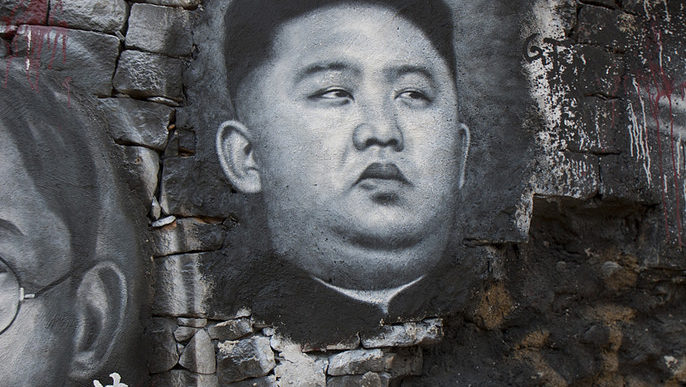
Kim’s Disaster: North Korean Nuclear Base Collapses, Killing at Least 200 People

Information emerging from furtive North Korea indicates that a tunnel at the regime’s nuclear test site collapsed last month after a nuclear test, killing about 200 people.

A report from Japanese broadcaster TV Asahi, citing unnamed sources, said 100 people were killed in an initial collapse around Sept. 10, and another 100 died in a rescue operation.

Other reports put the date of the collapse as Oct. 10. No official North Korean announcement was made about the date of the collapse.

North Korea’s massive Sept. 3 test caused multiple tremors and landslides in the region, according to Reuters.

Even before news of the tunnel collapse emerged, Western analysts had said the region might be unfit for more nuclear tests.

Reports that a tunnel collapsed triggered fears that radioactive material might also leak out.

Nam Jae-cheol, the chief of South Korea’s Korea Meteorological Administration, said Monday some type of collapse was likely.

“Based on our analysis of satellite imagery, we judge that there is a hollow space, which measures about 60 to 100 meters (in length), at the bottom of Mount Mantap in the Punggye-ri site,” he said. “So, should another nuke test occur, there is the possibility (of a collapse).”

Asked then whether an earthquake could trigger a release of radioactive materials, Nam said, “Should it sink, there is a possibility,” according to the South Korean Yonhap News Agency.

September’s hydrogen bomb detonation resulted in a 6.3 magnitude earthquake. Aftershocks led to a 3.4 magnitude quake on Sept. 23 and a 2.9 magnitude quake on Oct. 12.

Earlier this month, experts speculated that North Korea’s test site might have suffered irreversible damage.

“The explosion from the Sept. 3 test had such power that the existing tunnels within the underground testing site might have caved in,” said Kim So-gu, head researcher at the Korea Seismological Institute.

“I think the Punggye-ri region is now pretty saturated. If it goes ahead with another test in this area, it could risk radioactive pollution,” he added, as reported by Reuters.

A more powerful underground detonation at the current site could be “potentially suicidal,” not only because of damage from past tests, but also due to potential eruptions at Mount Paektu, a volcano only about 60 miles away, according to Kune Yull Suh, a professor of nuclear engineering at Seoul National University.

The website 38 North, which tracks North Korean activities, reported that the Punggye-ri nuclear test site did sustain damage from the last test.

It said there were “numerous landslides throughout the Punggye-ri Nuclear Test Site on the slopes of Mt. Mantap (and beyond) resulting from North Korea’s sixth nuclear test. These disturbances are more numerous and widespread than seen after any of the North’s previous five tests.” (For more from the author of “Kim’s Disaster: North Korean Nuclear Base Collapses, Killing at Least 200 People” please click HERE)

Follow Joe Miller on Twitter HERE and Facebook HERE.

North Korea’s Plot to Kill Kim Jong Un’s Nephew Foiled

Several North Korean agents were reportedly arrested after Chinese officials foiled an alleged plot to kill Kim Jong Un’s nephew— the son of the half-brother poisoned this year in a Malaysian airport.

Two of the seven North Korean agents who were involved in the alleged plot were arrested in Beijing, South Korean newspaper JoongAng Ilbo reported Monday, citing North Korean sources. The plot was stopped because Chinese officials increased security during the country’s 19th National Congress of the Communist Party.

“Special operatives belonging to the North’s reconnaissance squad have penetrated to remove Kim Han Sol, but some of them were arrested last week by the Chinese Ministry of National Security and are currently under investigation at special facilities outside Beijing,” the source told JongAng Ilbo.

Kim Han Sol, who is reportedly in his 20s, surfaced in March after he released a video confirming the death of his father, Kim Jong Nam, who was killed in February when two women smeared the banned VX nerve agent on his face at Malaysia’s Kuala Lumpur airport. Speaking in English, Kim Jong Un’s nephew showed his passport as proof of his identity and said, “my father has been killed a few days ago.”

He continued, “I’m currently with my mother and sister. We hope…” before the video’s audio abruptly cuts off. He ends with, “we hope this gets better soon.”

(Read more from “North Korea’s Plot to Kill Kim Jong Un’s Nephew Foiled” HERE)

Follow Joe Miller on Twitter HERE and Facebook HERE.
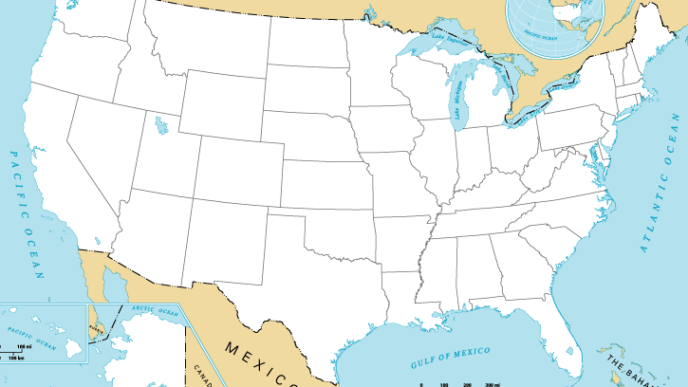
North Korean EMP Attack Would Cause Mass U.S. Starvation

Given the rising tensions between the United States and North Korea, much talk has centered around the the possibility of nuclear war.

However, experts believe there is another threat Americans need to be worried about.

According to a report presented earlier this month to a House Homeland Security subcommittee, North Korea could do far more damage to the populace with an electromagnetic pulse attack that could disable the electric grid.

An estimated 90 percent of the U.S. population could be wiped out by an EMP, which doesn’t have to re-enter the Earth’s atmosphere in order to be effective.

Conventional ICBMs need to hit close to a physical target in order to be effective. But an EMP attached to a warhead could detonate hundreds of miles above land and still inflict massive devastation, as it would “shut down the U.S. electric power grid for an indefinite period,” according to the report.

Worse yet, North Korea could rig the EMP to explode even if it’s intercepted by U.S. missiles.

If such an attack were to happen, the consequences could inevitably lead to mass starvation.

“The U.S. can sustain a population of 320 million people only because of modern technology,” said Dr. Peter Vincent Pry, a nuclear strategist formerly with the CIA who recently testified before the subcommittee.

“An EMP that blacks out the electric grid for a year would (decimate) the critical infrastructure necessary to support such a large population,” he told Forbes.

Pry broke down a timeline of how the chaos might ensue, noting that after the first three days, the local food and grocery supply would be depleted. Eventually, stock in regional warehouses would begin to spoil.

After a year passed, about 90 percent of the US would die from “starvation, disease and societal collapse,” according to Forbes.

Initial casualties, however, would result from downed airplanes. An EMP would disrupt air traffic control systems and fry all airplane electronics.

“Airliners would crash killing many of the 500,000 people flying over North America at any given moment,” Pry said.

Still, NPR downplayed the possibility of an EMP attack — even when former Director of Central Intelligence James Woolsey told the outlet an EMP poses the most immediate threat.

Moreover, James Clay Moltz, a professor of national security affairs at the Naval Postgraduate School in Monterey, California, doesn’t think the danger is as serious as others have made it out to be.

“There are legitimate concerns about EMP effects, but a non-tested system by a country with limited missile experience lowers the immediate threat,” he said. “But predictions of mass U.S. casualties and demands for costly defenses against a (North Korean) EMP attack seem unjustified at this time.”

But Fry and Dr. William R. Graham, both of whom were part of the recently-defunded EMP commission, think otherwise.

“It is critical, therefore, that the U.S. national leadership address the EMP threat as a critical and existential issue,” they told the House subcommittee, as reported by Futurism. “And give a high priority to assuring the leadership is engaged and the necessary steps are taken to protect the country from EMP.”

When asked by Forbes what the U.S. could do to prevent an EMP attack, Pry suggested surgical strikes to destroy North Korea’s ICBMs.

However, he said if the government is looking for a less hostile move, an EMP-hardening of the electric grid and other critical infrastructure would be the next best bet. (For more from the author of “North Korean EMP Attack Would Cause Mass U.S. Starvation” please click HERE)

Follow Joe Miller on Twitter HERE and Facebook HERE.
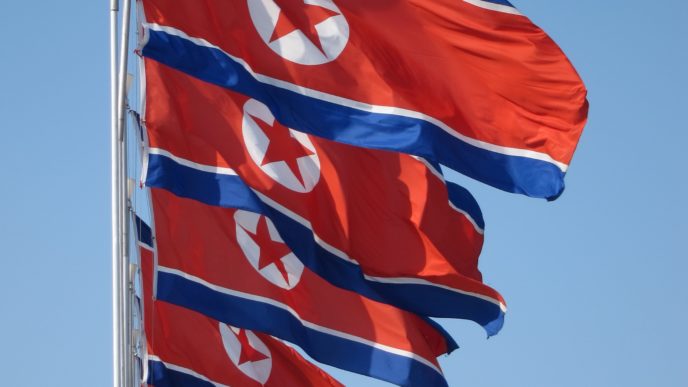
What Do China and North Korea Think About One Another? It’s Not Good

By Ryan Pickrell. Chinese and North Korean forces once fought side by side on the battlefield, but ties have since frayed, possibly beyond repair.

China has a complicated relationship with North Korea, which simultaneously serves as both a strategic asset and a liability. However, it has become more the latter than the former in recent years. North Korea’s frequent provocations frustrate Beijing, and China’s decisions to pressure North Korea in concert with the U.S. greatly angers Pyongyang. China and North Korea’s top leaders absolutely despise one another, according to individuals close to the respective governments.

When Chinese President Xi Jinping took power five years ago, he presented a grand vision for China known as the “Chinese Dream,” an ambitious plan to restore China’s great power status and make the country a responsible and respected global leader. Since North Korean dictator Kim Jong-un took control following the death of his father, the young ruler has advanced the country’s nuclear and ballistic missile programs at an accelerated rate, creating instability on China’s doorstep with frequent tests, drills, and intentionally aggressive and hostile provocations.

The only time former U.S. Ambassador to China Max Baucus has ever heard the professional Chinese president use “undiplomatic language” was when he was talking about Kim, Baucus revealed to the British Broadcasting Network. (Read more from “What Do China and North Korea Think About One Another? It’s Not Good” HERE)

_______________________________________

Japan PM Shinzo Abe Promises to Deal With North Korea Threat

By BBC. Japanese Prime Minister Shinzo Abe has promised to “deal firmly” with North Korea after exit polls suggested he won a clear victory in Sunday’s election.

Mr Abe had called an early election for an increased mandate to deal with “crises” facing Japan, including the threat from Pyongyang.

Local media report Mr Abe’s ruling coalition has retained its two-thirds majority in parliament . . .

The prime minister has previously called for the existence of the country’s armed forces to be formalised, a controversial move which he says is needed to strengthen Japan’s defence but which critics say is a step towards re-militarisation. (Read more from “Japan PM Shinzo Abe Promises to Deal With North Korea Threat” HERE)

Follow Joe Miller on Twitter HERE and Facebook HERE.
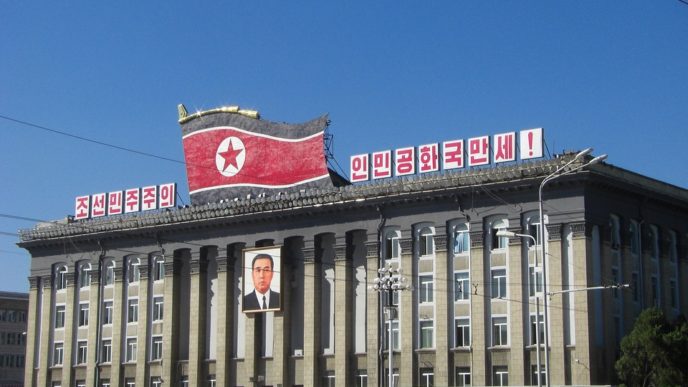
After Six Tests, the Mountain Hosting North Korea’s Nuclear Blasts May Be Exhausted

Have North Korea’s nuclear tests become so big that they have altered the geological structure of the land? Some analysts now see signs that Mount Mantap, the 7,200-foot-high peak under which North Korea detonates its nuclear bombs, is suffering from “tired mountain syndrome.”

The mountain visibly shifted during the last nuclear test, an enormous detonation that was recorded as a 6.3-magnitude earthquake in North Korea’s northeast. Since then, the area, which is not known for natural seismic activity, has had three more quakes . . .

Chinese scientists already have warned that further nuclear tests could cause the mountain to collapse and release the radiation from the blast.

North Korea has conducted six nuclear tests since 2006, all of them in tunnels burrowed deep under Mount Mantap at a site known as the Punggye-ri Nuclear Test Facility. Intelligence analysts and experts alike use satellite imagery to keep close track of movement at the three entrances to the tunnels for signals that a test might be coming. (Read more from “After Six Tests, the Mountain Hosting North Korea’s Nuclear Blasts May Be Exhausted” HERE)

Follow Joe Miller on Twitter HERE and Facebook HERE.

Kim Jong Un’s Newest Threat: We Will Respond to ‘Fire With Fire’

The rogue regime in North Korea has sent America a threat, through the unusual channel of a letter to Australia, promising it will respond to “fire with fire” . . .

North Korea has been issuing threats against America for some time, both through its statements and its actions.

Friday, the London Mirror reported that Kim Jong Un’s rhetoric had been boosted another notch, with his declaration the U.S. will have to put up with his nuclear status.

“This is a matter of life and death for us,” the RIA news agency reported him as saying. “The current situation deepens our understanding that we need nuclear weapons to repel a potential attack.

“We will respond to fire with fire.” (Read more from “Kim Jong Un’s Newest Threat: We Will Respond to ‘Fire With Fire'” HERE)

Follow Joe Miller on Twitter HERE and Facebook HERE.

CIA Chief: North Korea Able to Nuke U.S. ‘Within Months’

North Korea could acquire the ability to deliver a nuclear weapon to the United States within “months,” a top American spy official said Thursday.

“It is the case that they are close enough now in their capabilities that from a U.S. policy perspective, we ought to behave as if we are on the cusp of them achieving that objective,” Pompeo said during a question-and-answer session hosted by the Foundation for Defense of Democracies.

“When you’re now talking about months, our capacity to understand that at the detailed level is in some sense irrelevant,” he said. “Whether it happens on Tuesday or a month from Tuesday, we are at a time where the president has concluded that we need a global effort to ensure that Kim Jong Un doesn’t have that capacity.”

Pompeo’s artful assessment didn’t disguise the urgency of the North Korea nuclear threat, as he allowed that “intelligence is imperfect” but emphasized that every nuclear weapon or ballistic missile test heightens the danger posed by the regime. (Read more from “CIA Chief: North Korea Able to Nuke U.S. ‘Within Months'” HERE)

Follow Joe Miller on Twitter HERE and Facebook HERE.

North Korea’s ‘Hotel of Doom’ Shows Signs of Activity

Recent satellite images suggest that construction has restarted on North Korea’s ominous “Hotel of Doom.”

The new images of the 105-story Ryugyong Hotel in Pyongyang depict construction trucks surrounding the pyramid-like building as well as several other buildings, the Daily Mail reported.

Tourist photos have also recently surfaced showing cranes around the hotel.

The “Hotel of Doom,” as it was nicknamed, has cost approximately 470 million euros ($552 million) to date but has yet to host a single guest, the Independent reported.

The 105-story skyscraper was finally unveiled this summer after being under construction for nearly 30 years, although its doors still remain closed. (Read more from “North Korea’s ‘Hotel of Doom’ Shows Signs of Activity” HERE)

Follow Joe Miller on Twitter HERE and Facebook HERE.

North Korea Targeted U.S. Electric Power Companies

The cybersecurity company FireEye says in a new report to private clients, obtained exclusively by NBC News, that hackers linked to North Korea recently targeted U.S. electric power companies with spearphishing emails.

The emails used fake invitations to a fundraiser to target victims, FireEye said. A victim who downloaded the invitation attached to the email would also be downloading malware into his or her computer network, according to the FireEye report. The company did not dispute NBC’s characterization of the report, but declined to comment.

There is no evidence that the hacking attempts were successful, but FireEye assessed that the targeting of electric utilities could be related to increasing tensions between the U.S. and North Korea, potentially foreshadowing a disruptive cyberattack.

“This is a signal that North Korea is a player in the cyber-intrusion field and it is growing in its ability to hurt us,” said C. Frank Figliuzzi, a former chief of counterintelligence at the FBI.

The FireEye report comes on the heels of an NBCNews.com report in August that U.S. intelligence officials are increasingly worried that North Korea will lash out against enhanced U.S. pressure by using its fearsome cyber capabilities to attack U.S. infrastructure. (Read more from “North Korea Targeted U.S. Electric Power Companies” HERE)

Follow Joe Miller on Twitter HERE and Facebook HERE.

Russia Working in Defense of Kim Jong Un’s Regime

Russia has begun working quietly but very diligently to defend Kim Jong Un’s regime in North Korea because it is concerned that a collapse could open the door for NATO or even U.S. forces on its Asian border, reports Joseph Farah’s G2 Bulletin.

Moscow already is alarmed over NATO influence on its border with Europe, and “does not want any replication on its Asian flank,” according to a new report.

Reuters reported a Russian company has begun providing additional Internet resources to North Korea and that trade between the two nations reached $31.4 million in the first quarter of 2017, double previous totals.

“At least eight North Korean ships that left Russia with fuel cargoes this year have returned home despite officially declaring other destinations, a ploy U.S. officials say is often used to undermine sanctions against Pyongyang,” the report said.

“And Russia, which shares a short land border with North Korea, has also resisted U.S.-led efforts to repatriate tens of thousands of North Korean workers whose remittances help keep the country’s hard line leadership afloat.” (Read more from “Russia Working in Defense of Kim Jong Un’s Regime” HERE)

Follow Joe Miller on Twitter HERE and Facebook HERE.