
Country to Lift Ban on Growing Human Organs in Animals
A Japanese government-commissioned expert panel has greenlighted controversial scientific experiments to grow human organs inside the bodies of animals as early as this fall.
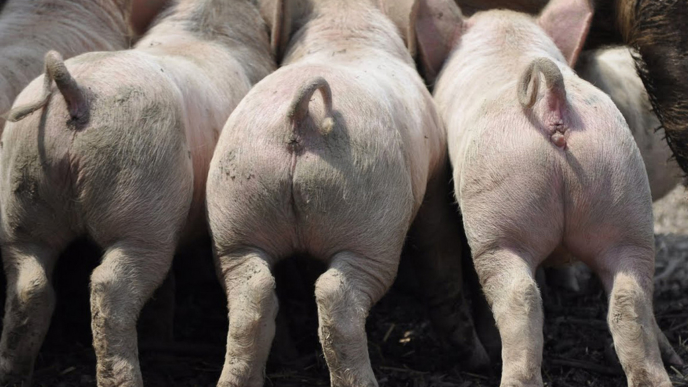
Under the auspices of the Education, Culture, Sports, Science and Technology Ministry, the panel produced a report on research involving the development of human organs in the bodies of pigs and other animals. In the report, the panel concluded it would allow researchers to implant an animal embryo (a fertilized egg) containing human cells into an animal’s womb and have the animal give birth.
One method being considered for growing human organs inside animal bodies involves injecting human induced pluripotent stem (iPS) cells into an animal embryo and then returning the embryo to an animal’s womb to be birthed. The embryos are genetically modified to prevent specific organs from being created. . . .
The panel concluded such research could lead to discovering the underlying causes of diseases, securing organs to be used for transplants, and developing new treatments. Such research is already permitted in the U.S. and the U.K.
However, the panel in the same report decided not to allow research that could produce a creature ambiguous enough to blur the line between humans and other animals, crossbreeding of animals born as a result of the method, and fertilization using human germ cells. (Read more from “Country to Lift Ban on Growing Human Organs in Animals” HERE)
Follow Joe Miller on Twitter HERE and Facebook HERE.
