Posts

Pakistani Christian Asia Bibi Flees, Reunites With Family

After a decade of uncertainty about her life, her safety, and her future, Pakistani Christian mother Asia Bibi can now breath a sigh of relief that she has safely fled to Canada a free woman, according to reports.

On Wednesday morning, a U.K. diplomat told the British Pakistani Christian Organization (BPCO) that Bibi has finally safely left Pakistan following her release from her eight-year stay on the country’s death row last year. Bibi faced possible execution under Pakistan’s notoriously harsh blasphemy law but was acquitted by the country’s supreme court in October.

“It is a big day,” Bibi’s attorney Saiful Malook told The Guardian newspaper. “Asia Bibi has left Pakistan and reached Canada. She has reunited with her family. Justice has been dispensed.”

The mother of 5 was convicted of blasphemy in 2010 following a 2009 incident at her berry-picking job. When she went to fetch water from a nearby well, her Muslim coworkers said that they didn’t want to drink from something that had been touched by a Christian. After the incident, two Muslim women said that she had insulted Mohammed, though that claim has never been verified.

“The United States welcomes the news that Asia Bibi has safely reunited with her family,” said U.S. Secretary of State Mike Pompeo in a prepared statement. “Asia Bibi is now free, and we wish her and her family all the best following their reunification. The United States uniformly opposes blasphemy laws anywhere in the world, as they jeopardize the exercise of fundamental freedoms.”

After being released from death row, Bibi made plans to flee Pakistan, which has a “high” rating for government restriction on religion and for social hostility involving religion, according to Pew Research.

Now in Canada, Bibi is safe from both further persecution by the Pakistani government and retributive violence from those angered by her acquittal.

“Although no one has yet been executed by the state under the blasphemy laws, some persons have been sentenced to death. Several accused under the blasphemy laws have been attacked, even killed, by vigilantes, including while in police custody; those who escape official punishment or vigilante attack are forced to flee the country,” explains the United States Commission on International Religious Freedom. “Others have died in police custody under allegedly suspicious circumstances.”

But while supporters around the world rejoice at the news of Bibi’s newfound safety, the last leg of her road to freedom and safety didn’t come without difficulties. Last month, Pakistani Prime Minister Imran Kahn told the BBC that there had been a “little bit of a complication” in her departure.

“It is very good that Asia Bibi is finally safe outside Pakistan,” Farahnaz Ispahani told Blaze Media. Ispahani is a global fellow at the Woodrow Wilson Center, senior fellow for South and South East Asia at the Religious Freedom Institute, and a former member of the Pakistani parliament. “It is bad news that it was such a struggle to free her and that thousands of Christians and other religious minority populations still live under threat.” (For more from the author of “Pakistani Christian Asia Bibi Flees, Reunites With Family” please click HERE)

Follow Joe Miller on Twitter HERE and Facebook HERE

Pakistan Is Still Supporting Insurgency to Topple the Afghan Government

Exclusive interview of Pasbanan with US army retired official

Arranged by: Shershah Nawabi

How do you define insurgency and insurgent groups?

I define an insurgency similarly to that described in the U.S. Army Field Manual 3-24. Insurgencies arise when parts of the population grow dissatisfied with the status quo and are willing to fight to change the conditions to their favor, using both violent and nonviolent means to effect a change in the prevailing authority. An insurgency is the organized use of subversion and violence to seize, nullify, or challenge political control of a region.

Although the Taliban are using classical insurgency tactics, what is happening in Afghanistan is not an insurgency. It is a proxy war being conducted by Pakistan using the Taliban to gain a dominating political influence in Afghanistan in the pursuit of Pakistani national aims. Pakistan created the Taliban in the 1990s for that purpose and Pakistan has sustained and supported the Taliban since 2001 for the same reason.

According to your experience how these groups are been made and how they manage to grow?

Again, I think FM 3-24 provides a useful guide as to how insurgencies grow or fail. It is based on legitimacy, that is, acceptance of authority by society. The population of a country decides who has the legitimacy to establish the rules and the government for that society. A population’s values and cultural norms will determine who that society perceives as a legitimate authority. Both the insurgency and the country’s government attempt to control the population by some mixture of consent and coercion.

Here we must distinguish between an insurgency and a proxy war. Although Afghans may have grievances with the Kabul government and may, at times, agree with certain positions held by the Taliban, the Taliban are not a movement indigenous to Afghanistan. As already stated, the Taliban are a creation of the Pakistani military and an instrument of Pakistani foreign policy. After the Taliban defeat in 2001, they were provided a safe haven in Pakistan, where an elaborate support infrastructure was established to provide recruitment, training, infiltration routes and medical treatment for Taliban fighters.

Do you believe that Afghanistan is a great platform for them to raise and have a high level of growth here?

The terrorist threats to Afghanistan come from the outside, either when those outside forces create instability inside Afghanistan or try to create a government in Afghanistan that hosts terrorists as Pakistan did with the Taliban in the 1990s when al Qaeda established a base in Afghanistan.

For example, there is a lot of concern now about the Islamic State in Afghanistan, which actually originates from and is sustained by Pakistan.

Members of the Pakistani Taliban (Tehrik-e Taleban Pakistan, TTP) began migrating to Afghanistan’s Nangarhar Province as “refugees” in 2010 after Pakistani military operations against the TTP in Orakzai and Khyber Agencies of the Federally Administered Tribal Areas.

It was those “refugees” who provided a foundation for the Islamic State. That base support was augmented by thousands of Pakistanis who fought for ISIS in Syria and returned starting in 2013.

In January 2015, the Islamic State of Khorasan Province (ISKP) was declared with former TTP commander Hafiz Saeed Khan of Orakzai as the leader, whose 12-member Shura had nine Pakistanis.

An ISKP support zone was set up in Pakistan adjacent to the Haqqani Network support zone.

What are the major aspects that the insurgency is growing in South Asia on a daily basis?

As stated above, it is not so much the growth of the insurgency as the growth of terrorism where the greatest focus should be placed, on Pakistan, not on Afghanistan.

The Taliban is a creation of Pakistan. Pakistan-based terrorist groups such as Lashkar-e-Taiba and Jaish-e-Mohammad are attacking India. The Pakistan-based Sunni supremacist group Jaish-ul-Adl attacks Iran. Pakistan also uses such extremist groups to suppress ethnic and religious minorities inside Pakistan.

It is that growing level of extremism and intolerance in Pakistan that should be of concern, which has been a threat to Afghanistan and will be the main contributor to instability in South Asia.

It is the direct result of official Pakistani policy.

The “Islamization” program initiated by Pakistani President Zia ul Haq in the late 1970s, which involved the proliferation of Islamic schools, “madrasas” and the promotion of Islamic law “Sharia,” was specifically designed to create national unity by suppressing ethnic separatism and religious diversity. Not surprisingly, radical groups have proliferated, becoming increasingly more extreme and intolerant.

The 1979 Iranian Shia revolution accelerated “Islamization” in Pakistan, for example, the 1985 formation of the Deobandi Sipah-e-Sahaba, an offshoot of Jamiat Ulema-e-Islam, founded to counter Shia influence in Pakistan.

In 1996 elements within the Sipah-e-Sahaba who did not believe the organization extreme enough left to form Lashkar-e-Jhangvi

Lashkar-e-Jhangvi al-Alami is a splinter group of Lashkar-e-Jhangvi and a Pakistani partner for the Islamic State has conducted terrorist attacks inside Pakistan, primarily in Balochistan.

Nevertheless, successive Pakistani governments have found it useful to employ members of those groups as “non-state actors” in its foreign policy and as a paramilitary force to suppress domestic unrest. We are currently seeing that play out in Pakistan’s suppression of the Pashtun Tahafuz Movement using the Taliban as enforcers for the Pakistani military. (For more from author of “Pakistan Is Still Supporting Insurgency to Topple the Afghan Government” please click HERE)

_________________________________________________________

Lawrence Sellin is a retired U.S. Army Reserve colonel with branch qualifications and assignments in Special Forces, Infantry and Medical Services. He served in Afghanistan and Iraq and participated in a humanitarian mission to West Africa. Sellin holds a Master’s Degree in Strategic Studies from the U.S. Army War College and received training in Arabic, Kurdish and French from the Defense Language Institute. He had a distinguished civilian career in medical research after completing a Ph.D. in physiology, followed by an international business career in information technology, where he was a manager and subject matter expert in telecommunications, business process management, and command and control systems. He is also the author of numerous articles on military and national security issues.

Follow Joe Miller on Twitter HERE and Facebook HERE
China Warns U.S. Against Push to Label Pakistan-Based Jihadi a ‘Global Terrorist’

China and its all-weather ally Pakistan are reportedly furious with the United States for pushing a draft resolution this week to outlaw the Pakistani leader of an anti-India, U.S.-designated terrorist group directly to the United Nations Security Council, bypassing established procedures. . .

Responding to the recent U.S. move, Geng Shuang, a spokesman for China’s foreign ministry, reportedly urged the United States to “act cautiously” and avoid “forcefully” pushing the draft resolution.

“This is not in line with [the] resolution of the issue through dialogue and negotiations. This has reduced the authority of the committee as a main anti-terrorism body of the UNSC, and this is not conducive to the solidarity and only complicates the issue,” Geng added. . .

China and Pakistan are closed military and financial allies. While Pakistan refuses to condemn the reported mistreatment of Muslims in China’s Xinjiang province, Beijing has repeatedly defended Islamabad against accusations of serving as a sanctuary for terrorists.

According to the U.S. government, China faces a terrorist threat from jihadis training and operating in the Afghanistan-Pakistan region, which houses the highest concentration of terrorist groups in the world. (Read more from “China Warns U.S. Against Push to Label Pakistan-Based Jihadi a ‘Global Terrorist'” HERE)

Follow Joe Miller on Twitter HERE and Facebook HERE
Christian Asia Bibi Free to Leave Pakistan After Spending Nearly a Decade on Death Row Under Blasphemy Charges

In October, Pakistan’s Supreme Court overturned the death sentence placed on Asia Bibi, a minority Christian woman who was convicted in 2010 of blasphemy under section 295-C of the Pakistani Penal Code.

Led in part by the extremist Tehreek-e-Labbaik Pakistan party (TLP), thousands filled the streets in the following days, protesting Bibi’s acquittal. There were calls for Bibi’s death, as well as the deaths of the three judges who acquitted her.

In an attempt to appease the TLP and other hardliners who railed against the ruling, the prime minister’s administration reportedly agreed to look into placing Bibi on the “exit control list” while a petition against the acquittal was reviewed. This would prevent her from leaving Pakistan despite the court’s decision in her favor.

On Tuesday, however, Asia Bibi’s acquittal was upheld by the Pakistani Supreme Court, and she is now free to leave Pakistan. According to the BBC, she “is being kept by authorities at a secret location in Islamabad.” This secrecy will likely continue until such a time that Bibi can leave the country.

The Associated Press writes that Bibi watched the announcement on TV, and is ready to see her daughters, who previously fled to Canada. An anonymous friend relayed the following quote from Bibi: “I am really grateful to everybody. Now after nine years it is confirmed that I am free and I will be going to hug my daughters.” (Read more from “Christian Asia Bibi Free to Leave Pakistan After Spending Nearly a Decade on Death Row Under Blasphemy Charges” HERE)

Follow Joe Miller on Twitter HERE and Facebook HERE
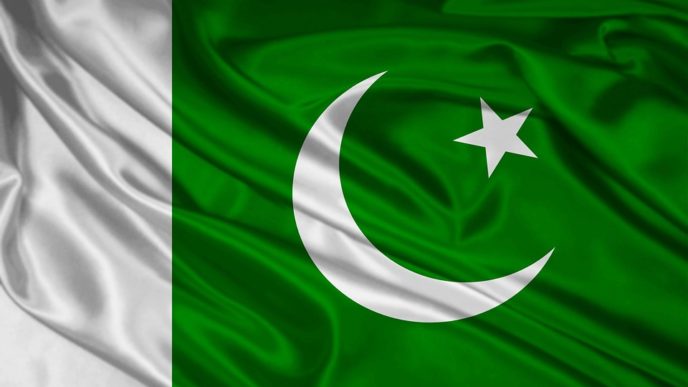
Huge Win for Freedom: Christian Woman Released After Almost a Decade on Death Row

A Christian woman in Pakistan on death row for nearly a decade after she allegedly contaminated a water jug — an offense viewed as blasphemy in the Muslim country — was acquitted by the country’s top court on Wednesday.

Asia Bibi was ordered released eight years after she was sentenced to death in 2010 on blasphemy charges – a landmark ruling that sparked widespread protests around Pakistan by hard-line Islamists and even led to the murder of a local governor. . .

[T]wo women refused to drink from the container she had touched because she was not Muslim. A few days later, a mob accused her of blasphemy after the women went to a local cleric in Sheikhupura – a city in Punjab – to report her. . .

The three-judge panel upheld the blasphemy law itself, saying it was consistent with verses from Islam’s holy book, the Quran. But they said prosecutors had failed to prove that Bibi violated the law. In addition to citing the Quran, the judges also referenced William Shakespeare’s King Lear, saying Bibi was “more sinned against than sinning.”

The ruling sent shockwaves across the country with hundreds of Islamists blocking a key road link the city of Rawalpindi with the capital, Islamabad. Islamists gathered in the country’s largest city, Karachi, in the northwestern city of Peshawar and elsewhere. Police urged demonstrators to disperse peacefully. (Read more from “Huge Win for Freedom: Christian Woman Released After Almost a Decade on Death Row” HERE)

Follow Joe Miller on Twitter HERE and Facebook HERE.

The Iran-Pakistan Border Is a Geopolitical Powder Keg

The Iran-Pakistan border contains all the ingredients for a geopolitical explosion – regional rivalries, Sunni-Shia conflicts, ethnic insurgents, espionage, drug smuggling and human trafficking.

China considers the stability of the region so important that it brokered a series of border security meetings between Iran and Pakistan over the past year.

Much of China’s multi-billion-dollar investment in the China-Pakistan Economic Corridor (CPEC) hinges on the commercial viability of the Pakistani port of Gwadar, near the Iranian border, for which it has a 40-year operational lease. Moreover, CPEC is the regional linchpin of the Belt and Road Initiative, an ambitious plan to connect Eurasia, the Middle East and Africa to China through a series of land-based and maritime economic zones.

Additionally, the planned Chinese naval base on Pakistan’s Jiwani peninsula, even closer to the Iranian border and located at the mouth of the Persian Gulf, is a critical military node in China’s “String of Pearls” facilities designed to dominate the strategic sea lanes in the Arabian Sea and Indian Ocean.

Such ambitions present a direct economic and military threat to India. Commercially, Gwadar competes with joint Iranian-Indian development of the port of Chabahar, just 150 miles to its west.

According to numerous reports, Saudi Arabia contributes to the instability of the border region by sponsoring virulently anti-Shia Sunni militant groups, such as Jaish al-Adl, who launch attacks on Iran from safe havens in Pakistan.

Iran retaliates by supporting the Baloch Liberation Front (BLF), an ethnic separatist group, whose sanctuaries and leader, Dr. Allah Nazar Baloch, are claimed to be inside Iranian territory and routinely conduct cross-border operations against Pakistani government targets. Members of the BLF are suspected to be in contact with Iranian intelligence, often through drug lords acting as intermediaries. BLF members are occasionally confused with their anti-Shia counterparts. Some months ago, a BLF team was mistakenly attacked by Iranian border guards. One member, shot in the encounter, was taken to Imam Ali Hospital in Chabahar for treatment, but later died of his wounds. The other team members were subsequently released by Iranian forces.

There are also narco-terrorists groups on the Pakistani side of the border with indirect links to the government in Islamabad. Lashkar-e-Khorasan, a alleged Islamic State affiliate, has been reportedly involved in “cleansing” western Balochistan of Sufi Zikris, Shia Hazaras, Hindus, Christians, Ahahmadis, Sikhs or anyone else who refuses to convert to the extreme form of Sunni Islam. The purported leader of Lashkar-e-Khorasan is Mullah Shahmir Bizenjo, a resident of Turbat, whose cousin is Senator Hasil Bizenjo, a member of the National Party and currently Pakistan’s Minister of Maritime Affairs. According to the Daily Beast, one of the drug world’s most notorious opium traffickers, also from Turbat, is Imam Bizenjo aka Imam Bheel, a National Party financier, whose son, Yaqoob Bizenjo, served as a member of the Pakistan National Assembly until 2013.

A more ominous portent of Iran-Pakistan border instability, is the return of the “Zainebiyoun” brigade. As a result of its involvement in the Syrian conflict, Iran created a unit composed of

Pakistani Shia volunteers trained by the Iranian Revolutionary Guard Corp (IRGC), who have gained extensive combat experience fighting for the Assad regime against Sunni militants. It is rumored that “Zainebiyoun” members are now infiltrating back into Pakistan to provide the cadre for a Hazara self-defense force, a community long under attack by virulently anti-Shia extremist groups in Pakistan.

Chinese efforts towards Iran-Pakistan reconciliation has borne some fruit. In recent months, there has been a flurry of agreements in trade, defense, weapons development, counter-terrorism, banking, train service, parliamentary cooperation and, most recently, art and literature.

Iran seeks to separate Pakistan from Saudi Arabia, while Pakistan tries to balance relations with both states. China benefits by reducing tensions among all the regional players in order to advance its wider economic and military aims.

The lesson for the United States is that Afghanistan is swimming in a sea of instability and not, as we seem to presume, the focal point of that instability. American policy should be focused on burden shifting, managing and, when appropriate, exploiting instability to thwart Chinese hegemony. (For more from the author of “The Iran-Pakistan Border Is a Geopolitical Powder Keg” please click HERE)

Follow Joe Miller on Twitter HERE and Facebook HERE.

Pakistan Freezes Accounts of 5,000 Suspected Militants

Pakistan has frozen the accounts of 5,000 suspected militants, taking about $3 million out of their pockets, but Islamabad could still come under scrutiny at a crucial June meeting of an international watchdog that tracks terror financing.

Analysts and government officials say political foot-dragging and sympathetic supporters throughout Pakistan makes it difficult to cut off the money supply to banned militant groups.

Next month in Spain, the Financial Action Task Force will update its assessment of “high-risk and non-cooperative jurisdictions,” Alexandra Wijmenga-Daniel of the task force’s communications department said in an email. She did not offer any specifics. (Read more from “Pakistan Freezes Accounts of 5,000 Suspected Militants” HERE)

Follow Joe Miller on Twitter HERE and Facebook HERE.

Sources: Democratic Aide Suspected of Major Security Breach Under Government Protection in Pakistan

A criminal suspect in an investigation into a major security breach on the House of Representatives computer network has abruptly left the country and gone to Pakistan, where her family has significant assets and VIP-level protection, a relative and others told The Daily Caller News Foundation’s Investigative Group.

Hina Alvi, her husband Imran Awan, and his brothers Abid and Jamal were highly paid shared IT administrators working for multiple House Democrats until their access to congressional IT systems was terminated Feb. 2 as a result of the investigation. Capitol Police confirmed the investigation is ongoing, but no arrests have been reported in the case.

The Awans are “accused of stealing equipment from members’ offices without their knowledge and committing serious, potentially illegal, violations on the House IT network,” according to Politico.

Many of the Democrats who employed the Awans are members of the House Committee on Homeland Security, the Committee on Foreign Affairs, and the Permanent Select Committee on Intelligence.

Their positions gave them access to members’ emails and confidential files. In addition, Imran was given the password for an iPad used by then-Democratic National Committee Chairwoman Debbie Wasserman Schultz, a Florida Democrat. (Read more from “Sources: Democratic Aide Suspected of Major Security Breach Under Government Protection in Pakistan” HERE)

Follow Joe Miller on Twitter HERE and Facebook HERE.

Pakistani Judge Threatens to Shut Down Country’s Social Media Over Free Speech ‘Terrorists’

Pakistan is no place for free speech.

A justice on Pakistan’s Islamabad High Court (IHC) has threatened to shut down the entirety of social media if criticism of Islam’s Muhammad continues, declaring these “blasphemers” as “terrorists.”

According to local reports, Justice Shaukat Aziz Siddiqi burst into tears while issuing the warning for those who apparently have taken to social media to criticize Muhammad. Siddiqi made it very clear that Pakistan would not allow for such displays of free speech.

“Why is the blasphemous content present on the social media? What steps had the government taken up in this regard so far?” Siddiqi asked. “I submit and sacrifice myself and all what I have including my parents, my life and job to the person of Allah’s messenger … If the sacrilegious pages cannot be blocked, then, Pakistan Telecommunication Authority (PTA) should cease to exist,” he added.

Siddiqi then took his comments a step further, arguing that social media in its entirety should be cut off for Muhammad’s sake.

“Each and everything can be sacrificed for the honor of Allah’s Messenger. I will close entire social media, if I have to,” he said.

And then came the conclusion: The justice declaring those who decide to engage in free speech as “terrorists.”

“I hereby declare as terrorists who commit blasphemy to the holy Prophet.” the IHC justice declared.

About 75 percent of Pakistanis support the country’s blasphemy laws, which say that insulting Islam is punishable by death. This has led to massive discrimination against Christians and other religious minorities living inside Pakistan. The blasphemy edicts sometimes lead mobs to take the streets, and guarantees violent repercussions for those who have been deemed slanderers of Islam.

Pakistan is currently fending off a wave of jihadist terrorist attacks. In one such incident in February, a suicide bomber killed 88 people after detonating his vest at a Sufi shrine. This might lead observers to believe that such a vital issue to national security would take priority in Islamabad. Instead, the judiciary is discussing how to block what its citizens discuss on social media.

Free speech does not exist in Pakistan. And worse, the highest levels of government are accused of becoming cozy with international terrorist groups.

Pakistan was notoriously once the home base for deceased al-Qaeda chief Osama bin Laden, who set up shop in Abbottabad, located less than a mile away from a prominent Pakistani military academy. Its Inter-Services Intelligence (ISI) agency has long been accused of collaborating with jihadist terror outfits. (For more from the author of “Pakistani Judge Threatens to Shut Down Country’s Social Media Over Free Speech ‘Terrorists'” please click HERE)

Follow Joe Miller on Twitter HERE and Facebook HERE.

Shot Through the Heart: Pakistan Bans Valentine’s Day Because It’s Not Islamic

Valentine’s Day has been banned from the Islamic Republic of Pakistan.

The nation’s high court in Islamabad, Pakistan’s capital city, ruled Monday that the country’s citizens must refrain from celebrating the holiday “with immediate effect.”

A citizen petition made its way to the superior court one day before the holiday commences. Abdul Waheed, who drafted the document, claimed Valentine’s Day is “against the teachings of Islam and should be banned immediately,” CNN reports. The court concurred with Waheed, claiming the holiday clashes with Muslim life. The Islamabad High Court ruled that the festivities are actually a “cover” to spread “immorality, nudity, and indecency… which is against our rich traditions and values.”

Valentine’s Day has become increasingly popular among Pakistani youth and has acted as a boon for florists and business owners. However, Islamist leaders feel the society at large has been placed under direct attack with the embrace of the Western holiday, and print and electronic media in the country have been warned about promoting the holiday’s events and activities.

In February 2016, Pakistani President Mamnoon Hussain added his voice to the masses calling for the ban. Hussain stated, “Valentine’s Day has no connection to our culture and it should be avoided.”

Jamaat-e-Islami, a hardline Islamist group with millions of followers, has led the effort to protect Pakistan against parts of the country that “wants to impose Western values and culture on our youth by celebrating Valentine’s day,” according to an anti-Valentine’s Day resolution passed last year in Peshawar. “There is no place in our culture and in our civilization for such an unnecessary and rude day, which aims to spread vulgarity and indecency amongst the youth,” the resolution continued.

Pakistan’s Islamic traditions have created an environment that is extremely hostile to religious freedom and basic human rights. For example, identifying or being revealed as a homosexual in Pakistan can result in long-term imprisonment, and the state is also notorious for discriminating against religious minorities.

Pakistan does not have anything remotely resembling free speech. Criticizing Islam or Muhammad can result in punishments ranging from a harsh fine to a death sentence. The majority of Pakistanis support the state’s blasphemy laws. (For more from the author of “Shot Through the Heart: Pakistan Bans Valentine’s Day Because It’s Not Islamic” please click HERE)

Follow Joe Miller on Twitter HERE and Facebook HERE.