Posts

Americans Are Getting Really Creeped out by Devices Eavesdropping on Them

. . .Anxiety levels over privacy and security are peaking as the relentless collection of online data and the steady drumbeat of data incursions and breaches take a toll.

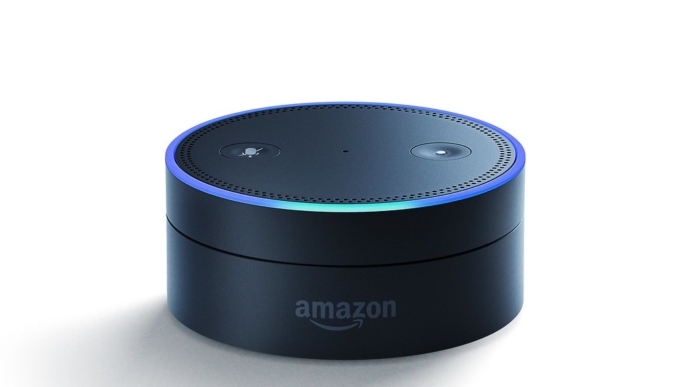
People are worried like never before about eavesdropping by smart home devices such as Google Home and the Amazon Echo or having their microphone tapped to target them with personalized ads and increasingly they want a say over how their personal information gets used, according to a survey released Tuesday to observe Data Privacy Day.

More than 8 in 10 American adults expect to have control over how a business handles their data, the survey released by privacy firm DataGrail found. . .

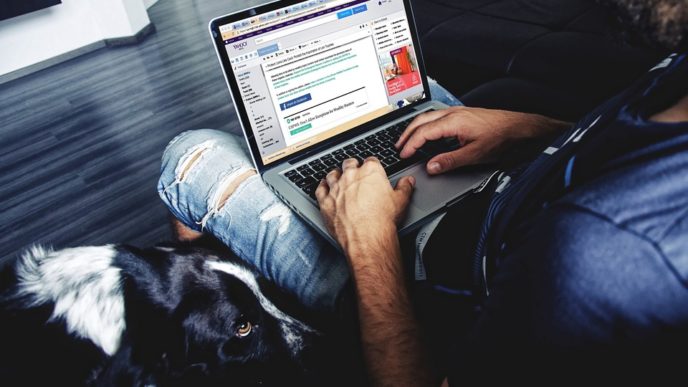
What’s striking a real nerve with Americans? More than 82% of the survey participants said they are alarmed by businesses monitoring or collecting data from their mobile phone’s microphone, their laptop’s webcam and smart home devices. They also don’t feel comfortable with their phone or laptop being used to track their location.

For 48% of American adults, the No. 1 privacy concern is social media companies selling their data to third parties, according to the survey. Four in 10 object to their personal information from social media being sold to third parties to serve ads. (Read more from “Americans Are Getting Really Creeped out by Devices Eavesdropping on Them” HERE)

Follow Joe Miller on Twitter HERE and Facebook HERE
‘Extreme Vetting’ Also Threatens Privacy of Americans

The “extreme vetting” proposals floated this week by Homeland Security Secretary John Kelly include the idea of making visitors to the U.S. open their phones and disclose their contacts, passwords and social media handles to immigration authorities. This might potentially be constitutional, because visitors outside the U.S. don’t necessarily have privacy protection. But it’s a serious threat to Americans’ constitutional rights anyway. The intrusion into core privacy of visa applicants through the fiction of consent can easily be extended to U.S. citizens in a wide range of situations.

There’s a theoretical legal basis for the vetting proposals: because there’s no inherent legal or constitutional right for foreigners (other than lawful permanent residents) to visit the U.S., there’s nothing wrong with conditioning entry on disclosure of private information.

I’m not sure this argument holds water. It’s true that non-Americans outside the U.S. don’t always have constitutional rights. But it doesn’t necessarily follow that the government could impose every conceivable condition on their entry, without constitutional limits.

For example, could the government tell foreigners seeking visas that if they enter the U.S., they must agree to discriminate on the basis of race while here? Surely not — because the government would itself be discriminating through that condition. (Read more from “‘Extreme Vetting’ Also Threatens Privacy of Americans” HERE)

Follow Joe Miller on Twitter HERE and Facebook HERE.

Backpack Found Containing 400 Health-Exchange Enrollees’ Information, May Be Compromised

Photo Credit: loststreet2010 / Creative Commons The personal information of around 400 health-exchange enrollees may be compromised, according to a statement issued today by Access Health CT CEO Kevin Counihan.

The statement notes that a backpack was recovered in Hartford that held “four notepads with personal information for approximately 400 individuals. The backpack also contained Access Health CT paperwork and it appears as though some of that personal information may be associated with Access Health CT accounts. It is still unclear where the backpack came from, and we are working [with] the Hartford Police Department to investigate, and contact the individuals whose information may be compromised. … Let me be clear: we are sorry this happened. This is a very serious situation and we will hold the person or persons who are responsible to account.”

Read more from this story HERE.

The Founding Fathers Would Have Protected Your Smartphone

Photo Credit: Politico Privacy is a core American value. For 235 years, the Fourth Amendment has protected us from unwarranted searches of our personal belongings. All the while, technology has been changing where and how we keep those belongings. On April 29, the Supreme Court held oral arguments in two cases, Riley v. California and United States v. Wurie. At question is whether the police can search the contents of a phone without a warrant during an arrest. At stake is whether technological advancements have rendered one of our most treasured civil liberties obsolete.

Today, many Americans keep their entire lives on their phones: family photos, emails, calendar appointments, Internet searches and even location history. Considered separately, each of these categories can reveal very private information. Taken together, they can present a pretty good picture of who you are, what you do, where you go, what you read and what you write. What protection does the Constitution offer them from suspicionless search by the government?

The Fourth Amendment grants to the people the right to be “secure in their persons, houses, papers, and effects, against unreasonable searches and seizures.” It did not find its way into the Constitution by accident. It was, rather, a specific response to a principal grievance of colonial Americans under British rule — namely, the use of the “general warrant” whereby the crown gave officials almost unfettered authority to search colonial homes, rifle through papers and scour personal belongings.

As the Constitutional Accountability Center explains in its friend-of-the-court brief in Riley and Wurie, “Stated simply, the Framers wanted to strip the government of the arbitrary power to rifle through a person’s belongings in the hope of finding something incriminating.”

There can be little doubt that the modern smartphone is today’s equivalent of our Founders’ “papers and effects.”

Read more from this story HERE.

White House Classifies Phone Numbers, Street Addresses of Website Visitors as ‘Public Information’

Photo Credit: REUTERS / Kevin Lamarque

Photo Credit: REUTERS / Kevin Lamarque

The White House’s new website privacy policy, released Friday, identifies phone numbers and street addresses of people who send the president questions on Whitehouse.gov as “public information.”

“Information you choose to share with the White House (directly and via third party sites) may be treated as public information,” according to the new White House policy, which assures that information provided to Whitehouse.gov will not be sold, but does not make the same assurance about information provided on the White House Facebook, Twitter, or Google Plus pages.

On the “Contact the White House” page’s question-and-comment submission form, required fields include first name, last name, email, phone number, and street address with city, state, and postal code.

Read more from this story HERE.

Is Obama Secretly Negotiating Away U.S. Sovereignty?

Photo Credit: WND

Photo Credit: WND

Consumer protections and the use of domestic law in the U.S. may drastically change as President Obama forges ahead with two secretive international deals that impact major aspects of the economy, privacy and beyond.

Wednesday, Obama defended a proposed mega free-trade zone between the world’s two largest economies, the United States and the European Union.

“I have fought my entire political career, and as president, to strengthen consumer protections. I have no intention of signing legislation that would weaken those protections,” Obama said during a visit to the EU headquarters in Brussels.

Obama was responding to criticism of the Transatlantic Trade and Investment Partnership, or TTIP, which the U.S. has been negotiated with the EU since last July.

Besides creating the world’s biggest free-trade zone, the TTIP will also bring about closer cooperation between EU and U.S. regulatory bodies while more closely integrating the two economies.

Read more from this story HERE.

Spyware App Turns the Privacy Tables on Google Glass Wearers

Photo Credit: Naked SecurityCritics of Google Glass usually remark on how the device allows its owner to take photos and videos of other people without their knowledge or consent, which has contributed to some backlash, including bans on Glass in some establishments and an alleged assault on a Glass user.

But a spyware app developed by two researchers has shown that Google Glass can be used to secretly take photos of whatever a Glass wearer is looking at without their knowledge – making the Glass user the one whose privacy and security is potentially compromised.

The lens display usually lights up whenever Glass is in use, which is the only way to tell when Glass is on – other than witnessing voice and gesture commands used by the wearer such as “Okay Glass, take a photo.”

However, according to media reports, the app takes a photo every 10 seconds when the display is off, meaning the wearer (or anyone in view of the camera) is unaware that it’s recording.

The app can also access the internet from the user’s Glass connection to upload the images to a server.

Read more from this story HERE.

Privacy Threat Found in ObamaCare Website

Photo Credit: Fox NewsTo enroll in a new ObamaCare health insurance plan on the federal marketplace, most consumers must first provide private personal information.

But buried in that website’s blueprint (known as “source code”) lies an alarming warning first unearthed by the Weekly Standard.

“You have no reasonable expectation of privacy regarding any communication or data transiting or stored on this information system,” reads the disclaimer, which does not appear on the site’s visible “Terms and Conditions” page.

The disclaimer continues: “At any time, and for any lawful Government purpose, the government may monitor, intercept, and search and seize any communication or data transiting or stored on this information system.”

Now security experts are worried this paragraph beneath the surface at HealthCare.gov may represent an ominous sign — that the U.S. government is ill-equipped to handle identity thieves.

Read more from this story HERE.

Proposed New Federal Rule Could Put ‘Big Brother’ in Your Driver’s Seat

A proposed federal rule that would require black boxes or event data recorders (EDRs) in every U.S. automobile may mean “Big Brother” could be in your passenger seat for every drive.

The National Highway Traffic Safety Administration rule requires all light passenger vehicles be equipped with an EDR by Sep.1, 2014. Ninety-six percent of new cars already have them – measuring such inputs as speed, lateral acceleration, pedal effort, seat belt use, wheel spin, steering wheel turn and direction.

Black box data retrieved from U.S. car accidents in a single day would provide more information than a year’s worth of crash testing, says Tom Kowalick, who heads the design team that is standardizing the devices for automakers worldwide.

But he also said he fears that for all their potential good, the EDRs present a massive privacy dilemma, and an opportunity for fraudsters.

“They can take that odometer and roll that odometer back to zero,” he said. “They can change the Vehicle Identification Number (VIN), which is in the computer. And once they do that, then it’s okay for them to very simply steal the motor vehicle and move it away.”

Read more from this story HERE.

Companies Are Putting Sensors On Employees To Track Their Every Move

Photo Credit: joelabell

The idea of having employees walk around with electronic sensors to track their every move is unsettling. There are privacy and legal issues, and who wants to feel like they are just a cog in a system?

But data companies say that the resulting reams of information will improve life for companies and employees.

Sociometric Solutions has created tracking devices for Bank of America, Steelcase, and Cubist Pharmaceuticals Inc., and is in talks with General Motors. It was started by a team of Ph.D students from MIT who decided to study the chemistry behind what makes certain workspaces like Google great at building teams. They came up with sensors placed in employee identification badges that gather real-time information to help companies measure productivity. The sensors identify a person’s tone of voice, movement and even their posture when communicating with others.

“Google really cares about creating a community because the social conversations — the ones at the water cooler, coffee maker — those are the ones that have the biggest impact,” says Ben Waber, president of Sociometrics and one of the company’s founders. “In the U.S., there’s this notion that your most productive time is when you’re sitting at your desk staring at the computer,” and that’s not necessarily true.

The sensors are intended to measure when and how employees are truly productive. While individual information is collected, it’s anonymized to provide metadata and hedge against privacy concerns. The information is then used to suggest how employees, and the company as a whole, can work more efficiently.

Read more from this story HERE.