Posts

Obama Threatens to Veto Military Bill Because It Protects Religious Groups

On D-Day, Franklin Roosevelt famously asked a country of many faiths to pray that God protect our troops as they “struggle to preserve our republic, our religion, and our civilization” against tyranny.

Given our military’s tradition of defending religious liberty from attack, it is disappointing to see President Barack Obama threaten to veto the military’s main authorization bill if it contains protections for religious freedom.

The National Defense Authorization Act (NDAA) is an annual bill that sets policies and budgets for our nation’s fighting forces and is currently being negotiated by both houses of Congress in conference before a final vote.

Included in the House version of the National Defense Authorization Act is an amendment offered by Rep. Steve Russell, R-Okla., that applies decades-old religious exemptions from Title VII of the Civil Rights Act (1964) and the Americans with Disabilities Act (1990) to federal grants and contracts.

The Russell Amendment is sound policy that will prevent the administration from stripping contracts and grants from faith-based social service providers whose internal staffing policies reflect their faith.

Jewish day schools and Catholic adoption centers, for example, are not liable under Title VII for being authentically Jewish or Catholic, and their staffing policies shouldn’t disqualify them from federal grants and contracts either.

But Obama’s veto threat is actually the strongest proof of why the Russell Amendment is needed. It shows that the president wants absolute freedom to discriminate against religious social service providers that interact with the government—all because many religious organizations won’t endorse the LGBT cause. Congress should say no to the president’s blatant attack on religious diversity.

Undermining Religious Liberty

For decades, the left has attempted to raise sexual orientation and gender identity to special protected status through Congress. Seeing little success using the democratic process, the Obama administration has instead turned to issuing various edicts that misinterpret existing civil rights protections to include sexual orientation and gender identity.

On July 21, 2014, Obama issued an executive order that unilaterally elevated sexual orientation and gender identity to special status for purposes of federal contracts.

As our colleague Ryan T. Anderson pointed out at the time, the order “disregards the consciences and liberties of people of goodwill who happen not to share the government’s opinions about issues of sexuality. All Americans should be free to contract with the government without penalty because of their reasonable beliefs about morally contentious issues.”

The executive order left in place the Title VII religious staffing exemption, and the Russell Amendment merely reaffirms this protection while clarifying that religious organizations have a right to employ people committed to authentically living in accordance with their faith tenets. In short, religious organizations are free to be religious organizations.

But Obama would interpret existing religious protections narrowly in order to make religious groups bend to the LGBT agenda. As seen in the administration’s education and health care mandates on gender identity, in practice, this means requiring employee bathrooms and showers meant for women be opened to biological men who self-identify as female regardless of people’s religious beliefs on the matter. The administration’s proven lack of respect for religious freedom when it comes to sexual orientation and gender identity policies is more than enough reason to keep the Russell Amendment.

Reaffirming Long-Standing Policy Is Apparently Unacceptable

Despite the Russell Amendment’s straightforwardness and precedent, 42 Senate Democrats have written to the Senate Armed Services Committee asking that the Russell Amendment be stripped from final National Defense Authorization Act language during conference negotiations.

The letter states that prospective employees should not be “disqualified from a taxpayer-funded job based on an individual’s religions.” Except that’s not how federal contracts typically work. Existing organizations bid for contracts to produce services or products based on their ability to deliver them, not to provide somebody “a taxpayer-funded job.”

The programs at issue are designed to help the needy in the most effective and efficient way possible, and faith-based organizations have proven that they are often the very best at providing these social services precisely because of their faith-based character.

But moreover, Title VII of the Civil Rights Act already specifically protects religious organizations’ ability to hire based on religion, so the burden is on the objectors to the Russell Amendment to prove why a system that has been affirmed by the Supreme Court and has served religious pluralism well for decades should now be stripped away when it comes to federal contracts.

Will Congress Hold the Line?

The Russell Amendment was included in the House version of the National Defense Authorization Act and passed by a comfortable margin (277 to 147) because it reflects the best of our traditions without taking away anything from anyone.

Congress should not let the president’s veto threat get in the way of passing sound policy, and the Russell Amendment is just that—a commonsense continuation of policy that has served our diverse society well since 1964. (For more from the author of “Obama Threatens to Veto Military Bill Because It Protects Religious Groups” please click HERE)

Follow Joe Miller on Twitter HERE and Facebook HERE.

State Department Report on Religious Freedom: Much Persecution, Few Positive Trends

The U.S. State Department released its annual report Wednesday on religious freedom worldwide, which covered almost every nation in the world and many non-state groups, but excluded the United States, reported Yahoo! News. The report covers developments in 2015.

The International Religious Freedom Report for 2015 includes a long “global overview” of the report as well as individual reports on every other country. The country reports cover the country’s religious demography, its government’s respect for religious freedom, and what it calls “societal respect” for religious freedom, and the American government’s policy in respect to religious freedom in that country. The report also includes several appendices with the texts of international and American statements on religious freedom.

Top Persecutors

Among the top persecutors of religious people were, unsurprisingly, ISIS and Boko Haram, which “continued to rank amongst the most egregious abusers of religious freedom in the world.” Earlier this year, Secretary of State John Kerry stated that these groups and others were committing genocide of Yazidis, Christians and Shiite Muslims. He added that the Islamic State’s “entire worldview is based on eliminating those who do not subscribe to its perverse ideology.”

In releasing the report, Deputy Secretary of State Antony J. Blinken said “Daesh [ISIS] kills Yezidis because they are Yezidi, Christians because they are Christian, Shia Muslim because they are Shia. … They’ve not only killed, they’ve sought to erase the memory of those they’ve killed, destroying centuries-old religious cultural sites.”

ISIS, according to the report, pursued a “brutal strategy” that included “barbarous acts, including killings, torture, enslavement and trafficking, rape and other sexual abuse against religious and ethnic minorities and Sunnis in areas under its control.” In areas it doesn’t control, the group sent suicide bombers and car bombs to kill “continued suicide bombings and vehicle-borne improvised explosive device attacks against Shia Muslims.”

The terrorist group also exploits its own version of the blasphemy laws common in Islamic countries. One speaker at the press conference told the story of seven-year-old Muaz Hassan. He was playing soccer with friends in ISIS-controlled Syria. “During the game, he said a bad word out of his frustration. He was detained by Daesh for blasphemy or cursing God. In a matter of days, he was marched out into a public square and murdered by a firing squad in front of a crowd of hundreds, including his parents.”

ISIS and Boko Haram were not the only countries singled out in the Overview. The report calls out Syria, Angola, Azerbaijan, Iran, Saudi Arabia, China, North Korea, Eritrea, Brunei, Burma, Viet Nam, the Central African Republic, Hungary, Bahrain, Ukraine, and Russia. Most are either Islamic or Communist or ex-Communist countries. Only one, Hungary, is a Western nation and it is flagged for its government contributing to a statue of a WWII anti-Semite, which the government then rescinded.

Few Positive Developments, But Effective Blasphemy Laws

In a much shorter section of the Overview, the State Department lists some “positive developments,” though these were almost all one act of small groups, in comparison with the large, organized, often state-led assaults on religious freedom around the world.

Religious freedom is “gradually expanding” in Vietnam, while in Kenya and the Central African Republic groups of Christians and Muslims worked together. A second Catholic church was built in the United Arab Emirates and the government gave permission for the building of the first Hindu temple. A court in Canada prevented the government from requiring that “persons must remove religiously based clothing that covered their faces while reciting their citizenship oath,” an indirect way of saying that it can’t require Muslim women from wearing the niqab.

In his remarks at the release of the report, the Ambassador-at-Large for International Religious Freedom said that his office had been given “significant” increases in funding. The department was able to increase its monitoring of individual countries and spend more time in those where “here our religious freedom advocacy can make a constructive difference,” said David N. Saperstein.

Only 24 percent of the world’s nations have “serious restrictions on religious freedom,” he said, but these countries contain 74 percent of the world’s people. This year, he told the press conference, he wanted to highlight “the chilling, sometimes deadly effect of blasphemy and apostasy laws” that governments use to persecute religious minorities. Such laws, he said, quoting a U.N. official, “do not contribute to a climate of religious openness, tolerance, non-discrimination and respect. To the contrary, they often fuel stereotyping, stigmatization, discrimination and incitement to violence.” (For more from the author of “State Department Report on Religious Freedom: Much Persecution, Few Positive Trends” please click HERE)

Follow Joe Miller on Twitter HERE and Facebook HERE.
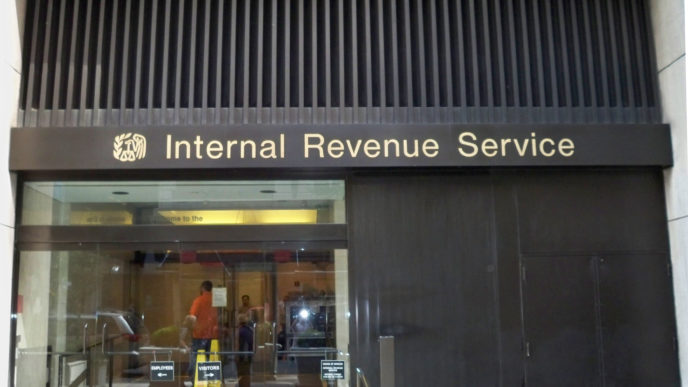
A Pastor Fights Against Government Restrictions on Political Sermons

When the Rev. Gus Booth found out the IRS was dropping its inquiry into Warroad Community Church where he preaches, he was actually disappointed.

“We wanted to go to court,” Booth told The Daily Signal in a phone interview. “This is the First Amendment vs. the IRS code. One standard of the law would win.”

The IRS has almost never fully enforced the Johnson Amendment, which the new Republican Party platform calls for getting rid of. The language of the platform is:

Places of worship for the first time in our history have reason to fear the loss of tax-exempt status merely for espousing and practicing traditional religious beliefs that have been held across the world for thousands of years, and for almost four centuries in America. We value the right of America’s religious leaders to preach, and Americans to speak freely, according to their faith. Republicans believe the federal government, specifically the IRS, is constitutionally prohibited from policing or censoring speech based on religious convictions or beliefs, and therefore we urge the repeal of the Johnson Amendment.

Republican nominee Donald Trump echoed the platform’s policy position in his acceptance speech at the Republican National Convention Thursday night, saying, “An amendment, pushed by Lyndon Johnson, many years ago, threatens religious institutions with a loss of their tax-exempt status if they openly advocate their political views.”

The IRS commenced its probe of the Warroad, Minnesota, church in early 2009 after Booth endorsed John McCain, R-Ariz., in the 2008 presidential election. The church had to turn over documents and minutes from meetings. However, in July he got a letter saying the probe was dropped for procedural reasons, but with a warning that it might start again.

Booth, the author of the 2014 book Shhhh! Be Quiet Christian, was one of 33 pastors across the country to endorse a candidate on “Pulpit Freedom Sunday,” a day promoted annually by Alliance Defending Freedom, a religious liberty organization. The point was to prompt the government to revoke a church’s tax-exempt status, creating grounds for a lawsuit to challenge the constitutionality of the Johnson Amendment.

Rarely Enforced

The Johnson Amendment was named for then-Texas Sen. Lyndon B. Johnson, a Democrat, in 1954. Johnson and other lawmakers were concerned 501(c)3 nonprofit groups would get involved in the elections, on behalf of opponents. So just before the Senate’s summer recess, Johnson pushed through an amendment that would rescind a charitable nonprofit’s tax-exempt status if such an organization — including churches — campaigned for or against a political candidate.

To say this law isn’t enforced very often is one area of agreement between the ADF and Americans United for Separation of Church and State, a group usually opposed to religious expression in the public square.

“Although church audits are rare, when an audit is warranted we would like to see the IRS enforce the law,” Americans United spokesman Simon Brown told The Daily Signal in an email. “We believe the IRS is not taking church audits as seriously as it should and we have pushed the agency to step up its enforcement in this area.”

“Since 1996, Americans United’s Project Fair Play has reported more than 100 churches to the IRS for what we believe was unlawful political activity—this means they used church resources to endorse or oppose candidates for public office,” Brown continued. “While we want houses of worship to keep their tax exemption, we also want the very few organizations that do not follow the rules to be thoroughly investigated by the IRS.”

An IRS spokesman did not respond to inquiries from The Daily Signal.

White House press secretary Josh Earnest said he hasn’t read the Republican Party platform language, but broadly spoke to President Barack Obama’s views.

“I haven’t seen the language that’s included in the platform. I think I would just reiterate something I think the president has said, which is that one of the founding values of the country is the separation of church and state, both to ensure that state interests are not interfered with by religious authorities, but also to make sure that state interests are not interfering with the work of religious authorities,” Earnest told The Daily Signal during a White House press briefing.

“So the president believes that both our institutions of state and our institutions of religion in the United States both benefit significantly from observing that principle.”

The Rev. Barry Lynn, the executive director of Americans United for Separation of Church and State, denounced the Republican Party’s platform.

“The Republican platform seeks to turn America’s houses of worship into miniature political action committees,” Lynn said in a statement. “I can’t imagine a more disruptive idea for our nation’s religious community or a real impediment to campaign finance reform.”

A “Violation of the Constitution”

Experts on the Johnson Amendment cite two cases of usage, only one of which was fully enforced. The other lasted about two years.

The IRS revoked the presumptive tax-exempt status of the Church at Pierce Creek in Conklin, New York, because the church bought newspaper ads in 1992 opposing Bill Clinton’s candidacy. Federal courts ruled the church crossed the line. However, this dealt with the organization opposing a candidate rather than regulation of what a pastor can say from the pulpit.

In a matter that deals more directly with what pastors oppose, the All Saints Episcopal Church in Pasadena, California, faced a near two-year investigation from the IRS after a 2004 sermon opposing the war in Iraq. The IRS dropped its investigation, but the church reportedly spent $200,000 in legal bills.

Tax-exempt status should not be conditioned on what a pastor says from the pulpit, contends Christiana Holcomb, ADF legal counsel, calling the law an unconstitutional infringement on free speech and the Establishment Clause.

“We have welcomed the IRS to really enforce this so we can make a challenge to the law, and make the public aware that any regulation of a pastor’s sermon is a clear violation of the Constitution,” Holcomb told The Daily Signal in a phone interview. “But even without going to court, the IRS has used intimidation, bullying, and harassment tactics.”

Alliance Defending Freedom, which sponsors the “Pulpit Freedom Sunday” each year, has the signature of 4,100 pastors calling for the end of the Johnson Amendment.

Among those is the Rev. Jim Garlow of Skyline Church in San Diego, California, who has spoken out against the Johnson Amendment for years, and recently wrote the book Well Versed: Biblical Answers to Today’s Tough Issues, which urges pastors to speak out on public affair.

“I have sent my sermons to the IRS. I’ve had people on the left wing calling, saying they will report me to the IRS. I say, ‘please do,’” Garlow told The Daily Signal in a phone interview. “What Thomas Jefferson meant by separation of church and state is no government interference in the pulpit.”

Garlow added, “Whether we’re talking about a conservative biblical-based church or a left-wing nonbiblical-based church, I want the Johnson Amendment gone for everybody.”

A “Cloud of Ambiguity”

But, if the Johnson Amendment has never really been enforced, why bother getting rid of it?

“The law itself is less powerful than the implications,” Garlow said. “It hangs with a huge cloud of ambiguity over pastors and lay people who think they can’t speak out on anything political or think it’s illegal to register voters.”

Booth adds a future administration might have more confidence in imposing the law.

“That’s a big if,” Booth said. “If the government thinks it can tell us what we can’t say about politics, it will think it can tell us what to say in our theological messages. If the government told me I’m not allowed to preach about baseball, my next sermon would be about baseball. This is not about politics.”

There are three primary reasons to be concerned about the law, said Hiram Sasser, deputy chief counsel for First Liberty Institute, a religious freedom advocacy group. The first is that pastors feel compelled to self-censor; the second is outside groups — such as the Americans United — have a means to threaten a church with litigation; and the third is that internally church members pressure pastors not to speak out on important issues out of fear of losing tax-exempt status.

“Since the founding, churches would have election Sundays, where the pastor would talk about the candidates and issues of the day,” Sasser told The Daily Signal in a phone interview. “If the IRS were to try to enforce this, it would lose.”

Sasser said the most relevant case would be in Hosanna-Tabor Evangelical Lutheran Church and School v. Equal Employment Opportunity Commission, where the Supreme Court ruled 9-0 in 2012 that federal discrimination laws don’t apply to religious organizations in selecting religious leaders. Sasser said the decision was about church autonomy that would extend to speech.

Sasser said Americans United for the Separation of Church and State routinely send warning letters to churches, which chills speech.

The organization contends that it is not trying to threaten or intimidate churches.

“Every election season, Americans United sends letters to thousands of houses of worship from a variety of faiths and denominations,” Brown, the Americans United spokesman, said in an email. “These letters are intended to educate clergy about what the laws does and does not allow regarding political activity by 501(c)(3) organizations. We want every house of worship to maintain its tax exemption and that is why we send the letters.”

The IRS should assure that religious organizations are allowed to talk to their own members about public issues to their own people, said Roger Severino, director of the DeVos Center for Religion and Civil Society for The Heritage Foundation.

“The IRS has used the Johnson Amendment as a stick to threaten religious institutions that preach to their own members about faith and morals,” Severino told The Daily Signal in a phone interview. He later added, “The threat is always out there when activists with anti-religious groups go into houses of worship and essentially spy, then report them to the IRS. Neighbors should not spy on neighbors as IRS enforcers.” (For more from the author of “A Pastor Fights Against Government Restrictions on Political Sermons” please click HERE)

Follow Joe Miller on Twitter HERE and Facebook HERE.

Church Fights State Over What It Preaches, Practices on Sexuality and Gender Identity

A small Iowa church has entered a legal battle with the state government over what the congregation considers censorship of biblical teaching on human sexuality.

The dispute began with a brochure published by the Iowa Civil Rights Commission about state law’s protections for sexual orientation and gender identity. The document explained how the law applies to places of public accommodation—and included churches among places such as restaurants and hotels.

In the brochure, the state agency interpreted the Iowa Civil Rights Act “to apply to churches anytime that they hold worship services that are open to the public, as all worship services are,” Christiana Holcomb, a lawyer with Alliance Defending Freedom, told The Daily Signal.

The Christian legal aid group represents Fort Des Moines Church of Christ. It filed a federal lawsuit July 4 on behalf of the church, located in the state capital of Des Moines.

As defendants, the suit names officials at the Iowa Civil Rights Commission, the attorney general of Iowa, and the city of Des Moines.

“No American, no citizen, has to wait for the government to enforce an unconstitutional law against them,” Holcomb said.

The commission’s interpretation of the civil rights law “does basically two things,” Holcomb told The Daily Signal:

One, it tells the church that you’re not allowed to teach or do anything, including what a pastor preaches from the pulpit, if it would make anyone feel uncomfortable based on their gender identity. A logical extension of that would mean that a pastor couldn’t preach about God’s design for human sexuality and biological sex.

The second component … is that a church that holds a worship service open to the public would no longer be allowed to have sex-designated sensitive areas like restrooms and locker rooms and shower and changing facilities.

‘Able to Choose What We Believe’

Alliance Defending Freedom’s motion for a preliminary injunction, filed July 14, asks a federal court to stop the state commission from using the law against the church while the lawsuit progresses.

Fort Des Moines Church of Christ, pastored by Michael Demastus, believes and teaches that God created each person either male or female, the lawsuit says.

“We can agree or disagree with what Fort Des Moines Church of Christ believes about the issues of gender identity and sexual orientation, and that’s fine,” Holcomb said. “In a diverse marketplace of ideas, we should each be able to choose what we believe.”

“But the real problem in Iowa is … you have a government trying to come in and dictate to a church what it believes and how it uses its house of worship.”

Peter Kirsanow, a member of the U.S. Commission on Civil Rights, wrote a letter July 13 to Angela Jackson, chairman of the Iowa commission, arguing that her agency’s approach “plainly violates both the free exercise clause and the establishment clause of the First Amendment of the United States Constitution.”

Fort Des Moines Church of Christ, Holcomb said, “discovered that an unelected commission in the state of Iowa had published this brochure” explaining the civil rights law.

The Iowa Civil Rights Commission revised its brochure July 8, four days after the church sued, clarifying that churches are generally exempt from the state law “unless the place of worship engages in nonreligious activities which are open to the public.”

Another church, Cornerstone World Outreach in Sioux City, Iowa, and its senior pastor, Cary Gordon, took legal action against the state commission for similar reasons, as The Daily Signal previously reported.

Holcomb said the state agency not only has the authority to interpret the Iowa’s civil rights law, but to enforce it, so it could use the statute to “infringe on a church’s religious freedom.”

‘Complementary Halves of Humanity’

According to its website, Fort Des Moines Church of Christ is a nondenominational congregation that is “simply trying to be faithful to God’s Word and call on our lives.”

“The church believes that God intentionally and purposefully created males male and females female, and that these two complementary halves of humanity reflect God’s image,” the lawsuit says.

Church policy for sex-specific private spaces states that restrooms and showers may be used only by members of the designated biological sex, according to the lawsuit.

While the commission has not taken action against Fort Des Moines Church of Christ, Holcomb said, the church was “deeply concerned” the agency could start enforcement proceedings.

Saying it wanted to get clarity for Iowa churches, Alliance Defending Freedom filed the lawsuit as a pre-enforcement challenge to the law.

Kristin H. Johnson, the state commission’s executive director, declined to comment to The Daily Signal.

In a prepared statement July 8, Johnson said the commission “has not done anything to suggest it would be enforcing these laws against ministers in the pulpit, and there has been no new publication or statement … raising the issue.”

The Des Moines church’s lawyers argue that the law bans expressing any views on sexuality that would “directly or indirectly” make individuals “unwelcome” based on their gender identity. In its description of the case, Alliance Defending Freedom writes:

The speech ban could be used to gag churches from making any public comments—including from the pulpit—that could be viewed as unwelcome to persons who do not identify with their biological sex because the commission has stated that the law applies to churches during any activity that the commission deems to not have a ‘bona fide religious purpose.”

‘It Could Flip-Flop Again’

The civil rights law was amended in 2007 to include gender identity and sexual orientation as classes protected from discrimination at places of public accommodation, Johnson said in the prepared statement.

“The commission regrets the confusion caused by the previous publication,” Johnson said, and “has never considered a complaint against a church or other place of worship on this issue.”

Alliance Defending Freedom’s Holcomb said “cosmetic changes” to the commission’s brochure aren’t enough and highlight “the underlying vagueness of the state law at issue.”

“The commission could change its mind tomorrow about the brochure and reissue the old one,” Holcomb said, “or a month or a year down the line, it could flip-flop again on this issue.” She added:

It just highlights that the commission has too much power, too much authority to try to apply the law to churches, which are not places of public accommodation. They are places of worship and should enjoy full and robust freedom under the First Amendment.

Who gets to decide what is or is not a religious purpose? Is that something that’s being left in the hands of unelected bureaucrats, or is that something that the church gets to determine?

(For more from the author of “Church Fights State Over What It Preaches, Practices on Sexuality and Gender Identity” please click HERE)

Follow Joe Miller on Twitter HERE and Facebook HERE.
Pastor Says State Law Threatens His Right to Teach the Bible in His Church

An Iowa pastor, saying the government needs to stop “meddling in religious affairs,” is at odds with the state over a law focused on sexual orientation and gender identity that he says hinders his First Amendment right to teach on matters of sexuality.

“The state of Iowa is not the self-appointed pope of all churches,” Cary Gordon, pastor of Cornerstone World Outreach, a nondenominational church with around 900 members in Sioux City, Iowa, told The Daily Signal.

An Iowa Civil Rights Commission brochure on sexual orientation and gender identity says churches are places of public accommodation and generally are not exempt from the law, according to First Liberty Institute, a legal organization that defends religious freedom and represents Gordon’s church.

The brochure says the Iowa Civil Rights Act, Iowa Code Chapter 216, “was expanded to add sexual orientation and gender identity to the list of protected classes.” The change took effect in July 2007.

“It is now illegal in Iowa to discriminate against a person because of his/her sexual orientation or gender identity,” the brochure says.

Gordon told The Daily Signal:

As it reads, according to their interpretation of the Iowa code, if you discuss anything out of the Scripture that relates to sexuality or marriage … you’re not in compliance with the law and you can be sort of treated like a criminal.

Gordon, senior pastor of his church for over 21 years, said his greatest concern with the issue is the “flagrant disrespect for the First Amendment of the Constitution, where the state retains the power to correct or control what I say and teach out of the Bible.”

“It’s fundamentally wrong and I can’t comply with that,” Gordon added. “I’ve taken an oath to the Lord Jesus Christ, and I obey the Bible above all men. … I have to obey God, and that puts me in a precarious position.”

The state Civil Rights Commission’s brochure “also indicates that the government has the authority to force churches to allow men in women’s restrooms,” First Liberty Institute says in a case summary.

“The Iowa Civil Rights Commission has not made any changes in its interpretation of the law, nor does it intend to ignore the exemption for religious institutions when applicable,” Kristin Johnson, the commission’s executive director, wrote in an email to The Daily Signal. Johnson wrote:

The Iowa Civil Rights Commission enforces Chapter 216 of the Iowa Code, which in part prohibits discrimination by public accommodations. The code also provides for an exemption for ‘Any bona fide religious institution with respect to any qualifications the institution may impose based on religion, sexual orientation, or gender identity when such qualifications are related to a bona fide religious purpose.’ This law was enacted in 2007 and has been consistently enforced, and the exemption consistently applied, since its enactment.

First Liberty Institute’s letter requests that the civil rights panel publically acknowledge that Gordon’s church will be exempt from enforcement action.

“I would hate to see a day when a pastor for doing his duties is arrested or something and taken to jail,” Gordon said, adding:

What we’re facing right now is quite literally a pastor being drug into court and having to spend a lot of church money to defend himself for doing something that pastors have been doing faithfully for hundreds of years and that’s teaching orthodox, Christian doctrine.

“I think this is really important that we stay true to our founding principles,” he said.

A federal lawsuit was filed July 4 on behalf of Fort Des Moines Church of Christ in Des Moines, Iowa, against members of the state Civil Rights Commission over concerns similar to those expressed by Cornerstone World Outreach.

Gordon, the father of three girls and two boys, said the state doesn’t “have any right to tell us what to teach or how to teach it or how to apply our beliefs in real life.”

“The state needs to stay out of our business,” he said.

Over the long term, the pastor said, this issue should affect all Christians:

The Bible teaches us to be modest and it teaches us certain roles that are honorable and beautiful about both sexes, male and female. You have to try to survive in a world that seems more and more hostile to what you believe whether you’re at church or at the shopping center.

Chelsey Youman, chief of staff and counsel for First Liberty Institute, told The Daily Signal it is hoping to avoid litigation.

“We … wanted to give the state commission a chance to do the right thing here,” Youman said.

The Iowa Civil Rights Commission has by 10 a.m. Aug. 5 to respond.

“We think it’s an absolute wake-up call to churches across America that we’re now having a state government say what you can and cannot say about your own doctrinal beliefs within the confines of your church, let alone having to open your facilities up in a way that is against your doctrine,” Youman said. (For more from the author of “Pastor Says State Law Threatens His Right to Teach the Bible in His Church” please click HERE)

Follow Joe Miller on Twitter HERE and Facebook HERE.

Justice Alito: ‘Those Who Value Religious Freedom Have Cause for Great Concern’

The Supreme Court’s decision not to hear a case challenging a Washington state law that forces a family-owned pharmacy to dispense emergency contraceptives is an “ominous sign” for those who value religious freedom, Justice Samuel A. Alito Jr. said.

“If this is a sign of how religious liberty claims will be treated in the years ahead, those who value religious freedom have cause for great concern,” Alito said Tuesday in a critical dissent.

Alito was joined in his dissent by Chief Justice John G. Roberts Jr. and Justice Clarence Thomas, falling one justice short of the four needed for the court to accept a case.

The case involves the Storman family, owners of Ralph’s Thriftway, a small, family-run grocery store and pharmacy in Olympia, Wash. In 2007, after Washington state passed a law that requires all pharmacies to dispense “all lawfully prescribed drugs or devices” in a timely manner to all customers, the Stormans found themselves in the cultural crosshairs.

Because of their Christian belief that life begins at conception, the Stormans objected to dispensing drugs such as Plan B that they believe aid in the destruction of human life.

Under the state law, denying Plan B could result in the Stormans losing their pharmacy license.

The Stormans then entered a long legal battle. In February 2012, a federal court struck down the law as unconstitutional. The court found “abundant evidence” that the law was designed to force religious pharmacists and pharmacy owners to violate their faith.

But last July, the 9th Circuit Court of Appeals reversed that decision, upholding the law mandating pharmacists to dispense legal drugs and devices. The Supreme Court’s decision not to hear the case today allows the 9th Circuit’s ruling—and the law—to stand.

If a customer at Ralph’s Thriftway requests a drug such as Plan B, employees refer customers to other local pharmacies that do carry the drug. According to court documents, over 30 pharmacies and drug stores within five miles of Ralph’s carry Plan B, and none of Ralph’s customers has ever been denied timely access to Plan B or other emergency contraceptives.

Alito, in his dissent, suggested the 2007 law, which is unique to Washington state, was designed specifically to target Christian believers.

“There are strong reasons to doubt whether the regulations were adopted for—or that they actually serve—any legitimate purpose,” Alito wrote, adding:

And there is much evidence that the impetus for the adoption of the regulations was hostility to pharmacists whose religious beliefs regarding abortion and contraception are out of step with prevailing opinion in the State. Yet the 9th Circuit held that the regulations do not violate the First Amendment, and this court does not deem the case worthy of our time.

Kristen Waggoner, a senior attorney at Alliance Defending Freedom who has defended the Stormans for a decade, expressed disappointment that the high court opted not to take the case.

“All Americans should be free to peacefully live and work consistent with their faith without fear of unjust punishment, and no one should be forced to participate in the taking of human life,” Waggoner said in a prepared statement. “We had hoped that the U.S. Supreme Court would take this opportunity to reaffirm these long-held principles.”

The Daily Signal last week interviewed Greg Storman about why the family-run pharmacy objects to dispensing Plan B.

“Our company revolves around faith, family, and community,” Storman said. “We serve every customer that comes to our pharmacy, but where we draw the line in the sand is we will not sell any drug that takes a human life, and we will not sell any drug that results in an abortion.”

While the Stormans were the public face of this case, two other pharmacists facing a similar dilemma were a part of the challenge.

Margo Thelen is one of them. Earlier this year, during an interview with The Daily Signal, Thelen said she would not dispense Plan B even if it meant losing her pharmacist’s license. Now, her future is unclear.

In his 15-page dissent, Alito confronted her dilemma head-on: “Violate your sincerely held religious beliefs or get out of the pharmacy business.” (For more from the author of “Justice Alito: ‘Those Who Value Religious Freedom Have Cause for Great Concern'” please click HERE)

Follow Joe Miller on Twitter HERE and Facebook HERE.

Judge Rules in Favor of Christian Student Group Against NC State’s ‘Speech Permit’

North Carolina State University infringed on the free speech rights of a student-led Christian group, a federal judge has ruled.

Chief U.S. District Judge James C. Dever III, calling his action “in the public interest,” issued a preliminary injunction Saturday against NC State’s speech permit policy, saying it violates the students’ First Amendment right to freedom of speech.

“The judge pretty much granted the entire request that we asked for,” a lawyer for the students, Tyson Langhofer, told The Daily Signal. “Essentially, everything in the final order that we requested was granted.”

The group Grace Christian Life, which meets on the NC State campus, sued school administrators on April 26 for requiring they obtain a permit before holding a meeting for fellow students in Talley Student Union.

Dever heard the case, Grace Christian Life v. Woodson, on June 2. W. Randolph Woodson is the chancellor of North Carolina State University.

In a statement provided to The Daily Signal, NC State said:

NC State appreciates the court’s review of this matter, and we will follow the court’s preliminary ruling. The university remains an environment that fosters and enables the healthy and free exchange of ideas and viewpoints by our students and academic community. The ruling is not in response to a concern over the university’s actual application of the policy, which is content neutral.

The judge’s order will not prohibit university officials from regulating student speech or behavior that is disruptive to campus activities, violates school policies, or interferes with the learning of others, Langhofer told The Daily Signal. He said:

Any kind of speech that would interrupt or interfere with the university’s educational activities or that would potentially prohibit or disrupt or block traffic, they can ask you to stop that. Any other speech that doesn’t disrupt otherwise, you don’t have to have a permit to engage in that. … The injunction order is final in that it’s the order that will last for the remainder of the case about the policy.

Langhofer is a senior counsel at Alliance Defending Freedom, a Christian legal aid group that represents people who have reason to think their religious liberties have been compromised.

NC State has the option to appeal, but Langhofer said that is “unlikely.”

“It means that now, students at NC State have the ability to speak freely to one another without having to obtain a permit first,” he said of the ruling. “It means they can fully exercise their First Amendment rights.” (For more from the author of “Judge Rules in Favor of Christian Student Group Against NC State’s ‘Speech Permit'” please click HERE)

Follow Joe Miller on Twitter HERE and Facebook HERE.

Students Sue North Carolina State University for Regulating Religious Speech

A student-led Christian group filed a lawsuit against North Carolina State University for allegedly restricting their First Amendment rights by demanding they obtain a speech permit.

The federal court hearing took place Thursday where Tyson Langhofer, senior counsel at Alliance Defending Freedom, represented Grace Christian Life, a non-denominational Christian church that organizes services and fellowship activities for students at North Carolina State University. ADF is a conservative legal organization that represents people who claim their religious liberty has been infringed upon.

Hannalee Alrutz, president of Grace Christian Life and a senior at North Carolina State University, told The Daily Signal, “I have witnessed other student groups on campus engaging in conversation freely and not being stopped.”

“Because college campuses are a marketplace of ideas, every student from every belief system and standing should have the right to freely express their ideas,” Alrutz said. “The policy kills our speech. It puts a lot of fear in us so that when we desire to talk to somebody on campus, like a fellow student, there is always, in the back of our mind, a worry that we may be stopped or punished because the policy allows for that.”

Like many groups and clubs across college campuses nationwide, Grace Christian Life used the student union as a place to tell their peers about Grace Christian Life’s mission and to “invite them to attend Grace Christian Life events.”

In order to make students aware of their activities, Grace Christian Life needed to apply for a permit to set up a table and were told that “without a permit, they must stop approaching other students in the Talley Student Union to engage in religious discussions with them,” according to a Wednesday press release by ADF.

“The only permit required for free speech on a public university campus is the First Amendment,” Langhofer said in a statement, adding that the permits are “unconstitutional restrictions on the free speech of students.”

Despite what they see as the questionable legality of the university’s permit policy, Grace Christian Life members applied for and obtained a permit that allowed them to “speak with other students from behind the table or anywhere in the room.”

When the students stepped out from behind their designated table, a member of the Student Involvement Office made them return to their permitted area.

Controversy ensued when Student Involvement members failed to confront other student groups engaging in conversation and “handing out literature either without a permit or outside of the area reserved by their table permit.” This occurred “sometimes in full view of the same officials that stopped Grace Christian Life from doing the same,” according to ADF’s press release.

North Carolina State University said in a statement provided to The Daily Signal that “NC State believes this lawsuit is both frivolous and without merit. The implication that an organization has been treated differently on our campus because it is a religious group is false.”

In response to the accusation that the university’s speech permit policy was “selectively” enforced among student groups, the university said:

Individuals are of course free to engage others in conversations about their faith on campus. That free speech right is protected by the U.S. Constitution, and NC State not only protects but also defends the right of free speech for this group and all groups committed to the open exchange of ideas regardless of viewpoint.

Following the hearing, Langhofer told The Daily Signal, “I believe that the court’s questions today made it very clear that [the judge] did not believe that the lawsuit was frivolous at all and that there were legitimate and appropriate constitutional concerns with the [university’s speech permit] policy.”

North Carolina State University has been granted until 1 p.m. Friday to respond to ADF’s proposed injunction, giving ADF until midnight to respond to any proposals made by the university. Langhofer told The Daily Signal that he expected a decision from the judge by Saturday.

“I am very pleased with the hearing,” Langhofer said. “The judge expressed grave concerns with the breadth of NC State’s policy. He questioned NC State’s policy at length about why the university felt the students need a permit to talk with one another in the student union.” (For more from the author of “Students Sue North Carolina State University for Regulating Religious Speech” please click HERE)

Follow Joe Miller on Twitter HERE and Facebook HERE.
7 Sure Signs America Has Declared War on Our Faith

Is there an increasing hostility to Christian values and religious freedoms in our country today? Here are seven representative examples, all from the last few weeks. Judge for yourself.

1. The NCAA announced that it will not hold any men’s and women’s Final Four basketball events in a city that “discriminates” against anyone based on sexual orientation or gender identity.

In its official statement, the NCAA declared, “The board’s decision follows the recent actions of legislatures in several states, which have passed laws allowing residents to refuse to provide services to some people based on their sexual orientation or gender identity. While proponents of the laws focus on how they protect religious beliefs, critics have voiced concerns that they create an environment of sanctioned discrimination.”

Not only, then, has the NCAA grossly mischaracterized these recent laws, but it is now guilty of discriminating against biblically based beliefs and declaring that no Final Four game will be held in any city that does not allow men to use women’s bathrooms or that protects a Christian photographer from being forced to shoot a same-sex “wedding.”

2. The Colorado Supreme Court has chosen not to hear the case of Christian baker Jack Phillips who was previously ordered by the Colorado Civil Rights Commission “to create cakes for same-sex celebrations, re-educate his staff, and file quarterly ‘compliance’ reports for two years.”

According to Jeremy Tedesco, Senior Counsel with the Alliance Defending Freedom, “We asked the Colorado Supreme Court to take this case to ensure that government understands that its duty is to protect the people’s freedom to follow their beliefs personally and professionally, not force them to violate those beliefs as the price of earning a living. Jack, who has happily served people of all backgrounds for years, simply exercised the long-cherished American freedom to decline to use his artistic talents to promote a message and event with which he disagrees, and that freedom shouldn’t be placed in jeopardy for anyone.”

The Court declined to hear the case, meaning that the state’s Civil Rights Commission not only has the power to require a bakery to make same-sex “wedding” cakes but also to require that baker to “reeducate” his staff and file regular reports proving that he is baking those cakes.

Chairman Mao would be proud of state-mandated “reeducation” like this.

3. Dr. Eric Walsh, the highly qualified, newly hired District Health Director with the Georgia Department of Public Health was fired because of the content of his sermons as a Seventh Day Adventist.

As expressed by Jeremy Dys, an attorney with First Liberty, which has taken on Walsh’s case, “No one in this country should be fired from their job for something that was said in a church or from a pulpit during a sermon.” And as noted by attorney David French, “Working for former president Bush and President Obama to combat AIDS, serving as a board member of the Latino Health Collaborative, and starting California’s first city-run dental clinic for low-income families dealing with HIV/AIDS wasn’t sufficient to overcome the horror at Walsh’s Christian views.”

How dare he preach what the Bible says and try to serve his country at the same time.

4. Several senators have introduced a bill that would deem “all efforts to change someone’s sexual orientation or gender identity an ‘unfair or deceptive act or practice’ under the Federal Trade Commission Act.”

That’s right. It would be illegal — a form of “medical malpractice” — to counsel someone struggling with same-sex attraction or gender identify confusion, but it would be perfectly legal to encourage someone to embrace those attractions or act on that confusion.

Already in 2009, conservative journalist Matthew Cullinan Hoffman wryly observed:

A man goes to a psychologist with a problem. “Doctor,” he says, “I’m suffering terribly. I feel like a woman trapped inside the body of a man. I want to become a woman.”

The psychologist responds: “No problem. We can discuss this idea for a couple of years, and if you’re still sure you want to be a woman, we can have a surgeon remove your penis, give you hormones for breast enlargement and make other changes to your body. Problem solved.”

Gratified, the first patient leaves, followed by a second. “Doctor,” he says, “I feel terrible. I’m a man but I feel attracted to other men. I want to change my sexual preference. I want to become heterosexual.”

The psychologist responds: “Oh no, absolutely not! That would be unethical. Sexual orientation is an immutable characteristic!”

Family therapist Adam Jessel offered a similar observation: “In today’s climate, if Bill tells me that he is attracted to his neighbor Fred’s young child and he wants to reduce these attractions, I, as a therapist, can try to help him. If Bill has an unwanted attraction to Fred’s wife, this too is something I am permitted to help him with. But if Bill has an unwanted attraction to Fred himself, then it’s regarded as unethical for me to help.”

If this new bill becomes law, it would not only be considered unethical to help Bill deal with his same-sex attractions, it would be illegal.

It would also be illegal to help a person get to the root of his or her gender confusion, but it would be perfectly legal for a counselor to recommend hormone blockers for a 10-year-old to stop the onset of puberty and then to prepare that child for sex-change surgery as soon as they were old enough.

Here are a few more examples, in shorter form, all from recent weeks.

5. The NBA announced that it will not hold next year’s All-Star game in Charlotte, North Carolina unless the state changes HB2, the Bathroom Privacy Act.

So, unless North Carolina agrees to let grown men use women’s locker rooms and changing facilities, and unless it removes protections for religious liberties, it will be punished.

6. The Department of Education has decided, “Religious schools that receive federal money yet obtain federal exemptions to [allegedly!] discriminate against LGBT students and employees will have their waivers posted online for public view.”

This means that any Christian institution receiving federal money and at the same time holding to biblical morality and sexuality could suffer adverse consequences.

“Led by Sen. Ron Wyden of Oregon, the lawmakers said in December, ‘We are concerned these waivers allow for discrimination under the guise of religious freedom.’”

Oh, those terrible religious freedoms!

7. As reported on Breitbart News, “A federal court sided with a transgender student who insisted that the Obama administration’s reading of federal Title IX rules would allow her to choose her own bathroom at her Virginia high school.”

According to the exultant Virginia ACLU, “With this decision, we hope that schools and legislators will finally get the message that excluding transgender kids from the restrooms is unlawful sex discrimination.”

In other words, no matter of what kind of hardship or inconvenience this puts on the rest of the students, and without any type of scientific proof that a child is actually “transgender,” the perceived needs of the one or two struggling children will be imposed on the other 1,000, and the Obama administration will come after your school if you fail to comply.

What’s scary is that I could have listed quite a few more examples, all from the month of April.

Believers in America, if somehow you are still sleeping, it is high time you woke up. (For more from the author of “7 Sure Signs America Has Declared War on Our Faith” please click HERE)

Follow Joe Miller on Twitter HERE and Facebook HERE.
House Rejects Amendment That Would Have Curtailed Religious Freedom

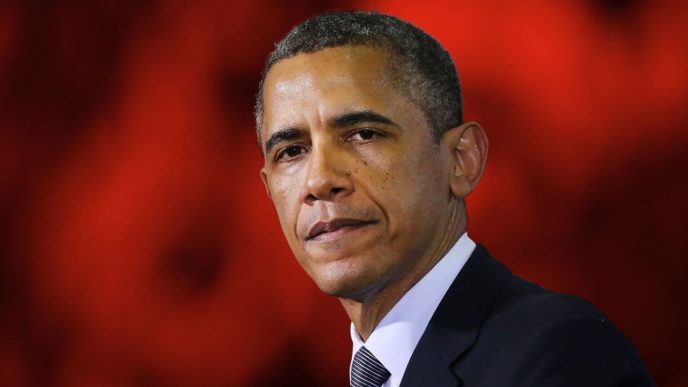
On Thursday, the House of Representatives voted to reject the Maloney Amendment. The Maloney Amendment would have ratified President Barack Obama’s executive order barring federal contractors from what it describes as “discrimination” on the basis of sexual orientation and gender identity in their private employment policies.

And, of course, “discrimination” on the basis of gender identity can be something as simple as having a bathroom policy based on biological sex, not gender identity, as we learned last week from Obama’s transgender directives. And “discrimination” on the basis of sexual orientation can be something as reasonable as an adoption agency preferring married moms and dads for orphans than other arrangements.

Employers should respect the intrinsic dignity of all of their employees, but as I explained in greater detail at The Daily Signal two years ago, Obama’s executive order undermines our nation’s commitment to pluralism and religious liberty. So a vote for the Maloney Amendment is a vote to support Obama’s radical agenda.

Obama’s executive order, like the Maloney Amendment, does not contain any religious liberty protections—though it does leave in place an older federal regulation that permits religious organizations that favor employment of co-religionists to continue such practices. But there is no protection for organizations that hire based on mission—not on affiliation—to continue to do so. This in effect excludes taxpayers who hold conscientious beliefs about sexuality that run counter to Obama’s from being eligible for federal contracts funded with their own tax dollars.

The Obama executive order, and attempts to codify it through the Maloney Amendment, are problematic for four reasons, but there is at least one thing that can be done in response.

1. Obama’s order and the Maloney Amendment undermines our nation’s commitment to reasonable pluralism and reasonable diversity, as it disregards the consciences and liberties of people of goodwill who happen not to share the government’s opinions about issues of sexuality. All Americans should be free to contract with the government without penalty because of their reasonable beliefs about morally contentious issues. The federal government should not use the tax code and government contracting to reshape civil society about controversial moral issues that have nothing to do with the federal contract at stake.

2. Obama’s order and the Maloney Amendment treat conscientious judgments about behavior as if they were invidious acts of discrimination akin to racism or sexism. But sexual orientation and gender identity are not like race. Indeed, sexual orientation and gender identity are unclear, ambiguous terms. They can refer to voluntary behaviors as well as thoughts and inclinations, and it is reasonable for employers to make distinctions based on actions. By contrast, “race” and “sex” clearly refer to traits, and in the overwhelming majority of cases, these traits (unlike voluntary behaviors) do not affect fitness for any job.

3. Obama’s executive order and the Maloney Amendment also do not contain any Bona Fide Occupational Qualification (BFOQ) exemption. BFOQs allow employers to make employment decisions so long as those decisions are honestly related to job qualifications. For example, Title VII of the Civil Rights Act contains a BFOQ that allows employers to take sex into account: permitting hiring only female camp counselors at an all-girls sleep-away summer camp, which might otherwise seem to be “sex discrimination.”

4. Obama’s executive order and the Maloney Amendment are unnecessary. Voluntary market forces are already eliminating true discrimination, as making employment decisions based on non-relevant factors hurts one’s ability to compete. But the federal government should not penalize those contractors that do conscientiously judge sexual orientation or gender identity to be relevant to their mission and purpose.

In response to this executive order, Congress has an opportunity to protect religious liberty and the rights of conscience. Policy should prohibit the government from discriminating against any individual or group, whether nonprofit or for-profit, based on their beliefs that marriage is the union of a man and woman or that sexual relations are reserved for marriage. The government should be prohibited from discriminating against such groups or individuals in tax policy, employment, licensing, accreditation, or contracting. This is the policy approach proposed in both the Russell Amendment and the First Amendment Defense Act.

Protecting religious liberty and the rights of conscience fosters a more diverse civil sphere. Indeed, tolerance is essential to promoting peaceful coexistence even amid disagreement. (For more from the author of “House Rejects Amendment That Would Have Curtailed Religious Freedom” please click HERE)

Follow Joe Miller on Twitter HERE and Facebook HERE.