Posts

The GOP Income Tax Plan Is Too Clever by Half

Our tax code redistributes wealth, stifles growth, and is too complex. Most importantly, the progressive system is a primary reason why our government is not responsive to we the people — because the leviathan is built upon debt and a relatively small group of truly wealthy taxpaying individuals, thereby empowering the socialists to grow government without much backlash.

The GOP plan for individual tax rates does not fundamentally alter this dynamic, and in fact, it might make the overall income tax pie even more progressive and the code more convoluted.

Moreover, as I’ve noted before, tax policy is not the issue of our time. The domestic issues of our time are health care, regulations, and debt. The only people who pay a significant amount in taxes will not get much of a cut and in some cases will get no cut at all. And those who pay very little, by definition, can’t get much back. Contrast that with the Obamacare cost of an extra ten to fifteen thousand dollars a year for middle-income families not being subsidized, and you will see why it’s dumb for Republicans to write off health care and move on to taxes.

But we already knew that the GOP had no plans to repeal Obamacare or systematically restructure the source of federal taxation. Thus, the ultimate concern was that the new plan would outright raise taxes on a meaningful number of middle- and upper-middle-income Americans. But the tax cuts projected in the plan are insignificant for most people, and many, depending on their state and family size, might see a tax increase.

The details

The main reason the GOP is obsessing about taxes is because of the corporate lobbyist push for a business tax cut. They are certainly right to ask for one, and the clean cut from 35 percent to 20 percent is very pro-growth. Then, because the GOP is incapable of messaging to the American people that corporations are individual jobs and wages, they feel a need to deal with the individual tax code as well. But because cutting individual taxes would necessarily require a tax cut for the rich (those who pay most of the taxes) and the loss of revenue, they went on a wild goose chase to raise some rates while lowering others, cutting some deductions and credits while increasing others. The fact that they refuse to cut spending and are, in fact, increasing spending has boxed them into a corner.

Before getting into the weeds on the individual provisions of the plan, it’s important to note that the Joint Committee on Taxation scored the overall budgetary outcome of the individual tax reforms as $3.3 trillion in new cuts and $3.0 trillion in new tax revenue. The corporate tax cut is a $1.5 trillion cut. By definition, this essentially revenue-neutral cut on the individual side means that some will pay more in taxes, and it will not be those who already barely pay taxes or who make money off the tax code. It is quite evident that those at the bottom will pay even less and that the very wealthy might pay more under this plan, especially with the back-door 46 percent rate on wealthy job creators.

Before conservatives sign off on this plan, at a bare minimum, they must work out on paper that no significant group of people, particularly upper-middle-income families, will see their taxes rise. That is the ultimate act of political malpractice and would make the entire package fall flat.

For the purpose of this analysis, I focus mainly on how the main provisions of the bill affect middle-income and upper-middle-income families who file jointly. Some of the ancillary provisions and the effects on other income levels will be addressed in future columns.

Middle-income and upper-middle-income brackets:

Details: The current seven tax brackets would be consolidated into four brackets: 12 percent, 25 percent, 35 percent, and 39.6 percent. For married couples, the low 12 percent rate would last all the way until $90,000 of income, the point at which the 25 percent rate would kick in. At present, that rate kicks in at $75,900. Also, under current law, all income from $18,000 to $75,900 is taxed at 15 percent; now it will go down to 12 percent. This, in a vacuum, is a significant tax cut. The 25 percent rate goes all the way through $260,000 of income under the GOP plan, whereas under current law most of that income is taxed at the 28 percent tax bracket. However, at $260,000 is where you get hit with the 35 percent rate, whereas under current law, that high rate doesn’t kick in until $416,000 of income.

Outcome: As you can see, this is a clean tax cut for those earning below $260,000. For those earning between $260,000 and $416,000, which includes a lot of hard-working successful professionals where both spouses have good jobs, this is something of a wash, but for most will still be a cut. However, the steep cliff of paying such a significantly higher rate on increased income is anti-growth. Which is why it’s dumb to collapse rates for the sake of it. Once you agree to the premise of a progressive, graduated income tax, the extra gradations are really necessary.

Standard deduction doubled/personal exemption eliminated:

Details: On the one hand, this bill would double the standard deduction for individuals from $6,350 to $12,700 and for couples from $12,000 to $24,000. On the other hand, it abolishes the personal exemption, which deducts $4,050 per person in the family, including the filer.

Outcome: For individuals, this is a clean tax cut because the $6,350 in increased standard deduction would outweigh the loss of $4,050 personal exemption. And given that most individuals don’t own homes, they are likely not itemizing deductions.

For families, any household with four or more individuals is clearly losing more in the exemption ($4,050 X 4+) than gaining with doubling the standard deduction ($12,000). Plus, most families who own homes itemize their deductions anyway and might still take that route even with the expanded standard deduction. However, coupled with the reduced marginal tax rates and the extra $600 in tax credit for every child (see next point), many, but not all, will still come out on top.

Elimination of state and local income tax (SALT) deduction:

Details: Under current law, individuals below the AMT-threshold income can deduct all state and local income taxes and property taxes from their income for purposes of federal income taxes. This bill would abolish the deduction for income taxes but allow for up to a $10,000 deduction for property taxes. It also limits the mortgage interest deduction to $500,000 worth of mortgage interest on homes purchased after the enactment date, but not on existing mortgages.

Outcome: The deduction for state income and property taxes, in conjunction with the mortgage interest deduction and charitable deduction, is why almost every middle- and upper-middle-income family that owns a home chooses to itemize deductions rather than take the standard deduction of $12,000. Even with the doubling of the standard deduction, most of these families above a certain income level, particularly those who tithe or give large amounts of charity, still deduct over $24,000 in itemization. By getting rid of the state and local deduction, most of those families will be placed into a scenario where it’s no longer worthwhile to itemize. It will de-incentivize charity, in contrast to current law.

Also, the GOP made the worst possible compromise on SALT. State income taxes are universal to almost every taxpayer in most states. That deduction was completely abolished. Yet, not only did they not abolish the real estate tax deduction, they have a cap of $10,000, which only applies to either wealthy homes or very high tax areas. The better compromise would have been to cap all SALT at $10K — no matter the breakdown. This was a handout to the realtors. Many individuals, not just in high tax states, will wind up paying more in taxes, even after the other cuts.

Expanded child tax credit
Details: This bill would expand the child tax credit from $1,000 to $1,600 per child. It would also raise the income threshold for phasing out this credit. Under current law, married families earning over $110,000 see their credit reduced by $50 per $1,000 of income over that threshold. This bill would dramatically raise that cap, to $230,000.

Outcome: In a vacuum, this is one of the best provisions of the bill. It is pro-family and also rectifies an unfair part of the tax code for upper-middle-income families. Phasing out the credit for those who work hard discourages upward mobility and is fundamentally unfair, especially when lower-income earners, in addition to the other programs, get to enjoy the tax credit to the point where it pays them money when their tax liability is zero (a “refundable” credit). It’s also important to note that the expanded portion of the credit — the extra $600 — is not refundable. A further positive provision is that the bill would require Social Security numbers to receive refundable tax credits, ensuring that most illegal aliens will not benefit from them.

However, the million-dollar question is whether the expanded child tax credit is enough to offset the increases on upper-middle-income families as a result of elimination of deductions and the personal exemption.

Abolishes AMT
The Alternative Minimum Tax (AMT) would be abolished. For many tax filers, this provision is a wash because the main outcome of the AMT is that it eliminates the personal exemption and credits and deductions. The new bill eliminates the AMT but abolishes those exemptions and deductions for everyone. However, this provision is very positive for those earning enough to be in the AMT but not too much to be locked out of the child tax credit. Thanks to the increase in phase-out amount (see previous point), families earning roughly $180K-$280K will get to receive most or all of the credit, thanks to the increase in threshold, but won’t see it abolished because the AMT is eliminated.

Bottom line: Revenue-neutral tax cut is not worth the political capital it will use

This proposal makes many systemic changes, without resulting in systemic outcome changes and a clear tax cut for everyone. While some will be slightly better off, others will pay slightly more. Using tax software and the expertise of my CPA brother-in-law, I calculated my 2016 tax return and compared it to the proposed changes. The result? I’d actually pay $169 more in taxes. And I’m not an outlying taxpayer. I’m a typical family of five in the 25 percent tax bracket, with a $350,000 home. While Maryland has a high income tax, it’s not among the highest, and my county property taxes are very average. If people like me will not see a tax cut, then many in the breadbasket of the GOP base will not see a tax cut.

Obviously, location and family size will make different stories, but no typical middle-income family (and, I would argue, even upper-income family) should pay more in taxes. That is political malpractice.

The liability of increasing the tax burden of a middle-income family by $500-$1000 per year is much more potent than the political reward for giving people a $500-$1,000 cut.

Additionally, I hope to address in a separate column the provision of this bill that uses the “chained CPI,” a less generous metric, to index income thresholds of the brackets to inflation. Over time, this will blunt some of the benefit of the rate reductions while still retaining the full loss of the deductions.

What Republicans should do instead

To rectify the problems, Republicans should do one or a mixture of the following:

Repeal Obamacare, which is the biggest tax on consumers, and replace it with free-market health care, which would represent the biggest spending cut of all policies. This will free up revenue for a real tax cut.

Focus for the next year on cutting other spending and cutting regulations, and save tax cuts for later.

Write a more systemic reform of the code, or abolish withholdings and require that everyone either write a check or receive a payment on April 15. That way everyone will know who actually pays taxes and how much they pay.

For now, stick with only the corporate tax cut and properly message it to the American people.

Repeat the Bush tax cuts — a clean, across-the-board slashing of rates along with the child tax cut expansion and increase in phase-out for upper-middle-income families. This will ensure that everyone gets a tax cut and that there are no political problems that embarrass us with our own voters.

In other words, either cut spending, create a real tax cut, or preferably both. But to keep spending high and box themselves into a revenue-neutral tax cut will result in the worst political and policy outcomes imaginable.

Republicans were created to cut taxes. They clearly don’t do anything else well in fiscal, social, and national security policy. Come on, Republicans, at least pretend: You have one job. (For more from the author of “The GOP Income Tax Plan Is Too Clever by Half” please click HERE)

Follow Joe Miller on Twitter HERE and Facebook HERE.
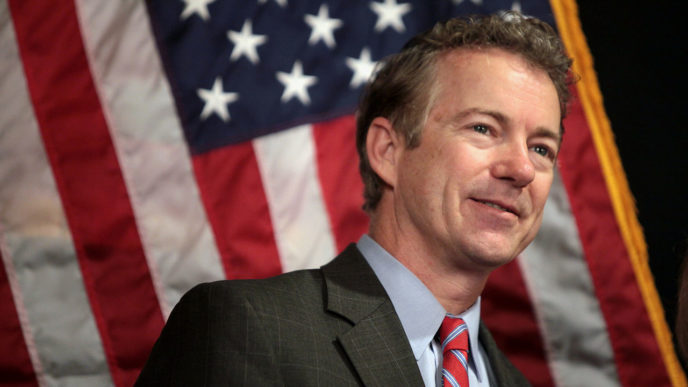
Rand Paul: Have to Cut Taxes on Top 1 Percent or It’s Not a ‘Significant Tax Cut’

Sen. Rand Paul (R-Ky.) said Thursday on “The Laura Ingraham Show” that the House’s tax plan will deliver economic growth, although it doesn’t really constitute “a significant tax cut” as President Donald Trump said it would.

The House’s watered-down Tax Cuts and Jobs Act, released Thursday, would reduce the number of income tax brackets to four, with rates of zero percent, 12 percent, 25 percent and 35 percent. In addition, the corporate tax rate drops from 35 percent to 20 percent — short of the 15 percent tax rate Trump championed on the campaign trail, but still a significant change.

Although Paul applauded some aspects of the bill’s content, he expressed disappointment, saying the proposed legislation as it now stands wouldn’t deliver the “significant tax cut” Trump and Republicans promised.

“If you don’t cut the top 1 percent, you don’t really have a significant tax cut,” Paul told LifeZette Editor-in-Chief Laura Ingraham. “What they’ve done is, they’ve bought into the class warfare on the individual side.”

“So at the top, there’s not going to be much of a tax cut. There will be some. And in the middle, there’s going to be a little bit — there’s mostly going to be eliminating deductions. And at the bottom, the bottom already don’t pay much income tax and will continue not to pay much income tax,” Paul added. (Read more from “Rand Paul: Have to Cut Taxes on Top 1 Percent or It’s Not a ‘Significant Tax Cut'” HERE)

Follow Joe Miller on Twitter HERE and Facebook HERE.

House Conservatives Say Tax Bill Draft Is Coming Within Days

By Bloomberg. House and Senate leaders laid out an ambitious schedule for drafting and releasing tax legislation over the next few weeks — a set of deadlines that must be met to try to achieve President Donald Trump’s goal of delivering major tax-rate cuts by year’s end.

House Freedom Caucus Chairman Mark Meadows said Monday he’s been promised that the House Ways and Means Committee will release its plan about seven days after this Thursday’s scheduled vote on a budget resolution. That would mean a bill text would be published on or before Friday, Nov. 3.

On Monday evening, Ways and Means Chairman Kevin Brady said only that the timing for a bill “is very shortly.”

“On the day that budget is approved, signed, sealed and delivered,” he’ll announce plans for marking up tax legislation, said Brady, a Texas Republican. He said during the annual meeting of the Securities Industry and Financial Markets Association that “the timing is accelerated” for tax legislation after the House decided to vote on the Senate’s version of the budget. (Read more from “House Conservatives Say Tax Bill Draft Is Coming Within Days” HERE)

_____________________________________________

Trump’s Promises Narrow GOP’s Options on Tax Bill

By The Washington Post. Republicans are accelerating efforts to fill in key details of their plan for massive tax cuts, but as lawmakers work to turn their proposal into legislation, President Trump’s numerous tax promises are proving difficult to keep.

On Monday, Trump promised the party would not touch tax benefits for 401(k) retirement plans, protecting a popular benefit for more than 50 million Americans but also further limiting the areas where Republicans could seek to raise new revenue.

His vow to protect 401(k) plans, made in a Twitter post, comes just days before House Republicans are planning to introduce a bill that would dramatically slash corporate tax rates, consolidate tax brackets for families and individuals, and eliminate the alternative minimum tax and estate tax. (Read more from “Trump’s Promises Narrow GOP’s Options on Tax Bill” HERE)

Follow Joe Miller on Twitter HERE and Facebook HERE.

5 Ways to Keep a Tax Farm (Citizens) Producing

The government depends on the citizens to produce, to create value from which the ruling classes can leech. They need to keep us working and spending in ways that they prescribe in order to insert themselves into transactions which would otherwise have nothing to do with them. Here are five ways that they keep the tax farm going.

1. Credit Cards and Debt

Credit cards, student loan debt, home loans, and car loans all represent an obligation to work full time. Once you have been saddled with debt, you cannot make the choice to take time off to pursue a business endeavor you are passionate about. You are on the hamster wheel.

The more debt you have, the more you have to earn, and the more taxes you will pay on those earnings. The less freedom you have to be productive in an alternative way.

The housing bubble was no accident; the government doesn’t care if you can afford it, they want you to “own” a home–or rather own a mortgage.

Of course, debt has its place, for instance taking on a home loan in order to have lower monthly payments than rent, and put that money into an asset.

But the problem comes when people take on an expensive home loan because they currently have a great job, ignoring the possibility that the job may not always be there. There are people who take out loans for a car–a clever trick GM started back in the day–in order to keep up with their neighbors or squeeze some momentary satisfaction out of the purchase.

And, of course, credit cards give us a dangerous “solution” to depression: shop therapy! Just like a drug, it can give a momentary high, replaced by an anxious desperation when the bill comes. And all the while you are paying sales tax on almost every purchase.

That is why we must avoid debt at all costs. Spend within your means. Delay gratification by saving before purchasing rather than paying interest after a purchase. And really consider whether a purchase is going to make your life easier, or make you happier, or if you are using it like a drug for a momentary high.

When it comes to college debt, the thing to do is spread awareness of alternatives to college if you think someone you know may be making a big mistake.

2. Full-Time Corporate Employment

Corporate employment is a cycle in itself; it keeps you going for the next raise, for the next promotion, and for all the benefits. Corporations are a creation of government, and would otherwise not exist in their current structure.

Health insurance through work was once an extra incentive to make a job attractive; now it is necessary to avoid a government fine. Better work more than 29 hours to make sure your employer has to cover it!

And when you are self-employed, the government punishes you by making you pay twice the Social Security contribution, since technically you employ yourself.

A corporate job alone is not always a bad thing, it works for some people. But there are plenty of people who push themselves into a job which cannot allow them to reach their full potential. People get a job in order to pay off student loan debt, or in order to get a nice car or to spend more on clothes, alcohol, and novelties.

The government likes this because the entire tax extraction process is designed around this system. Even bonus pay is taxed at a higher rate, like lottery winnings.

But there is a way to use a corporate job as an out. If you can manage to get a nice-paying job, not rack up debt or long-term obligations, and save, then you have the freedom to turn that saved capital into freedom.

This doesn’t work if you save up just to travel or buy a house on the beach to pursue the #SurfLife. It works if your capital is used to create value.

Here’s an example from my own life. My sister worked a corporate job in Massachusetts and took out a home loan to buy an undervalued house. By improving the property, selling it, and moving to an area with a much lower cost of land, she was able to buy a nice chunk of property without needing a loan.

That piece of property is now being used as a mini-farm with various avenues for making money. She is now her own boss and can pursue more personally fulfilling ways of earning a living, which does not always involve fiat currency.

3. Regulations and Laws

Okay, so let’s say you have managed to avoid debt, and have saved up enough from your corporate employment to start your own enterprise. The government creates barriers to competing against their corporate lovers.

I’ll continue with the example of my sister’s mini-farm. An easy way to start earning money would have been to sell the delicious hard cider she and her husband were already producing as a hobby. But the law said that they could not produce it on their own property, they could not distribute it without paying about $10,000 for entry into the market, and a host of other tight regulations.

Okay, they also wanted to run a hot dog cart. They already owned the cart from toying with the idea in Massachusetts. Well, you can’t do a cart, come to find out. In that area, all food trucks must be enclosed. They already had a cart, they did not have a food truck.

They are powering through and creating a great business based around the farm, but her husband had to continue to work instead of being able to immediately pursue the business dreams.

There are a million other examples of government throwing roadblocks in the way of unique self-employment or starting a small business.

Let me know in the comments if you have run into these issues in your own business endeavors.

4. A Fiat Currency

Here is an easy way to extract money from the population: continue to print money. The Fed says openly they aim for an inflation rate of 2%. What does that really mean? It means they aim to steal 2% of the value from all cash and saved dollars every year.

The Fed prints the money, and therefore it is they who gets to spend the value they rob from our savings. It is just another back door tax, a harvest, to reap the products of our labor.

On the flip side inflation is a little gift to those citizens who are behaving properly, according to the government, and taking on debt. They get to pay back their debt in inflated dollars.

But the best part for the government is they don’t have to deal with any resistance to raising tax rates. Most people don’t even understand what inflation is, they simply think stuff just gets a little more expensive each year.

Having a currency with no true value means whoever controls it has the ultimate power.

The old standby strategy to mitigate inflation is to hold reserves in tangible assets such as silver or land.

But cryptocurrencies are another promising innovation. They aren’t where they need to be yet, but there is reason to be hopeful for their development in divorcing us from the Federal Reserve system.

You’ll want to subscribe (and get our free metals report) to hear more about the difference between investment, speculation, and currency when it comes to crypto-coins–our discussion on the topic is about to heat up.

5. Advertising to Promote Consumerism

Just like GM encouraged car owners early on to trade in their vehicle each year for the newest model, citizens are now conditioned to trade in their expensive iPhone for the newest model.

TV programming has long highlighted the lifestyle of the rich and famous, encouraging ridiculous spending on wedding dresses and birthday parties, and glorifying rich spoiled brats.

This article does a nice job summing up the disease of consumerism:

Under our current working conditions, people are forced to build a life in the evenings and their days-off. We find ourselves more inclined to spend heavily on entertainment and conveniences because we rarely have any free time. When we do have time to ourselves, it’s usually fleeting, and we eventually find ourselves neglecting those activities which are free—walking, exercising, reading, meditating, sports, hobbies, etc.—because they take too much time.

While having extra money comes at the sacrifice of personal time for some, for others they not only are robbed of their personal freedom, but they struggle to make ends meet on top of it. The “perfect” consumer works full-time, earns a fair amount of money, indulges during their free time, and somehow just makes it by each month. However, even those who don’t earn fair wages sometimes find themselves wasting small increments of money on unnecessary items for the wrong reasons—a cup of Starbucks here, a McDonald’s cheeseburger there, and those really cool fuzzy dice hanging from the rear-view of your 1993 Honda Civic.

Any way you look at it, we have become an unhappy, mindless, over-worked society. We buy silly items for a few moments of happiness before getting bored and moving on. We feel a need to keep up with fads, or to fulfill our childhood vision of what adulthood would be like. We hide our insecurities, avoid issues, and replace psychological needs with material items. By keeping society’s free time scarce, people will pay more for convenience, gratification, and any other relief they can buy.

But at the end of the day, the choice is still our own. With a little mental toughness, we can train ourselves to psychologically exit the system, which is the first step to bringing it down. (For more from the author of “5 Ways to Keep a Tax Farm (Citizens) Producing” please click HERE)

Follow Joe Miller on Twitter HERE and Facebook HERE.

Will Trump’s Plan Raise or Lower Your Taxes?

President Trump’s administration has finally rolled out a blueprint for tax reform. Treasury Secretary Steven Mnuchin is selling the proposal as “the biggest tax cut and largest tax reform in the history of this country.”

Whether that claim is accurate remains to be seen as many of the specifics on the Trump plan were left out of the press conference. The administration reiterated, however, that tax reform to encourage economic growth remains a top priority for the president.

“President Trump has made tax reform a priority, and the Republican Congress wants to get it done.” Senior Trump adviser (and liberal Democrat) Gary Cohn said, speaking at a press conference Wednesday.

Candidate Trump proposed lowering individual tax rates by consolidating the number of tax brackets from seven to three. Trump proposed those rates to be 10%, 20%, and 25%. He later amended those rates to 12%, 25% and 33%, but the principle of his proposal was massive tax cuts for individuals.

What President Trump is now proposing is a three-bracket system with rates of 10%, 25%, and 35%. Married couples will have a “zero tax rate” on the first $24,000 they earn. The administration has not yet decided the income levels assigned to each bracket, though the promise is for a net tax cut for the lower and middle class.

Without knowledge of the range of the income tax brackets, it is difficult to estimate the impact these new tax rates will have.

“We are in constant dialogue with the House and the Senate,” Cohn clarified when pressed for more specifics. “We have outlines. We have a broad brush view of where they’re gonna be.”

Other details from the plan that leaked prior to the press conference were confirmed.

Several taxes are eliminated. The death tax and the alternative minimum tax are gone under Trump’s plan. Additionally, the 3.8% Obamacare tax on dividends and capital gains is repealed.

The tax plan includes a child care tax credit, though the details of the credit were not discussed.

Notably, President Trump’s plan calls for the elimination of most individual income tax deductions.

“We are going to eliminate most of the tax breaks that are mainly benefits to high income individuals,” Cohn said. Indeed, the Trump plan eliminates every single itemized deduction for individuals except for mortgage interest and charitable contributions. “This isn’t going to be easy,” Cohn admitted, noting this proposal may not be immune to criticism. “We will be attacked from the Left, and we will be attacked from the Right.”

“We think that will be sweeping reform,” Mnuchin later added.

The effect of eliminating individual income tax deductions on high income earners while cutting the top rate from 39.6% to 35% may actually have the effect of a net tax increase for higher income earners. Yet, again, it is impossible to know for sure because the administration did not relay the specifics of their proposal.

On the business side, the president wants to slash business tax rates from 35% to 15%. Small business owners will be eligible for the 15% business rate. The object is growth.

“The president’s objective is creating economic growth,” Mnuchin said. “We believe we can get back to 3% or higher GDP [growth] that is sustainable in this country.”

Additionally, there will be a one-time tax on overseas profits — a repatriation tax. President Trump has previously discussed cutting the repatriation tax on offshore business earnings from the current 35 percent to 10 percent. Secretary Mnuchin said the specifics of the repatriation tax rate are still under discussion.

The bottom line is the president’s tax plan will result in big tax cuts for businesses that will stimulate business and job growth. With the elimination of individual tax deductions, however, the effectiveness of tax cuts on individual income may be mitigated, and in some cases individual filers with high incomes may see a net increase in the tax they pay.

Ultimately, without further answers to questions on the specific details of the plan, people who want to know if their taxes are going to go up or down are left in the dark. (For more from the author of “Will Trump’s Plan Raise or Lower Your Taxes?” please click HERE)

Follow Joe Miller on Twitter HERE and Facebook HERE.
Where Do Your Tax Dollars Go?

When Americans file their taxes, it’s natural to wonder, “Where do my tax dollars go? What do they fund? And what don’t they fund?”

According to the latest Congressional Budget Office report on the distribution of federal taxes, Washington collects about $20,000 from the average household. Yet the 2016 deficit was a whopping $587 billion.

The almost $3.3 trillion that the federal government taxes out of the economy each year isn’t enough to satiate its profligate spending.

So where do our tax dollars go?

Some believe most of it goes to welfare and foreign aid. Others believe defense and corporate welfare dominate the budget.

In reality, health entitlements—Medicare, Medicaid, Obamacare—and Social Security are the largest programs. These entitlements and interest on the debt are set to consume every dollar of taxes paid in just over 20 years.

Social Security. The single largest federal program, Social Security accounts for roughly a quarter of all federal spending. Its trust funds are already paying out more than they take in, and as more people retire, the system will be under continued stress.

Without reform, the program’s trustees project benefits will need to be cut as much as 21 percent if nothing is done by 2034 (the Congressional Budget Office projects insolvency will come four years sooner).

Major health entitlements. Federal health programs such as Medicare and Medicaid and Obamacare subsidies are also growing at an unsustainable trajectory. Currently consuming 28 percent of the budget, health spending continues to grow faster than the economy.

Income security. Other income security programs—veterans’ benefits, unemployment compensation, food and housing assistance, federal employee retirement, and disability—are 18 percent of the budget, surpassing national defense spending.

Defense. The defense budget covers everything from military paychecks, to operations overseas, to the research, development, and acquisition of new technologies and equipment.

At 16 percent of the federal budget, defense spending is the last major category of federal spending and has been falling as a percent of the budget for the last decade.

And the rest?

Interest. Over the coming decade, U.S. debt held by the public is projected to balloon to 89 percent of gross domestic product—driven primarily by health and Social Security spending.

Deficit spending does not come cheap. As the debt increases, so does the cost of the interest we must pay to those who hold the debt, the unfortunate result of excessive government spending.

Currently, 6 percent of the budget is spent on interest—money that takes away from other priorities. Over the next 10 years, net interest on the debt is projected to rise to almost 12 percent of the budget, more than is projected to be spent on national defense.

Without reforming America’s massive and growing federal programs, Washington will have to continue to borrow increasing amounts of money, piling debt onto younger generations and putting the nation on an unsustainable economic course.

Growing government spending threatens higher taxes on current and future taxpayers. Increasing taxes is not an option. Washington already takes too much of the money that Americans work hard to earn.

Congress must rethink how it is spending the people’s money. The Heritage Foundation’s recently released “Blueprint for Balance” provides a workable guide for spending reform, listing $10 trillion of spending cuts that balance the budget in seven years.

The tax code is also badly in need of an update to make it less of a burden on the American people, American businesses, and the economy. Pro-growth tax reforms can unleash private investment, encourage job creation, and fuel economic growth, increasing prosperity for all Americans.

The first step to putting the federal budget back on a sustainable path is fully accounting for how precious taxpayer dollars are being used. Are you getting your money’s worth? (For more from the author of “Where Do Your Tax Dollars Go?” please click HERE)

Follow Joe Miller on Twitter HERE and Facebook HERE.

New Data Show That Ignorance of US Tax Policy Fuels Leftward Sentiments

With federal Tax Day now here, taxes have been on many people’s minds and have featured in a few recent public opinion studies.

A study released by Gallup this week found that Americans are more likely to say the income taxes they pay are fair, after a long downward trend since 2003.

Pew Research Center also released a study on taxes this week, but with a broader focus. It concluded that Americans are more likely now than they were 20 years ago to say they think the tax system as a whole is unfair, and that the main reason for the unfairness is that corporations and the wealthy are getting away with paying too little.

Yet in this Pew study as well, when asked about their own tax rates, respondents expressed a similar level of contentment as recorded in the Gallup study. Fifty-four percent told Pew they pay “about the right amount,” while 61 percent told Gallup the amount they pay is fair.

Taking these two studies together, Americans are more content with their own tax rates, yet tend to think the federal tax system as a whole is unfair.

Pew found that the top two irritants for Americans were that “some corporations don’t pay their fair share” (with 62 percent being bothered “a lot” by this), and that “some wealthy people don’t pay their fair share” (60 percent).

Less were bothered by the complexity of the tax system (43 percent). A similar proportion said they were not too much or not at all bothered by the amount they themselves pay (46 percent).

These are interesting insights, but in trying to relate them back to public policy, several issues crop up.

First off, “fair” is a very subjective term, and it raises a lot of questions: What would a more fair treatment of wealthy Americans and corporations look like in Americans’ minds? Higher rates? Fewer “loopholes”? (When we claim them ourselves, we call them “deductions.”) More auditing and enforcement?

And what is shaping Americans’ impressions of what is fair? Political rhetoric? Accusations of greed? An objective and informed understanding of who pays what in the U.S. tax system?

Research from The Heritage Foundation’s Center on Public Opinion suggests that it is definitely not the latter. Americans’ inaccurate understanding of who pays what taxes in this country likely drives their sense of unfairness.

When federal and state taxes are added together, the average corporate tax rate in the U.S. is 39 percent. That’s the highest corporate tax rate in the world.

A recent study conducted March 17-27 among registered voters on corporate taxes found that on average, Americans guess that the corporate rate is 30 percent—nine points lower than reality. The most common answer was 35 percent (16 percent of respondents said this).

But most Americans guessed something lower: 30 percent, 25 percent, even 20, 15, or 10 percent.

Another study conducted in December 2014 found a similar gap between reality and perception in personal income taxes.

That year, the top 10 percent of American earners making $120,000 per year or more earned 41 percent of all income, but paid 68 percent of all income taxes.

Americans were fairly accurate when it came to who earns what: They guessed on average that the top 10 percent of Americans earned 41 percent of American money, when in fact they made 45 percent of American money.

But they were pretty far off when it came to guessing the proportion of the nation’s taxes they pay. They guessed the top 10 percent pays 38 percent of all taxes, and they were off by 30 points. The top 10 percent pays 68 percent of all U.S. taxes.

The results indicate that when it comes to actually working out the numbers in their heads, Americans don’t think the tax scale is as graduated as it is. In fact, they think it’s graduated in the wrong way, with the middle class paying a higher proportion of taxes than they earn and the top 10 percent getting off easy.

Not surprisingly, Americans’ attitudes toward tax policy proposals, like raising or lowering tax rates, change when they have accurate information.

When asked after hearing the true proportions of income earned and taxes paid, the proportion of Americans saying they think the top 10 percent of earners doesn’t pay enough in taxes decreased by 31 percent.

The proportion saying they pay about the right amount increased 20 percent, and more even said that they pay too much (+11 percent).

Similarly, 50 percent of Americans think the corporate tax rate is too high, based on an average federal and state corporate tax rate of 39 percent.

And when Americans are shown comparison rates from a range of 12 different developed countries around the world, demonstrating that the U.S. corporate rate is the highest in the developed world, 67 percent think the U.S. rate is too high, further illustrating the subjectivity and fluidity of “fairness” within the tax system.

Gallup and Pew’s studies leave little doubt that Americans are concerned about the fairness of the current U.S. tax system.

When those feelings are based on false assumptions and incorrect information, the proper response is not to shape public policy around the whim of the people, but to provide accurate information about the United States’ current system, so that the American people can make an informed decision moving forward. (For more from the author of “New Data Show That Ignorance of US Tax Policy Fuels Leftward Sentiments” please click HERE)

Follow Joe Miller on Twitter HERE and Facebook HERE.
7 Ways This Senator Says Government Wastes Your Tax Dollars

As Congress enters debate on a new budget, Sen. Jeff Flake, R-Ariz., is making sure wasteful spending remains at the forefront with a report citing examples ranging from a study of how college students party to research on whether dinosaurs could sing.

Flake told The Daily Signal that he released the report, “Wastebook: PORKémon Go,” for two reasons.

“One, to inform the debate that is being had right now about whether we should bring earmarking back,” Flake said. “And two, just the issue of priorities. We have to make choices when we’re borrowing a lot of money.”

Named after the wildly popular mobile app Pokémon Go, “Wastebook: PORKémon Go,” released Tuesday, details more than $5 billion in what Flake calls wasteful government spending.

The report, which Flake discussed during an appearance Tuesday at The Heritage Foundation, is the second volume in the Arizona Republican’s “Wastebook” series.

Flake has a habit of exposing government waste. In 2015, he released a detailed report entitled “Wastebook: The Farce Awakens” and has put out similar reports since 2003, when he was in the House.

Here are seven of the most outrageous examples detailed in the new “Wastebook” report:

1. “Spaceport to Nowhere.” The Missile Defense Agency continues to fund a rocket launch site in Alaska that could cost the organization up to $80.4 million. The facility is 20 years old, “rarely used,” and was established with an $18 million earmark. “The millions spent to date on this launch complex have not made America safer from potential missile attacks from foreign adversaries,” the report states. “To the contrary, it has siphoned away tens of millions of dollars that could have been better spent on more promising initiatives.”

2. Fishes on a Treadmill. How long can a mudskipper use a treadmill? The University of California-San Diego’s Scripps Institution of Oceanography is using grant money from the National Science Foundation to answer just that. The study found that mudskippers “can exercise longer and recover quicker under higher oxygen concentrations.” The grant also is slated to be used “to purchase what one of the researchers jokingly refers to as ‘all the toys’ as well as travel costs for junkets to conferences.”

3. Holograms at a Comedy Museum. The National Comedy Center, a nonprofit in New York, received a $1.7 million grant from the Department of Commerce’s Economic Development Administration to create a comedy museum. The museum will feature holograms of dead comedians. A New York state lawmaker has promised to bring an additional $3 million in federal funding. “I’m not kidding you,” Flake said at Heritage. “It’s a comedy club that, unfortunately, gets your tax dollars.”

4. Partying College Students. Part of a $5 million grant from a section of the National Institutes of Health paid for a researcher at Brown University to study the partying habits of college students. Some findings: “Greek members engaged in more risky health behaviors … than non-Greek members,” and college students tend to increase their intake of alcohol on game days. “According to the researchers,” Flake said, “all the games had the same goal—causing the participants to become intoxicated. I think that falls into the obvious category.”

5. Do Boys or Girls Play More With Dolls? A study executed by Vanderbilt University with money from the National Eye Institute and National Science Foundation examined “whether boys or girls spend more time playing with Barbie dolls.” The report surveyed about 300 men and women and cost over $300,000. The study also found, in the words of Flake’s report, that “women were much better at identifying the correct Barbies while the men were more likely to recognize the Transformers.”

6. Singing Dinosaurs. A study conducted with partial funding from $450,000 in grants from the National Science Foundation examined whether dinosaurs were able to sing. The two-year study examined, in part, whether dinosaurs ever possessed a syrinx. The lead author said the study was “another important step to figuring out what dinosaurs sounded like.”

7. Binge-Watching Computers. Can computers learn human behavior by binge-watching TV shows such as “The Office” and “Desperate Housewives?” The study was funded in part by the Department of Defense’s Office of Naval Research and the National Science Foundation, which helped researchers study how TV shows “train computers to understand and predict human behavior.” Flake said he sees this research as nonsensical. “Spending nearly a half a billion dollars to … turn computers into couch potatoes doesn’t compute for me,” he said. (For more from the author of “7 Ways This Senator Says Government Wastes Your Tax Dollars” please click HERE)

Follow Joe Miller on Twitter HERE and Facebook HERE.
3 Ways to Use the Presidential Debate to Talk Taxes

With the leak of Donald Trump’s tax records by The New York Times, and following round two of the presidential debates in which both candidates spoke about their tax plans, taxes are in the news to stay.

But like its code, taxes are complicated. There’s the corporate tax rate, the sales tax, personal income tax, and loopholes to apply. The likelihood anyone does their own taxes without the help of an online program or accountant is low. Ain’t nobody got time for that, even if they could figure it out.

Starting today, and over the next few months, tax reform will be a hot topic to discuss with neighbors, family, friends, and co-workers. So where do you begin, and what angle provides the best argument for tax reform?

Here’s how to break it down.

Common Ground

It’s a pretty safe bet that most people agree: 1) we should all pay our fair share, but 2) the current tax system is difficult to understand. Too many loopholes exist that authorize some to legally circumvent a hefty payment or pay nothing at all. It’s not fair, but reform can make it fair; transparency works wonders.

Even though there is an argument to be made for private vs. public management, taxes fund services we use every day—think infrastructure, public transportation, etc. If we have to pay our fair share to ensure these services continue, we’d appreciate if our neighbor pays his fair share too. Removing the loopholes and simplifying the tax code achieves this end.

So, start with “we’re in this together.”

Examples

If we agree that all should pay their fair share, then the simplification of the tax code will better guarantee that happens. It will also reduce costs for families and small businesses.

The Daily Signal reported in August on how much money people have to pay just to file their taxes. The code is so complicated that a ridiculous amount of time and money is spent before the check is written to the state and/or federal governments. As the article notes: “Tax complexity is a charge on a charge.” What?

If that seems absurd, it’s because it is. Think of the possibilities if the time and money spent just to file taxes were eliminated with a simpler tax code—job creation! And other worthy endeavors. A bad tax system—unfair, complicated—decreases opportunity.

The Daily Signal also points out that the United States suffers from the highest corporate tax rate in the developed world. We’re ranked 154 of 178 in reference to “fiscal freedom.”

Let’s talk Burger King. Not many in the media were reporting on the corporate tax rate at the time—and even fewer Americans had been paying attention—but in 2014, Burger King made an announcement that it was planning to move its headquarters to Canada because the corporate tax rate was lower. I repeat, Burger King left the U.S. for Canada in order to pay lower taxes. (A little-known fact: The U.S. has the highest corporate tax rate in the developed world—higher than France!)

That caught the attention of the media and nearly every good, burger-loving American. All of a sudden, the corporate tax rate was in the news because everyone knows Burger King and nothing is more American than a burger!

Words

In addition to using words like “fair” and “simple” to describe the tax reform you want, be mindful of the phrases you choose to frame your argument.

For example, the “estate tax.” This is the technical name for the onerous federal tax levied against the property or business of someone who has just died, before the inheritance is passed on to the heirs. However, the term “estate tax” sounds regal and out of touch. If you want to illicit an emotional response (and better describe the tax), use “death tax.”

And if you ever get hit with the 99 percent argument? I often say: “The rich can afford to pay more, but you know who can’t? Everyone else. The more money the rich have to give to Uncle Sam, the more they have to downsize, which often leads to fewer jobs for you and me. It’s a losing situation.”

Taxes are tricky, both to pay and talk about. But hopefully the common ground, examples, and the right words/phrases outlined are a great starting point to make an argument for tax reform. Keep it simple, and we’ll cross our fingers that the tax code will soon follow suit. (For more from the author of “3 Ways to Use the Presidential Debate to Talk Taxes” please click HERE)

Follow Joe Miller on Twitter HERE and Facebook HERE.

Fraudulent Hillary Blasts the Very Tax Loopholes She Uses

Today, Hillary Clinton stood before the nation to outline her vision for the American economy. During her speech, she was resolute in her differences with political nemesis, Donald Trump.

Clinton was correct; the policy positions she shares with Trump are few; their policy differences, many. Clinton would like to increase taxes, regulations, and labor union membership. Trump wants the exact opposite.

Yet, Clinton was most emphatic in highlighting the difference between the two candidates’ tax policies. Of course, Clinton took a page from the ole’, outdated Democratic playbook, claiming her Republican opponent is proposing tax cuts for the rich. And this time, Clinton can point to her opponent, a billionaire himself, who will benefit from his own policies.

As I’ve pointed out in the past, the “tax cuts for millionaires” line is an easy talking point for Democrats, since it plays into the emotions of the middle class that the rich aren’t paying their fair share. Yet, the facts paint a different picture: The rich pay more than 70 percent of all federal taxes; the top one percent of Americans pay 25 percent of all taxes. On the other hand, those at the bottom of the income ladder pay only 0.8 percent (yes, that’s zero point eight) of all taxes.

So, any tax cut at all will almost always have a larger impact on those who pay most in taxes.

Clinton would like to increase taxes on millionaires. Her proposal, as studied by the Tax Policy Center, will increase taxes by $1.1 trillion over the next decade. Among her liberal tax policies, Clinton would like to impose an “exit” tax on corporations seeking more favorable tax rates in other nations and a special “American Dream Tax” — meaning those who make millions will be levied a new special tax.

But perhaps NO ONE hates paying taxes more than the Clintons. In fact, the Clintons go to such lengths to avoid the very taxes they propose for others that some believe they are engaged in tax fraud.

First, Clinton highlighted (vigorously I might add) that Trump wants to eliminate the estate tax. The estate tax, otherwise known as the death tax, is a transfer of wealth to the federal government after a family member dies. Currently, the death tax has a relatively high threshold: Taxes apply to assets over $5 million per individual, or $10 million per couple. So, of course, they mostly apply to upper income families — Trump’s and Clinton’s included.

Conservatives have long believed the death tax is unjust since it re-taxes all those assets that had already been taxed. It’s a long-standing tradition for conservatives to propose its elimination, as Trump has done.

Today, however, Clinton trashed Trump for such a proposal. The true irony, of course, is that Clinton has set up legal tax shelters to avoid ever paying the death tax — the very tax that she thinks rich Americans should pay. Bloomberg News reported in 2014:

Bill and Hillary Clinton have long supported an estate tax to prevent the U.S. from being dominated by inherited wealth. That doesn’t mean they want to pay it.

How righteous of them.

Bloomberg also found that in 2010 the Clintons shifted their mansions into residential trusts. By doing so, any appreciation in the house will not be valued in the tax base. Experts believe this could save the Clintons hundreds of thousands of dollars in taxes. In addition to their residential trusts, the Clintons also participate in life insurance trusts (also created in 2010). A life insurance trust allows the Clinton’s to avoid paying any death taxes.

How many of the ordinary Americans Clinton is supposedly “championing” on behalf of can place their homes into tax exempt residence trusts? Yah, me neither. Of course, these tax loopholes are legal, but the Clintons could have avoided such tax schemes in order to fulfill their “patriotic” defense of breaking up wealth held by the country’s top performers.

Yet, this is only the beginning of the Clintons’ hypocrisy.

The Clintons have been known to utilize five different shell companies, all registered to an address in Wilmington, Delaware, for the purposes of avoiding taxes. Actually, the Clintons aren’t even that discreet about it. The one address their shell companies use is also shared by 280,000 other companies for the purpose of avoiding taxes.

Bonnie Kristian writes in The Week:

[T]wo of the five [businesses] are tied to Bill and Hillary Clinton specifically. One, WJC, LLC, is used by the former president to collect consulting fees. The other ZFS Holdings, LLC, was used by the former Secretary of State to process her $5.5 million book advance from Simon & Schuster. Three additional shell companies belong to the Clinton Foundation.

And that brings us to the mother of all tax farces: the tax-exempt Clinton Foundation. In fact, a charity watchdog, the Sunlight Foundation, called the Clinton Foundation a “slush fund.” For starters, the charity work by the Clinton Foundation is suspect. In 2013, the Clinton Foundation raised more than $140 million, yet only spent $9 million on charity. Interestingly enough, the Foundation spent $30 million on payroll and employee benefits, $10 millions of luxury office space; another $10 million for “conferences and conventions,” while the rests sits in coffers presumable awaiting a Clinton retirement.

In numerous instances, the Foundation has been questioned as to whether it’s merely been a scheme to pay off friends. The New York Post reported that Chelsea Clinton’s friend, Eric Braverman, took over the Foundation in 2013 and made a killing — earning $275,000 in just five months.

In addition to paying exorbitant salaries to friends and family, a typical tax avoidance technique by the rich to shelter taxes, the Clintons use the Foundation to subsidize travel expenses, office space, and rental properties that would make a king jealous.

The profits that the Clintons realize through their foundation have been suspicious for some time. Take for example Hillary’s 2012 push for the US—Panama Trade Promotion Agreement. Included in that agreement was the ability to facilitate simplified financial transactions between the United States and Panama. That agreement may have paved the way for Panama to become one of the world’s largest tax shelters, as we now know came to fruition in the great world-wide offshore havens set up by the firm Mossak Fonseca.

As The Nation highlights in one article, “Although Hillary denounced Mossak Fonseca’s dealing on cue after the Panama Papers story broke, a number of individuals and multinationals that have contributed to the foundation used MF to establish offshore accounts.”

Furthermore, in May, the Wall Street Journal (WSJ) reported that the Clinton foundation was shelling out millions in untaxed donations that didn’t fit the charity definition, per se, but their friends. In that article, the WSJ revealed that more than $2 million was committed to a for-profit company, Energy Pioneer Solutions, founded by Scott Kleeb, a close friend of the Clintons. But it gets juicier. Brietbart news reports,

Not only did the [Clinton Foundation] potentially violate tax-exempt charitable foundation law by acting for private benefit, but Bill Clinton personally endorsed the company’s request to former Energy Secretary Steven Chu for a federal grant of $812,000.

This anecdote is just the tip of the iceberg. There are countless stories of Hillary selling political favors while she was Secretary of State for donations to her very own Foundation. For example, the less than democratic and perhaps American-terrorist endorsing state of Saudi Arabia, donated between $10 to $25 million to the Clinton Foundation. Fishy? I’d say so.

This is the difference between the two candidates. Whether you like Trump or not, you get the transparent attempt to lower taxes for both the rich — and the poor. Yet, Clinton will sell the American public a policy that makes the tax code fair by increasing taxes on the rich or closing tax loopholes only the wealthy can access. The sad fact is that Clinton is a dishonest human being who herself has been living off tax loopholes and exploiting the tax code perhaps more than anyone. My bet is that Clinton is interested in a tax code that benefits her wealthy buddies far more than you can ever imagine. (For more from the author of “Fraudulent Hillary Blasts the Very Tax Loopholes She Uses” please click HERE)

Follow Joe Miller on Twitter HERE and Facebook HERE.