Posts

Tricare Now Covering Transgender Treatment Options

The U.S. military’s Tricare health care system now covers transgender military family members and retirees, despite the official policy not yet going live, a top official said.

“I’m not going to wait for the final policy,” Navy Vice Adm. Raquel Bono, head of the Defense Health Agency, said in a wide-ranging interview with Military.com on Thursday atJoint Base Elmendorf-Richardson . . .

The policy, published for public comment in the Federal Register in February, will allow for hormone therapy and mental health counseling for “gender dysphoria,” the clinical term for those who identify as a different gender than the sex they were assigned at birth. Tricare is prohibited by law from covering sex-change surgery.

A ban on openly serving transgender troops was lifted by Defense Department officials in June. By Oct. 1, officials will issue a handbook for commanders and all those affected by the new policy, as well as medical guidance for providing transition care to transgender troops. As part of the new policy, military medical facilities will provide hormone treatment, counseling and sex-change surgery when deemed “medically necessary” . . .

In the meantime, Bono said, Tricare is working with its regional contractors to grant approval for transgender treatment that will be covered under the new policy. If the contractor will not approve it, the admiral said she will do so herself. (Read more from “Tricare Now Covering Transgender Treatment Options” HERE)

Follow Joe Miller on Twitter HERE and Facebook HERE.
Almost Everything the Media Tells You About Sexual Orientation and Gender Identity Is Wrong

A major new report, published today in the journal The New Atlantis, challenges the leading narratives that the media has pushed regarding sexual orientation and gender identity.

Co-authored by two of the nation’s leading scholars on mental health and sexuality, the 143-page report discusses over 200 peer-reviewed studies in the biological, psychological, and social sciences, painstakingly documenting what scientific research shows and does not show about sexuality and gender.

The major takeaway, as the editor of the journal explains, is that “some of the most frequently heard claims about sexuality and gender are not supported by scientific evidence.”

Here are four of the report’s most important conclusions:

The belief that sexual orientation is an innate, biologically fixed human property—that people are ‘born that way’—is not supported by scientific evidence.

Likewise, the belief that gender identity is an innate, fixed human property independent of biological sex—so that a person might be a ‘man trapped in a woman’s body’ or ‘a woman trapped in a man’s body’—is not supported by scientific evidence.

Only a minority of children who express gender-atypical thoughts or behavior will continue to do so into adolescence or adulthood. There is no evidence that all such children should be encouraged to become transgender, much less subjected to hormone treatments or surgery.

Non-heterosexual and transgender people have higher rates of mental health problems (anxiety, depression, suicide), as well as behavioral and social problems (substance abuse, intimate partner violence), than the general population. Discrimination alone does not account for the entire disparity.

The report, “Sexuality and Gender: Findings from the Biological, Psychological, and Social Sciences,” is co-authored by Dr. Lawrence Mayer and Dr. Paul McHugh. Mayer is a scholar-in-residence in the Department of Psychiatry at Johns Hopkins University and a professor of statistics and biostatistics at Arizona State University.

McHugh, whom the editor of The New Atlantis describes as “arguably the most important American psychiatrist of the last half-century,” is a professor of psychiatry and behavioral sciences at the Johns Hopkins University School of Medicine and was for 25 years the psychiatrist-in-chief at the Johns Hopkins Hospital. It was during his tenure as psychiatrist-in-chief at Johns Hopkins that he put an end to sex reassignment surgery there, after a study launched at Hopkins revealed that it didn’t have the benefits for which doctors and patients had long hoped.

Implications for Policy

The report focuses exclusively on what scientific research shows and does not show. But this science can have implications for public policy.

The report reviews rigorous research showing that ‘only a minority of children who experience cross-gender identification will continue to do so into adolescence or adulthood.’

Take, for example, our nation’s recent debates over transgender policies in schools. One of the consistent themes of the report is that science does not support the claim that “gender identity” is a fixed property independent of biological sex, but rather that a combination of biological, environmental, and experiential factors likely shape how individuals experience and express themselves when it comes to sex and gender.

The report also discusses the reality of neuroplasticity: that all of our brains can and do change throughout our lives (especially, but not only, in childhood) in response to our behavior and experiences. These changes in the brain can, in turn, influence future behavior.

This provides more reason for concern over the Obama administration’s recent transgender school policies. Beyond the privacy and safety concerns, there is thus also the potential that such policies will result in prolonged identification as transgender for students who otherwise would have naturally grown out of it.

The report reviews rigorous research showing that “only a minority of children who experience cross-gender identification will continue to do so into adolescence or adulthood.” Policymakers should be concerned with how misguided school policies might encourage students to identify as girls when they are boys, and vice versa, and might result in prolonged difficulties. As the report notes, “There is no evidence that all children who express gender-atypical thoughts or behavior should be encouraged to become transgender.”

Beyond school policies, the report raises concerns about proposed medical intervention in children. Mayer and McHugh write: “We are disturbed and alarmed by the severity and irreversibility of some interventions being publicly discussed and employed for children.”

They continue: “We are concerned by the increasing tendency toward encouraging children with gender identity issues to transition to their preferred gender through medical and then surgical procedures.” But as they note, “There is little scientific evidence for the therapeutic value of interventions that delay puberty or modify the secondary sex characteristics of adolescents.”

Findings on Transgender Issues

The same goes for social or surgical gender transitions in general. Mayer and McHugh note that the “scientific evidence summarized suggests we take a skeptical view toward the claim that sex reassignment procedures provide the hoped for benefits or resolve the underlying issues that contribute to elevated mental health risks among the transgender population.” Even after sex reassignment surgery, patients with gender dysphoria still experience poor outcomes:

Compared to the general population, adults who have undergone sex reassignment surgery continue to have a higher risk of experiencing poor mental health outcomes. One study found that, compared to controls, sex-reassigned individuals were about five times more likely to attempt suicide and about 19 times more likely to die by suicide.

Mayer and McHugh urge researchers and physicians to work to better “understand whatever factors may contribute to the high rates of suicide and other psychological and behavioral health problems among the transgender population, and to think more clearly about the treatment options that are available.” They continue:

In reviewing the scientific literature, we find that almost nothing is well understood when we seek biological explanations for what causes some individuals to state that their gender does not match their biological sex. … Better research is needed, both to identify ways by which we can help to lower the rates of poor mental health outcomes and to make possible more informed discussion about some of the nuances present in this field.

Policymakers should take these findings very seriously. For example, the Obama administration recently finalized a new Department of Health and Human Services mandate that requires all health insurance plans under Obamacare to cover sex reassignment treatments and all relevant physicians to perform them. The regulations will force many physicians, hospitals, and other health care providers to participate in sex reassignment surgeries and treatments, even if doing so violates their moral and religious beliefs or their best medical judgment.

Rather than respect the diversity of opinions on sensitive and controversial health care issues, the regulations endorse and enforce one highly contested and scientifically unsupported view. As Mayer and McHugh urge, more research is needed, and physicians need to be free to practice the best medicine.

Stigma, Prejudice Don’t Explain Tragic Outcomes

The report also highlights that people who identify as LGBT face higher risks of adverse physical and mental health outcomes, such as “depression, anxiety, substance abuse, and most alarmingly, suicide.” The report summarizes some of those findings:

Members of the non-heterosexual population are estimated to have about 1.5 times higher risk of experiencing anxiety disorders than members of the heterosexual population, as well as roughly double the risk of depression, 1.5 times the risk of substance abuse, and nearly 2.5 times the risk of suicide.

Members of the transgender population are also at higher risk of a variety of mental health problems compared to members of the non-transgender population. Especially alarmingly, the rate of lifetime suicide attempts across all ages of transgender individuals is estimated at 41 percent, compared to under 5 percent in the overall U.S. population.

What accounts for these tragic outcomes? Mayer and McHugh investigate the leading theory—the “social stress model”—which proposes that “stressors like stigma and prejudice account for much of the additional suffering observed in these subpopulations.”

But they argue that the evidence suggests that this theory “does not seem to offer a complete explanation for the disparities in the outcomes.” It appears that social stigma and stress alone cannot account for the poor physical and mental health outcomes that LGBT-identified people face.

As a result, they conclude that “More research is needed to uncover the causes of the increased rates of mental health problems in the LGBT subpopulations.” And they call on all of us work to “alleviate suffering and promote human health and flourishing.”

Finally, the report notes that scientific evidence does not support the claim that people are “born that way” with respect to sexual orientation. The narrative pushed by Lady Gaga and others is not supported by the science. A combination of biological, environmental, and experiential factors likely account for an individual’s sexual attractions, desires, and identity, and “there are no compelling causal biological explanations for human sexual orientation.”

Furthermore, the scientific research shows that sexual orientation is more fluid than the media suggests. The report notes that “Longitudinal studies of adolescents suggest that sexual orientation may be quite fluid over the life course for some people, with one study estimating that as many as 80 percent of male adolescents who report same-sex attractions no longer do so as adults.”

Findings Contradict Claims in Supreme Court’s Gay Marriage Ruling

These findings—that scientific research does not support the claim that sexual orientation is innate and immutable—directly contradict claims made by Supreme Court Justice Anthony Kennedy in last year’s Obergefell ruling. Kennedy wrote, “their immutable nature dictates that same-sex marriage is their only real path to this profound commitment” and “in more recent years have psychiatrists and others recognized that sexual orientation is both a normal expression of human sexuality and immutable.”

But the science does not show this.

While the marriage debate was about the nature of what marriage is, incorrect scientific claims about sexual orientation were consistently used in the campaign to redefine marriage.

In the end, Mayer and McHugh observe that much about sexuality and gender remains unknown. They call for honest, rigorous, and dispassionate research to help better inform public discourse and, more importantly, sound medical practice.

As this research continues, it’s important that public policy not declare scientific debates over, or rush to legally enforce and impose contested scientific theories. As Mayer and McHugh note, “Everyone—scientists and physicians, parents and teachers, lawmakers and activists—deserves access to accurate information about sexual orientation and gender identity.”

We all must work to foster a culture where such information can be rigorously pursued and everyone—whatever their convictions, and whatever their personal situation—is treated with the civility, respect, and generosity that each of us deserves. (For more from the author of “Almost Everything the Media Tells You About Sexual Orientation and Gender Identity Is Wrong” please click HERE)

Follow Joe Miller on Twitter HERE and Facebook HERE.
Obama to Force Women’s Shelter to Admit ‘Transgender’ Men

Barack Obama is set to finalize a federal rule requiring many women’s shelters to admit men who identify as “transgender,” potentially placing abused women and children at risk of being victimized again.

If enacted, all homeless shelters – including battered women’s shelters – that receive federal funding would have to allow people to use the homeless shelter of the sex with which they identify, regardless of their appearance, anatomy, or the “complaints of other shelter residents.”

Department of Housing and Urban Development (HUD) Secretary Julián Castro proposed the so-called “Equal Access Rule” last October. Media outlets say it will become final next month.

“[T]he provider may not ask questions or otherwise seek information or documentation concerning the person’s anatomy,” nor refuse to allow anyone a bed “because the client’s appearance or behavior does not conform with gender stereotypes,” it reads.

Although the shelter “may consider…whether a particular housing assignment would ensure health and safety” on a “case-by-case basis,” it may not base its decisions solely on the “complaints of other shelter residents.” (Read more from “Obama to Force Women’s Shelter to Admit ‘Transgender’ Men” HERE)

Follow Joe Miller on Twitter HERE and Facebook HERE.

What the Supreme Court’s Ruling Means for Transgender Bathrooms in Schools

The U.S. Supreme Court signaled an interest in taking on the transgender bathroom debate on Wednesday, granting a Virginia school system temporary permission to keep its bathrooms separated by biological sex.

In a 5-3 vote, the justices issued a stay in the case involving a transgender student in Gloucester County who is suing his school board to gain access to the boys’ restrooms. The stay halts a lower court’s order that said the school board must allow the transgender teen, Gavin Grimm, into the bathroom that corresponds with the student’s gender identity.

Gavin, 17, was born female but now identifies as a male.

If the Gloucester County school board’s petition for the Supreme Court to hear the case is denied, the stay will terminate automatically, and Gavin will be allowed to use the boys’ bathroom. If the court decides to take the case, the stay will remain in effect until the justices reach a final decision.

The lawsuit alleges that by prohibiting Gavin from using the boys’ restrooms, the school board’s policy violates Title IX, the federal statute that bans discrimination on the basis of sex.

The U.S. District Court in Eastern Virginia initially rejected that argument, and sided with the school board’s claim that Title IX does not protect against discrimination based on gender identity. The U.S. Court of Appeals for the 4th Circuit disagreed, and issued an injunction that required the school to allow transgender students to use restrooms in accordance to their gender identity.

Some in the lesbian, gay, bisexual, and transgender movement downplayed Wednesday’s decision, calling it “just a temporary delay.”

“Across the country, courts and policymakers are recognizing that discrimination against transgender people is sex discrimination,” Shannon Minter, legal director for the National Center for Lesbian Rights, said in a prepared statement. “We are confident that if and when this issue reaches the Supreme Court, the court will affirm that recognition.”

Conservatives, however, call the decision a significant step in their direction.

“It’s significant that the Supreme Court said we’re going to put a hold on that—we’re going to preserve the status quo as it’s always been in society, as it’s always been in schools,” Jeremy Tedesco, a lawyer at the Christian legal group Alliance Defending Freedom, told The Daily Signal. “That boys use boys’ restrooms and girls use girls’ restrooms.”

The implications, Tedesco added, could reach far beyond Gavin and other students in Gloucester County.

In directing schools nationwide to open their showers, bathrooms, and locker rooms to students of the opposite biological sex, the Obama administration cited the Gloucester case.

The Department of Education wrote that its interpretation “is consistent with courts’ and other agencies’ interpretations of federal laws prohibiting sex discrimination,” and linked to the case.

A total of 24 states are now challenging the legality of the administration’s mandate, in addition to dozens of private legal battles playing out nationwide.

“The Department of Education—in all the litigation that’s going on across the country and in their major, chief mandate that they sent out nationally to all the schools saying that Title IX requires schools to allow students of one sex to enter locker rooms and bathrooms of students of the opposite sex—they’re all relying on the Gloucester decision from the 4th Circuit to say that’s required,” Tedesco said. “What the Supreme Court has done is thrown that decision into serious doubt.”

Tedesco, who is involved in several of these challenges, said the decision is “a really important outcome” for Alliance Defending Freedom’s case in Illinois.

In that case, 50 families in the Chicago area are suing the Department of Education and the Justice Department for threatening to take away federal funding if the school does not comply with the Obama administration’s interpretation of Title IX.

Lawyers for the Obama administration, Tedesco said, “have been citing the Gloucester decision over and over again for why they should win.”

Now, he said, “it’s going to be a lot more difficult for them to rely on that case, with the Supreme Court putting the entire decision on hold and calling it into question.”

Gloucester County, located about 140 miles south of Washington, D.C., and just north of Newport News, Virginia, has more than 5,000 students in its eight public schools.

The Gloucester County school board welcomed Wednesday’s decision, saying in a press release that it “continues to believe that its resolution of this complex matter fully considered the interests of all students and parents in the Gloucester County school system.”

Josh Block, a lawyer for the American Civil Liberties Union representing Gavin, said he was disappointed by the decision because it will leave Gavin isolated from the rest of the student body.

In a blog post, Block wrote:

Gavin was preparing to begin his senior year with a fresh start. He would finally be able to use the restroom without being isolated. Even if the Supreme Court ultimately decides to let the lower court’s decision stand, Gavin will have had to spend most of his senior year forced to use a separate restroom from the rest of his classmates, simply because of who he is.

The high court’s four conservative-leaning justices all voted in favor of the stay. They were joined by Justice Stephen Breyer who wrote that he granted the stay “as a courtesy” in order to “preserve the status quo.”

Only four justices are needed for the Supreme Court to review a case, making it likely that the bathroom fight could be decided soon. (For more from the author of “What the Supreme Court’s Ruling Means for Transgender Bathrooms in Schools” please click HERE)

Follow Joe Miller on Twitter HERE and Facebook HERE.

SCOTUS Blocks Transgender Bathroom Order but Don’t Celebrate Yet

On Wednesday, the Supreme Court temporarily blocked a court order that allowed a transgendered boy to use the boy’s restroom in a Virginia high school. The decision comes amidst strong debate over whether or not self-proclaimed ‘transgendered’ individuals should be allowed to use the bathroom of their choice.

The New York Times reports that the 5-3 vote, with Justice Stephen Breyer joining the conservatives on the court “as a courtesy,” blocked a court order by the United States Court of Appeals for the Fourth Circuit until such a time as the Supreme Court decides to hear the case itself.

The facts of the case are as follows:

The case in the Supreme Court concerns Gavin Grimm, who was born female but identifies as a male and will soon start his senior year at Gloucester High School in southeastern Virginia. For a time, school administrators allowed Mr. Grimm to use the boys’ bathroom, but the local school board adopted a policy that required students to use the bathrooms and locker rooms for their “corresponding biological genders.” The board added that “students with gender identity issues” would be allowed to use private bathrooms.

Mr. Grimm sued, and a divided panel of the United States Court of Appeals for the Fourth Circuit, in Richmond, Va., ruled the policy unlawful. A trial judge then ordered school officials to let Mr. Grimm use the boys’ bathroom.

The SCOTUS vote has overturned that decision from the Fourth Circuit.

Conservative Review Senior Editor Daniel Horowitz warned that conservatives should not be quick to take heart at the court’s decision. “While it is certainly welcome that the high court didn’t rule the other way, this is no reason to cheer the Judiciary,” Horowitz said.

“It’s bad enough there are those promoting gender bending as a matter of policy and even worse that the Fourth Circuit is mandating it as a matter of law. It would have been absolutely ludicrous for the court not to issue a stay on such a dramatic and irrevocably harmful social transformation pending the outcome of the case. It is therefore troubling that three Supreme Court justices and the Fourth Circuit wanted to even deny the stay. Either way, it’s important to remember that no federal court should ever have the authority to coerce a school district to allow opposite genders in separate-sex bathrooms, much less enshrine such a revolutionary idea into a 1972 statute or the 14th Amendment ratified in 1868.”

The fact that the court is even weighing in on whether or not individuals should be allowed to use the restroom of the opposite gender is a sign of the Left’s successful campaign in the culture war. And there’s no telling if the court will side with conservatives in the next case. (For more from the author of “SCOTUS Blocks Transgender Bathroom Order but Don’t Celebrate Yet” please click HERE)

Follow Joe Miller on Twitter HERE and Facebook HERE.

Judge Considers Temporary Halt to Implementation of NC Bathroom Law

Kicking off what is expected to be a long legal battle, the U.S. Justice Department and the American Civil Liberties Union asked a federal judge to temporarily block parts of North Carolina’s bathroom law from being enforced.

If the judge agrees, provisions of House Bill 2, which mandates that people use bathrooms and locker rooms in schools, public universities, and other government buildings based on the gender listed on their birth certificates, would be put on hold until the court has a chance to hear their case, which is set to begin Nov. 14.

“Every day that House Bill 2 remains on the books, transgender people in North Carolina remain in the perilous position of being forced to avoid public restrooms or risk violation of state law,” Chris Brook, legal director of the ACLU of North Carolina, said in a press release. “This cruel, insulting, and unconstitutional law targets transgender people in North Carolina and causes irreparable harm. It must be put on hold while it is reviewed by the court.”

The ACLU joined forces with Lambda Legal and Jenner & Block to bring their case. Their case was consolidated with a similar challenge brought forth by the Justice Department. On Monday, the groups asked the court for a preliminary injunction to “seek immediate relief for transgender people,” arguing that it’s in the public’s interest.

Tami Fitzgerald, executive director of the North Carolina Values Coalition, which supports HB 2, said she believes parents would “revolt” if the judge were to grant the temporary exception.

“This is absurd and ridiculous,” Fitzgerald, who was present at Monday’s court hearing, said. “I think if the court were to find itself in the unfortunate end of the legally incorrect decision of agreeing with the DOJ, the parents of this country would revolt because HB 2 protects the privacy of everyone, but especially school children who are at an impressionable age.”

Gov. Pat McCrory, a Republican, signed HB 2 into law in March. The law requires people to use bathrooms and locker rooms in government buildings in accordance with the gender listed on their birth certificate.

Lawmakers enacted HB 2 after the city of Charlotte passed a nondiscrimination ordinance that allows transgender people to use bathrooms, locker rooms, and other sex-specific facilities in accordance with their gender identity.

The measure applies to all government buildings, including public schools and universities.

Under the law, if transgender people take the step of changing their birth certificate, they are allowed to use the bathroom that corresponds with their gender identity.

HB 2 has received strong pushback from the business community, culminating with the NBA pulling its All-Star Game out from the state.

U.S. District Judge Thomas Schroeder heard the case in the U.S. District Court for the Middle District of North Carolina.

Fitzgerald said Monday’s hearing went for nearly five hours, and that Schroeder “was really trying to hear both sides.”

In addition to the concerns of transgender people, at issue were safety and privacy concerns of students and parents.

“He asked a lot of questions about practical accommodations in showers and seemed rightly concerned about children in public schools,” Fitzgerald.

Joaquín Carcaño, 28, a University of North Carolina at Chapel Hill employee and transgender man who is the lead plaintiff in the lawsuit, called HB 2 “humiliating” in a press release issued Monday.

“All I want is to use the appropriate restroom, in peace, just like everyone else. It’s humiliating that this law separates me from my peers and treats me like a second-class citizen.”

The University of North Carolina is named as a defendant in the case, along with McCrory. According to Fitzgerald, lawyers for the school asked the judge to be dropped from the case because President Margaret Spellings said she wouldn’t enforce HB 2. Fitzgerald said the judge then asked how the University of North Carolina gets to choose which laws to enforce.

“The judge seemed rather unhappy that the UNC system unilaterally decided not to enforce HB 2,” Fitzgerald said, adding the judge “never got a good answer.”

It is unclear when the judge plans to issue his ruling on the temporary injunction. Fitzgerald said he appeared eager to “figure it out,” “maybe in the next week or two.” (For more from the author of “Judge Considers Temporary Halt to Implementation of NC Bathroom Law” please click HERE)

Watch a recent interview with the author below:

Follow Joe Miller on Twitter HERE and Facebook HERE.
Report: Obama School-Transgender Policy Child Abuse

The family policy experts at the Ruth Institute warn that the Obama administration agenda to push transgenderism on public schools, including demanding that boys be allowed in girls showers and vice versa, forces children to adopt the “ideological agenda” of homosexuality.

The organization has issued a report on the recent “Guidance to Help Schools Ensure the Civil Rights of Transgender Students” released by the departments of Justice and Education.

The guidance requires that public schools and universities allow students to choose their “gender identity” and grant them access to gender-specific facilities.

It would allow a man to shower with girls, for example, if he says he is a woman. Obama’s rules specifically forbid schools from asking for any sort of documentation or evidence . . .

Texas, jointed by eight other states, has filed a lawsuit against the Obama administration policy, charging it has “conspired to turn workplaces and educational settings across the country into laboratories for a massive social experiment, flouting the democratic process, and running roughshod over commonsense policies protecting children and basic privacy rights.” (Read more from “Report: Obama School-Transgender Policy Child Abuse” HERE)

Follow Joe Miller on Twitter HERE and Facebook HERE.

Parents Beat Back Obama’s Transgender Bathroom Mandate in Texas Schools

Administrators of a Texas school district changed guidelines for transgender students to involve parents and work with families on a case-by-case basis, after an uproar among parents.

The Fort Worth Independent School District announced the two new pages of guidelines dated July 19 after parents and others had a chance to speak at school board meetings, six public forums, and five meetings of a safety advisory panel, among others.

“The new guidelines place a heavy emphasis on involving parents and trusts students, teachers, and parents to work together to make the right decisions,” Superintendent Kent Scribner said in a prepared statement.

“We are grateful Superintendent Scribner reversed and repealed his illegal transgender directive,” a group of students, parents, and taxpayers called Stand for Fort Worth, said of the change.

The school district, comprised of 143 schools and 87,000 students, said it received comment from 235 individuals, including 119 separate emails.

“The new guidelines reflect what we’ve heard from students and teachers, parents and pastors,” Scribner said. “Our focus from the beginning has been the safety of all children and that, overwhelmingly, was the concern we heard from our parents and others.”

The previous eight pages of guidelines, approved by Scribner in April, allowed students to use the male or female restroom of their choice and directed school personnel to address a student by the name or gender pronoun he or she prefers, even without permission from a parent or guardian.

The Board of Education Trustees oversees the management and policymaking of the Fort Worth school district.

Scribner prepared the original guidelines, “completely done in secret,” and without “all the board members being aware of it, much less having parents having input on the process,” Julia Keyes, a Fort Worth resident and mother of five children, told The Daily Signal.

“It kind of came as a shock,” Keyes said.

Keyes, a member of Stand for Fort Worth, said parents and others were “outraged” and sent over 2,000 emails to school board members to hold the superintendent accountable.

“It was really the community that rose up,” Keyes said.

In May, the Obama administration issued a transgender student directive to schools around the nation, threatening to withhold federal funding if schools do not open up restrooms and shower facilities based on a student’s chosen gender identity.

Roger Severino, director of the DeVos Center for Religion and Civil Society at The Heritage Foundation, told The Daily Signal:

Texas and 23 other states have already sued the administration over its lawless edict on school showers, bathrooms, and dorms. So it’s not surprising to see concerned parents in Fort Worth and around the country standing up to school bureaucrats to ensure the safety and privacy interests of their children.

“We feel good about the guidelines as they stand,” Keyes said. “However, trust has been broken with the superintendent.”

In an email to The Daily Signal, Matthew Kacsmaryk, deputy general counsel at First Liberty Institute, said Scribner’s original guidelines overrode rights guaranteed by the First and 14th Amendments to the Constitution:

Like its federal counterpart, [Scribner’s directive] was replete with speech codes that violated the free speech clause, shower mandates that violated the free exercise clause, and parent blocks that violated the 14th Amendment rights of parents to the care, custody, and management of their children.

Texas Lt. Gov. Dan Patrick, a Republican, called for Scribner’s resignation over his unilateral implementation of the original guidelines.

Kacsmaryk said the Fort Worth school district’s original directive “expressly discouraged use of binary terms like ‘boy’ and ‘girl’” and made “no reasonable accommodation for dissenting Muslims, Jews, Mormons, Catholics, and Protestants who adhere to the Book of Genesis and continue to believe that God ‘created them male and female.”

The First Liberty Institute lawyer, who consulted with Keyes and her husband before Scribner backed down, added:

This is not diversity but displacement, the absolutist imposition of a sexually revolutionized view of the human person without any accommodation for religious dissenters who may have a different view of man and woman, male and female.

The group Stand for Fort Worth said it had “mobilized a bipartisan, multiracial coalition of students, taxpayers, and parents who were initially excluded from the process but whose voices have now been heard.”

The new guidelines say the school district will work with parents to create individual support plans for transgender students to address “the student’s unique needs.”

If the student requests access to an opposite-sex restroom, locker room, or related facility, the campus administrator, the student and his or her parent or guardian, and guidance counselor will review the request on a case-by-case basis.

The goal will be to create a “safe and supportive environment for students impacted by the accommodation with due recognition of the privacy rights of all students,” the guidelines say. (For more from the author of “Parents Beat Back Obama’s Transgender Bathroom Mandate in Texas Schools” please click HERE)

Follow Joe Miller on Twitter HERE and Facebook HERE.
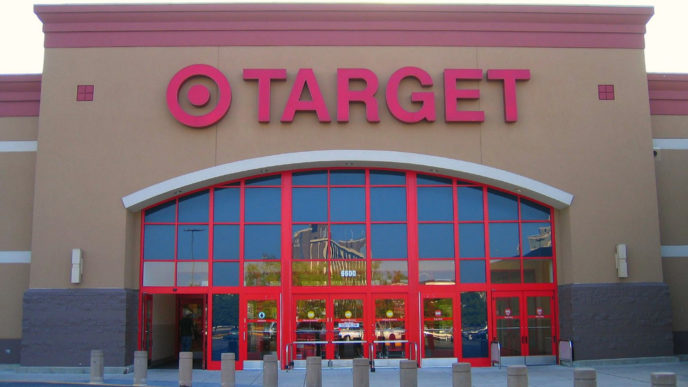
Target Transgender Voyeur Had Recorded Other Girls Undressing

The transgender male arrested for recording a young girl changing in a Target changing room admitted it was not the first time he made videos of women changing, court documents say.

On Monday, an 18-year-old woman said that 43-year-old Sean Patrick Smith recorded her changing into swimwear in the changing room of a Target store in the small town of Ammon, Idaho.

The young girl said she saw Smith – who identifies as a transgender woman and goes by the name Shauna Patricia Smith – holding a cell phone over the partition between stalls. Her mother confronted Smith, whom she described as a man wearing a dress and a blonde wig, and Smith fled.

On Tuesday, Detective Zeb Graham of the Bonneville County Sheriff’s Office tracked down Smith via his license plate number. Graham says Smith confessed that the offense was not his first.

Smith “eventually admitted to me that [he] had made videos in the past of women undressing,” Det. Graham wrote in a court affidavit obtained by local media. (Read more from “Target Transgender Voyeur Had Recorded Other Girls Undressing” HERE)

Follow Joe Miller on Twitter HERE and Facebook HERE.

As This School District Sets New Transgender Guidelines, Parents Fight for Transparency

Parents in a Washington suburb say their school board has cut them out of the process of implementing new guidelines for accommodating transgender students.

The school board in Fairfax County, an affluent suburb in Northern Virginia, has scrapped a public forum on the gender identity policy and scheduled a work session in which parents aren’t allowed to participate. It isn’t clear when or if parents will have an opportunity to weigh in.

The Fairfax County School Board “released regulations with no parental input—nothing from the taxpayers—so I’m really upset,” said Bethany Kozma, a mother who is calling for greater transparency from her elected officials. “It’s a free-for-all.”

Pat Hynes, the school board chairman, gave members a copy of the gender identity and sexual orientation regulations on July 1, the Friday before the Fourth of July weekend. According to emails obtained by The Daily Signal, Hynes received the regulations from the school district’s division counsel.

The school district has not posted the guidelines online, nor formally notified parents.

However, a group called Fairfax County Public Schools Pride, which describes itself as “an allied and LGBT community” for employees of the school system, made the regulations public on its website and said “these are now in force.”

“The finalized version of the regulations about treating trans and gender nonconforming students with dignity and fairness were released July 1,” the FCPS Pride website says. “We have been told that these are now in force, although the [school board] will decide how it wants to review them (whether by email or in a work session).”

The Daily Signal obtained a copy of the new gender identity and sexual orientation guidelines from Elizabeth Schultz, one of three school board members who oppose them.

The regulations allow transgender students to use the bathrooms and locker rooms they say correspond to their gender identity, and to participate in school-sponsored sports, clubs, and other activities in accordance with their gender identity.

The rules also instruct teachers and staff to call students by their preferred name and pronoun. They offer any transgender or gender nonconforming student the option of convening a “support team” consisting of the student’s parents, classroom teachers, administrators, school counselors, school psychologists, school social workers, or other appropriate staff.

Schultz, whose children attend county schools, is not just critical of the regulations but of the process nine of her fellow school board members are employing to implement them.

“Parents, students, and employees have yet to see plans or be publicly heard regarding, at a minimum, the implications of opening access in student and employee restrooms, locker rooms, and showers in school and administrative facilities,” Schultz told The Daily Signal.

Fairfax County parents’ unhappiness with how their elected school board has implemented a gender identity and sexual orientation policy in the district’s 196 schools and centers is something of a cautionary tale for school districts across the nation grappling with the same issues. At schools in Minnesota, Illinois, and Washington state, similar debates are playing out.

When Hynes, the board chairman, emailed the regulations to the board July 1, she requested a “forum” be held July 14 to discuss how the board should proceed. Schultz said the board scheduled the forum, which is typically open to the public, in a classroom with limited space, although the board typically holds such meetings in an auditorium and streams them online.

Three days before the forum—and after parents widely circulated emails calling on others to attend to voice their opposition to the regulations—Hynes withdrew her request for a forum in an email to the board, Schultz said.

Instead, Hynes proposed to hold a work session July 21, which, according to Schultz, provides no opportunity for parents or others to participate or comment.

“The development and status of these crucial regulations has generated intense public interest but little public engagement,” Schultz told The Daily Signal, adding:

Notably, work sessions of the board involve no public participation or engagement, so a work session does not resolve the issue of public engagement on the imminent and practical implementation of the regulations. It is unfortunate that once again, there appears to be a less-than-transparent process as the board conducts business in such a way that the very public we are elected to serve feels authentically informed and educated.

The Daily Signal sought comment from Hynes by email, but she did not reply before publication of this article. In an interview last week with Fairfax County Times, the board chairman appeared to understand why some board members and parents called for transparency.

“There are people in the community, particularly parents, who have questions about what it might mean for their children,” Hynes said of implementing the policy, adding, “[We] have an obligation to answer those questions so that parents have the information they need to understand what’s going on in their kids’ schools.”

Robert Rigby, president of the FCPS Pride employee group and a teacher at West Potomac High School in Alexandria, told Fox 5 DC (WTTG-TV) in an interview that he expects the new guidelines to have a “tremendous impact” on making Fairfax County schools “more welcoming to all kids, especially trans kids.”

Some parents, however, are more concerned about how the new regulations will affect nontransgender students.

“When transgenders and gays and lesbians get up there and say, ‘I was bullied,’ that’s wrong,” Kozma, a Fairfax mother of three who also opposes similar policies at the national level, said. “They should not be bullied.”

Kozma said she doesn’t fear transgender students, but rather, people who might abuse policies that allow people of the opposite biological sex into her daughter’s restrooms and locker rooms.

“My child’s safety and security and privacy is also at stake here,” she said.

Rigby addressed some of those concerns in his television interview, saying, “Some friends of mine with daughters have expressed concern about what about the yahoos, what about the troublemakers, what about the bad actors, and what we find is that no one ever has pretended to be trans to have access.”

The issue arose in May 2015, when the Fairfax County School Board voted to add gender identity and sexual orientation as protected classes under the school system’s nondiscrimination policy.

At that point, the school board made no decisions regarding accommodations to carry out the policy, such as allowing students to use bathrooms and locker rooms that correspond to their gender identity instead of their biological sex. It did agree to review the resulting regulations.

Instead, the board hired an outside consultant to “assist in developing appropriate regulations that protect the rights of all students,” Tamara Derenack Kaufax, then board chairman, wrote last year in a public statement.

As a consultant, Schultz said, the school board picked Jeffrey M. Poirier, until January a principal researcher at American Institutes for Research, a Washington nonprofit that bills itself as a behavioral and social science research and evaluation organization.

Poirier’s work there included “supportive services for LGBTQ youth and families,” according to his résumé. LGBTQ stands for “lesbian, gay, bisexual, transgender, and queer.”

Schultz scolded fellow board members for going “straight to someone whose entire mission it is to get these practices deeply embedded” in schools. She said she doesn’t plan to back down in her attempt to better inform parents of what she considers shady school board practices.

A former board member, Elizabeth Torpey Bradsher, appeared to agree, writing in a scolding letter to The Connection Newspapers published July 12:

The board has hit a sensitive nerve with their constituents and parents on this issue and now prefers to shy away from additional media controversy and discussion. In fact many parents are unaware the transgender policy is being brought forth again at a school board forum on July 14, which proves excellent planning on the board’s part.

The month of July is a wonderful time for controversial issues, the timing takes advantage that a large majority of parents and residents are gone on vacation; therefore it is easier to pass motions and generate policies. After such, the board will go into recess and all controversies will seem to be forgotten due to a lack of media attention. Thus there is little vocal objection from the public or notice.

The forum Bradsher mentions is the one that was canceled.

Up until a few weeks ago, Kozma said, she was one of those parents who were unaware of the transgender policy debate playing out in her own backyard. In part, however, she faults herself.

“This whole thing has taught me that I have to stay engaged on things that I didn’t think were important,” Kozma said. “If I’m going to be a good mom, I need to be engaged and informed about what’s going on in all aspects.” (For more from the author of “As This School District Sets New Transgender Guidelines, Parents Fight for Transparency” please click HERE)

Follow Joe Miller on Twitter HERE and Facebook HERE.