Posts

US Deploys Fighter Jets to Venezuelan Coast in Closest Approach Yet

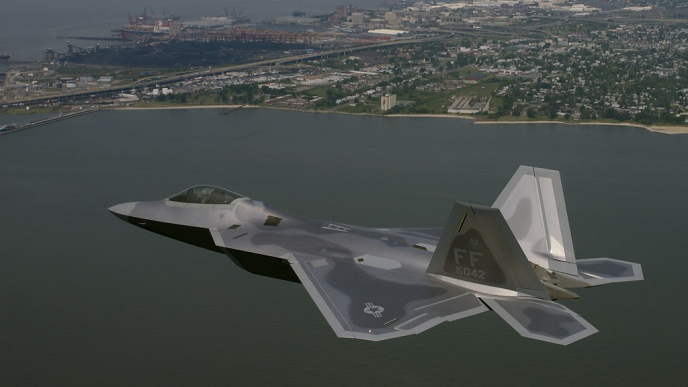
The U.S. deployed two fighter jets over the Gulf of Venezuela Tuesday, marking what appeared to be the closest known approach of military aircraft to Venezuelan airspace to date, according to reports.

The F/A-18 jets were observed on Flightradar24 flying for roughly 30 minutes over the waters north of Venezuela, the Associated Press reported.

A U.S. defense official, speaking on condition of anonymity, described the short mission as a “routine training flight” designed to demonstrate the aircraft’s operational reach.

The official also did not disclose whether the jets were armed but did emphasize that the operation remained entirely within international airspace.

Tuesday’s dual flight follows months of heightened U.S. military activity in the region. (Read more from “US Deploys Fighter Jets to Venezuelan Coast in Closest Approach Yet” HERE)

Photo credit: Flickr

Trump Gives Maduro Ultimatum: Resign and Leave Venezuela or Face U.S. Action, Report Says

President Donald Trump reportedly delivered a stark ultimatum to Venezuelan leader Nicolás Maduro during a tense phone call, warning the longtime socialist ruler to resign and leave the country or face consequences, according to a report from the Miami Herald.

Sources cited in the reporting say Maduro demanded key conditions in exchange for stepping aside — including global amnesty for crimes he is accused of and the ability to retain control of Venezuela’s military while allowing free elections. The United States rejected both proposals immediately.

Instead, Trump is said to have offered a narrow path: Maduro, along with his wife and son, would be permitted safe passage out of Venezuela — but would need to depart immediately. Amnesty would also be extended to top Maduro allies, the report states.

The failed phone call reportedly took place late in the week of Nov. 16, just days after Trump publicly signaled he was open to speaking directly with Maduro. The discussion included what a formal surrender might look like, given that the U.S. State Department has a $50 million bounty on the Venezuelan leader.

After the call broke down, Trump intensified military and diplomatic pressure on Caracas. The president declared Venezuelan airspace “closed in its entirety” and warned that U.S. operations inside the country could begin “very soon.”

The directive came as the USS Gerald R. Ford — America’s largest aircraft carrier — and a Marine Expeditionary Unit remained positioned offshore, capable of amphibious deployment.

Trump later acknowledged the conversation to reporters, saying only: “I wouldn’t say it went well or badly.”

U.S. leaders have tied the escalation to Venezuelan drug-trafficking networks, which Trump has increasingly blamed on Maduro’s government.

As pressure mounts and diplomatic options narrow, concerns rise over a possible U.S. military intervention in the country of 28 million.

Trump has repeatedly hinted that additional action — including strikes “by land” — may be imminent.

US Military Kills 2 Suspected Narco-Terrorists in 16th Military Drone Strike: Hegseth

Two suspected drug smugglers on a vessel were killed during a U.S. military drone strike, War Secretary Pete Hegseth said Tuesday.

The “lethal kinetic strike” was ordered by President Donald Trump and conducted in international waters in the eastern Pacific Ocean on a vessel operated by a Designated Terrorist Organization (DTO), Hegseth said.

The strike is the 16th since Trump began targeting drug smuggling boats suspected of transporting illegal drugs into the United States.

At least 66 suspected narco-terrorists have been killed in the strikes and three survived.

“Intelligence confirmed that the vessel was involved in illicit narcotics smuggling, transiting along a known narco-trafficking route, and carrying narcotics,” Hegseth wrote on X.

(Read more from “US Military Kills 2 Suspected Narco-Terrorists in 16th Military Drone Strike: Hegseth” HERE)

Photo credit: Flickr

Rand Paul Says Trump’s Strikes on Suspected Drug Boats Are Illegal

Sen. Rand Paul (R-Ky.) on Sunday told NBC’s Meet the Press that President Donald Trump’s recent military strikes against vessels the administration says were used to traffic drugs in the Caribbean are unlawful and set a dangerous precedent. Paul argued that the strikes — which the White House has framed as part of a campaign against narcotics trafficking — “go against all of our tradition” and lack the due-process and legal foundations normally required before lethal force is used outside of declared war.

“When you kill someone if you’re not in war, and not in a declared war, you really need to know someone’s name, at least. … All of these people have been blown up without us knowing their name and without evidence of a crime,” Paul told host Kristen Welker. He added that long-standing maritime practice is to board and search suspect vessels, not destroy them from the air, and warned that treating suspected smugglers as combatants could produce widespread wrongful deaths.

The U.S. has conducted multiple strikes in recent weeks against boats and a submersible the administration says were carrying narcotics, including fentanyl. U.S. officials say the actions are necessary to disrupt transnational trafficking networks; critics say the strikes have killed civilians and were carried out without adequate evidence tying the victims to cartel leadership or an imminent threat to the United States. Reports indicate at least several dozen people have died in strikes across the Caribbean region, and some survivors have been taken into U.S. custody.

International and regional leaders have also pushed back. Colombia recalled its ambassador amid disputes over one strike in Colombian waters that officials say killed a fisherman, while Caribbean governments and human-rights advocates have questioned the intelligence and legal rationale offered by Washington. Legal scholars have told reporters that using military force against suspected smugglers far from U.S. territory raises thorny questions about the law of armed conflict, sovereignty, and due process.

Paul contrasted wartime rules — where combatants may be targeted without individualized criminal charges — with peacetime law enforcement, which requires evidence, identification and often arrests followed by prosecution. “If our policy now is to blow up every ship we suspect or accuse of drug running, that would be a bizarre world in which 25% of the people might be innocent,” he said, referencing Coast Guard statistics about drug interdictions to underscore the risk of killing noncombatants. He urged Congress to weigh in rather than leaving such actions solely to the president.

The administration has defended the strikes as necessary and proportionate efforts to stop the flow of fentanyl and other deadly drugs into the United States, and the president has publicly framed drug cartels as enemies warranting hardline military responses. Supporters argue the actions target transnational criminal networks that threaten American lives and that new tactics are needed to stop evolving smuggling methods. But the escalating use of force has prompted bipartisan unease in Congress and renewed debate over the executive branch’s authority to order cross-border kinetic operations absent formal declarations of war.

Photo credit: Gage Skidmore via Flickr

Venezuelan Dictator Nicolas Maduro ‘Doesn’t Want to F–k Around’ With US, Trump Says

President Trump dropped an F-bomb Friday as he explained why Venezuelan dictator Nicolas Maduro appears willing to give the US a stake in the South American nation’s oil and mineral wealth.

“He’s offered everything. You know why? Because he doesn’t want to f–k around with the United States,” Trump said of Maduro, during a White House meeting with Ukrainian President Volodymyr Zelensky.

The Maduro regime reportedly offered to provide US companies preferential contracts and access to all existing and future oil and gold projects in Venezuela as part of a deal discussed with Trump administration officials, according to the New York Times.

Maduro also pledged to stop selling Venezuelan oil to China and slash energy and mining contracts Venezuela had entered into with Chinese, Iranian and Russian companies, the outlet reported.

The deal fell apart after Trump reportedly ordered special envoy Richard Grenell to end all diplomatic outreach to Venezuela last week, as the US military continues to carry out strikes against drug boats in the Caribbean Sea. (Read more from “Venezuelan Dictator Nicolas Maduro ‘Doesn’t Want to F–k Around’ With US, Trump Says” HERE)

Russia Cuts Deals with Cuba, Venezuela to Challenge U.S. in the West

Russia’s rubber-stamp legislature passed an “intergovernmental agreement on military cooperation” with the communist government of Cuba on Tuesday, formalizing an already existing alliance providing cannon fodder for the invasion of Ukraine.

Venezuelan dictator Nicolás Maduro also announced on Tuesday that he had solidified a “strategic partnership” with Russia that could allow Moscow greater ability to leverage influence in the Western Hemisphere, challenging the United States.

According to the Russian news agency Tass, the upper house of the Duma ratified an agreement that “will provide legal grounds to define the goals, areas and forms of bilateral military cooperation,” suggesting that such cooperation already existed between the two countries informally. The agreement is one step below the commitments of the mutual defense treaty that Russia signed with North Korea in June 2024, which preceded Pyongyang admitting that it had deployed troops to the war theater against Ukraine in Kursk.

Alexander Stepanov, a purported Russian “military expert,” told Tass that the military agreement with Cuba was a form of retaliation against President Donald Trump for his ongoing support for Ukraine, in particular concerns that the United States may soon provide Ukraine with Tomahawk cruise missiles.

“This is about a symmetrical response to the potential supply of Tomahawks,” Stepanov stated plainly. “The ratified agreement maximally expands our military cooperation and allows, within the framework of bilateral interaction and in coordination with the government of the Republic of Cuba, to deploy virtually any offensive systems on the island’s territory.” (Read more from “Russia Cuts Deals with Cuba, Venezuela to Challenge U.S. in the West” HERE)

Photo credit: Flickr

U.S. Deploys Warships to Venezuela in Trump’s Cartel Crackdown

The United States has deployed three Aegis guided-missile destroyers to waters off Venezuela as part of President Trump’s escalating campaign against Latin American drug cartels, U.S. officials confirmed this week.

According to an official who spoke on the condition of anonymity to the Associated Press, the USS Gravely, USS Jason Dunham, and USS Sampson will operate in the region over the coming months in support of counter-narcotics missions. The deployment marks one of the largest U.S. naval shows of force in the Caribbean in recent years.

The move underscores President Trump’s strategy of using the military to pressure cartels he blames for flooding U.S. communities with fentanyl and fueling violence through cross-border trafficking and smuggling networks. Trump has argued that traditional law enforcement and diplomatic measures have failed to stop the cartels, vowing instead to “take the fight directly to them.”

The president has also increased pressure on Mexico, warning President Claudia Sheinbaum that the U.S. military could be deployed inside Mexican territory if her government fails to rein in cartel activity. Sheinbaum has firmly rejected the idea of U.S. intervention but has pledged to intensify Mexico’s anti-cartel operations.

In February, the U.S. formally designated Venezuela’s Tren de Aragua, El Salvador’s MS-13, and six major Mexican cartels as foreign terrorist organizations. The designations give federal agencies expanded authority to pursue their members, finances, and global networks.

The crackdown also ties into Trump’s broader immigration agenda. The Department of Homeland Security reports that more than 324,000 illegal immigrants have been deported since the start of the year — about 70 percent with criminal records or cartel ties. Another 1.2 million individuals are estimated to have left the U.S. voluntarily under the administration’s stepped-up enforcement measures.

At sea, the U.S. Coast Guard has tripled its presence along the southern maritime approaches, focusing on detecting and interdicting drug and human smuggling ventures. Officials say the addition of the destroyers will expand surveillance and interdiction capabilities, creating what amounts to a layered defense against cartel networks operating in the Caribbean and South America.

The deployment of U.S. warships near Venezuela is expected to strain Washington’s already tense relationship with Caracas, which has long accused the U.S. of using counternarcotics operations as a pretext for intervention. Still, U.S. officials maintain the mission is focused squarely on dismantling trafficking pipelines, not sparking new conflict.

Photo credit: RawPixel

Venezuela Prepares for Imaginary U.S. Invasion with Karaoke, Karate

Socialist dictator of Venezuela Nicolás Maduro ordered measures in recent days to prepare the country for a purported “invasion” by the United States in response to President Donald Trump’s increasing efforts targeting Latin American drug cartels in the region.

Venezuelan state propaganda armed have rolled out bizarre videos in the past week of the alleged “training” Venezuela’s citizens are engaged in to scare the U.S. military out of invading.

The United States reportedly deployed three Aegis guided-missile destroyers near Venezuelan waters. According to unnamed sources speaking to Reuters on Monday, “about 4,000 sailors and Marines” are expected to be committed in the southern Caribbean region in a several-month-long operation in international airspace and waters.

For years, Maduro has repeatedly claimed without evidence that the United States plans to “invade” Venezuela and oust him from power. Maduro, who has illegally clung to power, is actively wanted by U.S. authorities on multiple narco-terrorism charges and is a leading figure of the Cartel of the Suns, an international cocaine trafficking operation identified by the United States as a Specially Designated Global Terrorist (SDGT) entity.

U.S. Attorney General Pam Bondi announced this month that the United States doubled its reward for information that can lead to Maduro’s arrest and conviction from $25 to $50 million. (Read more from “Venezuela Prepares for Imaginary U.S. Invasion with Karaoke, Karate” HERE)

Supreme Court Allows Trump to Strip Protections From Some Venezuelans; Deportations Could Follow

The Supreme Court on Monday allowed the Trump administration to strip legal protections from 350,000 Venezuelans, potentially exposing them to deportation.

The court’s order, with only one noted dissent, puts on hold a ruling from a federal judge in San Francisco that kept in place Temporary Protected Status for the Venezuelans that would have otherwise expired last month.

The status allows people already in the United States to live and work legally because their native countries are deemed unsafe for return due to natural disaster or civil strife. (Read more from “Supreme Court Allows Trump to Strip Protections From Some Venezuelans; Deportations Could Follow” HERE)

Judge Blocks Trump From Deporting Alleged Venezuelan Gang Members

A federal judge on Thursday has prevented the Trump administration from deporting alleged Venezuelan gang members from South Texas using the Alien Enemies Act (AEA), an 18th-century law.

U.S. District Court Judge Fernando Rodriguez Jr., whom Trump nominated in 2018, said, “Neither the Court nor the parties question that the Executive Branch can direct the detention and removal of aliens who engage in criminal activity in the United States.”

Rodriguez continued, “the President’s invocation of the AEA through the Proclamation exceeds the scope of the statute and is contrary to the plain, ordinary meaning of the statute’s terms.”

Rodriguez is the first judge to argue that the president cannot use the Alien Enemies Act to deport those the administration claims are gang members invading the United States.

In March, President Donald Trump proclaimed that the Venezuelan gang Tren de Aragua was invading the United States, citing the 18th-century law as his special power to deport these migrants without the typical court proceedings. (Read more from “Judge Blocks Trump From Deporting Alleged Venezuelan Gang Members” HERE)