North Korea Produces Video Depicting Nuke Attack on US, While China "Commits" to Help Defuse Situation

Photo Credit: Washington Post
The video was released Saturday on Uriminzokkiri, a North Korean government web site. It has also been posted on YouTube.
In it, each of the U.S. targets explodes into a ball of flames as the missiles strike on the map. The Colorado Springs attack is presumably because the North American Aerospace Defense Command (NORAD) is located near there, as well as the U.S. Air Force Academy. However based on the map the North Koreans posted, the attack site is actually in either southern Arkansas or northern Louisiana.
The video, typical of North Korean propaganda, is introduced by a male voiceover while a female news anchor in the traditional Korean hanbok dress reads from news headlines. The images are accompanied by synthesizer music and sounds of thunder. Further in, jarring montages of missile launches and military equipment are accompanied by what sound like 1970s power rock guitar solos. The video had more than 225,000 hits on YouTube by Saturday afternoon. Read more from this story HERE.
Kerry assured: China committed to getting N. Korea to abandon nuclear weapons
By Guy Taylor. After a day of diplomatic talks with Secretary of State John F. Kerry on Saturday, Chinese authorities claimed they are committed to working “peacefully” toward the goal of getting North Korea to abandon its nuclear weapons.
“We maintain that the issue should be handled and resolved peacefully through dialogue and consultation,” China’s State Councilor Yang Jiechi said on Saturday evening in Beijing while sitting beside Mr. Kerry at a restaurant in the Chinese Capitol.
“To promptly address the Korean nuclear issue serves the common interests of all parties,” said Mr. Yang. “It is also the shared responsibility of all parties.”
The remarks created the appearance of fresh unity between Beijing and Washington, where the Obama administration hoped that Mr. Kerry would be able to convince Chinese leaders to take a more active role in encouraging North Korea to tone down its recent nuclear threats.
Mr. Yang, however, took care to avoid making any specific commitments with regard to actions China is willing to take to pressure the North Korean military or the nation’s 28-year-old leader Kim Jong-un to give up the nation’s nuclear arsenal and back away from the recent wave of antagonistic posturing. Read more from this story HERE.
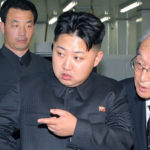
North Korean leader Kim Jong Un offers many faces, many threats
By Ernesto Londoño. When Kim Jong Un first appeared in Pyongyang’s carefully stage-managed public spotlight in the fall of 2010, North Korea watchers began scouring for clues to learn whether the pudgy heir apparent would be a reformist or simply the newest face of a despotic regime.
Nearly 16 months after taking the reins of the hermit state following the death of his stoic father, North Korea’s 30-year-old leader appears to be careening toward the latter — at least on the surface.
Having disavowed his country’s armistice with South Korea and threatened to fire his increasingly capable missiles toward the United States, Kim has put the Korean Peninsula and Washington on a war footing. His behavior follows the playbook of his predecessors, with one notable and potentially dangerous departure that appears to have him backed into a corner.
“His father and his grandfather always figured into their provocation cycle an off-ramp of how to get out of it,” Adm. Samuel Locklear III, the commander of U.S. troops in the Pacific, told Congress this past week. “It’s not clear to me that he has thought through how to get out of it. This is what makes this scenario, I think, particularly challenging.”
Making sense of the Kims has been more of an art than a science. A cadre of North Korea scholars has spent decades piecing together a portrait of the eccentric, secretive family by poring through mounds of propaganda, defector accounts and the limited, sporadic contact the regime has had with the West. While acknowledging that Kim Jong Un remains an enigma, experts in the intricacies of Pyongyang say a careful study suggests his recent bout of bellicose rhetoric probably represents a desperate cry for legitimacy rather than a genuine appetite for combat.Read more from this story HERE.