Fox News Sex Scandal Blows up BIG TIME

The three Murdoch family members at the top of 21st Century Fox, the parent company of Fox News, are in agreement that Roger Ailes, the company chief who has been hit with sex harassment claims, should go, a report says.

New York Magazine on Monday reported Rupert Murdoch and Lachlan Murdoch, co-chairmen of the company, and James Murdoch, CEO, are working out how to remove the 76-year-old, according to two sources.

A New York law firm was tasked by the organization with investigating the claims against Ailes, and “after reviewing the initial findings … James Murdoch is said to be arguing that Ailes should be presented with a choice this week to resign or face being fired.”

The report said the other two want to wait until the GOP convention in Cleveland is over this week, the report said.

The magazine report said the investigation was sparked by former news anchor Gretchen Carlson’s lawsuit against Ailes, but has since been expanded. (Read more from “Fox News Sex Scandal Blows up BIG TIME” HERE)

Follow Joe Miller on Twitter HERE and Facebook HERE.

Another Officer Acquitted in Death of Freddie Gray

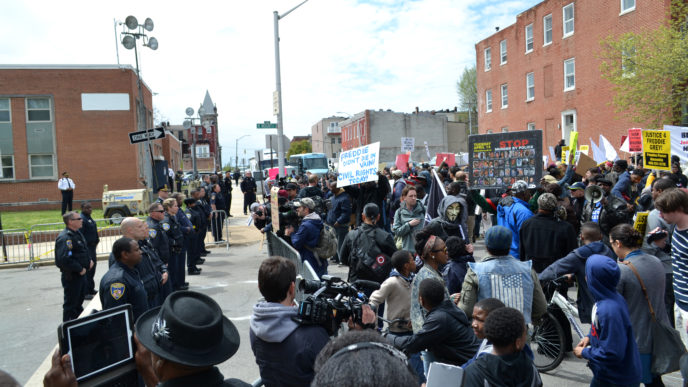
Baltimore Judge Barry Williams found Baltimore police lieutenant Brian Rice not guilty in the death of Freddie Gray on Monday, a Baltimore man whose death in police custody sparked riots and protests across the country.

Marilyn Mosby, Baltimore’s ambitious young state’s attorney, charged Rice with involuntary manslaughter, reckless endangerment, and misconduct in office. He was the fourth of six officers to be charged in Gray’s death. Three officers have been acquitted and a fourth case ended in a mistrial.

Rice elected to proceed with a bench trial, in which a judge renders a verdict instead of a jury. Williams acquitted two other officers in the Gray case, Edward Nero and Caesar Goodson in earlier trials.

Prosecutors alleged that Rice should have ensured Gray was properly secured by seatbelt after he was placed in a police van following his arrest for possession of an illegal switchblade. The state argued that police, under Rice’s command, subjected Gray to a so called “rough ride,” in which officers drive erratically while an unsecured suspect is thrown around wildly. Grey later died in a coma with several fractured vertebrae and a severed spine.

The defense countered that Gray’s injuries occurred at a point during which Rice had no access to him, and that the prosecution could not conclusively demonstrate that police gave Gray a “rough ride.” (Read more from “Another Officer Acquitted in Death of Freddie Gray” HERE)

Follow Joe Miller on Twitter HERE and Facebook HERE.

FBI Believed Orlando Shooter Wouldn’t Go Postal

The FBI’s 2013 investigation of Orlando, Florida, club shooter Omar Mateen found that he was not thought to be a terrorist – nor was he believed to be capable of “going postal,” according to new documents released on Monday by Judicial Watch.

WND reported shortly after Mateen, 29, reportedly launched a mass shooting at a club in Orlando that left more than four dozen dead and at least as many wounded that he had been investigated by the FBI. He was killed in the attack.

Judicial Watch on Monday released documents that it obtained through a Freedom of Information Act process that included comments from the St. Lucie County Sheriff’s Office quoting an FBI investigator.

These results followed complaints that Mateen, working for the private G4S security company as a guard in county facilities, had been commenting to sheriff’s deputies about terrorism and violence.

A sheriff’s officer wrote, “FBI concluded a several month long thorough investigation of one of our G4S employees, Omar Mateem, (sic) who works at the courthouse. Last night, I spoke with FBI SAC Rand Glass who informed me they believe this individual has been making comments about his capabilities via his alleged middle eastern terrorist contacts as a form of tit for tat – who is the biggest and baddest rhetoric. Reportedly, Mateem told FBI he did this because a deputy who no longer works at the courthouse kept calling him a ‘towel head.’ Mateem denied saying some things the FBI knows he did say. If he were smart he should not lie to them about any portion of the investigation (federal offense). They plan to speak to him again regarding the discrepancy. (Read more from “FBI Believed Orlando Shooter Wouldn’t Go Postal” HERE)

Follow Joe Miller on Twitter HERE and Facebook HERE.
Mexico Deports 9 out of 10 Illegal Central American Migrants

While many Mexican politicians including President Enrique Pena Nieto decry GOP presumptive nominee Donald Trump’s proposal for a border wall, the country reportedly deports nine in 10 Central American illegal migrants south of its own border.

Univision reports that Mexico strictly enforces its own immigration laws through strong border security which has led to the deportation of 87 percent, 92 percent, and 96 percent of illegal Salvadoran, Honduran and Guatemalan migrants respectively. The deportation data is valid for the first four months of 2016.

A total of 43,506 Central American illegal migrants were booted out of Mexico in the first third of 2016. The illegal migrants were trying to get through the country before ultimately attempting to cross the Mexico-U.S. border.

Migration from Central America became a major issue in the summer of 2014 when thousands of unaccompanied minors fled from the gang violence of the Northern Triangle countries: El Salvador, Honduras, and Guatemala. Of the tens of thousands of Central American illegal migrants that caught trying to illegally enter Mexico between January and April of 2016, 9,636 of them were Central American minors, 85 percent of which were deported.

Border security and immigration have been major issues in the 2016 presidential campaign as a result of Trump’s advocacy for a border wall that he wants Mexico to pay for. Pena Nieto has stated that there is “no way,” his country will foot the bill for a U.S.-Mexico border wall. (For more from the author of “Mexico Deports 9 out of 10 Illegal Central American Migrants” please click HERE)

Follow Joe Miller on Twitter HERE and Facebook HERE.

Slain Cop’s Brother Prays for Killer, Asks for Prayers for His Family

“I just want to say God bless these killers,” said Kedrick Pitts. “I continue to pray for those guys, too.”

Pitts’ brother, Montrell Jackson, was one of the three police officers shot and killed in Baton Rouge, Louisiana. Jackson, 32, was shot outside a convenience store by former Marine Gavin Long. In an interview with NPR on Sunday, July 17, Pitts said he believes God has a plan in what happened to his brother and the other police officers who were killed.

When asked by NPR’s Michel Martin to touch on a more political aspect of the shooting, Pitts had no comment. Martin asked if there was anything Pitts wanted to say about “the fact that your brother is also an African American man wearing the uniform” in light of the tension between African Americans and police officers in Baton Rouge.

“I don’t know what were their motives, but I just hope this is a real eye-opener to the community, to the whole world,” Pitts said. “It sucks that it had to be my brother, my best friend. But God had his plan and I trust and I believe in him.”

Pitts said he wants people to know that his brother is “in God’s hands.” He asked for prayers for himself and his family.

“I will continue to pray for you all, and I believe he will want this world to be a better place to put a end to all this madness and everybody come together,” Pitts said.

In the interview, Pitts described his brother as a man who loved his job and worked seven days a week. Jackson had been a police officer for 10 years. “He was well-known throughout the city,” Pitts said. He said Jackson “loved really being there for others.”

Jackson wrote a Facebook post on June 8, which Pitt elaborated on in the interview. In the post, Jackson wrote:

I’m tired physically and emotionally, disappointed in some family friends and officers for some reckless comments, but, hey, what’s in your heart is in your heart. I still love you all because hate takes too much energy. But I definitely won’t be looking at you the same. Thank you to everyone that’s reached out to me or my wife. It was needed and much appreciated. I swear to God I love this city, but I wonder if the city loves me in uniform. I get nasty, hateful looks and out of uniform some consider me a threat. I’ve experienced so much in my short life in these last three days have tested me to the core.

Pitts said this post was a reaction to the “Alton Sterling situation.” He said his brother “wants justice for their family also, but he just asks everyone to respect everyone, continue to love everyone and he wanted everyone to get through this together. He didn’t want any hatred going on, especially killing.”

Pitts remembered Jackson for his dedication to “God, family and the police force,” the Associated Press reported. (For more from the author of “Slain Cop’s Brother Prays for Killer, Asks for Prayers for His Family” please click HERE)

Follow Joe Miller on Twitter HERE and Facebook HERE.

#NeverTrump Delegates Disrupt RNC After Rules Report Is Presented

As the Republican National Convention kicked off Monday in Cleveland, it was clear from the outset that presumptive presidential nominee Donald Trump still faces serious backlash from critics within the party. A number of GOP delegates have petitioned for a rule change allowing them to vote their conscience instead of serving as a rubber stamp for their home states’ choice.

Making a final effort to effect such change, anti-Trump delegates attempted to secure a vote on the issue. Though media reports and party sources described the push as nearly impossible to pull off, protesting delegates nevertheless made their point.

That forecast appeared accurate when the rules committee report was finalized and denied the change being sought. According to exclusive reports from the convention, anti-Trump delegates were still determined to disrupt the convention proceedings.

M. Dane Waters, whose Delegates Unbound group has been at the forefront of this effort, predicted that delegates would “take this fight to the floor.”

Norvell Rose, reporting for Western Journalism from Cleveland this week, was on hand to witness the moment they did exactly that.

A revolt on the floor reportedly began shortly after the committee’s report was presented and caused a temporary disruption in the day’s scheduled events.

When those voting “yes” were declared the majority following a floor vote on the rules’ passage, anti-Trump delegates reportedly erupted in a chorus of booing and loud chants of “no.”

At one point, the convention’s band was instructed to begin playing as the fracas played out on the floor. Shortly after the display, prominent Virginia anti-Trump delegate Ken Cuccinelli was surrounded by inquiring attendees.

Cuccinelli reportedly reacted to the decision by tossing his credentials on the convention floor and leaving.

A motion for a roll-call vote on the rules has since been denied. (For more from the author of “NeverTrump Delegates Disrupt RNC After Rules Report Is Presented” please click HERE)

Follow Joe Miller on Twitter HERE and Facebook HERE.
Rush Limbaugh Renames ‘Black Lives Matter’ Group

Conservative talk show host Rush Limbaugh warned Monday that with the recent acquittal of another officer in the Freddy Gray case, Baltimore now has a target on its back. He warned that as Black Lives Matter continues to create a vitriolic environment, the likelihood increases of a similar attack in Baltimore like those on police in Baton Rouge, La., and Dallas, Texas.

Limbaugh took no prisoners in his description of the group, dubbing them with a new name.

“This could be a problem in Baltimore now. I’m serious,” he said. “This is the kind of thing that’s happening now that causes Black Lives Murder. You know, that’s what it’s becoming out there.”

President Barack Obama also came under heavy fire from Limbaugh, calling out his irresponsible rhetoric for putting more lives on the line.

“Because of the president’s inflammatory rhetoric — which pretty much accused the whole police force of being racist — more lives could be at risk,” he said. “During an earlier speech at Madrid, Obama said, ‘America’s police will be safer when they admit they have a problem… There are legitimate issues that have been raised, and there’s data and evidence to back up the concerns that are being expressed by these protesters.’”

Limbaugh also accused the Democrat elite for spreading a lie with the intention of causing strife.

“One of the flash points for all that’s happening now is the lie. A lie that has been known, a lie that wasn’t knowingly spread, a lie whose flames were knowingly fanned by people no less than Barack Obama and others ranking high in the Democrat Party, and that is ‘hands up, don’t shoot,” he said. (For more from the author of “Rush Limbaugh Renames ‘Black Lives Matter’ Group” please click HERE)

Follow Joe Miller on Twitter HERE and Facebook HERE.
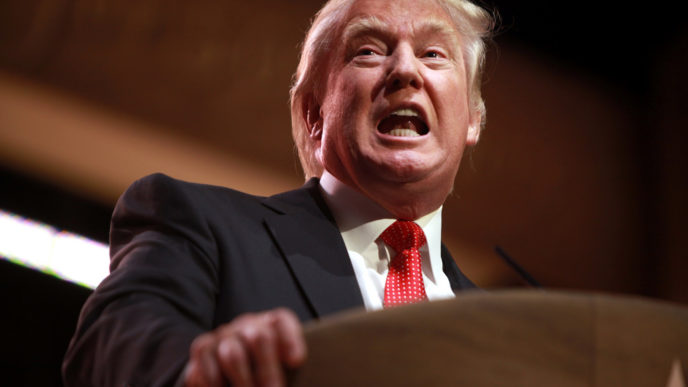
The Mainstream Media Is OBSESSED With Open Carry in Cleveland

Despite the safety concerns that rabble-rousing leftists and anti-Trump protesters might start trouble at the Republican National Convention, the streets of Cleveland were crowded but calm Monday, except for the rabid media attention paid to anyone who dare carry a firearm in compliance with state law.

While a handful of protestors gathered at the designated protest stage in Cleveland’s public square for differing reasons, and an even larger contingent present at a “Dump Trump” rally just a few blocks away, reports and protestors were at a 1:1 ratio at points.

But, naturally, the one thing guaranteed to tip that ratio towards the media was the lawful presence of a firearm.

In an interview with Claire Hardwick, who was reporting for CR on the scene, Jesse Gonzales, a local Trump supporter carrying an American-made AK-47 said that he’d never had so much press attention in his life as he did when exercising his constitutional rights per state law.

Gonzlalez told CR that the media attention he received has been “really wild.”

“I’ve never been talked to [on] camera before and it’s been like 20 so far,” the 26-year-old told CR. “So far today, it’s been like 20 times.”

“We rode about 120 streets to get here, everyone just said hi and waved,” said a friend of Gonzalez’s remarking on the attention given to the rifle. “But once we got here, the media just surrounded us.”

But Gonzales isn’t alone. Just a day earlier reporters also swarmed another man in the same area for doing the exact same thing.

The photo is of Steve Thacker, a local Marine veteran who told reporters he was simply out open carrying his semiautomatic rifle to “demonstrate [his] Second Amendment rights” just hours after news broke of the slaying of three Baton Rouge police officers.

“This is a statement. I’m not going to be wandering like this except in a situation like this,” the 57-year-old said. “The police are putting their lives on the line every day to protect the people … When somebody targets officers like this it is the greatest show of cowardice I’ve ever seen.”

Open carry is legal throughout the state of Ohio. This fact was driven home Sunday by the fact that Governor and former Presidential Candidate John Kasich declined calls to suspend the practice following the Baton Rouge ambush.

“Ohio governors do not have the power to arbitrarily suspend federal and state constitutional rights or state laws as suggested,” reads a statement emailed to Conservative Review from Kasich spokeswoman Emmalee Kalmbach. “The bonds between our communities and police must be reset and rebuilt–as we’re doing in Ohio–so our communities and officers can both be safe.”

This of course means that there will most likely be more citizens like Gonzalez and Thacker open carrying throughout the week.There will most likely also be a devoted media gaggle not far behind, ready to over-report the exercise of a Constitutional right in arguably the most secure city in America.

While protests and demonstrations so far in Cleveland by-and-large may be nothing that any person used to attending political events hasn’t already seen (just in case you haven’t, leftists and anti-Trumpers gathered and said leftist and anti-Trump things into microphones), one thing is exceedingly clear: is the media love to freak out they see someone exercising their Second Amendment rights. (For more from the author of “The Mainstream Media Is OBSESSED With Open Carry in Cleveland” please click HERE)

Follow Joe Miller on Twitter HERE and Facebook HERE.

DEAD BROKE: Forbes Says the Clintons Pulled in $229 Million Between 2001 and 2014

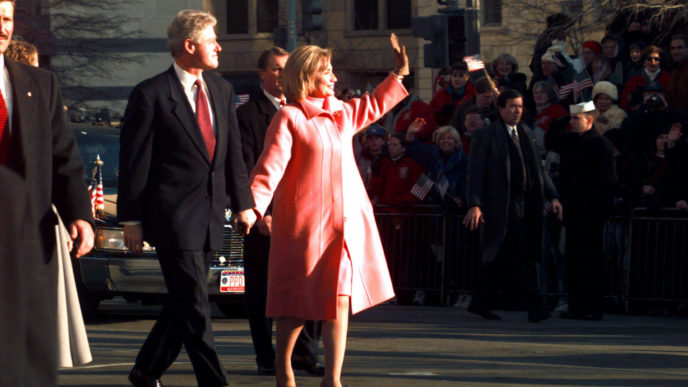
Remember when Hillary Clinton claimed she and Bill were “dead broke” when they left the White House?

Hey, I know this will startle you, but it turns out that’s a bunch of crap.

Because even before they left the White House, the Clinton had purchased both a “…a five-bedroom home in Chappaqua, N.Y., for $1.7 million [and] a seven-bedroom house near Embassy Row in Washington, D.C. [for] $2.85 million.”

With that said, Hillary’s long litany of lies don’t disqualify her for the presidency.

And the Obama administration has swept her felonious mishandling of classified government documents under the rug. So those technically don’t disqualify her.

But the Clinton Foundation and the Clintons’ methods of enriching themselves do. The mainstream media, with a few exceptions such as the New York Times, have failed to see the foundation as a target for investigative reporting. But Peter Schweizer, in his 2015 book Clinton Cash, examined the foundation and discovered how it allowed the Clintons to make foreign policy pay. Donate to the foundation or give Bill Clinton an exorbitant fee for a speech and good things often happened. According to Forbes, Bill and Hillary Clinton made $229,319,855 between 2001 and 2014.

The Clintons created a structure whereby foreign governments, businesses, and financiers could buy access to American politicians, Schweizer says. “Foreign entities are prohibited by federal law from giving to political campaigns and super-PACs. But with the Clinton Foundation and speaking fees, foreign entities can sidestep what has been a longtime consensus point in American politics.” That point: American foreign policy isn’t like politics, where campaign donations buy access and favors. With the Clintons, foreign policy is politics by other means.

When his wife became secretary of state, Bill Clinton’s speaking fees skyrocketed. He gave two speeches in Nigeria at $700,000 apiece. He was paid $750,000 by Ericsson, the Swedish telecom company, for a speech in Hong Kong. He gave 13 speeches for more than $500,000 a pop from the time he stepped down as president in 2001 to the day his wife left as secretary of state in 2013. Eleven of them occurred while she was in office, Schweizer found. PolitiFact confirmed his numbers and speech dates.

The examples of the Clintons’ remunerating themselves with help from holding high office are numerous. He got $16.5 million from Laureate International Universities, the parent company of an online diploma mill, as honorary chancellor for five years. Laureate Education Inc. got $55 million in State Department grants. The Clintons benefited from deals in Russia, India, Colombia, and Africa. At least Bill Clinton did.

Fred Barnes put it succinctly: “Hillary Clinton is the most corrupt person ever to get this close to becoming president of the United States.” (For more from the author of “DEAD BROKE: Forbes Says the Clintons Pulled in $229 Million Between 2001 and 2014” please click HERE)

Follow Joe Miller on Twitter HERE and Facebook HERE.
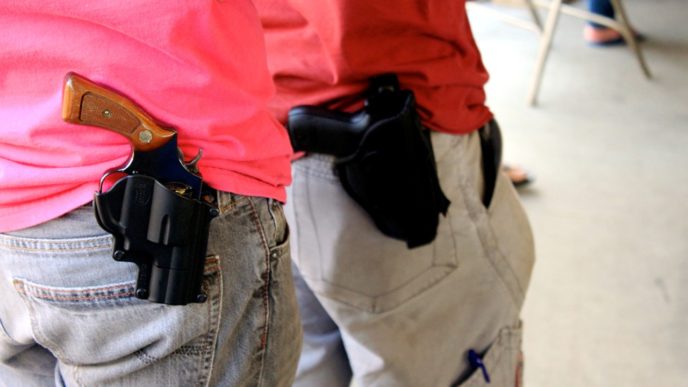
Why Police Say Body Cameras Can Help Heal Divide With Public

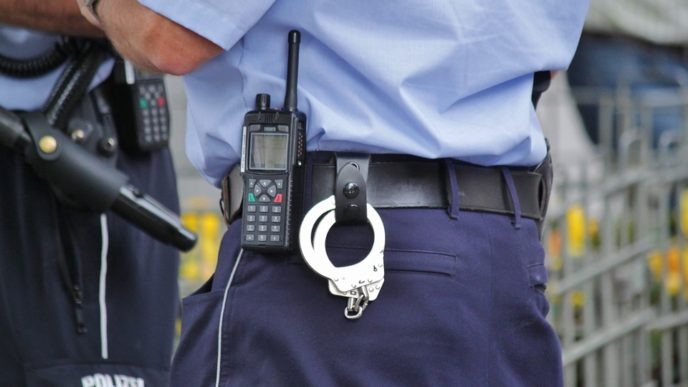
The 75 police officers of the Parker Police Department favor wearing cameras on their body to capture encounters with citizens.

“I don’t know if you could find one officer who would want to go back to not having body cameras,” said Cmdr. Chris Peters, who designed Parker’s body camera program, which is approaching its one-year anniversary in September. “Any officer who is doing the right thing on a daily basis would want to have a camera on them. What the camera provides is an unbiased third-party account, and helps reduce the amount of questions of what happened.”

The fatal police shootings of black men in Louisiana and Minnesota earlier this month have renewed focus on the debate over supervising police and citizen interactions.

Even before those incidents, the Parker Police Department, a small force representing 50,000 people in a mostly white, affluent suburb of Denver, was not the only law enforcement agency embracing body cameras.

Some, like the Salt Lake City Police Department, acted even before the fatal police shooting two years ago of a black teenager in Ferguson, Missouri. The officer was not charged in that case, and critics argued that had he worn a body camera, there would have been a clearer account of what happened.

In May 2012, the Salt Lake City Police Department, which serves Utah’s capital city and its large Latino and refugee population, equipped two patrol officers with body cameras.

Today, 372 officers wear cameras—including detectives—attaching them to their collar, helmet, or sunglasses.

The cameras have proven not only popular but successful, the department says, in helping limit the kind of forceful interactions between police and citizens that have sparked a divide between law enforcement and minority communities.

“When we talk to our officers about body cameras, we tell them we have to be transparent with our community,” said Salt Lake City’s Assistant Police Chief Tim Doubt, who noted that use of force complaints from citizens have dropped from 40-50 per year in 2008 to 2010, to six in 2014, and 18 last year.

“We are part of the community, they are part of us, and we have to show them that the bad things that come out on YouTube from cellphone video are outliers,” Doubt added. “In this country we’ve lost trust in the last couple of years with the public, and that body camera helps tell more of the truth.”

Early Results

Though research is in its infancy, some studies have shown that the use of body cameras can reduce use of force by officers and complaints by the public.

The San Diego Police Department is a rare agency that has released a study on its body camera program.

In July 2014, the department deployed cameras to 871 officers. A first-year investigation of the program revealed mixed results.

According to a copy of the study obtained by The Daily Signal, citizen complaints against officers decreased 23 percent from the year before the department began using body cameras, to a year after.

However, officer use of force incidents increased 10 percent in that time period.

Meanwhile, a study of the Rialto Police Department in California showed that when officers began using body cameras, use of force by police dropped 59 percent, and citizen complaints against them fell 87 percent.

Travis Easter, the media relations coordinator for the San Diego Police Department, said it’s too early to connect body cameras to police and citizen behavior.

But Easter, who used to wear a body camera when he worked in the field, said it’s not too soon to try and make a difference.

“Everytime I contact somebody I have an affect on their opinion of law enforcement, whether good or bad,” Easter told The Daily Signal. “That can change given how the contact with an officer goes. If officers and citizens are being watched, we are both more liable to do the right thing.”

Policy Pickle

But as body cameras become an accepted norm of modern policing, law enforcement agencies are facing challenges over related issues such as privacy, transparency, and performance.

The trickiness of body cameras was shown during last week’s deadly police shooting of Alton Sterling in Baton Rouge, Louisiana.

Police officials said after the shooting that body cameras worn by the two police officers involved fell out of position during the altercation, resulting in poor quality video unlikely to be useful in an investigation.

In another officer-involved shooting last week, the officer who killed Philando Castile during a traffic stop in Falcon Heights, Minnesota, was not wearing a body camera. Castile’s girlfriend used her phone to film the aftermath of the shooting on Facebook Live.

Technical issues aside, there are other complex questions involving body cameras, including:

Who wears body cameras, and in what circumstances should they be recording?

Who gets to see the video? Assuming the public can view the video, when can they get access to it (before an investigation is completed or after)?

And finally, who creates these policies? How does a state’s public records law interact with police departments that want to set their own standards for releasing body camera video?

The ways in which departments answer these questions will prove crucial in whether body cameras do what they are intended to do—to help settle disputes over controversial police-citizen interactions.

“Police body cameras are never good or bad unto themselves,” said Chad Marlow, a privacy and technology expert at American Civil Liberties Union.

“What determines good or bad is the policy that governs their use,” added Marlow, who has assisted police departments on their body camera policies, including the Parker Police Department. “The challenge in drafting a good body camera policy is we need to strike a balance between promoting policy transparency and accountability and preserving individual privacy. If you go too far in either direction you don’t create a workable or robust policy.”

Public View

Early adopters of body cameras are trying to be proactive in setting clear rules to catch up with the technology.

“We were one of the first to run a program, so when we started working on a policy, no one had a policy we could use as precedent,” said Doubt of the Salt Lake City Police Department, in an interview with The Daily Signal.

Although Salt Lake City has not faced a singular high-profile altercation between the police and the public that swept it to action, Doubt says the department appreciated early the benefits body cameras could provide, both for officers and citizens.

“It can resolve an internal affairs complaint, a criminal case, and of course, it’s evidence,” Doubt said. “We believe 99 percent of cops are doing a great job everyday, and that cameras will show that officers do a good job the majority of the time.”

But the public is constrained in seeing that for themselves.

The Salt Lake County district attorney, Sim Gill, has taken the position that he won’t let the police department publicly release video footage—if he considers it evidence in a case—until after he conducts an investigation of a use of force incident, or officer involved shooting.

“My obligation is the due process rights of everyone,” Gill told The Daily Signal in an interview. “It all goes to classification. If I classify the body camera footage as evidence, and it is material and relevant to prosecution, I have to treat it as evidence [and not release it during the investigation]. If the video is no longer relevant, then of course it should be released before the investigation is finished.”

Doubt says he personally disagrees with delaying the release of video, believing it harms the legitimacy of the investigation.

He says the police department is working on a policy that would reinforce its support for making footage available earlier unless the district attorney can publically justify a compelling reason not to.

“This is me talking—I believe once you get all of those first statements in first three or four days, we should release all that stuff,” Doubt said. “We should release video and reports so people see we are not trying to hide anything.”

Gill said the state’s public records law allows for body camera footage to be private during an active investigation.

While Gill insists he “believes in open transparency,” he says he has to treat body camera footage just like any relevant item in an investigation. And that means limiting when the public can obtain video.

“If we are going to rush and release body camera video, why aren’t we releasing the full confession of a homicide defendant?” Gill said. “Why not release audio tape of a serial rapist? Why not release still photographs of a bloody encounter? Everyone intuitively in the community understands we can’t do that.”

“As a public prosecutor, at least in Salt Lake County, I’ve led the conversation on transparency, and the open release of information, and I absolutely believe that,” Gill added. “It’s not that we don’t release body camera video. It’s really about the right time to release it.”

State Lines

The challenge in Salt Lake City is familiar to Nancy La Vigne, director of Urban Institute’s Justice Policy Center, who helped write a comprehensive database of state laws regarding body cameras.

La Vigne learned that even states that have laws allowing expansive access to public records often have an exception for law enforcement in some manner.

These laws give local law enforcement broad powers to restrict the access to content it controls, including body camera footage, but less freedom to release it.

“My fear is that police departments won’t release the video because of these laws,” La Vigne told The Daily Signal. “To the average citizen, this may make it look like, ‘Well, so much for body cameras; there is no transparency there.’ But most law enforcement under existing statute can withhold this information and arguably rightfully so.”

Some states whose public record laws don’t explicitly reference body camera footage are creating policy that does.

For example, this month, North Carolina Gov. Pat McCrory, a Republican, signed into law a policy that says police dashboard camera and body camera footage are not public records.

That means the general public has no right to see or receive copies of the film. People who are seen or heard in the video can request to obtain it.

In June of this year, New Hampshire adopted a body camera law that takes a much different approach.

This policy gives police departments discretion with who can access the footage, allowing video that shows “any restraint or use of force” by an officer to be a part of public record.

In addition, New Hampshire police departments are required to keep footage depicting officer use of force incidents, and citizen complaints, for at least three years.

Marlow of the ACLU contends that while most body camera video holds “no value” and should not be released, especially footage shot in a private residence or that involving confidential informants, material of high public interest should be easy to obtain.

“There is broad consensus in the year 2016 that body cameras are going to be a part of modern policing,” Marlow said. “But there are many people out there whose approach is if the body camera train has left the station, then we can stop the train at its next stop and that is making the video available to the public.”

“If police body cameras are used in the field, but the public does not have the right to see important footage, they go from a tool promoting transparency into becoming yet another police surveillance tool,” Marlow added.

Unique Approach

The New Orleans Police Department has devised a unique process to decide when to release body camera video.

In February, the department created a “critical incident team” that will review body camera footage of every officer-involved incident resulting in serious injury or death, and determine whether to release the video before an investigation of the case is adjudicated.

The team, made up of the department’s deputy chief of internal affairs, the New Orleans city district attorney, the Orleans Parish district attorney, and the U.S attorney for the Eastern District of Louisiana, has one week to make a recommendation on whether to release video.

New Orleans Police Superintendent Michael Harrison then has two additional days to make the final decision.

Harrison, in an interview with The Daily Signal, said there have not yet been any “critical incidents” for the team to review since the policy was created.

In March, the department released body camera video for the first time, documenting two fatal police shootings from the year before. But the release of that video came after the police department’s internal investigation of both shootings found them to be justified. Prosecutors chose not to pursue criminal charges against the officers involved.

Harrison insists that in the future, he would authorize the release of video before a case is settled, even if it shows his officers behaving improperly.

“As chief, I have to think about the shock to the conscience of the community, I have to think about whether showing this video comprises the investigation and I have to worry about public unrest as a result of showing it compared to not showing it,” Harrison told The Daily Signal. “Let’s just be real—sometimes releasing it very well could hurt us more, and that’s okay. If it’s a good video that depicts what happened I would probably show it.”

In addition to creating a robust policy around releasing video, Harrison says a body camera program’s effectiveness is also determined by whether departments hold officers accountable when they don’t follow the rules.

New Orleans began deploying body cameras in April 2014. Today, 620 officers wear them on their chests, including police doing patrols, gang investigations, and even school resource officers.

The department’s policy requires officers to activate the cameras during all calls for service, and if they don’t, Harrison says they could be punished.

“The oversight of the program has to be really good in order to go to the public and say body cameras are a new measure of accountability,” Harrison said.

Supervisors run audits on the video shot by officers every month, reviewing all footage capturing use of force, and also conducting random spot checks.

In April, the department reported that 99 percent of officers were compliant with the rules of the program.

Despite officer buy-in from the program, Harrison is careful about predicting body cameras as the solution to bring police and communities closer together.

“Chiefs should be very careful about giving false expectations that the camera captures everything because it does not,” Harrison said. “It captures what it’s designed to capture, but not 360 degrees.”

“I think New Orleans is doing much better than we have in past with community relations, but we realize there is long way to go,” Harrison added. “But because we are truly transparent, we are given the benefit of the doubt many times. Citizens are feeling better about us, and officers feel better about their department.” (For more from the author of “Why Police Say Body Cameras Can Help Heal Divide With Public” please click HERE)

Follow Joe Miller on Twitter HERE and Facebook HERE.