
Trump Delivers Some Good Ideas, Backed by One Huge Misconception
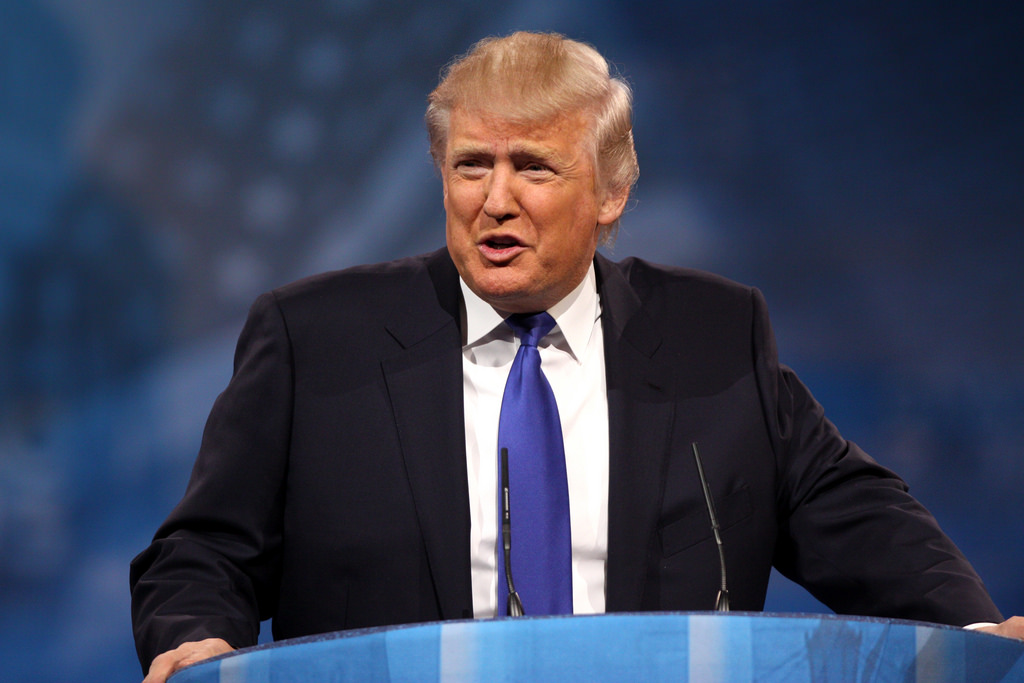
In his speech on Monday to the Detroit Economic Club, Republican presidential nominee Donald Trump outlined a number of proposals to restore and revitalize the American economy. He touched on tax reform, regulatory reform, energy, trade, and more, and through it all delivered some pretty good ideas. However, there’s still a concerning lack of basic economic understanding behind many of his remarks.
Taxes
Let’s start with taxes: Mr. Trump wants them to be lower, and simpler, and who can argue with that? He calls for cutting the corporate tax rate to 15 percent, reducing the number of individual tax brackets from seven to three, and eliminating some of the loopholes and deductions that make filing taxes such a time-consuming and complicated mess. So far so good, although this last point about simplicity is somewhat undermined by his calls for new deductions to cover the cost of child care. I like the idea in spirit, but how do you prove to the IRS what is and isn’t a child care cost? It seems like monitoring those deductions could end up being both extremely expensive and a huge invasion of privacy.
Trump received some energetic booing when he announced that “for many Americans, their tax rate would be zero.” This is a divisive point even among conservatives, who generally want lower taxes for everybody. There is a perception that paying no taxes leaves a person without a stake in the system, and leads to irresponsible behavior as a citizen. Personally, I’m happy whenever the government steals less money from the taxpayers, and if that means not stealing at all from some people, so much the better. Trump would also work to repeal the estate tax, an insidious form of double taxation that absolutely has to go.
Regulations
On regulations, Trump says he would issue a temporary moratorium on all new agency rules. That’s a great idea, but I’d like to know how temporary is temporary, as would all the businesses trying to plan for the future. Trump talks about the importance of certainty, and a certain knowledge about when regulations will kick back in is certainly a crucial part of that. Tell you what, let’s just make the moratorium permanent and call it a day. Then everybody’s happy, right?
Trump also intends to request lists of unnecessary regulations from each agency so that they may be repealed. The only problem with this idea is that it’s hard to imagine the agencies that passed the rules being impartial arbiters of what is or is not necessary. I expect these lists will end up being very short indeed.
In a similar vein, Trump announced that he would immediately cancel all illegal and overreaching executive orders. Again, this is extremely impressive if true, but one cannot help but wonder who is going to make the call of what “illegal and overreaching” means. Given Trump’s rhetoric on security and law and order, it’s hard to imagine him rolling back some of the worst executive orders, such as order 12333, for example, which allows for mass spying on American citizens.
Still, despite these few stumbling blocks, so far this has come across as a rather good Republican policy speech, ticking all the boxes that conservatives usually care about. But it’s when he comes to trade that Trump reveals the underlying misunderstanding of how economies work that casts doubt on whether we can rely on him to be a true champion of economic growth.
Trade
Trump’s major mistake in talking about economic policy, both foreign and domestic, is that he holds a stubborn “us vs. them” mentality regarding the rest of the world. “We are in competition with the world!” he bellows. Unless he’s thinking of the Olympics, no, we’re not. Contrary to what Michael Douglas said in a movie from the 1980s, wealth is not a zero sum game. When one country becomes richer, it doesn’t mean another must become poorer. In fact, when some of us benefit, we all benefit. A rising tide lifts all boats.
Trump doesn’t see it this way. He repeatedly claims “I want wealth to stay in America” as if there is a finite, unchanging amount of wealth. The reality is that wealth is created by specialization, trade, innovation, education, and increases in human capital. When more wealth is created, it doesn’t mean America gets a bigger piece of the pie, it means the pie itself is bigger, and everyone can have a bigger piece.
Early in his speech, Trump attacked the policies of his Democratic opponent, saying that other countries would love to see us elect Hillary Clinton, because of the economic disaster she would create. While it’s undeniably true that Clinton’s policies would be ruinous, why on Earth would other countries delight in that? The U.S. is the largest economy in the world. We trade with everybody. We buy their exports. We send them tourists. We invest in their businesses. The idea that China, Russia, or the European Union would somehow benefit if the U.S. when down in flames is not only ridiculous, it’s insane.
It’s this mindset that leads Trump to reject international trade deals out of hand and to criticize NAFTA (which on balance has been pretty good for America, not to mention for Canada and Mexico), and which has led him to threaten companies who plan to move their operations overseas. This glaring blind spot has left him unable to see that there can be mutual benefit in international cooperation.
So while Trump’s speech contains plenty of good ideas to get the economy going again, his inability to understand something as basic as the gains from trade leaves me skeptical that he will usher in the economic renaissance he promises. (For more from the author of “Trump Delivers Some Good Ideas, Backed by One Huge Misconception” please click HERE)
Follow Joe Miller on Twitter HERE and Facebook HERE.


