
Do Primary Elections in Alaska Work?

According to the Alaska Division of Elections, Alaska taxpayers will pay roughly $2,000,000 to help state political parties choose their nominees this year (note: this does not count the presidential race, which does not use the state primary process). For the price of $2 million in state funding, we should expect an election process that works, and that benefits all Alaskans, right? It seems a fair assumption, but it is also a naïve one. If the past three election cycles are any example, Alaska’s current primary election process has trouble meeting either expectation, which is one of the reasons fewer and fewer candidates are entrusting their bid for office to Alaska’s primary election process.

Of course, in one sense, it is easy to say that the process has worked for the politicians and candidates who emerged victorious from last month’s primary. Winning candidates can often be counted on to defend the process that led to their own election, even when that process utterly fails to deliver for most Alaskans. However, it should be noted that neither Alaska’s governor, lieutenant governor, nor senior US senator won their election through the primary election process. In fact, all three participated in that process and then abandoned it in order to get elected. If bypassing the primary election process worked for three of Alaska’s senior elected officials, why should other candidates not do likewise? And in fact that is what we are seeing today, as candidates openly consider write-in campaigns after primary losses, or bypass the primary entirely by running independent of a party label.

Even as a candidate who was successful in last month’s primary, I would argue that it is fairly easy to see that the current primary election process is not working, and that it needs to be one of the places we look to make cuts in next year’s legislative session. Let us set aside entirely the matter of whether Alaska’s elections are being executed properly. They aren’t, and that will likely be the final nail in the coffin of Alaska’s primary system, but even if they were being executed flawlessly today, I would still have to conclude that Alaska’s current primary election system has failed to deliver.

Voter Participation

According to numbers from the Division of Elections, 12% of Alaskans participated in the 2016 primary election (17% of registered voters). Our senior US senator received support from 5.4% of Alaskans (7.7% of registered voters), which pundits have already hailed as a landslide win. Obviously, her opponents received even less support. But these numbers alone do not tell the whole story.

Primary election participation in Alaska during presidential years has been in free fall since 2008. That year, voter turnout was 40.62%. By 2012, that number had dropped to 25.34%. Now in 2016, that number has dipped to 17.28%, less than one tenth of one percent away from the lowest voter turnout ever recorded and published by the Division of Elections in a federal election cycle.

Public Confidence

While primary election voter turnout is impacted by many factors, of greatest concern to me personally is the impact felt by changes in public trust and confidence in the primary process itself. Simply put, compared to 2008, voters today have less reason to believe that the results of primary elections will be maintained by the candidates and political parties involved. While the results of primary elections used to be a reliable indicator both of which party would be supporting a general election candidate, and of who would be appearing on the general election ballot for that party, today that is no longer the case. Let us review some notable examples, examples that many Alaskan voters will not soon forget:

* In 2010, after pledging to support whichever candidate won the Republican Primary, Senator Murkowski lost her race for the Republican Primary. Instead of supporting the outcome of the primary election, she began negotiations with the Alaska Libertarian Party to appear on the ballot as a Libertarian. When those negotiations failed, she pursued a successful campaign as a write-in candidate, a campaign co-chaired by Democrat Byron Mallott with public support from a number of Republican Party leaders.

* In 2014, after a previous bid for Governor in the Republican Primary was unsuccessful, Gov. Bill Walker returned to the campaign trail as an independent candidate, with running mate Craig Fleener. In the primary election, Byron Mallott won the Democrat Nomination for governor and Hollis French won the Democrat Nomination for Lt. Governor. After the primary election, Mallott replaced Fleener and began campaigning as an independent, and neither Democrat nominee advanced to the general election as a Democrat.

In fact, over the past three primary elections, Alaskan voters have witnessed a number of cases where candidates campaigned under a different party in the general election than they did in the primary, where voters changed party registration to influence the primary election of another party on behalf of their own party, where party leaders supported candidates other than their party’s own nominees, and where the actual results of primary elections seemed to matter very little, as losing candidates either threatened or pursued write-in campaigns, and winning candidates were not assured of support even from their own party. In this type of environment, how do state-financed primary elections continue to make sense?

Party Discipline

This Saturday, the Republican Party will attempt to remove one of its own elected party leaders, Dave Bronson, from office. Ironically, the charge against him is that he has been encouraging voters to support, for US Senate, the candidate who best reflects the Platform of the Republican Party (note: the fracas arose because that candidate is not the candidate who won the Republican primary). Yet, while discipline may exist for party leaders who break ranks in defense of their party’s platform, there does not yet seem to be any corresponding move to pursue discipline for Republican politicians whose official acts undermine the Republican Platform, or who campaign against their party’s own nominees after losing in the primary.

Those trying to make sense of all this should realize that party leadership usually changes biennially, and those currently serving as party officers are likely to be different from those who held those positions two, four or six years ago. However, it does bear mention in the 2010 case, that Sen. Murkowski has had a vote in all official state party business since 2002, and at no point since 2002 has she lost that vote or had her representative removed from party office. In fact, when it comes to official voting leaders of the state party, she has been the one constant.

Conclusion

Perhaps it was once the case that state-funded primary elections served the public by bringing clarity to voters about what candidates of a particular party believed and the positions they would likely hold in office. However, today’s primary election process seems to do more to confuse than to clarify.

When candidates no longer reflect the platform and values of their party, when those who win primary elections do not end up being supported by their party in the general election, when parties ask some of their nominees to drop-out (and others to join competing tickets), when candidates and voters no longer have confidence that the results of the primary election will be honored and maintained by political parties and fellow candidates, then you have all the ingredients for a confusing, dysfunctional system that most voters could simply do without.

Tell me, why should I vote in the primary, if the results of the primary election may not even matter? 83% of registered Alaskan voters chose not to participate this year. They had more important things to do with their time. At some point we need to step back and conclude that the state should not be subsidizing such a dysfunctional process, certainly not to the tune of $2,000,000 every election.

Follow Joe Miller on Twitter HERE and Facebook HERE.
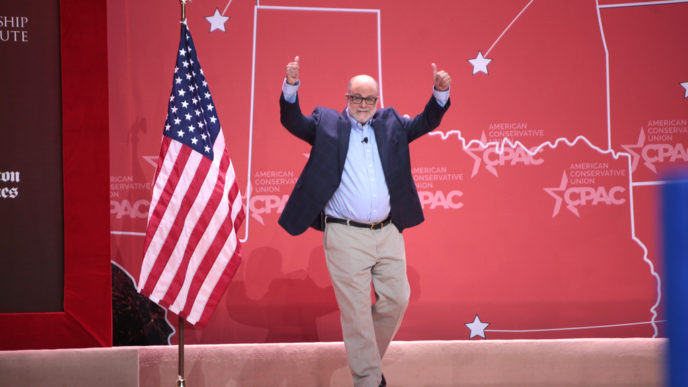
Radio Host Levin Reverses Course: ‘I’m Gonna Vote for Donald Trump’

After once declaring he could never support Donald Trump as the Republican nominee, Mark Levin changed his mind with a big announcement on his radio program Tuesday.

“I’m gonna vote for Donald Trump. I’m gonna wind up voting for Donald Trump on Election Day,” the talk radio host said after reiterating his perspective that Texas Sen. Ted Cruz was a far better choice for conservatives.

“I take no responsibility for the dumb things he says or the dumb things his surrogates say,” he added of the GOP nominee and his campaign.

Levin’s endorsement comes five months after unequivocally stating, “I am not voting for Donald Trump. Period.”

The 58-year-old syndicated radio host also noted that Trump has an uphill climb to win the White House, despite some recent national polls showing him tied or in the lead. (Read more from “Radio Host Levin Reverses Course: ‘I’m Gonna Vote for Donald Trump'” HERE)

Follow Joe Miller on Twitter HERE and Facebook HERE.

Hillary Cuts off Reporter After Being Asked About Clinton Foundation Conflicts

Hillary Clinton seemed visibly agitated on Tuesday after a reporter asked if her daughter’s continuing involvement on the Clinton Foundation board would present a conflict of interest if Clinton is elected president.

The reporter asked the Democratic nominee, “If Chelsea Clinton does stay on the foundation’s board — which the foundation has said very definitively that she will, or that that’s the plan currently — do you believe that could raise legitimate conflict questions, and does that mean –“

“No, I do not,” Clinton snapped. “I’ve said over and over again, doesn’t matter how many times you ask me, and how you ask me. These issues will be decided after the election, and we will decide the appropriate way forward.”

Clinton defended her family charity by insisting that every donor was disclosed, but she acknowledged that a lot of the work will have to be “spun off” because of support from foreign governments.

“We’re going to do what is right and proper to make sure that there is not even a question,” she said. “Let’s not pretend there will be conflicts, because there were not.”

During an ABC News interview with David Muir, the former secretary of state said that her husband, former President Bill Clinton, should not have to step down from his position before the election is over.

“I don’t think there are conflicts of interest,” she said. “I know that that’s what has been alleged and never proven. But nevertheless, I take it seriously.”

While Bill Clinton announced his plans to depart the Clinton Foundation board and stop raising money for the foundation if his wife becomes president as a means of addressing the “legitimate concerns about potential conflicts of interest,” Chelsea Clinton said she would not follow suit.

“As recently as this summer, the foundation was discussing with some allies plans for Chelsea Clinton to leave the board, along with former President Bill Clinton, if Mrs. Clinton should win,” The Wall Street Journal reported. “But on Wednesday [Aug. 24], foundation spokesman Craig Minassian said Chelsea Clinton plans to stay on the board.”

An Associated Press report late last month revealed that during Clinton’s term as secretary of state, more that half of those she met with outside the government had given money to the Clinton Foundation.

Republican presidential nominee Donald Trump has called the Clinton Foundation “the most corrupt enterprise in political history.”

His running mate, Indiana Gov. Mike Pence, has said the foundation should be “immediately shut down.” (For more from the author of “Hillary Cuts off Reporter After Being Asked About Clinton Foundation Conflicts” please click HERE)

Follow Joe Miller on Twitter HERE and Facebook HERE.

U.S. Ship Forced to Change Course After Being Harrassed by Iranian Vessels

In an open act of harassment, a fast attack craft, belonging to Iran’s Islamic Revolutionary Guard Corps approached a U.S. Navy coastal patrol ship in the central Gulf Sunday, coming within 100 yards of the vessel.

A statement from U.S. Defense Department officials called the encounter between the Iranian ship and the USS Firebolt, “unsafe and unprofessional due to lack of communications and the close-range harassing maneuvering.”

According to the department officials, uncovered weapons manned by members of the crew were visible on the Iranian ships.

As the ship continued to approach the U.S. vessel, the Firebolt tried unsuccessfully to make radio contact.

After three attempts at communication with the Iranian ship, the Firebolt was forced to change its course.

According to one official, Iranian ships have been responsible for 31 such incidents of harassment this year alone.

“We don’t see this type of unsafe and unprofessional activity from any other nation,” the official said.

In August, Fox News reported a similar occurrence, which took place in the Strait of Hormuz.

An official with the U.S. Navy confirmed that four ships from the IRGC fleet “harassed” the American destroyer USS Nitze.

The official reported that during a “high-speed intercept,” two of the Iranian ships were able to come within 300 yards of the Nitze.

The USS Nitze, which was on a “routine transit” in international waters, was joined by the USS Mason, a guided missile destroyer, when the incident occurred.

One official described the action of the Iranian ships as “unsafe and unprofessional.”

He went on to say the incident “created a dangerous, harassing situation that could have led to further escalation.”

The USS Nitze made 12 unsuccessful attempts to communicate with the Iranian vessel after which the USS Mason sounded its whistle 5 times, but the Iranian ships continued to approach.

Just like the USS Firebolt, the Nitze was forced to change course. (For more from the author of “U.S. Ship Forced to Change Course After Being Harrassed by Iranian Vessels” please click HERE)

Follow Joe Miller on Twitter HERE and Facebook HERE.

Threats of a Russian Election Hack a Mere Smoke Screen by Democrats for Power Grab

The Democrats are now playing the Russia card. As Donald Trump rises in the polls against an increasingly unpopular Hillary Clinton, Democrats are raising the specter of the nefarious Vladimir Putin. Then-Secretary of State Hillary Clinton’s famous Russian relations reset was a bust, but we are supposed to trust her to handle Putin in the future. More important, the Democrats are sowing grounds to challenge the election, relying on their unnatural ability to squeeze, as if by magic, extra votes from the courtroom.

There may be an even more insidious objective, Outgoing Nevada Sen. Harry Reid — never a fan of election fair play — warned of Russian tampering and called for an FBI investigation. This followed warnings by Jeh Johnson, Secretary of the Department of Homeland Security, of potential cyber-attacks come November. He indicated he was considering designating the election system “critical infrastructure.”

Why is that significant? This would be followed by a Washington campaign to “assist” and “protect” balloting, which inevitably would turn into control. The Heritage Foundation’s Hans von Spakovsky warned that Johnson’s action “may be a way for the administration to get Justice Department lawyers, the FBI and DHS staff into polling places they would otherwise have no legal right to access, which would enable them to interfere with election administration procedures around the country.” That would dramatically, and permanently, transform the constitutional balance between the national and state governments.

Despite scare-mongering by Reid and Johnson, there is no evidence of any impending cyber-attack on the American electoral system. Even Johnson apparently admitted that he could point to no indications of such a threat. A far greater danger to the integrity of U.S. democracy is voter fraud, yet the courts seem determined to block any effort to even require identification to cast a ballot. This undermines the great strength of America’s elections, state control.

As von Spakovsky pointed out, “we have the most decentralized election system of any Western democracy.” This approach protects America from having Russia (or China or anyone else) manipulate electoral outcomes. Nationalizing the process actually would make U.S. elections far more vulnerable to outside attack.

Which demonstrates the continuing wisdom of the nation’s Founders in creating a system that kept most important public policies and activities at the state level. The national government was established to deal with national problems, not to elevate to the national level controversies which belonged closer to the people.

The Founders’ idea, called “federalism,” naturally grew out of Americans’ commitment to self-government. The people, not a king or emperor, were sovereign. They were to solve their own problems and chart their own futures. That required decision-makers to be close to each other and the challenges facing them.

In this way federalism had a lot in common with the Catholic doctrine of subsidiarity. Whenever possible, higher, more distant institutions should leave undisturbed authorities below. Each government had a specific role and should not encroach upon the responsibilities of others.

Early Americans well understood the meaning of federalism: creating two distinct levels (local authorities being subsumed within states) of government with separate and defined duties. Unfortunately, however, the founding generations allowed ambiguity to creep in by calling the national government the “federal” government.

The very concept of federalism requires protecting the vibrancy of state (and local) institutions. The federal system meant dual authority rather than the unitary system prevalent in Europe, including in Great Britain. Although the Civil War established the ultimate supremacy of the national government, the conflict did not wipe out state sovereignty. The so-called federal government remained small, without much day-to-day impact on most people’s lives. Even enthusiastic nationalists at the time could not have imagined the wholesale federal takeover of education, health care, and welfare.

Of course, to speak of “federal” action now means to nationalize an issue. Thus, supporting the founding principle of “federalism” risks communicating the opposite of the truth to people, suggesting that the Constitution turned most problems over to the “federal,” that is, national government. And that continuing islands of state authority, such as running elections, are anomalies which should be wiped out.

Federalism in the original sense of the word always set American democracy apart from that of other nations. Power was separated and balanced; responsibility was accorded to institutions best able to confront problems. The people retained ultimate sovereignty and remained close enough to their officials to hold the latter accountable.

Unfortunately, these principles are under sustained attack. Attempts to tie Trump to Russia are just another attempt to expand federal, as in national, authority. With so many of their leaders AWOL, only the American people are left to stand up for their country’s founding principles. Only We the People. (For more from the author of “Threats of a Russian Election Hack a Mere Smoke Screen by Democrats for Power Grab” please click HERE)

Follow Joe Miller on Twitter HERE and Facebook HERE.
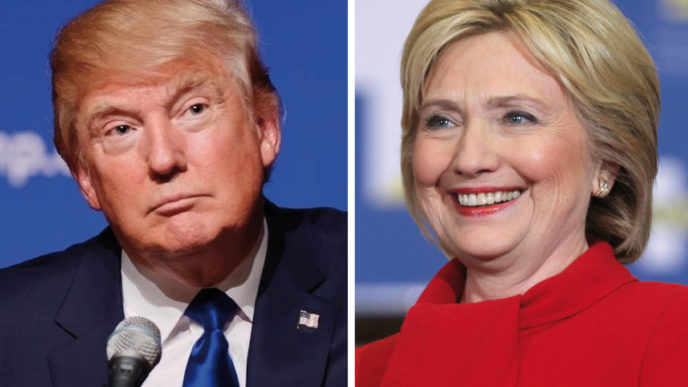
Polling Average Shows Trump-Clinton Race Tightening

The 2016 presidential election has proven frustrating for many Republicans. The GOP nominee, a businessman with no political resume, has alienated key demographics, insulted prominent members of the press, and divided leading voices in the party. But despite all this, a recent average of national polls suggests he has closed the gap with Democratic nominee Hillary Clinton.

One new CNN poll has Trump ahead by 1 point in a head-to-head match-up, while the RealClearPolitics’ (RCP) average of recent polls has Clinton up by a modest 3.3 points — a lead far smaller than the nearly seven-point lead she had in late August. And while a recent Washington Post-SurveyMonkey poll shows Hillary maintaining a comfortable lead, two poll experts cautioned a measure of skepticism about that polls’ methodology.

“Mark Blumenthal and Jon Cohen are two of the best pollsters in the business,” RCP Senior Elections Analyst Sean Trende told The Stream about the Post‘s online poll. “They do not put out a junk product. That said, it is a new methodology, and even the best methodology can’t fix sampling error.”

Robert Morris University (RMU) professor Philip Harold, Ph.D., was cautious about the poll results. “They surveyed a lot of people, and included all 50 states, but that does not mean it is an accurate poll,” he explained in an e-mail. “There is really no way in this poll to get the opinions of people who are less willing to share their views, which opens it up to significant non-response bias.”

According to Harold, the poll “assumes, in other words, that there is no significant difference between the populations of supporters for the candidates, and their willingness to share their opinion. That is a significant assumption, and one which is belied by the recent history of polling for Trump support, which finds his supporters more reticent to share their opinion (e.g. throughout the primary season he consistently gained 2% more support than the polls predicted).”

“The medium of an online poll may also very well favor Clinton supporters — people who are in front of computers all day and who take online surveys are not the downscale, working class voters who are enthusiastic about Trump,” Harold said. “The Texas results of this poll show that something might be off — it shows a dead heat between Trump and Clinton, which no one really thinks is true.”

Do Third-Party Candidates Matter?

One way of measuring the race is how Trump and Clinton match up when Libertarian Party nominee Gary Johnson and Green Party nominee Jill Stein are included in the polls. RCP’s average in a four-way race found that Clinton’s lead slips to 2.4 points over Trump, indicating that the secondary candidates are taking more from Clinton’s support than Trump’s.

It’s “hard to say” whether Johnson and Stein will factor into November’s elections, said Trende. “Third parties tend to fade down the stretch, except when they don’t (e.g. [Ross] Perot [in 1992]). Given the sky-high unfavorable for both candidates, I wouldn’t be at all surprised if things didn’t fade this year.”

Harold, however, said, “I tend to think that as people’s minds are focused in the months, days and weeks leading up to election day, Stein and Johnson’s numbers will drop. They will be factors and will pick up votes, definitely. But more of a factor will be who votes.”

“Clinton’s challenge is motivating voters who traditionally have had lower turnout, but who voted in much greater numbers the past couple elections for Obama — that is difficult to do,” Harold continued. “Trump’s task is to bring those who have not voted to the polls — that is also very difficult to do.”

“Getting supporters to the polls is what keeps the Clinton campaign up at night,” he said. “They have lots of money and technology, but they do not have an inspiring candidate. The key state in the electoral college is Pennsylvania. Trump needs to win there, and he should win there, given the kind of campaign he’s running. The nice 6-to-9-point gap there Clinton has opened up keeps the Trump campaign up at night.”

Conclusions

In 2012, many conservatives assumed that pollsters were overstating President Barack Obama’s excitement among voters. As Hot Air’s Ed Morrissey told The Stream, “The reason we were doing this so-called unskewing of the polls, which turned out to be a huge mistake, was that we were convinced the electoral model had changed from 2008 to 2010.”

“We were wrong in our assumptions because we were making assumptions,” said Morrissey. Obama ended up beating GOP nominee Mitt Romney by the same margin as the polls predicted. But in its recent poll showing Trump with a three-point lead over Clinton, The Los Angeles Times indicated that what conservatives got wrong in 2012 could end up being correct in 2016.

Harold also says pollster accuracy is a legitimate question in 2016. “Trump won the Republican primaries by bringing in new voters to the ballot box. That makes it very, very difficult for pollsters, who are relying on the statistics from previous elections, to filter out those who do not plan to vote and to weigh their samples.”

According to Trende, however, “Different pollsters have different methodologies. So while the averages are good, there is always a chance that some particular pollster ‘figured things out.’ It might be the LA Times. But it might also be SurveyMonkey (which has HRC +6), so over time you’ll be *closest* to the correct result using averages.”

And what if the popular vote in November comes down to the wire? “If you look closely, in [the RCP] averages, in 538’s averages, and in the SurveyMonkey polls, electoral vote #270 actually falls a touch on the Trump side of the popular vote. In a tied popular vote race, Trump probably has an edge.” (For more from the author of “Polling Average Shows Trump-Clinton Race Tightening” please click HERE)

Follow Joe Miller on Twitter HERE and Facebook HERE.
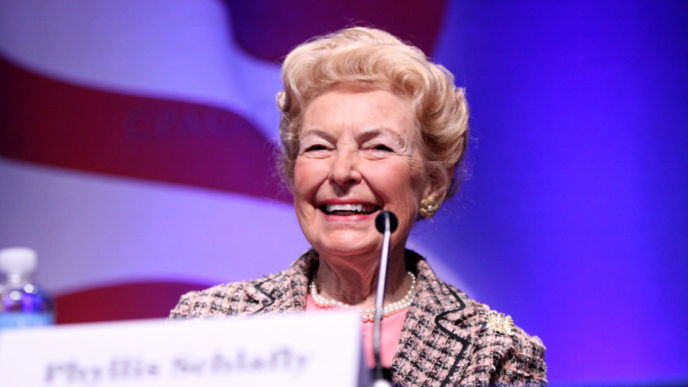
The Incredible Leadership of Phyllis Schlafly

With the death of Phyllis Schlafly, America has lost an authentic heroine.

Schlafly was an American patriot, a true renaissance woman, an exceptional leader, and a wonderful human being.

At the age of 92, Phyllis was one day from releasing her latest book. While she wrote many, no one can forget the one that started it all: “A Choice Not an Echo.” That little book issued in paperback helped to spur the modern conservative movement.

I have one of those original books and it helped me to know what I believed and why I believed it. And for younger conservatives who are seeking the truth, that little book was re-released as a 50th anniversary addition, updated and expanded.

Schlafly’s Political Leadership

Phyllis will be remembered by most Americans as the lady who defeated the so-called Equal Rights Amendment. And she did, though she would be the first to tell you that it was the women across America, roused and incensed by learning the truth of how this amendment would demean their status and roles in the name of equality who took to the hallways of state capitols to stop ratification of this amendment to the United States Constitution.

Her leadership, however, was historic. She organized women (and more than a few men as well) under the banner of Eagle Forum to take their facts, their unique brand of lobbying, their winning smiles, and their messages of unintended consequences to scores of state legislators.

Phyllis was ever present at the state capitols but also on the television programs where her debating style, facts, and a smile disarmed many a host and frustrated the most fervent of her opponents. She never resorted to ad hominem attacks as her opponents often did because she had the truth and the facts on her side.

But, Phyllis Schlafly was a leader on so many other fronts that matter today. She loved the U.S. Constitution and believed it to be inspired. One of her greatest joys was being appointed by President Ronald Reagan to the Commission on the Bicentennial of the U.S. Constitution. I worked for Reagan as his deputy for presidential appointments at the time and I don’t really know who was happier about this appointment—Reagan for being able to appoint Phyllis or Phyllis for receiving this appointment from Reagan.

She, of course, served with distinction alongside former Chief Justice Warren Burger in bringing the Constitution and its limits on federal government to millions of Americans.

National defense, anti-communism, American leadership, freedom around the world, limited government, parental choice in education, the strength of the traditional family, life, national security, the strategic defense initiative, national sovereignty, immigration reform—well, this is just a short list of the many major policy areas on which Phyllis spoke through her books, her Phyllis Schlafly Report, her conferences, and her public appearances. She was brilliant and a great communicator, a woman well-grounded in moral truths.

It is also an interesting note that she went to law school after raising her family, though she would have been admitted to Harvard Law after graduating from college. Phyllis certainly did not need a law degree, but found that liberals like Sen. Birch Bayh of Indiana sought to disdain her legal knowledge and debating skills because she did not have one. So she just decided to remove that little argument by getting that law degree, and so she did, graduating near the top of her Washington University Law School class.

Schlafly’s Legacy in the Conservative Movement

And Phyllis was a wonderful mentor to many. I first met her at a conference shortly after I came to Washington, D.C., as a 20-something young conservative. It was a meeting of the top conservative leaders in the country and I was the junior staff person giving out the registration materials.

Bill Rusher from National Review, Tom Winter and Allen Ryskind from Human Events, Stan Evans and Congressman John Ashbrook of the American Conservative Union, Frank Donatelli and Ron Docksai of the Young Americans for Freedom, Morton Blackwell, and the few other top leaders were there. When Phyllis Schlafly approached, I stood up and said, “Hello, Mrs. Schlafly,” to which she replied, I’m Phyllis, tell me your name.

We became friends and allies from that day forward.

She hosted me in her home on one of my earliest trips as political director of the American Conservative Union on whose board she served. We had a wonderful visit and I benefitted from her wisdom on the political and policy battles of the day. Eleven o’clock approached and she said that she always watched the news … it was the time that she did her 100 sit-ups every day. Phyllis was a disciplined woman, too.

Phyllis and Fred raised six children, but there are literally thousands of us around the country who feel a kinship to this extraordinary woman.

During my time as a member of the senior management at The Heritage Foundation, there have been numerous occasions for us to work together and she has always been one of Heritage’s treasured allies. Her student conferences were often held in our auditorium and Heritage staff would often slip in the back of the auditorium when Phyllis was about to speak. You could not be part of the conservative movement and not know of the enormous contribution Phyllis Schlafly has made to assure that we and future generations know the blessings of liberty and the battle we must wage to keep them.

Phyllis showed us how to live, to learn, to stand for our principles and values. She lived as the Prophet Micah wrote that the Lord requires of us: to do justly, and to love mercy, and to walk humbly with God. We have been blessed with her friendship, her leadership, and her love. Her Lord has welcomed her home with the words, “Well done, good and faithful servant.” Phyllis Schlafly, we will miss you. (For more from the author of “The Incredible Leadership of Phyllis Schlafly” please click HERE)

Follow Joe Miller on Twitter HERE and Facebook HERE.
What Zika Crisis Shows About Women’s Health Funding Debate

After Congress failed to pass a Zika funding bill due in part to disagreements over restricting funds from going to Planned Parenthood, pressure is on for lawmakers to reach a deal this month to address the growing crisis.

But prospects for an agreement remain bleak, with Republicans standing firm on their belief that Planned Parenthood does not need more funding to contribute to the fight against the Zika virus, and Democrats insisting that they do.

In Florida, meanwhile, one major network of federally approved health care centers says it is ready to ramp up efforts against Zika, funding or no funding.

“We can handle it,” Tiffani Helberg, spokeswoman for Community Health of South Florida Inc., told The Daily Signal. “We have enough physicians and nurses and medical experts and health centers to handle anything.”

As Democrats and Republican lawmakers negotiate, Planned Parenthood has insisted that its organization is critical in the fight against Zika, and therefore should be included in any Zika funding bill.

“Often we are the only provider that someone will see all year and we are the front line of defense when it comes to battling Zika,” Dawn Laguens, executive vice president of Planned Parenthood Federation of America, said during a press conference on June 30 after Senate Democrats blocked the $1.1 billion Zika measure.

In reality, clinics affiliated with Planned Parenthood, the nation’s largest provider of abortions, are limited in the services they can provide in the fight against Zika.

In Puerto Rico, for example, Planned Parenthood is running an educational campaign, providing condoms and birth control, and informing women of their options if they do get pregnant while being infected with the Zika virus. If a woman believes she’s infected with the virus, she must go elsewhere for testing and treatment.

The $1.1 billion measure that already passed the House but failed in the Senate, Laguens said, “does not provide necessary planning for family planning resources in line with [Centers for Disease Control and Prevention] recommendations.” The Planned Parenthood official added the bill “does not give money to the providers best suited to help fight the Zika virus, like Profamilias in Puerto Rico.”

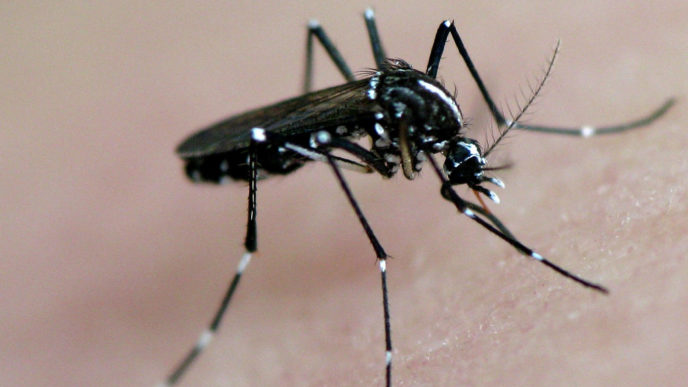
Zika, which has hit Puerto Rico the hardest of all states and U.S. territories, is transmitted through mosquitoes and also sexually. The virus poses the greatest risk to pregnant women, as it’s known to cause microcephaly in as many as 13 percent of infants, which results in a baby’s head to be unusually small and its brain to be underdeveloped.

According to its website, Profamilias operates two women’s health care clinics in Puerto Rico under the umbrella of the International Planned Parenthood Federation.

When President Barack Obama made his $1.9 billion Zika funding request back in February, he did not specifically ask Congress to fund Planned Parenthood.

Planned Parenthood is not a qualified provider under the Medicaid program in Puerto Rico, which will distribute federal Zika money. Without a change to Medicaid provider eligibility, Planned Parenthood would not be eligible to receive funding through Obama’s request.

Instead, the Zika bill currently being negotiated would increase government funding for the 13 preventative clinics in Puerto Rico that already provide care through the Medicaid program. In addition, the bill calls for a 700 percent funding increase for community health centers across the United States.

According to the Centers for Disease Control and Prevention, Puerto Rico currently has 13,791 locally acquired Zika cases. Zika-infected mosquitoes also have made their way to Florida, where 35 people have been locally infected, in addition to 507 travel-related cases involving state residents.

Centers for Disease Control Director Thomas Frieden warned last week that the federal government is running out of resources to fight the virus, pressuring Congress to pass a spending bill.

“We don’t have the resources we need to mount the kind of robust fight against the disease,” Frieden said Aug. 30 during a Twitter town hall. “Without additional funding we will not be able to fully understand the impact of Zika.”

Blame Game

Since failing to pass a Zika funding bill this summer, Republicans and Democrats in both the House and the Senate have been blaming each other.

“Democrats would prefer to filibuster the bill [in the Senate] if there is no funding specifically for Planned Parenthood,” Don Stewart, a spokesman for Senate Majority leader Mitch McConnell, R-Ky., told The Daily Signal via email. “They’ve filibustered the bill twice already and I expect they will again.”

“Democrats have been calling for bipartisan negotiations for months, but instead of coming to the table, Republicans are holding a vote on a bill they know will fail,” Adam Jentleson, deputy chief of staff for Senate Minority Leader Harry Reid, D-Nev., said, according to CNN. “Once this partisan exercise is over, we hope Republicans will finally engage in real negotiations to address this critical issue.”

The Daily Signal contacted Reid’s office for further comment, but they did not return the request.

The Heritage Foundation’s Paul Winfree, a budget expert, argued in an August interview that the Obama administration could shift up to $2.2 billion from an account established to counter the Ebola virus. But as of Tuesday, Congress was working toward reaching a deal on the Zika bill.

With the issue of Planned Parenthood a sticking point for both Republicans and Democrats, the question remains: How essential is Planned Parenthood in the Zika fight?

The Daily Signal contacted Planned Parenthood, but the group did not return the request for comment.

Is Planned Parenthood Equipped?

Casey Mattox, a lawyer at the conservative nonprofit Alliance Defending Freedom, argued that “for public health reasons alone,” federally qualified health centers—which don’t include Planned Parenthood—should be the recipients of any Zika-related health funds.

“We are facing a public health crisis with Zika and in a public health crisis, you want the places that can actually address that crisis to receive the funding,” Mattox said. “Federally qualified health centers are equipped to do that and Planned Parenthood simply is not.”

Federally qualified health centers each year provide comprehensive health care, including obstetrics and gynecology services, at little to no cost to millions of Americans who are uninsured, jobless, or among the working poor.

According to the Centers for Medicare and Medicaid Services, federally qualified health centers provide more than three times the total number of services that Planned Parenthood provides.

“In federally qualified health centers, you actually have medical professionals on staff—doctors and nurses on staff—to diagnosis and treat illness,” Mattox said, adding:

That’s what they’re there for. Planned Parenthood does not have that. They have people who can provide birth control, and can provide other women’s health screenings in some cases, but they don’t have medical professionals that can actually provide primary care services. And that’s what you need in a public health crisis, the ability to provide primary care services, determine whether someone has Zika, and advise them on how to not get Zika.

Currently, 13,540 clinics provide comprehensive health care for women in the U.S., compared with 665 Planned Parenthood locations, according to data collected by Alliance Defending Freedom and Charlotte Lozier Institute, the education arm of the Susan B. Anthony List, a pro-life advocacy group.

In Puerto Rico, where the Zika virus is hitting especially hard, 20 federally qualified health centers exist, according to the Kaiser Family Foundation.

Profamilias, operating under International Planned Parenthood Federation, runs two permanent clinics in Puerto Rico in addition to 11 “service points” there, according to its website.

The Daily Signal sought comment from Profamilias, but it did not reply.

‘Not Overwhelmed at This Point’

In southern Florida, where the number of Zika cases continues to rise, a spokeswoman for one federally qualified health care network said its centers are ready and prepared to take on more Zika cases.

“We have seen some Zika patients and we’re working with the Health Department to handle the situation,” said Helberg, vice president for communications and development for Community Health of South Florida Inc. “We’re not overwhelmed at this point. I think everything’s being handled appropriately.”

Community Health of South Florida Inc. operates 11 centers covering the Florida Keys to Miami, where the majority of domestic Zika cases have been reported.

Helberg said she did not want to address the specific issue of Planned Parenthood and whether community health centers are more deserving of taxpayer funds to fight Zika.

But she said that if a pregnant woman goes to one of its centers to get tested for Zika, “we’ll take care of them throughout their pregnancy.”

“We treat everyone—children, adults, elderly, you name it—women, men, and we provide a host of services to them,” she said. “We are here to treat them with whatever needs they have, in any of the areas that we have services.”

Mattox, the lawyer with Alliance Defending Freedom, argued that health care centers such as the network in South Florida unquestionably are better suited to receive federal Zika funds.

“If Planned Parenthood wants to address this problem, then, unlike federally qualified health centers, they are well-equipped to do that,” the lawyer said, adding:

In the last 10 years, Planned Parenthood has brought in over $750 million in excess income and they’re spending well over $20 million this election season in order to influence the outcome in November. So they have plenty of resources at their disposal if they want to pitch in and do what federally qualified health centers and many other nonprofits are doing without having the large bankrolls to be able to support that.

It makes a lot more sense for our taxpayer dollars to be supporting the efforts of the entities that don’t already have the billion-dollar reserves and actually need our resources to be able to provide those services.

More for Doctors and Hospitals

And while financially prepared to face the growing Zika crisis, Helberg said, the community health network of health centers in Florida would welcome more funding.

“We’ve had a lot of cutbacks in funding as of late and that is hurting us as a community health center,” she said. “We are the No. 1 resource for many people, whether you’re insured or uninsured, whether you’re homeless, whether you’re undocumented, we will provide you health care services. And without adequate funding, that’s difficult. Zika or no Zika.”

Prior to the Zika outbreak, conservatives had been calling on Congress to strip Planned Parenthood of its $500 million in taxpayer funding and instead divert that money to health care centers such as the network that Helberg helps to operate.

The effort, which ultimately failed, came after the Center for Medical Progress, a group that opposes abortion, released a series of undercover videos showing high-ranking Planned Parenthood officials discussing the sale of tissue from aborted babies. Planned Parenthood has denied illegal activity.

Some health care experts warned Congress that stripping Planned Parenthood of its taxpayer dollars could hurt the millions of patients the organization serves each year.

This time around, however, Republicans aren’t asking to take away money from the nation’s largest abortion provider—they’re arguing against giving it more.

The measure the Senate will take up again this week, which already passed in the House, “actually increased funding for health care,” Stewart, the spokesman for McConnell, said. “And yes, it goes to doctors, hospitals, community health centers.”

Whatever the outcome, Helberg said she remains optimistic about community health centers’ ability to step up if the Zika crisis gets worse.

“I think we’re equipped,” she said. “We’ve withstood many challenges—bird flu and all the other horrible things that have come through—and that’s the role of a community health center: to be here through good and bad times. We can handle it, we have enough physicians and nurses and medical experts and health centers to handle anything.” (For more from the author of “What Zika Crisis Shows About Women’s Health Funding Debate” please click HERE)

Follow Joe Miller on Twitter HERE and Facebook HERE.

Top 10 Findings From the FBI’s Hillary Labor Day Document Dump

Over at the Washington Examiner, Ashe Schow boils down the FBI’s Labor Day weekend document dump to the bare essentials.

The top 10 revelations related to Hillary’s interview with the FBI?

10. Hillary Clinton is incompetent (part I): she claimed she didn’t know that a (C) marking on official government documents meant that it was classified as “Confidential”.

9. Hillary Clinton is incompetent (part II): she also claimed she didn’t know how document classification worked; say, that Top Secret, Secret and Confidential are the three basic levels of classified documents.

8. Hillary Clinton couldn’t recognize what documents should be protected: like emails regarding specific drone strikes, for instance. Hillary was fine with sending those over her unprotected, illegal, and bathroom-dwelling email server.

7. Hillary Clinton hid at least 18,000 work-related emails: far from turning over “all work-related emails”, she hid tens of thousands of government-related communications, because they were all about yoga lessons and Clinton Foundation bribes, but mostly bribes.

6. Hillary Clinton used more than a dozen mobile email devices for State Department business: so much for the using “one device for convenience” lie.

5. Hillary Clinton repeatedly lost her mobile devices: but there were just a bunch of state secrets on them, so what’s the big deal?

4. Hillary Clinton ignored government warnings not to use mobile devices for official business: “Clinton and her immediate staff were notified of foreign travel risks and were warned that digital threats began immediately upon landing in a foreign country, since connection of a mobile device to a local network provides opportunities for foreign adversaries to intercept voice and email transmissions…” — and Clinton and her immediate staff, of course, ignored such warnings.

3. Hillary Clinton was never authorized to conduct State Department business on her private server: she was required to solicit and gain approval from the government in order to conduct official business on her home-brew, bathroom email server. She failed to do so. She ignored all official guidance.

2. Hillary Clinton was terrified she’d been hacked: she had received a variety of phishing emails, including porn solicitations. No word on what category said porn fell into.

1. Clinton mass-deleted emails just after The New York Times revealed the private server: only three weeks after the Times revealed Clinton’s private email server, the “oh sh**” moment occurred, according to the FBI. Electronic shredding was the result.

(For more from the author of “Top 10 Findings From the FBI’s Hillary Document Dump” please click HERE)

Follow Joe Miller on Twitter HERE and Facebook HERE.

Why I Applaud Trump’s Plan to Show Teachers the Door

There are not too many areas of policy on which Donald Trump and I agree. One of the few exceptions is on the topic of education policy, where Trump has rightly condemned the Department of Education as wasteful, meddlesome, and counterproductive. While the presidential candidate has waffled back and forth on whether he would eliminate the department outright or drastically scale it back, it’s clear that he has no love for the unconstitutional federal education bureaucracy.

Predictably, progressive groups are horrified at Trump’s proposal, and are scrambling to pull at the heartstrings of Americans, emotionally manipulating them into opposing this eminently sensible proposal. In this vein, the Center for American Progress (CAP) has released a policy paper claiming that eliminating the Department of Education (DoEd) would destroy jobs for nearly half a million teachers.

To which I can only respond: Good!

It’s time to punch a hole in this myth that teachers are some kind of noble, magical unicorns selflessly molding young minds out of the goodness of their hearts. While there are many good teachers who honestly want to help children learn, we need to get over this idea that every teacher is infinitely valuable simply by virtue of their chosen profession. Teaching is a job like any other, but unlike most other jobs, it’s one that has been badly corrupted by politics and government to the point where many teaching positions do more harm than good.

In particular, public school teachers have largely become glorified babysitters, tasked with crowd control, not education. And mandatory testing standards mean that many teachers are simply ”teaching to the test” rather than engaging in a genuine effort to enlighten their students. In some schools, the role of the teacher has been reduced to pressing play on a device containing a pre-recorded lesson plan. Yet these are the brave and noble souls that liberals think deserve special treatment compared to other workers.

Regarding the Department of Education itself, it’s important to note that the U.S. Constitution does not mention education as an enumerated power of the federal government, The Tenth Amendment makes explicit that anything not specifically given to the federal government is the sole province of the states, and the people. The Department of Education is therefore, by definition, illegal. Anyone who uses the argument that “we must uphold the rule of law” must likewise oppose the Department of Education, or risk falling into the fathomless abyss of hypocrisy.

Now that that’s out of the way, let’s take a pragmatic look at what the Department of Education actually does. The Department’s core function is awarding large amounts of money to state and local school systems in the form of federal grants, with inevitable strings attached that hamstring localities’ ability to set their own curricula, standards, or procedures. The massively unpopular Common Core standards are a prime example of the kind of mischief the DoEd gets up to, as states were lured into the restrictive standards by massive amounts of funding through the Race to the Top program, only to discover that any semblance of flexibility was the cost of the grants.

Federal control over local schools makes no sense, as bureaucrats in Washington have no idea what is needed to educate students in Alaska, Alabama, or Maine. Additionally, the money handed out by the DoEd has not resulted in any measurable improvement in education outcomes over the forty or so years of its existence.

If, as CAP alleges, scaling back teachers and funding will be catastrophic for student outcomes, why is it that we have seen absolutely no benefit from the steady increase of both these variables over the past several decades? This is how government operates; it endlessly piles up spending and staff that were never necessary to begin with, and then screams that disaster will occur if they are removed.

This brings us back to teachers. At this point, most people are familiar with teachers’ unions and how they prevent bad teachers from being fired. We’ve all heard stories about hopelessly incompetent or even criminal teachers staying on staff because of their union’s political power. A business that is unable to get rid of its worst employees is always doomed to failure, unless, of course, it is being propped up by endless revenue streams courtesy of the American taxpayer, as public school are. These people don’t care about students; they care about lining their own pockets.

This diversion of funds from the private sector, where people spend money on things they care about, and where they try to find good value for their dollars, to politically favored groups like teachers who bear no responsibility for doing a good, or even acceptable job, is a tremendous waste, not just of money, but of young minds as well. I have no doubt that many of these teachers who are propped up by funding from the DoEd would be much more valuable to society in other roles, where their worth is determined by the services they provide to the public, not the lobbying of special interests.

In summary, children in public schools, especially those under the thumb of the federal government, are not taught, they are controlled. They are not encouraged, they are discouraged. They are told what to think, not how to think. They are brainwashed to obey authority without question, and punished when they dare to think differently. In my view, the fewer people we have engaging in such irresponsible treatment of our children, the better. (For more from the author of “Why I Applaud Trump’s Plan to Show Teachers the Door” please click HERE)

Follow Joe Miller on Twitter HERE and Facebook HERE.