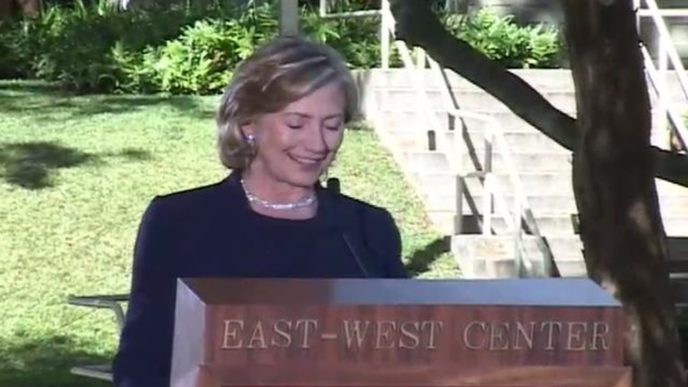
5 Events That Prove This Was Hillary’s Terrible, No Good, Very Bad Week

Hillary Clinton just had a terrible, no good, very bad week. A series of events have started to catch up with her and have resulted in Donald Trump closing the polling gap nationally and state by state. Here are five reasons why this is so:

1. Trump looked presidential in a foreign visit

Clinton’s main selling point is that Trump is an unhinged individual that will embarrass himself and the nation when dealing with foreign leaders. That was forcefully put to bed on Wednesday when Trump flew to Mexico for a meeting with President Enrique Peña Nieto. Following the meeting, the two held a joint press conference which had Trump looking and acting presidential. Sure there has been some quibbling over whether or not the two discussed payment for a wall across the US-Mexico border. But the underlying optics were of a cool controlled Trump, who sounded measured.

2. Press is getting irritable about press conferences

Today marks 273 days since Clinton has held a press conference. After this week Trump has held more press conferences in foreign countries than Clinton has held on American soil. The press is starting to take notice. Politico cataloged press reaction after Tim Kaine told CBS news that Clinton is very available to the media:

Co-anchor Norah O’Donnell, off-screen, asked, “Really?”

“That’s not true – no matter how you count her availabilities,” CNN reporter Dan Merica tweeted, cc’ing traveling press secretary Nick Merrill.

Trump spokesman Jason Miller retweeted the message.

“I bet the reporters who follow Clinton ‘everywhere she goes’ would beg to differ with Tim Kaine’s assertion here,” The Washington Post’s Philip Rucker wrote, to which Bloomberg Politics’ Jennifer Epstein responded, “We do.”

To borrow a phrase from CR’s Editor-in-Chief Mark Levin, Clinton’s “praetorian guard” is getting antsy at carrying her water. And they have started being very vocal about it.

3. Emails won’t go away.

This week we also learned that the State Department has uncovered 30 more emails regarding the Benghazi consulate from Hillary Clinton’s private email account. This calls into question whether Clinton was truthful when she said all work emails were turned over before using BleachBit to clean her servers. It is not just the Benghazi emails that are resurfacing, but details about the whole operation.

The Daily Caller reported that Clinton’s top aides at the State Department, Cheryl Mills and Huma Abedin, were very weary of her use of a private email.

One aide worried that Clinton was giving her private email address “to everyone,” but the other aide assured her that Clinton was not widely distributing her address, but that she was receiving forwarded email from her prior Senate email address.

“Personally, I think it’s outrageous that staff go straight to her on this stuff,” Deputy Chief of Staff Huma Abedin told Chief of Staff Cheryl Mills in an April 3, 2009, email exchange.

“This is unbelievable, and she also should not be giving her email to everyone – b/c she will get stuff like this,” a frustrated Mills replied.

The emails will continue to dog Clinton, and it will not be just from Wikileaks. A judge has ruled that a whole host of other emails must be released. As the public learns more, Clinton’s poll numbers continue to drop.

Late yesterday, the FBI released the report they sent to the Justice Department regarding Hillary’s use of a private email server. As Leon Wolf of Redstate noted on Twitter, “From the FBI’s notes they just released: 68 of the email chains they found on Clinton’s private server are still classified today.”

4. Increasing calls for the end of the Clinton Foundation

After Associated Press investigation alleging pay-for-play between the Clinton Foundation donor base and the State Department under Clinton, media publications have started to call for the Clinton Foundation to wind down fundraising operations. In an editorial, the New York Times called on the Clinton Foundation to stop taking donations immediately, saying:

The Clinton Foundation has become a symbol of the Clintons’ laudable ambitions, but also of their tangled alliances and operational opacity. If Mrs. Clinton wins, it could prove a target for her political adversaries. Achieving true distance from the foundation is not only necessary to ensure its effectiveness, it is an ethical imperative for Mrs. Clinton.

The Hill reported that experts have called into question the Foundation’s promise to end taking donations with a Clinton win.

Watchdog groups are poking holes into former President Bill Clinton’s promise that his family’s foundation will stop taking foreign and corporate cash if his wife wins the presidency.

They say it would be relatively easy for foreign governments or individuals to funnel cash into the foundation during a Hillary Clinton presidency without the American public ever learning of the foreign contributions — despite the former president’s promises outlined in an Aug. 22 open letter published on the Clinton Foundation’s website.

Rather than tamping down talk of the Foundation, the media are seemingly digging further into it. It will be interesting to see if the media back down on the Clinton criticism if she decides to hold press conferences, as this may just be a tool they are using to force her hand.

5. Favorability ratings nosedive

Clinton’s already high negatives have begun a free fall, as the public learns more about her shady dealings and probable corruption at the State Department. This week polling began to show her unfavorable rating ratcheting up from a percentage in the low 50s to a percentage pushing 60 percent. This has coincided with Trump’s unfavorable rating coming down from the mid-60s to the upper 50s.

The shift is also being shown in the polling as Trump has begun closing the post-DNC gap Clinton reached earlier this summer.

All in all this has been a brutal week for Hillary Clinton. Trump has once again seized the momentum, and is driving the message. With their first joint appearance on Wednesday evening, we will see if this momentum can hold. (For more from the author of “5 Events That Prove This Was Hillary’s Terrible, No Good, Very Bad Week” please click HERE)

Follow Joe Miller on Twitter HERE and Facebook HERE.

THE FIX WAS IN: Yes, the FBI Found Ample Evidence That Hillary Clinton Violated Federal Records Act

FBI investigators compiled enough evidence during their investigation of Hillary Clinton’s rogue email server to show that the former secretary of state violated federal records-keeping laws.

She was also informed in 2009, her first year in office, that she had an obligation under the Federal Records Act to forward her State Department work emails to the agency’s record preservation system. But, according to the news website Circa, Clinton opted against that option because she wanted control over “sensitive” messages.

Circa’s report comes from former Washington Times veteran reporter John Solomon and is based on unnamed sources familiar with the FBI’s investigation of Clinton. That probe ended in July when the FBI and Justice Department declined to press charges against the Democratic presidential candidate or her aides for their handling of classified information.

But sources told Solomon that there was ample evidence that Clinton violated the Federal Records Act by failing to save her work-related emails to the State Department’s SMART system and by exclusively using a private BlackBerry and email account.

Further, Solomon reports that one witness interviewed by the FBI invoked their Fifth Amendment right against self-incrimination. It is unclear who that witness was, but the report describes the individual as a technology-oriented worker.

Bryan Pagliano, the State Department official who Clinton paid under the table to set up and manage her rogue email network, was interviewed by the FBI under limited immunity. He had pleaded the Fifth in an interview with the House Select Committee on Benghazi last year. It’s unclear if he also invoked those rights during his FBI interrogation.

The report contains other new information, which has not been verified by The Daily Caller.

Clinton’s team of handlers was specifically questioned by a tech worker involved in maintaining her private server at her New York residence about whether the system flouted federal rules and regulations. According to Solomon’s source, the worker was told that the system was in compliance.

Clinton also opted to continue using a private email address on her personal BlackBerry because she did not want her emails made available under the Freedom of Information Act. Clinton knew that by using a personal email account, her records would not be accessible to the State Department employees who handled FOIA requests.

That claim, if true, would grossly undermine Clinton’s assertion that she did not use the private email system to flout FOIA. A federal judge has granted the watchdog group Judicial Watch discovery in order to get to the bottom of that issue. The group recently submitted 25 questions to Clinton asking her why and how she set up the private email system.

Despite Clinton’s claims that the system was designed not to avoid FOIA but for personal convenience, several FOIA requests filed for Clinton’s email records while she was in office were denied by the State Department. One of those FOIAs — filed in December 2012 — was handled by Clinton’s chief of staff Cheryl Mills. Though Mills knew that Clinton used a private email account for State Department business, the FOIA request was denied by the State Department.

The State Department’s inspector general issued a report in January calling the agency’s handling of Clinton FOIAs “inaccurate” and “incomplete.” (RELATED: State Dept. Gave ‘Inaccurate’ Response To Records Requests For Hillary’s Emails)

“There was plenty of evidence from our interviews, especially from technical and compliance staff, as to the intention of creating a private email system outside the State Department’s record keeping. It was well known, and it persisted even after people raised legal and security concerns,” one source told Circa.

Some of the claims in the Circa report may be cleared up soon. The FBI is reportedly ready to release the report it gave to the Justice Department as part of its investigation. The bureau will also reportedly release notes taken during Clinton’s July 2 interview. (For more from the author of “The FIX WAS In: Yes, the FBI Found Ample Evidence That Hillary Clinton Violated Federal Records Act” please click HERE)

Follow Joe Miller on Twitter HERE and Facebook HERE.

Russia Will Deploy a Division of Troops About 50 Miles From the US

At a recent event, Russian Defense Minister Sergei Shoigu said that a division of troops would be stationed in Chukotka, Russia’s far-east region, just slightly more than 50 miles from Alaska.

“There are plans to form a coastal defense division in 2018 on the Chukotka operational direction,” said Shoigu.

He said that the deployment was “to ensure control of the closed sea zones of the Kuril Islands and the Bering Strait, cover the routes of Pacific Fleet forces’ deployment in the Far Eastern and Northern sea zones, and increase the combat viability of naval strategic nuclear forces.”

Japan and Russia dispute ownership of the northern Kuril Islands, where Russia plans to deploy missile-defense batteries. The Bering Strait is the narrow waterway that separates Alaska from Russia. (Read more from “Russia Will Deploy a Division of Troops About 50 Miles From the US” HERE)

Follow Joe Miller on Twitter HERE and Facebook HERE.
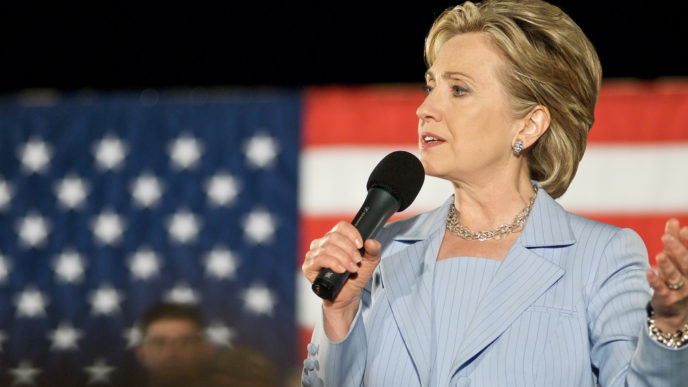
FBI: Clinton Unable to Locate Any of 13 Personal Devices She Used

Hillary Clinton used 13 different personal mobile devices to either make calls or access her surreptitious email address, including eight she used while working at the State Department. But she was unable to find any of them to assist in the FBI’s investigation, according to notes the agency released Friday, and had at least some of them smashed with a hammer.

Clinton’s law firm, Williams & Connolly, said it was “unable locate any of these devices,” the FBI said. Clinton aide Justin Cooper claimed to have destroyed at least some of Clinton’s old Blackberries by breaking them in half or smashing them with a hammer.

The FBI published 58 pages of notes from its July interrogation with Clinton in response to Freedom of Information Act requests that had been filed. (Read more from “FBI: Clinton Unable to Locate Any of 13 Personal Devices She Used” HERE)

Follow Joe Miller on Twitter HERE and Facebook HERE.

No, Republican Voters Are Not ‘Moving on’ From Marriage

A year after the U.S. Supreme Court’s narrow 5-4 ruling redefining marriage, many of the elite in the Republican Party are anxious to declare “the marriage issue” settled. It’s a common refrain from high-ranking Republicans: “The Supreme Court has spoken” and the party should move on to other issues.

The trouble for the echo chamber of corporate lobbyists, paid political consultants, wealthy donors and media personalities who constantly push this narrative is that the actual Republican Party — the tens of millions of Americans who vote in elections — do not buy the refrain, and they regularly hold accountable those who do.

Zerr Zapped

Anne Zerr is the latest example. A state house member in Missouri, Zerr was one of three Republicans who refused to support SJR 39, a proposed amendment to the state constitution that would protect supporters of marriage from being punished by government for refusing to be part of same-sex “marriage.” SJR 39 is essentially the Missouri version of the First Amendment Defense Act pending in Congress.

Grassroots activists had pushed the measure through the state senate to protect the bakers, florists, photographers, innkeepers, and others who have been targeted in other states with lawsuits, fines, and financial and reputational ruin from facing a similar fate in Missouri. SJR 39 would have let voters decide the issue. But when LGBT activists and their allies in corporate America expressed their opposition, Zerr caved and helped kill the proposal.

Unfortunately for Anne Zerr, she then faced voters in a Republican primary race for an open state Senate seat. Social conservatives saw an opportunity to send a message to the echo chamber by opposing her. The National Organization for Marriage (NOM) funded mailers and phone calls targeting Zerr for her refusal to allow voters to protect supporters of marriage. And ordinary voters responded.

NOM endorsed her main opponent, conservative businessman and devout Catholic Bill Eigel, who supported SJR 39. On August 2nd, Eigel defeated Zerr in the Republican primary.

Numerous GOP Political Careers Wrecked By Muffing the Marriage Test

Zerr is not the first Republican to pay with her career for following the urgings of the elite to abandon marriage. She is just the latest.

It’s rarely covered by the media, but the political landscape is littered with the wrecked careers of Republicans who abandoned the party’s commitment to marriage as it has always existed, which is a foundational institution of virtually every faith tradition on the planet.

New York enacted same-sex marriage only because four Republicans in the state senate listened to the political elite and wealthy donors and voted against their party platform and the wishes of their constituents. They were promised, and received, big-time fundraising help from Governor Andrew Cuomo, Mayor Michael Bloomberg and Wall Street billionaires. But none of that mattered. Conservatives and marriage supporters like NOM focused voters on their betrayal.

An unprecedented coalition of people with diverse beliefs and backgrounds came together to hold these legislators accountable — including African American and Hispanic clergy, the orthodox Jewish community, New York’s Conservative Party and longtime GOP activists. Today, all four Republicans who for voted for gay “marriage” are now former senators. Despite all the Wall Street money, grassroots activists were able to spread the word about the betrayal these four senators committed — and the voters responded.

Not Even Coastal Republicans are Safe

This phenomenon is not limited to state legislative races. In 2014, two prominent gay Republicans were recruited by GOP leaders in Washington to run for congressional seats in California (Carl DeMaio) and Massachusetts (Richard Tisei). Both made support for gay “marriage” a prominent feature in their election campaigns. As a result, social conservatives opposed them both, some going so far as to endorse their Democratic opponents on the theory that the lesser of two evils was to have a bad Democrat serve for two years rather than a bad Republican serve for decades. DeMaio and Tisei each raised millions, but both were defeated.

A similar thing has happened in races for the US Senate. In California, Republican Tom Campbell, a former state legislator and member of Congress, came out in support of redefining marriage. Social conservatives funded TV ads against him, and he lost a competitive GOP US Senate primary as a result.

The same thing happened in New Hampshire, when NOM funded an ad campaign against wealthy businessman Bill Binnie, who thought gay “marriage” was his ticket to the US Senate. Binnie was defeated. This past cycle, Monica Wehby was the Republican nominee for U.S. Senate in Oregon and promptly aired a TV commercial announcing her support for redefining marriage. Conservatives responded by openly opposing her, and Wehby was trounced.

Naturally, GOP Champions of Natural Marriage Tend to Thrive

Principled Courage Trumps Political Cash

Meanwhile, US Senate candidates in competitive races who stood firm in their support for marriage — often against the wishes of corporate interests and the consulting class — were rewarded. Tom Cotton in Arkansas and Thom Tillis in North Carolina both benefited from independent expenditure campaigns from groups like NOM in winning their elections.

Lest you conclude that this is a battle between social conservative money and corporate money, it’s not primarily the money that matters. Social conservatives are always outspent by the corporate interests, and often badly. What matters is the support of the voters. Once they are alerted to where the candidates stand, they respond. A modest degree of spending by social conservatives produces an outsized response because voters deeply care about the issue.

It’s not only partisan candidates who have seen this effect. In Iowa, three sitting members of the state supreme court, including its chief justice, were removed from the bench by voters furious with their ruling imposing gay “marriage” in that state. An aggressive campaign opposing their judicial retention was mounted by social conservatives to alert voters to their judicial misdeeds.

It should be acknowledged that these races often involve more than the marriage issue. There is usually a range of issues at play in any contested race, whether for the state legislature or Congress. But unquestionably, marriage was a critical issue in all of these contests. Marriage was the issue that drove conservatives to oppose and ultimately defeat incumbents like Anne Zerr in Missouri.

A Solid Platform to Run On

Finally, it is also important to note the importance that support for marriage played most recently in the GOP when grassroots Republican activists made their views clear in crafting the national Republican Party platform last month in Cleveland. Despite an organized and well-funded campaign by Wall Street billionaires and corporate lobbyists to “modernize” the party’s official position on marriage, convention delegates utterly rejected the notion.

The 2016 GOP platform is the most pro-traditional marriage platform ever adopted. It specifically calls for reversing the Obergefell ruling redefining marriage. It explicitly condemns as the product of activist judges the rulings on marriage in both Obergefell and the Windsor case that overturned the federal Defense of Marriage Act, and it calls for the appointment of Supreme Court justices who will reject their reasoning. It endorses the First Amendment Defense Act to protect supporters of marriage from governmental persecution. And it calls for a constitutional amendment to return to the states their right to define marriage solely as the union of one man and one woman.

Never fans of social issues to begin with, it’s a safe bet that the consulting class, corporate lobbyists and wealthy donors will ignore the mountain of evidence all around them that rank-and-file Republican activists and voters revere marriage and will act to defend it. But Republican candidates should come to understand that succumbing to the pleadings of the elite echo chamber can come at a very high price: their very political careers. (For more from the author of “No, Republican Voters Are Not ‘Moving on’ From Marriage” please click HERE)

Follow Joe Miller on Twitter HERE and Facebook HERE.

Trump Rallies Border Hawks With 10-Point Plan, Hillary Zingers

Is Donald “build-a-wall” Trump going soft on illegal immigration? The GOP presidential candidate sought to reassure concerned supporters at a rally in Phoenix this week by debuting an ambitious 10-point immigration plan. With cowboy hats and boots on display throughout the Phoenix Convention Center arena, the large crowd loved every minute of the hour-long speech, heartily cheering such applause lines as “We take in anyone … Not anymore!”

Noticeably missing, however, was his previous call to deport all 11 million or so illegal immigrants. Based on recent statements, he seems to have backed off of that promise. Perhaps he concluded it wasn’t feasible. Perhaps he was advised that Congress would never pass such a law and that he could not constitutionally accomplish it with an executive order.

The event featured several GOP stars, including Arizona Governor Doug Ducey, Maricopa County Sheriff Joe Arpaio, Sen. Jeff Sessions (R-Ala.) and Trump’s running mate, Governor Mike Pence of Indiana. When border-hawk Sheriff Arpaio came on stage, the crowd roared so loudly it was like being at a rock concert.

Former 9-11 New York Mayor City Rudy Giuliani was a bit of a surprise speaker, and arguably made the most powerful speech for Trump. “Based on Hillary’s job at the Secretary of State,” he told the crowd, “I wouldn’t elect her to dog catcher in New York!”

Trump’s “Angel Moms” related their tragic stories of relatives killed (or in one case, made into a paraplegic) by criminal illegal immigrants. The speakers all wore Trump’s “Make America Great Again” trademark white baseball cap, as did Trump.

Arizona’s Republican Senator John McCain was noticeably missing from the event. Whenever his name came up, the crowd booed loudly. McCain has angered the conservative base in Arizona for failing to keep his word when it comes to curbing illegal immigration.

Trump Goes After Hillary

Trump’s speech was awash with the points and subpoints of his immigration plan, but he also left room to go after his Democratic opponent. “Hillary only cares about one thing when it comes to illegal immigration, the needs of the illegal immigrants here,” he said, adding that her immigration plan is nothing but open borders.

He said he would create a new task force to find the most criminally dangerous illegal immigrants, “just like dangerous Hillary Clinton, maybe they’ll be able to deport her.” And he said that he consulted with border patrol officers and experts on the illegal immigration problem in order to develop his 10-point plan, whereas Clinton just meets with lobbyists and big donors.

Other parts of his plan include passing Kate’s Law, to ensure that criminal illegal immigrants who illegally re-enter the country receive tough, mandatory minimum sentences. He would triple the number of ICE officers and add 5,000 more border patrol agents. New screening tests would be given to immigrants, with “extreme vetting” done to ensure they have our ideological values. And the 287g program would be brought back to return law enforcement powers to local police, something that was stripped away during the Obama administration.

“We must put American citizens first,” Trump said, and added that since not everyone who comes to America can successfully assimilate, we need to pick the ones who will.

He attacked the media several times for failing to disclose the truth about illegal immigration, and the crowd would turn and yell angrily at the media section. Some members of the media found it difficult getting attendees to agree to interviews, because there was so little trust. The crowd frequently broke into chants, including “USA USA,” “Build a wall,” and “Hillary for prison.”

There were plenty of protesters outside, many dressed colorfully to attract media attention. They carried professionally made signs that said “no hate” or that argued against a border fence. One man held up a piñata of Trump and let small children beat it with sticks. A protester who made it inside the convention hall started yelling while one of Trump’s angels was speaking. About 50 men, including multiple members of law enforcement and security, made their way over to the man and removed him.

The Meeting With Mexico’s President

Trump also talked about his meeting earlier in the day with Mexican President Peña Nieto. It is not clear whether the two discussed Trump’s insistence that Mexico fund a border fence between the two countries. According to the AP, Trump said they didn’t discuss it, whereas Nieto said he told Trump Mexico wouldn’t pay for it. Nieto held a joint press conference with Trump after the meeting, which resulted in considerable backlash against Nieto for daring to find common ground with Trump.

Considering Trump’s aggressive stance on illegal immigration, the meeting was a considerable feat to pull off, one that made Trump look presidential and able to deal realistically with foreign leaders. Perhaps his backing down from his call to deport the 11 million illegal immigrants made the difference. (For more from the author of “Trump Rallies Border Hawks With 10-Point Plan, Hillary Zingers” please click HERE)

Follow Joe Miller on Twitter HERE and Facebook HERE.

Back Again: This Time Obama Administration Wants a Taxpayer Bailout for Puerto Rico

Less than two months after Congress passed a package aimed to provide financial relief for Puerto Rico, the Obama administration is already at it again—this time seeking an outright taxpayer bailout for the U.S. territory through additional Medicaid funds and access to the earned income tax credit.

Why does Puerto Rico need help? After decades of failed economic policies and rising debt, Puerto Rico began defaulting on some of its debt payments in 2015. Faced with substantial government spending (including massive pension costs), a declining economy, and rising interest rates, Puerto Rico was on track to default on multiple other debt payments.

Under Congress’ attempted relief, most debtors still won’t receive full payment. After all, it wouldn’t be relief for Puerto Rico if it actually had to pay all its bills. Instead, the island will have access to bankruptcy-like proceedings that will allow it to write off a large portion of its debt.

This is precisely what the administration wanted. The island now has access to so-called “Super Chapter 9” bankruptcy that will allow Puerto Rico to write down not only its municipal debts (in the same way that states can choose to do), but also its constitutionally protected territorial debt.

In addition, Puerto Rico has been afforded an unprecedented stay on litigation that will allow the island’s government to operate free of legal challenges for months.

But apparently allowing the island to renege on its constitutional obligations and stripping creditors of their right to access the courts wasn’t enough. Now the administration is back at it again, seeking an outright taxpayer bailout for the island.

In a letter to the recently appointed Congressional Task Force on Economic Growth in Puerto Rico, the administration called for granting Puerto Rico the same access as states to Medicaid funds and the earned income tax credit.

But Puerto Rico is not a state and its residents are not subject to federal income taxes. So why should U.S. citizens who do pay federal income taxes have to fork over an extra $36.2 billion over the next 10 years to provide benefits to people who do not pay those taxes?

Puerto Rico and other U.S. territories already receive a disproportionate share of federal welfare spending, and they get these benefits without their residents paying federal income taxes.

Providing additional Medicaid funds to Puerto Rico is not really any different than a pure cash bailout. Money is fungible, and what Puerto Rico doesn’t have to spend from its own resources to provide Medicaid, it can use on whatever else it wants.

The same is true for the earned income tax credit, except that the bailout would go directly to Puerto Rican residents as opposed to its government. But Puerto Ricans aren’t subject to federal income taxes, so why should they receive federal income tax credits?

The administration argues that the earned income tax credit is “one of the most powerful policy tools” to stimulate and encourage work. Stimulating work is an important objective in Puerto Rico where only 38 percent of the island’s working-age population has a job in the formal economy.

But the tax credit would have little impact in Puerto Rico and would be ripe for fraud and abuse.

For starters, the federal minimum wage in Puerto Rico is as large an impediment to job creation as a $20 per hour minimum wage would be on the mainland. Employers who can’t afford to pay workers the minimum wage will still not be able to pay the minimum wage with an earned income tax credit. Instead, the benefits will primarily flow to Puerto Rico’s more fortunate residents—those with a formal job.

Moreover, taxpayers can expect to foot the bill for unlawful earned income tax credit payments. Even when implemented by the IRS, which has access to taxpayers’ federal income tax returns, this tax credit has an excessively high improper payment rate of about 25 percent.

Just imagine how high the improper payment rate would be in Puerto Rico where residents don’t file federal taxes. Puerto Rico’s Treasury, which would presumably administer the tax credit, would have no incentive to prevent improper payments. After all, mainland taxpayers would be funding the subsidy.

Puerto Rico has the authority to enact and fund its own version of an earned income tax credit. Instead, the territory’s politicians have prioritized maintaining a bloated public sector with much higher pay than the island’s private sector workers.

Congress has already intervened more than it should have in Puerto Rico’s financial crisis. Federal taxpayers shouldn’t be forced to foot the bill for Puerto Rico’s poor economic and fiscal policies.

If Congress does cave in to the bailout demands, states and localities will be encouraged to engage in the same reckless policies so that they too can receive a federal bailout. (For more from the author of “Back Again: This Time Obama Administration Wants a Taxpayer Bailout for Puerto Rico” please click HERE)

Follow Joe Miller on Twitter HERE and Facebook HERE.
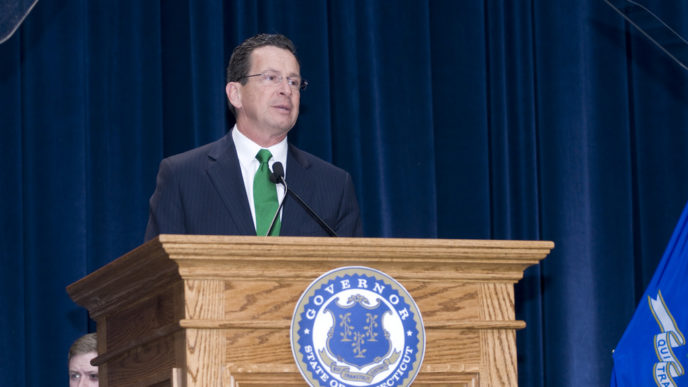
Connecticut Limits Free Speech Using Campaign Finance Rules

The clash over free speech and campaign finance has erupted in Connecticut, as two Republican state legislators have refused to settle a case with the State Elections Enforcement Commission.

Connecticut is one of at least three states that have a “clean campaign” system, in which a candidate collects very small donations of $5 from a large pool of people to qualify for a near fully-funded campaign by the taxpayer. In all, 13 states have some form of public financing for state elections, according to the National Conference of State Legislatures.

However, the enforcement action taken by the Connecticut State Elections Enforcement Commission, or SEEC, against 16 Republican candidates—including state Sen. Joe Markley and state Rep. Rob Sampson—could be unprecedented, some national observers said.

The state’s sanction against the legislative candidates was for mentioning Connecticut Gov. Dan Malloy, a Democrat, by name in mailings that referenced “Malloy’s bad policies” and “Malloy’s tax hike” for their own races in 2014, when Malloy was also on the ballot. The lawmakers used similar reference in campaign literature this year and in 2012, but face no sanction because Malloy appeared on the 2014 ballot.

“I don’t know how you can be a sitting state legislator and not mention the governor’s name,” Markley told The Daily Signal in a phone interview. “This is not in the statute; this is an interpretation by the [State Elections Enforcement Commission].”

The State Elections Enforcement Commission will have a hearing on the matter in September, Markley said. He said he will challenge in state court if necessary on constitutional grounds. As a matter of being competitive in the state, he said candidates must take public funding. But, he believes putting the government in charge of financing campaigns is the problem.

“If it weren’t for the state funding campaigns, this wouldn’t have arisen as an issue,” Markley said. “It is frustrating for liberals to see government funds used to criticize them for a change.”

It’s hard to find a similar case nationally, said David Keating, president of the Center for Competitive Politics, which opposes most campaign finance restrictions.

“What Connecticut is trying to do is both ridiculous and likely unconstitutional,” Keating told The Daily Signal in an email.

Still, Keating added that politicizing a program was likely inevitable once the state has the purse strings to campaign funding.

“A government that funds speech will seek to control that speech,” Keating said. “Bureaucrats who control the funding will try to penalize candidates for trivial violations.”

Keating said such a case has less to do with the Citizens United precedent on campaign finance than it would have to do with legal precedent barring government agencies from placing unconstitutional restrictions on receiving government money.

However, this matter typically comes up in the areas of welfare or in government contracting and not campaign funding, Keating said. Thus, he said there is almost no precedent for the Connecticut controversy.

State Elections Enforcement Commission spokesman Josh Foley said the agency doesn’t comment on ongoing cases.

Connecticut House Speaker Brendan Sharkey, a Democrat, defended the commission’s actions in a letter to the editor responding to a Hartford Courant columnist’s criticism of the sanctions.

“When candidates voluntarily sign up to receive taxpayer dollars to run their campaigns, they swear to abide by the law,” Sharkey wrote. “Instead, state Republicans in 2014 coordinated to violate the rules—including the protagonist in Mr. [Kevin] Rennie’s column—and most of them have already admitted their violations and settled their cases.”

Connecticut adopted a bipartisan public financing law in 2005 following a major corruption scandal. The law was passed by a Democratic-controlled legislature and signed by a Republican governor. In October 2014, the state election agency issued an advisory opinion warning candidates for the legislature to avoid referring to candidates in the governor’s race.

The state agency asserted that referring to candidates would have been permissible if the cost of the campaign had been shared by either the state Republican Party or the 2014 campaign of Republican gubernatorial candidate Tom Foley.

The state election agency brought a case against 16 Republican candidates who mentioned Malloy by name during their 2014 campaigns. Most of those Republicans signed a settlement agreement, admitting an election violation in exchange for dodging a civil penalty. However, Markley and Sampson refused to sign, asserting that empowering the agency would violate the First Amendment.

“For me, this is a clear violation of my First Amendment rights, and an overt restriction on free speech,” Sampson wrote in an op-ed in The Southington Observer newspaper. “The government should not be able to restrict the issues we campaign about in a free election.”

Two other states that provide near-full state funding for all state offices, including the legislature, are Maine and Arizona.

Hawaii also provides a matching funds program for its legislative candidates, which provides tax dollars to candidates who cap their spending. Minnesota defunded its program in its last state budget, according to the Center for Competitive Politics.

Keating, president of the center, said candidates in most of the states do not use the public funding program any longer, largely because it inhibits their ability to campaign. So, he said, it’s doubtful a dispute similar to what is happening in Connecticut has occurred elsewhere.

The states of Florida, Maryland, Massachusetts, Michigan, Rhode Island, and Vermont all provide some form of public financing to candidates for governor and lieutenant governor. Elections to the state Supreme Court are publicly funded in New Mexico and West Virginia.

The Connecticut public finance system could be on shaky legal footing because of this case, said Hans von Spakovsky, senior legal fellow at The Heritage Foundation.

“If providing public funding for candidates is being used as grounds to prevent criticism of candidates in other elections or of the governor then that would be a horrendous infringement on the First Amendment and probably the Supreme Court would throw that public financing system out,” von Spakovsky told The Daily Signal.

He referred to part of the Arizona public financing law that was tossed by the court. In June 2011, the U.S. Supreme Court struck down a provision of the Arizona public financing law that allocated more taxpayer money to candidates if a political action committee or independent group spoke against the candidate in ads. (For more from the author of “Connecticut Limits Free Speech Using Campaign Finance Rules” please click HERE)

Follow Joe Miller on Twitter HERE and Facebook HERE.

Congress Must Close New $10 Billion Gap in Government Spending, Report Says

To meet current obligations, the government will need $10 billion more next year, forcing Congress to make new cuts, according to lawmakers’ nonpartisan budget office.

The Congressional Budget Office’s preliminary new projections, obtained by The Daily Signal, show current government operations without changes would cost nearly $1.08 trillion, up from $1.07 trillion.

Lawmakers returning to Washington after Labor Day are in for a rude awakening, because the new report means hard decisions ahead.

Put another way, last year’s budget deal between President Barack Obama and House Republican leadership mandated spending levels that were $10 billion less than the CBO’s new projections.

The Congressional Budget Office, or CBO, is the nonpartisan agency charged with providing economic and fiscal information to lawmakers. And the gap identified in its new analysis makes the already arduous political task of funding the government even harder.

With government spending authority set to expire Oct. 1, Congress was expected to pass a makeshift spending measure known as a continuing resolution.

To avoid breaking the $1.07 trillion spending caps established in the budget agreement of October 2015, negotiated by the president and then-House Speaker John Boehner, Congress now must find $10 billion to trim or endure a round of automatic, politically painful spending cuts called the sequester.

That task of identifying the cuts under the Obama-Boehner caps will fall to members of the House and Senate appropriations committees.

GOP aides told The Daily Signal that Congress has found itself in similar situations before, but rarely of this severity.

In the past, appropriators applied across-the-board spending cuts to reduce any funding shortfalls. But following that precedent, a senior House aide told The Daily Signal, could lead to severe defense cuts because of the way Boehner and Obama negotiated last year’s deal.

“Funding for our national defense would be cut significantly below the spending limits signed into law,” the aide said, “and non-defense spending would be allowed well above those spending limits.”

While defense hawks will balk at those reductions, another senior Republican aide said they’re not inevitable. Appropriators will “utilize whatever tools they have in their toolbox” to close the funding gap, the staffer said.

“This is just a preliminary CBO analysis,” the staffer said. “It’s a carbon copy of what this year’s bill would look like based off of last year before any policy decisions are made, changes are built in, and before any final decisions are made about right spending levels.”

The funding gap throws gas on a long-burning debate in Congress.

And now leverage wrests with appropriators. They could turn to budget gimmicks such as offsets, anomalies, and “changes in mandatory programs,” which they call CHIMPS.

House conservatives have traded barbs with leadership over top-line government spending levels all year. The conflict already derailed a proposed $1.07 trillion budget pushed by Boehner’s successor, House Speaker Paul Ryan, R-Wis.

Two caucuses of GOP members in the House, the Freedom Caucus and the Republican Study Committee, have spearheaded the opposition. They called for $30 billion worth of cuts and a return to the $1.04 trillion spending level established by the Budget Control Act of 2011.

Fear over the possibility of a lame-duck spending bill, one passed between the Nov. 8 election and the swearing-in of the new Congress in January, has persuaded many conservatives to reconsider.

Several members of the Freedom Caucus say they could swallow a continuing resolution for $1.07 trillion if it extended government funding until next year. That way, outgoing lawmakers wouldn’t be making spending decisions after they’ve been booted from office. (For more from the author of “Congress Must Close New $10 Billion Gap in Government Spending, Report Says” please click HERE)

Follow Joe Miller on Twitter HERE and Facebook HERE.
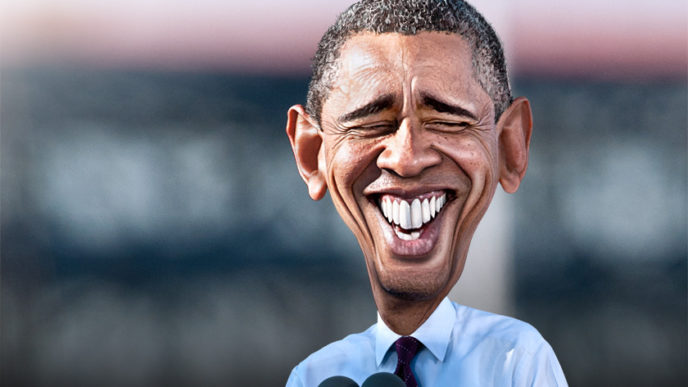
SHOCKED FACE: Under Obama, National Deficit Skyrockets to Ludicrous Levels, Again

The nonpartisan Congressional Budget Office (CBO) just revealed that this year’s federal budget deficit will rise to $590 billion, a depressing 35% increase over last year’s already-high $438 billion:

CBO now estimates that the 2016 deficit will total $590 billion, or 3.2 percent of GDP, exceeding last year’s deficit by $152 billion… The deficit is growing in 2016 because revenues are up only slightly, by less than 1 percent ($26 billion), whereas outlays are projected to rise by 5 percent ($178 billion).

As Barack Obama staggers toward the end of his failed presidency, that marks just the latest milestone in what is perhaps his worst legacy, one that remains grotesquely underreported by the “watchdog” mainstream media.

Namely, he possesses what is by far the worst deficit record in U.S. history.

The primary culprit, the CBO explains, is “weaker-than-expected economic growth” that also characterizes the Obama era:

The growth in GDP that CBO now projects is slower throughout the 2016-2026 period than the agency projected in January. Weaker-than-expected economic growth indicated by data released since January, recent developments in the global economy, and a reexamination of projected productivity growth contributed to that downward revision.

Not that you’ll hear any of this from Obama or his willing accomplices, of course.

The most you’ll hear from any of them on the subject is the preposterous claim that Obama has somehow reduced deficits throughout his tenure. That amounts to bragging that he halved annual deficits after first quadrupling them.

Before Obama entered the White House, after all, the largest deficit the nation had ever endured was the record $458 billion in 2008.

But then Obama proceeded to run deficits of $1.4 trillion in 2009, $1.3 trillion in 2010, another $1.3 trillion in 2011, then $1.1 trillion as he ran for reelection in 2012. In 2013 we finally dipped back below the trillion-dollar mark, but it was still a $680 billion total that dwarfed the largest deficit of George W. Bush’s tenure. We then suffered historically enormous deficits of $492 billion in 2014 and $438 billion last year. And now the CBO reports that Obama’s trajectory is upward once again.

Let’s compare Obama’s deficit record to that of the man he so viciously maligned, George W. Bush.

In 2001, Bush posted a surplus of $127 billion, then deficits of $158 billion in 2002, $378 billion in 2003, $413 billion in 2004, $318 billion in 2005, $248 billion in 2006, $161 billion in 2007 and $458 billion in 2008.

Over an eight-year period, that amounts to an accumulated $2 trillion under Bush, or an average of approximately $260 billion. Obama, in contrast, has run up an accumulated $7.3 trillion in deficits, for an average of $913 billion.

Even if one attributes the entire 2009 deficit to Bush (thereby disregarding Obama’s trillion-dollar 2009 “stimulus” and other wasteful spending) and subtracting his 2001 surplus, he still averages just $444 billion for the years 2002 through 2009.

With those comparative averages in mind, it’s only fair to recall July 3, 2008, when Obama labeled Bush “unpatriotic” at a time when the deficit was just $161 billion:

“The problem is, that the way Bush has done it over the last eight years is to take out a credit card from the Bank of China in the name of our children, driving up our national debt from $5 trillion for the first 42 presidents, number 43 added $4 trillion by his lonesome, so that we now have over $9 trillion of debt that we are going to have to pay back – $30,000 for every man, woman and child. That’s irresponsible. It’s unpatriotic.”

So if Bush was “unpatriotic” for averaging $260 billion deficits, what label applies to Obama for averaging $913 billion deficits?

When confronted with these inescapable facts, Obama apologists often rationalize by scapegoating the Bush tax cuts, combined with war spending in Iraq and Afghanistan.

But those rationalizations simply aren’t accurate. War spending in Iraq and Afghanistan reached its peak in 2007, which was also several years after the Bush tax cuts of 2001 and 2003 took effect. But as noted above, the deficit that year was just $161 billion.

The simple fact is that Obama’s deficit record is the worst in U.S. history, and it’s not even close. Long after he exits the White House, we’ll all still be left paying his bill. (For more from the author of “SHOCKED FACE: Under Obama, National Deficit Skyrockets to Ludicrous Levels, Again” please click HERE)

Follow Joe Miller on Twitter HERE and Facebook HERE.