Donald Trump, Same-Sex ‘Marriage’ and the Church

If President Trump does not nominate pro-life justices to the Supreme Court, I will be surprised and disappointed, although not shocked, since I do not put my absolute trust in people, especially political leaders. If President Trump does not oppose same-sex “marriage,” I will be disappointed but not surprised.

That’s why his recent comments on 60 Minutes were disappointing but not surprising.

After all, he had his good friend Peter Thiel speak at the Republican National Convention, and Thiel was warmly received as he proudly proclaimed his gayness. Thiel is also part of the president-elect’s transition team, with the potential of a high-level position within his administration. And Trump (along with Pence) has not made a major point of saying that he wanted to overturn the Obergefell decision, instead putting his emphasis on overturning Roe v. Wade, sending abortion-related decisions back to the states.

Trump has also spoken of a test for immigrants regarding their attitudes towards LGBTs, so he clearly cares about their safety and well-being.

It is true, of course, that at various times in the campaign he spoke of his opposition to same-sex “marriage,” even saying at least once that he would “strongly consider” appointing justices who would overturn it. But less than one week later, he assured a lesbian reporter that under his administration, there would be great progress for LGBT Americans

In short, opposition to same-sex “marriage” has never been his mantra, nor did he emphasize this in debates, nor has he ever attempted to offer a clearly articulated answer in terms of what to do when perceived gay rights conflict with perceived religious rights.

I was not surprised, then, when he said to Lesley Stahl on 60 Minutes, “I’m pro-life. The judges will be pro-life.” And I was not surprised when, in reply to Stahl’s questioning on same-sex “marriage,” he said, “You have these cases that have already gone to the Supreme Court. They’ve been settled, and I’m fine with that.”

Of course, I was disappointed with his answer, and I was not alone in wondering, “Why is Roe v. Wade not settled but Obergefell v. Hodges is settled? Why should the court overturn the one and not the other?”

At the same time, there’s an excellent chance that the pro-life justices President-elect Trump has promised to appoint would also stand for religious liberty and against the court’s redefinition of marriage. Consequently, in the coming years, as cases reach the Supreme Court on these volatile issues, the conservative, pro-life-leaning majority would likely side against many of the goals of LGBT activism.

The Three Key Takeaways from Trump’s 60 Minutes Interview

For me, though, there are three key takeaways from the 60 Minutes interview. (I’m speaking specifically in terms of the culture wars, not in terms of the interview as a whole.)

First, as bold, strong-willed, and anti-establishment as Trump may be, he is still a human being, and the temptation to “get along with everybody” in Washington is still there. We must strongly encourage him, then, not to compromise his pro-life promises for a single moment of his presidency.

He has made a sacred commitment, and it’s one major reason that many Christian conservatives voted for him.

Second, Christian conservatives who voted for him should not suddenly turn on him in light of his same-sex “marriage” comments. Again, we had no reason to expect him to take a strong stand here – although that is certainly something to pray for and work for – and since he knows he owes his election to conservative evangelicals, it would be foolish for us to burn our bridges now.

His door is still open to us, and we need to do our best to walk through that open door.

Third, the president-elect’s comments remind us that it is the church’s job to change society, not the president’s.

As I have said repeatedly in recent months, Jesus never said that the White House was the salt of the earth and the light of the world but that rather that we, His devoted followers, were.

Of course, the president has a tremendous bully pulpit, and his comments on divisive issues influence many, just as President Obama’s “evolving” views on same-sex “marriage” influenced many. But did any of us who voted for Donald Trump really think to ourselves, “We’re voting for him because we believe he will change the moral climate of the culture and speak out against LGBT activism”? Was this even on our radar? I think not.

Either way, I didn’t vote for Trump expecting him to spark a moral and cultural revolution in America.

I voted for him with the hope that he would not do what Hillary Clinton was expected to do and with the prayer that he would keep his word regarding Supreme Court justices and make some healthy decisions for the nation as a whole.

As for transforming the culture, that is the role of the church through the many facets of the gospel. Are we up to it? (For more from the author of “Donald Trump, Same-Sex ‘Marriage’ and the Church” please click HERE)

Follow Joe Miller on Twitter HERE and Facebook HERE.
GOP Didn’t Need to Suppress Democratic Voters. A Lot of Them Deserted Hillary Clinton

The left, mainstream media, pundits and almost every poll were certain Hillary Clinton was going to win the election. Ultimately, a “Chinese monkey king” ended up doing a better job predicting the election results than the experts. What did they miss, and why did they miss it? Why did so many voters desert Clinton and vote for Trump?

Many on the left cling to the idea that Clinton lost due to voter suppression of minority voters — despite the millions George Soros funneled into organizations to combat this allegation from occurring. A writer for Salon wrote a lengthy piece rambling on and on about how the GOP kept minorities from voting, but without any direct evidence that this had happened. The logic in this article and others is: The Democrat should get the most minority votes; Clinton got fewer votes from minorities than she should have gotten; therefore someone must be keeping minorities from voting for Clinton.

But that isn’t the reason.

Why Trump? Why Not Clinton?

First, the mainstream assumed that Trump was a racist and that he would draw an even lower percent of black and Latino voters than Republicans usually get. In fact, a larger share of blacks, Latinos and Asian-Americans voted for Trump than had voted for Romney. The only Republican candidate to do better with those three groups was George W. Bush in his first election in 2000 and his reelection in 2004.

Revealingly, Trump received about the same share of the white vote than Romney did four years ago, yet it now appears he received about the same or slightly fewer votes than Romney did then.

Second, exit polls reveal that key Democratic constituencies failed to show up to vote for Clinton. She received fewer votes from blacks, Latinos, Asians, Millennials and lower income voters than nearly every observer expected. Younger blacks didn’t think Clinton indicated enough support for Black Lives Matter or criminal justice reforms. Additionally, she didn’t have the star power Obama had as the first black president.

For example, Clinton lost some of the traditional support for Democratic candidates from lower middle class and working class voters. Only 52 percent of voters making $50,000 or less annually voted for her, down from 60 percent for Obama. Rep. Debbie Dingell (D-Mich.) recognized during the race that Clinton was in trouble in Michigan. She observed that middle class voters were discouraged that their economic situation had gotten worse, not better, under Obama.

Similarly, millennials were disgruntled by Clinton’s lack of ethics, especially the way her campaign created the caricature of “Bernie Bros” as racist and sexist. They had favored Bernie Sanders in the Democratic primary and disliked her ties to Wall Street and her interventionist foreign policy.

Some Millennials voted instead for third-party candidates, bolstering Libertarian Gary Johnson to 3 percent of the vote, an increase from his 1 percent in 2012. Johnson and the other third-party candidate, Green Party’s Jill Stein, took enough of the vote away from Clinton in four swing states to tip the race to Trump. Ironically, Clinton’s husband may have the won election as president in 1992 due to third-party candidate Ross Perot taking away votes from George H.W. Bush.

The Conclusion

The evidence suggests that a lot of minority voters accepted Trump’s message and broke away from the Democratic party. Enough voters in groups the Democrats expected to hold voted Republican to give the election — and the crucial battleground states — to Trump.

Ironically, part of Clinton’s problem is the narrative she and the left created about white racism. Clinton seems to have lost some of the black vote because she didn’t embrace the radical Black Lives Matter agenda enough. The left has manufactured such absurd levels of racist accusations that it’s backfiring on them, hurting Democrats who don’t breathlessly push the spin.

As long as the left ignores the real reasons Clinton lost, they can expect another loss in 2020. (For more from the author of “GOP Didn’t Need to Suppress Democratic Voters. A Lot of Them Deserted Hillary Clinton” please click HERE)

Follow Joe Miller on Twitter HERE and Facebook HERE.
Anti-Trump Demonstrators Attack Unaccompanied Woman, Shatter Her Windshield

Anti-Trump protesters in Portland, Ore. attacked a vehicle driven by a young woman who claimed she was attempting to pass on a road blocked by demonstrators due to a personal emergency.

Local press covering the protest filmed the confrontation.

Protesters claim the altercation began when a motorist attempted to circumvent a Trump protest due to a personal emergency. The Daily Caller News Foundation is not able to confirm the nature of the alleged emergency. Demonstrators then claimed she attempted to run over one of the protesters with her car.

“I can’t agree with them,” the reporter covering the protests said. “I was out here, and someone jumped in front of her car while she was slowly trying to drive away.”

A bystander then attempted to intervene so the vehicle could pass. He in turn was pushed and shoved by protesters. At one point during the dispute, a demonstrator slammed and shattered the woman’s windshield. Though the reporter could not identify which specific protester was responsible, one individual immediately proximate to the vehicle throughout the encounter was brandishing a baseball bat.

“This woman is by herself, surrounded by protesters — hundreds of them,” the reporter said, as a camera crew filed the ongoing encounter. The woman sat alone inside the car and cried, her neck and shoulders tensed in a frightened posture.

The reporter indicated it was the second such confrontation between demonstrators and a motorist that evening. He also reported that police were not on the scene.

“I haven’t seen a police officer — I’m trying to think– all night.” he said. (For more from the author of “Anti-Trump Demonstrators Attack Unaccompanied Woman, Shatter Her Windshield” please click HERE)

Follow Joe Miller on Twitter HERE and Facebook HERE.
Is Donald Trump’s Fed Criticism Just Bluster, or Will We See Reform?

President-elect Donald Trump has drawn criticism for launching a series of undisguised attacks on the Federal Reserve Bank of America, and its chairman, Janet Yellen. It’s unbecoming, critics say, for a politician to drag a stately, independent institution down in the mud, especially when it was designed to rise above the everyday considerations of politics. Trump has been critical of Yellen for failing to raise interest rates more quickly, and has accused her of using her post to try to aid Hillary Clinton in the election, a strategy which, if true, obviously failed to work.

The Fed is important, because it is responsible for controlling the money supply which, among other things, affects interest rates and inflation across the whole country. It has been argued by some, myself included, that the Fed’s overly loose monetary policy has prolonged the effects of the Great Recession, by distorting the monetary signals on which investors make their decisions. Trump’s attack is a little more blunt than that kind of analysis, but he is not wrong to go after the Fed. In fact, he should probably be doing more.

Of course, the idea that the Fed has ever really been independent of politics is a ridiculous fiction, designed to insulate the Board of Governors from accountability for their decisions. The president gets to appoint the Fed chairman, and that decision will always be motivated by political as well as policy concerns. Furthermore, it’s ridiculous to assume that the members of Board are somehow immune to their own political biases. Just as the Supreme Court, an institution supposedly isolated from politics, takes into account which way the political winds are blowing, so do the decision makers at the Fed. Donald Trump recognizes that. Although the precise nature of his attacks may be overblown and hyperbolic, there is no doubt that the Federal Reserve plays a key role in what the nation’s economy looks like, and that has an effect on electoral politics.

Where Trump would do better, however, is to focus his attacks on monetary policy itself. While I don’t expect him to be the heir of Ron Paul, whose trenchant criticisms of the Federal Reserve brought monetary policy to the forefront of the national debate in a way unseen since the days of bimetallism, Trump is right that keeping interest rates artificially low is bad policy, and should be stopped. He may lack the theoretical rigor of the Austrian school to explain how low interest rates create faulty investments, setting up a monetary bubble that must sooner or later burst, or how quantitative easing devalues the currency and hits all Americans with the hidden tax of inflation, but he has business acumen at least to know that we can’t solve our problems by printing more money, forever and ever without limit.

Janet Yellen should be worried. Donald Trump is not going to end the Fed, as Ron Paul promised to do, but with any luck, he will oust her and replace her with someone less committed to monetary expansionism. It’s true that the chairman doesn’t unilaterally make policy decisions, but a strong voice calling for a more responsible approach could at the very least be influential in setting the tone for the bank. And who knows? We may even get that full Federal Reserve audit that Rand Paul introduces every year.

It may fly in the face of tradition for a president-elect to so vocally go after a “independent” agency, but if so it’s a tradition that badly needs rethinking. Monetary policy is too important to be left to bankers, much less ones who are unaccountable to the public. (For more from the author of “Is Donald Trump’s Fed Criticism Just Bluster, or Will We See Reform?” please click HERE)

Follow Joe Miller on Twitter HERE and Facebook HERE.
Weakness, Failure, Cronyism, Idiocy: The GOP Is Back in DC

In case you thought Republicans would be emboldened to crush the liberal agenda and focus on their mandate, think again. Given the Republican agenda in just the first 48 hours back in Washington after the election, they’d do themselves and the country a favor by abolishing the lame-duck session.

Same failed leaders

Today, House leadership rammed through leadership elections before incoming freshmen even knew where to find the bathrooms and ensured that all the existing honchos were re-elected. Paul Ryan, R-Wisc. (F, 51%) was re-elected as Speaker, Kevin McCarthy, R-Calif. (F, 35%) as Majority Leaders, Steve Scalise, R-La. (D, 62%) as Whip, and Cathy McMorris Rodgers, R-Wash. (F, 41%) as Conference Chair. Conservatives even lost the lower tier leadership races. Rep. Steve Stivers, R-Ohio (F, 32%) was elected as chair of the National Republican Congressional Committee (NRSC) over a more conservative opponent, Rep. Roger Williams, R-Texas (C, 79%). A man who voted more with the Democrats will now be in charge of recruiting candidates for the GOP majority. The same people with the same failed modus operandi and the same broken political barometer will be leading the GOP’s governing agenda in the House. (Ditto for the Senate.)

As Rep. Dave Brat, R-Va. (A, 100%) wrote so convincingly, leadership elections should have been postponed until there is a clear direction as to the 100-day agenda of each leader. Why not give the freshmen more time to acquaint themselves with the candidates? Why the rush?

A weak agenda rooted in defensiveness

And what do we mean by the same failed modus operandi and a broken political barometer, one which tells them a winning issue is a loser and a losing issue is a winner?

Look no further than this week’s agenda:

As CR already reported, the very first act of the GOP House after the election was to create a new government board designed to market products of the concrete industry. The cost is paid for by levying what is essentially a tax that will be passed on to consumers. The federal government is basically running a 501(c)(6) business association for the masonry industry. This is the worst type of crony capitalism, expansion of government, and market social engineering that every Republican campaigned to end.

What else is on the GOP agenda?

H. Res. 780 — “A resolution urging respect for the constitution of the Democratic Republic of the Congo in the democratic transition of power in 2016.” How about a resolution urging the respect of our Constitution and Republicans demonstrating a commitment to taking power back from the judiciary and the executive? How about passing a resolution committing to Article I in the next Congress and demonstrating that this Congress will somehow be different? And on the subject of Congo, why are we taking in so many refugees from there?

H.R. 5332 — Women, Peace, and Security Act — “A bill to ensure that the United States promotes the meaningful participation of women in mediation and negotiations processes seeking to prevent, mitigate, or resolve violent conflict.” This bill was introduced by Rep. Kristi Noem, R-S.D. (F, 42%), who is erroneously regarded as a conservative by many commentators and is now planning to run for governor in South Dakota. This is the sort of pathetic identity politics that has been so soundly repudiated by this election.

Imagine what Republicans could spend their time on if they truly wanted to signal that they’ve changed their ways. They could pass a resolution blocking Obama from bringing in 1,800 migrants that even Australia rejected. Or, they could address the border surge. But no, banality reigns supreme.

While Democrats spend every waking hour plotting to advance the liberal agenda and marginalize conservatives, Republicans spend every waking hour focusing on random special interests, bills that can’t be messaged to their constituents, and avoiding contentious issues and important reforms, even when they are electoral winners. That is the GOP modus operandi that will sadly continue unless the people around Trump force them to change.

A return to earmarks?

One of the only fiscal reforms that conservatives have secured in recent years was the abolition of earmarks. The problem with earmarks is not the relatively small cost of the expenditure, but that the practice is used to buy off members in support of terrible legislation. As I told Breitbart.com, it is the magic grease and force multiplier to get a majority of members to support any bad policy.

Yet tomorrow, when the House GOP Conference formally adopts its rules package for the next Congress, a group of big spenders will push for a vote on restoring earmarks. Reps. John Culberson, R-Texas (F, 54%), Mike Rogers, R-Ala. (F, 54%), and Tom Rooney, R-Fla. (F, 58%) plan to call a vote to restore earmarks. Paul Ryan would be wise to deny them a vote like he does when he blocks many conservative initiatives.

What is further disturbing on the fiscal front is that RINO Rep. Rodney Frelinghuysen, R-N.J. (F, 29%) is slated to take over as chairman of the Appropriations Committee with porker-in-chief Hal Rogers, R-Ky. (F, 30%) term-limited out of office. Republicans will be inheriting $20 trillion debt, which is a tremendous drag on the economy in addition to being a liability on our children. It would have been a nice opportunity for Republicans to demonstrate that they will not repeat the mistakes of the Bush years by appointing a fiscal hawk as chair of the check-writing committee. Instead, they will choose someone with a 29 percent Liberty Score®.

Conservatives must not hope for change. They must ensure change.

The first step to forcing change is to mitigate any more harm. Congress should extend the FY 2017 budget CR to next April — when hopefully an invigorated majority will finally pass conservative priorities. After that, they should short circuit the lame-duck session and get out of town.

Over the December break, conservatives should build support for immediate and complete repeal of Obamacare when Congress convenes in January and have a repeal bill ready for Donald Trump the minute he returns from the inaugural ball.

Amazingly, Paul Ryan opened the conference meeting today with the following declaration!

Actually, meet the new boss … same as the old boss.

If Ryan wants us to believe this is a new governing majority, he must prove it. (For more from the author of “Weakness, Failure, Cronyism, Idiocy: The GOP Is Back in DC” please click HERE)

Follow Joe Miller on Twitter HERE and Facebook HERE.
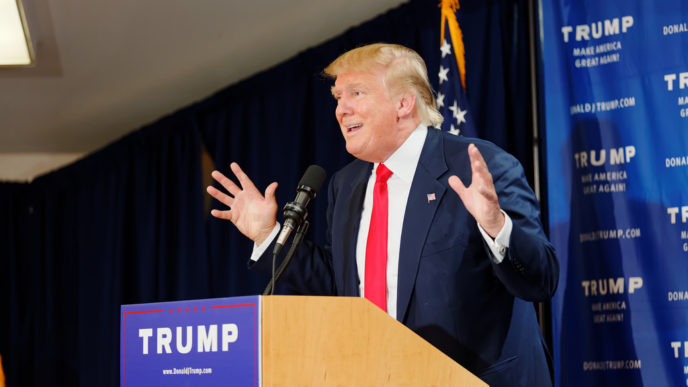
Sanctuary Cities Defy Trump’s Pledge to Defund Them. How He Can Fight Back.

Leaders of sanctuary cities that protect illegal immigrants from deportation are responding defiantly to threats by President-elect Donald Trump to withhold federal funding from them.

Local governments from cities including the District of Columbia, Los Angeles, New York City, Chicago, and Boston over the past few days have said that despite the financial cost they could face in a Trump administration, they will not change policies that limit their cooperation with immigration-related requests from the federal government.

“To all those who are, after Tuesday’s election, very nervous and filled with anxiety as we’ve spoken to, you are safe in Chicago, you are secure in Chicago, and you are supported in Chicago,” Chicago Mayor Rahm Emanuel, a Democrat, said Monday. “Chicago will always be a sanctuary city.”

Though Trump has not specified how he would fulfill his promise to combat sanctuary cities since winning the presidency, allies of his say he has broad tools to encourage localities to play a more proactive role in immigration enforcement.

“These mayors, what they aren’t saying, is they receive tons of dollars in federal grants and president-elect Trump has made clear that sanctuary cities may see some of that money dry up if they are continuing to defy federal law,” said Kris Kobach, Trump’s immigration adviser and the Kansas secretary of state, in an interview Tuesday on “Fox & Friends.”

Blocking Funding

Previous efforts in Congress to withhold federal funding from sanctuary cities have failed recently, including legislation sponsored by Sen. David Vitter, R-La., last year that focused on law enforcement grant programs and Community Development Block Grants for affordable housing, anti-poverty programs, and infrastructure development.

With 48 Democrats in the new Senate class, the minority party still has the power to filibuster legislation it doesn’t like.

But proponents of stronger immigration enforcement said legislation specific to one form of grants—funding from the Department of Justice—could be easier to implement.

That’s because the Department of Justice is currently undertaking a review on whether to withhold federal law enforcement money from 10 sanctuary cities, including New York, Chicago, and Philadelphia.

The Obama administration began this project last year, and it has sent letters to those jurisdictions asking them to certify that they’re complying with a federal law that requires local governments to share certain information about illegal immigrants with federal officials.

“If these sanctuaries want to cling to their policies, the federal government ought to sue them for obstruction,” said Jessica Vaughan, director of policy studies for the Center for Immigration Studies, in an interview with The Daily Signal.

Expanding Enforcement

Vaughan, and other immigration experts, say they also expect Trump to bring back a controversial local enforcement program, called Secure Communities.

Under Secure Communities, federal immigration agents asked law enforcement agencies to hold in custody illegal immigrants who they came into contact with for an extra 48 hours from when they would normally be released so they could be picked up and deported. These requests were known as detainers.

Critics of the program said it violated immigrants’ civil rights, and did not differentiate between low-level and serious offenses. Many local jurisdictions stopped complying with the program, fearing they would be sued by immigrant rights groups.

In November 2014, the Obama administration got rid of the program and replaced it with a less demanding version, the Priority Enforcement Program (PEP).

With the new program, local authorities, in most cases, are asked to only notify federal immigration officials when they plan to release someone from jail whom the government seeks to deport.

“I think he [Trump] will bring back Secure Communities,” said Alex Nowrasteh, an immigration policy analyst at the Cato Institute. “That is super easy to do and the legislative and regulatory machinery is already there. If he did that, there would be much more uniform detection of illegal immigrants in local and state jails and they would be much more likely to be released into ICE [Immigration and Customs Enforcement] custody.”

In his first post-election interview, Trump said he will focus on deporting illegal immigrants with criminal records and not everyone living in the United States illegally. He put the number he would target at 2 million or 3 million people.

The Obama administration already prioritizes deporting convicted criminals. It has expelled 530,000 convicted criminals from the U.S. since 2013.

But its definition of criminal is narrower than the approach that Trump may take.

Currently, federal immigration officers are told to first target illegal immigrants considered to be threats to national security and public safety, who have likely been convicted of a felony. Other priorities for deportation include individuals who have been convicted of multiple misdemeanors, and recent arrivals who came here illegally after Jan. 1, 2014

Nowrasteh and Vaughan say reverting back to Secure Communities could allow Trump to widen that net so it includes illegal immigrants who have been charged but not convicted, and people charged with immigration violations like illegal re-entry and overstaying visas.

“I could see him widening [immigration enforcement] dramatically to what was going on under Secure Communities where he would target any unlawful immigrant who was arrested for any reason,” Nowrasteh said.

State and City Pushback

If Trump were to do that, Nowrasteh said, he will get pushback from states and localities.

Some states and cities already have in place laws that limit their cooperation with federal immigration authorities.

For example, in California, it’s harder to apprehend illegal immigrants because of a state law, known as the Trust Act, that strictly limits the situations in which local agencies will help ICE take custody of those it seeks to deport.

The mayor of Somerville, Massachusetts, meanwhile, has issued an executive order, also called the Trust Act, which shields immigrants with minor or no criminal records from possible deportation.

“I could see a case where a state like California will take the federal government to court saying it’s unconstitutional for the feds to force them to participate in this type of program,” Nowrasteh said. “I have no doubt there are many administrative ways these cities and police departments can obstruct [federal] immigration enforcement.”

Indeed, a 2014 federal appeals court ruling declared that complying with detainer requests is optional, and local jurisdictions are legally free to enact their own policies.

Also, a 1997 Supreme Court ruling in the case Printz v. the United States confirmed that Congress cannot force states to enact or enforce a federal regulatory program, such as ICE’s detainer requests.

If localities continue to oppose helping the federal government, Vaughan said she expects Trump to make it hard for them to resist.

According to the Los Angeles Times, Trump’s advisors are drafting plans to resume workplace raids and to ramp up pressure on local police and jails to identify illegal immigrants.

“The foundation for more robust enforcement is already there,” Vaughan said. “The idea is not, and has not ever been, to go door to door and round up every illegal immigrant who can be found. It’s to have a credible enforcement system that works on a routine basis, that focuses the most on threats, but does not necessarily exempt people caught in worksite operations or other ways that can come to the attention of ICE.” (For more from the author of “Sanctuary Cities Defy Trump’s Pledge to Defund Them. How He Can Fight Back.” please click HERE)

Follow Joe Miller on Twitter HERE and Facebook HERE.

Thomas Jefferson Now Politically Incorrect at the University He Founded

A group of students and professors at the University of Virginia want to give the founder of their school the shaft. In a letter to the university’s president, Teresa Sullivan, they asked her to remove Thomas Jefferson quotes from messages to students, according to the Washington Examiner.

“For many of us, the inclusion of Jefferson quotations in these emails undermines the message of unity, equality, and civility that you are attempting to convey,” the group wrote. Sullivan said in a response that she would not backpedal from quoting Jefferson, according to another report from the Examiner.

The Sage of Monticello—as the author of the Declaration of Independence has often been called in tribute to his home in Charlottesville, Virginia—had such high hopes for the school that he wrote of the students toward the end of his life, “they will exhibit their country in a degree of sound respectability it has never known, either in our days, or in the days of our forefathers. I cannot live to see it. My joy must only be that of anticipation.”

Jefferson was so proud of his creation that he put it on his tombstone, and left off the fact that he was president of the United States. Many generations of students and faculty have shown their appreciation for their school’s founder. According to stories told on campus, students rushed into the school’s rotunda to save a statue of Jefferson in an 1895 fire.

Unfortunately, a few of UVA’s current students think Jefferson’s legacy is problematic.

This is not the first time Jefferson has come under attack. Local chapters of the Democratic Party, which used to celebrate Jefferson as one of its antecedents, have increasingly removed Jefferson’s name from their annual Jefferson-Jackson Day dinners. Jefferson’s detractors have generally cited his slave ownership as the reason he can no longer be championed.

Though Jefferson was a slave owner, no single document in human history besides maybe the Bible has done more to undermine slavery than the Declaration of Independence. Abraham Lincoln was sometimes privately critical of Jefferson, but he gave enormous credit to the Virginian’s philosophy for sealing the institution’s fate.

Lincoln wrote for a Jefferson birthday celebration in 1859:

All honor to Jefferson—to the man who, in the concrete pressure of a struggle for national independence, had the coolness, forecast, and capacity to introduce into a merely revolutionary document an abstract truth, applicable to all men at all times, and so to embalm it there, that today, and in all coming days, it should be a rebuke and a stumbling block to the very harbingers of reappearing tyranny and oppression.

It is particularly sad, but not unexpected, that Jefferson has come under fire at the university he held out such high hopes for. There has been a concerted effort to remove any mention of symbols or great leaders of America’s past who have fallen out of favor with the current political climate.

In the past year alone, activists have attempted to remove monuments across the country: from more controversial Confederate monuments, to Andrew Jackson’s statue in New Orleans, to even paintings of progressive hero Woodrow Wilson at Princeton University.

The justification in most of these cases was that the figures were racist and supported values that are no longer accepted, so they need to be removed from the public sphere entirely.

When does this war on American history stop? If every figure must be held up to the constantly evolving values of the times, we will eventually find that we’ve purged all of the good along with the bad elements of what made this country what it is. We may even find that tomorrow, we are the ones being erased from history. (For more from the author of “Thomas Jefferson Now Politically Incorrect at the University He Founded” please click HERE)

Follow Joe Miller on Twitter HERE and Facebook HERE.
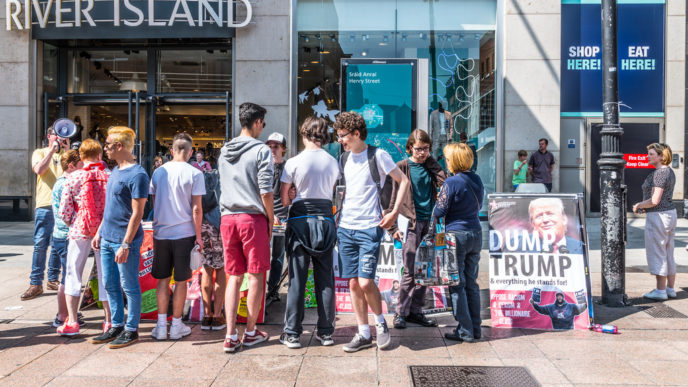
Democrats Looking for Answers After Devastating Election

Hours after the arrest of 17 progressive protesters at a sit-in at New York Sen. Charles “Chuck” Schumer’s office, President Barack Obama said Democrats will be doing some healthy reflection after the pounding the party took in last week’s national election.

The progressive wing of the Democratic party, which backed Vermont Sen. Bernie Sanders’ presidential primary challenge to eventual nominee Hillary Clinton, wants to double down on its agenda. It blames Clinton’s supposed centrist stance and close ties to Wall Street for the loss to Republican Donald Trump on Nov. 8.

Some of this will play out in the coming months in the competition to be the next Democratic National Committee chairman.

The President and Protesters

“When your team loses, everybody gets deflated and it’s hard and it’s challenging and so I think it’s a healthy thing for the Democratic Party to go through some reflection,” Obama, who as president is the outgoing titular leader of his party, said in a press conference Monday. “I think it’s important for me not to be big-footing that conversation. I think we want to see new voices and new ideas emerge.”

Obama said the Democratic Party can’t waiver from its core beliefs.

“I believe that we have better ideas, but I also believe that good ideas don’t matter if people don’t hear them and one of the issues that Democrats have to be clear on is that, given population distribution across the country, we have to compete everywhere,” Obama said.

Protesters outside likely Senate Democratic leader Schumer’s office had a different view than Obama.

The 45 millennial activists, calling themselves “All of Us 2016,” made two demands: that Democrats vow to never negotiate with President-elect Trump and that Schumer step aside from his designated role and endorse Sanders to be the party’s Senate leader.

“The Democrats cannot negotiate with a racist, fascist President Trump, they must filibuster all day and all night to stop his racist, fascist agenda,” All of Us co-founder Waleed Shahid, 25, of Brooklyn, told The Daily Signal. “It was negotiation that led to calling African-Americans three-fifths of a citizen.”

The protesters sang, “We stand for our future and together we stand strong.” They also chanted, “Our future is on the line, Chuck Schumer, grow a spine.”

“Democrats lost because they couldn’t tell the truth. Schumer is entirely funded by Wall Street,” Shahid said, adding it would have turned out different if Sanders had been the Democratic nominee. “Sanders inspired the American people.”

Various protesters were arrested in groups of one and two, and taken away. This is revealing about Schumer, said Anna Bonomo, 26, of Hermitage, Pennsylvania.

“Charles Schumer decided to have almost 20 millennials arrested instead of meeting with us and talking with us,” Bonomo told The Daily Signal. “I think that just goes to prove that Wall Street Democrats like him are not here for the people they claim to represent.”

Schumer’s office did not respond to inquiries from The Daily Signal.

The Democratic National Committee did not respond to The Daily Signal’s questions about the state of the party. The DNC chair’s leadership role will be elevated with Republicans holding the White House and Congress.

Electing the Next Chairman

Interim DNC Chairwoman Donna Brazile was shouted down last week by a DNC staffer, who blamed the party’s establishment for Trump’s victory and warned of pending doom from climate change, The Huffington Post reported. The DNC staffer told Brazile:

Why should we trust you as chair to lead us through this? You backed a flawed candidate, and your friend [former DNC Chair Debbie Wasserman Schultz] plotted through this to support your own gain and yourself. You are part of the problem. You and your friends will die of old age and I’m going to die from climate change. You and your friends let this happen, which is going to cut 40 years off my life expectancy.

DNC members will choose a successor to Brazile in February.

Both Schumer and Sanders have endorsed Rep. Keith Ellison of Minnesota, co-chairman of the Congressional Progressive Caucus, to be the next chairman of the Democratic National Committee, as has outgoing Senate Democratic leader Harry Reid of Nevada.

But securing the nomination won’t be easy for Ellison, the first Muslim in Congress.

Competition for Leadership

Former Vermont Gov. Howard Dean, who chaired the DNC from 2005 through 2009 when the party retook Congress and the White House, plans to run for the job again. Former Maryland Gov. Martin O’Malley, who ran unsuccessfully for president, has said he’s interested in the job.

Others possibilities are reportedly Labor Secretary Thomas Perez and New Hampshire Democratic Party Chairman Raymond Buckley.

In addition to Trump’s surprising win over Clinton, the Nov. 8 election also saw the GOP hold the House and Senate and make gains among governorships and state legislatures. Trump even won traditionally blue states of Pennsylvania, Wisconsin, and Michigan.

Sanders scolded the Democratic Party in a tweet Monday morning, though he didn’t address the protest group advocating his elevation to Senate Democratic leader.

“I come from the white working class, and I am deeply humiliated that the Democratic Party cannot talk to the people where I came from,” Sanders tweeted.

He later tweeted: “The Democratic Party can no longer be led by the liberal elite. We have to stand up to Wall Street and the greed of corporate America.”

Politico reported that big Democratic donors met with billionaire financier George Soros at the District of Columbia’s elite Mandarin Oriental hotel for a closed-door conference sponsored by the Democracy Alliance, a progressive activist organization. Soros spent millions trying to get Clinton elected. Ellison attended the meeting spanning Sunday through Monday.

Others attending the conference were House Minority Leader Nancy Pelosi of California and Massachusetts Sen. Elizabeth Warren. Soros’ Democracy Alliance has contributed more than $500 million to get Democrats elected and on liberal groups since 2005. (For more from the author of “Democrats Looking for Answers After Devastating Election” please click HERE)

Follow Joe Miller on Twitter HERE and Facebook HERE.

Protecting President Trump Won’t Be Easy. A Former Secret Service Agent Explains Why

The most difficult task I ever grappled with was learning how to effectively secure the life of the president of the United States as a Secret Service agent in the Presidential Protective Division.

Mastering presidential security is a herculean task which requires seasoned, presidential lead advance agents to master logistics, security, diplomacy, and constantly evolving technology. It takes a typical Secret Service agent approximately seven to ten years of investigative field work before they are even eligible for consideration for appointment to the Presidential Protective Division, and very few agents are selected. In many children’s sport leagues, and on many of our college campuses, everyone gets a trophy for participating. But, not in the Secret Service, where only the best of the best are selected to protect the president. A Secret Service agent friend of mine once described the journey from an agent’s hiring to the Presidential Protective Division as “the world’s longest job interview,” and he was correct.

With the inauguration right around the corner, President-elect Trump’s Secret Service detail will have to grapple with the following obstacles:

1. The inauguration

I was one of the advance agents from the Presidential Protective Division tasked with designing and implementing the security planning for Barack Obama’s January, 2009 inauguration. I was also assigned to the 2005 inauguration of George W. Bush in a support capacity. Sadly, both the 2001 and 2005 Bush inaugurals were marred by protests, egg throwing, arrests, and a number of attempts to disrupt the inaugural motorcade route. And, although these protestors clearly had the right to protest, they did not have the right to throw objects and disrupt the security plan. It’s not a partisan talking-point but a harsh reality that many on the far-left have embraced the politics of destruction and violence as a strategic political weapon. The Barack Obama 2009 inauguration saw almost none of this type of activity with only isolated misconduct incidents and infamous logistics failures such as the “Purple Tunnel of Doom” disaster. I derive absolutely no pleasure in telling you that the far-left presents more challenges to the security planners at a Republican event than the Right does at a Democrat event but, history doesn’t tell tall tales.

Protesting is, thankfully, a constitutionally protected activity, but it does suck up security assets like a manpower vacuum because the threat of any protest turning violent requires that the protests be monitored and, as recent history has unquestionably shown us, many Trump protestors are only a hair trigger away from turning violent at a rally. The Secret Service is going to have to deal with this reality and build their security plan around what will assuredlybe significant protest activity on Inauguration Day.

2. Social media threats

President-elect Trump wasn’t the first political candidate to use social media as a force multiplier, but he was the first to do so by adding a personal touch to such an enormous and attentive social media audience. The media made Donald Trump’s tweets the focus of legions of news stories and drew a corresponding amount of attention to Trump’s account, amplifying his audience and, paradoxically, enabling him to use those social media platforms to get his message out and bypass traditional media gatekeepers. I don’t know what President-elect Trump’s future plans are with regard to social media but I would be surprised if he abandoned his signature communication vehicle.

If he continues to tweet, albeit with the understanding that the tweets now carry the weight of presidential communications, they will likely elicit some furious feedback from his political enemies. Unfortunately, many of the responses to his social media posts will be threats. All of these threats will have to be “run out” (investigated) as we used to say in the Secret Service. This is going to cause an unprecedented drain on the Secret Service’s very limited protective intelligence assets (the agents who investigate threats to Secret Service protectees). Although I am now, and will always be, a vocal supporter of limited government, there is simply no way to squeeze twenty pounds of presidential threat investigations into a five pound investigative bag. The agents needed to investigate this potential tidal wave of threats will have to be taken away from criminal investigative assignments. It may be a good time to have a bigger conversation about scrapping some of the Secret Service’s current tasks and re-prioritizing protection, major events, and protective intelligence.

3. Technology and weapons

The Secret Service culture is heavily resistant to change, especially regarding new technology. Another former agent friend of mine summed it up with the quip “the Secret Service: Yesterday’s technology-tomorrow.” The Secret Service is still using decades-old manpower hour management programs and it still requires its agents to waste hours of precious time each month on unnecessary paperwork and bureaucratic hoop-jumping. Applying an outsider’s business perspective, in the model of a President-elect Trump, to this process could clean this mess up quickly and free up Secret Service agents to do their jobs, not making multiple photocopies of a time and attendance report.

Secondly, the Secret Service MUST update its weapons capabilities to reflect the evolving threat of a small arms tactical assault from a terror group. Rank-and-file agents have been complaining about the Secret Service’s insufficient weapons capabilities for years, and the transition to 5.56 from the 9mm sub-machinegun took way too long. Every Secret Service agent assigned to a protective mission — from those temporarily assigned as post-standers, to the agents permanently assigned to the president — should be equipped with the necessary weapons and training to be able to defend themselves and the president from this evolving terror threat. And while the Secret Service’s main mission is to evacuate the president, not to engage in wild-west-type gun fights, they must have the ability to stave off a prolonged tactical assault by a small group of well-armed and suicidal terrorists who will only be stopped by applying an equal amount of force.

Donald Trump ran a different kind of campaign, with a different kind of political strategy. This is going to require a different kind of approach to keeping him safe. God bless those involved in the effort. (For more from the author of “Protecting President Trump Won’t Be Easy. A Former Secret Service Agent Explains Why” please click HERE)

Follow Joe Miller on Twitter HERE and Facebook HERE.

YES, PRESIDENT TRUMP WILL BUILD A WALL: ‘I’m Very Good at This, It’s Called Construction’

So relays Louis Nelson at a very butthurt Politico:

“What we are going to do is get the people that are criminal and have criminal records, gang members, drug dealers, where a lot of these people, probably 2 million, it could be even 3 million, we are getting them out of our country or we are going to incarcerate,” he said in the interview, to air on “60 Minutes … But we’re getting them out of our country; they’re here illegally.”

Only then, Trump said, will he figure out a plan to deal with the “terrific people” who are in the U.S. illegally but have otherwise clean criminal histories. Securing the border, he said, is a prerequisite for any other action on immigration…

…One unchanged part of his immigration platform has been his plan for the construction of a wall along America’s southern border with Mexico, something he said he would force the Mexican government to pay for by threatening to cut off the flow of money from immigrants to their families south of the border. Trump said Sunday that while an actual wall will be necessary along some portions of the border, a mere fence will suffice in others.

“I’m very good at this; it’s called construction,” he said.

If I were President-Elect Trump, I’d have added the word “dumbass” to my response, but that’s — perhaps — the reason I’m not the President-Elect. (For more from the author of “YES, PRESIDENT TRUMP WILL BUILD A WALL: ‘I’m Very Good at This, It’s Called Construction'” please click HERE)

Follow Joe Miller on Twitter HERE and Facebook HERE.