Anti-Trump Protests in 31 Photos

From New York to the District of Columbia, Americans across the country took to the streets over the weekend to voice their dismay with President-elect Donald Trump. In the video above, The Daily Signal compiled a roundup of some signs, symbols, and messages used at these rallies. (Warning: Some signs contain profanity.)

(For more from the author of “Anti-Trump Protests in 31 Photos” please click HERE)

Follow Joe Miller on Twitter HERE and Facebook HERE.

4 Takeaways From Election 2016 About Millennials (Republicans, Listen Up)

I’ve read all the explanations of how and why Millennials voted the way we did in the recent presidential election. I’ve also spoken with my peers.

Here are four key things about my generation that our newly elected leaders would do well to consider.

1. Millennials Have Compassion

Even though many Millennials are struggling to find a job, they are still active in the causes they care about. As this article from The Washington Post pointed out in 2015, 84 percent of Millennials donated to a charity in 2014, and Millennials are also volunteering for their causes.

Millennials care about people who are mistreated, misunderstood and ignored — often minorities — and want to make the world a better place for them. This compassion is commendable, and this is where I believe Republicans have an opportunity to make inroads with Millennials. Show them how conservative principles reinforce true compassion and care for minority groups.

After all, Millennials are the largest living generation, dominating the workforce and likely to dominate the voting population in the near future. If Republicans want to harness that powerful potential, they need to start now.

2. Millennials Are Suspicious of the Establishment

Data from the Pew Research Center has shown that Millennials are less trusting of others than older generations and are also more detached from institutions than older generations. Seventy-four percent of Millennials “sometimes or never trust the federal government to do the right thing,” The Washington Post reported last year.

Additionally, Millennials place a lot of value in honesty and transparency. As a report from ORC International states, “transparency is vital to establishing trust and loyalty with millennials.” The report discussed the relationship between Millennials and their employers, but I think the same would hold true for Millennials and their president.

So how did that play out this election season? Fifty-five percent of voters age 18-29 voted for Clinton, while 37 percent voted for Trump, according to exit polls. In 2012, 60 percent of Millennials voted for President Obama, Bloomberg reported, adding that Millennial support of third party candidates jumped from 3 percent in 2012 to 8 percent this year.

Millennials rejected Trump as an overall demographic — unsurprising, given his inflammatory rhetoric. But they obviously weren’t huge Clinton fans, coming out instead for Bernie Sanders early on (he got 80 percent of their votes in the Iowa, New Hampshire and Nevada primaries, The Atlantic reported).

Millennials’ low enthusiasm for Clinton (and high enthusiasm for Sanders) underscores Millennial distrust of the establishment and desire for transparency. It is not surprising to me that given the Clinton dynasty’s multiple scandals, repeated dishonesty, rigging of the Democratic primaries and recent FBI investigations, Millennials would reject Clinton or vote for her reluctantly. They saw Sanders as anti-establishment and honest, and placed their trust accordingly. While most Millennials did not favor Trump, some were drawn to him early on for similar reasons.

If Republicans want to gain Millennials’ trust, they should take note of this suspicion toward the establishment and foster an atmosphere of transparency and honesty.

3. Millennials Are (and Desire to be) Connected

For Millennials, camaraderie matters. They are inspired to support causes their peers support, and they want to feel a connection to those causes.

I’ve been encouraged to see my own Millennial friends advocate reaching across the aisle in love in the wake of the election. This is coming from Millennials who voted for Clinton, Trump, a third party or chose not to vote at all. They are seeing the pain, fear and divisiveness, and even those expressing deep disappointment over the results are promoting change through kindness and care, attempting to unify and find connection on matters that everyone can agree upon.

If Republicans in office want to be a part of this, they should publicly promote bipartisan cooperation where it makes sense. Not with faked or meaningless platitudes, but allowing the public to see authentic moments of united effort.

That being said, while many Millennials are calling for peace and unity, many are not.

4. Millennials Can Be Immature

Currently, thousands of Millennials across America are protesting the election of Trump. While I support the protesters’ First Amendment rights, many in my generation need to toughen up.

By toughen up, I don’t mean become calloused or lose compassion. But to be truly effective, Millennials must pair their compassion with mental toughness. This means acknowledging that the world is ugly. People will disagree and even make fun. People can be downright mean and offensive — even some political leaders.

If we want to challenge that ugliness, we have to look it in the eye. Not with tantrums, violence or rage. But with strength of conviction and the kindness we espouse, whether our opponents deserve it or not. That’s how you “go high.”

Maybe I’m overly optimistic, but what can I say — I’m a Millennial and research shows that we are.

What should Republican leaders do with this? Condemn violent acts, always, but address the underlying concerns. If people are protesting what they perceive to be hate, racism, sexism etc. from President-elect Trump, maybe he should attempt to reassure when possible. More of this:

Less of this:

An Opportunity — For Both Millennials and Republicans

As I wrote previously, I believe Millennials have more potential for effecting change in this nation than anybody who sits in the Oval Office. Now that the presidential election is over, that belief is even stronger.

In the midst of an explosive election cycle and after a major disappointment for half of the country, I’ve seen my peers display compassion for others, reject establishment corruption and attempt to connect across racial, economic and political lines. I refuse to focus on the temper tantrums of some Millennials. Rather, I’m focusing on the positive qualities in my generation that I believe can change our culture.

I hope I’m not the only one choosing to focus on the good qualities in my generation and the potential there. I especially hope that our nation’s newly-elected leaders recognize that potential, and seek to work with Millennials for a stronger, more unified nation. (For more from the author of “4 Takeaways From Election 2016 About Millennials (Republicans, Listen Up)” please click HERE)

Follow Joe Miller on Twitter HERE and Facebook HERE.

Michael Moore Says Trump Supporters ‘Not Racist’

Liberal political activist Michael Moore defended white Trump supporters Friday on MSNBC’s Morning Joe, saying, “they’re not racist.”

“They twice voted for a man whose middle name is Hussein,” Moore said referring to Trump supporters. “That’s the America you live in.”

Moore’s comments were in response to Eddie Glaude Jr., chair of the Department of African American Studies at Princeton, after Glaude asserted that “at the heart of this country is some deep racial animus that animates the very communities that we’re trying to lift up.”

Moore continued:

Even though this country is only 12 percent black, the vast majority of this country, especially its young people — if you remember, it was really the only white demographic he won in ‘08 was 18 to 35-year-olds — they poured out in record numbers, they made that happen. But if you put people through another eight years where there’s no middle class jobs, they’re struggling to get by, the basic things like you said — the price of a box of cereal doubles. These are the things that are important to people because they are trying to get by, they’re living from paycheck to paycheck.

Though Moore has defended Trump supporters, and predicted that the Republican candidate would win, he has made it clear that he is not a fan. Yesterday he called Donald Trump an “illegitimate president” while touring Trump Tower in New York City, saying “the majority of people voted for Hillary Clinton.” He was referring to the fact that Trump won a majority of the Electoral College, which is what determines presidential elections, rather than the popular vote.

Moore also joined in on a social media trend comparing November 9, the day after the election, to September 11. The filmmaker tweeted “Fahrenheit 11/9,” a reference to his 2004 film Fahrenheit 9/11. (For more from the author of “Michael Moore Says Trump Supporters ‘Not Racist'” please click HERE)

Follow Joe Miller on Twitter HERE and Facebook HERE.

Have White Evangelicals Joined With the KKK and Nazis?

A gay website announces, “Who’s happy Trump won? The Klan, Nazis and anti-immigrant activists worldwide,” explaining that “racists, homophobes, Islamophobes, haters and anti-semites are genuinely ecstatic over his election.”

A respected NBA coach says, “I’m still sick to my stomach, and not basically because the Republicans won or anything, but the disgusting tenor, tone and all the comments that have been xenophobic, homophobic, racist, misogynistic. And I live in that country where half the people ignored all that to elect someone. That’s the scariest part of [the] whole thing to me.”

Yet it was white evangelicals who played a critical role in getting Donald Trump elected, voting for him at the rate of 81 percent. Accordingly, a headline on USA Today proclaimed, “White evangelicals just elected a thrice-married blasphemer: What that means for the religious right.” And a New York Times op-ed was titled, “The Rage of White, Christian America.”

Are these sentiments exaggerated?

Commenting for Christianity Today, African American pastor Jonathan Brooks said, “Donald Trump is our president and I am speechless. Deep down inside, despite what we have seen over that last few years, I thought we had made progress. I just knew that a blatant racist and accused misogynist could not be the leader of our country. But I was wrong! America proved that we care more about preserving a way of life that privileges a few than protecting the lives of our most marginalized.”

Dominique Gilliard, another African American evangelical leader stated, “While Hillary was undoubtedly a flawed candidate, white evangelicals’ unprecedented supported of Trump — despite his racism, misogyny, and ethnocentrism — is revelatory, and deplorable. Did this bear witness to whiteness rather than the Gospel? What did this communicate to the world about our God?”

As expressed pointedly by Mexican-born Chicago pastor Paco Amador (quoting the words of Sandra Maria Van Opstal), “How long [Lord] must we live in a country that continues in the idolatry of white supremacy and self-preservation?”

But was this election really about “the idolatry of white supremacy and self-preservation”? Did white evangelicals simply ignore Trump’s “racism, misogyny, and ethnocentrism,” indeed, his alleged “blatant” racism? And why did a “slightly larger share of black and Latino voters cast ballots for Trump than supported Mitt Romney in 2012,” as noted in a post-election article on CNN.com?

If a vote for Trump was a vote for “white supremacy and self-preservation,” then why did more black and Latino voters cast votes for Trump than for Romney?

And how many African American and Hispanic evangelicals voted for Hillary Clinton? (Overall, 88 percent of African Americans and 65 percent of Hispanics voted for her.)

While many fine Christians are incredulous that a fellow Christian could vote for Trump, I am equally incredulous that a fellow Christian could vote for Hillary. To me, that is a vote for the shedding of innocent blood in the womb, for radical LGBT activism, for the potential restriction of our religious freedoms, and for an extremely dangerous shifting of the Supreme Court that could have negatively impacted our country for a generation or more.

And, quite candidly, my reluctant vote for Trump had nothing to do with “the idolatry of white supremacy and self-preservation” — of “whiteness rather than the gospel” — nor did I overlook our president-elect’s myriad, glaring faults. And of the many friends I know who voted for Trump, none of them did it glibly, none of them excused his failings, and none of them did it to preserve some kind of white power structure or privilege. (Interestingly, the vast majority of black callers to my radio show voted for Trump.)

How, then, do we bridge this deep, painful gap in our perceptions?

Bridging the Deep, Painful Gap

As a white, male evangelical, I need to listen carefully to my black and Hispanic colleagues, along with others who are appalled at the Trump election (in particular, women of all backgrounds), and I need to understand how threatening and obscene his words sound to them. And as much as I disagree, I need to understand why so many see this as an issue of maintaining white superiority.

More broadly, I need to understand how Trump is perceived by immigrants and minorities in general, especially Mexicans and Muslims. Although the media has certainly inflamed tensions, there is a reason those tensions exist.

On the flip side, those who are appalled that their fellow-believers could vote for Trump need to understand that many of us were primarily voting against Hillary and therefore for the unborn, for a conservative Supreme Court, and for religious liberty. We were also voting against what we felt was the negative direction our country had taken under President Obama, a direction that would have been continued under Hillary Clinton — and to repeat, for us, this had nothing whatsoever to do with “the idolatry of white supremacy and self-preservation.”

And while some of us would question whether Trump is actually racist, let alone blatantly racist, most of us would not dispute that he is the most unlikely candidate ever supported by conservative Christians. Yet we believe that, in God’s sovereign purpose, He could be raising up this unlikely vessel for such a time as this. And the fact that he has so many solid evangelicals so close to him, possibly at a level unprecedented in numerous elections, gives us genuine hope that he has an open ear to our cause and will seek to be the president of all the people of America.

Certainly, some evangelicals have almost granted president-elect Trump the status of savior, even trying to present him as a saint, and I have consistently challenged this mentality. Yet I do not believe that is the case with the vast majority of his conservative Christian voters, many of whom supported other candidates before finally turning to Trump. (Seminary president Dr. Richard Land, who voted for Trump and encouraged others to do so, said on my show that, out of the 17 Republican candidates, Trump was his 18th choice.)

In short, evangelicals who voted for Trump need to understand why their anti-Trump colleagues are so devastated and shocked by the outcome of the election. There are legitimate reasons for their concerns. Conversely, anti-Trump evangelicals need to understand that their colleagues who voted for Trump are not white supremacists who blindly embraced a debased candidate, and we had legitimate, prayerfully calculated reasons for our votes.

In the end, since Donald Trump is the incoming president of the United States, it is imperative that all of us come together and work for the common good, but that can only happen if we do our best to see one another’s perspective.

Can we find a way to join together as one for the good of our hurting nation, even with our deeply mixed views on our president-elect?

We really have no choice. And regardless of our views about president-elect Trump, for whose success as president we pray, we can and must do the work of the church — living godly lives, preaching the gospel, helping the poor and the needy, and standing for justice. (For more from the author of “Have White Evangelicals Joined With the KKK and Nazis?” please click HERE)

Follow Joe Miller on Twitter HERE and Facebook HERE.

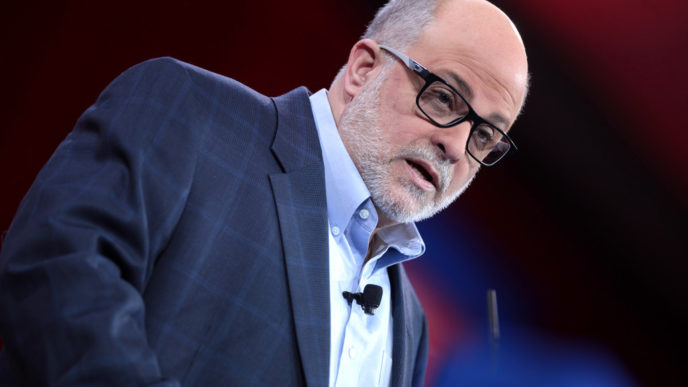
Donald Trump Has Laid out His Agenda and Mark Levin Will Hold Him to It

Earlier this week, Conservative Review Editor-in-Chief Mark Levin reviewed the agenda for the first 100 days of Donald Trump’s presidency.

“The first hundred days, the first three or four months are crucial in getting the big things through congress,” Levin said. President-elect Trump laid out his agenda in a speech delivered in Gettysburg shortly before the election, an agenda Levin has called “outstanding.”

Listen:

Among the President-elect’s proposals were a full repeal of Obamacare, tax reform, an end to common core, and—of course—funding for a wall along the southern border and other increased border security measures.

Whatever the first hundred days will hold, be sure that conservatives will hold President-elect Trump’s feet to the fire to ensure he keeps his word. (For more from the author of “Donald Trump Has Laid out His Agenda and Mark Levin Will Hold Him to It” please click HERE)

Follow Joe Miller on Twitter HERE and Facebook HERE.
Hillary Clinton Has Been a Slave to Her Own Ambition. Now She’s Free

Watching Hillary Clinton’s concession speech, I was struck by how serene she appeared to be. There was no bitterness, no veiled barbs at Donald Trump or his deplorables, no insults directed at average Americans, not even any harmless snark. This didn’t seem like the Clinton we’ve all come to know and love loathe. What was going on here?

I had fully expected Hillary’s surprise defeat at the hands of Trump to destroy her. To be denied something she has coveted for so long, in such a surprising way, at the very last minute, must have affected her in ways the rest of us can’t even imagine. I actually thought her health might be in danger. But then it occurred to me: What if she is feeling something completely different? What if this situation is more complex than it seems?

I’m currently rereading “The Lord of the Rings” for, if my count is accurate, the seventh time. With that story in my mind, it’s impossible for me not to draw parallels between the Ring of Power — the One Ring to Rule Them All — and the presidency. What if Hillary has been a slave to her ambition for the last 50 years, just as the creature Gollum became a slave to the ring and the power that came with it? For half a century, she has desperately been pursuing one thing, the presidency. And now, for the first time, it is clear that she will never have it. She is too old to run in four years. Hillary will never be president of the United States.

Gollum’s relationship with the ring was more complicated than mere desire. As Gandalf the wizard said, “He hates and loves the ring, as he hates and loves himself.” Maybe Hillary feels the same way about the presidency. As with all addictions, the object desired creates such disruption in the life of the addict she grows to despise the very thing she lusts after. When that object is destroyed, when all hope of obtaining it is lost, it can be a liberating experience. When the Ring of Power is destroyed in the fires of Mount Doom, all under its spell are set free.

When Hillary lost the primary to Barack Obama in 2008, publically bursting into tears, we all assumed she was feeling the sting of the loss. What if, instead, she was confronting the realization that she would have to do it all over again in eight years? Already in her 60s, she knew then that the next decade of her life would be consumed with campaigning, political maneuvering, and jockeying for position to the exclusion of all else. She had no choice; her uncontrollable ambition demanded it. It must have been exhausting, and you know what? I would have cried too.

Now it’s all over. She never has to campaign again. She can comfortably retire from public life and live out the remainder of her days as a grandmother, if she so chooses. Maybe Hillary’s acceptance that she can never achieve the dream that has haunted her all her life has brought her peace. The curse has been lifted, and she is free to move on.

Well, it’s only a theory, but it would make me happy if it were true. To be doomed to run for president again and again is not something I would wish on my worst enemy, and if Hillary has finally managed to escape that, I wish her peace. (For more from the author of “Hillary Clinton Has Been a Slave to Her Own Ambition. Now She’s Free” please click HERE)

Follow Joe Miller on Twitter HERE and Facebook HERE.

The Next Great Battle for Conservatives: Keeping RINO Insiders out of the Administration

It’s no secret that Donald Trump is as much of a blank slate on policy as anyone who’s ever been elected president. Both supporters and opponents of the president-elect agree that Trump is still very malleable on many issues and has a lot to learn about both foreign and domestic policy. This is why it is critical for conservatives to win the ‘battle of personnel’ in the coming days. Failure to land conservative outsiders in key cabinet and advisory roles would be akin to failing to establish control of the beach head during the Normandy invasion. We can dream of our policy battles once we get a footing on land, but if the same RINO insiders who broke the system are allowed to control the administration, we will immediately fall back in the sea, rendering the entire election moot.

While many conservatives were and remain apprehensive about Trump’s commitment to conservative values on some issues, the appeal most saw in him was a figure who would bulldoze the failed elites and rid the system of its barnacles. This sentiment was perhaps epitomized during the debates when Hillary Clinton would proudly tout her decades of experience. Trump simply retorted, “Hillary has experience, but it’s bad experience.” It gets back to Bill Buckley’s old adage – “I’d rather entrust the government of the United States to the first 400 people listed in the Boston telephone directory than to the faculty of Harvard University.”

Nowhere is this more evident than with foreign policy, national security, and immigration. Almost everyone with experience in these fields within government has been on the wrong side of these issues and harbor views so divorced from reality that even random names in a telephone book would make better decisions. Yet, these same failed insiders are now gravitating to the transition team like a fly on stink and are looking for jobs.

The first challenge is to appoint a chief of staff who is not only resolute and organized but who shares the vision of the movement Trump has led. A good first start is to reject calls from establishment figures to name RNC Chairman Reince Priebus to this top advisory role.

Additionally, failure to keep the following people out of the administration would tarnish the entire appeal of a Trump presidency:

Chris Christie – potential pick for Attorney General

Just take a look at CR’s issue profile of Chris Christie and it will become clear that this man has been pushing liberal views on fiscal, social, and foreign policies for years. He was rabidly pro-amnesty before he latched himself onto Trump. The notion that someone with his principles and mindset would clean out the Justice Department is a fantasy. The notion that a man who appointed liberal judges as governor would fight legal battles against the rainbow jihad is an exercise in pink unicorns. Christie would be better suited at the Department of Transportation where he can manage traffic on the bridges.

Rep. Michael McCaul (R-TX) – potential pick for DHS Secretary

There is no doubt that the issues of immigration and Islamic terror are the two biggest factors in Trump’s win. This is why it’s so important to keep McCaul away from DHS. As we’ve chronicled in this column, McCaul has done nothing to fight the open borders crowd, and in fact, proposed terrible immigration bills as chairman of the Homeland Security Committee. This is the exact sort of “bad experience” the voters want Trump to reject.

More importantly, McCaul has been a leader in the promotion of “Countering Violent Extremism,” which is subversion agenda advanced by North American Muslim Brotherhood affiliates to obfuscate any mention of Islamic terrorism. This is the very willful blindness that Americans so desperately wanted to change with the outcome of this election. Appointing McCaul to head Homeland Security would continue to empower groups like CAIR at a time when they must be banned from government. McCaul famously wrote a note to a top CAIR official suggesting that his organization is moderate and an effective weapon against terrorists.

Ambassador to Saudi Arabia would probably be a more appropriate position for Mr. McCaul.

Bob Corker – Secretary of State

There is no better example of elevating the arsonist to firefighter than the prospect of appointing Senator Bob Corker (R-TN) to head the State Department. Even in past Republican administrations, the State Department has served as a fifth column promoting the ‘America last’ agenda. This is why it is even more critical to place someone with an outsider’s mindset in the office of Secretary of State more than any other position. Bob Corker is the worst possible choice.

Corker is every bit as responsible for the Iran deal as Hillary Clinton and John Kerry. His views on foreign policy in general reflect the very inside-the-beltway mentality that must change with a new administration.

As I chronicled in my dossier on Corker back when he was being considered for Vice President, the Tennessee senator has sandbagged us on amnesty, taxes, Dodd-Frank, and the START treaty – just to name a few issues. Appointing Corker to any position of prominence, much less Secretary of State, would undermine Trump’s entire movement and reflect an exercise in making the establishment elites great again.

But maybe if Trump appoints him to a cushy ambassadorship, it could free up his Senate seat for conservatives …

Mike Rogers – National Security

Former Michigan Rep. Mike Rogers (R-MI) is heading up the part of the transition team responsible for national security. He is rumored to be in the running for CIA Director or Director of National Intelligence. If there was ever a politician who emblematized the disease of “Washington insiderism” and represents the failure of Republicans to hold Obama accountable for his perfidious foreign policy, it’s Mike Rogers.

As Chairman of the Permanent Select Committee on Intelligence, Rogers put out such a weak report on the Benghazi scandal that it was tantamount to a cover-up. As Trey Gowdy said at the time, Rogers didn’t even interview eye witnesses before he issued his report. In May 2014, ace national security report, Eli Lake, reported that Rogers downright opposed the formation of the Benghazi Select Committee and seemed to be defending the Obama administration.

Why was he siding with Obama?

While we might never get the full story, the details that are out in public should automatically disqualify Rogers to serve in the administration. In June 2014, Judicial Watch reported that Rogers’ wife, Kristi, who was a top executive at the British-based security contractor Aegis Defense Services, helped win major security contracts for her group. “Libya also was an area of activity for Aegis, Ms. Rogers’ company. As Rep. Rogers assumed control of the Intelligence Committee, an Aegis subsidiary, Aegis Advisory, began setting up shop in Libya,” wrote Micha Morrison of Judicial Watch.

Read the full report from Judicial Watch, which raises serious questions about a conflict of interest in Libya.

Rogers bizarrely announced his retirement and said he planned to pursue a career in radio, a move that shocked a lot of people in Washington. Yet, now he is groveling for a position in the new administration. What happened to his radio career?

If people around Trump plan to elevate a man like Mike Rogers to a top national security or intel post, they as may as well replace him with Huma Abedin.

In summary …

The key for Trump is to avoid the mistakes of the past and to NOT automatically rely on insiders. Everyone expects Trump to look outside the box for Cabinet positions. That is in fact his mandate. There are plenty of smart, qualified conservatives who have not been infected by the elitist Kool Aide and the corruption of Washington. And if he is ever short on staffing options, he should remember Bill Buckley’s advice and pull out a telephone book before he taps the very people that have endangered our national security. (For more from the author of “The Next Great Battle for Conservatives: Keeping RINO Insiders out of the Administration” please click HERE)

Follow Joe Miller on Twitter HERE and Facebook HERE.
3 Ways the Trump Administration Can Improve Education

As the post-election dust settles, the incoming Trump administration now has the chance to consider some immediate policy goals for the new year.

As a part of its top and immediate education priorities, the Trump administration should seize the opportunity to advance education choice for children in Washington, D.C., and reverse President Barack Obama’s policies that have grown federal intervention and stifled innovation in education.

This can be accomplished in three ways:

1. Supporting the D.C. Opportunity Scholarship Program. One of the greatest opportunities to improve the prospects of poor and minority children will be right at the White House doorstep when President-elect Donald Trump assumes office.

The nation’s capital is home to the D.C. Opportunity Scholarship Program (D.C. OSP), which provides scholarships to children from low-income families to attend a private school of choice within the District.

The D.C. Opportunity Scholarship Program has been overwhelmingly successful. Students in D.C. who used these scholarships to attend private schools had graduation rates 21 percentage points higher than their peers who applied for a voucher but did not receive one (the program is oversubscribed and a lottery was employed to award scholarships when demand outpaced supply).

Graduation rates for D.C. OSP students reached 91 percent, far outpacing graduation rates in D.C. Public Schools.

Despite this success—and for a fraction of what is spent in the public system (D.C. Public Schools’ per-pupil revenue exceeds $29,400 per student per year, compared to the voucher amount, which is up to $12,600)—the Obama administration has tried to phase out the program, creating uncertainty for families.

As a federal city, the next administration should support education choice in the District of Columbia by supporting the D.C. Opportunity Scholarship Program (which is due for reauthorization), and should consider supporting policies that expand education choice to more District families.

2. Rescinding ESSA regulations. On Dec. 10, 2015, Obama signed into law the Every Student Succeeds Act (ESSA), the eighth reauthorization of the Elementary and Secondary Education Act (ESEA) and the most recent successor to No Child Left Behind (NCLB).

Although ESSA made some important changes to prescriptive and ineffective NCLB policies, lawmakers failed to enact reforms that genuinely restored state and local control of education. Not only were many conservative priorities absent from the bill that became law; the bill’s shortcomings are now being exacerbated by the Department of Education’s rulemaking process.

If the regulations that have been written by the department go into effect, ESSA will serve as a heavy-handed law that dictates the day-to-day affairs of local schools regarding spending, staffing, and accountability. This matters for states, local school districts, and the more than 49 million American schoolchildren who will be impacted by the law.

If the regulations as currently drafted are finalized, the next administration should rescind those regulations while supporting the longer-term conservative legislative policy priority of allowing states to opt-out from ESSA completely, as envisioned in the Academic Partnerships Lead Us to Success Act (A-PLUS).

3. Rolling back higher education regulations. Under the Obama administration, the Department of Education has supported policies that pick winners and losers in the higher education sector by, for example, promulgating regulations that unfairly single out for-profit colleges and universities.

The next administration should roll back two significant regulations: defense to repayment (regulation enabling the department to cancel the debt of students who can show their colleges have misrepresented the education students thought they would receive), and gainful employment (regulation that for-profit colleges and vocational programs must ensure their graduates’ loan repayments to not exceed 20 percent of their discretionary income), adversely affecting schools that serve nontraditional students.

Repealing such regulations would remove barriers to innovation in higher education and allow the marketplace to be a better determinant of quality, while also ensuring the federal government remains neutral on students’ and parents’ higher education choices.

Protecting education choice in the District would be a welcome change for low-income families in the nation’s capital, while signaling general support for policies that advance education choice.

Rolling back regulations weighing down ESSA would be a first step toward limiting federal intervention in local school policy, paving the way for more robust reforms in the year to come. And rescinding regulations unfairly targeting certain sectors of higher education would help ensure there is a market of higher education options that is diverse and reflects the varying needs of traditional and nontraditional students alike.

These are three important first steps in ensuring that students across America will begin to experience better and more diverse options in pursuing an education. (For more from the author of “3 Ways the Trump Administration Can Improve Education” please click HERE)

Follow Joe Miller on Twitter HERE and Facebook HERE.

Historical First: Joe Miller Achieved Highest Vote for Libertarian in US Race Ever

Joe Miller earned the Libertarian Party (L.P.) its highest-ever vote percentage in a federal Senate race this week, with his 30 percent in Alaska.

Generally when an L.P. candidate gets into double digits it is because one of the major party’s isn’t contesting the race at all. But Miller impressively got this 30 percent L.P. total coming in second place against a Republican (winning incumbent Lisa Murkowski, 44 percent), with a Democrat (Ray Metcalfe, 11 percent), and an independent (Margaret Stock, 14 percent) far behind him. Miller beat the combined total of the Democrat and the 3rd place independent.

Miller pulled this off possibly despite the Libertarian label more than because of it; he was well-known to Alaskan voters, having been the official GOP Senate candidate in 2010.

In that race he famously was beaten by the incumbent Murkowski, who Miller exceeded in the primary by running a Tea-Party insurgent campaign. Yet in the general election she triumphed via write-in, a rare collision of dual near-impossibilities in modern politics: beating an incumbent and winning via write-in . . .

It’s an example of how “moving forward there’s a huge opportunity to enlarge our tent,” Watts says. “As much as we talk about open borders,” Watts says (Miller’s Tea-Partyish belief in border walls was a sticking point with many Libertarians), “we want folks to come in to our Party, to assimilate and actually become libertarians and understand the non-aggression principle and self-ownership and negative individual rights and the whole platform.” (Read more from “Historical First: Joe Miller Achieved Highest Vote for Libertarian in US Race Ever” HERE)

Follow Joe Miller on Twitter HERE and Facebook HERE.
Trump Should Reverse Obama’s Executive Actions. Here Are 7 Areas to Start.

Under the U.S. Constitution, Congress, not the president, creates the laws. Article I of the Constitution grants enumerated legislative powers to Congress. The Constitution assigns the executive the duty to enforce the law, and Article II, Section 3 requires that the president “shall take Care that the Laws be faithfully executed.”

However, throughout the last eight years, we have seen the Obama administration continually abuse the power of the executive branch by issuing unconstitutional, unilateral executive actions to push its agenda. The “old days” of Congress creating our laws have become a distant memory.

President Barack Obama even went so far as to announce his unilateralism, saying, “We’re not just going to be waiting for legislation in order to make sure that we’re providing Americans the kind of help they need. I’ve got a pen and I’ve got a phone.”

Well, it appears that American voters have their own pens, too, and they’ve put them to their ballots now in a stunning and decisive way. On Tuesday, the American people elected Republican outsider Donald J. Trump to serve as the 45th president of the United States.

Now, with control of the presidency, both chambers of Congress, and soon the Supreme Court, conservatives across the country are looking forward to repairing some of the damage Obama has inflicted on our constitutional system.

As long promised, Trump should use the first 100 days of his administration to repeal every illegal executive action the Obama administration has issued while in office.

Here is a list of the seven areas with the most damaging executive actions signed during the Obama administration that must be repealed:

1. Crony Exemptions to Obamacare. While Trump works with Congress to actually repeal Obamacare, he can start by issuing an order to halt some of Obama’s executive actions that created special exemptions to Obamacare for his favored constituencies.

2. Executive Amnesty. The new president must repeal Obama’s unilateral changes to our nation’s immigration laws, which exempted certain categories of illegal aliens from being deported. (This bar on deportations was halted by a court order, but the underlying exemption still remains on the books.)

3. Environmental Protection Agency Overreaches. Trump must repeal Obama’s multiple illegitimate expansions of EPA rules. These new rules have imposed huge costs on society and are crippling the U.S. energy sector.

4. Appeasement of Iran. Trump must repeal the executive order that single-handedly removed U.S. sanctions on Iran. These sanctions provided key leverage to the U.S. in negotiations with Iran, and their removal has cleared Iran’s path in developing a nuclear weapon.

5. Climate Change Bureaucracy. Trump must repeal the executive order that purports to “prepare the United States for the impacts of climate change.” This action from Obama created manifold new justifications for government spending based on inconclusive science.

6. Life and Religious Liberty. Trump should reverse Obamacare’s unprecedented taxpayer funding of abortion. He should also direct the secretary of Health and Human Services to undertake a rulemaking process that will end the mandate for insurance to cover abortion-inducing drugs and contraception, along with “gender transition” therapies and surgeries.

7. “Gender Identity.” Trump should repeal the Obama administration’s Title IX guidance equating “gender identity” with “biological sex.” The Department of Justice and Department of Education have wielded this guidance to punish educational institutions for “discrimination” under Title IX, simply for having separate showers, locker rooms, and bathrooms for men and women.

By making the repeal of these executive actions a priority, the Trump administration will have an easy opportunity to right some of the wrongs of the past administration.

As Henry Ford once said, “Failure is simply the opportunity to begin again, this time more intelligently.” It’s been a while since conservatives have had an opportunity like this one, and it is imperative we take advantage of it. (For more from the author of “Trump Should Reverse Obama’s Executive Actions. Here Are 7 Areas to Start.” please click HERE)

Follow Joe Miller on Twitter HERE and Facebook HERE.