Pro-Life Leaders Praise Trump Victory, Promise Push for Action

On Tuesday, Republican presidential nominee Donald Trump won the White House in an electoral landslide, even as he appears to have lost the popular vote. Senate Republicans, defending 24 vulnerable seats to the Democrats’ 10, have lost one seat and may lose two, if Kelly Ayotte loses her seat in New Hampshire — leaving the party with a two seat majority heading into a friendly 2018 midterm election. House Republicans held on to a strong majority, losing only six seats to Democrats.

Several key demographics put Trump and Republican Senators over the top — white voters without college degrees, especially — and among them pro-lifers may have been crucial to key Republican victories.

“Exit polling reported that he captured 81 percent of the evangelical vote — exceeding the evangelical support for Bush, McCain and Romney,”Family Research Council President Tony Perkins said. “In the third debate, Trump took on the partial-birth abortion issue and I believe that’s the moment he closed the deal with evangelicals and solidified their support.” Trump’s election was “a stunning rebuke to the political establishment.”

The American People Have Spoken

“The American people have spoken loud and clear,” said American Life League President Judie Brown. “We hear them saying they love our nation, they love Our Lord, they love His babies, and they want to make America great again by shutting down Planned Parenthood once and for all.” The the election is “an historic moment for the pro-life movement,” said Marjorie Dannenelser, president of the Susan B. Anthony List.

Many noted how much the pro-life movement had contributed. Dannenelser noted that “Both the presidential race and the control of the Senate came down to tens of thousands of votes in Florida, Ohio, and North Carolina.” Her group’s outreach to “1.6 million low propensity pro-life voters and persuadable Democratic and Hispanic voters” in these states helped seal the victory.

Created Equal’s Mark Harrington likewise noted that his group’s “vote-anti-abortion campaign traveled 5200 miles to 18 cities in three battleground states and flew 70 tow banner hours.”

Undercover investigator David Daleiden, founder of the Center for Medical Progress, said that in the last year, his group’s videos has “exposed Planned Parenthood and the abortion industry’s barbaric, taxpayer-sponsored criminal scheme to harvest and sell tiny baby hearts, lungs, livers, and brains for profit. Yesterday, the American people voted for change agents to respect and protect even the smallest and most forgotten among us, including our unborn brothers and sisters.”

Life Action president Lila Rose said that Tuesday’s results showed the weakness of the abortion industry. “Planned Parenthood has been defeated at the ballot box,” she said.

Despite the millions Planned Parenthood and its allies spent to elect a pro-abortion president and Congress, voters roundly rejected the abortion agenda of Hillary Clinton and the abortion industry that backed her campaign. When the abortion lobby pushed for unregulated abortions through all nine months of pregnancy and wanted to force taxpayers to pay for them, the American people pushed back.

Trump Must Deliver

The pro-life leadership promised to hold Trump accountable to his promises to defund Planned Parenthood, make permanent the Hyde Amendment, nominate a pro-life Supreme Court justice and sign a ban on most late-term abortions. “Our nation will now embark on a path to eliminate abortion and to foster the freedom of the Church. We will be able to advance such an agenda because of the pro-life majorities that now exist both in the House of Representatives and in the Senate,” said Priests for Life’s national director Frank Pavone.

Pro-Life Action League Executive Director Eric Scheidler said that his group is “looking forward to working with incoming President Trump and the Republican majorities in the House and Senate to restore legal protection to our unborn brothers and sisters — starting with defunding Planned Parenthood.”

Trump “promised to appoint justices in the mold of Scalia,” wrote Thomas Glessner, founder of the National Institute for Family and Life Advocates, in The Washington Examiner. (Disclosure: NIFLA is a client of this reporter.) “Donald Trump will be expected to honor his commitment to bring sanity back to the judicial branch of our government and ethics back to Washington.” (For more from the author of “Pro-Life Leaders Praise Trump Victory, Promise Push for Action” please click HERE)

Follow Joe Miller on Twitter HERE and Facebook HERE.

Miley Cyrus’ Reaction to Trump’s Election Was Surprisingly Refreshing

The general reaction of Hollywood liberals following the 2016 presidential election results has been one of anger, sadness, and horror. But Miley Cyrus of all people had a surprisingly gracious response to Donald Trump’s victory.

After Wednesday morning’s announcement, the controversial pop singer tweeted a video to her fans in which she verbally grappled with the implications of a Trump win.

Some may argue that the tears were a little much, but those individuals should recall that many Republicans were just as devastated by the 2012 election results. Given this, Cyrus’ reflection was a refreshing departure from the pointless whining, name-calling, and anti-American rhetoric of her peers.

“…I do want to say that I’ve been very vocal [in] my support for everyone besides Donald Trump,” she admitted. “Heavily supported Bernie, heavily supported Hillary. And I still think that in her lifetime she deserves to be the first female president. And that’s what makes me so sad—is that I just wish she had that opportunity because she’s fought for so long, and because I believe her when she says she loves this country. This is all she’s ever done; she’s given her life to make it better.”

“But like Trump so ironically played after his speech, that said you can’t always get what you want. And happy hippies, we adjust, and we accept everyone, and who they are. And so Donald Trump, I accept you. And, this hurts to say, but I even accept you as the president of the United States. And that’s fine. That’s fine because, I think now, I want to be a hopeful hippie.

But please, please just treat people with love and treat people with compassion and treat people with respect, and I will do the same for you. And … anything you ever want to talk about or understand—maybe people that don’t think the same way that you and some of the people that support you do—please, if you wanna open your mind and you wanna open your heart, I would love to give you a key.”

Cyrus—the same person who vowed to flee the country should Trump win the election—demonstrated the type of humility and genuine care for the American people that is virtually nonexistent among the entertainment industry’s elite. If she can show a change of heart and humanize the man she once labeled her enemy, then liberals and conservatives should be hopeful about the hard conversations and compromises that undoubtedly lie ahead. (For more from the author of “Miley Cyrus’ Reaction to Trump’s Election Was Surprisingly Refreshing” please click HERE)

Follow Joe Miller on Twitter HERE and Facebook HERE.

Trump’s Win Isn’t the End, Says Levin. Time to Hold This New ‘GOP Monopoly’ Accountable

Wednesday night on the “Mark Levin Show,” Conservative Review’s Editor-in-Chief addressed the historic election that swept Republicans into power and placed Donald Trump in the White House.

Levin offered his congratulations to President-elect Donald Trump, but he reminded his audience that it was not Trump who defeated Hillary Clinton. Rather, the constitutional conservatives who went forth and voted for him are the real victors.

Listen:

Trump won by running on “one of the most conservative policy records and agendas of any modern president,” Levin said.

“It wasn’t until later when you, when WE held his feet to the fire … insisting that he embrace conservative principles” that he was able to do so, Mark remarked.

Donald Trump has won. The Republicans control the government.

Now it’s time to get to work on implementing that conservative agenda. “And we’re going to insist that on these very, very important conservative issues upon which many of you voted — that this Republican monopoly advance our principles … the principles they said that they would institute,” Levin said.

“We’re going to insist on it.” (For more from the author of “Trump’s Win Isn’t the End, Says Levin. Time to Hold This New ‘GOP Monopoly’ Accountable” please click HERE)

Follow Joe Miller on Twitter HERE and Facebook HERE.

No One Is More Horrified by the Election Results Than Planned Parenthood

As the election results poured in Tuesday evening, panic began to set in for government-subsidized abortion giant Planned Parenthood.

The nation’s number-one abortion mill arguably ran one of the strongest campaigns in support of Democratic nominee Hillary Clinton. But, in the end, all of the PSA videos, emails, tweets, and costly door-to-door campaigning weren’t enough to quash the astonishing momentum of the Trump Train.

A Donald Trump victory represents a likely end to Planned Parenthood’s crony love affair with Hillary Clinton. But the murderous “women’s rights” lobby made it clear Wednesday that they’re not going down without a fight.

Things were looking up for Planned Parenthood CEO Cecile Richards and her cult of baby-killing progressives after the Republican-led Congress agreed in September to keep them on the federal dole through the end of the year. This, combined with Clinton’s unmistakable pledge to defend Roe v. Wade and appoint a Supreme Court justice who would defend women’s “right to choose” (to kill the unborn) afforded Planned Parenthood a sense of optimism about a future full of unfettered action and expansion.

Now, Planned Parenthood will have to kiss that goodbye. This may be one of the most shocking breakups of 2016. (For more from the author of “No One Is More Horrified by the Election Results Than Planned Parenthood” please click HERE)

Follow Joe Miller on Twitter HERE and Facebook HERE.

How Republicans Can Start to Dismantle Obamacare With a Trump Presidency

The GOP’s long-discussed dreams of repealing Obamacare became closer to reality early Wednesday morning when Donald Trump was elected president.

Six years after President Barack Obama signed the Affordable Care Act into law and after more than 60 attempts to repeal it, Republicans now have a good chance to advance their own agenda.

While on the campaign trail, Trump repeatedly promised voters that he would repeal Obamacare if he was elected president and even called on congressional Republicans to call a “special session” to move forward with rolling back the law.

“Obamacare has to be replaced,” Trump said earlier this month during a stop in Pennsylvania. “And we will do it, and we will do it very, very quickly. It is a catastrophe.”

Now, following Trump’s defeat of Democratic presidential nominee Hillary Clinton, Republicans are laying the groundwork for dismantling the Affordable Care Act next year.

“I don’t think it’s going to be a sentence-per-sentence destruction of the bill, but I do think that substantial chunks of it are in really grave danger,” Seth Chandler, a visiting scholar at George Mason University’s Mercatus Center and a professor at the University of Houston Law Center, told The Daily Signal.

Republicans need 60 votes in the Senate to pass a bill repealing the health care law and would fall short of that threshold in the new Congress, where the GOP will hold at least 52 seats.

But GOP lawmakers are likely to use a budget tool called reconciliation—a procedure used in the Senate that allows a bill to pass with 51 votes—to roll back key provisions of Obamacare and avoid a Democratic filibuster.

The GOP-led House and Senate passed a budget resolution last year that included instructions to use reconciliation to repeal Obamacare and were ultimately successful in getting it to Obama’s desk, where it was vetoed.

The bill called for the repeal of the individual and employer mandates, Medicaid expansion, tax credits, medical device tax, and Cadillac tax. It also stripped the government of its authority to run the exchanges set up under the law and lessened the fine for failing to comply with the mandates to $0, which was needed to abide by Senate rules.

GOP leaders in the House and Senate haven’t committed to using reconciliation again next year to dismantle the Affordable Care Act, but House Speaker Paul Ryan said Wednesday the law is “collapsing under its own weight.”

“This Congress, this House majority, this Senate majority has already demonstrated and proven we’re able to pass legislation and put it on the president’s desk,” Ryan, R-Wis., said during a press conference. “Problem is, President Obama vetoed it. Now, we have a President Trump who has promised to fix this.”

Ryan’s counterpart in the Senate, Majority Leader Mitch McConnell, also said Wednesday that Obamacare’s repeal is a priority for the GOP-led Senate.

“It’s pretty high on our agenda as you know,” McConnell, R-Ky., said. “I would be shocked if we didn’t move forward and keep our commitment to the American people.”

As Congress considers and crafts a reconciliation bill rolling back key aspects of Obamacare, Trump can take steps on his own to “make the Affordable Care Act’s life miserable,” Chandler said.

The first thing the president-elect can do is end cost-sharing reductions, Chandler said, which are payments the federal government makes to insurance companies that provide silver-level plans to consumers.

“The Affordable Care Act is fragile enough that doing this one thing of refusing to pay the cost-sharing reduction payments will be enough to strike a mortal blow,” he said.

The House filed a lawsuit against the Obama administration in 2014 over the cost-sharing reductions on the grounds that the Department of Health and Human Services was using money that Congress never appropriated.

That lawsuit is currently weaving its way through the courts, but Chandler argued that Trump can stop cost-sharing reductions on his first day in office. Doing so would likely cause insurance companies to leave Obamacare’s exchanges and cancel policies, Chandler said.

Such action on the part of insurers would have a significant impact on consumers, but it could be used as a “starting point” for negotiations with congressional Democrats over a replacement for the health care law.

“Trump holds a very powerful card in his hand,” Chandler said.

In addition to ending cost-sharing reductions, Trump can also begin the rulemaking process to roll back several regulations implemented under Obamacare, including the contraception mandate and the essential benefits requirement.

The controversial contraception mandate, which was challenged before the Supreme Court this year, requires employers to provide their workers with health insurance plans that cover contraceptives and abortion-inducing drugs.

Under the essential benefits requirement, health insurance plans must cover a number of health care services, which include ambulatory patient services, emergency services, maternity and newborn care, and preventive and wellness services.

After Obamacare became law in 2010, Republicans pledged to repeal it while campaigning during the 2014 midterm and 2016 general elections but haven’t been successful.

Obamacare’s fourth open enrollment period began last week, and consumers have until Dec. 15 to purchase coverage that begins in January.

Though 20 million Americans gained health insurance coverage under Obamacare, many consumers have seen their premiums and deductibles increase over the last three years.

Monthly premiums for plans sold on Obamacare’s federal exchange next year will rise by an average of 25 percent, and consumers have fewer choices than they have had in the past.

Ryan and House Republicans rolled out the House GOP’s replacement plan for Obamacare in June, which starts with repealing the Affordable Care Act.

The plan, part of Ryan’s “A Better Way” agenda, maintains few of Obamacare’s provisions, such as a measure allowing those under the age of 26 to remain on their parents’ plans, but would also reform Medicaid and loosen regulations on health savings accounts.

Trump unveiled his own health care plan during the campaign, which includes measures to allow insurers to sell policies across state lines and to turn Medicaid into a state block grant program.

Republicans haven’t coalesced around one alternative to the health care law. But Sen. John Barrasso, R-Wyo., said Wednesday the GOP would ensure consumers have a “smooth transition” from the current health care system to a new one once Obamacare is repealed.

“People had significant disruption in their lives already,” Barrasso said. “We want a smooth transition—as smooth as possible. We’re moving away from Obamacare to patient-centered care and putting competition back in the system.” (For more from the author of “How Republicans Can Start to Dismantle Obamacare With a Trump Presidency” please click HERE)

Follow Joe Miller on Twitter HERE and Facebook HERE.

Iran Is Wrong: Trump Can Absolutely Overturn the Nuclear Deal

Donald Trump’s election as president has discomforted many foreign leaders, especially in Iran.

Iranian President Hassan Rouhani claimed Wednesday that there is “no possibility” for the Obama administration’s nuclear deal with Iran to be overturned by Trump, despite Trump’s threat to do so.

This is an outright lie. President Barack Obama purposely structured the deal as an executive agreement to make an end-run around Congress, which he knew would oppose the flawed and risky deal.

After his inauguration, Trump would have the authority to revoke the executive agreement. Trump has called the deal “disastrous” and said his “No. 1 priority” would be to dismantle it.

Iran’s state television channel reported that Rouhani told his Cabinet that Tehran’s “understanding in the nuclear deal was that the accord was not concluded with one country or government but was approved by a resolution of the U.N. Security Council and there is no possibility that it can be changed by a single government.”

Iranian Foreign Minister Mohammad Javad Zarif chimed in to urge Trump to accept the agreement: “Every U.S. president has to understand the realities of today’s world. The most important thing is that the future U.S. president stick to agreements, to engagements undertaken.”

That is laughable advice, coming from the hypocritical leaders of a country that regularly violates international law by sponsoring terrorism, taking hostages, harassing shipping in international waters—not to mention violating U.N. Security Council resolutions by exporting arms to Palestinian terrorist groups, Hezbollah terrorists, Syrian militias, and Yemeni rebels.

Iran has also been caught trying to covertly buy illicit dual-use nuclear technology in Germany. This violates its commitments under the nuclear agreement to obtain international approval for all nuclear purchases.

The new administration could use these or other violations as a justification for doing away with the nuclear deal.

Trump has promised to enforce the nuclear deal so strictly that it will be patently clear that Iran is responsible for the deal’s demise. During the presidential campaign he said:

You know, I’ve taken over some bad contracts. I buy contracts where people screwed up and they have bad contracts. But I’m really good at looking at a contract and finding things within a contract that, even if they’re bad, I would police that contract so tough that they don’t have a chance. As bad as the contract is, I will be so tough on that contract.

Iran’s dictators have had an easy time out-negotiating and out-maneuvering the Obama administration, which eagerly sought to clinch a deal. The administration made huge concessions that allowed Iran to dismantle international sanctions without dismantling key elements of its nuclear program, which continues to advance.

It looks like the Trump administration will take a much harder line on the Iran nuclear issue, which will be one of the earliest foreign policy issues it must address. (For more from the author of “Iran Is Wrong: Trump Can Absolutely Overturn the Nuclear Deal” please click HERE)

Follow Joe Miller on Twitter HERE and Facebook HERE.
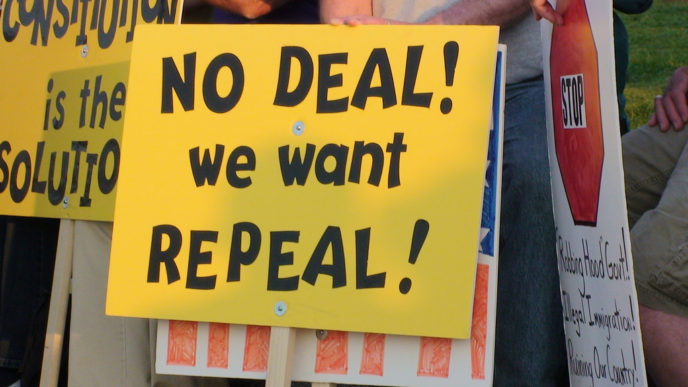
Make Religious Freedom Great Again

Donald Trump promised that he would make America great again. If he is to make good on that promise, he’ll need to start by robustly restoring our first freedom: the free exercise of religion.

Unfortunately, under President Barack Obama’s administration, it came in for attack as never before. Thankfully, many of those attacks can be rectified in the very first days of a Trump administration.

Trump should commit to protecting the free exercise of religion for all Americans of all faiths. In her concession speech, Hillary Clinton referred to the “freedom of worship”—piety limited to a synagogue, church, or mosque. But what the American founders protected was the right of all to live out their faith every day of the week in public and in private, provided they peacefully respect the rights of others.

The reduction of religious liberty to mere freedom of worship is a hallmark of the Obama years. Houses of worship, for example, were exempted from the Department of Health and Human Services Obamacare contraception and abortifacient mandate.

But religious schools, like Wheaton College, and religious charities and communities, such as the Little Sisters of the Poor, were merely “accommodated”—offered a different way to comply with the mandate while still violating their beliefs.

A Trump administration can fix this right away. Trump can instruct his secretary of Health and Human Services to provide robust religious liberty protections to the HHS mandate. And Congress can pass legislation, which Trump can sign, to repeal and replace Obamacare.

Likewise, the Obama administration has engaged in a series of executive actions—some of which were likely unlawful—to advance a radical transgender agenda. This, too, Trump can end.

For example, the Obama departments of Justice and Education have instructed school districts throughout the country that they are now interpreting a 1972 law, Title IX, to require schools to allow students to use the bathroom, locker room, and shower facility that accords with their self-declared “gender identity.” They did this by saying the word “sex” would now mean “gender identity.”

The Obama Department of Health and Human Services has done the same thing: claiming a provision in Obamacare that forbids discrimination on the basis of “sex” means “gender identity”—and thus all health care plans have to cover sex reassignment therapies, and all relevant physicians have to perform them.

Obama has also issued executive orders barring federal contractors and federal foreign aid recipients from engaging in what the government deems to be “discrimination” on the basis of “sexual orientation and gender identity”—where something as simple as saying biological males shouldn’t use female showers can count as “discrimination.”

All of this can be undone right away. Trump can rescind Obama’s executive orders, and he can instruct his secretaries of Education and Health and Human Services and his attorney general to interpret the word “sex” as Congress intended it—as a biological reality—not as “gender identity.”

Congress can then make these orders permanent by enacting the Russell Amendment, which protects freedom in religious staffing for religious institutions, and by passing the Civil Rights Uniformity Act, which specifies that the word “sex” in our civil rights laws does not mean “gender identity” unless Congress explicitly says so.

Trump should also make it clear that under his watch the federal government will never penalize any individual or institution because they believe and act on the belief that marriage is the union of husband and wife.

Trump can issue an executive order stating that when it comes to tax status, accreditation, licensing, government grants, and contracts, no entity of the federal government may penalize someone for acting on their conviction on man-woman marriage. To protect a future president from undoing this, Congress can pass, and Trump sign into law, the First Amendment Defense Act. Indeed, Trump promised to sign this bill into law during his campaign.

Whether it be harassing an order of nuns, forcing doctors to perform sex reassignment therapies, or preventing local schools from finding win-win compromise solutions that would respect all students’ bodily privacy, the Obama administration has waged an aggressive and unnecessary culture war.

Because it has done so almost exclusively through executive action, a Trump administration can quickly undo this damage. And Congress can then ratify it permanently in law. That’ll go a long way toward protecting peaceful coexistence, making American truly great again. (For more from the author of “Make Religious Freedom Great Again” please click HERE)

Follow Joe Miller on Twitter HERE and Facebook HERE.
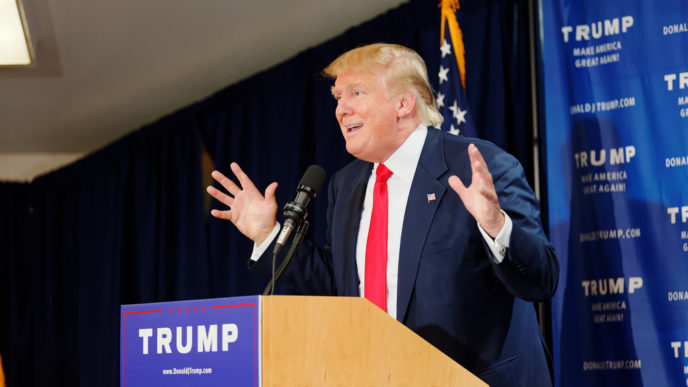
Obama Didn’t Endorse Illegal Voting, but There’s Plenty Wrong With What He Did Say

At least two FOX Business News hosts have claimed that President Barack Obama told illegal immigrants to vote in an interview with actress Gina Rodriguez late last week. The first was Neil Cavuto; the second was Stuart Varney.

Snopes was quick to pronounce it “False,” but their pronouncement seemed overly hasty. So what’s the truth?

It’s complicated. What seems to have happened is that Rodriguez asked a question, in which she claimed that illegal immigrants are citizens, and Obama answered a slightly different question. That only becomes clear later in the interview, however. Initially, it sounds like he is agreeing with her false premise, and encouraging illegals to vote.

Unfortunately, FOX Business ran a clip of the interview that did not include all of Obama’s comments (which, frankly, were garbled). When one listens to the entire interview two or three times, however, the more natural interpretation is that Obama is encouraging Latino citizens to vote, even if they have family members who are illegal immigrants. But the exchange is confusing. (See the full interview below.)

Here’s the relevant interchange (which starts at 3:23 in the interview):

RODRIGUEZ: Many of the millennials, Dreamers, undocumented citizens — and I call them citizens because they contribute to this country — are fearful of voting. So if I vote, will immigration know where I live? Will they come for my family and deport us?

OBAMA: Not true. And the reason is, first of all, when you vote, you are a citizen yourself. And there is not a situation where the voting rolls somehow are transferred over and people start investigating, et cetera. The sanctity of the vote is strictly confidential in terms of who you voted for. If you have a family member who maybe is undocumented, then you have an even greater reason to vote.

RODRIGUEZ: This has been a huge fear presented especially during this election.

OBAMA: And the reason that fear is promoted is because they don’t want people voting. People are discouraged from voting and part of what is important for Latino citizens is to make your voice heard, because you’re not just speaking for yourself. You’re speaking for family members, friends, classmates of yours in school …

RODRIGUEZ: Your entire community.

OBAMA: … who may not have a voice. Who can’t legally vote. But they’re counting on you to make sure that you have the courage to make your voice heard.

What Else Obama (and Rodriguez) Said

There’s still plenty to object to in the interview. While Obama didn’t encourage illegal immigrants to vote, Rodriguez did. She also made the emotionally charged, but false, statement that citizenship is determined by those who “contribute to this country.”

Rodriguez and Obama also seemed to agree, in another part of the interview, that there is no fraud at the election booth, with the president emphatically saying “No” when asked about it.

Moreover, Obama said that “people are discouraged from voting” and that “fear is promoted … because they don’t want people voting.” While voter ID laws and other measures are locked in court battles across the country, many of the laws challenged by liberals (and the Obama administration) merely require voters to show proof of citizenship via a photo identification.

This is hardly a rerun of the Jim Crow era, especially with the growing circumstantial evidence of widespread voter fraud. And even Obama said just moments later that not everyone can vote, and moments earlier had said “when you vote, you are a citizen yourself.”

Fair Elections?

Obama’s comments came just a few days before the U.S. Department of Justice (DOJ) announced it will send 500 people to 67 locations in 28 states to oversee voting. The announcement made passing references to stopping illegal voting, but spent far more time outlining how the DOJ plans to make sure people going to the polls aren’t blocked.

While all legally registered voters should be able to participate in the election process, it is concerning that the DOJ seemed to pass over the threat of illegal voting.

Then again, given the Tea Party targeting scandal of 2012 and the DOJ’s cover-ups for Hillary Clinton this year, why would we expect Obama to uphold fair elections?

Here’s the full interview:

(For more from the author of “Obama Didn’t Endorse Illegal Voting, but There’s Plenty Wrong With What He Did Say” please click HERE)

Follow Joe Miller on Twitter HERE and Facebook HERE.

4 Ways to Survive Election Day

As Election Day looms, many conservatives are struggling to be excited about this political cycle — in fact, many are dreading it. Still, it’s an important period in our nation’s history. Here’s how to navigate the next 24-48 hours without feeling crazy, depressed, or like you want to stick your head in the sand.

Vote

Given how awful both Trump and Clinton are, I really struggled this year with whether or not I was going to vote at all. But voting is a privilege — something not every citizen of every country shares (especially women). I’ve heard some people say, I don’t know anyone who has died for my right to vote. Perhaps not, but look at it this way: Our military sacrifices time, effort, money — and lives — to protect us from countries who’d like to take our freedoms away. Which right do you think our enemies would like to eradicate first? Voting is in the top five.

Read up on the candidates again — including the independent ones like Evan McMullin. Depending on where you live, figure out if your state is a “swing state,” and if you might deploy a strategy while voting. If you really, really can’t cast a vote due to your conscience — well that’s up to you. Remember: Be vigilant and report any suspicious activity at your polling place to police.

Oh, and if you feel comfortable and safe, bring your kids to vote: Tell them the differences between a democracy and a republic — remember, we live in the latter. If they’re older, explain to them how the Electoral College works. This is an important part of history; they’ll only get to see four times before they do it themselves. Lead the way; pave the path. It’s not a chore; it’s a privilege.

Do your thing

Now that you’ve voted, or perhaps you’re waiting for a lull later in the day, text your local friends and neighbors and tell them where you voted and gently nudge them to do the same. Then, go about your business, doing the thing you were put on this earth to do. Don’t sit around on social media wondering how many folks are voting. Plus, the results won’t be in for hours. The Founding Fathers didn’t lay the foundation for a republic — complete with voting rights — and that whole “life, liberty and the pursuit of happiness” thing for you to sit around worrying about who is going to be the next president.

I’ve got a great piece of art on one of my walls at home: “Dreams Don’t Work Unless You Do.” Cliche? Yes. Prosaic? Maybe. But, also, right. Whatever your dream is, beyond having a Republican, Democrat, or Independent for president, do a little bit of it today. This country still needs encouraging teachers, intelligent doctors, informed lawyers, proficient plumbers, creative architects, innovative designers, and good parents, (et al) as much as it needs a president who will do a good job too. Do your part in the American dream — especially before either nominees can get their foot in the door and do any more to try to yank it away.

Get with your family — then get informed

The most influential thing on your children won’t be their next president — it will be you. Get with your family, friends, whoever is in your circle of influence. Have a meal; Enjoy a glass of wine. Read aloud or listen to “Duck For President.” It’s adorable and will make them laugh and ease your mind. Tell them you love them — these are the moments children remember.

Now, and only now, check in with your preferred source of news. A few results from the East Coast might be rolling in, but remember, some of the swing spots — the purple areas — are more rural come in later. Plus, you’ve still got our West Coast friends who take a while (it seems). Go ahead, read the statistical analysis, start counting electoral votes, and if it makes you feel better, wonder how we got here all over again. (Not that this will matter much at this point, but it’s certainly a natural reaction.) The states to watch are Nevada, Colorado, Minnesota, Wisconsin, Ohio, Pennsylvania, Virginia, New Hampshire, North Carolina, and Florida.

Don’t panic

When the results have finally come in and the winner is basically declared, first, panic a little, if you’re the type to do so. If not, just roll your eyes, purse your lips, shrug, or — the worst — glare silently at the red and blue map on TV. Let all the thoughts run through your mind: I can’t believe it! How did we get here? This is absurd! How are we even a world superpower? Will we even be a world superpower come January? I miss Ronald Reagan! I’m moving to New Zealand! Or Canada! What am I going to tell my kids?

Then, collect yourself. You’re an adult after all. Be glad you live in a republic and not a democracy and that you even get to vote at all. Hope and pray that neither president is as awful as we have predicted. Ask yourself if you did everything you could to prevent what you’re seeing on television and if not, what you’ll do differently in 2020. Vow to do that, and more, especially at the local level starting Wednesday.

Then go to bed, with these things in mind, and this nugget from one of the best journalists of our time, the late Robert Novak: “Always love your country–but never trust your government!” (For more from the author of “4 Ways to Survive Election Day” please click HERE)

Follow Joe Miller on Twitter HERE and Facebook HERE.
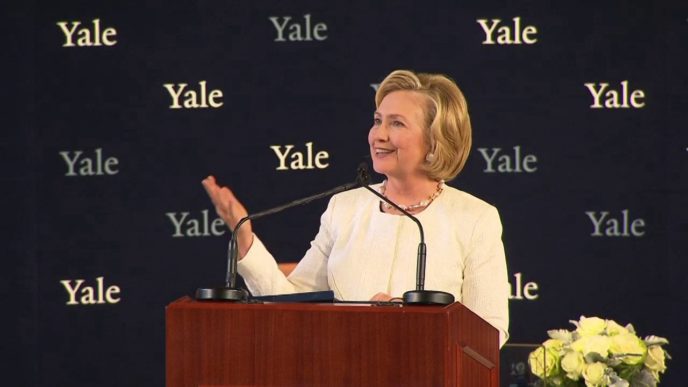
What Can We Do to Indict Hillary Clinton, One of the Most Corrupt Politicians in History?

There is little doubt in the minds of the American public that Hillary Clinton probably broke a law. After all, she seems to have little reason to abide by it. In fact, she may be the first presidential candidate to be interviewed by the FBI as often as she is by the media.

More recently, the FBI has reopened the investigation into wrongdoing by Hillary and her aides after the FBI stumbled upon thousands of additional State Department emails that may have been improperly shared after investigating a separate incident involving disgraced former congressman (and estranged husband of Hillary’s closest aide, Huma Abedin) Anthony Weiner and his involvement with underage women.

Although the FBI has determined (perhaps politically) no wrongdoing by Clinton there either, it’s unlikely the illegal activity surrounding Hillary’s emails — and the fraudulent nature of the Clinton Foundation — will keep her off the radar of law enforcement.

Yet, if Hillary is elected as some polls suggest, the bigger question on the minds of so many Americans is what happens if Hillary did break the law? Can she be indicted? Can she go to jail? Can she pardon herself? To get answers, I sat down with one of the most informed individuals on such matters, Bruce Fein, constitutional scholar and former associate deputy attorney general under President Reagan.

Q & A with Bruce Fein

JG: Could “President Hillary Clinton” be indicted if law enforcement concludes she broke the law?

BF: This question was litigated during the Nixon/Watergate era. The courts concluded that a sitting president, unlike a member of Congress or a judge, could not be indicted. Since the president is the executive of an entire branch of the government, it would effectively shut that branch down. It would be in direct conflict with the Constitution.

However, like they did with President Nixon, Congress has the ability to impeach a president, and if they do so successfully, then the president can then be indicted.

That being said, it would be nearly impossible for the Justice Department to indict a president. Since the president has the authority to fire any individual in the executive branch without cause, any U.S. attorney willing to indict a President Hillary Clinton would immediately be fired. The case would never make it to a grand jury. A grand jury can’t indict an individual unless it is signed by the U.S. attorney. Even today, the secretive grand jury process is often ignored by the U.S. attorney’s office for much lesser political reasons. That is one reason the first action by any new president is to fire most of the U.S. attorneys and replace them with their own. When I was with Reagan, we fired most of the U.S. attorneys under President Carter.

JG: If President Clinton were indicted before the election, could she pardon herself as president?

BF: President Obama would never allow Clinton to be indicted. He wouldn’t risk destroying the Democratic Party over an indictment. Even then, Clinton’s indictment would simply be dismissed by the U.S. attorney’s office as soon as she became president.

JG: What are the steps to creating a special prosecutor?

BF: There are two ways:

One, is by congressional enactment, or an independent counsel statute — which Congress allowed to expire in 2000. That statute provided for three judges on the U.S. Court of Appeals here to appoint an independent counsel that runs their own criminal investigation using the FBI and traditional resources that don’t report to the attorney general in cases of clear conflict of interest where the target of the investigation is the president, the upper echelon of his cabinet, or head honchos within a party.

The independent counsels have the right to stay and investigate as long as they wish. Kenneth Star [who investigated President Bill Clinton] was an independent counsel, Congress appropriates money for them; they are the ones who decide to challenge executive privilege and that sort.

The other way to do this, assuming Clinton became president, is by regulation. This was done during Watergate. At that time, there was a vacancy at the attorney general’s office, so the Senate Judiciary Committee told the new nominee, Elliot Richardson, that he was not to be confirmed unless he agreed to various regulations. Those regulations required Richardson to establish a special prosecutor; it had to be Archibald Cox, and he had to have a special jurisdiction. Otherwise, you’re not going to be confirmed. So, he said ok.

That process could happen under a Clinton presidency, too.

JG: So, in Clinton’s case, it would really be up to Congress to establish a special prosecutor?

BF: Yes. Congress can establish a special prosecutor that can hold grand juries, report to the judicial branch, and even, be called before Congress to testify. They are just like the U.S. attorney’s office except they can’t be fired by the president.

JG: The special prosecutor can go after anyone around the president, but not presidents themselves since they are immune from indictment?

BF: No, the special prosecutor can certainly go after the president. Except, instead of indictment, any facts established in the investigation of the president can be used by the House of Representatives in an impeachment proceeding.

JG: Given your knowledge of impeachments, what do you think might happen to Clinton?

BF: Well, unless there is an independent counsel or special prosecutor, nothing is going to happen. It’s possible that some of the aides around Clinton get indicted. If there is a special prosecutor, I would imagine that would make its way to being considered by the House of Representatives.

Now, there is another argument some make about impeachment. Clinton could say that she broke the law as the secretary of State, but impeachable offenses are only actions undertaken while being president.

That argument would have to be voted on by the House, but I don’t think it’s a persuasive argument. Impeachment is like a preventive measure — it’s simply a statement that we just don’t trust this person with the reins of government, showing past behavior.

JG: Given your experience working on the impeachment proceedings against President Nixon, do you think Clinton’s actions warrant investigation by a special prosecutor if she becomes president?

BF: I don’t think the level and pervasiveness of wrongdoing that we expect of Clinton was on the level of Nixon. In part, she was secretary of State, but presidents can do everything, and President Nixon was doing everything. He was ordering the IRS to do stuff, breaking into offices, threatening the TV and radio licenses of media organizations if they were critical of him.

However, the most disturbing things about Clinton are that she placed herself above the law, very recklessly. She was secretary of State, and she had information that belonged to the government. The public confidence in the administration of justice is at its zenith at these highest levels. Moreover, we’re speaking about someone who was in the White House for eight years, has been through impeachment once with her husband, she was in the Senate for eight years, so she knows better. Yet she treated the whole thing with disdain.

When Alexander Hamilton was explaining what the nature of an impeachable offense was in Federalist Paper 65, he said it wasn’t necessarily a crime, but a crime against the Constitution — a crime against society because you shake confidence in justice and fairness. That is what Hillary Clinton has done.

JG: If you were to advise Congress on how to handle potential crimes committed by Hillary Clinton, if she became president, what would you tell them?

BF: I would suggest Congress immediately start having hearings on a proposed Article of Impeachment. It should be Congress that conducts the investigation. It’s their responsibility. The reason why Watergate worked is because Congress did their own investigation, and it was on TV, and the American people could see it.

All the grand jury stuff is secret. And one of the reasons why, in my judgement, the Bill Clinton impeachment failed is because all the really serious parts of the investigation were all secret. All the American people heard was Kenneth Star sitting and reading a piece of paper.

The House of Representatives has all the investigatory tools that the U.S. attorneys have: They can issue subpoenas, issue depositions; they can investigate it all in secret (via Executive Session) if they choose, they can issue immunity grants through the courts — and do all this investigation on their own that would allow them to come to their own conclusion whether to impeach Clinton or not.

JG: Do you think Clinton’s actions warrant Congress to take these steps?

BF: I’m not in favor of impeachment for the sake of impeachment. I’m in favor of impeachment in order to maintain the integrity of the principle of law. What persuades me to this conclusion isn’t to downplay the magnitude of the wrong. It’s that we do not give conclusive weight — but very strong presumptive weight — to the majority vote.

If she wins the election, we’ll need to have a very high threshold of wrongdoing to effectively overturn a popularly elected president — especially since these were acts committed before the American people voted, and when most of us knew what was going on but still elected her. (For more from the author of “What Can We Do to Indict Hillary Clinton, One of the Most Corrupt Politicians in History?” please click HERE)

Follow Joe Miller on Twitter HERE and Facebook HERE.