How Russia’s Cyberattacks Have Affected Ukraine

Ukraine’s May 25, 2014, presidential election was a pivotal moment for the country.

A revolution that February, in which more than 100 died, had overthrown pro-Russian President Viktor Yanukovych.

Two weeks prior to the election, on May 11, pro-Russian separatists in the eastern Ukrainian cities of Donetsk and Luhansk declared their independence from Kyiv.

At the time of the vote, separatist forces, receiving weapons and financing from Moscow, were on the march, taking town after town across eastern Ukraine.

The country as a whole was still reeling from the body blow of losing the Crimean Peninsula to Russia that March. And with a war brewing in the east, Ukraine’s new pro-Western government was under pressure to cement its legitimacy and restore faith in the democratic process.

There were fears of an all-out Russian invasion or a combined offensive by pro-Russian separatists and Russian regulars advancing as far as the Dnieper River, cleaving Ukraine in two.

Officials advised citizens in Kyiv to use the city’s metro in case of a Russian aerial bombardment or artillery blitz. Spray-painted signs on the sides of buildings pointing to the nearest bomb shelter became ubiquitous in cities across Ukraine.

And as Ukraine’s regular army—decimated by decades of neglect and corruption—was on its heels in the Donbas, legions of civilian volunteer soldiers banded into partisan militias and set out for the front lines.

“There was a real chance the front could have collapsed in 2014,” Denys Antipov, a Ukrainian army veteran, told The Daily Signal. “Nobody knew what was going to happen. It was a war for our independence.”

The survival of Ukraine as a sovereign, democratic nation was at stake. And the presidential election needed to go smoothly—thus making it a prime target for a Russian cyberattack.

Four days prior to the election, on May 21, 2014, a pro-Russian hacktivist group called CyberBerkut launched a cyberattack against Ukraine’s Central Election Commission computers.

According to Ukrainian news reports, the attack destroyed both hardware and software, and for 20 hours shut down programs to monitor voter turnout and tally votes.

On election day, 12 minutes before polls closed, CyberBerkut hackers posted false election results to the election commission’s website. Russia’s TV Channel One promptly aired the bogus results.

Ukrainian officials said the cyberattack didn’t affect the outcome of the election because Ukraine used paper ballots. The votes were counted by hand.

Ukrainian investigators later uncovered evidence that CyberBerkut hackers had penetrated the election commission’s computers in March, more than two months prior to the election.

“I believe that we should not underestimate the ability of hackers—especially those that enjoy state sponsorship—to disrupt the political process of a country,” wrote Nikolay Koval, who served as chief of Ukraine’s Computer Emergency Response Team during the 2014 revolution, in a 2015 NATO report on Russia’s cyberwar in Ukraine.

No Silver Bullet

When Russia went to war with Georgia in 2008, it launched cyberattacks against Georgian government computers and media websites.

“In Georgia, cyberattacks were closely coordinated with Russian military operations,” wrote James Andrew Lewis, senior fellow at the Center for Strategic and International Studies, in the NATO report.

“The internet has become a battleground in which information is the first victim,” Reporters Without Borders said in a statement published to the group’s website in August 2008 during the Russo-Georgian War.

Cyberwarfare was not, however, a “silver bullet” for Russia in Georgia. Likewise, Russian cyberattacks in Ukraine have been, so far, mostly used to create chaos and increase the fog of war, rather to effect any militarily significant outcome.

“The most notable thing about the war in Ukraine, however, is the near-complete absence of any perceptible cyberwar,” wrote Martin Libicki, a RAND Corp. analyst, in the NATO report.

“In particular, there are two major forms of cyberattack that have not taken place in the Russo-Ukrainian conflict: attacks on critical infrastructure and attacks on defense systems,” Libicki added.

Yet, according to news reports, since 2014, Russia has maintained a low-level cyberoffensive against Ukraine, targeting banks, railroads, the mining industry, and power grid.

Military communications and secure databases have also been attacked, according to Ukrainian officials. Pro-Russian hackers have also leaked stolen, sensitive information from Ukrainian government networks and the accounts of government officials to the internet.

And according to a report by LookingGlass, a U.S. cybersecurity firm, a Russian cyber espionage campaign called “Operation Armageddon” allegedly began targeting Ukrainian government, law enforcement, and military officials in 2013.

“It is evident that Russia has fully embraced cyber espionage as part of their overall strategy to further their global interests,” the LookingGlass report said.

Yet, according to Lewis, Russia’s cyberattacks on Ukraine have achieved little.

“The incidents in Ukraine did not disrupt command and control, deny access to information, or have any noticeable military effect,” Lewis, the Center for Strategic and International Studies senior fellow, wrote.

He added, “Cyberattacks are a support weapon and will shape the battlefield, but by themselves they will not produce victory.”

Despite its limitations, cyberwarfare was a key component of Russia’s “hybrid warfare” playbook in Ukraine. Online disinformation campaigns helped cloud Western media reports about Russia’s direct involvement in military operations in Crimea and the Donbas.

“Information campaigning, facilitated by cyber activities, contributed powerfully to Russia’s ability to prosecute operations against Ukraine in the early stages of the conflict with little coordinated opposition from the West,” Keir Giles, associate fellow of the Russia and Eurasia Programme and director of the Conflict Studies Research Center at Chatham House, wrote about Russian hybrid warfare.

“Russia, more than any other nascent actor on the cyberstage, seems to have devised a way to integrate cyberwarfare into a grand strategy capable of achieving political objectives,” Giles added.

A ‘Part of Daily Life’

Even though Russian cyberattacks were not decisive on the battlefields of Georgia and Ukraine, Moscow has aggressively used cyber means to target foreign political processes and to spread propaganda.

Russia’s military intervention in Ukraine was accompanied by a wave of cyberattacks, chiefly comprising distributed denial of service attacks, on government and business organizations in Poland and Ukraine, as well as the European Parliament and the European Commission.

Russia has also launched cyberattacks against the governments of countries across Europe, including the Netherlands, Estonia, Germany, and Bulgaria.

“Russia considers itself to be engaged in full-scale information warfare, involving not only offensive but defensive operations—whether or not its notional adversaries have actually noticed this happening,” Giles, the Chatham House expert, wrote.

In 2007, Estonia faced a monthlong cyberattack, which targeted government computer networks, the media, and banks.

“The cyberattacks in Estonia, composed of service disruptions and denial of service incidents, could best be compared to the online equivalent of a noisy protest in front of government buildings and banks,” Lewis wrote. “They had little tangible effect, but they created uncertainty and fear among Estonian leaders as they were considered a precursor to armed Russian intervention.”

Bulgaria’s Central Election Commission was hit by a cyberattack in October this year, during local and municipal elections.

The attack was a distributed denial of service attack similar to what Russian hackers used in Ukraine, Georgia, Estonia, and Poland. It included 530,000,000 visits to the commission’s website in 10 hours. (Bulgaria has a population of 7.2 million.)

Russian hackers have also targeted Western European governments. Germany’s domestic intelligence agency, BfV, said in May that Kremlin-linked hackers had targeted Germany’s parliament. And in May, Russian hackers targeted German Chancellor Angela Merkel’s Christian Democratic Party.

Merkel has been a firm proponent of maintaining EU sanctions against Russia for its military interventions in Ukraine. The German chancellor is up for re-election in 2017.

A cyberattack on Deutsche Telekom, a German telecommunications company, in November spurred German officials to publicly address the Russian cyberthreat.

The head of Germany’s foreign intelligence service, Bruno Kahl, warned that Russian hackers might target next year’s German presidential elections.

“We have evidence that cyberattacks are taking place that have no purpose other than to elicit political uncertainty,” Kahl told the German newspaper Süddeutsche Zeitung in November.

“The perpetrators are interested in delegitimizing the democratic process as such, regardless of who that ends up helping,” Kahl said. “We have indications that [the attacks] come from the Russian region.”

And without specifically blaming Russia for the Deutsche Telekom attack, Merkel said, “Such cyberattacks, or hybrid conflicts as they are known in Russian doctrine, are now part of daily life, and we must learn to cope with them.”

According to news reports, a Russian cyber espionage campaign also targeted the Netherlands-based international investigation into the Malaysia Airlines Flight 17 shootdown over eastern Ukraine, as well as the World Anti-Doping Agency investigation into Russian Olympic athletes.

“Russian strategic culture focuses on war as political activity; for cyberpower to have a truly strategic effect, Russia believes that it must contribute directly to shaping political outcomes by altering the political perceptions of their opponents to better suit their interests,” James J. Wirtz, dean of the School of International Studies at the U.S. Naval Postgraduate School, wrote in the NATO report on Russia’s cyberwar in Ukraine.

Cold War Tradecraft

In 2014, cyberattacks linked to Russian hacking groups increased on U.S. government computer networks.

U.S. officials in Europe have also been the target of Russian cyberattacks.

In February 2014, a disparaging phone conversation between Geoffrey Pyatt, U.S. ambassador to Ukraine, and Victoria Nuland, U.S. assistant secretary of state for European and Eurasian Affairs, was uploaded to YouTube.

The U.S. government pinned the bugging of the phone conversation and its online release on Russia.

“I would say that since the video was first noted and tweeted out by the Russian government, I think it says something about Russia’s role,” former White House press secretary Jay Carney said at the time.

“Certainly we think this is a new low in Russian tradecraft,” Jen Psaki, the State Department’s press secretary at the time, said in response to the leaked phone call.

Russia’s cyberwar strategy draws on Soviet tradecraft. The USSR conducted clandestine operations around the world to extend Soviet influence and undermine the legitimacy of, and sow chaos within, Western democracies.

These tactics included leaking false information to foreign media outlets.

“The Soviets always tried to influence both friend and foe; the Russians are doing the same,” Steven Bucci, a visiting fellow at The Heritage Foundation who served for three decades as an Army Special Forces officer, told The Daily Signal in an earlier interview.

War, or Something Else?

The U.S. government currently has no clear definition for when a cyberattack crosses the threshold from a crime or an act of espionage to an act of war.

And, so far, Russian cyberattacks on NATO countries like Bulgaria, Estonia, Germany, Poland, and the U.S. have not spurred NATO’s invocation of Article V—the Western military alliance’s collective defense protocol.

The U.N. Charter is also ambiguous about when a cyberattack merits a kinetic military response.

“Skeptics rightly claim that in cyberwar, no one dies,” Kenneth Geers, ambassador of NATO’s cybersecurity center and a senior fellow at the Atlantic Council, told The Daily Signal. “But to some degree, our concept of national security must evolve with technology.”

In a 2011 White House report, the Department of Homeland Security listed 16 “Critical Infrastructure Sectors,” which, if destroyed, would have a “debilitating effect on security, national economic security, national public health or safety, or any combination thereof.”

The list comprised infrastructure assets like power grids, air traffic control systems, and dams. The country’s electoral process was not listed as a critical infrastructure sector to be protected from cyberattacks.

The Democratic and Republican national committees are nonprofit organizations, which are responsible for financing and organizing their own cybersecurity.

Geers argued, however, that the government has a responsibility to secure the DNC and RNC email servers because they have national security value.

“In some way, the U.S. government will define these servers as ‘critical infrastructure’ and articulate some level of responsibility for protecting them,” Geers said. “The U.S. government is responsible for protecting our country and its citizens, and that certainly includes the security of our democracy, especially from foreign power manipulation.”

According to Bucci, the alleged Russian hacking of the DNC over the summer was espionage and falls well short of the threshold required to merit a military response.

“The U.S. government has never defined an act of war in cyber,” Bucci said. “This would not be close in anyone’s book. It’s not a crime either. It’s spying. The release of the purloined emails is for influence.”

The White House’s 2011 “International Strategy for Cyberspace” alluded to the use of military force to retaliate against a cyberattack.

According to the report: “When warranted, the United States will respond to hostile acts in cyberspace as we would to any other threat to our country. We reserve the right to use all necessary means—diplomatic, informational, military, and economic—as appropriate and consistent with applicable international law, in order to defend our nation, our allies, our partners, and our interests. “

In testimony before the House Armed Services Committee on June 22, Thomas Atkin, acting assistant secretary of defense for homeland defense and global security, said the Pentagon has no clear-cut threshold for when a cyberattack becomes an act of war.

Cyberattacks could merit a military response if there was an “act of significant consequence,” Atkin told Congress.

“As regards an act of significant consequence, we don’t necessarily have a clear definition,” Atkin said. “But we evaluate it based on loss of life, physical property, economic impact, and our foreign policy.”

“Computer network operations, even when they are this daring, are closer to covert action than traditional warfare,” Geers said, referring to the alleged Russian hacking of the DNC.

“Only the president can decide” when a cyberattack becomes an act of war, Geers added. (For more from the author of “How Russia’s Cyberattacks Have Affected Ukraine” please click HERE)

Follow Joe Miller on Twitter HERE and Facebook HERE.

Social Security Needs Real Reform, Not Just a New Commission

Social Security was a fact of life in 20th-century America, but it may soon reach a critical fork in the road.

In less than two decades from now, Social Security’s combined trust fund will be exhausted. If no action is taken to reform this major program, benefits will suddenly be indiscriminately reduced by 23 percent.

To begin to address this concern, Rep. Tom Cole, R-Okla., and Rep. John Delaney, D-Md., have proposed the Social Security Commission Act of 2015, which would create a bipartisan commission to resolve Social Security’s solvency challenges.

To succeed, such a commission should include an action-forcing deadline with enforcement provisions.

Every day that passes without Congress making reforms to Social Security, the reform options become more drastic and more of the burden is passed on to future generations. Yet Congress and the president continue to avoid the problem and push it down the road.

The goal of the Delaney-Cole commission would be to issue recommendations that extend Social Security’s solvency for another 75 years.

The commission would be made up of 13 members, with three being appointed by each of the House and Senate party leaderships, and the chair being appointed by the president. The commission would need a supermajority of nine votes to send its recommendations to Congress.

The idea for a bipartisan Social Security commission was inspired by the Greenspan Commission from the early 1980s. In 1981, President Ronald Reagan created the Greenspan Commission whose recommendations led to bipartisan support for the Social Security Amendments of 1983 that extended Social Security’s solvency for 50 years.

However, this newly proposed commission lacks the action-forcing moment that the Greenspan Commission had.

When the Greenspan Commission released its recommendations in January 1983, the Social Security combined trust fund was projected to run out of funds in July 1983—meaning benefit checks would not go out on time. Congress had motivation to accept the Greenspan Commission’s recommendations or otherwise face delayed or reduced Social Security benefit checks for beneficiaries.

The Delaney-Cole bipartisan Social Security commission lacks this immediate action-forcing moment to motivate members of Congress to adopt reforms. In its absence, members of Congress have little motivation or political cover to adopt benefit changes to a very popular program.

This commission could help to educate the public, which is desperately needed after a campaign that was predicated on misinformation in regards to Social Security.

The president-elect was off when he claimed in the campaign, “If we are able to sustain growth rates in [gross domestic product] that we had as a result of the Kennedy and Reagan tax reforms, we will be able to secure Social Security for the future.”

This simply is not true. Social Security problems arise not from poor economic growth, but primarily from demographic changes. Social Security relies on current workers financing benefits for current retirees.

Today, women are having fewer children and people are living longer, causing demographic shifts that strain Social Security’s finances. In 2016, the U.S. fertility rate fell to a record low.

The aging of the baby boomers means more individuals will be drawing Social Security benefits. By 2029, 20 percent of the population will be age 65 and older—up 13 percent from the current population.

Moreover, Social Security’s current benefit design means that benefits grow with wages and inflation. As the economy grows, benefits too will become more costly.

In the meantime, some lawmakers have begun introducing concrete proposals to reform Social Security. For example, Rep. Reid Ribble, R-Wis., introduced the Save Our Social Security Act, which included reforms that increased the payroll tax cap, raised the retirement age, and provided a minimum anti-poverty benefit.

While an imperfect bill—particularly because it increases Social Security’s size, instead of limiting the program by targeting benefits more effectively—it puts reforms on the table for discussion.

Recently, Rep. Sam Johnson, R-Texas, introduced the Social Security Reform Act of 2016. The bill includes commonsense solutions such as gradually raising the retirement age, targeting benefits for those most in need by reducing benefits for spouses and children of high-income earners, and replacing the cost-of-living adjustment with a more accurate measure of inflation.

This plan presents a reasonable, targeted, and fiscally responsible approach to reform Social Security.

Social Security, Medicare, Medicaid, Obamacare, and other health care programs total 52 percent of all federal spending and they are growing rapidly. These programs are the main drivers of our nearly $20 trillion national debt. Tackling them will require strong political leadership.

At a recent event hosted by the Committee for a Responsible Federal Budget, Delaney suggested pairing the Social Security commission to a deal to raise the debt ceiling in March.

Without any real enforcement, such a commission could be easily abused by Congress to save face when raising the debt ceiling with no meaningful cuts or reforms.

A Social Security commission could be helpful, but only if it includes action-forcing provisions. Otherwise, a commission will serve as an excuse for policymakers to say they are doing something about Social Security’s shortfalls without actually doing anything. (For more from the author of “Social Security Needs Real Reform, Not Just a New Commission” please click HERE)

Follow Joe Miller on Twitter HERE and Facebook HERE.
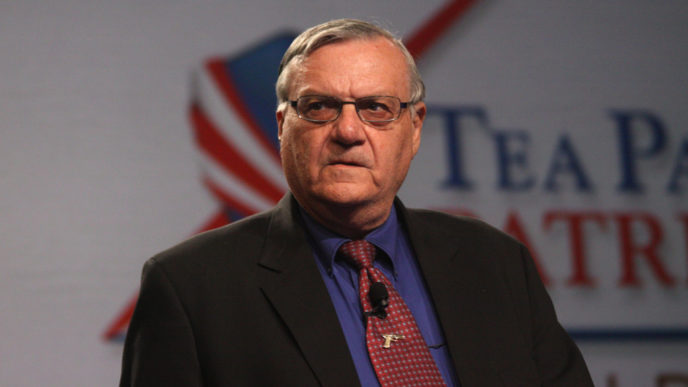
Sheriff Joe Arpaio Offers Evidence He Says Proves Obama’s Birth Certificate Is Not Real

The office of Maricopa County, Ariz., Sheriff Joe Arpaio presented what it characterized as proof that the birth certificate the White House offered as evidence of President Obama’s American birth is not real.

Arpaio began the press conference Thursday in Phoenix by assuring reporters the office had “followed the evidence” and would have been just as satisfied if it had determined the certificate was authentic.

In the hour-long presentation, Arpaio’s lead investigator, Mike Zullo, made the case that the certificate was created from a “source” document: the birth certificate of Hawaiian Johanna Ah Nee, who was born within weeks of Obama in August 1961.

The Ah Nee document was originally obtained from investigative journalist Jerome Corsi, the author of several books and a contributor to the website World Net Daily.

According to Zullo, two separate forensic expert sources from two continents — Reed Hayes from Hawaii and the For Lab team in Italy — reviewed the Obama certificate and concluded it was not authentic.

Zullo told reporters Hayes has 45 years in the field and originally did not want to take the case because he is an Obama supporter and voted for him twice.

After reviewing the Obama certificate, the court expert stated, “I can’t clear this. There is something wrong with it.”

Zullo showed a video to reporters that purported to demonstrate how the date stamp in two different boxes on Obama’s certificate had the exact angle and placement, matching one of the date stamps on the Ah Nee original.

(For more from the author of “Sheriff Joe Arpaio Offers Evidence He Says Proves Obama’s Birth Certificate Is Not Real” please click HERE)

Follow Joe Miller on Twitter HERE and Facebook HERE.

Navy Vet Creates 7-Point Plan to Fix the VA. But He Needs Your Signature by Christmas.

Since 2015, there have been at least a dozen reported cases of military veteran suicide on Veterans Administration medical facility grounds. The most recent occurred just before Thanksgiving, when Army Sgt. John Toombs, who served in Afghanistan, hanged himself on the grounds of the Alvin C. York VA Medical Center in Murfreesboro, Tenn.

In a viral video recorded hours before he ended his life at the age of 32, Toombs, who suffered from PTSD and depression, claims he was kicked out of a drug treatment program for “trivial reasons.”

Like many of his peers, Joe Schmitt, a Navy veteran and hospital corpsman, is fed up with way the government has failed servicemen and women. After hearing of Sgt. Toombs’ untimely death, he decided to do something about it.

Schmitt has authored not one, not two, but seven petitions asking the White House to address what he believes are major flaws in the VA. Why seven? WhiteHouse.gov has an 800-word limit for petitions. To get around this, Schmitt created a separate petition for each proposed area of reform:

Leadership employment requirements

Intern employment expectations

Veteran health care education

Release of records upon death

Higher accountability for VA employees

Drug and alcohol treatment programs

Termination of redundant studies that waste VA money

In order for the White House to consider all of these reforms, he will need a total of 700,000 signatures by Jan. 3.

Schmitt, a Brooklyn native who joined the Navy in 1986 at age 17, has had to deal with the flawed VA system in the wake of a traumatic brain injury (TBI) he suffered after an IED explosion in Afghanistan in 2011.

Speaking to Conservative Review, he noted that the reforms listed above had long been on his mind, but John Toombs’ untimely death was “the straw that broke the camel’s back.”

Schmitt said he actually had two chance encounters with Toombs.

The first encounter was at a local bar in Tennessee. Schmitt, who currently resides in Tennessee, recalls “talking to a kid from the Tennessee National Guard that was telling me about his PTSD and his drug problem, and how he wanted to better himself for his daughter.”

At the time, Schmitt advised Toombs to get honest with himself and get the help he needed to “have a decent life.”

The second and last time he saw Toombs was when he went to drop off paperwork at the Alvin C. York center.

“He was sitting on a couch there, and it had to have been after he’d gotten kicked out of the program, because he did not look happy at all,” Schmitt said. “And then when I see him in the video, I’m like, ‘Oh my God … that was him.’”

Toombs’ death was a wakeup call for Schmitt, who says he’s had to deal with incompetent VA personnel who overlook or ignore serious medical problems. He has gone so far as to spend $9,000 of his own money to seek external medical services at a TBI clinic in Maryland.

“It kind of irritates me that you can bring in individuals who are refugees from another country, or have someone who is here illegally, and they can get top medical care,” he told CR. “But you have all of these veterans who’ve sacrificed so much, and it’s a struggle for them to get care.”

Schmitt explained that many veterans who are fed up with the Veterans Administration end up homeless, addicted to drugs, or worse, as in the case of Sgt. Toombs.

“Here’s the thing,” he explained. “When it comes to John Toombs, PTSD is the main cause of the addiction, because the veterans are trying to self-medicate. So, yeah, you’ve got to treat the addiction. But you need to treat the PTSD as the primary cause, and then work a recovery system around that.”

Joe Schmitt said he doesn’t think the majority of VA health care providers “really, truly understand” veterans. Part 6 of his petition addresses this point.

“You know how some people have workplace sensitivity courses? Well, they should have something like that regarding veterans, where providers try to understand the world of a veteran, and what makes them different from a civilian,” he said.

“I can sit there and direct my care because I’m a corpsman,” he said. “But what happens to these guys who don’t have the background — or don’t know any better — that put their blind trust and faith in a system that’s supposed to be there for them? And it fails them?”

“You don’t have suicides in [regular] hospitals around the country,” he continued. “But the fact that you have the 12 suicides since 2015, on VA property … that’s a personal thing. That’s a personal message.”

That is why Schmitt drafted his seven-part petition – in the hope of preventing similar incidents from happening.

“The veterans and our service members sacrifice so much, and we ask so much from them,” he said. “They’re all heroes in the fact that they raised their hand and said, ‘Look, U.S. military, send me wherever you’re going to go.’”

Schmitt created a Facebook event for the petition, including links to each of the seven parts and a record of the 12 veteran suicides since 2015. (For more from the author of “Navy Vet Creates 7-Point Plan to Fix the VA. But He Needs Your Signature by Christmas.” please click HERE)

Follow Joe Miller on Twitter HERE and Facebook HERE.

Japan Overtakes China as Largest Holder of U.S. Treasuries

China’s holdings of U.S. Treasuries declined to the lowest in more than six years as the world’s second-largest economy uses its currency reserves to support the yuan. Japan overtook China as America’s top foreign creditor, as its holdings edged down at a slower pace.

A monthly Treasury Department report showed China held $1.12 trillion in U.S. government bonds, notes and bills in October, down $41.3 billion from the prior month and the lowest investment since July 2010. The portfolio of Japan decreased for third month, falling by $4.5 billion to $1.13 trillion, according to the data. Collectively, the two nations account for about 37 percent of America’s foreign debt holdings.

China’s foreign reserves, the world’s largest stockpile, declined for the fifth straight month in November to $3.05 trillion — the lowest since March 2011 — amid support for the sliding currency. That stockpile has fallen from a record $4 trillion in June 2015. (Read more from “Japan Overtakes China as Largest Holder of U.S. Treasuries” HERE)

Follow Joe Miller on Twitter HERE and Facebook HERE.
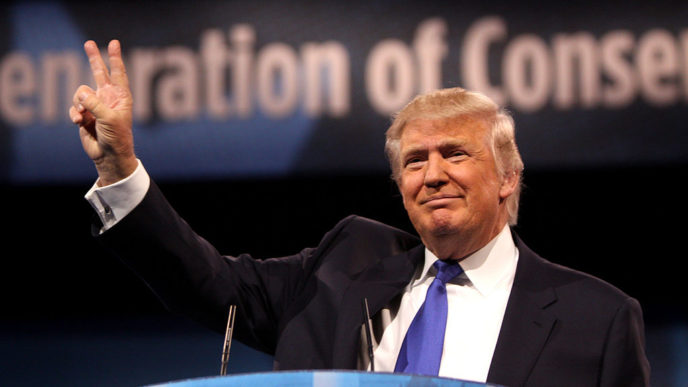
Electoral College Survey Shows Electors Will Stand by Trump

There are some Republican members of the Electoral College who wish they were not voting for President-elect Donald Trump on Monday.

However, an Associated Press survey of more than 300 electors has found that Trump opponents’ dreams to use the Electoral College as the final place to block Trump’s ascent to the White House have little hope of becoming reality.

Although the electors admit to an unprecedented wave of pleas to change their votes, AP noted that electors cited everything from the law, to duty, to loyalty to cast their votes for Trump.

Trump won 306 electoral votes on election night, far above the 270 needed to win election Monday, when the electors will gather in their respective state capitals to vote.

For Trump to lose, at least 37 electors would need to forsake him. AP reported that only one Republican elector told AP he won’t vote for Trump.

Many are solidly behind the president-elect.

“Hell will freeze and we will be skating on the lava before I change,” said Republican Tom Lawless of Tennessee. “He won the state and I’ve pledged and gave my word that that’s what I would do. And I won’t break it.”

Republican elector Jim Skaggs of Kentucky said he will swallow his concerns and vote for Trump.

“His personality worries me,” Skaggs said. “He is not open-minded. I hope he is far better than I think he is.”

Misgivings aside, he said, “I fully intend to vote for Donald Trump. I think it’s a duty.”

Although being an elector is usually a very low-key role in America’s political process, electors told AP that has not been the case with Trump’s election.

“Let me give you the total as of right now: 48,324 emails about my role as an elector,” said Brian Westrate of Wisconsin. “I have a Twitter debate with a former porn star from California asking me to change my vote. It’s been fascinating.”

Although efforts to stop Trump have been organized, they have not been effective, said some electors.

“We got a stack of letters from idiots,” said Republican elector Edward Robson of Arizona.

Fellow Arizona GOP elector Carole Joyce said the deluge has been profound.

“They’ve caused me great distress on my computer, that’s for sure,” she said.

“I average anywhere from a thousand to 3,000 emails a day. And I’m getting inundated in my regular mailbox out front — anywhere from 17 to 35 letters a day coming from Washington state, Oregon, all around the country. Hand-written, some of them five or six pages long, quoting me the Federalist Papers, the Constitution, asking me again out of desperation not to vote for Donald Trump,” she said.

Joyce was philosophical about the fuss.

“… that’s their right,” she said. “I’ve had nothing threatening, I’m happy to say. The election is over. They need to move on.” (For more from the author of “Electoral College Survey Shows Electors Will Stand by Trump” please click HERE)

Follow Joe Miller on Twitter HERE and Facebook HERE.

Major New Research Devastating to Abortion; Times Flips It the Other Way Around

Abortion proponents have been telling us for years the damage it would do to women if abortion were made illegal. Now a major gold-standard study has shown that argument to be fatally flawed. In a bizarre twist, however, The New York Times has reported on the research as if it favored the pro-abortion position.

The Times article, written by Pam Belluck, carries the headline “Abortion Is Found To Have Little Effect On Women’s Mental Health.”

Science journalism can be tricky. Sometimes it’s embarrassingly oversimplified, sometimes it’s distorted, especially on topics with potential political implications. It’s always important to consult the original source.

What It Says

Here’s what the actual research report says: Researchers compared mental health outcomes for women who had been granted abortions and those who had been denied it due to the baby’s gestational age. It found that those who seek abortions have similar mental health outcomes whether they are granted the abortion or denied it for reasons of law or policy beyond their control.

What It Tries To Say

But the Times tries to extend its findings far beyond that. For example:

Some states require women seeking abortions to be counseled that they might develop mental health problems. Now a new study, considered to be the most rigorous to look at the question in the United States, undermines that claim.

Is that true? No, because of what isn’t said in either the Times article or the original research.

What It Doesn’t Say

The research report says nothing about the effects of counseling women before abortion. All of the study participants had visited abortion clinics seeking the procedure. Some of them were allowed to abort, others were denied; none were actually persuaded not to have the abortion.

In other words, the study is completely silent on the mental health effects of deciding not to have an abortion, whether that’s because they know it is wrong, or they’re persuaded by family members not to have it, or even if there’s no facility nearby where they might hope to obtain an abortion.

So there’s nothing in this study that measures the effect of moral persuasion.

What It Says Again

If a woman chooses abortion but is coerced out of it against her will, her long-term mental health is likely to be the same as if she were allowed it.

What can we conclude from that, then, about the value of counseling or persuading women not to have an abortion? What can we conclude about the value of making a moral choice? What can we conclude about the difference it makes when a family member supports a mother carrying her pregnancy to term?

In other words, what do we really know (from this study, that is) about the full range of differences between having an abortion and not having one?

Practically nothing — except that being coerced out of having a desired abortion doesn’t seem to help the mother much. (It helps the baby. A lot.)

The Bombshell: No Evidence for a Major Pro-Abortion Argument
But there is more — and it’s a bombshell. Abortion proponents are so eager to tell us this study undermines arguments against abortion, they’ve missed its devastating assault on their own position.

They say it’s good for women to have “choice.” For example, “Reproductive choice empowers women by giving them control over their own bodies,” and “Women who receive abortions are less likely to suffer mental health problems than women denied abortions” (abortion.procon.org).

Care to show some evidence for that? Previous research studies have differed on it. This “gold standard” study says there is no such evidence. Women who want an abortion but are legally denied the opportunity may not come out any better for it, but they don’t come out any worse, either.

In fact the evidence strongly suggests that legally denying abortion has no long-term adverse mental health effects on women at all. So much for that “pro-choice argument”!

Policy Implications

Is there any mental health argument in favor of abortion, then? Not according to this study. Women’s mental health ought not be a consideration in abortion policy — not because women’s health is unimportant, but because this study shows that legally allowing or denying abortion has no real effect on it.

Does this study give any comfort to people who want to end requirements for pre-abortion counseling on mental health effects? Yes and no; but the yes part is silly. Yes, where abortion is illegal due to the age of the child in the womb, there’s no evidence-based mental health reason to counsel women against an abortion. But what’s there to counsel about when it’s already against the law?

Meanwhile, though, this study says nothing about counseling (persuading) a woman to carry the child to term. This study adds nothing of value to policy discussions on that question — though you can count on many others acting as if it does, along with the Times.

But the big news is that there’s no evidence that legal restrictions on abortion have any negative impact on women’s mental health or well-being. (For more from the author of “Major New Research Devastating to Abortion; Times Flips It the Other Way Around” please click HERE)

Follow Joe Miller on Twitter HERE and Facebook HERE.

In Afghanistan, the Ghosts of Christmas past and Present

For most Americans, Dec. 25, 2016, will be Christmas Day. For Nikki Altmann, it is also the fifth anniversary of her husband’s death in Afghanistan.

“Everything we were planning was gone in a moment’s notice,” Nikki told me less than six months after her husband was killed in action.

As many listen to the festive sounds of holiday cheer on Christmas Eve, a military widow will likely recall the sound of her husband’s voice. That’s because the last time Nikki and U.S. Army Staff Sgt. Joseph Altmann spoke to one another was on Christmas Eve 2011.

“We talked about everything … all of our dreams,” Nikki said. “(Joe) said that February or March was when he hoped to be home.”

About 24 hours later, Nikki, who was spending her holiday in Ireland while working as a flight attendant, was notified that her 27-year-old husband’s life had tragically ended in the mountains of Afghanistan’s Kunar Province. While the news itself was devastating, hearing that Joe died on Christmas Day was unimaginable.

“Every day is a constant reminder of what I had, what I was going to have, and what is no more,” the young military widow said in 2012.

Every day since our phone conversation, I have been inspired by the strength I heard in Nikki’s voice. I also remember something else she said.

“Six months from now, people won’t be calling to see how I’m doing,” she said.

Nikki’s husband is one of 2,392 American heroes to lose his or her life during America’s longest war. For those too young to remember, a U.S.-led coalition invaded Afghanistan on Oct. 7, 2001, in response to the 9/11 attacks, which were launched by al Qaeda terrorists being harbored by the Taliban. The war continues to this very day.

In recent years, some have spearheaded an ill-conceived effort to stop calling Afghanistan a war. That hasn’t changed the little-discussed fact that 91 U.S. troops have been killed there since New Year’s Day in 2014, including 14 so far this year. To call a conflict where courageous Americans are still being killed and wounded anything other than a war dishonors the valiant men and women who have sacrificed so much in Afghanistan over the past 15-plus years.

Diminishing the harsh reality of war also does a disservice to the approximately 8,400 U.S. troops who will be stationed in Afghanistan when President Obama passes the baton to President-elect Trump, who will be the 45th commander-in-chief of our nation’s Armed Forces. Until a president decides otherwise, thousands of American troops will continue putting their lives on the line as their families wait and worry at home.

Afghanistan isn’t some faraway footnote on Google Earth. It’s the war zone where Nikki’s husband gave all while proudly wearing our country’s uniform. Afghanistan isn’t just a news story (though many journalists have spent the last decade ignoring it), it’s where my Fire in My Eyes co-author, U.S. Navy LT Brad Snyder (Ret.), was permanently blinded by a bomb blast while courageously helping wounded Afghans.

Afghanistan is also where U.S. Army Capt. Florent Groberg (Ret.), with whom I’m writing a new book called 8 Seconds of Courage, charged a suicide bomber who was trying to wipe out the soldier’s entire patrol. Captain Groberg — America’s first foreign-born Medal of Honor recipient since the Vietnam War — saved dozens of American lives in those eight crucial seconds. More than four years later, he wears a bracelet bearing the names of four friends who did not survive the attack: U.S. Army Command Sgt. Maj. Kevin Griffin, U.S. Army Maj. Thomas Kennedy, U.S. Air Force Maj. Walter David Gray and USAID Foreign Service Officer Ragaei Abdelfattah. Flo has dedicated the rest of his life to sharing their stories.

On Dec. 7 — the 75th Anniversary of the attack on Pearl Harbor — the Pentagon announced that U.S. Army Sgt. 1st Class Allan Brown, 46, died the previous day at the Walter Reed National Military Medical Center in Bethesda, Md. He had suffered devastating wounds during an enemy attack on Bagram Airfield in Afghanistan during a Veterans Day-themed event. Private First Class Tyler Iubelt, 20, and Sgt. John Perry, 30, were killed in the same terrorist attack.

Did you hear a single word about Sgt. 1st Class Brown’s ultimate sacrifice when he died less than two weeks ago? I saw the story on a local news broadcast while visiting Washington, D.C., which is near the departed warrior’s Takoma Park, Md., home. Yet as far as national news was concerned, the brave soldier’s story was barely a blip on the radar screen, which serves as yet another sad example of media malpractice.

For 16 straight Christmases, American warriors have spent their holiday seasons far from their families in a cold, desolate land. Five years ago, the day Christians celebrate Jesus Christ’s birthday was also the day that Staff Sgt. Joe Altmann went to heaven after making the ultimate sacrifice.

Regardless of our religious or political beliefs, we are all Americans. As the holidays approach, shouldn’t we be setting aside our differences and uniting around our troops fighting in Afghanistan, Iraq, Syria and around the world, as well as their families and our nation’s veterans?

As Nikki so candidly predicted during our phone call, people would eventually stop calling to check in. Fifteen years and 16 Christmases after the war in Afghanistan was launched in the shadows of the Twin Towers, too many of us — especially those who work in journalism and politics — have moved on from Afghanistan.

For my part, I will not move on until the very last U.S. service member leaves Afghanistan and every single veteran and fallen hero of the conflict is appropriately honored. To do anything less would dishonor the service and sacrifice of patriots like the remarkable men and women mentioned in this column, who dedicated their lives to protecting their families and ours.

As your family sits down for dinner on Dec. 24, think about Joe and Nikki Altmann saying their final goodbyes five Christmas Eves earlier. As their story fills your mind, perhaps you will briefly interrupt the festivities to share it with others.

When looking at the smiles of your kids on Christmas morning, think about how much Joe and Nikki would probably have loved to raise children of their own. Then, perhaps you will tell your kids that as they open their presents, thousands of moms and dads aren’t spending Christmas with their children because they are serving overseas and protecting others.

Afghanistan, where Staff Sgt. Joe Altmann gave his last full measure of devotion five Christmases ago, is filled with the ghosts of Christmas past and present. As Americans fortunate enough to live in freedom, we must join together in honoring the heroes who gave us this precious holiday gift. (For more from the author of “In Afghanistan, the Ghosts of Christmas past and Present” please click HERE)

Follow Joe Miller on Twitter HERE and Facebook HERE.

What Moved Voters? Pastors and Flocks Disagree

Even as Clinton dead-enders cycle through scapegoats and conspiracy theories in their drawn-out path to acceptance of the fact that they lost the 2016 election, statistician George Barna of the American Culture and Faith Institute is still trying to understand what influenced voters to rally behind Donald Trump, especially among America’s religious communities. If his data are correct and representative, they suggest that church leaders have a somewhat exaggerated view of their own influence over conservative Christian voters — who seem to be moved more by personalities appearing on right-leaning secular media.

Just a week after the election, Barna turned up some interesting data on who exactly swung votes among conservative Christians. Based on a survey of 3,000 voters who fit this broad profile, Barna found that these voters cited a range of media personalities, and a few conservative leaders. The leading influencers, according to Barna’s selection of voters, were:

Radio host Rush Limbaugh (cited by 19%)
TV host Sean Hannity (17%)
TV host Bill O’Reilly (14%)
Radio host Laura Ingraham (12%)
Family Research Council President Tony Perkins (11%)
Columnist Charles Krauthammer (9%)
Radio Host Tim Wildmon (6%)
TV host Megyn Kelly (5%)
Televangelist Pat Robertson (5%)
Columnist and TV analyst Todd Starnes (4%)
TV personality Eric Bolling (4%)
TV and radio host Glenn Beck (3%), and
Radio host Michael Savage (3%).

Bran noted that even conservative Christian voters are much more likely to be moved by “mainstream” figures who appear on Fox News and comparable venues than by identifiable church leaders.

What Pastors See Differently from Their Flocks

In a subsequent report released December 14, the American Culture and Faith Institute asked religious conservatives which institutions they believe are most influential among the general public. According to Barna’s latest report, Christian conservatives think that of the eight “non-media sources of influence evaluated, labor unions had the most impact of all. In total, three out of ten … said that labor unions had ‘a lot’ of impact on peoples’ voting decisions.”

The next three entities with high perceived impact, were President Obama (25%), church-distributed voter guides (24%), and Christian non-profits (23%). Ranked slightly below were Protestant churches and pastors (20%) public opinion polls (15%); celebrity endorsers (14%); and Catholic churches and priests (12%). Perhaps Barna’s most surprising finding was the significance of voter guides. He noted that “three out of four … said they relied on at least one voter guide to help them make voting decisions in the November election.”

A survey which the American Culture and Faith Institute conducted of theologically conservative pastors showed a gap between those pastors’ perception of their own influence, and the perception of voters. “Conservative pastors clearly had a higher opinion of their influence on the election than did the people they sought to influence,” Barna reports, explaining: “While the pastors tended to rate themselves at the top of the list, conservative voters placed them in the middle of the pack in terms of influence. Similarly… pastors were more likely to see significant influence from Catholic priests and churches” than voters reported.

The report continues: “Although Protestant churches and pastors ranked fifth in influence … those religious leaders and organizations placed at the top of the list according to the pastors themselves. One out of every five [conservative] pastors said such entities had ‘a lot of impact’ on voters.”

Of course, Barna’s report measures only perceptions — specifically, what Christian voters think motivated the general voter in the most recent election. It’s quite possible that such conservatives are as misinformed as their pastors. And of course, there is no way to measure the power of prayer, of initiatives such as Franklin Graham’s 50-state tour to energize Americans and beg for divine protection for our country. In the end, that might have been the most powerful force of all. (For more from the author of “What Moved Voters? Pastors and Flocks Disagree” please click HERE)

Follow Joe Miller on Twitter HERE and Facebook HERE.

This Former Pussycat Dolls Singer Is Using Her Role in ‘Dirty Dancing’ to Spread a Powerful Pro-Life Message

Former Pussycat Dolls lead singer, X Factor (U.K.) judge, and “Moana” star Nicole Scherzinger is using her celebrity status to share her pro-life views.

In a recent interview with Daily Mail, Scherzinger discussed why she decided to accept the role of Penny Johnson in ABC’s forthcoming television remake of “Dirty Dancing.” In the original movie, Penny, played by Cynthia Rhodes, gets an illegal abortion, which threatens her life..

Scherzinger, a Catholic, told Daily Mail that initially, she was hesitant to play Penny because she “didn’t want to promote abortion.” But after consulting her family, she changed her mind. Her grandfather, a Catholic priest, prayed about the role and concluded that it was “what she was meant to do.”

“We decided that maybe I could be a voice, that I could shed some light on the subject without being preachy,” Scherzinger said.

Scherzinger’s comments will likely come as a surprise to those familiar with the sexy dance moves and promiscuous song lyrics of the Pussycat Dolls. But she says her mother’s decision to have her after getting pregnant at a young age helped to shape her views.

“My [mom] got pregnant with me when she was 17 and had me when she was 18. She chose,” Scherzinger shared. “Her parents were never going to let her have an abortion. So I came out, so I just want to, you know, encourage everybody to keep your babies.”

Scherzinger hopes that women watching the “Dirty Dancing” remake “can learn from her ways and I can be a positive influence.” (For more from the author of “This Former Pussycat Dolls Singer Is Using Her Role in ‘Dirty Dancing’ to Spread a Powerful Pro-Life Message” please click HERE)

Follow Joe Miller on Twitter HERE and Facebook HERE.