Democrats Shouldn’t Blame Russia. They Should Blame Jill Stein

Blame Russia for Hillary’s losing White House bid? Try Jill Stein.

It wasn’t Vladimir Putin who picked up tens of thousands of votes in key battleground states that Clinton needed to win. Stein earned more votes than Clinton lost to Trump by in Michigan, Pennsylvania, and Wisconsin. Meaning, had most of those voters voted for Clinton, rather than Stein, Clinton could have won the election.

That’s not all, though. These three states — Michigan, Pennsylvania, and Wisconsin — also happen to be the three states where Stein sought recounts that Clinton supported. Recounts that validated Clinton’s loss.

The result of the Wisconsin recount announced last night showcases Clinton’s weaknesses far better than Putin ever could. The Wisconsin recount confirmed Trump’s win and awarded him an additional 131 votes.

That’s right. Clinton, by supporting Stein’s recount, actually helped Trump get more votes.

Meanwhile, Stein walks away with millions in unspent recount funds. Millions more than Stein ever raised for her presidential campaign.

What did Clinton get out of the recount? Nothing but another humiliation.

It’s mystifying Clinton would ever participate in such an exercise when you break it down.

First, Clinton gave money to Stein who, arguably, cost Clinton the election. Not only that. Clinton gave money to Stein to contest results in a state where Stein won only one percent of the vote. A state where Clinton’s own counsel said there was no evidence of tampering. A state that Clinton didn’t even bother to campaign in during the general election.

Who in Clinton world thought this was a good idea? What could have possibly been gained?

Maybe this is why the Democrats are so eager to blame Russia. It’s easier for them believe in fantasies of Putin’s evil election-rigging than believe Clinton’s presidential campaign could be so incompetent.

Putin didn’t dupe America. Stein sure is duping the Democrats, though. (For more from the author of “Democrats Shouldn’t Blame Russia. They Should Blame Jill Stein” please click HERE)

Follow Joe Miller on Twitter HERE and Facebook HERE.

Should Christian Leaders Stay out of Politics?

Is it dangerous for Christian leaders to mix politics and religion? Is that a confusion of their calling? Or is it important for Christian leaders to address all areas of life, including politics?

I have had to address this question myself, since I might be preaching in a church service one day, teaching in a Bible school the next, and then talking politics on the radio the next (or, sometimes, doing all three in one day). How should we conduct ourselves as religious leaders?

If Donald Trump as president keeps his word and successfully repeals the Johnson Amendment, which has greatly muzzled religious political speech, this question will become all the more relevant for Christian leaders in America.

What exactly is our role?

To Speak Out or To Not Speak Out

It so happened that on the same day, in response to the same article, some old friends expressed their disapproval of my commenting on political issues. One posted on Facebook, “I remain disappointed that you continue to focus on politics Mike. Your mandate is higher! God’s purpose for you and Christian leaders is [God’s] Kingdom not this world. Leave that to others!”

Another emailed, asking, “Are you sure you want to cross over to being a daily political commentator, rather than speak primarily to spiritual issues?”

Neither of these men are critics, and both wrote in friendly tones, but the thrust of their message was clear: To write political commentaries is to detract from my higher, spiritual calling.

I’m confident they would say this to other spiritual leaders as well.

In stark contrast, I hear from readers and listeners on a regular basis who thank me — sometimes with tears — for addressing moral, cultural, and political issues, in particular, for doing so as a follower of Jesus who uses the Bible as his grid.

One man posted on Facebook, that during the elections, “The only media voice I listened [to] for counsel was Dr. Brown.”

Another wrote:

Dr. Brown I am greatly appreciative that you are engaging the political arena. It’s seems that a fair amount of Christian leaders shy away from the political spectrum due to a fear of losing their audience. If we want to see change in this country, then we as Christians need to engage the political system. Encourage Christian leaders to run for office so that light can shine in the darkness of the corrupt leadership that this country has given over to itself.

Which perspective is right? Would Paul or Peter or John have gotten involved in the presidential elections? Would they have endorsed a candidate or advised a candidate or commented on the various party platforms? Would they have even voted?

Some point to Jesus’ comment in John 18 when He said to Pilate shortly before His crucifixion, “My kingdom is not of this world” (John 18:36). If it were of this world, He explained, then His servants would have been fighting for him not to be delivered up to His captors.

But in saying this, Jesus hardly meant that we should not be involved in the affairs of this world. After all, feeding the hungry and clothing the poor and educating our children and working our jobs are all “of this world.” Should we stop doing these things and simply go on a mountaintop to pray, waiting for the Lord’s return? (Of course, we’d soon have to figure out how to get food and where to sleep — all issues of this world.)

In reality, what Jesus was saying was this: “My kingship does not derive its authority from this world’s order of things. If it did, my men would have fought to keep me from being arrested by the Judeans. But my kingship does not come from here” (Jn. 18:36, CJB).

What about Philippians 3:20, where Paul wrote that “our citizenship is in heaven, and from it we await a Savior, the Lord Jesus Christ” (ESV)?

Interestingly, it was this same Paul who, at strategic times, invoked the fact that he was a citizen of Rome, assuring that he would receive better treatment than a common criminal (see, for example, Acts 16:35-39; 21:37-39).

His point in Philippians 3 had to do with those who lived with a fleshly, earthly carnality (see Philippians 3:18-19), and he was saying to his readers, “You are not like them! You are a heavenly people living in this world.”

In the same way, Peter wrote, “Dear friends, I warn you as ‘temporary residents and foreigners’ to keep away from worldly desires that wage war against your very souls” (1 Pet. 2:11, NLT).

It’s Not Our Eternal Home, But That Doesn’t Mean We Remain Silent

We are passing through this world, and it is not our eternal home, so we must not get entangled with worldly, carnal desires, which war against our souls. We should be above such things. But that doesn’t mean that we don’t fight against injustice or champion the cause of the needy, nor does it mean that we remain silent on important political and social issues.

After all, slavery was the paramount hot-button, deeply-divisive, political and social issue of the 19th century, yet it would have been very wrong for Christian leaders to remain silent on this, just as it’s very wrong for Christian leaders to remain silent on issues like abortion and homosexual activism today.

I can’t tell you how many times readers and listeners and viewers have talked with me after hearing me speak — again, often with tears in their eyes — thanking me for addressing the divisive cultural issues of the day. These are issues they live with every day — in their homes, in their schools, in their places of business, and they are frustrated when their pastors and teachers fail to give them spiritual guidance to help navigate these troubled waters.

And this is not just happening in the States. During my annual trip to India earlier this month, pastors in Mumbai specifically asked me to address LGBT issues, while in other international trips in the last few years, Christian leaders in the government have met with me privately (or publicly), asking for input on these same pressing social issues. They want to know what they can do as believers to make a positive impact on their society, and that includes the realm of politics and government.

Of course, we can get involved in politics in a partisan way, becoming appendages of a particular political party, which is a real mistake. And we can easily get caught up in a divisive, immature political spirit, which is quite destructive, or we can become obsessed with politics, which would distract us from our larger calling.

That’s one reason that, on my radio show, we devote certain days to theology and Bible study, while I spend much of my time teaching and preaching in churches and conferences — and not talking about politics.

But there’s nothing stopping us from walking in the Spirit, maintaining an eternal perspective, and constructively addressing the political realm. In fact, it behooves us to do so, as long as we don’t neglect our primary calling of preaching and teaching the Scriptures. The Church needs us to do it and the society needs us to do it.

I’m confident that I am not alone in sensing that it pleases God and helps His people when we, as ministry leaders, bring the Word of God to bear on every area of life, politics included.

Do you agree? (For more from the author of “Should Christian Leaders Stay out of Politics?” please click HERE)

Follow Joe Miller on Twitter HERE and Facebook HERE.

Religious Leaders, Academics Sign ‘Preserve Freedom, Reject Coercion’ Statement Against LGBT Agenda

More than seventy-five academics and religious leaders have declared their opposition to laws that punish Christians and people of other faiths who practice beliefs that gender cannot change and that marriage is between a man and a woman. The signers of “Preserve Freedom, Reject Coercion” include The Stream Executive Editor Jay Richards.

According to the statement, thanks to laws across the country, “people of good will can face personal and professional ruin, fines, and even jail time, and organizations face the loss of accreditation, licensing, grants, contracts, and tax-exemption” for holding to traditional views on marriage and sexuality. The signers also declare:

We affirm that every individual is created in the image of God and as such should be treated with love, compassion, and respect. We also affirm that people are created male and female, that this complementarity is the basis for the family centered on the marital union of a man and a woman, and that the family is the wellspring of human flourishing. We believe that it is imperative that our nation preserve the freedoms to speak, teach, and live out these truths in public life without fear of lawsuits or government censorship.

Endangered Freedoms

While marriage was legally redefined nationwide in 2015, many state laws require citizens who hold traditional views on sexuality to act in opposition to their views. One of those laws has been challenged in Washington State by florist Baronelle Stutzman. Stutzman, a Christian who fought her case at the state Supreme Court earlier in November, was sued for declining to serve a gay couple’s “marriage” ceremony because of her religious beliefs. She faces bankruptcy if she loses the case.

A law that could have jailed pastors in Massachusetts for using biologically correct pronouns, meanwhile, has been modified to protect religious leaders. Christians who are not pastors still face fines and possible jail time if they use pronouns that don’t meet the government’s approval, or decline to open sex-segregated bathrooms to the opposite sex.

Many of these laws don’t just target just Christians, but instead an entire citizenry. Perhaps most famously, North Carolina’s HB2, which responded to a City of Charlotte mandate that bathrooms be opened to anyone of either gender, reiterated that business owners have the liberty to make their own bathroom policies. HB2 was declared by U.S. Attorney General Loretta Lynch to be akin to racist Jim Crow laws that existed prior to the Civil Rights Era.

The religiously diverse signers say the laws “empower the government to use the force of law to silence or punish Americans who seek to exercise their God-given liberty to peacefully live and work consistent with their convictions.”
“As Americans, we cherish the freedom to peacefully express and live by our religious, philosophical, and political beliefs,” say the signers, “not merely to hold them privately. We write on behalf of millions of Americans who are concerned about laws that undermine the public good and diminish this freedom for individuals and organizations alike.”

The 79 signers included leaders from every Christian tradition. Among the signers are Russell Moore, head of the Southern Baptists’ Ethics and Religious Liberty Commission, and Albert Mohler and Paige Patterson, presidents of the SBC’s two largest seminaries. The list includes Catholics like Archbishop Charles Chaput, president of the Franciscan University Sean Sheridan, and scholar Robert P. George. Presbyterian theologian Peter Leithart and Orthodox scholar John Mark Reynolds also signed.

The statement was posted on the Colson Center website. (For more from the author of “Religious Leaders, Academics Sign ‘Preserve Freedom, Reject Coercion’ Statement Against LGBT Agenda” please click HERE)

Follow Joe Miller on Twitter HERE and Facebook HERE.

This Small Business Owner Didn’t Want to Make Shirts for Gay Pride Festival. Now He’s in Court.

A lawyer representing a Kentucky print shop owner who chose not to print gay pride festival T-shirts argued in a hearing this week that the government cannot force a person to create speech against his or her beliefs.

Blaine Adamson, owner of Hands On Originals in Lexington, Kentucky, turned down business due to his religious beliefs in 2012. He chose not to print shirts for the Gay and Lesbian Services Organization in advance of a gay pride festival.

The LGBT organization filed a discrimination complaint against Adamson with a local human rights commission.

“This case is about the expressive freedom of everyone, because if the owners of Hands On Originals must print messages that conflict with their beliefs, then there’s nothing stopping the government from forcing a lesbian printer to create a religious group’s flyer objecting a same-sex marriage or forcing a Muslim graphic designer to build a website promoting Jewish beliefs,” Jim Campbell, senior counsel at Alliance Defending Freedom, told The Daily Signal. “I think that there is a universal appeal to what we are arguing here.”

A Kentucky circuit court sided with Adamson in April 2015, saying that he had the right not to print the shirts. The Lexington-Fayette Urban County Human Rights Commission had previously ruled that Adamson must print T-shirts, even if the messages on the shirts conflicted with his religious beliefs.

The commission appealed to the Kentucky Court of Appeals on the Fayette County Circuit Court ruling that overturned the commission’s decision. The oral argument was held Dec. 13.

“Protecting Blaine’s freedom protects everyone’s freedom, regardless of their beliefs or convictions,” Campbell said in a statement. “No matter what you believe, the government shouldn’t be able to force you to create speech that conflicts with your deepest convictions.”

Adamson’s lawyers say they believe he has the right to decline printing shirts that conflict with his deeply held values.

“The trial court’s decision rightly affirmed that, and we are asking the court of appeals to do the same,” Campbell stated.

Campbell told a three-judge panel Tuesday that Adamson does not discriminate based on a person’s sexual orientation, the Lexington Herald-Leader reported.

“Hands On Originals declined to print the shirts in question because of the messages on them, not the sexual orientation of the individuals who asked for them,” Campbell told the Kentucky Court of Appeals, according to the local news outlet.

According to the Lexington Herald-Leader, Ed Dove, a lawyer with the Lexington Human Rights Commission, said, “You can’t separate the message from the discrimination. That’s a red herring.”

Alliance Defending Freedom, the Christian legal organization representing Adamson, said of the incident:

Blaine explained that he could not print a shirt bearing a message that conflicts with his faith. He then offered to connect the [Gay and Lesbian Services Organization] to another printer who would create the shirts for the same price that he would have charged.

“Hands On Originals, our client, regularly prints shirts for gays and lesbians,” Campbell told The Daily Signal. “In fact, Hands On Originals has printed promotional items for a lesbian singer that performed at the very pride festival in question in this case, so Hands On Originals has no objection serving gays and lesbians.”

Campbell said:

The owners of Hands On Originals object to printing anything that promotes sexual activity or relationships outside of a marriage between a man and a woman. That belief regularly requires them to decline orders from heterosexuals.

Alliance Defending Freedom says it expects a court decision to be made within 90 days.

“If they rule in our favor, then we’ll have to see if the commission decides to continue to spend taxpayer dollars to pursue this or if the court rules for the commission, then we’ll have to evaluate whether to appeal to the Kentucky Supreme Court,” Campbell said. (For more from the author of “This Small Business Owner Didn’t Want to Make Shirts for Gay Pride Festival. Now He’s in Court.” please click HERE)

Follow Joe Miller on Twitter HERE and Facebook HERE.

Conservatives Split From GOP Leaders Over Timing of Obamacare Repeal

GOP lawmakers on Capitol Hill are committed to using a budget tool called reconciliation to send a bill repealing Obamacare to President-elect Donald Trump’s desk.

Though Republicans are settled on getting rid of the Affordable Care Act, fault lines have emerged between GOP lawmakers who disagree on when exactly the health care law should be repealed and, to a lesser extent, which Obamacare provisions to include in the reconciliation bill.

On one side are Republicans like Sens. Orrin Hatch of Utah and Susan Collins of Maine, who have said they would like to see enactment of Obamacare’s repeal delayed until 2019 or beyond, which would give the GOP-led Congress time to craft, pass, and implement a replacement for the health care law.

“I’d like to do it tomorrow, but reality is another matter sometimes,” Hatch, who chairs the Senate Finance Committee, told The Washington Post. “We have to live with the real world, and the real world right now is that the Democrats won’t help with anything.”

But opposite those Republicans are conservatives like Reps. Mark Walker and Mark Meadows, both from North Carolina, who want to see repeal enacted in the first few months of Trump’s administration.

“We need to show some urgency,” Walker told The Daily Signal. “I won’t put it in how many days, but over the first few months, the repeal needs to be enacted out of the gate.”

Unlike Walker, who will take over as chair of the Republican Study Committee next year, Meadows has mapped out a timeline to repeal the health care law within Congress’ first 100 days, then pass and implement a replacement over a span of roughly 17 months.

“We need to have a very aggressive timeline on repeal,” Meadows, who recently took over as chairman of the House Freedom Caucus, told The Daily Signal. “What I would be hopeful for is a replacement that would come shortly after that, but to combine the two would be a mistake in that it would slow down the repeal process.”

Republicans plan to use reconciliation—which allows a bill to pass the Senate with just 51 votes—to repeal Obamacare, and are looking to pass a reconciliation bill during the first days of the 115th Congress, which begins Jan. 3.

They now have the support of the White House.

During an interview with radio host Hugh Hewitt on Wednesday, Reince Priebus, President-elect Donald Trump’s incoming chief of staff, signaled that the Trump administration agrees that Congress should use reconciliation within the administration’s first nine months to repeal Obamacare.

“We’re probably going to lead with Obamacare repeal and replace,” Priebus told Hewitt. “Then we’ll have a small tax reform package at the end of April. So I think what you’re looking at between two tax reform packages and reconciliation in the first nine months … what essentially comes down to three basically different budget packages.”

Though most agree that the dismantling of the 2010 health care law should come before Congress starts to tackle the proposal to replace Obamacare, others say that a delayed enactment for repeal occurring in 2019 or beyond would ease the transition for those currently enrolled in plans purchased on the exchanges.

Under Meadows’ timeline, leaders in the House and Senate would draft reconciliation instructions—which tell budget leaders what to include in the bill—and pass the legislation within their first 14 legislative days.

Repeal would then take place within the first 100 days, which Meadows said would provide insurers time to begin crafting plans for 2018 that aren’t required to adhere to the insurance mandates created by the Affordable Care Act.

Those regulations, opponents of the health care law say, caused the cost of premiums to rise.

Under Meadows’ plan, implementation of a replacement would happen over the span of roughly 17 to 18 months, which would allow the Trump administration to work through new regulations for the 2019 plan year.

“Adjusting in six months, that’s a herculean leap,” Meadows said. “Adjusting in a 17- to 18-month time frame is certainly something that all the insurance providers can do, and they’ve been asked to do much more in adjusting to the Affordable Care Act with less specificity coming from the Department of Health and Human Services.”

Already, Meadows said he is seeking input from at least two insurance providers on a viable plan to repeal and replace the law.

While the North Carolina Republican believes their contribution will present congressional leaders with a “compelling case” as to why the law needs to be rolled back quickly, he’s adamant that leaving it in place for even a few years will hurt consumers.

“A gradual wind down will still create perverted markets with regards to health insurance,” Meadows said. “I don’t know of any argument that would suggest that a three- to five-year wind down will make it less onerous on the American people.”

A Place to Start

Budget leaders and staff are already discussing what should be included in the reconciliation bill that would repeal Obamacare, and they’re using the legislation crafted in 2015 and subsequently passed by Congress as a blueprint.

That reconciliation bill repealed the individual and employer mandates, Medicaid expansion, and Cadillac and medical device taxes. The legislation also stripped the government of its authority to operate the federal and state-run exchanges, and lessened the fine for failing to comply with the mandates to $0, which was needed to abide by Senate rules.

Through that legislation, Republicans already charted a successful course for repealing Obamacare, one that received the stamp of approval from the Senate parliamentarian.

But both Walker and Meadows, along with Sen. Mike Lee, R-Utah, believe that the bill crafted next year should go further.

“That’s the minimum,” Walker said of the 2015 bill. “That needs to be the starting place, not the ending place.”

In an op-ed for National Review, Walker and Lee called for the next reconciliation bill to also repeal Obamacare’s insurance mandates, which include the essential health benefits requirement, the ban on limiting or denying coverage to consumers with pre-existing conditions, and the contraception mandate.

“When government bureaucrats and politicians decide that every insurance policy must cover free doctor visits and abortifacients, Americans who don’t need those options end up paying more for products they don’t want,” Walker and Lee wrote. “That’s great for the insurance companies, but not for taxpayers or consumers.”

Abortifacients are drugs that cause abortions.

There is skepticism as to whether a repeal of the insurance mandates would pass muster with the Senate parliamentarian, who has the authority to strike out parts of a reconciliation bill.

But the trio of Republicans believe that lawmakers should at least attempt to eliminate the mandates.

“To leave some of these aspects in place is not an excuse the American people are ready to accept,” Meadows said.

Dissent

Both Meadows and Walker told The Daily Signal that though they would like to see a reconciliation bill for next year go further than that passed in 2015, they would still support a bill that mirrors the one crafted more than one year ago.

But Sen. Rand Paul, R-Ky., is threatening the GOP’s ability to pass the budget resolution—one that would include the reconciliation instructions to repeal Obamacare.

In an op-ed in Time, Paul pledged to vote against the budget resolution.

“I will not vote for any budget that doesn’t have a plan to balance, regardless of what is attached to it, and I’m calling on other conservatives in the Senate to take the same stand,” the Kentucky Republican said.

Just 51 votes in the Senate are needed for the budget to pass, and Republicans hold 52 seats in the 115th Congress.

Democrats and independents hold a total of 48 seats, so if Paul and one other GOP senator decide not to support the fiscal roadmap, Vice President-elect Mike Pence would be the tiebreaker.

But waiting for Pence to vote would mean the bill repealing Obamacare couldn’t be voted on until after he and Trump are sworn into office on Jan. 20.

So far, it doesn’t appear that Paul has support from other conservatives.

Meadows and Walker said they support Paul’s calls for a balanced budget, but wouldn’t go so far as to oppose the budget resolution that would be the vehicle for Obamacare’s repeal.

“Am I with him in terms of believing that a debt ceiling increase and a future budget must balance and must be on a path to balancing? Without a doubt,” Meadows said, “so it may be more a tactical question of difference versus a strategic question that we differ on.”

Additionally, many conservatives in both chambers, including Lee, voted in support of the budget resolution for 2016 specifically because it instructed congressional leaders to draft a reconciliation bill repealing Obamacare. (For more from the author of “Conservatives Split From GOP Leaders Over Timing of Obamacare Repeal” please click HERE)

Follow Joe Miller on Twitter HERE and Facebook HERE.

Term Limits Would Infuse Congress With ‘New Blood,’ Lawmakers Argue

Two conservative lawmakers plan to fight for term limits in the next Congress, saying the effort will foster accountability and complement President-elect Donald Trump’s promise to “drain the swamp.”

Sen. Ted Cruz, R-Texas, and Rep. Ron DeSantis, R-Fla., announced they will introduce a constitutional amendment that would limit members of the House to three two-year terms and members of the Senate to two six-year terms.

“This is the same amendment that Donald Trump endorsed during his campaign,” DeSantis said in a phone interview Tuesday with The Daily Signal. “It is the same amendment that is supported by groups like U.S. Term Limits Inc.”

Enacting term limits, DeSantis said, will “force new blood into the Congress.”

DeSantis and Cruz formally unveiled the initiative in an op-ed published Friday by The Washington Post.

The lawmakers said their goal is to end an era of career politicians.

“We believe that the rise of political careerism in modern Washington is a drastic departure from what the founders intended of our federal governing bodies,” Cruz and DeSantis wrote. “To effectively ‘drain the swamp,’ we believe it is past time to enact term limits for Congress.”

It’s a long road, as Heritage Foundation scholars Hans von Spakovsky and Elizabeth Slattery have written about amending the Constitution.

A constitutional amendment may be proposed by two-thirds of both the House and Senate or by a national convention called by Congress at the request of two-thirds of the state legislatures. Either way, three-fourths of the states must ratify an amendment—and Congress decides whether state legislatures or state ratifying conventions take those votes.

Term limits will help address the issue of establishment politicians, DeSantis told The Daily Signal.

“The fact of the matter is the election system is designed and the rules are designed by incumbents to protect incumbents, that’s just the reality,” DeSantis said, adding:

So, if you look at the House of Representatives, for example, 90 percent of the seats are going to go to one party over the other just because of demographics and other issues. The only chance you have to really defeat an incumbent … is in a primary.

Term limits already enjoy substantial public support, DeSantis and Cruz said in their op-ed.

They cite a Rasmussen Reports survey finding that 74 percent of likely voters support congressional term limits. Only 13 percent oppose term limits and another 13 percent say they are undecided.

Unlike some initiatives introduced by conservative lawmakers, this one may enjoy bipartisan support.

Rep. Anna Eshoo, D-Calif., reportedly said she would support a discussion of term limits. Rep. John Larson, D-Conn., former chairman of the House Democratic Caucus, praised the precedent set by Republicans in enforcing term limits for lawmakers who lead committees, Politico reported.

“A number of people would say Republicans have struck a better formula for advancement,” Larson said, according to Politico. “And I don’t think it’s a bad thing for leadership at all.”

DeSantis told The Daily Signal that lawmakers who don’t support term limits will have to answer to their constituents:

The problem is that when you get up to the political class there are some members that don’t want to be term-limited, and I think there had been a lot of Democrats who have kind of pooh-poohed term limits over the years. The question will be, if we keep it up and get a public vote, are they going to listen to their constituents or are they going to basically just say that we don’t need term limits?

With term limits, lawmakers will have a better shot at reforming the system, the Florida Republican said.

“So, if you have a reform impulse, I think with term limits it will be much easier to be able to enact reform,” DeSantis said. “When you have people that have been around for 40 years, they kind of have their own ways, and it’s much harder to get them to change.” (For more from the author of “Term Limits Would Infuse Congress With ‘New Blood,’ Lawmakers Argue” please click HERE)

Follow Joe Miller on Twitter HERE and Facebook HERE.
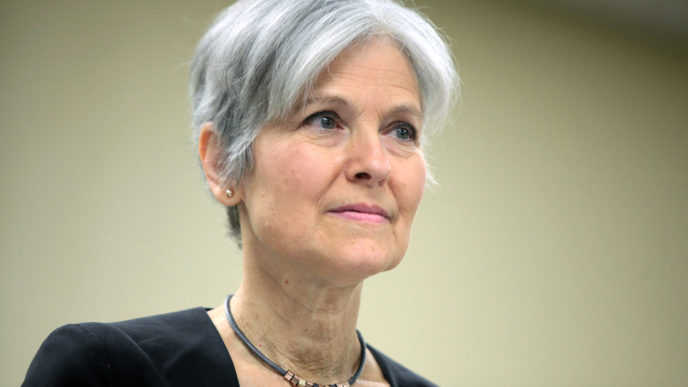
Did Harry Reid Take a $2 Million Bribe? The Feds Won’t Let Investigators Find Out

There are allegations that outgoing U.S. Senator Harry Reid, D-Nev. (F, 2%) may have accepted a massive bribe to push a bill legalizing online poker nationwide in 2010. And the federal government has reportedly “stymied” the investigation into those allegations.

Tom Harvey and Jennifer Dobner report for The Salt Lake Tribune that Davis County Attorney Troy Rawlings is investigating the origins of a $2 million cashier’s check with connections to an online poker company that was laundered through “Mail Media LTD” — an outfit for laundering online-gambling funds — and may have landed in a Marshall Islands bank account in the name of a holding company “to benefit, or even bribe, Harry Reid, the once-powerful majority leader.”

According to their reporting, “state and federal investigations, court filings and public records requests — including audio recordings of interviews and thousands of pages of transcripts, summaries by investigators, emails, requests for evidence and other materials — show that the Department of Justice (DOJ) and the FBI failed to pursue a vigorous investigation of this money and any potential tie to Reid.”

The matter was brought to Rawlings’ attention when “disgraced” businessman Jeremy Johnson confessed that the money came out from a now-defunct business where Johnson and his cohorts illegally processed payments for poker companies. Johnson told FBI agents and Rawlings that Sen. Reid was going to get “a little something extra” in exchange for political help.

Rawlings’ investigation into the route of the $2 million check picked up the trail from two former Utah attorneys general of interest, with the officials’ suspicious actions motivating Rawlings to further pursue the case. Harvey and Dobner of the Tribune report:

The available evidence contains no direct connection between the money and the Nevada Democrat, only that Rawlings wants to dig into that possibility.

Federal authorities have stymied his effort, leaving Rawlings to wonder why. Were agents ordered to steer clear of that money trail? And, if so, by whom? In short, was there a cover-up? […]

Even at the state level, though, Rawlings’ push for funding for a grand jury also has stalled. Attorney General Sean Reyes’ office has not turned over any funds for such an inquiry despite months of negotiations.

Johnson had claimed to authorities at the time of Reid’s contentious 2010 reelection bid against Republican Sharon Angle, his company SunFirst was asked to distribute poker funds to Reid through various donors at a July 6, 2010 fundraiser.

The Salt Lake Tribune documents the following events thereafter:

Reid, according to Johnson, told the crowd — including Bitar, Ifrah and Poker Players Alliance Executive Director John Pappas — that he was switching positions and would now support legislation to ensure that online poker was legal at the federal level. Pappas said in an interview that he didn’t remember what Reid said at the meeting.

In his multiple accounts of the meeting, and specifically in a February 2014 interview with two FBI agents, Johnson has said, “Harry Reid is going around meeting people and saying ‘Hi’ and I was standing next to one of Ray’s entourage and I’m like, ‘How did you guys get Harry Reid to go against his own constituents and do this?’ and he’s like, ‘Well, let’s just say he’s getting a little something extra in his retirement fund.'”

Attorney Troy Rawlings has asked federal agencies for evidence linking Reid to this bank account. But while they have been happy to investigate other figures of interest, they have blocked efforts to gain information about the Democratic Senate minority leader: “Rawlings said he has been told by federal authorities to ‘forget Harry Reid.’”

A month after Sen. Reid’s reelection in 2010, he began campaigning in Congress to legalize online poker.

According to Tom Harvey and Jennifer Dobner, “Reid’s spokeswoman did not return emails and a phone message seeking comment for this story. Previously, his office called any bribery allegations “unsubstantiated” and accused Rawlings of grandstanding to advance his political career.” (For more from the author of “Did Harry Reid Take a $2 Million Bribe? The Feds Won’t Let Investigators Find Out” please click HERE)

Follow Joe Miller on Twitter HERE and Facebook HERE.

Forty Electoral College Members Now Calling for Intelligence Briefing Before They Vote

Thirty additional members of the Electoral College signed their names to a letter Tuesday demanding an intelligence briefing prior to casting their votes for president Dec. 19.

Forty electors have now signed the letter, all of them Democrats with the exception of one Republican, according to The Hill.

As reported by Western Journalism, a group of 10 electors requested more information Monday about the ongoing investigation regarding what influence the Russians may have had in the presidential election.

In an open letter addressed to Director of National Intelligence James Clapper, the electors stated they would need additional details before meeting Dec. 19 to formally vote for the country’s next president.

Christine Pelosi, the daughter of House Minority Leader Nancy Pelosi, is one of the electors leading the effort.

The letter reads, in part: “The Electors require to know from the intelligence community whether there are ongoing investigations into ties between Donald Trump, his campaign or associates, and Russian government interference in the election, the scope of those investigations, how far those investigations may have reached, and who was involved in those investigations.”

“We further require a briefing on all investigative findings, as these matters directly impact the core factors in our deliberations of whether Mr. Trump is fit to serve as President of the United States,” the letter continues.

It concludes, “Additionally, the Electors will separately require from Donald Trump conclusive evidence that he and his staff and advisors did not accept Russian interference, or otherwise collaborate during the campaign, and conclusive disavowal and repudiation of such collaboration and interference going forward.”

The campaign of Democrat Hillary Clinton is backing the effort by the electors.

On Fox News Sunday, President-elect Trump was asked about a Washington Post story Friday headlined, “Secret CIA Assessment Says Russia Was Trying To Help Trump Win White House.”

“I think it’s ridiculous. I think it’s just another excuse. I don’t believe it. I don’t know why, and I think it’s just — you know, they talked about all sorts of things. Every week, it’s another excuse,” he replied.

“So, why would the CIA put out this story that the Russians wanted you to win?” host Chris Wallace followed up.

“I’m not sure they put it out. I think the Democrats are putting it out because they suffered one of the greatest defeats in the history of politics in this country. And, frankly, I think they’re putting it out. It’s ridiculous,” the president-elect responded.

During the race, the Clinton campaign and fellow Democrats blamed the Russians for being behind the hack of the Democratic National Committee that resulted in embarrassing emails being released by WikiLeaks.

Since the election, the Clinton team has supported Green Party Candidate Jill Stein’s recount efforts in Wisconsin, Pennsylvania and Michigan, despite the former secretary of state’s having described any attempts to undermine or not accept the election results as “horrifying” during a presidential debate in October.

“That is not the way our Democracy works,” Clinton said. “We have been around for 240 years. We’ve had free and fair elections. We’ve accepted the outcome when we may not have liked them and that is what must be expected. … [Trump] is talking down our democracy, and I, for one, am appalled that someone who is the nominee of one of our two major parties would take that kind of position.”

Additionally, the Democrat nominee has pointed to “fake news” and FBI Director James Comey as reasons Trump won the election. (For more from the author of “Forty Electoral College Members Now Calling for Intelligence Briefing Before They Vote” please click HERE)

Follow Joe Miller on Twitter HERE and Facebook HERE.

Netanyahu Says He and Trump Can Solve Palestinian Conflict, Get Rid of Iran Nuclear Deal

He’s now the longest serving prime minister in the history of Israel, has survived eight years of President Barack Obama in the White House, as well as many attempts by his political opponents and a hostile Israeli press to topple him.

He also guided Israel safely through five years of unprecedented turmoil in the Middle East and even succeeded to team up with former foes in the Arab world against an ever more aggressive Iran that has succeeded to become a regional superpower in recent years.

At the age of 67, Benyamin Netanyahu has become the grand old man of Israeli politics. But he has no plans to retire.

The Israeli prime minister is eagerly looking forward to work with President-elect Donald Trump, who he says he knows well after only two meetings, and explained to CBS’ 60 Minutes why he is so optimistic about the future of his country.

“Part of his optimism relates to the election in the U.S. He and his followers on the Israeli right, are greeting the idea of President Donald Trump with a resounding l’chaim (on life or cheers),” said CBS correspondent Lesley Stahl in her introduction to the interview.

Stahl is right. The election of Trump has raised high hopes for a totally different relationship between the White House and the Israeli government and for a completely different U.S. policy toward the Palestinian-Israeli conflict.

“I know Donald Trump. I know him very well. And I think his attitude, his support for Israel is clear. He feels very warmly about the Jewish state, about the Jewish people and about Jewish people. There’s no question about that,” Netanyahu said at the outset of the interview.

Netanyahu told Stahl that he doesn’t regret going to Congress last year to campaign against the Iran deal and said it was his responsibility to stand up against Obama and speak out against the nuclear deal with Iran because it threatens the future of Israel.

Netanyahu said he has quite a few options to get rid of the nuclear deal with the Mullahs now that Trump will occupy the White House.

“There are ways, various ways of undoing it (the nuclear deal). I have about five things in my mind,” the Israeli leader said, but he refused elaborate.

Netanyahu told 60 Minutes that the only good thing the deal has done to Israel is to bring ”the Arab countries and Israel closer together.”

“All I can tell you is that Israel’s position in the Arab world has changed because they no longer see Israel as their enemy, but as their ally, in their indispensable battle against the forces of militant Islam,” Netanyahu said.

He confirmed that Israel’s relations with Egypt and Jordan have dramatically improved and that Israel has formed an alliance with Saudi Arabia against the Iranian threat.

Netanyahu vehemently denied that his good relations with Russia President Vladimir Putin have put Israel in the anti-U.S. bloc led by China and Russia, as Stahl suggested.

“That’s a false impression. First of all, there is, there is an irreplaceable ally. It’s called the United States of America,” the prime minister said, adding that the U.S. too has all sorts of relations with the two countries.

He said he developed good relations with Putin to avoid a clash between the IDF and the Russian army in Syria, where Israel frequently attacks Hezbollah-bound weapon convoys.

Stahl then tried to blame Netanyahu for the stalemate in the negotiations with the Palestinian Arabs and claimed they suffer under an occupation that has lasted 50 years, and the expansion of so-called Israeli settlements, the Jewish villages in Judea and Samaria, was the main stumbling block on the road to peace.

Netanyahu remained unfazed, however, and said the claim that Israel has become isolated as a result of its “occupation” of the Palestinian Arabs was false.

“Isolated? All these countries are coming to Israel and it’s a fantastic change,” Netanyahu said in reference to the many countries who turn to Israel for help in areas such as agriculture or water technology.

He denied the “settlements” were an obstacle to peace, not only because they make up less than three percent of the land mass of Judea and Samaria, but because the obsession with them obscures the real reason for the absence of peace — the Palestinian refusal to recognize Israel as a Jewish State.

“The real reason we haven’t had peace is because of a persistent refusal of the Palestinians to recognize a Jewish state in any border,” Netanyahu said.

“You (the Palestinian Arabs) ask us to recognize you, I’m willing to do that. I ask you to recognize us. Recognize the Jewish state, for God’s sake. And if they do, this thing will begin to correct itself very quickly,” he said.

Netanyahu said he hasn’t reversed his position on the solution of the conflict — two states for two peoples — and repeated his desire to work with Trump in order to solve the 100-year-old conflict that Trump has dubbed “the war that never ends.” (For more from the author of “Netanyahu Says He and Trump Can Solve Palestinian Conflict, Get Rid of Iran Nuclear Deal” please click HERE)

Follow Joe Miller on Twitter HERE and Facebook HERE.

Gov. Kasich Signs Bill Banning All Abortions Once Unborn Babies Can Feel Pain

Ohio Gov. John Kasich signed the Pain-Capable Unborn Child Protection Act this afternoon, enshrining protections for preborn children from 20-weeks gestation.

At the same time, he vetoed the “Heartbeat Bill,” which would have protected children in the womb much earlier, as soon as their heartbeat can be detected.

In a statement, Kasich said he was working hard “to strengthen Ohio’s protections for the sanctity of human life.”

Defending his decision to veto the Heartbeat Bill, Kasich said, “The State of Ohio will be the losing party in a lawsuit and, as the losing party, the State of Ohio will be forced to pay hundreds of thousands of taxpayer dollars to cover the legal fees for the pro-choice activists’ lawyers.”

The Heartbeat Bill divided pro-lifers across Ohio because some thought it will lead to a possible Supreme Court re-affirmation of Roe v. Wade. Ohio Right to Life president Mike Gonidakis told Kaiser Health News that he opposes it because, “We believe in an incremental approach to both the legislative side as well as the changing of hearts and minds.” (Read more from “Gov. Kasich Signs Bill Banning All Abortions Once Unborn Babies Can Feel Pain” HERE)

Follow Joe Miller on Twitter HERE and Facebook HERE.