State Department Held Workshops for Employees Dealing with Trump Transition Stress

The Department of State held workshops in December for agency employees struggling with the emotional stress of the Trump Transition, the Washington Free Beacon reports.

The workshop, titled, “The Emotional Transition: Managing the Stress of Change,” was advertised in an agency-wide email, and employees were allowed to dedicate work time to the hour-long sessions. The sessions were held Dec. 8 and Dec. 14, a month after President-elect Donald Trump defeated former State Department Secretary Hillary Clinton in the presidential race.

“Change is an inevitable part of the human experience,” an email invitation for the workshop said, according to the Washington Free Beacon. “We can become paralyzed by fear or allow the experience of change to propel us closer to self-actualization.”

“Our perspective determines our outcome,” the State Department email continued. “This seminar is designed to discuss the impact of change; the emotional cycles some people experience when confronted with change, and tools to effectively manage the stress of change.”

The stress workshops were sponsored by State’s Bureau of Medical Services, which regularly provides “treatment for problems related to the stress of deployment to high-threat posts, overseas crises and other stressful situations encountered by Foreign Service Officers, family members and State Department employees overseas.” (Read more from “State Department Held Workshops for Employees Dealing with Trump Transition Stress” please click HERE)

Follow Joe Miller on Twitter HERE and Facebook HERE.

Religious Freedom under President-Elect Trump

As we commemorate Religious Freedom Day 2017, on January 16th, we mark a year of much change and a season of much opportunity for religious freedom.

President-Elect Trump’s surprise win can be credited in part to widespread (and unforeseen) angst over eight years of an Obama administration that has increasingly meddled in individual lives and liberty. In the area of religious freedom, the federal government has picked and chosen which religious freedom claims to advance and which to ignore. While the administration has disproportionately highlighted Muslim religious rights, it has failed to defend the rights of Christians — both overseas and at home. It also only supports religious freedom claims when they do not interfere with its pet causes of promoting abortion and LGBT policies. Such selectivity and bias destroys the integrity of any religious freedom policy; unfortunately, our federal government has done exactly that.

President-Elect Trump now has an opportunity to restore the credibility of U.S. religious freedom policy, at home and abroad, by addressing these incongruities. He can do this with two simple policy adjustments:

Protect religious freedom equally for everyone. Justice is blind, and the same law must be applied neutrally and fairly to everyone, regardless of their religion, and regardless of the circumstances. Some claims will succeed and others will fail under our religious freedom laws — they have always functioned this way. The key is that all are entitled to a fair shot. Yet by prioritizing some and deprioritizing others in its policy, the Obama administration has unfairly influenced the race out of the starting gate. This approach has been incredibly destructive to the morale of anyone who cares about religious freedom. The new president can do much good merely by taking the approach that all religious claims deserve to be treated equally by the government, regardless of the faith of the individual and the context in which the claim is raised.

Protect robust religious exercise, not a stifled and limited notion of the idea advanced by the Obama administration and championed by losing presidential candidate Hillary Clinton. Under the Obama administration’s view, religious freedom only applies fully within “houses of worship,” not to one’s place of business or anywhere else. Yet this is neither true under our laws nor faithful to our history. Religious freedom includes the ability to exercise one’s religious beliefs in all spheres of life; indeed, this is reflected domestically in our First Amendment and internationally in the Universal Declaration of Human Rights. Despite what the Obama administration would wish, religious freedom simply doesn’t exist when the Little Sisters are forced by the government to violate their consciences by helping provide abortion-causing drugs to their employees — as the administration tried to force them to do. These nuns did not have religious freedom under the administration’s proposals, despite what the government tried to claim. This must be corrected.

Policy changes in these two areas apply to our international religious freedom efforts as well. The Obama administration has failed to properly prioritize religious freedom in our international affairs, and has abandoned our historical role as a strong religious freedom and human rights defender around the world. President-Elect Trump has an opportunity to change this, and re-engage the United States on this critical issue worldwide by defending the right of all to freely choose and live out their beliefs. Marginalized peoples around the world often look to the United States for help when they are persecuted because of their religion, and we should be there for them. A proper understanding of religious freedom demands that it be defended for all, at home and abroad.

This proper understanding of religious freedom has been dangerously eroded over the past eight years. President-Elect Trump has an opportunity to lead in restoring it, and the above two steps would be a start. (For more from the author of “Religious Freedom under President-Elect Trump” please click HERE)

Follow Joe Miller on Twitter HERE and Facebook HERE.

The ‘POTUS Shield’ Descends on Washington to Pray for Trump, State Governments

A group of faith leaders and prelates gathered Thursday in Washington, D.C., to “storm heaven” in prayer for President-elect Donald Trump a week prior to his inauguration. On Friday, they prayed in small groups at the White House, the Capitol, and the Supreme Court.

The “POTUS Shield,” as they call their movement, seeks to “raise up a shield of prayer and prophetic understanding” and lead attendees in prayer, intercession, declarations and decrees over the White House, the Supreme Court and Capitol Hill, the group says on their website. “As some of the faith leaders and prophets that first heard and declared the will of God for this election process, and specifically the breaker anointing upon Donald Trump to usher in a new era; we are now assembling to humbly invoke the voice of the Lord.”

The faith leaders include E.W. Jackson, Lt. General Jerry Boykin, Bishop Harry Jackson, Dr. Alveda King, Lance Wallnau and Cindy Jacobs, among others. This leaders, says the group’s homepage, “are especially gifted to help discern and present spiritual plans to prepare the way for transformation, reformation, and revival in our nation.”

“We’re really not looking for Mr. Trump or any human to change America, but we know God can and will do it,” Dr. Alveda King, director of Civil Rights for the Unborn, told CBN News at the gathering.

The group’s mission is to be “prayerfully committed to see, to hear, to declare and decree, and to prepare the way for transformation, reformation and revival of our nation,” with the following key principles in mind:

1. To assemble, structure and activate The POTUS Shield as a powerfully interactive spiritual, apostolic, prophetic force that acts and reacts in unity, with efficiency and expedience;

2. To be a leadership forum that is inclusive and embraces the Bible believing Body of Christ, with a Kingdom heart to embrace the Body of Christ as One, even as prayed by our Lord as written in the Gospel of John, Chapter 17.

3. To connect as an apostolic network exclusively assigned to the affirmation and reformation of The United States of America as ONE nation under GOD;

4. To discern, declare, and decree the strategies of the Lord for our nation, with a special sensitivity to the three branches of the United States Government;

5. To prepare the way and coordinate the simultaneous spiritual alignment of the Kingdom shift that is manifesting and impacting the government and the Church;

6. To lay the foundation to convene in Philadelphia in March during Purim to declare a renewed covenant as the renewed United States of America, as one nation under God, and to commission and plan similar covenants in each of the 50 states in the Union.

Pastor Leon Benjamin from Richmond addressed some of the concerns of the African-American community about the Trump administration. “We must believe for the best,” he told CBN News. “It doesn’t matter who is in the White House as long as there is faith that God has not forsaken us and that He has not left us because of a transition of power. That would be dreadful for us as pastors and leaders to say ‘Oh my God, we’re doomed now!’ So we’re very hopeful.”

POTUS Shield will now begin to focus their prayer on state capitals and agencies.

(For more from the author of “The ‘POTUS Shield’ Descends on Washington to Pray for Trump, State Governments” please click HERE)

Follow Joe Miller on Twitter HERE and Facebook HERE.

Clinton Foundation Shuts down Global Initiative Due to Decrease in Foreign Donors Paying to Play

The Clinton Foundation revealed last week that it will be discontinuing the Clinton Global Initiative and laying off 22 staffers. The beleaguered organization filed a report with the New York Department of Labor Thursday stating its intentions to terminate the doomed employees on April 15, reports The Observer, a New York City weekly.

The move comes in response to an ongoing FBI investigation into the foundation’s “pay-to-play” schemes, where foreign interests as well as corporate interests contributed heavily to the foundation in exchange for influencing American government, especially during Hillary Clinton’s tenure as secretary of state. The IRS is also investigating the schemes.

Clinton’s Wave of Layoffs

It is a part of a wave of layoffs. According to Politico, the foundation told employees internally last September that dozens of layoffs were coming by the year’s end, and announced that it would no longer be accepting new contributions from foreign or corporate donors.

At that time, there were concerns that if Hillary won the presidency, the loose money would present multiple conflicts of interest. Bill Clinton admitted that foreign interests “may have given money to the foundation to build a relationship with the Clintons or to gain access to the State Department during Hillary Clinton’s tenure as secretary of state.” At its peak, the CBI had about 200 employees. 74 were laid off at the end of last year.

Emails released by Wikileaks exposed tension within the foundation over the conflicts of interest. Top Clinton aide Doug Band expressed his concern about the ethical dilemmas in a 2011 email to John Podesta, especially in regards to Bill.

I signed a conflict of interest policy as a board member of cgi. … Oddly, wjc does not have to sign such a document even though he is personally paid by 3 cgi sponsors, gets many expensive gifts from them, some that are at home etc. I could add 500 different examples of things like this.

The Washington Post reported that “Band helped run what he called ‘Bill Clinton Inc.,’ obtaining ‘in-kind services for the President and his family — for personal travel, hospitality, vacation and the like.’” What the Post called the foundation’s “aggressive strategy” lined up “consulting contracts and paid speaking engagements for Bill Clinton that added tens of millions of dollars to the family’s fortune.”

The CGI’s Pay to Play Schemes

Typical of the pay-to-play schemes was the relation of the owner of the Russian company Uranium One to the foundation and to Bill Clinton himself. The owner contributed $2.35 million to the Clinton Foundation, which the foundation failed to report. At that time, the Russian owner was in the process of buying the company, a sale that Secretary Clinton approved. Bill Clinton also received $500,000 from a Russian bank for a Moscow speech, where he promoted Uranium One stock.

The conservative news site Heat Street cynically observed, “The Clintons have always claimed their family charitable foundation was able to raise so much money because, deep down, Saudi princes and Ukrainian oligarchs are really concerned about poor children in Haiti.”

Michael Sainato of The Observer wrote that “The Clinton Foundation‘s downward trajectory ever since since Hillary Clinton’s election loss provides further testimony to claims that the organization was built on greed and the lust for power and wealth — not charity.”

Donations stopping dropping even before Hillary Clinton unexpectedly lost the election. Every year, CGI would throw a lavish party with celebrities, heads of state and Fortune 500 CEOs. But sponsors for the annual event started dropping off after 2011, from 46 that year down to just 23 last year. Coca-Cola, Barclays and Goldman Sachs all dropped their sponsorships last year.

Foreign donors to the Foundation also began drying up. The Australian government, which had contributed over $88 million to the foundation over 10 years, ended its partnership. The Norwegian government reduced its contribution from $20 million in 2015 to $4.2 million in 2016. Since the decline in donations began after public criticism of the foundation started heightening, this appears to validate the claim that foreign interests were contributing “predicated on donor access to the Clintons, rather than its philanthropic work.”

Meanwhile, former Clinton Foundation CEO Eric Braverman has now been out of public sight for 85 days. Wikileaks founder Julian Assange that it was a disgruntled Democratic insider who leaked emails to the organization, not the Russians. Based on that statement, Braverman has been named as a possible “mole” within the Foundation. (For more from the author of “Clinton Foundation Shuts down Global Initiative Due to Decrease in Foreign Donors Paying to Play” please click HERE)

Follow Joe Miller on Twitter HERE and Facebook HERE.

Ben Carson’s Prescription: Get People off Government Assistance

Retired neurosurgeon Ben Carson appeared before the U.S. Senate Committee on Banking, Housing, and Urban Affairs Thursday to share his vision for the Department of Housing and Urban Development if the Senate confirms him as its next secretary.

In early December, President-elect Donald Trump announced Carson, who was a rival contender for the White House, as his pick to lead HUD.

Here are four highlights from Carson’s appearance:

1. On government assistance.

At the hearing, Republican Sen. Thom Tillis questioned Carson about his vision of best serving those who are on government programs.

“What is the best possible thing we can do for somebody who is on government assistance?” the North Carolina senator asked.

“Get them off of it,” Carson responded.

2. His childhood experience.

Carson said in a written statement that growing up in “inner city Detroit with a single mother who had a 3rd grade education” allowed him to understand housing insecurity.

Carson credited his mother for teaching him the importance of personal responsibility, and said that if confirmed as the next secretary of housing and urban development, he would do more than just advance its programs and funding.

3. Put medical clinics in neighborhoods.

Carson said that as part of his effort to enable and serve the beneficiaries of HUD programs, he plans to potentially put medical clinics in neighborhoods so that people don’t “rely on the emergency room where it costs five times more and where you don’t get kind of follow up that would prevent you from having stage five renal disease.”

4. Will work to benefit ‘all Americans.’

Sen. Elizabeth Warren, D-Mass., asked Carson about his intentions to ensure that none of the money funneled through HUD would specifically benefit Trump’s real estate ties.

“My concern is whether or not, among the billions of dollars that you’ll be responsible for handing out in grants and loans, can you assure us that not one dollar will go to benefit either the president-elect or his family?” Warren asked.

Carson responded by saying that his work would be beneficial to all Americans, not just the select few.

“It will not be my intention to do anything to benefit any American, particularly,” Carson said. “It’s for all Americans, everything that we do.” (For more from the author of “Ben Carson’s Prescription: Get People off Government Assistance” please click HERE)

Follow Joe Miller on Twitter HERE and Facebook HERE.

What Comes after Repeal? How to Fix American Health Care, Part 2

Thursday, I laid out the case for why Obamacare should be repealed, instead of propped up and tinkered on by additional top-down, boardroom thinking. It’s clear that whatever replaces Obamacare must focus on quality and incremental local solutions, not one-size-fits-all government mandates.

In this respect, the federal government’s biggest task for replacing Obamacare is to get out of the way and let state policymakers and health care providers innovate.

First off, let’s get clear what Americans want: They’d like many choices of affordable health insurance plans that allow them to choose their doctors. They want to buy a plan when they are young, then keep their plan from job to job and into retirement. And they’d like it to be truly affordable. These “must haves” are obvious to people of any political orientation.

Instead of approaching this challenge like designing a single system or product (the way Obamacare was constructed), Congress needs to help these conditions develop organically, while preserving freedom of choice for Americans. Here are some further thoughts.

Expand health savings accounts. As we age, our need for medical care increases, yet current government policies offer few incentives for people to save for their future health care needs. The one exception is health savings accounts, which are tax-deductible accounts owned by individuals that roll over from year to year. But those accounts are currently available for just one type of insurance plan—a high-deductible plan.

The improvement would be to expand the scope of health savings accounts so that they can be used with any type of insurance design, as well as to become the accounts into which any funds (either private or public) to help pay for health care needs can be deposited. That way, people would not only have more options, but also a place to keep (for future needs) any savings they get from buying better value insurance and medical care.

Create space for diverse payment models. Congress should remove regulatory obstacles to innovative approaches to providing or paying for medical care. For instance, many direct primary care practices use a monthly subscription payment model instead of the traditional fee-for-service model. This model eliminates significant administrative costs and allows doctors to spend more time with patients. Yet federal and state regulations that inappropriately treat those payments as insurance (as opposed to payments for medical care) further inhibit adoption of this approach that simultaneously reduces costs while improving quality.

Allow innovative new delivery models. In a similar fashion, federal and state lawmakers should remove the regulatory obstacles to other health care delivery innovations, such as specialty hospitals, free-standing emergency rooms, and telemedicine. Indeed, too often those regulatory barriers exist not to protect patients or consumers, but rather to protect less efficient providers from competition.

In general, federal health policy should focus on establishing a few basic rules while leaving most of the detailed decisions to either the private sector or state governments.

For instance, any federal tax relief for health care expenses should be the same regardless of a person’s employment situation. Today, those with employer coverage pay no income or payroll tax on their health insurance benefits, but those purchasing coverage on their own have to use after-tax dollars to buy coverage.

In addition, those who rely on public programs should be able to take the value of their benefits in the form of a contribution that they can apply to the plan of their choice, not dumped into a one-size-fits-all government program.

The federal government should also return to the pre-Obamacare status of setting only minimal rules for insurance markets and deferring to state regulation of insurance as a financial services product.

The federal government should not attempt to design and manage America’s health care system. Federal laws and regulations should allow and encourage insurers and medical providers to compete in offering better quality care at lower costs.

This will require returning health care decision-making to patients and their doctors, and returning policymaking to the lowest level of government that is best equipped to handle it: state legislatures.

Some politicians don’t like the idea of relinquishing that power, but after seeing the results of decisions made in Washington over the last few years, I think it’s worth a try. (For more from the author of “What Comes after Repeal? How to Fix American Health Care, Part 2” please click HERE)

Follow Joe Miller on Twitter HERE and Facebook HERE.

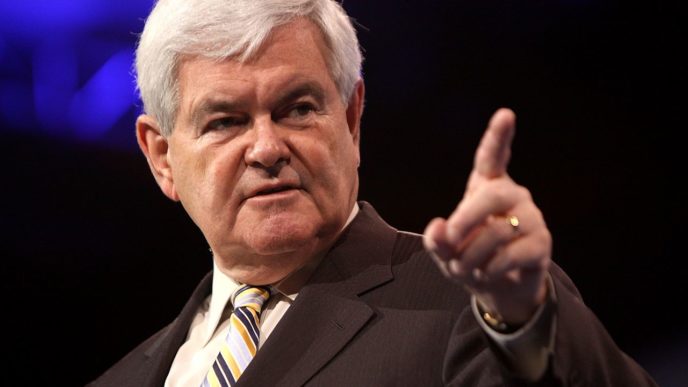
Trump’s Entrepreneurial Approach Threatens the Washington Establishment, Says Newt Gingrich

President-elect Donald Trump is on a collision course with the Washington establishment, former House Speaker Newt Gingrich said Thursday. A city that is accustomed to doing things a certain way contrasts sharply with Trump’s entrepreneurial approach, he observed.

Gingrich spoke at The Heritage Foundation for the second of a six-part series on understanding Trump and Trumpism. Thursday’s lecture examined the difference between Trump approach’s of “ahead of schedule and under budget” vs. the Washington approach of “behind schedule and over budget.”

The American people can expect Trump to govern similarly to how he ran his campaign—unconventionally, Gingrich said.

“What you have is a president-elect who is entrepreneurial rather than either corporate or bureaucratic, which is part of why he can tweet—he knows what he thinks,” Gingrich said. “He doesn’t have to go to his staff and say, ‘Would five of you sit down for a long period and come back and tell me whether or not I actually think this.’”

Following the event, Gingrich told The Daily Signal that the key to understanding Trumpism is to understand how Trump makes decisions. He pointed to Trump’s success of refurbishing the Wollman Rink, a public ice skating rink in New York’s Central Park. Trump refers to this project in “The Art of the Deal” as an example of what to expect in the future administration.

Gingrich noted that “Trump knows you get what you inspect, not what you expect.”

He added, “This tells you a lot about how he gets a Cabinet, how he designs a campaign.”

Gingrich compared Trump’s candidacy to his experience as a builder, placing an emphasis on Trump’s entrepreneurial spirit.

“If you build a building, it actually has to stand,” he said. “This isn’t like NASA, which has now had 14 studies on how to get to Mars, none of which has gotten us one inch closer to Mars. You could actually stack all the papers up and be closer to Mars. That doesn’t work if you’re actually constructing things.”

According to Gingrich, Trump’s success can be attributed to his focus on not only output and results, but also his relationships with others.

“If you’re going to be in the building business, you better get used to talking to people who build things.”

Gingrich referred to the president-elect as the most anti-left leader of all time, a person who will eliminate safe spaces and political correctness.

“He’s almost never pro-left. He’s almost never pro-political correctness,” Gingrich said. “He’s certainly never pro-stupidity, and he’s always pro-American.”

What makes Trump different is that he chooses not to focus on making himself great, but rather on making America great, Gingrich noted.

“A traditional politician, it would have been about him, but [Trump] understood if it was about America, and he’s the guy making America great, that makes him bigger than any traditional politician,” Gingrich said.

Gingrich will continue his six-part series on Trumpism at Heritage on Tuesday, Jan. 17. The speech will take place at 11 a.m. EST. (For more from the author of “Trump’s Entrepreneurial Approach Threatens the Washington Establishment, Says Newt Gingrich” please click HERE)

Follow Joe Miller on Twitter HERE and Facebook HERE.

Here’s Why If You Have a College Degree You’re More Likely to Live in an Elite Bubble

Political scientist Charles Murray recently surveyed 130,919 Americans between the ages of 20-99 to determine how big or small of a “bubble” they live in. Participants took the “Bubble Quiz,” and answered questions like, “Have you ever lived for at least a year in an American neighborhood in which the majority of your 50 nearest neighbors did not have college degrees?” and “During the last year, have you ever purchased domestic mass-market beer to stock your own fridge?”

The lower the score a participant received, the bigger the bubble and more “insulated” they are from “mainstream American culture,” meaning that they don’t watch the same TV shows, drink the same beer, drive the same cars, and work in the same fields as people who received higher scores.

The most-bubbly zip codes in the United States are (unsurprisingly) in New York City, Boston, Silicon Valley, San Francisco, Los Angeles, and Chicago. Philadelphia, Baltimore, Miami, Washington, D.C., and San Diego also have bubble areas too, but not on the same scale as New York City or Boston. As Murray notes, the zip codes with the biggest bubbles are “overwhelmingly Democratic strongholds.”

So what’s the root difference between Americans who live in a “bubble”? And why is there a difference? According to Charles Murray, the greatest divide is a cultural one. Murray argues that “mainstream American culture” is “conspicuously different from the culture of the new upper class” located in large-city bubbles. As a result of this cultural divide, there’s an “asymmetry of power” between those who live in big cities and those who don’t. Further, the quiz found that elite zip codes in America are predominately white and urban.

So, white urbanites who don’t drink mass-market beer, have never owned a pickup truck, and don’t eat at Ruby Tuesday, “run the nation’s culture, economy, and politics,” according to Murray.

And what makes someone “elite”? In short, a college degree makes a big difference.

Murray found that when he “controlled for the age of the respondent and the urbanization of the zip code, it turned out that virtually all the effect on the bubble-score is driven by the percentage of adults with a college degree in the zip code where the respondent lived.” The survey also discovered that the median family income of the zip code had “almost no independent effect” on the size of a bubble, which is significant.

The U.S. Census Bureau reports that only 33 percent of American adults hold a bachelor’s or higher degree. For some, a four-year degree is too expensive to obtain, and for others who are drawn to technical or labor-intensive jobs, a bachelor’s degree may not be necessary or desirable. But in an increasingly divided country, American adults who don’t have a college degree feel powerless in comparison to those who have formed elite bubbles.

When people feel powerless, they feel like they have nothing to lose. Donald Trump made the powerless feel like they mattered once again, and that’s why he won the election.

So what should “elite” Democrats do if they want to connect with the rest of America? “Get out more,” says Murray. (For more from the author of “Here’s Why If You Have a College Degree You’re More Likely to Live in an Elite Bubble” please click HERE)

Follow Joe Miller on Twitter HERE and Facebook HERE.

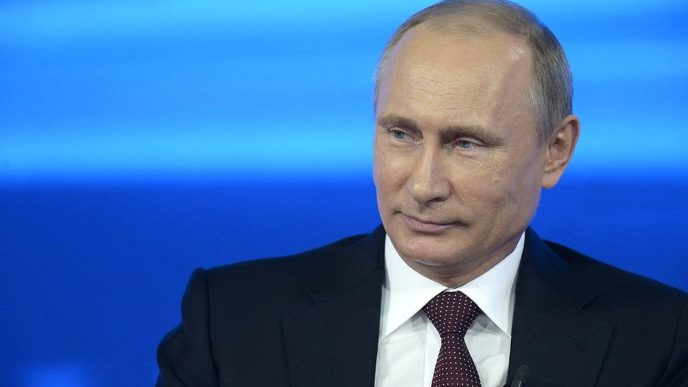
Who’s the Real Threat to the West: Putin or the EU?

Vladimir Putin is far from a saint. No Russian leader can really be one and rule for long. (The principled democratic socialist Alexander Kerensky lasted just a few months in 1917.) The political history of Russia is tragic for complex historical reasons. If you want to understand that great but troubled country, undertake some extensive reading. A short list would include:

Richard Pipes’ magisterial Russia Under the Old Regime,
Simon Sebag Montefiore’s The Romanovs,
Dominic Lieven’s The End of Tsarist Russia, and
Alexander Solzhenitsyn’s brilliant series of historical novels, The Red Wheel.

You need not delve into Russia’s history to ask yourself: Does it really serve America or the West to cast Russia as our permanent enemy, as Senate anti-Russia hawks John McCain and Lindsey Graham insist to the point of obsession?

Don’t forget that these two pro-immigration globalists were among the leading champions of our invasion and occupation of Iraq. If they’d had their way in Syria, U.S. planes would have been risking dogfights with Russian jets, all to help al Qaeda’s Islamist allies conquer the country and repress a million Christian Syrians. The “moderate Syrian rebels” were merely a fig leaf, with no more presence or power than Iraqi “moderates” and “democrats” had in 2003. Remember neocon savior Ahmed Chalabi? Iraqis don’t.

Who Threatens Our Vital Interests in Europe More: Putin or Merkel?

What vital interests of ours does Russia threaten? Yes, it invaded Crimea, to take back disputed territory full of Russian speakers that was only transferred to Ukraine in the 1950s. Russia has violated the sovereignty of Ukraine, which was part of Russia since before the U.S. annexed Texas. As I said back in 1992, Ukraine should have secured its independence permanently by holding on to the nuclear weapons it inherited from the Soviets. But Bill Clinton convinced Kiev to trade those vital safeguards for a piece of American paper. As sympathetic as we should be to the people of Ukraine, who suffered their own Holocaust at the hands of the Soviet government in the 1930s terror famine, the battle over the border between Ukraine and Russia is none of America’s business.

Those who’d make it our business are busybodies, globalist utopians who dream of imposing their own ideological solutions on other countries — meddling in elections from Israel to Armenia, provoking resentment against America all around the world, then huffing and puffing with outrage because Russia may have helped leak authentic, damning emails about Hillary Clinton’s campaign.

Just how long do they think that the U.S. can pretend it knows how to manage and police the entire world, before we suffer some push back? We don’t even know if Russia was trying to swing the election from Clinton — who looked unbeatable to most Americans in the know — or simply to weaken and humiliate her before she got into office. Putin may get more than he bargained for: a president who is much tougher, more nationalistic, and free of financial and personal ties to the Saudis, Qatar, and the Muslim Brotherhood.

What Russia Wants

Russia craves excessive influence over the Baltic states, which rightly won their independence in the 90s, but which we brought into NATO, taking advantage of Russia’s post-Communist chaos to create a tripwire for possible nuclear war right on its doorstep. Step back for a moment, and put yourself in Russia’s shoes. Imagine if during the Civil War, while we fought for our survival, Great Britain had recruited Mexico as its military ally, even stationing troops and ships there. When we got back on our feet, we would have rightly resented that. I don’t think that President U.S. Grant would have let that stand for long.

Russia violates human rights, and Putin persecutes his critics, it’s true. But how sincere are critics of Russia on these subjects who breeze past far worse offenses in countries like Saudi Arabia, China, and Turkey? When McCain and Graham start demanding that the Saudis stop torturing rape victims, that China stop forcing women to have abortions, and that Turkey release hundreds of dissident journalists from prison, then and only then should we listen to their complaints about Vladimir Putin. (To Marco Rubio’s credit, in his Senate grilling of Trump nominee Rex Tillerson, he did survey Saudi abuses.)

The EU Wants to Silence Its Patriotic Critics

What Putin really threatens is not so much NATO as the EU — because he funnels money to patriotic parties across the Continent that oppose the oligarchs in Brussels, who are stealing sovereignty from voters, trying to impose legal abortion and gay marriage on Catholic countries from Poland to Ireland, and encouraging the mass colonization of Europe by Jew-hating Islamists of military age whom Turkey ships across the porous southern EU border.

The real threat to the West comes not from the economically stalled, oil-dependent Russia, with its shrinking demography and limited regional ambitions. The EU itself is the greatest danger to our allies in Europe, and hence to America. Its reckless embrace of a single currency, its destruction of internal borders, its suicidal acceptance of limitless Muslim refugees — these are acts of sabotage that Putin’s secret service could never dream of pulling off. The EU has gravely weakened major NATO countries such as France, Germany, and Britain — filling them with potential terrorists and endangering their banking systems. Smaller, poorer EU countries like Greece and Italy suffer the twin assaults of German austerity measures, and Angela Merkel’s delusional refugee policies.

The only hope for those Western nations is that their patriotic parties succeed in wresting power from sterile, aging elites, and restoring in each a healthy regard for its national interests — as Britain began to display with its embrace of Brexit, and the U.S. did by electing Donald Trump. If those parties do succeed, they won’t be Putin’s puppets, any more than Trump will be. But they will see as he sees that we have far graver threats facing us than border conflicts on the Dnieper.

We face a mass colonization of the cradle of Western civilization by millions of real or potential religious fanatics, tied to Saudi fundamentalism by a thousand financial strings. The polity responsible for imposing that threat on the West is the Soviet European Union, and its thousands of unelected apparatchiks. When that monstrosity collapses, there won’t be a Berlin Wall we can dismantle, but perhaps patriotic Westerners can converge on its headquarters in Brussels with sledgehammers and pickaxes, in the spirit of 1989. (Read more from “Who’s the Real Threat to the West: Putin or the EU?” HERE)

Follow Joe Miller on Twitter HERE and Facebook HERE.

Favorite Bible Verses in 2016 from 88 Nations

An online Bible App says they’ve discovered the world’s favorite Bible verses, based on the number of highlights, bookmarks and shares for verses, according to Christianity Today. YouVersion announced that 2016 was the biggest year ever, with users installing their App on over 250 million devices. Based on their analysis, some surprising verses made it to the top of the favorites list.

Zechariah 14:9 was the favorite verse for two countries that could hardly be more different: Israel and Afghanistan. The verse says, “The Lord will be king over the whole earth. On that day there will be one Lord, and his name the only name.” Other countries identifying with this verse were France, Finland, Sweden, Guadeloupe, Belgium, Martinique and Cyprus.

The most popular verse worldwide with nearly 550,000 shares was Romans 8:28: “And we know that in all things God works for the good of those who love him, who have been called according to his purpose.”

Another popular verse was Jeremiah 29:11: “‘For I know the plans I have for you,’ declares the Lord, ‘plans to prosper you and not to harm you, plans to give you hope and a future.’” This verse was the top verse for 29 countries, including Saudi Arabia, Colombia and Italy.

A complete chart of the most popular verses by country may be found here. (For more from the author of “Favorite Bible Verses in 2016 from 88 Nations” please click HERE)

Follow Joe Miller on Twitter HERE and Facebook HERE.