
Dakota Access Pipeline Easement Marks a New Day for US Energy

The final easement granted on Wednesday by the U.S. Army Corps of Engineers to complete the Dakota Access pipeline project sent a clear signal to our nation: Infrastructure development is once again a priority.

Last November, America chose a president who campaigned on rebuilding America’s infrastructure, encouraging energy development, and championing job creation. Now, only weeks into his administration, President Donald Trump’s actions have matched his campaign promises.

Four days after his inauguration, the president signed an executive order for expedited approval of the Dakota Access pipeline easement. Two weeks later, the easement has been granted.

This stands in stark contrast to the actions of President Barack Obama, whose disregard for the rule of law last fall halted the completion of the legally permitted Dakota Access pipeline.

This sent a chilling message to the private industries that finance, develop, and complete all required regulatory reviews to build roads, bridges, transmission lines, pipelines, wind farms, and water lines.

The message was that when top government officials and lawless mobs decide to obstruct a legally permitted pipeline project that is more than 90 percent complete, no infrastructure project is safe.

Few people outside North Dakota can comprehend the chaos this conflict brought to my state. It became a cause célèbre, bringing thousands of political activists, anti-oil extremists, and movie stars to an area south of Bismarck where they illegally camped on federal land.

These protestors damaged bridges and construction equipment, burned tires, threatened law enforcement and area residents, and blocked progress on the pipeline’s construction.

Except for a few hundred still in the area, these protesters are mostly gone.

Yet today, the nearby Standing Rock Sioux members and state and county crews are feverishly cleaning up the mess of personal belongings, trash, and human waste they left behind—an estimated 250 truckloads that must be hauled to the Bismarck landfill.

They are hoping to beat next month’s spring thaw on the floodplain where they camped, so that the trash left behind by these “water protectors” doesn’t pollute the Missouri River.

There is a poignant and absurd irony about this situation. Those claiming to be the true protectors of land and water turned out to be the only threat to the environment.

With the easement to finish the Dakota Access pipeline now granted, it’s time to get to work and finish this $3.7 billion private project that will deliver as many as 570,000 barrels of oil a day from northwestern North Dakota through South Dakota and Iowa to connect to existing pipelines in Illinois.

This important piece of energy infrastructure will enhance America’s energy security and put Americans back to work.

I am grateful for the president’s commitment to projects like this that are so vital to our nation.

It sends a strong signal of a new era of cooperation between the federal government and private businesses that are committed to moving our nation forward with new critical infrastructure creating greater job opportunities for Americans. (For more from the author of “Dakota Access Pipeline Easement Marks a New Day for US Energy” please click HERE)

Follow Joe Miller on Twitter HERE and Facebook HERE.
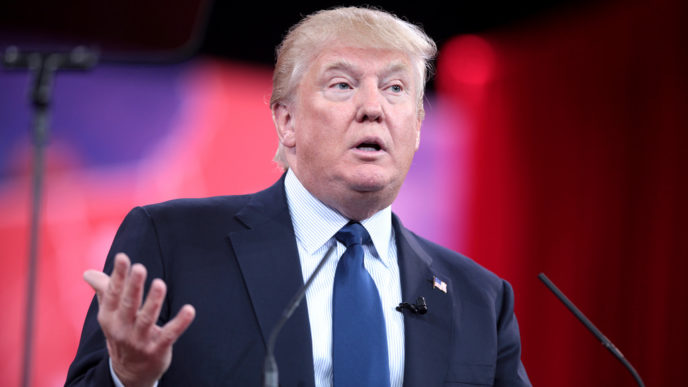
Last-Minute Lawyer Faulted for ‘Poor Job’ Defending Trump’s Immigration Order

The lawyer who argued the case for President Donald Trump’s executive order designed to bar terrorists from entering the country is the target of sharp criticism for his performance Tuesday night before a federal appeals court.

“I’m not sure I’m convincing the court,’’ August E. Flentje says.

Flentje, a career Justice Department lawyer, took the case after two top lawyers in the Trump administration recused themselves.

“I’m not sure I’m convincing the court,’’ Flentje said out loud at one point in arguing for the executive order temporarily restricting travel to the U.S. from seven terrorism-prone nations.

During the Obama administration, then-Attorney General Eric Holder honored Flentje for helping to draft the legal case for same-sex marriage and for terrorism suspects being held in the Guantanamo Bay detention center, which the administration sought to close.

When the three-judge panel from the 9th Circuit Court of Appeals pressed Flentje for evidence connecting the seven countries to terrorism, he said, “These proceedings have been moving quite fast, and we’re doing the best we can.”

He said the government hadn’t included all the evidence yet. He cited some Somalis in the United States who he said were connected to the al-Shabab terrorist group.

Judge Michelle Friedland asked, “Can you point us to where in the record you are referring?”

Flentje responded: “It is not in the record.”

Flentje delivered a weak argument that likely could affect the outcome of the case, said Hans von Spakovsky, senior legal fellow at The Heritage Foundation.

“It was a very poor job. It’s the worst presentation I can recall seeing by a Justice Department attorney,” von Spakovsky, a former Justice Department lawyer, told The Daily Signal.

Justice Department spokeswoman Nicole A. Navas said the department wanted to avoid any conflicts of interest after the former employer of two top Trump administration lawyers filed a brief on behalf of opponents in the suit against the president’s executive order.

The acting solicitor general and acting assistant attorney general “have refrained from signing this brief, out of an abundance of caution, in light of a last-minute filing of an amicus brief by their former law firm,” Navas told The Daily Signal in an emailed statement.

“The department has no additional comment than what was stated in the government’s brief,” she added on the question of why Flentje argued the case in one of the nation’s most liberal circuits.

A federal judge in Seattle on Friday placed a temporary restraining order, or TRO, on enforcement of the week-old executive order. It put a nationwide pause on carrying out the order.

Flentje’s job Tuesday night was to make the legal case for Trump’s order on vetting immigrants from seven Middle Eastern countries that have been terrorism hot spots.

“There was a lot of back and forth in that entire argument,” White House press secretary Sean Spicer said Wednesday in response to a question on Flentje’s presentation and whether Trump was concerned about it.

“I think he did what he had to do to, represent the president’s case and represent the administration’s case on the TRO,” Spicer said of Flentje before adding of Trump:

He feels very confident on the merits. That’s where his focus has been. So I’m not concerned.

I think the president’s main concern has been … making sure that an executive order that was lawfully executed and [went] through the entire process—remember, the DOJ’s Office of Legal Compliance vetted this order and deemed it was legal. So we can follow this entire process to be sure it was done correctly, constitutionally, legally.

Washington state, later joined by Minnesota, challenged Trump’s executive order, arguing it would harm their states’ tax bases and businesses.

A U.S. district judge in Seattle did not rule on the merits of the case, but determined Washington state had standing and issued the temporary restraining order on the executive order. Now, the appeals court is deciding only on the restraining order and not, for now, the actual executive order.

Flentje started work at the Justice Department about 19 years ago, under President Bill Clinton. He continued under Presidents George W. Bush and Barack Obama.

Noel Francisco, the acting solicitor general, and Chad Readler, acting assistant attorney general, initially were going to represent the Trump administration.

Their decisions to remove their names from the most recent brief and from the case itself came after their former employer, the Jones Day law firm, filed an amicus brief against Trump’s executive order. Jones Day also filed a brief seeking to remove the two lawyers from the case, contending their involvement represented a conflict.

Flentje, the special counsel to the assistant attorney general, then became the highest-ranking Justice Department attorney to handle the case.

Interestingly, Jones Day was associated with both the Trump presidential campaign and the Trump transition team. The new president named a former Jones Day lawyer, Don McGahn, as White House counsel, the legal news site Above the Law noted.

The person filing the brief against Trump’s executive order now could pose ethical questions since the Jones Day firm has had such close ties to Trump in the past, von Spakovsky said.

“The opposing brief of the executive order is a very serious conflict,” von Spakovsky said.

In 2013, Holder issued the Attorney General’s Award for Distinguished Service to a team, including Flentje, that made the legal case that the Defense of Marriage Act, a Clinton-era law recognizing marriage as the union of a man and woman, was not constitutional.

In 2010, Holder’s Justice Department honored Flentje and other lawyers with the Attorney General’s Award for Excellence in Furthering the Interests of U.S. National Security. The award was for their work on 240 appeals involving detainees at the Guantanamo Bay prison for terror suspects.

(For more from the author of “Last-Minute Lawyer Faulted for ‘Poor Job’ Defending Trump’s Immigration Order” please click HERE)

Follow Joe Miller on Twitter HERE and Facebook HERE.
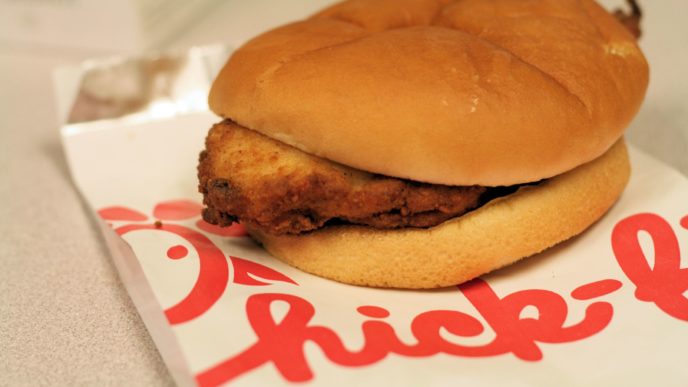
Your Chicken Sandwich Costs More With a $15 Minimum Wage

Progressives are touting a $15 minimum wage as a low-cost policy to reduce poverty and income inequality. However, the costs of a high minimum wage are higher than its proponents would like to believe.

In a recent Heritage Foundation backgrounder, James Sherk outlined the costs to consumers of a $15 minimum wage and took issue with methodological flaws in two studies that proponents of a higher minimum wage often cite.

Relying on peer-reviewed scholarship on the fast-food sector, Sherk estimates that increasing the minimum wage to $15 would raise fast-food prices 38 percent and reduce employment 36 percent. A chicken sandwich that currently sells for $3.05 would instead cost customers $4.21.

The logic is straightforward: With higher labor costs and already narrow profit margins, fast-food restaurants will have to raise prices. But with higher prices, consumers spend significantly less on fast food.

Sherk goes on to argue that two studies predicting little effect from a $15 minimum wage on fast-food business models include fatal flaws.

One study by Purdue’s School of Hospitality and Tourism Management found that a $15 minimum wage would increase a fast-food restaurant’s costs by only about 4 percent.

However, the authors made a major mistake: They added up median costs, rather than average costs, which made 8 percent of all restaurant costs disappear. Since restaurants in the real world can’t make costs vanish, the study has little relevance for them.

A more respectable effort, by the Political Economy Research Institute, likewise found low costs to fast food from a higher minimum wage. However, the institute’s model assumed that fixed costs were constant in the industry, and that the fast-food sector’s future growth would be relatively low cost. With low cost growth ahead of them, restaurants could afford to pay workers more without raising prices.

However, the assumption of constant fixed costs is inappropriate in a multiyear, industrywide projection, since it implies that the industry will be able to grow without building any new stores or buying any new kitchen equipment.

The Political Economy Research Institute also assumed a lower level of price sensitivity than the scholarly consensus indicates. Finally, the institute assumed that turnover costs in the fast-food sector are unrealistically high, generating unrealistic savings from higher wages.

Correcting these three assumptions brings the institute’s model largely in line with Sherk’s.

Advocates of higher minimum wages have laudable goals: helping poor Americans become self-sufficient and showing respect for often thankless jobs.

But a high minimum wage would do more harm than good. It would raise the cost of living for low-income households, including many that don’t include a minimum-wage worker.

A higher minimum wage also would make entry-level employment harder to find, putting the bottom rung of the wage ladder out of reach to those with the fewest marketable skills.

Those who sincerely care about fighting poverty and improving economic mobility will find less costly ways to meet those goals. (For more from the author of “Your Chicken Sandwich Costs More With a $15 Minimum Wage” please click HERE)

Follow Joe Miller on Twitter HERE and Facebook HERE.
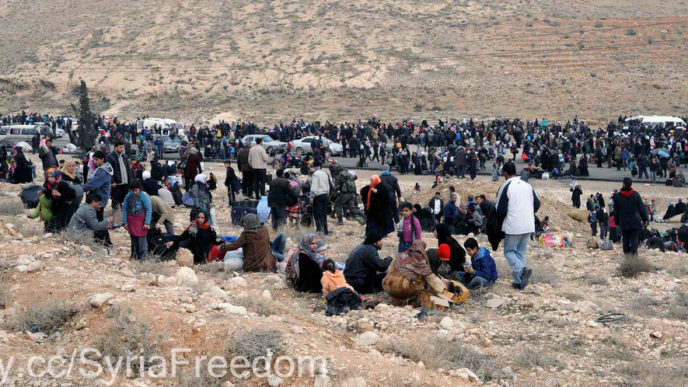
Liberal MSM Stoops to New Low, Using Persecuted Syrian Christians as Political Props

This week, a Syrian Christian family was united with its loved ones in New York City after initially being denied entry to the U.S. due to President Donald Trump’s travel moratorium.

Tuesday morning, mainstream media outlets and liberal social justice organizations reported on the heartfelt family reunion, gleefully and conveniently overlooking the sheer hypocrisy of their past failure to cover the plight of persecuted Christians in the Middle East.

According to CNN, members of the Asali family had been waiting nearly 15 years to join their relatives in America. But when they finally made it to their initial destination of Philadelphia, one day after Trump issued a completely legal executive order temporarily barring immigration from seven Muslim-majority countries, the Asalis were sent back to Doha, Qatar.

Sarmad Assali, a U.S. citizen (who spells her surname differently than her Syrian family members), filed a lawsuit with the American Civil Liberties Union in protest. And after a federal judge issued a temporary injunction against Trump’s executive order, the Asalis were able to return to the United States.

Now, the same media outlets and social justice groups that called Trump’s executive order a “Muslim ban,” and lamented the “discriminatory” nature of prioritizing persecuted religious minorities, are celebrating these Christian immigrants. Why, exactly, are they doing this now?

Not because they really care about the Asalis, but because the family serves as the perfect way for them to push their anti-Trump agenda.

See? This family got screwed over, too. And they’re Christians! Not the even anti-Muslim conservative bigots can support Trump now.

“The thrust is, the low influx of persecuted minorities facing genocide was one of the media’s best-kept secrets during the Obama administration,” said Conservative Review’s Nate Madden, who has written extensively on the plight of religious minorities in the Middle East. “Now that Trump has instituted a travel suspension that has provisions for them, they manage to find the compassion button.”

Indeed, religious leaders like Archbishop Bashar Warda, the Chaldean Catholic archbishop of Erbil in Iraq, have long begged the U.S. government and media to shed light and assist on the deadly struggles their people face.

In an interview with Crux magazine earlier this month, Archbishop Warda shared his thoughts on President Trump’s highly contested travel moratorium.

“Christians and other minorities have been largely ignored by the American government before now, so even if this step had a bumpy start and required clarification, we in Iraq appreciate that an American administration understands that we are here and wants to help the minorities here who have suffered so much,” Warda said.

“I do not understand why some Americans are now upset that the many minority communities that faced a horrible genocide will finally get a degree of priority in some manner,” he added.

For many Middle Eastern Christians, Trump’s executive order wasn’t a punishment imposed by a racist foreign tyrant, but a much-welcomed policy change that, in the long run, would benefit the truly destitute.

But of course, we have yet to hear this perspective from the liberal mainstream media, and we’re not likely to any time soon. (For more from the author of “Liberal MSM Stoops to New Low, Using Persecuted Syrian Christians as Political Props” please click HERE)

Follow Joe Miller on Twitter HERE and Facebook HERE.
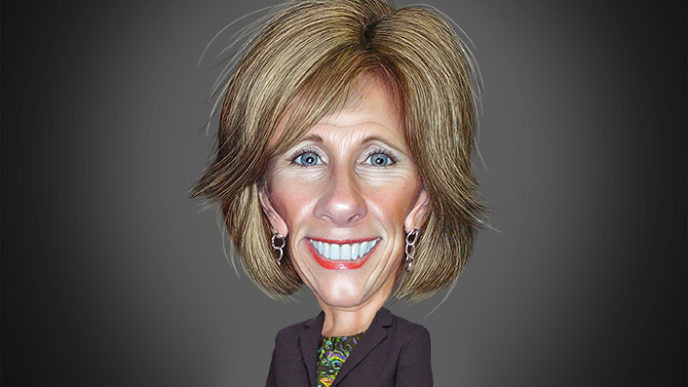
DeVos Confirmed as Education Secretary, Pence Casts Historic Tie-Breaking Vote

School choice advocate Betsy DeVos was narrowly confirmed Tuesday as the next education secretary despite deep opposition from teachers unions and other groups, after Vice President Pence intervened to cast a historic tie-breaking vote.

Pence’s vote marked the first time in American history a vice president has broken a tie on a Cabinet nominee’s Senate confirmation – and the first tie-breaking vote by a VP since 2008. Pence was compelled to cast the vote after two Republican senators – Susan Collins of Maine and Lisa Murkowski of Alaska – joined all 48 Senate Democrats in opposing DeVos.

“The Senate being equally divided, the vice president votes in the affirmative and the nomination is confirmed,” Pence said, stepping into his role as president of the Senate in a brief appearance on Capitol Hill.

With his support, DeVos was confirmed on a 51-50 vote.

Devos was sworn in later by Pence in a ceremony at the vice president’s ceremonial office, which he called “the easiest vote I ever cast.” (Read more from “DeVos Confirmed as Education Secretary, Pence Casts Historic Tie-Breaking Vote” HERE)

Follow Joe Miller on Twitter HERE and Facebook HERE.

‘The Future Is Female’: Hillary Clinton’s First Post-Election Statement Reminds Us Why She Lost

On Tuesday, Hillary Clinton delivered one of her first public statements since losing the Nov. 8 presidential election. In a video addressed to those attending the MAKERS women’s conference in California, Clinton boldly declares, “The future is female.”

The former first lady praised the participants of last month’s anti-Trump Women’s March on Washington and encouraged women to “be bold” amid the fear and uncertainty that apparently plague women in America.

“Despite all the challenges we face, I remained convinced that, yes, the future is female,” Clinton asserts.

Really? This is how Hillary chooses to break the relative silence of her post-election pity party? By telling women to fight sexism with more sexism? Give us a break!

Conservatives on social media had similar reactions:

As Ben Shapiro so eloquently wrote Tuesday for The Daily Wire, “Women in America in 2017 are the luckiest women in world history, and are not at a systemic disadvantage to men. But Hillary continues to promulgate a victim narrative that does not align with the facts.”

He continued:

No, the future isn’t female. The future is free. And that distinction eluded Hillary during the campaign, which is why she lost. Identity politics can be lucrative business, but it isn’t the truth: the truth is that we all seek a future in which women around the globe have the same freedoms women in America do (although Hillary did little to forward that mission as Secretary of State). Labeling the future “female” is as benighted as labeling it “male” or “black” or “gay.” The future has yet to be decided, and we should all pray that the future isn’t owned by any particular social group.

Hillary, for the future, here’s a tip on how to win votes: Don’t isolate half of the population with contemptuous feminist mantras that needlessly stir dissension and deny reality. Remember, #LoveTrumpsHate. (For more from the author of “‘The Future Is Female’: Hillary Clinton’s First Post-Election Statement Reminds Us Why She Lost” please click HERE)

Follow Joe Miller on Twitter HERE and Facebook HERE.

Want to Take Back Our Sovereignty? Start by Breaking up the Ninth Circuit

The spectacle of the U.S. government having to grovel before the Ninth Circuit to determine whether we are a sovereign nation or not should draw attention to another important initiative: the effort to break up the tyrannical Ninth Circus Court of Appeals.

Believe it or not, the courts did not create themselves. Congress has plenary control over lower courts and the appellate jurisdiction of the Supreme Court. Congress can abolish the lower courts altogether and reroute their cases to state courts. Every aspect of the court system’s structure — administrative procedures, rules of adjudication, methods of interpretation, and logistics of proceedings — can be regulated by Congress in any way. As such, it goes without saying that Congress can, as it has done in the past, modify the geographical jurisdiction of an existing circuit.

The Ninth Circuit cesspool

The time has come to strip the Ninth Circuit down to size. This court is by far the most anti-constitutional circuit amidst a federal judiciary where the majority of the circuits don’t respect the Constitution as written. Most of the members of the Ninth have literally supplanted the written Constitution for an ever elastic set of ethos that are anchored to nothing more than the political values of these unelected judges at the time they woke up that day. Most importantly, what they have done to the sovereign state of Arizona is outrageous. Congress owes it to the good citizens of the Grand Canyon State to free them of the clutches of judicial tyranny.

To begin with, putting politics aside, the Ninth Circuit — which includes Alaska, Hawaii, California, Nevada, Arizona, Oregon, Washington, Idaho, and Montana — is too big. As of the end of FY 2016, there were 13,334 pending appeals before the Ninth Circuit, more than twice the amount of the second busiest circuit (the Fifth) and more than ten times as much as the adjacent Tenth Circuit. The idea of breaking up the Ninth goes back respected figures like current Supreme Court Justice Sandra Day O’Connor, a native Arizonan. Not to mention the fact that the Ninth Circuit is, by far, the most reversed appeals court in the country, making Anthony Kennedy look like James Madison in comparison.

To that end, Rep. Andy Biggs, R-Ariz. (A, 0%) has followed in the tradition of many non-California residents of the Ninth Circuit’s tentacles and introduced H.R. 250 — the Judicial Administration and Improvement Act. This bill would limit the jurisdiction of the Ninth Circuit to California, Washington, Oregon, and Hawaii. A new “twelfth circuit” would be created to oversee appeals from district courts in Arizona, Nevada, Idaho, Montana, and Alaska. Personally, I’d limit the Ninth Circuit to California alone, as was suggested in a bill from a previous Congress, (or better yet, a few square acres in Death Valley), but overall this is a great starting point.

Now is the best time to create a new circuit. With GOP control of the Senate and the filibuster having been eliminated for lower court judges, Trump can flood the zone with originalists (to the extent they exist) and establish the first full circuit that actually follows the law and the Constitution as written. These judges can start fresh, unvarnished from lawless “precedent” of the past.

Cry for Arizona

Arizona is one of the most important states for the judiciary because so many immigration cases emanate from the Grand Canyon State. Words cannot describe how the Ninth Circuit has stolen the sovereignty of Arizona to the detriment of the state’s economy, security, and social cohesion. This officious panel has invalidated every single thing the legislature and the people (through ballot referendum) have done to protect their state. In addition, the Ninth Circuit has forced the state to give driver’s licenses to illegals, offer bail to the most violent criminal aliens, and has blocked the state from requiring proof of citizenship in order to register to vote. The Roberts Supreme Court has not lifted a finger to overturn almost any of the dozen or so decisions from the Ninth Circuit [Scalia and Thomas called them out for it]. With at least 630,000 illegals residing in the state, at a cost of $2.4 billion a year, Arizona is left defiled and helpless in protecting its own residents and even their right to vote in untainted elections.

Indeed, the Trump administration and the GOP Congress owe it to the state to provide them with a new federal appeals court. The Constitution [art. IV, § 4.] requires the federal government to “guarantee to every state in this union, a republican form of government, and shall protect each of them against invasion.” Arizona has been invaded in the worst way possible and they have lost all republican representation by having their sovereignty and right to self-determination denuded by the unelected and unaccountable Ninth Circuit.

As I observed in Stolen Sovereignty [page 100]:

One of the indictments against King George listed in the Declaration was: “He has forbidden his Governors to pass Laws of immediate and pressing importance, unless suspended in their operation till his Assent should be obtained; and when so suspended, he has utterly neglected to attend to them.”

Certainly, when the federal government was created to replace King George as the national authority, they never intended to suppress states from passing laws to protect themselves and their taxpayers, not with a standing army, but at least with their legitimate state law enforcement and power over local issues. In fact, they guaranteed the help of the federal government to protect them from invasion.

In his dissent in Arizona v. United States, Justice Scalia concluded with a rhetorical question: “[W]ould the States conceivably have entered into the Union if the Constitution itself contained the Court’s holding? … if securing its territory in this fashion is not within the power of Arizona, we should cease referring to it as a sovereign State.”

Our founders certainly feared that their experiment might result in the collapse into an executive oligarchy, but they certainly never envisioned powers of King George being wielded by a judicial oligarchy, much less a puny lower court existing at the pleasure of Congress. (For more from the author of “Want to Take Back Our Sovereignty? Start by Breaking up the Ninth Circuit” please click HERE)

Follow Joe Miller on Twitter HERE and Facebook HERE.

Shapiro: Is Trumpism the New Reagan Revolution?

Last week, Ethics and Public Policy Center senior fellow Henry Olson released a revisionist look into the legacy of Ronald Reagan. The purpose: to recast Donald Trump in Reagan’s mold. According to Olson, Trump could be the New Reagan Revolution. Why? Because Reagan was not, in fact, “an anti-government ideologue.” Here is Olson’s breakdown of Reaganism:

Reagan’s conservatism was not a more attractive version of Barry Goldwater’s anti-statist ideology. From the moment Reagan started speaking out as a conservative in the late 1950s, he endorsed an active role for government. He believed that government should care for those who could not care for themselves, build public housing for the poor and expand public universities…Reagan’s conservatism even supported the idea of universal health coverage….Reagan did not shrink from endorsing government action when needed as governor or as president. He raised the gas tax in 1983 to fund road construction and repair. He also imposed sanctions on Japanese industries and companies for what he believed were unfair trade practices even as he sought to extend free-trade agreements throughout the world. Even Reagan’s support for immigration was limited by a belief in protecting U.S. workers….That’s not to say Reagan would have agreed with everything Trump says or does. But the overlap in their views on these issues stems from a broader overlap in philosophy.

And just like that – it’s magic! – Trump is the new Reagan.

Unfortunately, this is a dramatic overstatement of Reagan’s position in order to justify Trump’s. It turns Reagan into a big government advocate. He wasn’t. (Read more from “Want to Take Back Our Sovereignty? Start by Breaking up the Ninth Circuit” HERE)

Follow Joe Miller on Twitter HERE and Facebook HERE.

On Immigration, Winning Cheap Grace

The great theologian Dietrich Bonhoeffer wrote scathingly of “cheap grace,” which is the warm fuzzy feeling we give ourselves, and the praise we win from others, by making little virtue-signals that cost us almost nothing — and might well impose suffering on innocent third parties. Jesus Himself denounced it when He saw it among the Pharisees, but Christians are not immune.

In Bonhoeffer’s time, German pastors won cheap grace by safely denouncing Communist atrocities, while pretending that the same crimes weren’t happening just down the train tracks from their churches, at the hands of their own Nazi government. Catholic philosopher Rene Girard spoke of a similar psychological trick, which he called “victimism,” or the cynical use of weaker people’s suffering to aggrandize yourself and win power.

Speak Soothingly to Power

Cheap grace can always be gained by signing on with the sins that are popular with the powerful, and denouncing some evil that is distant or widely despised. Hence pastors in the segregated South could safely denounce the crimes of Josef Stalin, while ignoring the “strange fruit” that hung in their own towns’ trees after brutal lynchings of black men. How many pastors piled up cheap grace aplenty in the 1980s by fighting apartheid in faraway South Africa, and ignoring the abortion clinics that killed black babies by the thousands right down the street?

Now open borders Christians, such as the media-savvy Fr. James Martin, SJ, are gathering cheap grace in bushel baskets on the subject of immigration. In a shrill, moralistic screed that The Stream already analyzed as contrary to Catholic doctrine, Fr. Martin told Americans that it is simply and blankly un-Christian to secure our country’s borders, enforce its labor laws, or carefully vet refugees to keep out those committed to terrorism or sharia.

That is meant to end the argument, to threaten us with eternal damnation if we don’t accept Fr. Martin’s political program — one which no Christian government has enacted anywhere for almost 2,000 years. As a leader in the movement to really implement Christianity for the first time, ever, on immigration issues, Fr. Martin claims his place as one of the best Christians in history. Or so he would like us to see him.

We Learn, 2,000 Years Late, that Borders are Un-Christian

Does Fr. Martin, or any of the bishops who echo him, really believe that no Christian may vote to secure his country’s borders? Is it sinful for Mexico to police its border with Central America? For Latvia to guard its frontier with Putin’s Russia? For Israel to police the crossing into Jordan? I’ve never read any such statements, and I think I know the reason: It’s perfectly obvious that international borders require the rule of law, that sovereign countries deciding who comes and goes is part of what we must “render unto Caesar.”

It doesn’t harm Fr. Martin, in his cozy Manhattan office, that drug cartels and people smugglers control the U.S.-Mexico border, honeycombing it with tunnels and planting it with “rape trees,” with the clothes ripped off young women. Nor does he find himself exploited in an underground economy, where greedy employers turn away poor American workers with enforceable legal rights, then fill their factories or fields with docile, frightened foreign people whom they can threaten with deportation.

Fr. Martin doesn’t have children whose public school is in chaos, overburdened with the hopeless task of trying to assimilate and educate kids in a dozen different languages. Fr. Martin’s health insurance is covered by the wealthy Jesuit order, so he never needs to worry about what it will cost him to use an emergency ward — at a hospital which treats long lines of undocumented and uninsured workers, and so has to soak its few paying customers to avoid going bankrupt. Fr. Martin will never lose his job at America magazine to a lower-paid foreign priest who came in on an H1-B visa, whom he is forced to train.

The Cheapest Grace in the History of the Church
There is a long list of people, both foreign and American, who pay a heavy price for our blithe acceptance of immigration chaos. Few such people have columns in prestigious magazines, or get hired as faith consultants by Martin Scorcese — which Fr. Martin was, for the movie Silence. (As you’ll read here at The Stream, that movie’s ending was an icy apologia for priests who renounce Jesus, betray the Faith, and make a comfortable living helping pagans to persecute the church.)

Those people exist, from the villages emptied of men in rural Mexico, to the ghettos of America where black and Latino teens cannot find entry-level jobs. But it’s easy to ignore them.

Likewise it’s easy for Fr. Martin and others like him to call for utopian policies, wave Jesus around to silence our reality-based objections, and refuse to examine their real-world impact on the poor and the vulnerable. Better still, they can wield their “high-minded” demands to blunt the force of the growing pro-life movement, by insisting that all of us swallow their Seamless Garment poison pill, before we’re allowed to stop killing a million children each year. That wins them points with their powerful friends like Joseph Biden and Tim Kaine, both Jesuit allies and pro-choice Democrats. So men like Fr. Martin coast through life on a cushion of unearned praise and cultural privilege, while sneering at their weaker fellow citizens as “un-Christian,” cruel, and selfish.

I’ll give this to open borders Christians: They have found the source of the cheapest grace in the history of the church. Simon Magus would be proud. (For more from the author of “On Immigration, Winning Cheap Grace” please click HERE)

Follow Joe Miller on Twitter HERE and Facebook HERE.

Judge Robart’s Ruling Against Trump’s Immigration Order Is Baseless

If the law means anything, the Trump administration will succeed in overturning the so-called court ruling against its travel ban.

The nationwide stay of the ban issued by Judge James Robart, a Washington state-based federal district judge, is tissue-thin. It doesn’t bother to engage on the substance, presumably because facts, logic and the law don’t support Robart’s sweeping assertion of judicial authority in an area where judicial power is inherently quite limited.

This doesn’t justify President Donald Trump tweeting that Robart is a “so-called judge.” That slam earned Trump bipartisan blowback and may encourage other judges to tilt against Trump’s ban in response to a perceived threat to the independence of the judiciary. But Robart’s handiwork is shoddy and usurpatory, despite the fact that he is indeed a literal judge.

Even if you assume that the states of Washington and Minnesota have standing to pursue the litigation (Robart asserts implausibly that they “face immediate and irreparable injury” from the executive order, the heart of which is a three-month pause on most travel from seven countries), the stay falls down. It ignores our constitutional scheme and Supreme Court precedent, as the Justice Department brief seeking to reverse it persuasively argues.

First, Judge Robart is trespassing on a core executive responsibility. “The exclusion of aliens is a fundamental act of sovereignty,” the Supreme Court held in the 1950 Knauff case, “inherent in the executive power to control the foreign affairs of the nation.” The courts are not meant to second-guess the executive’s conduct of foreign affairs, or intrude on its plenary power in this area. “It is not within the province of any court,” the court noted in that decision, “unless expressly authorized by law, to review the determination of the political branch of the Government to exclude a given alien.”

Second, it’s hard to get around the relevant federal immigration law, which says, “Whenever the President finds that the entry of any aliens or of any class of aliens into the United States would be detrimental to the interests of the United States, he may by proclamation, and for such period as he shall deem necessary, suspend the entry of all aliens or any class of aliens as immigrants or nonimmigrants, or impose on the entry of aliens any restrictions he may deem to be appropriate.”

This is as explicit and wide-ranging as it gets. When the president has such authorization from Congress, the Supreme Court held in the Youngstown Steel case in 1952, his “authority is at its maximum, for it includes all that he possesses in his own right plus all that Congress can delegate.”

Finally, aliens residing outside the United States have no right to come here. The Supreme Court held in the 1982 Landon case, “an alien seeking initial admission to the United States requests a privilege and has no constitutional rights regarding his application, for the power to admit or exclude aliens is a sovereign prerogative.”

It’s not clear how Judge Robart expects opponents of the Trump ban to overcome these substantial and well-established obstacles. A more extensive and carefully reasoned decision by a Massachusetts-based district judge reached the opposite conclusion of his.

It is true that the ultimate source of the Trump executive order is his ill-advised call for a Muslim ban during the campaign. But the executive order, focusing on seven war-torn or hostile countries that had already been singled out for special scrutiny during the Obama administration, is manifestly not a Muslim ban.

Judge Robart may not like the Trump policy, but that doesn’t mean that it is illegal or unconstitutional. His ruling is worthy of the generally unhinged opposition to President Trump. If the judge doesn’t deserve the abuse that Trump heaped on him on Twitter, he produced what should rightly be considered so-called jurisprudence. (For more from the author of “Judge Robart’s Ruling Against Trump’s Immigration Order Is Baseless” please click HERE)

Follow Joe Miller on Twitter HERE and Facebook HERE.