What Trump Has Done on Immigration in First 100 Days

President Donald Trump’s dedication to enforcing immigration law is one of his significant accomplishments as he nears his 100th day in office Saturday, experts and lawmakers say.

Trump is “taking the handcuffs off of [Immigration and Customs Enforcement] and the Border Patrol because the immigration enforcement officers were prohibited from doing their job to a significant degree under [President Barack] Obama,” Mark Krikorian, executive director of the Center for Immigration Studies, told The Daily Signal in an interview.

The Trump administration highlighted its dedication to enforcing immigration law in a list, initially obtained by CNN, which specifies victories during the president’s first 100 days in office.

Included are executive orders issued by Trump on Jan. 25 that detail border security and immigration enforcement directives. These include instructions for a border wall, an order to withhold funding from sanctuary cities that are noncompliant with U.S. immigration law, and the hiring of “10,000 additional immigration officers.”

The list also includes an April 11 announcement from Attorney General Jeff Sessions where he instructed federal prosecutors to prioritize criminal immigration enforcement.

Trump also signed a revised executive order in March which placed temporary travel restrictions on residents of six countries the Obama administration and Congress had designated as posing risks of terrorism.

The original executive order issued in January was nullified by a federal judge in Seattle in a ruling upheld by a U.S. appeals court. The revised executive order was blocked by a federal judge in Hawaii.

Enforcing the Law

Rep. Louie Gohmert, R-Texas, who is vice chairman of the House Judiciary Committee’s subcommittee on crime, terrorism, and homeland security, said he agrees with these measures.

“Just having a president who says, ‘We’re going to enforce the border’ has had a profound effect on the number of people that are coming into the country illegally,” Gohmert told The Daily Signal in an interview. “It [has] already dramatically been cut back and so I think this is moving along quite well.”

Hans von Spakovsky, a senior legal fellow at The Heritage Foundation, told The Daily Signal in an interview that there is a stark difference between the Obama administration and the Trump administration.

“What has changed so radically is that the Department of Homeland Security and all our border patrol agents are now finally able to do their jobs,” von Spakovsky said. “The handcuffs have been taken off.”

The number of illegal immigrants crossing the U.S.-Mexico border in March, under 12,500, is the lowest total in 17 years, he said.

Trump’s approach to illegal immigration is vastly different from Obama’s, said Krikorian, of the Center for Immigration Studies, which advocates stricter enforcement of immigration laws.

“Under Obama … if the Border Patrol caught somebody who said he had been in the United States before January of 2014, they had to let him go, even if they knew he was illegal,” Krikorian said. “In other words, Obama essentially had a kind of informal amnesty for anyone sneaking across the border who would say that he had been in the country before January of 2014.”

This practice, reinstated in 2016, came from Obama’s “priorities” program, which instructed agents to pick up criminals, individuals threatening national security, and illegal immigrants who entered the U.S. after Jan. 1, 2014.

When Obama was in office, Krikorian said, Border Patrol agents would see individuals who were “still wet from wading across the Rio Grande.”

However, if the Border Patrol agents “hadn’t actually seen them with their own eyes in the river, they had to let them go” if they claimed to have arrived before 2014, he said.

Working Toward Building the Wall

Rep. Andy Biggs, R-Ariz., said Trump’s promise of building a border wall is already decreasing illegal immigration.

“One thing that the Trump administration has done very well is broadcast loud and clear that they are going to keep their promise of [building] the border wall,” Biggs, who comes from a border state, told The Daily Signal in an interview. “And that has resulted in a reduction in crossings.”

Last month, Trump sent a letter to House Speaker Paul Ryan, R-Wis., which detailed border wall funding with a request for $1.38 trillion for U.S. Customs and Border Protection to be available through September 2021. It would cover “procurement, construction, and improvements required for the operational control of United States borders, including design and construction of a wall and other physical barriers on the southern border of the United States.”

Republican lawmakers in the House and Senate, however, have said they prefer to put off a fight with Democrats over beginning to pay for the wall until the fall, rather than as part of funding the government for the rest of the current fiscal year, which ends Sept. 30.

“Full border wall funding can’t be there at this point,” Sen. James Lankford, R-Okla., a supporter of the wall, said in a recent interview with The Daily Signal. “It’s not designed, prototypes have not been created.”

Trump said Tuesday that funding for the wall likely will not be included in the spending bill that Congress must pass by midnight Friday to avoid a partial government shutdown, The New York Times reported.

Michelle Mittelstadt, director of communications at the Migration Policy Institute, a nonpartisan think tank on immigration, told The Daily Signal in an email that “the net result of his first 100 days is that a combination of action and rhetoric appear to be significantly reshaping the current immigration reality in the U.S.”

Taking a Stand Against Sanctuary Cities

Trump issued an executive order Jan. 25 denying unspecified federal funding to sanctuary cities.

“I’ve been particularly encouraged by the administration’s support for denying federal funds to sanctuary cities, in line with legislation I’ve backed,” Sen. Roy Blunt, R-Mo., said in a statement provided to The Daily Signal.

During the Obama presidency, Blunt called on Senate colleagues to “limit federal funding” to sanctuary cities that did not cooperate with enforcing federal immigration laws.

“The previous administration set a dangerous precedent by cherry-picking the laws it chose to enforce, and I’m glad we now have a partner in the White House who is holding sanctuary cities accountable,” Blunt said.

Trump’s order is facing opposition in the courts, however.

On Tuesday, a federal judge in San Francisco placed a national hold on Trump’s executive order regarding sanctuary cities until the issue can work its way through the courts.

Federal funding for entitlement programs such as Medicaid in sanctuary cities, however, would not be affected by the president’s order, von Spakovsky said in a new commentary.

The Department of Justice says it is working to implement Trump’s executive order to urge sanctuary cities to provide documentation of compliance with the department. The department also is hiring more immigration judges who will serve at detention centers along the border, Sessions announced this month.

Room to Improve

An area of immigration policy that Trump could improve on, Krikorian of the Center for Immigration Studies said, is addressing a program implemented by the Obama administration in 2012 called Deferred Action for Childhood Arrivals, or DACA.

This program has provided deportation protection and work permits to over 750,000 immigrants who were brought to the U.S. illegally as children.

“The fact that [Trump] has basically adopted the DACA, the illegal DACA amnesty, as his own is the one big black mark with regard to immigration,” Krikorian said. “Does it cancel everything else out? No, but it clearly is a problem.”

Donald M. Kerwin, executive director of the Center for Migration Studies, a pro-immigration think tank, said he disagrees with Trump’s approach.

Kerwin specifically criticized what he called Trump’s commitment “to decreasing refugee admissions by more than 15 percent at a time when you know there’s a global refugee crisis that exceeds in size the crisis after World War II.”

Kerwin also criticized Trump’s heightened border security measures and dedication to building a border wall.

“The language, the rhetoric has been brutal,” Kerwin told The Daily Signal in an interview, adding:

It’s been unwelcoming. The proposals have been extraordinarily extremist and harsh, and they show no concern at all, no recognition at all for the benefits that immigrants contribute to the United States.

Going forward, Biggs said, Trump should remain focused on the border wall and the need to secure funding for it.

Blunt appeared to like what he sees.

“President Trump is putting the safety of the American people first by taking action to enforce our immigration laws, strengthen border security, and prevent terrorists from entering the country,” he said. (For more from the author of “What Trump Has Done on Immigration in First 100 Days” please click HERE)

Follow Joe Miller on Twitter HERE and Facebook HERE.

Federal Land Grabs Have Gotten out of Control. Why Trump’s Executive Order Is a Positive Sign.

Draining the swamp doesn’t just mean shrinking the size of federal bureaucracies. It means reducing the role of government throughout our society—including its ability to seize land.

A good place to start is President Donald Trump’s executive order, which calls for a review of national monument designations—a tool long used by presidents to unilaterally restrict land use.

The tradition of presidents designating national monuments began in 1906 when President Theodore Roosevelt signed the Antiquities Act.

That law was intended to prevent the looting of archaeological and Native American structures and objects, and it gave the federal government an expeditious path to do so.

Unsurprisingly, its use has evolved into a federal power tool for making land grabs that cater to special interests, rather than welcoming input from local affected parties, such as the outdoor tourist industry, Native American tribes, or simply the people living in the community.

Such land grabs date way back before President Barack Obama. Before his last-minute monument designations, 16 presidents designated more than 140 monuments covering over 285 million acres of land and marine areas.

Like every other environmental decision ordered by a new administration, the left responded to Trump’s executive order by predicting that it will reduce America the Beautiful to a dumpster fire.

As one publication put it, the order is a “sop to right-wing radicals who are hostile to public lands—and really hate Obama.” (They forgot to mention the hatred for puppies and rainbows, too).

Contrary to the media spin, the issue at hand is not about environmental stewardship, but taking decisions away from states, private citizens, and local interests.

For more than a century, the president of the United States has had the power to unilaterally designate land as a national monument, without input from Congress or the affected states.

Such action from the president either prohibits or restricts economic opportunity in the area, and often does more environmental harm than good.

Reading The Washington Post article on Trump’s order, one could easily assume that there is no local opposition to the controversial 1.35 million acre monument designation at Bears Ears declared by Obama in the final days of his presidency—one of the presumed targets of Trump’s executive order.

The Post gives the false impression that only elected Republican members of Congress opposed Obama’s designation.

The article highlights that a coalition of tribes, environmentalists, archaeologists, and outdoor industry groups all lobbied Obama for the protection at Bears Ears. Yet the author conveniently fails to include opposition from, you know, the local tribes and people that actually live in San Juan County.

For instance, members of the Navajo of San Juan County tribe—the county where Bears Ears resides—rescinded their support for the monument designation. Chester Johnson, of the Aneth Navajo chapter said,

At that time when they switched to national monument they didn’t share it back with the community what their intent was. Aneth is the only one chapter that had the backbone to stand up and say, ‘Look central government, you don’t do that. You share it with us what the intent is for our region, the land that we use for centuries.’

Another Aneth chapter member, Susie Philemon, fought back tears as she urged opposition to the designation, underscoring the fact that they have strong incentives, both economic and spiritual, to protect and preserve the land.

She stressed that “[t]here are people that still graze there, they reside there, and they make that place their livelihood and you cannot just take that away.”

San Juan County leaders staunchly opposed Obama’s designation.

Native American Rebecca Benally, the first woman elected to the San Juan County Commission, voiced opposition to the centralized decision, saying, “My constituents do not want a national monument in San Juan County because it’s just another federal overreach with empty promises.”

As loudly as the local community, the Navajo of San Juan County tribe, Utah Gov. Gary Herbert, and members of Congress and state officials voiced their concerns, they all fell on deaf ears.

The problem of unilateral land designation dates much further back than Obama and Bears Ears.

Although Obama designated the contentious Bears Ears monument in Utah as he walked out the White House door, the use of the Antiquities Act is a bipartisan problem. Presidents from both parties have abused the power to restrict land use.

A review of the use of the Antiquities Act designations is a welcome and necessary first step, but ultimately Congress needs to intervene.

Congress should recognize that states, local governments, and private citizens are the best arbiters of how to manage land and should repeal the Antiquities Act or limit the president’s power by requiring congressional, state, and local approval for any national monument designation.

Whether the issue is logging, recreation, conservation, or energy extraction, such decisions are most effectively made at the state and local levels. An antiquated law more than 110 years old shouldn’t ruin the lives of communities. (For more from the author of “Federal Land Grabs Have Gotten out of Control. Why Trump’s Executive Order Is a Positive Sign.” please click HERE)

Follow Joe Miller on Twitter HERE and Facebook HERE.
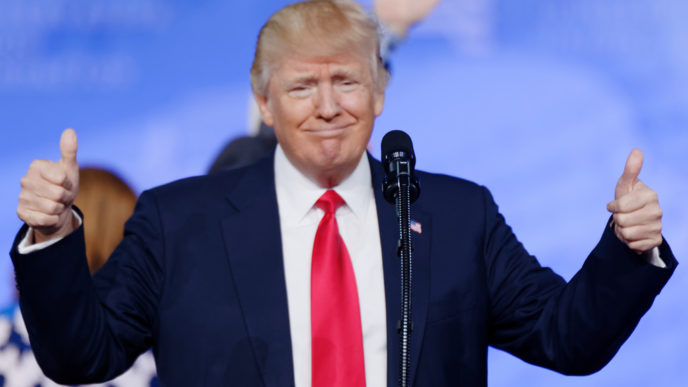
How Trump’s Tax Plan Would Affect High-Tax States Like California, New York

High-income earners in high-tax states would see a federal tax rate cut, but may pay more in the end if they’re unable to deduct state and local taxes under President Donald Trump’s tax reform proposal announced Wednesday.

The White House released the contours of his tax reform proposal that would lower tax rates and reduce the number of tax brackets. However, the plan would also reduce the number of tax deductions.

When a reporter asked if deducting taxes on state and local income taxes would also be eliminated, Treasury Secretary Steven Mnuchin answered, “Yes.”

“We are going to eliminate on the personal side all tax deductions other than mortgage interests and charitable deductions,” Mnuchin said at a White House press conference Wednesday.

House Republicans were already reportedly considering eliminating the deduction on state and local taxes, which could disproportionately affect wealthy people in high-tax blue states such as New York and California.

This federal deduction basically encouraged states to hike taxes, said Jonathan Williams, the chief economist for the American Legislative Exchange Commission, a state-centric public policy organization.

“The current policy subsidizes high-tax states,” Williams told The Daily Signal in a phone interview. “Using that revenue to pay for cutting rates across the board is a step in the right direction.”

The Trump tax plan would reduce the number of tax brackets from seven to three brackets of 10 percent, 25 percent, and 35 percent. The plan would not tax the first $24,000 in income for a couple, which is double the current standard deduction.

The Trump plan would repeal the alternative minimum tax, phaseout the death tax, and repeal the 3.8 percent surtax on investment income used to fund Obamacare.

On the business side, the corporate tax rate will be cut to 15 percent, from 35 percent. Also, the government would only tax a business’s income from inside the United States, not income from abroad. This is common in other countries and is known as a “territorial tax system.”

Gary Cohn, director of the National Economic Council and Trump’s chief economic adviser, told reporters tax reform is a “once-in-a-generation opportunity to do something really big.”

The last sweeping reform came in 1986.

“This isn’t going to be easy. Doing big things never is. We’ll be attacked from the left. We’ll be attacked from the right,” Cohn said. “But one thing is certain. I would never, ever bet against this president.”

Cohn added:

In 2017, we are still stuck with a 1988 corporate tax system. That’s why we are one of the least competitive countries in the developed world when it comes to taxes. So tax reform is long overdue.

House Minority Leader Nancy Pelosi, D-Calif., said the plan is the “same trickle-down economics that undermined the middle class,” and said the president should work on a fiscally responsible bipartisan plan with Democrats.

“Instead of focusing on hardworking families as he promised, President Trump’s tax outline is a wish list for billionaires,” Pelosi said in a public statement. “What few details are here overwhelmingly cut taxes for the richest and do little for middle-class Americans and those trying to get there. Besides which, nowhere does President Trump indicate how his deficit-exploding tax plan will actually be paid for.”

Adam Michel, a tax policy analyst with The Heritage Foundation, said he believes the proposal shows Trump is serious about reform:

For too long, America’s out-of-date and overbearing tax system has put a damper on economic growth while punishing savings and investment. The president’s plan is a great starting point. Now, the president and Congress must work together to finally update our broken tax system. True reform should apply the most efficient and least economically destructive forms of taxation, have low rates on a broad base, and be as transparent, predictable, and simple as possible.

Grover Norquist, president of Americans for Tax Reform, praised Trump’s proposal.

“President Trump has re-energized the drive for fundamental tax reform that creates growth and jobs,” Norquist said in a public statement. “The plan cuts taxes for businesses and individuals and simplifies the code so Americans can file on a postcard. Reducing taxes on all businesses down to 15 percent will turbocharge the economy.”

Mnuchin called the current 35 percent corporate rate “perhaps the most complicated and uncompetitive business rate in the world.”

He said he anticipates the proposal would return the U.S. to greater than 3 percent growth without an adverse impact on the debt or revenue. Throughout most of the Obama administration, economic growth didn’t surpass 3 percent in a single year.

“This plan will lower the ratio of debt to [gross domestic product]. The economic plan under Trump would grow the economy, will create massive amounts of revenues,” Mnuchin said.

The plan is a net tax reduction, Williams said, and fundamental reform takes cronyism out of the tax code, which could help Trump keep another promise.

“Draining the tax code swamp is a good way to go about getting rid of all those special interest loopholes,” Williams said. (For more from the author of “How Trump’s Tax Plan Would Affect High-Tax States Like California, New York” please click HERE)

Follow Joe Miller on Twitter HERE and Facebook HERE.
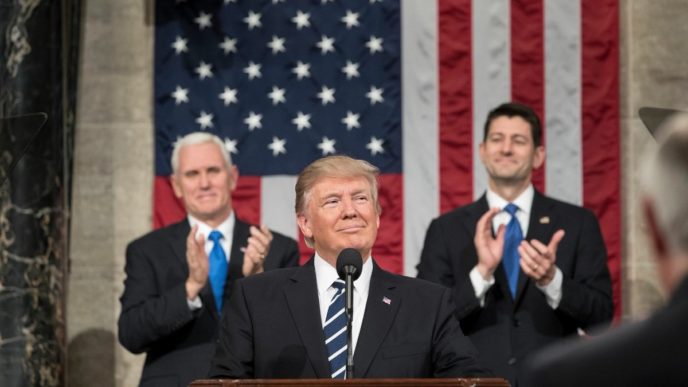
With Support From Conservatives, House Republicans Move Closer to Obamacare Repeal Deal

Republican leaders in the House received a boost to their attempts to repeal and replace Obamacare on Wednesday as the Freedom Caucus, an influential bloc of conservatives, announced its support for a revised plan.

The group of more than 30 lawmakers said it would support a new version of the bill, called the American Health Care Act. The revision includes an amendment crafted by Freedom Caucus Chairman Mark Meadows, R-N.C., and Tuesday Group Co-chairman Tom MacArthur, R-N.J.

“The MacArthur amendment will grant states the ability to repeal cost-driving aspects of Obamacare left in place under the original [American Health Care Act],” the Freedom Caucus said in a statement. “While the revised version still does not fully repeal Obamacare, we are prepared to support it to keep our promise to the American people to lower health care costs.”

For the Freedom Caucus to take an official position on legislation, its rules call for 80 percent of members to agree.

The culmination of weeks of negotiations between Meadows and MacArthur, the compromise amendment aims to unite the House’s centrist and conservative Republican wings behind the health care bill.

With their legislation, GOP lawmakers and President Donald Trump are working to fulfill a major campaign promise—to repeal and replace Obamacare.

Trump initially promised to dismantle the health care law his first day in office, but disagreement among Republican lawmakers has delayed efforts in Congress to do so.

Lawmakers received the text of the amendment last night, but a rough outline of the plan was leaked to the press last week.

The deal takes aim at regulations implemented under what President Barack Obama considered one of his major domestic achievements, the Affordable Care Act, which conservatives said caused premiums to rise dramatically.

Under the amendment, states can apply for federal waivers to opt out of Obamacare’s essential health benefits requirement, a list of 10 services that insurance plans are required to cover.

The measure leaves in place a provision of Obamacare that prohibits insurers from denying coverage to patients with pre-existing conditions, but allows states to waive its community ratings rules, which ban insurers from charging sick patients more than healthy ones.

States could opt out of the community ratings rules only if they implement a program designed to minimize costs for patients with pre-existing conditions, such as a high-risk pool.

High-risk pools, subsidized by the government, are insurance pools for patients with pre-existing conditions.

Additionally, only patients who fail to maintain continuous coverage could be charged more by insurers.

The amendment from MacArthur and Meadows attempts to assuage the concerns of House conservatives who, along with a bloc of centrist Republicans, opposed GOP leadership’s original health care bill.

Though Republican leaders now have the support of the Freedom Caucus, it’s unclear if the revised plan will have the backing of centrist Republicans.

Members of the centrist Tuesday Group told reporters Wednesday they needed more time to look over the amendment.

The revised bill has swayed influential conservative groups, however.

Club for Growth and FreedomWorks, which both opposed the original bill, announced their support for the amendment and said they would back the bill with its addition.

“While we’re still short of full repeal, this latest agreement would give states the chance to opt out of some of Obamacare’s costliest regulations, opening the way to greater choice and lower insurance premiums,” Club for Growth President David McIntosh said in a prepared statement. “It’s a solution we’ve supported for weeks, and the time to move forward is now.”

Heritage Action for America, the lobbying affiliate of The Heritage Foundation, backed away from its key vote against the health care bill.

In a formal statement, Mike Needham, CEO of Heritage Action, said:

To be clear, this is not full repeal and it is not what Republicans campaigned on or outlined in the Better Way agenda. The amendment does, however, represent important progress in what has been a disastrous process. Given the extreme divides in the Republican Party, allowing Texas and South Carolina to make different decisions on health insurance regulations than New York and New Jersey may be the only way forward.

Discussions over the health care bill began early last month after Republican leaders revealed their plan to repeal and replace Obamacare, a yearslong promise to voters.

Lawmakers were supposed to vote on the original legislation twice late last month. But House Speaker Paul Ryan delayed one vote and then abruptly pulled the bill the next day after it became clear not enough Republicans supported it.

Conservatives, led by Meadows, continued discussions with MacArthur, Republican leaders, and the Trump administration.

GOP leaders and the White House are discussing a potential vote on the revised bill Friday, according to Axios, and the House whip team is counting votes.

Ryan, R-Wis., told reporters at a press conference earlier Wednesday that the lower chamber would vote “when we’ve got the votes.”

Still, the speaker said the MacArthur amendment “helps get us to consensus.”

“We think it’s very constructive,” Ryan said, adding:

We think the MacArthur amendment is a great way to lower premiums, give states more flexibility while protecting people with pre-existing conditions. Those are the three things we want to achieve.

(For more the author of “With Support From Conservatives, House Republicans Move Closer to Obamacare Repeal Deal” please click HERE)

Follow Joe Miller on Twitter HERE and Facebook HERE.

Cops Detain Entire School, Illegally Search/Grope 900 Kids

Children feel violated, parents are furious, and a lawsuit is getting filed after the Worth County Sheriff’s office conducted an illegal search of 900 students — in the name of the war on drugs. The rights-violating intrusive and aggressive patdowns and drug dog searches yielded absolutely nothing.

On April 14, when the students of Worth County High School returned from spring break, they arrived at school to find a police state had taken over. The sheriff and his deputies — with no probable cause — detained and illegally searched every single child in the school, all 900 of them.

When kids went home that day to tell their parents what happened, naturally, they were furious as it is a gross violation of the children’s 4th Amendment rights.

“It’s essentially a fourth amendment violation,” said attorney Mark Begnaud. “It’s 900 illegal searches, suspicion-less pat downs, suspicion-less searches.”

Naturally, Sheriff Jeff Hobby is standing by this rights violation on a massive scale, noting that as long as a school administrator was present, the search of the children was legal.

Apparently, in the sheriff’s mind, school administrators can usurp the constitutional rights of children in favor of unlawful police searches.

But school officials and the student rule book disagree.

In the student handbook, it says school officials may search a student only if there is reasonable suspicion the student has an illegal item.

As WALB reports, Worth County Schools attorney Tommy Coleman said in order for the Sheriff’s office to search any students, they’d had to have reason to believe there was some kind of criminal activity or the student had possession of contraband or drugs.

“If you don’t have that then this search would violate an individual’s rights,” said Coleman. “[It] violates the constitutional right and enforcing them the right against unreasonable search and seizures.”

Interim Worth County Superintendent Lawrence Walters said he understands parents concerns about the drug search at Worth County High school on Friday, according to WALB.

“I’ve never been involved with anything like that ever in the past 21 years and I don’t condone it,” said Walters.

Walters said he was notified that there was be a search but pointed out that he did not give permission nor did he approve the mass groping of children.

“We did not give permission but they didn’t ask for permission, he just said, the sheriff, that he was going to do it after spring break,” said Walters.

“Under no circumstances did we approve touching any students,” explained Walters.

Adding insult to injury, many students complained that they got far more than just a pat down.

At least one deputy’s searches were found to be “too intrusive.”

According to Hobby, it was later discovered that one of the deputies had exceeded instructions given by Hobby and conducted a pat down of some students that was considered to be too intrusive.

When multiple students complained about being groped by the intrusive deputy, Sheriff Hobby ensured parents and school officials that “corrective action was taken to make sure the behavior will not be repeated.”

Exactly who that cop was and what ‘corrective action’ was taken, remains a mystery.

“I’m okay with them doing the search, if it was done appropriately like the school has done in the past,” said father of two Jonathan Luke. “But when they put their hands on my son, that’s crossing the line.”

Aside from not finding a single bit of contraband, the sheriff’s search was also entirely uncalled for as the Sylvester Police Department did a search on March 17 — just a few weeks before — and found no drugs.

But Hobby told reporters he didn’t think that search was thorough enough, so he decided to do his own. And, this time, he’d grope every student.

Now, many of the parents are planning a lawsuit against the Sheriff’s office which will likely be the only means of holding this man and his department accountable.

As for the 900 counts of deprivation of rights under the color of law that the sheriff should be facing, not a single charge has been levied against the department.

This is what school has become in a police state. (For more from the author of “Cops Detain Entire School, Illegally Search/Grope 900 Kids” please click HERE)

Follow Joe Miller on Twitter HERE and Facebook HERE.
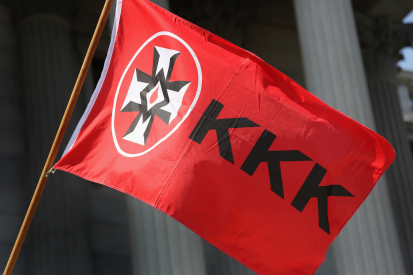
Antifa Thugs Unmasked – by Laws Originally Passed Against the KKK

In a standoff between white supremacists and communist thugs, there are no heroes — save local law enforcement. Occasionally, however, there’s some half-decent schadenfreude to be found.

In a twist of delicious irony, a law originally enacted to deal with the Ku Klux Klan led to the unmasking of several Antifa thugs on the streets of Auburn, Alabama, Tuesday.

According to a story at Twitchy, local police told people protesting a speech by Alt-Right leader Richard Spencer at Auburn University — which was court-ordered to host him — to take off their hallmark masks.

From video shot outside the venue, it appeared as though the police were enforcing the rules, which included a no-mask policy. That meant the members of the [A]ntifa, or anti-fascists, were made to uncover their faces as they marched past law enforcement toward the campus.

As the story notes, the responses to the unmasking on social media included tweets lauding the Auburn Police Department for enforcing the law while criticizing local cops in Berkeley, California, where lax law enforcement has been blamed for riots over the weekend. Spencer’s views are despicable, but the way a free society deals with bad ideas is to drown them out with better ones, not engage in domestic terrorism. Someone needs to pass that memo along.

As my colleague Chris Pandolfo pointed out in the wake of the past weekend’s riots in Berkeley, Antifa’s name, which is a truncation of “anti-fascism,” really ought not to be taken at face value.

“‘Antifa’ is made up of self-described anarchists — radical left-wing thugs who employ violence and intimidation to advance their beliefs,” he writes. “They’ve shown up previously at Berkeley to shut down a “free speech” event hosted by provocateur Milo Yiannopoulos, leaving damaged property, fires, and assault victims in their wake.”

In short, Antifa has no problem shutting down political demonstrations with brute force and intimidation tactics for their socio-political ends [read: terrorism], and they typically wear masks to do it.

Covering one’s face to commit acts of political violence is not limited to Antifa thugs. It’s also a favorite tactic of groups like ISIS and other Islamist terror cells, as well as another U.S.-based, Democrat-sympathetic domestic terrorist organization: The Ku Klux Klan.

What many may not know, however, is that the current law forcing the Antifa demonstrators to remove their facial coverings finds its roots in a decades-old provision originally passed to take on the robe-clad hate group.

Title 13 of the Alabama State Code prohibits masked people from congregating in public places without facing criminal charges. If you want to publicly gather in the Yellowhammer State, you can either take your mask off, move along, or leave in cuffs. This, along with a provision the court order was what was being enforced, a spokesman for the Auburn Police Department confirms via email.

While several states now have laws prohibiting the covering one’s face in public, these laws in the deep south herald back to mid-20th century efforts to keep white supremacists from going about incognito to terrorize and intimidating law-abiding citizens.

The history of Alabama’s anti-masking law go back to Governor Jim Folsom — a noted opponent of the KKK — who in 1949 signed a law making wearing a mask a misdemeanor, punishable, back then, by a $500 fine and a year in jail, according to Time Magazine archives. The law was the first of its kind passed in the Deep South since Reconstruction.

The current version of the law was passed in 1977.

Furthermore, in “Hooded Americanism: The History of the Ku Klux Klan”, historian David Mark Chalmers notes that Folsom also ordered the arrest of anyone who similarly covered their license plates, saying “mobs, hooded or unhooded, are not going to rule Alabama.” Nor would they at Auburn.

Georgia also has a similar statute, which was upheld by the Supreme Court in 1990, after it faced a legal challenge from the KKK on First Amendment grounds.

So there you have it: A law put in place to combat racist terrorists over five decades ago is now being used against communist terrorists trying to intimidate racists. Welcome to 2017, folks. (For more from the author of “Antifa Thugs Unmasked – by Laws Originally Passed Against the KKK” please click HERE)

Follow Joe Miller on Twitter HERE and Facebook HERE.

Scientists Take Big Step Toward ‘Artificial Womb’ to Save Premature Babies

Doctors could use “artificial wombs” to save premature babies, according to new research published by scientists with the Children’s Hospital of Philadelphia.

The study, published Tuesday, successfully kept unborn lambs alive in an artificial womb with nutrient-rich liquids. Lambs raised using the artificial wombs were normal in every way scientists could measure. Baby lambs developed to the age equivalent of 23-week-old human babies.

Scientists say the technology can be used to keep more premature babies alive. Scientists plan to begin trials on human babies within three to five years.

“This system is potentially far superior to what hospitals can currently do for a 23-week-old baby born at the cusp of viability,” Dr. Alan Flake, a fetal surgeon at Children’s Hospital of Philadelphia who led the study, said in a press statement.

“These infants have an urgent need for a bridge between the mother’s womb and the outside world. If we can develop an extra-uterine system to support growth and organ maturation for only a few weeks, we can dramatically improve outcomes for extremely premature babies,” Flake said. (Read more from “Scientists Take Big Step Toward ‘Artificial Womb’ to Save Premature Babies” HERE)

Follow Joe Miller on Twitter HERE and Facebook HERE.

The Police vs. The PC Police

As is almost always the case, signs of trouble preceded the latest shooting in Paris, which left one police officer dead and wounded two bystanders before police killed the gunman, later identified as French national Karim Cheurfi, a known criminal with a long, violent record. ISIS claimed to be behind the attack. According to police, a note praising ISIS fell out of Cheurfi’s pocket when he fell.

Cheurfi was of Algerian descent, born in a Paris suburb. The Washington Post reported he had a criminal record and was known to authorities. His rap sheet included four arrests and convictions since 2003. He had spent nearly 14 years in prison for crimes that included burglary, theft and attempted murder.

When Cheurfi attempted to buy weapons French authorities took notice, especially when he made statements about wishing to kill police officers. After he traveled to Algeria earlier this year, Paris prosecutor Francois Molins said Cheurfi was interviewed, but a judge refused to revoke his probation. It makes one question not only France’s probation laws, but the types of background checks in place that ought to have prevented Cheurfi from legally acquiring any firearm (if he bought it legally), much less the Kalashnikov rifle he allegedly used.

French and other European politicians immediately expressed concern over what effect the shooting and the terrorist attacks that preceded it might have on France’s choice of a new president. Rightist candidates immediately tried to exploit the issue, but it has been a subject on the minds of French voters, particularly in Paris, where a major enclave of immigrants from Muslim countries continue to be seen by many as a threat to the French way of life.

Cheurfi should have been back in jail for parole violations. Given his record, his statements and the trip to Algeria, enough red flags were raised to warrant action.

A side note. While Algeria has not been a main source of terrorism in the world, the human rights agency Algeria Watch has noted: “Although Algerian nationals were not among the suicide bombers of 11 September 2001, they have featured prominently in subsequent investigations into al-Qaida activities in North America and Europe.

In the UK, where an Algerian community has grown as a largely unknown minority in recent years, several dozen Algerians have been arrested since mid-2001 in localities as widely spread as Leicester, Glasgow, Edinburgh, London and Manchester. Arrests in London in January 2003 uncovered a cell producing ricin, while in Manchester, one of the Algerian detainees, 27-year-old Kamel Bourgass, was responsible for killing a police officer — the first victim in the UK’s post-11 September anti-terrorist campaign.”

In the United States and other countries in the West, most often someone has to actually break the law before they can be arrested. Given the tactics of terrorists, it might be worth discussing whether to invoke a doctrine of pre-emption, which is sometimes employed when an enemy nation appears to be an imminent threat. If that is an option to prevent death and destruction from countries, why can’t we impose something similar for people who have violent criminal records and who openly state, as Cheurfi did, that he intends to kill police?

Western reluctance to adapt such a practice shows there is one force more powerful than the uniformed police. It is the “PC police.” These are people who care more about how they feel than for the innocent people gunned down in our streets.

Don’t innocents have the right to be protected from fanatics who so often claim to be doing God’s work? With ongoing investigations by the Department of Homeland Security into radical terrorists in every state, it’s long past time to get them before they get any more of us. (For more from the author of “The Police vs. The PC Police” please click HERE)

Follow Joe Miller on Twitter HERE and Facebook HERE.

College Sued for Banning Student’s Preaching as ‘Disorderly Conduct’

Sure, you can preach here, Georgia Gwinnett College told an evangelical student, right over there — on two spots making up just 0.0015 percent of the campus. Oh, also, the “public forum areas” are only open 18 hours a week and not on the weekends. And you have to ask permission three days in advance. Which we don’t have to grant.

Forced Out

Chike Uzuegbunam complied. Then the administration told him to stop doing it at all. A campus law enforcement officer told him that “people are calling us because their peace and tranquility is being disturbed.” His witnessing was “disorderly conduct.” That’s any expression “which disturbs the peace and/or comfort of person(s).” That means almost anything someone wants to complain about and the Student Affairs office wants to ban.

The college’s Freedom of Expression Policy says “the Student Affairs official must not consider or impose restrictions based on the content or viewpoint of the expression.” But the college doesn’t seem to mean it when the content or viewpoint are Christian.

The officer told him to stop preaching. He said Uzuegbunam could only speak one on one with students. He told him to use the methods of other religious denominations to relay his message. Members of the Church of Jesus Christ of Latter-Day Saints (“LDS”) regularly get approval to visit the GGC campus.

There was no claim that that Uzuegbunam caused any damage or behaved violently. He did not block anyone passing by or cause congestion. He did not use a microphone or carry a sign.

After he was told to stop preaching, Uzuegbunam went to speak with Aileen Dowell, GGC’s Director of the Office of Student Integrity. She said that it is a violation of GGC policy for anyone to express a “fire and brimstone message” on campus, even within the free speech zones.

The Lawsuit

The Alliance Defending Freedom sent a letter to GGC objecting to its policy three years ago. GGC never responded, so the ADF filed a lawsuit last December on Uzuegbunam’s behalf against the college. The complaint contends that the policy discriminates against religion, because non-religious students are accommodated. The ADF is asking the court to suspend the policies.

Handing out tracts and evangelizing is part of Uzuegbunam’s Christian faith, the ADF asserts. The school has “created and enforced a heckler’s veto.” Anyone who is offended or discomforted by students engaging in free speech can use the college’s policy to silence them. The school’s disorderly conduct policy is overly broad.

The First Amendment guarantees freedom of speech and freedom of religion. It applies to public places, including public colleges like Georgia Gwinnett College. The ADF lawsuit contends that Uzuegbunam is engaging in religious speech, protected by at least two clauses in the Constitution.

ADF Legal Counsel Travis Barham said, “a state college … has the duty to protect and promote those freedoms.” He went on, “Students don’t check their constitutionally protected free speech at the campus gate.” He ridiculed the school for hypocritically “touting commitments to ‘diversity’ and ‘open communications.”

The U.S. has a rich history of street preachers. It’s doubtful the college will prevail in ending this tradition, especially if the case makes it up all the way to the U.S. Supreme Court. Justice Anthony Kennedy, the swing vote on the court, tends to side in favor of religious freedom. (For more from the author of “College Sued for Banning Student’s Preaching as ‘Disorderly Conduct'” please click HERE)

Follow Joe Miller on Twitter HERE and Facebook HERE.

The Supreme Court Has a Chance to Right a Long Standing Wrong

Last week, the U.S. Supreme Court heard oral arguments in Trinity Lutheran Church v. Comer. The case stems directly from religious bigotry in the mid-1800s.

In 2012 Trinity Lutheran Church in Missouri applied for a state grant to resurface their playground to make it safer. The church’s pre-school uses the playground and it’s also available to the local community. Most of the children in the pre-school and neighborhood do not attend the church.

Missouri denied the funds. They claimed state law prohibited them from aiding “any church, sect, or denomination of religion.”

And so on to court and now to the U. S. Supreme Court. The case offers the Court the chance put right the wrong imposed on religious believers in Missouri 140 years ago.

That wrong is called the Blaine Amendment.

Catholic Immigrants Found Catholic Schools

By the mid-1800s, in the wake of the Second Great Awakening, the religion of the American people was for the most part lowest-common-denominator (LCD) Protestantism. Charles Finney, the most prominent evangelist during the awakening, summed it up:

Persons of all denominations, forgetting their differences, gave themselves to the work. They all preached the same thing, the same simple Gospel. They held out substantially the same truth: Christ died to save souls; you may be saved; you are a sinner and need to be saved; now, will you come to Christ and submit yourself to God? This was about the amount of instruction.

That LCD Protestantism influenced all of American public life including public education. Since Protestantism was part of what it meant to be a real American, public schools promoted it with enthusiasm.

During that same era, the country experienced great waves of Catholic immigrants. For Catholics, Mr. Finney’s “simple gospel” was true as far as it went. It just didn’t go far enough. In fact, they found it so inadequate and, in the public schools, so objectionable that they founded their own schools. These would promote Catholic faith, education, and identity.

Keeping “Sectarian” Catholic Schools at Bay

Protestant America was never very keen on Catholics, but this went beyond too far. There had to be a way to make it harder for poor Catholics to send their children to these new “sectarian” Catholic schools. How could Catholic children be forced into the public schools with their “non-sectarian” Protestant bias so that they could become good Americans — and good Protestants?

To save the Republic from rampant Catholicism, the Order of the Star Spangled Banner was formed in 1849. Their core issue was the abolition of slavery, an extremely good cause, but they fueled that good cause with anti-Catholic bigotry. The Order was a secret society. When asked about it, members were bound by oath to say, “I know nothing.” Hence, they were called “The Know-Nothings.” Politically they were the American Party.

Their idea of the First Amendment was to keep Catholic “sectarianism” at bay while strengthening “non-sectarian” LCD Protestantism.

This was nearly enshrined in the U. S. Constitution in 1879. President Ulysses S. Grant proposed an amendment banning “sectarian” religious instruction in public schools and the use of tax dollars to in any way support “sectarian” schools. The amendment was named for James G. Blaine who had been Speaker of the House.

Protestants and non-religious people loved the amendment. While it was never ratified, all but eleven states adopted and still have Blaine Amendments or similar legislation. Missouri is one of them.

Danger for All Religious Groups

What Grant, Blaine, the Know-Nothings, and the amendment’s other supporters didn’t take into account is that “sectarian” is in the eye of the beholder.

They thought they were safeguarding the republic from the dangers of “rum, Romanism, and rebellion.” Instead they created a legal trap for religious believers including the good folk at Trinity Lutheran. Today when all religion is regarded as “sectarian” it’s possible to exclude all religion from government benefits.

Now I know it’s a mistake to judge those in the past by our standards. It’s easy to second-guess a 140-year old decision with 20/20 hindsight. Still, the Blaine Amendments give states the power to discriminate against any or all religious groups. That exacts a steep tax on freedom as Trinity Lutheran and many others have discovered.

Those who observe the Supreme Court seem to think that the Court will find for Trinity Lutheran. Besides, the new governor of Missouri has changed the policy. One way or the other, Trinity Lutheran will receive their grant.

What the Court should do, if it can, is declare Blaine Amendments across the country unconstitutional. That would set right a long standing injustice. (For more from the author of “The Supreme Court Has a Chance to Right a Long Standing Wrong” please click HERE)

Follow Joe Miller on Twitter HERE and Facebook HERE.