Terror in St. Petersburg: What You Need to Know
Russia’s St. Petersburg subway train system was hit with major explosions Monday afternoon, resulting in the deaths of at least 12 people and dozens of casualties, Russian media said.
Here’s what you need to know about the underground chaos caused from a suspected terror attack.
1. What happened?
At least one explosive device, reportedly resembling a nail bomb, detonated at a main junction in the St. Petersburg metro system. The metro has been completely shut down so that police can investigate the matter and prevent further potential attacks.
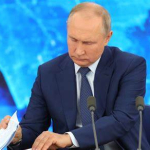
The incident occurred at about 2:40 p.m. local time. Russian strongman Vladimir Putin has indicated that the explosion is being investigated as a possible act of terrorism. Putin expressed his condolences, as he was in St. Petersburg for a forum with the president of Belarus, a close ally of Russia.
Police have found and deactivated an additional unexploded bomb in a separate station, according to reports.
JUST IN: Russian President Vladimir Putin speaks on St. Petersburg blast https://t.co/bKOYIcAKge https://t.co/gBjSifUyeQ
— CNN (@CNN) April 3, 2017
Vladimir Putin: We will take all the necessary measures to provide assistance to those affected by the St Petersburg metro explosion
— President of Russia (@KremlinRussia_E) April 3, 2017
Social media users posted photos and video of the carnage that unfolded after the explosion.
"St Petersburg bomb hurts Europeans, Brits & Americans just as it hurts Russian citizens" says @afshinrattansi from @Underground_RT. pic.twitter.com/GGo62Gw65H
— RT UK (@RTUKnews) April 3, 2017
First pictures of St Petersburg explosion show carriage door blown off https://t.co/qWm2ri5aOn pic.twitter.com/Gp7KxgekCr
— ITV News (@itvnews) April 3, 2017
2. Who is responsible?
At least one witness told the media that a man threw a backpack onto the train just prior to the explosion. The backpack reportedly contained a nail bomb, which is similar to the explosives used by the 2013 Boston Marathon bombing terrorists.
Russia faces an increasingly radicalizing Islamic population. Many Russian nationals from Chechnya have gone off to the Middle East to fight for ISIS and other terror groups. At least 2,400 Russians have gone to fight for ISIS since 2014, according to studies.
Russian news agency Interfax reports that surveillance footage may have captured an image of the attack’s suspect.
#ЭКСКЛЮЗИВ
Публикуем фото предполагаемого террориста, устроившего #взрыв в #метро Петербурга: https://t.co/6IYGIorlFV pic.twitter.com/6Po3RCy46f— РЕН ТВ | Новости (@rentvchannel) April 3, 2017
3. What’s next?
The attack may be taken especially personally for Russian President Putin, who was born in and long served as a government official in St. Petersburg, a city of over 5 million. The Russian autocrat has a track record of dealing with Islamic terror threats with a heavy hand.
From his early military campaigns in Dagestan to the current civil war in Syria, Putin has utilized indiscriminate bombing campaigns to clamp down on insurgencies and protect his interests.
The state-controlled RT is providing live coverage of the incident’s aftermath.
(For more from the author of “Terror in St. Petersburg: What You Need to Know” please click HERE)
Follow Joe Miller on Twitter HERE and Facebook HERE.