White House Fires out a Scathing Response to Democrats Over Investigation Into Trump

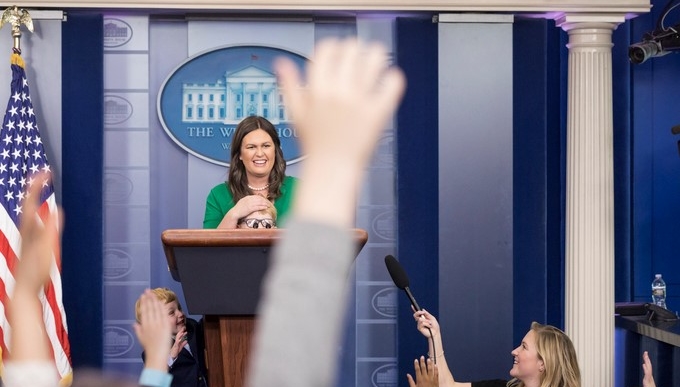
White House press secretary Sarah Huckabee Sanders fired off a scathing statement Monday condemning Democrats over their latest advances into investigations of President Donald Trump.

“Today, Chairman Nadler opened up a disgraceful and abusive investigation into tired, false allegations already investigated by the Special Counsel and committees in both Chambers of Congress,” Sanders said in the statement.

“Chairman Nadler and his fellow Democrats have embarked on this fishing expedition because they are terrified that their two-year false narrative of ‘Russia collusion’ is crumbling,” she continued. “Their intimidation and abuse of American citizens is shameful.”

On Monday, House Judiciary Committee chair Rep. Jerrold Nadler (D-N.Y.) sent letters to 81 persons and organizations for the sake of the committee’s investigation into various controversies of the Trump administration.

“Democrats are harassing the President to distract from their radical agenda of making America a socialist country, killing babies after they’re born, and pushing a ‘green new deal’ that would destroy jobs and bankrupt America,” Sanders continued in the statement. (Read more from “White House Fires out a Scathing Response to Democrats Over Investigation Into Trump” HERE)

Follow Joe Miller on Twitter HERE and Facebook HERE

Couple Launches Safe Website for Children as an Alternative to YouTube

A few years ago, an Iowa couple became concerned about the type of online content available to children and the negative effects it can have on mood, behavior, and learning. So, they decided to do something about it.

Joseph Sines, and his wife, Bethany, decided to utilize their skills and background to create a website for kids that would entertain, educate, calm, and most importantly, be 100 percent safe for young minds.

They recently soft-launched their subscription website dubbed Bottlesodes or, as they like to call it, B-TV. The site is loaded with short videos aimed at kids ages 3 to 11. . .

Joseph has worked in the film industry for about 12 years, and Bethany studied child development in college. They’ve been married 11 years and they have an 8-year-old daughter and a 6-year-old son.

In an interview with TheBlaze, the couple said that, after having kids, they noticed that children — their own as well as those of their friends — would sometimes have meltdowns after watching TV or videos online. (Read more from “Couple Launches Safe Website for Children as an Alternative to YouTube” HERE)

Follow Joe Miller on Twitter HERE and Facebook HERE

McConnell Drops a Major Bombshell About Trump’s National Emergency Declaration

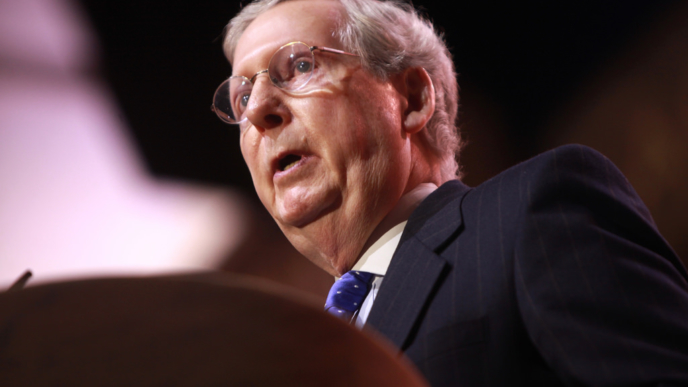
Senate Majority Leader Mitch McConnell (R-KY) on Monday said it’s likely the Senate will pass a resolution blocking President Donald Trump’s national emergency declaration for his border wall. The silver lining, for those who agree with Trump’s declaration, is the Senate may not have enough votes to override a veto, should Trump go that route.

“What is clear in the Senate is there will be enough votes to pass the resolution of disapproval, which will then be vetoed by the president,” McConnell told reporters in Kentucky. “Then, in all likelihood, the veto will be upheld in the House.”

McConnell said he’s not happy with Trump deciding to “take this path” by declaring a national emergency. It puts the Republicans in Congress in bind. They don’t want to break away from Trump on border security but they also worry about precedent it sets, especially when a Democrat takes the White House. . .

McConnell’s remarks come after Sunday’s revelation that Sen. Rand Paul, also from Kentucky, would vote with Democrats and a handful of Republicans. Other Republicans voting in favor of the resolution include Sens. Susan Collins (R-ME), Lisa Murkowski (AK) and Thom Tillis (NC).

A few Senators, like Cory Gardner (R-CO), Marco Rubio (R-FL) and Mitt Romney (R-UT), have yet to say how they’ll vote on the resolution. (Read more from “McConnell Drops a Major Bombshell About Trump’s National Emergency Declaration” HERE)

Follow Joe Miller on Twitter HERE and Facebook HERE

Bernie Can’t Name One Piece of Passed Legislation That Helps African Americans

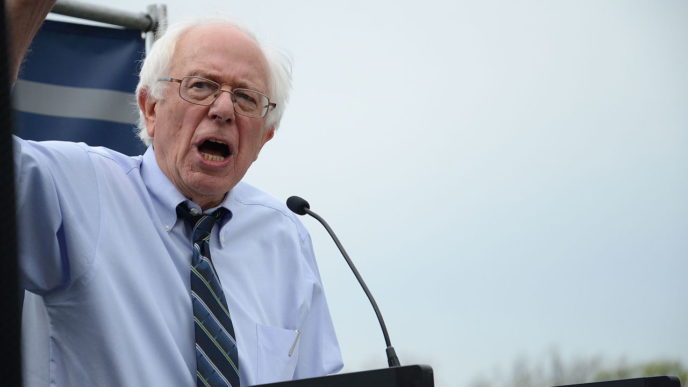
Sen. Bernie Sanders (I-VT) seems to think he’s such a huge advocate for African Americans and the civil rights movement. There’s just one problem with his assessment: he’s been in Congress for more than three decades and he can’t name one piece of legislation that has passed that benefits minorities. But don’t worry. He supported Jesse Jackson when he ran for president in 1988, so, naturally, that means he’s fought for civil rights in America.

“So, I think I have a long history in civil rights activism. In 1988 I was one of the few white public officials who supported Jesse Jackson for President of the United States and he ended up winning Vermont,” Sanders told Charlamagne Tha God during an interview on The Breakfast Club. “I think if you look at my record, in terms of civil rights and other areas, you will find it is consistently a very, very strong work.”

Charlamagne asked Sanders, point blank, “Any legislation we can point to?” . . .

“Well legislation that, ah, benefits African-Americans, yeah we passed, but not specifically. We passed legislation that benefits working people, sure,” Sander responded.

(Read more from “Bernie Can’t Name One Piece of Passed Legislation That Helps African Americans” HERE)

Follow Joe Miller on Twitter HERE and Facebook HERE

Hillary Reveals Decision After 2020 Speculation

By Townhall. Former Secretary of State and two-time failed presidential candidate Hillary Clinton has finally made up her mind on 2020. She’s decided she will not face off against President Donald Trump in 2020.

“I want to be sure that people understand I’m going to keep speaking out,” Clinton told Hudson Valley News 12. “I’m not going anywhere. What’s at stake in our country, the kind of things that are happening right now are deeply troubling to me. And I’m also thinking hard about how do we start talking and listening to each other again? We’ve just gotten so polarized. We’ve gotten into really opposing camps unlike anything I’ve ever seen in my adult life.”

(Read more from “Hillary Reveals Decision After 2020 Speculation” HERE)

_________________________________________________

‘I’m Not Running’: Hillary Clinton Rules out 2020 Bid for First Time on Camera

By Hudson Valley News 12. Hillary Clinton ruled out a 2020 presidential run for the first time on camera in an exclusive interview with News 12, pledging instead to take an active role by working with the candidates in the crowded Democratic field.

“I’m not running, but I’m going to keep on working and speaking and standing up for what I believe,” she told News 12’s Tara Rosenblum.

In her first local TV interview since the midterm elections, the former first lady and secretary of state opened up about 2016, 2020 and beyond. She expressed deep concerns about the state of American politics today — and vowed to be vocal about those concerns. . .

Asked if she would ever run for elected office again, such as for New York governor or mayor, Clinton said, “I don’t think so, but I love living in New York and I’m so grateful that I had the chance to be a senator for eight years and to work with people across our state.” She added, “I care deeply about the future of New York and so, again, I’m gonna do what I can to help support candidates and causes that I think are continuing to make New York a better and better place.” (Read more from “‘I’m Not Running’: Hillary Clinton Rules out 2020 Bid for First Time on Camera” HERE)

Follow Joe Miller on Twitter HERE and Facebook HERE

Arizona Border Rancher: Our Border Agents Patrol ’10 Yards Behind the Line of Scrimmage’

Is our government trying to stop and deter the invasion at the border, or is it simply trying to manage, process, apprehend, and arrest our way out of the problem? This question has real-life consequences for Jim Chilton, a prominent Arizona rancher who owns one of the largest properties on the border.

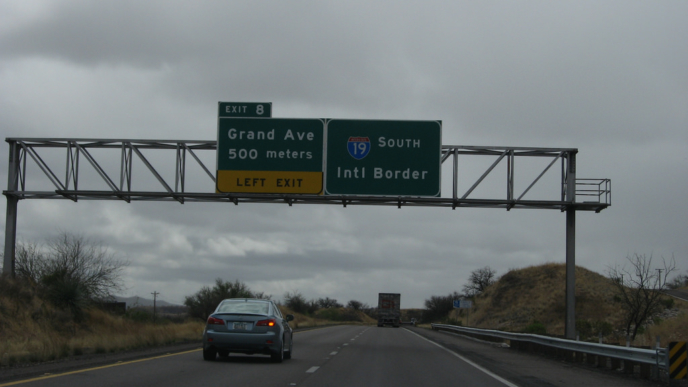
Jim and Susan Chilton own a 50,000-acre ranch south of the tiny town of Arivaca in Pima County, Arizona. Their ranch is 12 miles west of the Nogales point of entry, with rugged terrain separating the checkpoint and all its law enforcement assets from his “no man’s land,” which includes 14 miles of international border. According to Chilton, there is nothing close to a permanent Border Patrol presence at the border where his ranch is located, and his property has become a known drug and human smuggling route for the cartels, who are constantly surveilling his property. “My ranch is essentially controlled by cartel scouts,” says the fifth-generation rancher, who is wondering why the agents don’t permanently camp out right at his border.

“The fact is the Sinaloa Cartel has cartel scouts on our mountains and they have telephones with satellite encryption and high-value radios,” said Chilton in a wide-ranging interview. “We’ve uncovered extremely expensive binoculars left by one of the scouts chased off by one of my cowboys. They have night vision and rolled-down solar packs on their backs, so they can keep everything charged. They are on the tops of the mountains 24/7 guiding the drug packers through the country. They can see Border Patrol 5-15 miles away and they carefully move their people through our area. It’s outrageous.”

In any other country or any other era of our history, we’d consider this an invasion. An invasion would warrant, at the bare minimum, the Border Patrol and other assets holding the line right at the border and refusing to allow any entry of cartel activity on our soil. Most of those crossing in the remote areas aren’t even the bogus asylum seekers; they are the drug smugglers. Chilton was incredulous at the notion that drugs don’t cross between points of entry and invited the media to come to his ranch and see the photos of those coming over in camo with assault rifles.

Chilton described a frustration I’m hearing from several parts of the border, namely that the policy of our government is to keep the Border Patrol stationed in operating bases far from the border, essentially ceding all the land south of their presence, allowing the cartels to whittle away our sovereignty and the security of our border ranchers. To be clear, Jim is thankful when they do come, and indeed, one agent was almost killed on his ranch after being shot by a cartel smuggler last June, but he is stupefied as to why they won’t proactively park themselves right at the border and not let anything move across.

“The Border Patrol are in the Tucson station, which is 80 miles north of the border,” said Chilton, criticizing what is known as the “depth in defense” strategy. “It takes them several hours to go to the border after morning briefings and checking the vehicles, but they won’t stay at the international border.”

Thus the Chiltons’ entire ranch is outside the protection zone, open to the criminal activity and the drug smuggling which eventually affects the rest of the country. “The real drug packers we see drop off their drugs at a GPS site and then we see them going back south to Mexico.” All while the cartels complete their smuggling, Chilton complains that he “very seldom ever sees a Border Patrol agent” unless they are called in for a specific reason.

Chilton’s entire border region only has a cattle fence that “as an 80-year-old” he can get through himself. He believes we need agents actually stationed at the border itself, with access roads, not just responding from afar.

“The Tucson station has 650 agents and has 24 miles of responsibility. That is 27 agents per mile.” Chilton believes that is a line that can be held at that level of manpower. But given that the broader area is 4,000 square miles of responsibility, if you don’t put agents right at the line to deter border-jumpers, it’s like a losing game of football to deter them “from behind the scrimmage line.”

Most of his land is leased from the Forest Service and would be easy for the feds to control. In addition to seldom seeing border agents, he rarely sees Forest Service rangers.

“Does a football team on defense line up 10 yards behind the line of scrimmage? They’d lose every time. You need to be at the line of scrimmage, not behind the line and letting these drug packers come through.”

“As soon as Trump was elected, traffic stopped, but gradually increased again and was much higher this past year than in 2017.” He said most of the traffic in his region is drugs.

“I’m really happy they are doing things at the points of entry, but that will just push them through me.”

Chilton is frustrated that the agents are busy either operating around the point of entry, dealing with the asylum seekers, or parked in Tucson.

He expressed frustration at the refusal of CBP to change strategy and proactively prevent smugglers from getting onto our soil rather than trying to apprehend them later. “They say their strategy is multi-level defense and depth, meaning you come out halfway to the border, let people walk into the country, and apprehend them after they come in 10-15 miles. I say put the team on the line of scrimmage.”

“I have offered them 10 acres near the U.S.-Mexico boundary to patrol and to rent it for a forward operating base at a rate of a dollar a year. And if you can’t afford the dollar, I’ll give it to you.”

Chilton explained how he’s had five forest fires on his ranch over the years that he and his fellow ranchers believe were set by the cartels who camp out on his property because they have free rein. “Each one cost over $2 million to put out and [was] paid by you taxpayers.”

He went on to describe numerous fires in the broader region that were traced back to “drug packers and illegal immigrants” that destroyed homes, infrastructure, and timber, at a cost of hundreds of millions “hidden in the U.S. Forest Service’s budget.”

Furthermore, he asserted that when the smugglers get into the territory, this allows the cartel members already in the country and operating in the bigger cities to come pick them up in areas where they can circumvent the checkpoints. “The cartels have cellphones and communicate with each other and split up so that the agents need to scatter even when they do apprehend them.”

Judy Keeler, a prominent cattle rancher in New Mexico’s Hidalgo County, an area that has been flooded with illegal aliens this year, corroborated Chilton’s concern over CBP’s strategy of not holding the line at the border in her state as well. She owns two cattle ranches, parts of them further north and parts closer to the border. “Just north of Highway 9, we always have a lot of Border Patrol activity on our ranch. We’d always wondered why they waited to get after the people crossing the border, until we asked an agent, one of the Border Patrol’s finest, the boots on the ground. He told us they were not allowed to apprehend anyone until they had crossed Highway 9. Even though they have the technology to watch them crossing into the U.S., the boots on the ground cannot apprehend them until the immigrants have walked the five miles from the border.”

In Keeler’s opinion, “This only makes the jobs of the boots on the ground more difficult.”

“Several years ago, when we had a wave of human crossings, the Border Patrol’s agent in charge admitted at a Border Task Force meeting in Deming, New Mexico, that they were only able to apprehend one group out of every ten crossing Highway 9.”

For his part, Chilton and four other local ranchers in Arizona have formally petitioned CBP to construct fencing, roads, and technology, as well as “forward operation bases near the border barrier to effectively secure the international boundary between Nogales and Sasabe, Arizona.”

When I interviewed Jaeson Jones, a retired captain in the Texas Rangers who coordinated numerous counter-smuggling operations with Border Patrol during his career, he confirmed that this is indeed the strategy of Border Patrol.

The perception that the U.S. Border Patrol holds the line across all of the southwest border by having agents and assets preventing anything from crossing is not based in the reality of daily operations. The current model employed involves agents who mostly respond to investigate sensor hits, tower cameras, aerostats, aircraft, and even sign [foot] traffic that has detected someone who has crossed or is fixing to cross the border. From that point, agents then respond between the ports of entry to the location where people or contraband are most likely to be intercepted who are already on U.S. soil.

Many agents might not like being treated like soldiers on war footing rather than domestic law enforcement. A number of former border agents I’ve spoken to over the years have disagreed with the contention of the ranchers that they could park themselves on the border. They have defended the “depth in defense” tactics. Some have suggested it’s too dangerous for them to be right on the border in the isolated areas and that they lack the resources to do so anyway.

But if it’s too dangerous and uncomfortable for them, what about the ranchers and what about the rest of America that has to deal with border-jumpers and the crime they bring when they get away from the agents who aren’t holding the line?

This is where the military comes in, according to Chilton. “This is a national crisis, an emergency. We need the military at the border. But our experience in the past with the Obama administration when he called up the National Guard is that the poor guys died of boredom because they never saw action, even though the cartels were already watching them five miles into the border.”

“The National Guard was on a hill where they had a couple of miles between them and the border, and the two guys had orders not to fire unless fired upon. All a sudden they saw 100 or so people coming across the border with guns walking right toward them. They jumped into their vehicle, set off the alarm, and Border Patrol and the Sheriff’s Department and other officials rush to the spot. They never found anybody because it was a decoy action, where the Border Patrol focused on that spot while they were running drugs far away.”

Jaeson Jones agrees with the concerns of the ranchers and notes that it’s time for a multi-layered approach that will allow a mixture of local law enforcement, Border Patrol, and the military to hold the line of scrimmage. “The 21st-century model that should be employed is a preventative model, one that does not allow for the movement of any person or contraband between ports of entry by holding the line at the border,” he said. “While there are many logical reasons for the current approach – from lack of manpower [to] outdated equipment and even outdated agency outcome measures from the agency – what is clear is the need for a proven strategy of collaboration. It would fill the void for the lack of manpower, utilizing all agencies of the Homeland Security Enterprise (HSE) to help hold the line. This would include all federal government agencies and would require the assistance of local and state law enforcement. If we are to protect our border, then a preventative approach will be required.”

Indeed, the president has the power (8 U.S.C. § 1103(a)(10)) to deputize local law enforcement to “to perform or exercise any of the powers, privileges, or duties” of immigration enforcement in the event that the attorney general determines that there is “an actual or imminent mass influx of aliens.” He can also marshal all park rangers and Bureau of Land Management assets into securing the border together with the military.

With the lack of funds for more fencing and agents, Trump can beef up the line with local and state law enforcement as well as an unlimited deployment of the military.

As we continue to debate a border wall, which requires more appropriations from Congress, it might be worthwhile for the administration to explore what the executive can do with Border Patrol and the military to more aggressively block the actual invasion right at the border, a goal that would not require more funding from Congress. (For more from the author of “Arizona Border Rancher: Our Border Agents Patrol ’10 Yards Behind the Line of Scrimmage'” please click HERE)

Follow Joe Miller on Twitter HERE and Facebook HERE

BOMBSHELL: Ocasio-Cortez’s Top Aide Funneled $1+ Million in Political Donations

Saikat Chakrabarti, the brains behind socialist Rep. Alexandria Ocasio-Cortez (D-NY) who also serves as her chief of staff, allegedly funneled over $1 million in political donations to his own private companies, according to a new complaint filed with the Federal Election Commission.

“Chakrabarti’s companies appear to have been set up for the sole purpose of obscuring how the political donations were used,” The Washington Examiner reported. “The arrangement skirted reporting requirements and may have violated the $5,000 limit on contributions from federal PACs to candidates, according to the complaint filed by the National Legal and Policy Center, a government watchdog group.” . . .

Tom Anderson, the director of the National Legal and Policy Center’s Government Integrity Project, told the Examiner: “It appears Alexandria Ocasio-Cortez and her associates ran an off-the-books operation to the tune of hundreds of thousands of dollars, thus violating the foundation of all campaign finance laws: transparency.”

This latest development comes after a report last week revealed that Ocasio-Cortez’s new “living wage” rule that she implemented for her staff allows her staff to “avoid public transparency laws that would require them to reveal outside income, gifts, and stock trading activity,” the Washington Examiner reported. . .

“She ended up moving into a luxury apartment building with a wide array of amenities where rent for even a studio apartment exceeds $2,000 a month,” the Free Beacon reported. “Her office pushed back against the notion that it was hypocritical for Ocasio-Cortez, who has made housing affordability one of her top policy concerns, to move into a luxury building. A spokesman pointed out that her office also uses a car with an ‘internal combustion engine that runs on fossil fuels,’ even though she thinks their use should be eliminated.” (Read more from “BOMBSHELL: Ocasio-Cortez’s Top Aide Funneled $1+ Million in Political Donations” HERE)

Follow Joe Miller on Twitter HERE and Facebook HERE
University Bans Chick-Fil-A

Last month, a dean from Rider University in New Jersey announced her resignation over the school’s decision to ban Chick-fil-A from becoming an on-campus restaurant.

In November, the university removed Chick-Fil-A from a list of possible new restaurant franchises to bring to campus, claiming that the fast food chain is “perceived to be in opposition to the LGBTQ+ community.”

Cynthia Newman, the dean of the College of Business announced her resignation — which will become effective on August, 31 — in a statement that reflected on the handling of the situation, Campus Reform reports.

“As some of you already know, I am a committed follower of Jesus Christ. As such I endeavor every day to do exactly what Chick-fil-A puts forwards as its overarching corporate value: to glorify God by being a faithful steward of all that is entrusted to me and to have a positive influence on all who come into contact with me,” Newman said in the announcement. “During my initial conversations, I expressed how disappointed I was, not that the decision has been made to not have Chick-fil-A on campus … but rather that the University leadership had made such a judgemental statement about Chick-fil-A’s values — values that reflect the essence of the Christian as well as other faiths.” . . .

“Unfortunately, that did not happen,” Newman said. “Instead a second email was issued without any type of an apology and I, along with other campus leaders, was given a set of talking points about the Chick-fil-A decision that we were to use to respond to those who were critical of the decision. I could not, in a good conscience as a committed Christian, adhere to those talking points.” (Read more from “University Bans Chick-Fil-A” HERE)

Follow Joe Miller on Twitter HERE and Facebook HERE

Born at Just 24 Weeks, World’s ‘Tiniest Baby’ Boy Goes Home

As the debate escalates in the U.S. over late-term abortion, the world’s “tiniest baby” boy ever recorded to have survived, who was born at just 24 weeks and weighing under 10 ounces, has just gone home healthy.

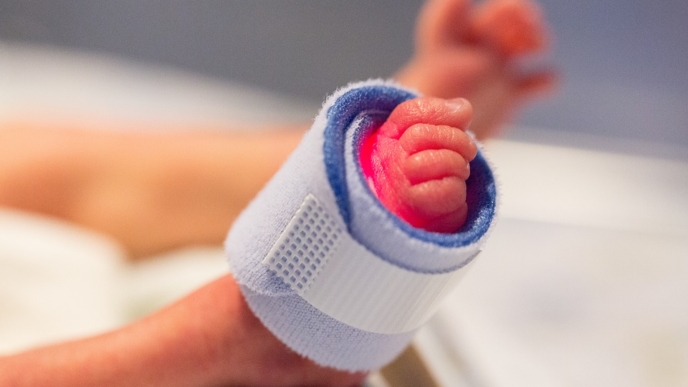
The boy, whose name has not been released, was born by Caesarean-section weighing just 9.45 ounces, which is lighter than the previous all-time recorded low for a baby boy set a decade ago.

The child spent several months at the Keio University Hospital in Tokyo after being born three months early in August. While his mother said she at times doubted that he would survive, the boy was finally released to go home on Feb. 20 — and made history in the process. . .

World Health News tweeted out a photo of the tiny baby in celebration of his full release from the hospital. “A baby boy weighing just 268 grams (9.45 oz) at birth was sent home after months in a Tokyo hospital, the smallest surviving male baby in the world, Keio University hospital said,” World Health News tweeted. . .

The baby’s weight breaks the previous record for a boy: 9.67 ounces, recorded in Germany in 2009. (Read more from “Born at Just 24 Weeks, World’s ‘Tiniest Baby’ Boy Goes Home” HERE)

Follow Joe Miller on Twitter HERE and Facebook HERE
Funding U.S. Sovereignty

We were a Nevada family when promoters first floated the idea of a high-speed magnetic-levitation (“maglev”) rail project between Los Angeles and Las Vegas. It would travel across the desert at speeds up to 300 mph, arriving in Anaheim in 81 minutes.

We were stoked. My grandsons would be surfers! But like most such proposals, this one couldn’t find adequate financial backing.

A more recent fast-rail proposal would connect Los Angeles to San Francisco, 380 miles distant, at speeds up to 220 mph. This one found financing aplenty, but lacked adult supervision.

The initial 2008 estimate was $33.6 billion in construction costs. That’s what California voters agreed to. Completion was projected by 2028. By 2012, the California government said make that $53.4 billion. Then last year, they said – what the heck – make it $63.2 billion, but it won’t be finished until 2033. The boondoggle’s other legs lift the overall cost to $98.1 billion.

Former California Gov. Jerry “Moonbeam” Brown apparently wasn’t cut out for managing large projects like this one. Current Gov. Gavin Newsome pulled the plug shortly after his inauguration in January. “There’s been too little oversight,” he said, “and not enough transparency.”

But “before you celebrate the sudden outbreak of common sense in California,” as Investor’s Business Daily cracked last month, Newsome made the astonishing announcement that he still wants to build the bullet train from Merced (pop. 83,000) to Bakersfield (pop. 380,000).

In between the two is Fresno (pop. 512,000). It’s extremely unlikely that these populations will yield enough ridership to keep the rail system solvent. That’s $10.6 billion down the drain, just in construction costs, and then a system that will almost certainly bleed red ink deep into this century.

Far be it from me to stigmatize mental illness, but this appears to be lunacy. Can we at least agree that we don’t want our accountants to be lunatics? Still, it’s California. If you live in a different state, why should you care about the latest outbreak of moon-barking on the Left Coast? Because you’ve got $3.5 billion “skin in the game.”

Yes, your federal government has participated in the funding for this proposed project. It was supposed to be a matching grant, dollar-for-dollar. But by the end of last year, the state of California had spent $3 billion on the project, and only 15 percent was California money. The rest, a little over $2.5 billion, was your money.

Democrat Newsome has clung to the Merced-to-Bakersfield black hole because quitting would trigger “sending $3.5 billion in federal funding back to Donald Trump.”

This is a disturbing rationale. An American public official would rather pour $10.6 billion of hard-earned taxpayers’ money into a guaranteed failure than to return it to the people who may have better uses for it, maybe even an urgent need for it?

But I have to thank Gov. Newsome for provoking me to think that through. What could we do with $3.5 billion on the federal side?

Well, Congress said we can’t afford to fund $5 billion in border fencing. We only appropriated $1.375 billion for 55 miles of new fencing at the border. That’s $25 million per mile of fencing. At that rate, we could build another 140 miles of fence, for a combined total of 195 miles fenced this year.

But why does it cost so much? In 2007, when fencing was built under the Secure Fence Act of 2006, it cost $2.8 million per mile. By 2008, it cost $3.9 million per mile. I understand that labor costs escalate, and perhaps we’re building a higher quality of fence nowadays. But if the fence cost $10 million per mile, we could build 137 miles of fence with the Congressional appropriation, and 420 miles of fence with the repaid California rail grant. Even at $12.5 million, we could build 110 miles with the Congressional appropriation and 280 miles with the repaid California rail grant.

In the long run, we should finance the fence and all the necessary manpower and technology at the border by a tax on foreign remittances to the sources of illegal immigration.

That’s a tax on Western Union, Moneygram, bank transfers and money orders originating in the U.S. and destined for any of the countries that benefits from their citizens extracting wealth from our country and sending it home.

This is a fair tax because it burdens the groups that make immigration enforcement expensive. It doesn’t focus unfairly on Mexicans, but also on Central American sources of illegal immigration.

It also burdens illegal immigrants who have not come across the southern border, but have overstayed student and tourist visas. There are more illegal immigrants here from India, for example, than from Nicaragua.

It’s less fair that the tax on foreign remittances can’t distinguish between legal and illegal immigrants. Even U.S. citizens would have to pay the tax to send money to friends and family in countries that are sources of large numbers of illegal immigrants. But the fact remains that they are removing wealth from our economy and our communities, on a one-way trip to foreign countries. We’re entitled to take that into account.

Follow Joe Miller on Twitter HERE and Facebook HERE