If Trump Wants To Reduce Beef Prices, He Should Help Struggling Farmers Grow Their Herds
While well-intentioned, President Trump’s plan to temporarily permit more foreign beef imports into America without paying higher tariffs will only exacerbate the long-term stock shortage in the cattle industry, and it will directly lead to higher long-term beef prices.
Trump announced Friday that the United States “will allow up to 300,000 metric tons of product for ground beef to be imported with no out of quota tariff” for the next 90 days, and that such product “will be sold at 25 percent below current market prices.” While touted by the president as an effort to reduce ground beef prices for American families, the policy shift was met with concerned pushback from lawmakers representing rural states responsible for U.S. cattle production.
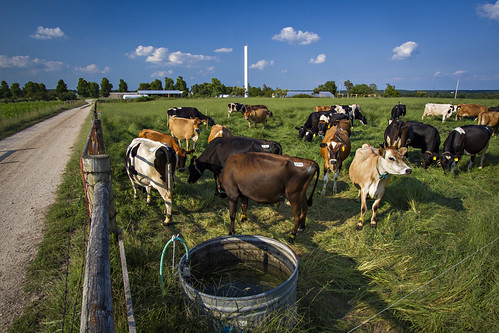
Beef is a very cyclical industry, largely driven by the fact that it takes nine months to create a new calf, and another year or two (at a minimum) to bring it to market and process it. Because of the difficulty of predicting demand that far out, plus the difficulty of matching supply to that demand, we end up with big swings in prices in every five-to-10-year cycle.
Right now, we are at the price peak in the cycle. The only way to bring prices back down is to increase the supply, and that can only happen when farmers choose to retain cows to breed and grow the stock instead of selling them today. This is called heifer retention. When prices are high, farmers want to sell stock. When they’re low, farmers want to hold back the stock.
That’s the revenue side. Then there’s the cost side. Beef costs are driven by the three F’s: feed, fertilizer, and fuel. Right now, the costs of all three are through the roof. (Read more from “If Trump Wants To Reduce Beef Prices, He Should Help Struggling Farmers Grow Their Herds” HERE)
Photo credit: Flickr