Teacher to ‘Hail Satan,’ Pastor Vows Sledgehammer

A South Florida middle-school teacher is again igniting rage among local Christians by planning a satanic display encouraging children to “hail Satan” in a public city park during the upcoming Christmas season.

Preston Smith, a language-arts teacher at Boca Raton Community Middle School, is looking to erect a giant, 300-pound metal pentagram with messages including: “May the Children Hail Satan,” “In Satan We Trust” and “One Nation under Antichrist.”

But one local pastor is vowing to personally demolish the display with a sledgehammer.

“In essence they’re putting out a welcome mat for Satan,” Pastor Mark Boykin, of the Church of All Nations in Boca Raton told WPEC-TV.

“I think this is reprehensible. I think it’s an insult to our city. … It’s evil, it’s the essence of evil. I will take the responsibility for taking the sledgehammer and knocking it down.” (Read more from “Teacher to ‘Hail Satan,’ Pastor Vows Sledgehammer” HERE)

Follow Joe Miller on Twitter HERE and Facebook HERE.

Antifa Revealed! Free Expose of Alt-Left

Statues of American heroes desecrated or ripped down nationwide. Supporters of the president of the United States attacked in the streets. Peaceful gatherings of conservatives targeted with bomb threats or even acid attacks.

Examples of violence perpetuated by antifa are continuous.

Most recently, well-known far-left organizer Yvonne Felarca, a teacher at Berkeley’s Martin Luther King Jr. Middle School, was charged with battery and resisting arrest after leading a protest against a conservative group. Felarca is known as the leader of the far-left group By Any Means Necessary, or BAMN.

Street clashes between conservatives and antifa are now common in America’s cities. Berkeley, California, has been the site of several “Battles of Berkeley” in which violence is taken for granted. The violence by the black-clad protesters has been so extreme even Rep. Nancy Pelosi, D-Calif., condemned antifa and called for prosecutions.

Yet many conservatives and libertarians remain ignorant about the group’s origins, tactics and inspiration. Speaker of the House Paul Ryan infamously sided with antifa rather than with President Trump when the commander in chief suggested both the far left and the far right were to blame for August’s violence in Charlottesville, Virginia. (Read more from “Antifa Revealed! Free Expose of Alt-Left” HERE)

Follow Joe Miller on Twitter HERE and Facebook HERE.

Conservatives Encouraged by Republican Framework for Tax Reform

Any tax reforms passed by Congress should give relief to middle-class families and small businesses, bring jobs and capital back to the United States, and make the tax code more fair by ending loopholes and breaks for special interests, congressional Republicans said Wednesday in what they call a framework for debate.

The framework from House Speaker Paul Ryan, Senate Majority Leader Mitch McConnell, and other GOP leaders calls for creating a larger zero-tax bracket (an individual’s first $12,000 of income would become tax free, and the first $24,000 for married couples), roughly doubling taxpayers’ standard deduction, and condensing the current seven tax brackets to three.

“This is a historic day,” Ryan said at an afternoon press conference. “This is a day that is a long time in coming. In fact, it was on this day, under this dome, in 1986 that Congress took the final vote on the last overhaul of our tax code. That long. After that vote, President Reagan said Americans would ‘finally have a tax code that they can be proud of.’”

“It was true then, but things look very very different today, don’t they?” Ryan added. “Instead of a source of pride, our tax code has become a constant source of frustration. It is too big. It is too complicated, it’s too expensive. Today, we are taking the next step to liberate Americans from our broken tax code.”

“Tax reform that follows the outline we heard today will deliver significant benefits for all Americans,” Adam Michel, a tax policy analyst at The Heritage Foundation, said in an email to The Daily Signal, adding:

The outlined tax reform will raise wages, increase job creation, and create untold additional opportunities. The plan goes a long way toward fixing our business tax system that makes it hard for businesses to invest in America.

Depending on their income, individual taxpayers currently may be taxed at one of these percentages: 10, 15, 25, 28, 33, 35, or 39.6.

The three brackets in Republicans’ proposed tax framework are 12 percent, 25 percent, and 35 percent.

The framework would end personal exemptions for dependents and increase the child tax credit.

President Donald Trump has made overhauling the tax code a major agenda item during his first year in office, and Treasury Secretary Steven Mnuchin has promised to deliver it by the end of 2017, now three months away.

Republican lawmakers’ plan would repeal the alternative minimum tax, created in 1969 to ensure that more affluent taxpayers could lower their tax bill only via deductions a certain amount. Many lawmakers, including Sen. Ted Cruz, R-Texas, previously have called for an end to the alternative minimum tax.

The framework for tax reform would eliminate most itemized deductions, taken from a taxable adjusted gross income and “made up of deductions for money spent on certain goods and services throughout the year,” as Investopedia explains it.

The plan also calls for repeal of the estate tax—which opponents call the death tax—and the generation-skipping transfer tax, what the Tax Policy Center calls an “additional tax on a transfer of property.”

The plan includes tax benefits to incentivize work, higher education, and retirement security and promises to repeal many provisions “to make the system simpler and fairer for all families and individuals, and allow for lower tax rates.”

The framework also would:

Limit the minimum tax rate for small businesses and sole proprietorships to 25 percent.

Lower the corporate tax rate to 20 percent, “below the 22.5 percent average of the industrialized world.”

Allow expensing of “new investments in depreciable assets other than structures made after Sept. 27, 2017, for at least five years.”

Lower rates for domestic manufacturers and update rules for various industries and sectors “to ensure that the tax code better reflects economic reality and that such rules provide little opportunity for tax avoidance.”

The Republican plan also seeks to keep companies from moving overseas by taxing both businesses and foreign profits of U.S. corporations at a reduced rate.

Rep. Mark Walker, R-N.C., chairman of the Republican Study Committee, the largest GOP caucus in the House, praised the newly released details.

“At first glance, the policies released today are good news to the American people,” Walker said in a formal statement. “I am proud to see that a large part of the Republican Study Committee’s submission to the tax reform task force was incorporated into today’s framework. We need to begin acting on this framework legislatively as soon as possible.”

Rep. Diane Black, R-Tenn., chairwoman of the House Budget Committee, said the goals would put America at an advantage:

By simplifying the system and getting the government out of the way of our free-market economy, America is made more competitive on an international scale and the potential for unprecedented job creation is unleashed. We believe this will be a catalyst for more jobs, bigger paychecks and fairer taxes—this framework is pro-America. Plain and simple.

Alfredo Ortiz, president and CEO of the Job Creators Network, said the plan shows promise.

“I’m encouraged to see that the administration is moving forward with tax cuts for small business,” Ortiz said in a statement provided to The Daily Signal, adding:

While many details still need to be filled in, this is a crucial and positive step in the right direction. Make no mistake: the recent progress in the campaign for tax relief should bring optimism to the 29 million small business owners and the roughly 56 million people that depend on them for their livelihoods.

In a statement provided to The Daily Signal, David McIntosh, president of the Club for Growth, said the plan will foster economic development.

“Club for Growth is very encouraged and pleased with the long-awaited tax reform outline that the Big Six released today,” McIntosh said. “Fundamental tax reform comes around only once in a generation, and this is our chance. The outline is both aggressive and very pro-growth with its rate reductions.”

Mike Needham, chief executive officer of Heritage Action for America, the lobbying affiliate of The Heritage Foundation, said the plan is a call to action.

“While today’s announcement marks an important and encouraging first step, it is imperative the administration and congressional leaders work hand-in-hand with conservatives to push back against the radical left and the special interests that will pull out every stop to preserve the status quo,” Needham said. (For more from the author of “Conservatives Encouraged by Republican Framework for Tax Reform” please click HERE)

Follow Joe Miller on Twitter HERE and Facebook HERE.

Black Lives Actually DON’T Matter to NFL and the Left

Lost in the imbroglio over the NFL’s disrespect for our national anthem is the irony of the original impetus for Colin Kaepernick’s antics. Players are protesting supposed police brutality while new data shows there is a growing epidemic of violent crime in America, which is likely the result of dissuading police from proactive law enforcement work.

Sadly, the biggest victims of this rebounding epidemic are African Americans. Where is the protest or outrage over violent crime in inner cities rather than the police response to it (or lack thereof)?

It’s hard to overstate the importance of yesterday’s release of crime data from the FBI showing a second straight year with rising violent crime. After plummeting for 23 years, violent crime rose in 2015 and again in 2016, bending the only positive social trajectory we have witnessed over the past generation.

According to the FBI, violent crime rose by 4.1 percent and the murder rate spiked by 8.6 percent — the greatest single-year increase in 25 years. Also, while the murder rate spiked in all city size groups, it skyrocketed by over 20 percent in cities with over 1 million people. This, after increasing by a similar rate in 2015.

While the overall violent crime rate is still relatively low compared to the ‘70s, due to the quarter-century-long decline, the rate has now climbed back to 2012 levels, setting us back five years’ worth of progress.

These latest numbers demonstrate that the 2015 increase was not a blip on the radar but a likely trajectory change. Unlike most other statistics, which fluctuate from time to time, this new trend is very alarming.

When violent crime drops every year for over two decades, there are clearly some fixed and inveterate macro-factors at play. While criminologists disagree over the causes behind the drop, more aggressive policing and tougher sentences are undeniably a major part of the equation.

But whether one believes the great crime-reduction miracle is the result of tough-on-crime laws or other sociological reasons, it takes a pretty transcendent countervailing factor to reverse this 23-year trend by even a small percentage, much less such a significant increase.

This is why it’s dishonest when some major media outlets tout the fact that crime is still relatively low compared to the pre-‘90s era; there has been a generational sea shift in violent crime that is almost permanent. Of course, it will take many years of dismantling law and order to return to the pre-Giuliani days. Do we really want to wait for another few years of spikes in crime to pull the fire alarm? (For more from the author of “Black Lives Actually DON’T Matter to NFL and the Left” please click HERE)

Follow Joe Miller on Twitter HERE and Facebook HERE.

NSA Leaker Told FBI That She Was Triggered by Fox News Being on at Her Workplace

The National Security Agency contractor who leaked a top secret report about Russian activities during the election told FBI agents that she was upset with her employer because Fox News was played on TVs at her office.

“I’ve filed formal complaints about them having Fox News on, you know?” Reality Winner, the contractor, told FBI agents during a June 3 interview at her home in Augusta, Ga. “Uh, just at least, for God’s sake, put Al Jazeera on, or a slideshow with people’s pets. I’ve tried everything to get that changed.”

Federal prosecutors disclosed the interview transcript in a court filing on Wednesday. Politico first reported details of the document.

Federal prosecutors have charged Winner with mishandling classified information for leaking a top secret report that laid out evidence that Russian hackers had targeted U.S. voter registration databases. Winner, who faces at least nine years in prison if convicted, printed the document from her NSA office at Fort Gordon and then sent it to reporters at The Intercept. (Read more from “NSA Leaker Told FBI That She Was Triggered by Fox News Being on at Her Workplace” HERE)

Follow Joe Miller on Twitter HERE and Facebook HERE.

Megyn Kelly’s Today Show Plagued by Awkward Moments and Offensive Remarks

[Editor’s note: We aren’t fans of Megyn Kelly, but it seems most of the hits on Kelly’s new show – like the video below – are coming from the left. If you’ve watched her since leaving Fox, please comment below on whether her show is worth watching]

It’s only day three of Megyn Kelly’s new daytime show on NBC, and the program is already being dragged down by a series of offensive remarks, cringeworthy interactions, and awkward moments.

“Megyn Kelly TODAY” has created a number of bad headlines since its Monday premiere.

In response to a promo video where Kelly claims to be a “unifying force,” John Oliver’s HBO program, “Last Week Tonight” ran a supercut of Kelly’s most “controversial” remarks:

On her first day, Kelly created a mini-controversy by hosting the cast of “Will & Grace” and making a bizarre comment about a gay fan of the show.

Russell Turner, a “super fan” of the show, was invited onstage by Kelly. When he got on onstage, Kelly made viewers cringe by asking, “Is it true that you became a lawyer–and you became gay–because of Will?” (Read more from “Megyn Kelly’s Today Show Plagued by Awkward Moments and Offensive Remarks” HERE)

Follow Joe Miller on Twitter HERE and Facebook HERE.

The Obscure Law Affecting Puerto Rico’s Ability to Recover After Hurricane Maria

A relatively obscure maritime law is in the spotlight after the devastation of Puerto Rico from Hurricane Maria.

The Merchant Marine Act of 1920, better known as the Jones Act, has typically been confined to debates about energy independence, trade, and regulation. The law requires shipments between two U.S. ports be on U.S.-built, U.S.-manned, and U.S.-owned vessels.

The Trump administration has granted temporary waivers to the law after recent hurricanes in Texas and Florida, but has yet to do so in Puerto Rico, despite pressure from Congress. The previous waivers were primarily for the purpose of transporting fuel.

“Puerto Rico didn’t need this storm to be ground zero on the harm done by the Jones Act,” Salim Furth, a senior fellow in macroeconomics at The Heritage Foundation, told The Daily Signal. “They were already being cut off from the main market, effectively paying double the shipping costs.”

It’s also a problem for other U.S. regions apart from the continental United States, noted James Coleman, a law professor at Southern Methodist University, the author of a forthcoming white paper on the subject for the Federalist Society’s Regulatory Transparency Project. He writes:

The Jones Act has also long imposed particularly heavy burdens on far-flung domestic ports like Hawaii, Alaska, and Puerto Rico, because they often import commodities from the United States.

This problem is particularly salient in Puerto Rico, which just declared bankruptcy because it is $74 billion in debt.

Economists estimate that, just from 1970 [to] 2012, the Jones Act cost Puerto Rico’s economy $29 billion. Reforming the Jones Act could save consumers in Puerto Rico, Alaska, and Hawaii as much as $15 billion per year.

Acting Homeland Security Secretary Elaine Duke told the Senate Homeland Security and Governmental Affairs Committee that her department hasn’t rejected a waiver outright yet, and said the department is researching the matter.

“There’s two issues with Puerto Rico. One is the potential shortage of carriers with the U.S. flag carriers,” Duke told the committee Wednesday. “The second is tariffs and other things that make the fuel cost high in Puerto Rico, and that’s what we’re hearing, too, that people are suffering from the tariffs.”

Sen. John McCain, R-Ariz., a longtime advocate for repealing the law, wrote a letter to Duke this week asking for a waiver for Puerto Rico. He also tweeted about it Wednesday.

Eight House Democrats also have asked for a waiver for Puerto Rico, in a letter to Duke, writing:

The island is now facing an unprecedented, uphill battle to rebuild its homes, businesses and communities. Temporarily loosening these requirements—for the express purposes of disaster recovery—will allow Puerto Rico to have more access to the oil needed for its power plants, food, medicines, clothing, and building supplies.

President Barack Obama declined calls to waive the Jones Act to help in the Deepwater Horizon oil spill cleanup in the Gulf of Mexico in 2010. President George W. Bush did waive the law after Hurricane Katrina in 2005.

The American Maritime Partnership, the U.S. shipbuilders lobby, contends that lawmakers are making false assumptions about the law’s impact, and released what it calls a “fact check” on Wednesday, disputing assertions from what it labeled “a parade of politicians and ‘experts.’”

Claim: The Jones Act prevents cargo from foreign vessels to reach Puerto Rico.

False. Any foreign vessel can call on Puerto Rico. The Government Accountability Office (GAO) noted in a 2011 report that two-thirds of the ships serving Puerto Rico were foreign ships. 55 different foreign carriers provided imported cargo to Puerto Rico in a single month, as cited as an example by GAO.

Foreign shipping companies compete directly with the American shipping companies in an intensely competitive transportation market.

Claim: A Jones Act waiver would add efficiency to the delivery of essential cargoes to impacted communities.

Because of infrastructure challenges, a Jones Act waiver could hinder, not help, relief efforts. A Jones Act waiver could overwhelm the system, creating unnecessary backlogs and causing confusion on the distribution of critical supplies throughout the island.

Already, there are logistical bottlenecks for Jones Act cargoes as a result of the inability to distribute goods within Puerto Rico due to road blockages, communications disruptions, and concerns about equipment shortages, including trucks, chassis, and containers.

“The men and women of the American maritime industry stand committed to the communities in Puerto Rico impacted by Hurricane Maria, where many of our own employees and their families reside and are working around the clock to respond to the communities in need,” Thomas A. Allegretti, chairman of the American Maritime Partnership, said in a statement.

“A steady stream of additional supplies keeps arriving in Puerto Rico on American vessels and on international ships from around the world. The problem now is distributing supplies from Puerto Rico’s ports inland by surface transportation,” he said.

The hurricane season could provide some momentum for Congress to consider repealing the law, said Coleman, the SMU law professor.

The law itself could pose political problems for President Donald Trump, however, Coleman said.

“There are tensions between ‘America First’ and the goal of economic growth and energy dominance,” Coleman said. “It’s a protectionist law that protects certain groups, but it harms the productivity of other groups.”

The Trump administration backtracked from a regulatory expansion of the Jones Act proposed by its predecessor. Two days before leaving office, the Obama administration sought to administratively expand the reach of the law under Customs and Border Protection. On May 10, under the Trump administration, the CPB withdrew the proposed regulatory change.

Northeastern states are more likely to get oil from foreign sources, rather than from domestic sources, because of the law, Coleman contends in his white paper.

Unfortunately, because of the Jones Act, it costs three times as much to ship oil from Texas to refineries on the U.S. East Coast as it costs to ship oil [from] Canada.

There are simply not enough Jones Act compliant ships to carry Texas oil to the U.S. East Coast, so it must be shipped [from] abroad. Similarly, northeastern U.S. refineries pay more than three times as much to ship oil from Texas, rather than from West Africa or Saudi Arabia.

As a result, the northeastern U.S. is more likely to rely on foreign sources of crude oil, while, with the ban on U.S. oil exports now ended, U.S. oil is shipped longer distances abroad, leaving American consumers behind.

A compelling “America First” argument is that repeal of the Jones Act would allow freer trade within the borders of the United States, said Furth of The Heritage Foundation.

“It’s also in line with ‘drain the swamp’ because this is a lobbyists’ law,” Furth said. “The lawyered-up, lobbied-up industries are aware their profits depending heavily on this law.” (For more from the author of “The Obscure Law Affecting Puerto Rico’s Ability to Recover After Hurricane Maria” please click HERE)

Follow Joe Miller on Twitter HERE and Facebook HERE.
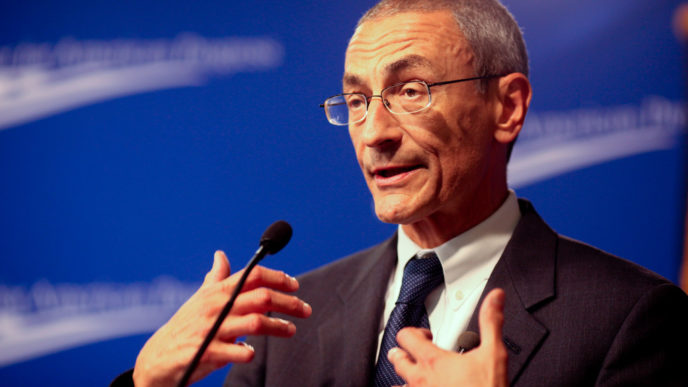
Obamacare Repeal Isn’t Dead, House Conservatives Insist

Despite “fake news” claims that Republicans’ chance to repeal and replace Obamacare ends Saturday, that isn’t necessarily true, a conservative House member said Tuesday.

“Go back and look at the name of the Obamacare reconciliation vehicle in 2010,” Rep. Thomas Massie, R-Ky., told reporters during lawmakers’ monthly Conversations With Conservatives event on Capitol Hill, referring to how Democrats pushed through the health care law without a single Republican vote.

Democrats combined education and health care, and “they did student loan reform, they used some of the savings on the Obamacare tweaking that they did,” Massie said.

“So you can absolutely do two things at once. It’s not dead on September 30th,” he said of dismantling Obamacare.

On Saturday, however, time runs out for Senate Republicans to use their current filibuster-blocking budgetary device to pass a bill to replace Obamacare with 50 votes.

The GOP has only 52 seats in the 100-seat upper chamber, and Massie’s fellow Kentucky Republican, Sen. Rand Paul, is one of four GOP votes against the latest version of the so-called Graham-Cassidy bill. The others are Susan Collins of Maine, Ted Cruz of Texas, and John McCain of Arizona.

The co-sponsors, Sens. Lindsey Graham of South Carolina and Bill Cassidy of Louisiana, conceded Tuesday that their effort is done for now.

“We haven’t given up on changing the American health care system. We are not going to be able to do that this week,” Senate Majority Leader Mitch McConnell, R-Ky., told reporters Tuesday. “But it still lies ahead of us, and we haven’t given up on that.”

Massie also questioned the structure thus far of House and Senate Republicans’ unsuccessful bills to repeal and replace Obamacare, and how they seemed to cater to congressional Democrats, none of whom appears willing to vote for repeal.

“Why is it that every GOP repeal and replace bill includes a trillion-dollar federal health care program?” Massie said. “Who are we negotiating with if [Democrats] are not going to vote for it?”

Rep. Andy Biggs, R-Ariz., told reporters that repeal and replace legislation isn’t “totally dead.” He said he hopes to have the opportunity to vote to repeal Obamacare in the near future.

“I would really love the chance at least once in my lifetime to repeal it,” Biggs said.

Rep. Andy Harris, R-Md., showed support for the Graham-Cassidy bill during the event, despite saying the legislation has flaws.

“There’s no piece of legislation that’s ever going to be perfect,” Harris said. “But if this [is] the only piece of legislation we could get, it does accomplish the defederalization of the Affordable Care Act.”

Harris said his reasons for supporting the bill include its plan to take money that would have been sent directly to Medicaid and give it to states in the form of block grants for health care. He said he liked the bill’s reversal of “the increase in Medicaid, which is an out-of-control spending plan.” (For more from the author of “Obamacare Repeal Isn’t Dead, House Conservatives Insist” please click HERE)

Follow Joe Miller on Twitter HERE and Facebook HERE.

Parents of Benghazi Victims: Hillary Should Stand Trial

The parents of two of the victims of the Benghazi terror attack – which was carried out by Muslim terrorists but blamed by Barack Obama and Hillary Clinton on an obscure YouTube video – have filed a brief in the District of Columbia Court of Appeals arguing that Clinton should stand trial for lying about the deaths.

WND reported that the case brought by Larry Klayman of Freedom Watch on behalf of Patricia Smith and Charles Woods accused Clinton of lying about the attack and then defaming the families of the victims by suggesting they were lying.

The case charging Clinton with “defamation, false light, and intentional infliction of emotional distress” was dismissed at the lower courts, which ruled Clinton was acting within the scope of her employment, secretary of state, at the time.

That, the opinion found, included her use of a private, unauthorized and unsecured email system through which information was sent that “directly led to the deaths of appellants’ sons.”

Clinton earlier narrowly escaped a default judgment that was entered in a case in the lower court over her liability for the deaths of Americans in Benghazi when an Obama-appointed judge adopted claims that she wasn’t properly served. (Read more from “Parents of Benghazi Victims: Hillary Should Stand Trial” HERE)

Follow Joe Miller on Twitter HERE and Facebook HERE.

Trump Tax Plan Doubles Standard Deduction

The long-awaited Republican tax-overhaul proposal would double the standard deduction for joint filers to $24,000, establish three tax brackets of 12 percent, 25 percent and 35 percent to replace the current seven rates, and set the corporate tax rate at 20 percent.

Many details remain unclear, including the income levels for each tax bracket, but according to details released early Wednesday, the corporate tax rate will be lowered to just below the 22.5 percent average of the industrialized world to continue President Trump’s campaign to bring jobs back from overseas and “make American great again.”

The president has said the plan will be the largest tax cut in American history.

A framework released by members of Congress cites the four requirements the president laid out: “First, make the tax code simple, fair and easy to understand. Second, give American workers a pay raise by allowing them to keep more of their hard-earned paychecks. Third, make America the jobs magnet of the world by leveling the playing field for American businesses and workers. Finally, bring back trillions of dollars that are currently kept offshore to reinvest in the American economy.”

The plans come from the White House, the House Committee on Ways and Means, and the Senate Committee on Finance. (Read more from “Trump Tax Plan Doubles Standard Deduction” HERE)

Follow Joe Miller on Twitter HERE and Facebook HERE.