
Liberal Protesters Interrupt Town Hall Prayer With Jeers When Chaplain Prays in Jesus’ Name

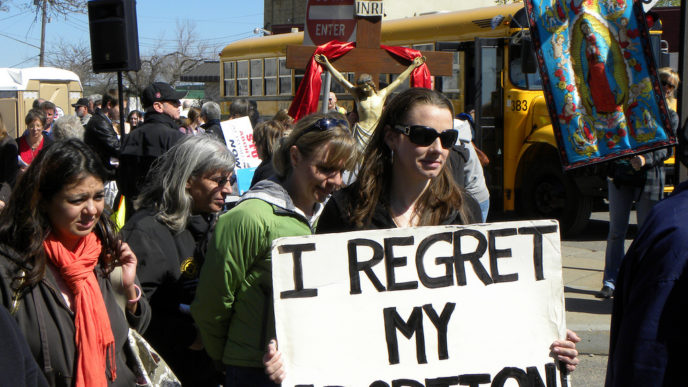
When a Louisiana state chaplain announced he was going to pray before a town hall meeting in Metairie, liberal protesters yelled and jeered at him, overpowering his prayer with cries of “separation of church and state,” among other slogans. CBN identified the protesters as members of the liberal activist group Indivisible.

The group also booed a veteran as he tried to say the Pledge of Allegiance. They refused to stand for the pledge and as he spoke yelled “do your job” and “get on with it.”

Some Shouted, Others Screamed

Republican Sen. Bill Cassidy called the town hall meeting to discuss immigration, healthcare and the economy, reported The Washington Free Beacon. When Dr. Michael Sprague announced that he would begin with prayer, the liberal group Indivisible in attendance protested loudly.

Some shouted, “church and state!” Others screamed, “Pray on your own time!” One woman even yelled “Lucifer!” One shouted as the chaplain tried to start, “Amen. Shut up. We’re done.”

When Sprague said, “in Jesus’ name,” the group screamed angrily again. In a Christianity Today interview, Sprague said the idea of booing Jesus was nothing new. “We need to remember that Jesus has been booed many, many times and He will be booed again. But when I was praying in the name of Jesus, I was not praying a political prayer or a religious prayer; I was simply praying in the name of a very real person named Jesus who says to love your enemies, care for the poor, and turn the other cheek.”

According to Indivisible’s website, the group “energizes and informs Americans about government’s potential and enlists them to imagine and create the government we need for all to have a safe, healthy, just and prosperous future.” It is unclear how yelling over a town hall prayer accomplishes that purpose.

Sprague said he wasn’t angry at the protesters for their behavior during the town hall. “So I’m not mad. In fact, with every single person there, I would love to pray with them that that if they get tired of this old life, they would hear Jesus say the words, ‘Come to Me, all of you who are weary and burdened, and I will give you rest.’”

Watch the video below:

(For more from the author of “Liberal Protesters Interrupt Town Hall Prayer With Jeers When Chaplain Prays in Jesus’ Name” please click HERE)

Follow Joe Miller on Twitter HERE and Facebook HERE.

The Latest on the President: Trump Signs Order Loosening Gun Restrictions

President Donald Trump has signed a resolution blocking an Obama-era rule that would have prevented an estimated 75,000 people with mental disorders from buying guns. The rule was part of former President Barack Obama’s push to strengthen the federal background check system in the wake of the 2012 Newtown, Connecticut shooting.

It required the Social Security Administration to send in the names of beneficiaries with mental impairments who also need a third-party to manage their benefits. But lawmakers, the National Rifle Association and even the American Civil Liberties Union criticized the rule, saying it unfairly stigmatized the disabled and infringed on their constitutional right to bear arms. (Read more from “The Latest on the President: Trump Signs Order Loosening Gun Restrictions” HERE)

Follow Joe Miller on Twitter HERE and Facebook HERE.

Chromosomes Don’t Lie, and Biology Is Reality, Not Bigotry

It seems like my simple statement that “Caitlyn Jenner is a man wearing a dress” caught fire online on many sites and in different formats, expressing what millions of other Americans think and feel but are often reluctant to express lest they be branded hateful and intolerant. In the interest of fleshing that statement out and giving voice to the feelings of many others, let me state more of the obvious.

Immovable Truths

I do recognize that some people have biological or chromosomal abnormalities, often grouped together under the category of intersex but representing well under 2 percent (or even under 1 percent) of the population. But these very real exceptions only prove the rule, and in normal cases, which represent 98-99 percent of the population and therefore define cultural norms, the following truths remained fixed and immovable:

A biological male does not have female genitalia.

A biological male does not have female chromosomes.

A biological male does not get a monthly period.

A biological male cannot conceive or bear a child.

A biological female does not have male genitalia.

A biological female does not have male chromosomes.

A biological female does get a monthly period.

A biological female cannot impregnate another woman.

It also remains true that chromosomes do not lie (meaning, XY = male and XX = female, and abnormalities are just that — abnormalities) and that biology is not bigotry (this line is not original with me, but I’m not sure who said it first).

And so, a biological and chromosomal male who believes he is a woman is no more a woman than he is a dog, a fire hydrant, or a Martian. Conversely, a biological and chromosomal female who believes she is a man is no more a man than she is a zebra, a telephone, or a Neptunian.

It is true, of course, that the brain is part of the body, but it is also true that not everything the brain perceives to be reality is reality, which is why we say that someone has a psychological disorder when they deny the reality of the world that surrounds them — and no sane person calls that diagnosis hateful. Yet when we argue that many who identify as transgender do have a psychological disorder, we are told that we are driven by hate. On what basis?

Mixed Signals

Interestingly, when it comes to gender distinctions, radical feminists, LGBT activists, and other opponents of “heterosexism” send some very mixed signals. On the one hand, they tell us that the so-called gender binary (meaning, dividing the world into the distinct categories of male and female) is bigoted and antiquated. Then, on the other hand, they use stereotypical gender categories to argue for transgender identity.

For example, these activists want toy stores to become gender neutral, not just in their bathroom facilities but in the main shopping areas as well, no longer distinguishing between boys’ toys and girls’ toys. (Target made its toy aisles gender neutral in 2015.) Yet these same activists will tell you that little Sally is really a boy because she prefers playing with boys’ toys.

So, which is it? Is there such a thing as boys’ toys and girls’ toys or not? And, generally speaking, are there differences between male behavior and female behavior, between male tendencies and female tendencies, between male interests and female interests, between male perspectives and female perspectives?

More basically, is there a reason that Target has still not made its entire store gender neutral — in other words, is there a reason that Target still has distinct sections for men’s clothes and women’s clothes? This, of course, makes perfect sense, unless we think that the day is soon coming when men are as likely as women to wear a bra and panties. (If some really extreme activists had their way, I imagine that day would come sooner rather than later.)

What’s interesting, though, is that those of us who celebrate gender distinctions do so in non-rigid ways, recognizing that some boys may have certain interests and responses that are more feminine, while some girls may have certain interests and responses that are more masculine. Yet this does not mean that those boys are actually girls or that those girls are actually boys. Obviously not. To conclude that they were would be to confuse minor category exceptions with larger category rules.

A Bizarre Period in History

I truly believe that one day (may it come sooner than later!), we will look back with astonishment at this bizarre period of history, one in which perception was mistaken for reality, one in which one of our most lauded male athletes received a courage award for acquiring female breasts, one in which children too young to be left home alone — let alone drive a car, drink, or vote — were allowed to make long-term, body-altering decisions about their future, one in which whole states were punished and boycotted for refusing to allow teenage boys to play on girls’ sports teams and share locker rooms and shower stalls with them.

The positive takeaway from today’s social madness is that we have become more aware of those who struggle with deep gender identity issues, from early childhood to old age. May we better understand their struggles, may we become a more compassionate society, and may we work together to help them find true wholeness inside and out. And may the cultural madness cease.

We’ve had more than enough of gender-fluid teens and gender-blender adults and 50 ways (and more) to define your gender and college professors being required to address students as ze and xer and fae and thon.

It’s time we get back to reality. (For more from the author of “Chromosomes Don’t Lie, and Biology Is Reality, Not Bigotry” please click HERE)

Follow Joe Miller on Twitter HERE and Facebook HERE.
Planned Parenthood Is Terrified: US Facing ‘the Biggest Threat’ to Abortion… ‘Ever’

“We’re in the fight of our lives” and “need all the help we can get.” “This is a turning point in our nation’s history.” “We only survive this moment if we all work together.”

The latest fundraising appeal from Cecile Richards of Planned Parenthood’s Action Fund reveals one thing:

Planned Parenthood is desperate.

In the plea to Planned Parenthood’s entire network of abortion supporters, Richards boasts about “organizing tens of thousands,” but her tone is undeniably one of fear.

Richards’ emergency appeal describes the political situation as “the biggest threat to reproductive health and rights this country has ever faced.” (Read more from “Planned Parenthood Is Terrified: US Facing ‘the Biggest Threat’ to Abortion… ‘Ever'” please click HERE)

Follow Joe Miller on Twitter HERE and Facebook HERE.

For the First Time, Federal Court Explicitly Establishes Filming Police as a Right

There’s been an ongoing battle between police and the citizenry over who has the right to film in public. Disputes between police and the public have led to cameras being confiscated by police, and citizens being manhandled, beaten, and arrested. Now, it seems, the courts are weighing in, and not on the side of police.

The court’s opinion comes from a federal civil rights lawsuit filed by Phillip Turner vs. Driver, Grinald, and Dyess (2017). The plaintiffs are all officers from Ft. Worth, Texas. According to court documents, “Plaintiff-Appellant Phillip Turner was video recording a Fort Worth police station from a public sidewalk across the street when Defendants-Appellees Officers Grinalds and Dyess approached him and asked him for identification. Turner refused to identify himself, and the officers ultimately handcuffed him and placed him in the back of a patrol car.”

Prior to this case, there was no clear precedent that specifically established filming the police as a First Amendment right. In fact, as we’ve reported before, U.S. District Judge Mark Kearney of the Eastern District of Pennsylvania issued a ruling last year stating that citizens do not have a First Amendment right to record the police in public.

According to the recent precedent:

At the time in question, neither the Supreme Court nor this court had determined whether First Amendment protection extends to the recording or filming of police. Although Turner insists, as some district courts in this circuit have concluded, that First Amendment protection extends to the video recording of police activity in light of general First Amendment principles, the Supreme Court has “repeatedly” instructed courts “not to define clearly established law at a high level of generality”: “The general proposition, for example, that an unreasonable search or seizure violates the Fourth Amendment is of little help in determining whether the violative nature of particular conduct is clearly established.” Thus, Turner’s reliance on decisions that “clarified that [First Amendment] protections . . . extend[] to gathering information” does not demonstrate whether the specific act at issue here—video recording the police or a police station—was clearly established.

The court went on to note that police nor Turner had a precedent to reference in which filming cops was specifically protected as a First Amendment right.

In light of the absence of controlling authority and the dearth of even persuasive authority, there was no clearly established First Amendment right to record the police at the time of Turner’s activities.

Now there is.

In the recent ruling, the Fifth Circuit Court of Appeals weighed in on the citizens’ rights to film police movement, activities and buildings. The court determined,

“We conclude that First Amendment principles, controlling authority, and persuasive precedent demonstrate that a First Amendment right to record the police does exist, subject only to reasonable time, place, and manner restrictions.” The court set the first ever precendent giving citizens the right to film police, within reason, of course. In other words, the court believes the public has a right to film police so long as it is within reason, in public, and not in private. Going further, the court seemed to empathize with the public’s demand for a transparent government. They wrote, “speech is an essential mechanism of democracy, for it is the means to hold officials accountable to the people. The right of citizens to inquire, to hear, to speak, and to use information to reach consensus is a precondition to enlightened self-government and a necessary means to protect it.”

Turner asserted his First Amendment rights were violated when he was disallowed from filming the police station he was recording. For refusing to provide identification when asked, Turner was detained, handcuffed, and placed into the back of a squad car —an action he contends was a violation of his fourth amendment rights to unreasonable search and seizure and arrest.

When the supervisor arrived, Turner told him he was aware of his rights to withhold his identity. The supervisor agreed, he was given back his camera and allowed to leave. Unfortunately, the court’s ruling was not put in place prior to his case, or else he would have been allowed to continue filming and free to come and go as he pleased. Even though he never was sent to jail, his detainment was a form of arrest, a contention he raises going further with his case.

While the Texas precedent is not a national precedent, those who are attempting to film the police can, nonetheless, cite the precedent in the hopes police officers will continue to allow them to film without being impeded. Until such time as the Supreme Court weighs in on the matter, the right to film police will still continue to be a matter of contention between the police and the public, and dealt with on a state by state basis.

For his part, Turner appears to welcome the challenge to take his case all the way to the Supreme Court. We reached out to Turner for comment but have not yet heard back from him as of the writing of this article. But he did post a comment to his Facebook page. “5th circuit established, is the Supreme Court next??,” he stated, apparently feeling the weight of his victory in court.

If you or someone you know is planning to attempt to film cops, here are some things you need to know. According to the ACLU’s guide to photographing in public:

Taking photographs and video of things that are plainly visible in public spaces is a constitutional right—and that includes transportation facilities, the outside of federal buildings, and police and other government officials carrying out their duties.

Unfortunately, law enforcement officers have been known to ask people to stop taking photographs of public places. Those who fail to comply have sometimes been harassed, detained, and arrested. Other people have ended up in FBI databases for taking innocuous photographs of public places.

The right of citizens to record the police is a critical check and balance. It creates an independent record of what took place in a particular incident, one that is free from accusations of bias, lying, or faulty memory. It is no accident that some of the most high-profile cases of police misconduct have involved video and audio records.

As for video, the ACLU recommends;

No matter who you are you have the First Amendment right to:

Peacefully assemble and protest in public spaces and photograph and videotape the police or anything else in a public space.

Here’s the deal:

Public spaces include streets, sidewalks, and public parks.

Private property owners can set rules for public entry (like a theater saying “no cell phones”).

The right to take photos does not give you the right to:

Go places you’re not otherwise allowed, record audio of other people’s private, conversations, trespass, or interfere with police engaged in legitimate law enforcement operations.

Police officers may not: confiscate or demand to view your digital photos or videos without a warrant, or delete your photos or videos under any circumstances.

If you’re stopped or detained for taking photos:

Be polite.

Don’t resist.

Ask, “Am I free to go?”

If the officer says “no,” you are being detained.

If you are detained, ask what crime you’re suspected of committing.

Until you ask to leave, being stopped is considered voluntary.

It’s perfectly reasonable and acceptable to remind the police officer that “taking photographs is your First Amendment right” and “does not constitute reasonable suspicion of criminal activity” according to the American Civil Liberties Union. (For more from the author of “For the First Time, Federal Court Explicitly Establishes Filming Police as a Right” please click HERE)

Follow Joe Miller on Twitter HERE and Facebook HERE.

Conservatives Use Clout to Press for Full Repeal of Obamacare

Conservatives in the House and Senate are leveraging their numbers in an attempt to influence the direction of legislation repealing Obamacare and ramp up the pressure on Republican leadership to bring a 2015 repeal bill back before members for another vote.

Their efforts began Monday night when Sens. Ted Cruz of Texas, Mike Lee of Utah, and Rand Paul of Kentucky said in a series of coordinated tweets, and later a joint statement, that they would support only a “full repeal” of Obamacare.

They were joined by three key House conservatives—Republican Study Committee Chairman Mark Walker of North Carolina, Freedom Caucus Chairman Mark Meadows of North Carolina, and former Freedom Caucus Chairman Jim Jordan of Ohio—in opposing a draft of the repeal they called “Obamacare-lite.”

“We have the votes to now tell the leadership this is what we want to do,” Paul said during a conference call with reporters Thursday. “We do have the votes. We’re a force to be reckoned with, and we want to be part of the negotiation over trying to make sure that we have complete repeal.”

The conservatives are rebelling against the draft bill leaked last week and instead want GOP leaders to revive the successful repeal bill from 2015 and bring it before members for a new vote.

That legislation passed both chambers of Congress, but President Barack Obama vetoed it in January 2016.

The 2015 bill repealed key provisions of the Affordable Care Act, including the individual and employer mandates, Medicaid expansion, tax credits, and taxes. It also stripped Planned Parenthood of federal funding.

But GOP leaders haven’t committed to that wording and instead say they want to include parts of a replacement plan in the bill dismantling the health care law.

Republicans will use a budget tool called reconciliation to repeal Obamacare; reconciliation fast-tracks legislation through the Senate and allows it to pass with 51 votes.

With control of 52 seats in the Senate, Republican leaders view reconciliation as the best way to repeal the health care law, especially since the legislation would earn President Donald Trump’s signature once it lands on his desk.

The GOP has a slim margin in the 100-member Senate, so Paul and his fellow conservatives are hoping to use their numbers to extract concessions from Republican leaders.

Since Vice President Mike Pence can break a tie, Republicans can lose no more than two votes.

“There have been rumors and rumblings of those in leadership putting forward something that is not a complete repeal, that some of us would refer to as Obamacare-lite,” Paul said. “We are for complete repeal.”

The same situation is unfolding in the House, where the bill fails if Republicans lose more than 20 votes.

The House Freedom Caucus stands roughly 40 members strong. If the entire group of conservative members opposed legislation repealing less of Obamacare than the 2015 reconciliation bill did, it wouldn’t pass the lower chamber, where Republicans have 238 seats.

When asked by The Daily Signal whether conservatives were worried their demand for the 2015 bill possibly would derail repeal efforts entirely, Jordan said the lawmakers weren’t concerned.

“We actually think you should do what you said you would do [in the 2016 campaign],” Jordan said.

“They didn’t tell us to repeal it, but keep the Medicaid expansion,” he said, referring to voters. “They didn’t tell us to repeal it, but keep this new tax increase. They didn’t tell us to repeal it and start a whole new entitlement program. They told us to repeal it and replace it.”

House Speaker Paul Ryan said last month that Republicans would vote on a repeal bill this month, but details of a proposal haven’t yet been released.

A draft bill to replace Obamacare was, however, leaked to the press last week.

It was that legislation that sparked the critical response from the six conservative lawmakers, who said the proposal amounted to “Obamacare-lite.”

The draft document would repeal Obamacare’s major provisions, with some aspects effective in 2020 and others sooner, and implement parts of a replacement centered around age-based tax credits.

The conservatives, though, said the draft document stopped short of full repeal and, through the refundable tax credits, would create a new entitlement program.

“The draft legislation, which was leaked last week, risks continuing major Obamacare entitlement expansions and delays any reforms,” Walker said in a statement.

“Worse still, the bill contains what increasingly appears to be a new health insurance entitlement with a Republican stamp on it,” the Republican Study Committee chairman said.

Now, House Republican leaders are distancing themselves from the draft replacement plan.

Majority Whip Steve Scalise, R-La., told reporters at a press conference Tuesday that he had spoken to Walker, who said he couldn’t recommend the 170 members of the Republican Study Committee support the document.

“That draft is not even representative of where we are,” Scalise said. “[Walker is] working with us, and we’re in direct conversations with the chairman of the RSC as well as others about the best way to build a consensus to pass a bill to gut Obamacare.”

“That draft is no longer valid,” he said.

A spokesman for Scalise, the No. 3 House Republican, later told The Hill that the leaked document was an “older draft.”

For the last month, conservatives irked by the slow speed of repeal efforts have been pushing Republican leadership to pass a new bill with the 2015 language.

But although that language cleared both the House and Senate, some senators are skeptical about repealing Obamacare’s taxes and expansion of Medicaid eligibility.

Further compounding the divide between conservatives and their fellow Republicans is Trump, who has said the White House and new Health and Human Services Secretary Tom Price would send their own Obamacare replacement plan to Capitol Hill.

Trump has yet to do that, and it isn’t clear when he will. But the president has advocated a simultaneous repeal and replacement of Obamacare, a strategy that some conservatives, Lee among them, said would be dangerous.

Jordan and Paul, though, said Congress should pass a repeal of Obamacare and Paul’s Obamacare Replacement Act the same day.

Though Trump, the House, and the Senate aren’t yet on the same page regarding the future of the health care law, Jordan appeared poised to deliver a message to the president during an interview Tuesday morning on Fox News’ “Fox and Friends,” a morning show Trump is known to watch.

“We make this job too hard,” Jordan said. “Let’s do what we told the voters.” (For more from the author of “Conservatives Use Clout to Press for Full Repeal of Obamacare” please click HERE)

Follow Joe Miller on Twitter HERE and Facebook HERE.
Washington Post: Fake News Partner With the CIA

Let’s frame the situation in simple terms. You work for a company that has a very lucrative partnership with a big-time money man. That money man gives you a piece of information and tells you it’s important.

What you do every day is spread information. That’s how you earn your living.

Are you going to take that piece of info from the money man and spread it, or are you going to question it and research it and shoot back hard-edged questions to the money man?

If you’re a loyal employee, and if you want to keep your job, and if you’re smart enough to understand how things work, you’re going to spread the money man’s piece of info and keep your head down.

You’re not going to worry your pretty little head about whether the piece of info is true.

Unless you’re a complete dolt, you certainly aren’t going to spread the info with a disclaimer stating that your source, the money man, has a major business contract with your company.

Getting the picture? The truth is irrelevant.

Here are key statements from Norman Solomon’s AlterNet article about the Washington Post, its owner, Jeff Bezos, and the CIA (12/18/13):

“The Post’s new owner, Jeff Bezos, is the founder and CEO of Amazon — which recently landed a $600 million contract with the CIA. But the Post’s articles about the CIA are not disclosing that the newspaper’s sole owner is the main owner of CIA business partner Amazon.”

“Even for a multi-billionaire like Bezos, a $600 million contract is a big deal. That’s more than twice as much as Bezos paid to buy the Post four months ago.”

“And there’s likely to be plenty more where that CIA largesse came from. Amazon’s offer wasn’t the low bid, but it won the CIA contract anyway by offering advanced high-tech ‘cloud’ infrastructure.”

“Bezos personally and publicly touts Amazon Web Services, and it’s evident that Amazon will be seeking more CIA contracts. Last month, Amazon issued a statement saying, ‘We look forward to a successful relationship with the CIA’.”

“As Amazon’s majority owner and the Post’s only owner, Bezos stands to gain a lot more if his newspaper does less ruffling and more soothing of CIA feathers.”

“Amazon has a bad history of currying favor with the U.S. government’s ‘national security’ establishment. The media watch group FAIR pointed out what happened after WikiLeaks published State Department cables: ‘WikiLeaks was booted from Amazon’s webhosting service AWS. So at the height of public interest in what WikiLeaks was publishing, readers were unable to access the WikiLeaks website’.”

“How’s that for a commitment to the public’s right to know?”

“Days ago, my colleagues at RootsAction.org launched a petition that says: ‘The Washington Post’s coverage of the CIA should include full disclosure that the sole owner of the Post is also the main owner of Amazon — and Amazon is now gaining huge profits directly from the CIA’…”

“While the Post functions as a powerhouse media outlet in the Nation’s Capital, it’s also a national and global entity — read every day by millions of people who never hold its newsprint edition in their hands. Hundreds of daily papers reprint the Post’s news articles and opinion pieces, while online readership spans the world.”

“Propaganda largely depends on patterns of omission and repetition. If, in its coverage of the CIA, the Washington Post were willing to fully disclose the financial ties that bind its owner to the CIA, such candor would shed some light on how top-down power actually works in our society.”

“Bezos personally and publicly touts Amazon Web Services, and it’s evident that Amazon will be seeking more CIA contracts. Last month, Amazon issued a statement saying, ‘We look forward to a successful relationship with the CIA’.”

“As Amazon’s majority owner and the Post’s only owner, Bezos stands to gain a lot more if his newspaper does less ruffling and more soothing of CIA feathers.”

“Amazon has a bad history of currying favor with the U.S. government’s ‘national security’ establishment. The media watch group FAIR pointed out what happened after WikiLeaks published State Department cables: ‘WikiLeaks was booted from Amazon’s webhosting service AWS. So at the height of public interest in what WikiLeaks was publishing, readers were unable to access the WikiLeaks website’.”

“How’s that for a commitment to the public’s right to know?”

“Days ago, my colleagues at RootsAction.org launched a petition that says: ‘The Washington Post’s coverage of the CIA should include full disclosure that the sole owner of the Post is also the main owner of Amazon — and Amazon is now gaining huge profits directly from the CIA’…”

“While the Post functions as a powerhouse media outlet in the Nation’s Capital, it’s also a national and global entity — read every day by millions of people who never hold its newsprint edition in their hands. Hundreds of daily papers reprint the Post’s news articles and opinion pieces, while online readership spans the world.”

“Propaganda largely depends on patterns of omission and repetition. If, in its coverage of the CIA, the Washington Post were willing to fully disclose the financial ties that bind its owner to the CIA, such candor would shed some light on how top-down power actually works in our society.”

You may recall that the Washington Post was a main player in launching stories about fake news sites after the presidential election.

One of the biggest fake news outlets in the world (cough, the Washington Post) took the lead in “exposing fake news.”

Then, on January 8, 2017, the Post ran a piece headlined: “It’s time to retire the tainted term ‘fake news’”. That was an attempt to stop the bleeding, because independent news sites all over the world were pointing out that mainstream news outlets had long been the biggest purveyors of fake news. The Post writer, Margaret Sullivan, stated:

“But though the term [fake news] hasn’t been around long, its meaning already is lost. Faster than you could say ‘Pizzagate,’ the label has been co-opted to mean any number of completely different things…”

Actually, the term has been around for quite a while. I named my site nomorefakenews.com in 2001. And the term, in 2016, wasn’t “co-opted.” It was turned against news outlets, like the Post, who were attacking independent media.

The Post is in bed with the CIA to the tune of $600 million. If that isn’t the foundation of fakery on a grand scale, what is?

Try to find one major news outlet that has exposed and pounded on this Washington Post-CIA marriage. You can’t. You see, the fakers protect their own. It’s a club. If you join, you keep your mouth shut about the inherent unholy alliances within the club. It’s a rule.

Memo to the New York Times, LA Times, CNN, FOX, NBC, CBS, ABC, BBC, Reuters, AP: If you want to prove you’re not fake, go after the Washington Post, hammer and tongs, on their marriage to the CIA. Don’t let up. Demand conflict of interest statements from the Post, for starters.

And here’s a talking point for you. Was Jeff Bezos’ cash purchase of the Washington Post a mere coincidence, placed next to his $600 million contract with the CIA, or did he buy the Post so he could offer the CIA an even tighter relationship with the number-one paper of record?

Get it? Or am I going too fast for you? (For more from the author of “Washington Post: Fake News Partner With the CIA” please click HERE)

Follow Joe Miller on Twitter HERE and Facebook HERE.

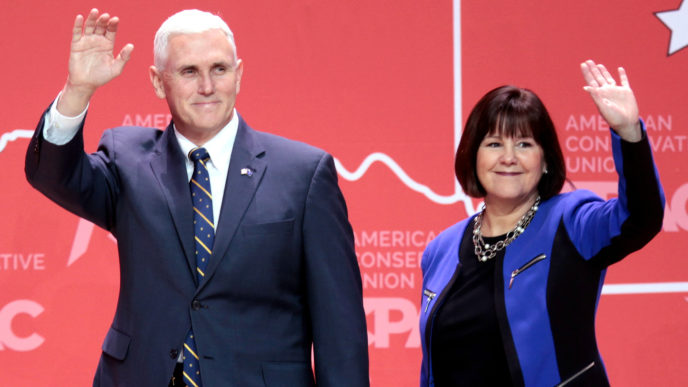
Pence Highlights Administration’s Commitment to School Choice in Meeting With Black College Leaders

Vice President Mike Pence stressed to a group of college administrators that the Trump administration is committed to greater education choice for elementary and high school students.

The vice president spoke Monday at the White House Historically Black Colleges and Universities 2017 Listening Session at the Eisenhower Executive Office Building, near the White House. The bulk of his remarks were about the contributions of the more than 100 HBCUs in 19 states, and the administration’s desire to partner with the schools.

With Education Secretary Betsy DeVos attending, Pence also stressed the importance of improving education in a child’s early years.

“Secretary DeVos is dedicated to expanding opportunities through educational choice all across this country, ensuring that whether it’s a public school, a public charter school, or even a private school, that parents on an increasing basis are able to choose for their young children the school regardless of their income and area code,” Pence said.

Research has shown education choice to be particularly helpful to minority communities.

A Harvard study of New York City found minority students with scholarships “to attend private elementary schools in 1997 were, as of 2013, 10 percent more likely to enroll in college and 35 percent more likely than their peers in public school to obtain a bachelor’s degree.”

A Department of Education study of the D.C. Opportunity Scholarship Program found participants had a 21 percentage point increase in graduation rates.

The Trump administration could be moving away from the policies of the Obama administration, which sought to defund the D.C. Opportunity Scholarship Program, said Lindsey Burke, director of education policy studies at The Heritage Foundation.

Though, Burke added, the federal government is fairly limited in what it can do on the issue, aside from President Donald Trump, DeVos, and others using the bully pulpit to promote choice. The exception for a direct impact is the D.C. program, which is funded through Congress.

“Trump could do a lot as a sign of support and expand school choice in a big way by transitioning D.C. to an all choice system,” Burke told The Daily Signal.

During his first week in office, Trump issued a proclamation marking National School Choice Week, which said:

With a renewed commitment to expanding school choice for our children, we can truly make a great education possible for every child in America.

I commend our nation’s students, parents, teachers, and school leaders for their commitment to quality, effective education, and I call on states and communities to support effective education and school choice for every child in America.

As our country celebrates National School Choice Week, I encourage parents to evaluate the educational opportunities available for their children. I also encourage state lawmakers and federal lawmakers to expand school choice for millions of additional students.

(For more from the author of “Pence Highlights Administration’s Commitment to School Choice in Meeting With Black College Leaders” please click HERE)

Follow Joe Miller on Twitter HERE and Facebook HERE.
Trump’s Defense Proposal Would Boost a Languishing Military

On Monday, President Donald Trump’s budget director, Mick Mulvaney, announced that the administration will seek a defense budget of $603 billion for 2018—“one of the largest increases in history.”

Trump said nondefense spending would be cut by an equal $54 billion, “the largest proposed reduction since the early years of the Reagan administration.”

The White House characterized the defense bump as a 10 percent increase. Both the percentage increase and the $54 billion figure refer back to the 2011 Budget Control Act caps for fiscal year 2018, which is $549 billion.

As is typical in Washington, nearly everyone can find something to be unhappy about in this proposal. As in most cases, the reality lies somewhere in the middle.

Reasons to View This Announcement Positively

As The Heritage Foundation reported in our 2017 Index of U.S. Military Strength, in the last five years, as a result of a diminishing budget and equipment overuse, the military has been sorely depleted. The Army is smaller than it has been since World War II, the Navy the smallest since World War I, and the Air Force the smallest since its existence.

And it’s not just smaller—it’s less ready. As the military service vice chiefs of staff testified in January, only three of the Army’s brigade combat teams are ready to fight today, one-quarter of Navy aircraft are flyable, and the Air Force is suffering from crippling pilot and maintenance personnel shortages.

Major weapon systems are also aging and not being replaced. The average age of Air Force aircraft is 27 years old, and the Army does not have the ability to replace its main battle tank, which is already 37 years old.

U.S. spending on national defense has declined to 16 percent of the federal budget from 32 percent in the early 1980s, constantly being squeezed lower by larger and larger entitlement spending. Similarly, the percentage of gross domestic product spent on national defense has declined to 3.2 percent from 6.8 percent in 1986.

In real constant dollars, the Department of Defense’s budget has declined by 24 percent since 2011. By any measure, America is not spending enough to sustain its military in these times of increasing global threats.

So any proposed increase in military spending is both welcome and sorely needed. Trump’s proposal to increase defense spending is helpful and represents a clear commitment. It is also encouraging that the president is willing to take on this fight to repeal the Budget Control Act caps and increase defense spending.

Just the Beginning

But this increase on its own is insufficient to begin the rebuilding. It simply represents an “on-ramp” to rebuilding.

The Obama administration had already planned to spend $584 billion in 2018 on defense, and the military services have already prepared detailed plans to spend that amount.

A 2018 budget of $603 billion represents an increase of 3 percent, not 10 percent, over the previous administration’s plans. An $18 billion increase will not be enough to regrow the military, rebuild near term readiness, and commence needed modernization programs.

And this recent announcement did not mention the 2018 “overseas contingency operations” account request, which must remain relatively the same as 2017’s in order to make real progress.

Heritage recommends a 2018 defense budget of $632 billion, with the additional implementation of $14 billion in savings we have proposed through various initiatives as well as a similar level of funding for overseas contingency operations.

Fully rebuilding the military will probably require more than can be reallocated from just discretionary spending, and in future years, more sources will be required.

Both Sen. John McCain, R-Ariz., and Rep. Mac Thornberry, R-Texas, have correctly pointed out that this 2018 budget will not be sufficient to rebuild the military. Hopefully, working together, Congress and the administration can provide the necessary funds in 2018 and beyond to begin rebuilding the military.

In sum, the announcement of an increased defense budget for 2018 is good news for our military and nation. The deterioration of our armed forces did not happen overnight—it occurred over years, and to now rebuild it will similarly take years.

The president’s proposal is a welcome and necessary first step in that process, but more will be needed. (For more from the author of “Trump’s Defense Proposal Would Boost a Languishing Military” please click HERE)

Follow Joe Miller on Twitter HERE and Facebook HERE.

Video Clip Shows IRGC Support for Terror in America

As Iran’s government claimed that the Islamic Revolutionary Guard Corps (IRGC) is widely known to be fighting terrorism in neighboring countries, a newly-emerged video clip purportedly shows an IRGC strategist threatening to unleash terror cells in the U.S., targeting nuclear missile launch facilities, among other things.

At a time when the Trump administration is considering listing the IRGC as a foreign terrorist organization, Iranian Foreign Minister Javad Zarif said at the weekend U.S. efforts to sanction the organization have never benefited the U.S.

Zarif said the world at large agrees that the IRGC has extended the utmost support for neighboring countries in their fight against terrorism.

Iran is supporting Shi’a militias fighting alongside the Iraqi military against Islamic State of Iraq and Syria (ISIS/ISIL) jihadists. The IRGC is also heavily involved, in conjunction with Tehran’s Hezbollah allies and other Shi’a fighters, in supporting the Assad regime in the Syrian civil war, where combatants include Sunni nationalists, Kurds, Salafists, and ISIS and al-Qaeda affiliated jihadists.

The exiled Iranian opposition group National Council of Resistance of Iran (NCRI) called Zarif’s claim that the IRGC fights terrorism “ridiculous.” (Read more from “Video Clip Shows IRGC Support for Terror in America” HERE)

Follow Joe Miller on Twitter HERE and Facebook HERE.