Iran Tests POTUS, Taking First American Hostage During Trump Era

The terrorist regime that rules Iran has confirmed that it is holding U.S. Navy veteran Michael R. White hostage.

Iranian foreign ministry spokesman Bahram Ghasemi told Iran’s state-run Tasnim News Agency Wednesday: “An American citizen was arrested in the city of Mashhad some time ago and his case was conveyed to the U.S administration on first days.”

The New York Times confirmed White’s capture on Monday after speaking to his mother.

“Iran has been holding an American Navy veteran in prison on unspecified charges since late July, when he was seized while visiting an Iranian girlfriend, his mother said Monday,” the Times reported.

Iranwire, a website for Iranian expatriates, also discussed White’s capture. In the piece, Irvar Farhadi, a former Iranian prisoner, said he met Mr. White at Iran’s Vakilabad Prison in the city of Mashhad.

According to the International Campaign for Human Rights in Iran (ICHRI), Vakilabad authorities conduct secret mass executions inside of the prison.

“He was not in a good psychological condition and is not allowed visitors or access to the phone. He is virtually a hostage without any charges against him,” Farhadi told Iranwire.

He added, “Michael is kept among dangerous criminals including murderers and professional drug smugglers and his life is in danger. I promised to myself that if I got out of prison one of the first things that I would do would be to inform people about the situation of this American prisoner.”

At least four U.S. citizens and one U.S. permanent resident are currently being held by Iran. CBS reports, citing sources, that Tehran is “holding the Americans to try to extract concessions such as those received in a deal reached with President Obama.”

President Obama set a dangerous precedent in paying a total of $1.7 billion dollars (in what appeared to resemble a ransom payment) for the release of four American hostages.

This is believed to be the first time that the Iranian regime has taken an American citizen hostage during the Trump era. The last known American detained by Iran was Xiyue Wang, a Ph.D. candidate at Princeton University. He was detained while conducting research in Tehran on August 8, 2016. Wang was later sentenced for espionage charges.

President Trump has a decision to make. He can follow in Obama’s footsteps and negotiate with the terrorist regime in Iran. He may instead choose to demand the unconditional release of the growing number of Americans held hostage by Tehran. The White House has not yet commented on the matter. The State Department said it was aware of the reports but did not comment further. (For more from the author of “Iran Tests POTUS, Taking First American Hostage During Trump Era” please click HERE)

Follow Joe Miller on Twitter HERE and Facebook HERE

Media Completely Ignores Isaam Akel, an American Brutalized Like Khashoggi

An Arab man with deep ties to America dissented against an authoritarian Middle Eastern regime. As a consequence, he was held captive, reportedly beaten, and his life may be over.

No, his name is not Jamal Khashoggi. Unlike Khashoggi, this man is a U.S. citizen. And he was not consorting with or propagandizing on behalf of Islamists, but enraging them by consorting with America’s closest ally in the region.

While Issam Akel has not been made a cause celebre, perhaps he should be. An American resident of East Jerusalem, Akel was arrested by the Palestinian Authority (PA) in October 2018 and sentenced to life in prison with hard labor for allegedly committing the mortal sin of “selling a house to the enemy in Jerusalem.” . . .

The details of Akel’s plight are characteristically sketchy, but reports indicate he was either lured to Ramallah, or picked up off the street in Jerusalem by PA police, incarcerated, and potentially tortured. This was a particularly brazen act, given that Akel is a U.S. citizen, who carries an Israeli ID card that should provide him immunity from PA arrest.

In spite of all the significant threads coming together in the imprisonment and potential beating of an American by an autocratic regime for allegedly flouting an anti-Semitic law, the Western media and political class have been largely mum. There is no echo chamber lauding Akel’s putative bravery, nor haranguing Mahmoud Abbas and the PA for their brutality. There is no chorus lobbying for sanctioning the PA with the full force of the U.S. government. Rest assured, Akel’s face will not grace the cover of Time as “Person of the Year” anytime soon. (Read more from “Media Completely Ignores Isaam Akel, an American Brutalized Like Khashoggi” HERE)

Follow Joe Miller on Twitter HERE and Facebook HERE

Mayor Was Shot to Death Hours After Being Sworn In

The mayor of Tlaxiaco, Oaxaca in Mexico, Alejandro Aparicio Santiago, was shot to death two hours after being sworn into office, The Independent reported. Santiago was on his way to Tlaxiaco’s city hall when a gunman open fire on him and his colleagues. He had been touring local city offices and was surrounded by his supporters when the attack occurred.

According to CNN, a Facebook live video was streaming when the shooting occurred and supporters appeared confused after the attack took place. Some held down the man they believed was responsible for the shooting.

Santiago and three others were taken to a nearby hospital. Santiago was shot in the chest, where the bullet punctured his right lung. He suffered internal bleeding and eventually succumbed to his injuries, CNN reported. Two others also died. . .

The state prosecutor’s office believes drug gangs were behind the attacks. They’re also believed to be responsible for injuring four other people, including another politician. (Read more from “Mayor Was Shot to Death Hours After Being Sworn In” HERE)

Follow Joe Miller on Twitter HERE and Facebook HERE

The Syria Controversy Is a Proxy War Over America’s Foreign Policy

The great game never ends, but the American people are tired of playing. While members of the foreign policy establishment (or experts, as they prefer to be called) continue the work of empire, with its interests, alliances, and intrigues around the globe, the people they are supposedly working for want out. This divergence, exemplified by the debate over Syria, imperils the legitimacy, as well as the efficacy, of American foreign and military policy.

This is why the resignation of Defense Secretary James Mattis has been presented as a crisis. Losing a skilled, honorable man’s services due to irreconcilable differences with the president would be a blow to any administration, let alone one as chaotic as Trump’s. . .

The debate over our involvement and strategy in Syria is important in itself, but it is also a proxy for the fight over who has the authority to direct American foreign and military policy. Continued American intervention in Syria is being pushed everywhere from National Review to The New York Times. But whatever its merits as policy, it remains unpopular beyond destroying ISIS, which is largely accomplished.

Congress, sensitive to public opinion on this at least, declined to authorize the mission creep the ostensible experts favor. Although Congress has also fecklessly declined to do anything to restrain American involvement in undeclared wars, the Constitution still requires positive authorization for war, which is supposed to be declared and directed by elected officials answerable to the people.

Regardless of the wishes of the people, Congress, and even the current commander-in-chief, the foreign policy establishment has kept playing the great game, presumably on the theory that it is easier to ask forgiveness than to seek permission. These officials believe their policies are correct, and the broad strategy of maintaining American influence and protecting American interests justifies involvement in a particular crisis or hot spot. President Trump’s flaws provide them with a ready excuse for ignoring, and even subverting, political leadership. (Read more from “The Syria Controversy Is a Proxy War Over America’s Foreign Policy” HERE)

Follow Joe Miller on Twitter HERE and Facebook HERE
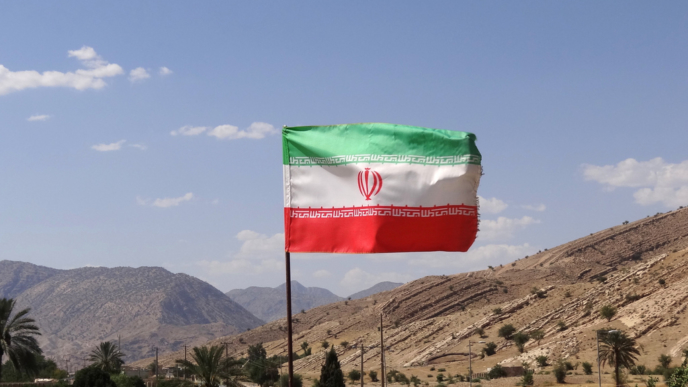
U.S. Airstrike Kills Terrorist Behind USS Cole Bombing

A U.S. military airstrike on New Year’s Day reportedly killed Jamal al-Badawi, who helped orchestrate the October 2000 bombing of the Arleigh Burke-class guided-missile destroyer USS Cole (DDG-67), officials said.

“We are aware of reports that Jamal al-Badawi was killed in a strike in Yemen,” Navy Capt. Bill Urban, a U.S. Central Command spokesman, said in an email to USNI News. “U.S. forces conducted a precision strike Jan. 1st in the Marib governate, Yemen, targeting Jamal al-Badawi, a legacy al Qaeda operative in Yemen involved in the USS Cole bombing.” . . .

On Oct. 12, 2000, Cole was refueling at the Yemeni port of Aden when two al Qaeda terrorists brought an inflatable Zodiac-type speedboat alongside the destroyer’s port side and detonated a bomb onboard, according to the U.S. Naval History and Heritage Command.

The explosion blew a 40-foot wide hole in Cole and killed 17 sailors. The crew was able to save the ship. The Navy transported the ship to Pascagoula, Miss., for extensive repairs. . .

A federal grand jury in 2003 indicted al-Badawi and co-conspirator Fahd al-Quso with 50 counts of terrorism-related offenses related to the Cole bombing and an attempted January 2000 attack on USS The Sullivans (DDG-68). The U.S. government issued a $5-million reward for information leading to al-Badawi’s capture, according to the U.S. Department of Justice. (Read more from “U.S. Airstrike Kills Terrorist Behind USS Cole Bombing” HERE)

Follow Joe Miller on Twitter HERE and Facebook HERE
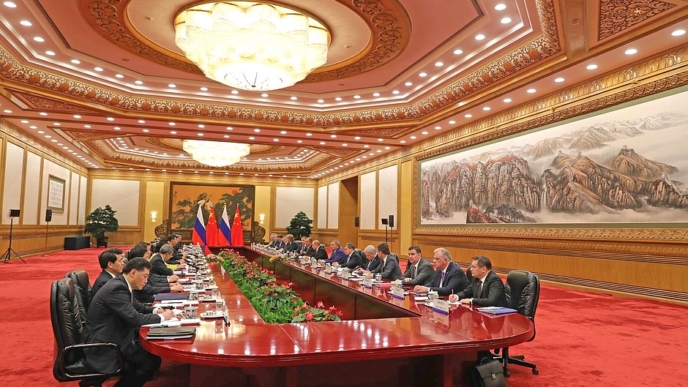
Salvaging America’s Defeat in Afghanistan

It is no longer a question of whether the United States will leave Afghanistan; it is a question of under what conditions.

Will it be a repeat of the chaotic withdrawal from Vietnam in 1975 and America’s subsequent timidity in the pursuit of our national interests? Or will it be simply a segue to a more successful regional foreign policy?

Now that U.S. policymakers are slowly coming to the realization that there will be no military victory in Afghanistan, it is critical to understand why we were defeated because it provides a foundation to formulate a more effective strategy.

Not to put too fine a point on it, we were fighting the wrong type of war.

In the face of clearly contradictory facts, the Pentagon insisted on pursuing counterinsurgency operations confined geographically to Afghanistan while the generals in Islamabad were using the Taliban to conduct a proxy war, launching attacks against American, NATO and Afghan forces from safe havens in Pakistan.

The Pakistanis have openly stated that they took billions of U.S. dollars while plotting to defeat the United States.

Case in point — In 2015, Lieutenant General Hamid Gul, the former head of Pakistan’s intelligence service, the ISI, a committed Islamist and known as the “godfather of the Taliban,” said the following in an Urdu language television interview:

One day, history will say that the ISI drove the Soviet Union out of Afghanistan with the help of USA and another sentence will be recorded that says the ISI drove the USA out of Afghanistan with the help of the USA.

The Pakistani audience roared with laughter and applauded in approval. And why wouldn’t they? America was monumentally stupid.

It borders on tactical insanity to conduct a war when the enemy controls, simultaneously, as Pakistan has, the operational tempo and the supply of your troops. Pakistan could always do just enough to prevent us from winning and protect the Taliban from losing by providing sanctuary.

The United States should have known that — even before we put boots on the ground. Pakistan is an ally of China, has never shared U.S. objectives in Afghanistan and began obstructing those objectives within days of 9/11.

In strategic reality, it is not the Taliban nor Pakistan with which we should be concerned. And the problem does not reside solely in Afghanistan.

The threat is from China in the form of the Chinese-Pakistani alliance. China’s aim is to dominate South Asia, first economically based on the China-Pakistan Economic Corridor (CPEC) and then militarily using its alliance with Pakistan to establish military bases in Balochistan, Pakistan’s southwestern province.

Those bases would provide a critical link between China’s military facilities in the South China Sea and its naval base in Djibouti at the entrance of the Red Sea and the Suez Canal.

Chinese naval and air bases on the Balochistan coast would control the vital sea lanes of the Arabian Sea and northern Indian Ocean and threaten another strategic chokepoint, the Strait of Hormuz. A successful implementation of the Chinese-Pakistani plan would mean the isolation of India, which is not at all advantageous to the international order.

Key to that plan is the withdrawal of U.S. troops from Afghanistan and the removal of American influence from South Asia.

Countering those ambitions does not require direct confrontation with China. Instead, it involves applying pressure to Pakistan’s major pain points, a crumbling economy and ethnic separatism.

An obvious economic target is CPEC, the flagship of China’s Belt and Road Initiative, which runs through Balochistan, the location of CPEC’s major port, Gwadar, thus making Balochistan a strategic center of gravity.

Balochistan, traditionally secular and tolerant, has also been the home of a festering ethnic insurgency since the partition of India in 1947, when the region was forcibly incorporated into Pakistan. Despite its mineral wealth, the Baloch have been intentionally kept underdeveloped by the Pakistan government.

This underdevelopment has been a cause for sporadic uprisings, along with oppression and alleged extrajudicial killings by the Pakistani military. Similar resentment exists within two of Pakistan’s other major ethnic groups: the Pashtuns and Sindhis.

By exploiting those two Pakistani pain points, the United States could maintain regional influence, thwart China’s march to the sea, create options for Afghanistan, affect the stability of the Iranian regime and, potentially, drive a stake into the heart of radical Islam.

The expenditure of blood and treasure in Afghanistan will only be in vain if we fail to improvise, adapt and overcome.

Lawrence Sellin, Ph.D. is a retired U.S. Army Reserve colonel, an IT command and control subject matter expert, trained in Arabic and Kurdish, and a veteran of Afghanistan, northern Iraq and a humanitarian mission to West Africa.

Follow Joe Miller on Twitter HERE and Facebook HERE

Central American Countries Are Helping Middle Easterners Illegally Enter the United States

Golfito, Costa Rica — It was here in March 2017, at the main aluminum structure of a government migrant camp, that federal Costa Rican police arrested Ibrahim Qoordheen of Somalia as a suspected al Shabaab terrorist operative on his way to the U.S. southern border.

Qoordheen had been smuggled from Zambia to Brazil, passed through Panama, and was making his way north through Costa Rica when the Americans had him arrested here, 20 miles inside Costa Rica, according to an American intelligence official with knowledge of the case who spoke on condition of anonymity. The Golfito camp, with a capacity of 250, was set up as a two-day rest station for South America-exiting migrants whom the governments of Panama and Costa Rica register and help move through northward to Nicaragua. . .

Luckily, the Somali stayed long enough for an American intelligence analyst working with the name he had provided in Panama to unscramble it and match it to a pre-existing intelligence file that identified him as intertwined with an al Shabaab cell and smuggling network in Zambia, the U.S. intelligence official said.

A Costa Rican immigration service official whose jurisdiction includes the Golfito camp disclosed that at least several other U.S.-bound suspected terrorists also were pulled from this camp since Qoordheen’s March 2017 arrest, likewise based on significant derogatory U.S. counterterrorism intelligence. The Costa Rican official declined to provide specifics of the intelligence beyond that it involved terrorism, offering only that: “Most are good, but some are bad.”

The American public was never told that Qoordheen and other suspected terrorists were pulled off U.S.-bound migrant routes in distant Costa Rica and Panama because such information is usually classified or not disclosable, in line with standard practice to protect ongoing investigations and operations. (Read more from “Central American Countries Are Helping Middle Easterners Illegally Enter the United States” HERE)

Follow Joe Miller on Twitter HERE and Facebook HERE

New: Emerging Information on U.S. ‘Spy’ Detained in Russia

As I previously reported here at Townhall, a United States citizen who has now been identified as Paul Whelan, has been detained by the Russian Federal Security Service and said to be caught “during an espionage operation.”

His twin brother is now speaking up on background regarding his brother’s trip, who was a former U.S. Marine. David asserted in many TV interviews early Wednesday that his brother was in Russia to attend a wedding. David Whelan has also shared that this family was told by the U.S. Embassy in Moscow that they have not been able to speak to Paul since his arrest.

Paul’s brother claims he was a frequent traveler to Moscow and the last time anyone heard from him was around 5 p.m. when he failed to show up that evening for the wedding.

Secretary of State Mike Pompeo, said the United States intends to learn more about the charges and will demand his immediate return “if the detention is not appropriate.”

Pompeo continues in part stating that the U.S. has “made clear to the Russians our expectation that we will learn more about the charges and come to understand what it is he’s been accused of and if the detention is not appropriate we will demand his immediate return.” (Read more from “New: Emerging Information on U.S. ‘Spy’ Detained in Russia” HERE)

Follow Joe Miller on Twitter HERE and Facebook HERE

Mexican President’s Immigration Plan Could Be Game Changer

By Fox News. In a bid to reduce migration to the U.S. and attract investment, Mexican President Andres Manuel Lopez Obrador has proposed the creation of economic “free zones” along the U.S.-Mexico border.

The Tax Incentive Decree for the Northern Border Region, which Lopez Obrador announced Saturday, would create a free zone that would stretch from the Gulf of Mexico to the Pacific Coast and be more than 15 miles wide, the San Diego Union-Tribune reported.

Inside the zone, income taxes would be reduced by a third and Value Added Taxes on imported goods would be slashed in half, the minimum wage would increase 100 percent, and fuel prices would equal U.S. prices, the report said.

“It’s going to be the biggest free zone in the world,” Lopez Obrador said. “It is very important to project for winning investment, creating jobs and taking advantage of the economic strength of the United States.”

Lopez Obrador, a self-styled left-wing populist, took office Dec. 1 with the promise to help the country’s poor, noting that the nation’s minimum wage had lost 70 percent of its purchasing power in recent decades after devaluations and economic crises. (Read more from “Mexican President’s Immigration Plan Could Be Game Changer” HERE)

___________________________________________________

US, Mexico Seek to Stem Migration From Central America by Funding Development in Region

By USA Today. The United States and Mexico will be cooperating closely to convince thousands of potential Central American migrants to not risk the perilous journey to the U.S. border by investing money into some of the region’s poorest areas.

Mexican Foreign Minister Marcelo Ebrard said up to $10.6 billion in existing U.S. funding would fund “institutional reform” and “good government” initiatives in Central America, along with regional development in southern Mexico – where new Mexican President Andrés Manuel López Obrador has promised to pull the region out of poverty through projects ranging from railways to refineries to planting thousands of hectares of trees.

Cross-border cabinet meetings would be convened, Ebrard said, and private sector participation would be included in the plan.

“Both countries recognize the strong links between economic growth in southern Mexico and successfully promoting prosperity, good government and security in Central America,” Ebrard told reporters.

“We’re committed to promoting strong regional economic growth, better-paying jobs and better opportunities for all our citizens.” (Read more from “US, Mexico Seek to Stem Migration From Central America by Funding Development in Region” HERE)

Follow Joe Miller on Twitter HERE and Facebook HERE
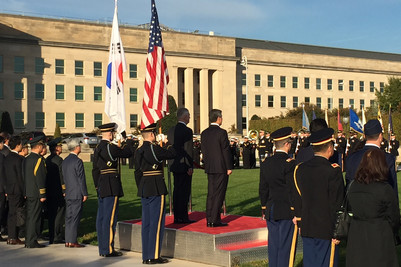
Kim Jong Un Says He’s Open to Reunion With Trump, but There’s a Catch

North Korean leader Kim Jong Un said Tuesday that he is prepared to meet with U.S. President Donald Trump at any time, but warned that he would pursue an alternative course if Washington kept up sanctions on Pyongyang.

In his closely watched New Year’s address, Kim said he was ready to pursue an outcome that would be “welcomed by the international community.” However, he said the North will be forced to take a different path if the United States “continues to break its promises and misjudges our patience by unilaterally demanding certain things and pushes ahead with sanctions and pressure.”

Kim also said the U.S. should continue its halt to joint military exercises with South Korea and not deploy strategic military assets to the South. He also made a nationalistic call urging for stronger inter-Korean cooperation and said the North is ready to resume operations at a jointly run factory park in the North Korean border town of Kaesong and restart South Korean tours to the North’s Diamond Mountain resort. Neither of those is possible for South Korea unless sanctions are removed.

Nuclear talks between Washington and Pyongyang have stalled for months as they struggle with the sequencing of North Korea’s disarmament and the removal of U.S.-led sanctions against the North. Some analysts say North Korea has been trying to drive a wedge between Washington and Seoul while putting the larger burden of action on the United States. Pyongyang over the past months has accused Washington of failing to take corresponding measures following the North’s unilateral dismantlement of a nuclear testing ground and suspension of nuclear and long-range missile tests.

North Korea also has bristled at U.S. demands to provide a detailed account of nuclear and missile facilities that would be inspected and dismantled under a potential deal. (Read more from “Kim Jong Un Says He’s Open to Reunion With Trump, but There’s a Catch” HERE)

Follow Joe Miller on Twitter HERE and Facebook HERE