Mystery of Sunken Russian ‘Ghost Ship’ Grows after Explosions Reported while Carrying Alleged Nuclear Reactors to North Korea

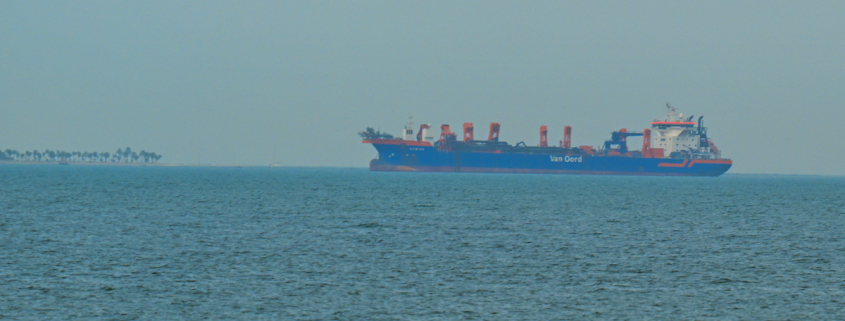
The mystery of how a Russian cargo ship sank deepened after it was revealed that the vessel suffered multiple explosions while allegedly carrying two nuclear reactors believed to be bound for North Korea, according to a new report.

The prevailing theory suggests that the West might have been involved in the incident that saw the Ursa Major sink 60 miles off the coast of Spain on Dec. 23, 2024, CNN reported.

The ship, also known as the Sparta 3, appeared to have been hit by a rare type of torpedo that breached the ship’s hull and forced it to sink to the bottom of the Mediterranean Sea, according to Spanish investigators.

The investigation suggested that the only thing that could have breached the ship was the Barracuda supercavitating torpedo, a powerful weapon of which only the US, a few NATO countries, Russia and Iran are believed to be in possession.

In the aftermath of the incident, the ship’s Russian captain allegedly told Spanish investigators that Ursa Major was hauling “components for two nuclear reactors similar to those used in submarines,” with the sailor unsure if the reactors were loaded with atomic fuel, CNN reported. (Read more from “Mystery of Sunken Russian ‘Ghost Ship’ Grows after Explosions Reported while Carrying Alleged Nuclear Reactors to North Korea” HERE)

Report: Pakistan Deploys Jets and Troops to Saudi Arabia for Iran War

Pakistan sent a squadron of jet fighters, an air-defense system, and about 8,000 troops to Saudi Arabia to honor a mutual defense pact between the two countries during the Iran war, according to a Reuters report on Monday.

“The deployment, the full scale of which is reported here for the first time, was confirmed by three security officials and two government sources, all of whom described it as a substantial, combat-capable force intended to support Saudi Arabia’s military if the kingdom comes under further attack,” Reuters wrote.

This seems like a delicate point, since Iran has attacked Saudi Arabia without any sign of an overwhelming response by Pakistani forces. The Saudis intercepted three more inbound Iranian drones on Monday, the day after Iran is believed to have used drones to bomb the Barakah nuclear plant in the United Arab Emirates.

As with past Iranian attacks, the Saudi Defense Ministry vowed to “take the necessary operation measures to respond to any attempt to violate its sovereignty and security,” but did not take any dramatic action against Iran. There was no clear indication that Pakistani forces played any role in taking down the latest three Iranian drones.

Saudi Arabia and Pakistan signed a defense pact in September 2025, shortly after Israel conducted a surprise airstrike on Hamas terrorist leaders living in Doha, Qatar. Although the defense pact did not specifically mention Israel, many observers suspected the agreement was intended to make the Israelis think twice about conducting similar strikes on Saudi or Pakistani territory – or perhaps to make the United States think twice about supporting Israeli strikes. (Read more from “Report: Pakistan Deploys Jets and Troops to Saudi Arabia for Iran War” HERE)

Xi Raises Prospect of a Future US-China War in Meeting with Trump: ‘Thucydides Trap’

By New York Post. Chinese leader Xi Jinping opened Wednesday’s high-stakes meeting with President Trump by ominously raising the prospect of a future war between the US and China.

Xi made reference to a geopolitical concept known as the Thucydides trap, which posits that there is a high probability of a violent clash when a rising power challenges the ruling hegemon.

“The whole world is watching our meeting,” Xi said inside Beijing’s Great Hall of the People, with Trump seated across the table.

“Currently, transformation not seen in a century is accelerating across the globe, and the international situation is fluid and turbulent,” he continued, according to one translation of his remarks. “The world has come to a new crossroads.

“Can China and the United States overcome the Thucydides trap and create a new paradigm of major country relations? Can we meet global challenges together and provide more stability for the world? Can we, in the interest of the well-being of our two peoples and the future of humanity, build a brighter future together for our bilateral relations?” (Read more from “Xi Raises Prospect of a Future US-China War in Meeting with Trump: ‘Thucydides Trap’” HERE)

___________________________________________________

Melania Mysteriously Snubs Trump’s Big Trip

By Daily Beast. Donald Trump left Washington for a three-day state visit to China flanked by cabinet secretaries, sixteen corporate CEOs, his son Eric and daughter-in-law Lara—but not his wife.

Melania Trump’s office confirmed her absence in an email to the South China Morning Post hours before takeoff, without even attempting to offer an explanation: “First Lady Melania Trump is not travelling this time,” her spokesperson said.

Her office did not immediately respond to a request for comment on why she was sitting out the trip.

The move comes amid speculation about the first lady increasingly breaking with her husband as she seems to be trying to charter her own course. Trump and his White House aides were reportedly blindsided last month when she called a surprise press conference to read a statement declaring she had no ties to the late sex trafficker Jeffrey Epstein. The move appeared only to revive the scandal that Trump himself had been eager to put to rest.

Melania’s absence, bizarrely, does not appear to have kept the man who produced her critically panned Melania documentary last year from tagging along. (Read more from “Melania Mysteriously Snubs Trump’s Big Trip” HERE)

Multiple Oil Spills May Plague The Persian Gulf Because Of Iran War

The Iran War’s effects are moving past economics and into the environment.

Multiple instances of what appear to be oil spills have occurred this week in the Persian Gulf, Reuters reported. One apparent spill appears to be emanating from Kharg Island, while another spill appears to be streaming behind an ADNOC Logistics & Services oil tanker that was hit by Iranian drones on May 4.

The images are probably indicative of oil slicks, Reuters reported, citing Louis Goddard, co-founder of Data Desk, a climate- and commodities-focused consultant.

“The ADNOC Logistics & Services vessel Barakah remains at anchor off the coast of Oman ​after being impacted by two Iranian drones on May 4,” Reuters reported, citing an ADNOC company spokesperson. “A small amount of what is understood to be bunker fuel was unfortunately released as a result of the incident.”

The Barakah is classified as a crude oil tanker, according to MarineTraffic. It remains unclear how much fuel leaked into the Persian Gulf from the vessel. (Read more from “Multiple Oil Spills May Plague The Persian Gulf Because Of Iran War” HERE)

Photo credit: Flickr

US Destroys Six Iranian Ships In Straight Of Hormuz During ‘Project Freedom’

U.S. Central Command (CENTCOM) head Adm. Brad Cooper told reporters on Monday that the United States destroyed six Iranian boats that were threatening commercial ships passing through the Strait of Hormuz.

President Donald Trump launched “Project Freedom” on Sunday, an effort by the U.S. Navy to help guide commercial ships through the Strait of Hormuz. On a press call with reporters, Cooper said the U.S. returned fire and destroyed Iranian forces who emerged to threaten the commercial ships.

“We have defeated each and every one of those threats,” Cooper told reporters.

“We defended this, both ourselves and consistent with our commitment, we defended all the commercial ships,” Cooper added. “We had drone launches against commercial ships, all of which were defended against consistent with our commitment, and then the small boats were all going against commercial ships, and all were sunk by Apaches and [inaudible] helicopters.”

Cooper told the Daily Caller that the U.S. has cleared an “effective pathway” through the strait. Two U.S. ships have passed through the strait in the last 24 hours. Following the exchange of fire, Cooper declined to speak about whether the ceasefire between the U.S. and Iran was now over.

(Read more from “US Destroys Six Iranian Ships In Straight Of Hormuz During ‘Project Freedom’” HERE)

Report: Somali Pirates Team Up with Houthi Terrorists to Attack Key Oil Trade Route

A report published this week suggests pirates from Somalia are once again threatening commercial shipping in the Red Sea, reportedly working with the Iran-backed Houthi insurgents of Yemen to menace a trillion-dollar flow of seaborne oil.

“Somali and Houthi-linked groups are teaming up — using skiffs and new tech to strike ships with coordination not seen in a decade — while Saudi crude rerouted from the Strait of Hormuz has created a target-rich environment for them,” RTCOM Defense CEO Ido Shalev told Fox News Digital.

“There is an opportunistic alignment, with the Houthis providing geopolitical cover and advanced GPS and surveillance, and Somali groups providing the boots on the ground or skiffs on the water,” he said.

Shalev said it was a return to the “Somali model” of piracy that grew prevalent in the 1990s after the collapse of Somalia’s central government. The Somalis had two thousand miles of coastline and a huge fleet of small fishing boats, which criminals quickly realized could be employed for swarming attacks against large commercial vessels as depicted in the 2013 film Captain Phillips.

The age of Somali piracy supposedly ended when the government in Mogadishu regained control over the coastline, but two new hijackings over the past ten days have revived the pirate menace, to the great embarrassment of the Somali government. (Read more from “Report: Somali Pirates Team Up with Houthi Terrorists to Attack Key Oil Trade Route” HERE)

Iran Tortures Dad to Death for Using Internet, Executes Karate Champ in Regime’s Latest Bloody Crackdowns

The barbaric Iranian regime reportedly tortured a dad to death for the high crime of using the internet and abused and executed a 21-year-old karate champ for merely attending a protest.

Father of two Hesam Alaeddin, 40, was beaten to death after being arrested for using Starlink to access the internet — which has been banned in the country since the US-Iran war started Feb. 28.

News of Alaeddin’s death was reported by Reza Pahlavi — the exiled son of the last shah of Iran — and spread across shocked posts on social media.

“The brutal and criminal regime of the Islamic Republic killed Hesam Alaeddin under torture after he was reportedly arrested for using Starlink,” Pahlavi wrote on X on Friday. “For 62 days, this regime has shut down the internet and continues to massacre Iranian people. The world cannot stay silent.”

Alaeddin was detained sometime in the past two weeks after being accused of connecting to the internet with Starlink, IranWire reported.

Iranian regime police searched his home, and when they found the Starlink device, they beat him in the family’s residence until he died, according to IranWire. (Read more from “Iran Tortures Dad to Death for Using Internet, Executes Karate Champ in Regime’s Latest Bloody Crackdowns” HERE)

Photo credit: Flickr

Strait of Hormuz Crisis Sparks Fears of Global Famine

The crisis in the Strait of Hormuz caused immediate shocks to the world oil market, but analysts are also afraid that rising food prices and fertilizer shortages could increase the risk of famine in struggling nations.

Vespucci Maritime CEO Lars Jensen told Fox News Digital on Thursday that the “worst-case” scenario would resemble “the eight-year closure of the Suez Canal from 1967 to 1975.”

“Best case, there is an agreement between the U.S. and Iran within the next few weeks, and the Strait reopens — and it has to be a deal where there is trust that Iran is sufficiently satisfied with the deal such that they do not suddenly close the strait again,” Jensen said.

“Even in that case, it will still take months for the supply chains to revert back to normality,” he added.

The Suez Canal was shut down by Egypt at the beginning of the 1967 Arab-Israeli War. The Egyptians blocked one of the world’s most important shipping lanes by laying minefields and sinking ships to create physical barriers. The canal remained closed until 1975. It was actually the second time the canal was closed by Egypt, after a much shorter shutdown in 1956-1957. (Read more from “Strait of Hormuz Crisis Sparks Fears of Global Famine” HERE)

Photo credit: Flickr

Mystery Deepens over Mojtaba Khamenei’s Condition after Iran Unveils ‘Martyr’ Mural

A viral mural showing the Islamic Republic’s new ayatollah among dead Iranian leaders has deepened speculation he was killed or gravely wounded in the 28 February strikes on Tehran.

A mural depicting Mojtaba Khamenei alongside dead Iranian commanders and officials has gone viral in Iran, fueling speculation that the country’s new ayatollah may be dead or gravely wounded nearly two months after he was last seen in public.

The mural, unveiled in Mashhad Ardehal west of Kashan and titled “Martyrs of the Epic Struggle,” depicts deceased top Iranian military and political leaders, including Qassem Soleimani, former President Ebrahim Raisi and Islamic Republic founder Ruhollah Khomeini.

The footage of the mural spread rapidly on social media, sparking questions over the fate of the new supreme leader and the son of late Ayatollah Ali Khamenei, who was killed in the initial US-Israeli strikes on Tehran on 28 February. Iranian authorities have not commented.

This was not the only slip-up by the Tehran regime in recent days. Tasnim News Agency, tied to the Islamic Revolutionary Guard Corps (IRGC), referred to Khamenei in a recent post as the “martyred leader of the revolution.” The Islamic Republic officials later said it was an error. (Read more from “Mystery Deepens over Mojtaba Khamenei’s Condition after Iran Unveils ‘Martyr’ Mural” HERE)

Top Iranian Negotiator Arrives Back in Pakistan — while Trump Orders Chief US Aides to Phone it in

Iran’s foreign minister was back in Islamabad on Sunday reportedly hoping to work on a peace plan — while President Trump said his top aides will only participate by phone at this point because Pakistan is too far to go to again.

Iranian Foreign Minister Abbas Araghchi did the quick turnaround after leaving Pakistan’s capital without meeting with US officials Saturday, a move that prompted Trump to then swiftly cancel American negotiators’ intended return trip to Islamabad.

US Special Envoy Steve Witkoff and Jared Kushner were expected to leave for Pakistan’s capital Saturday before being called off.

Trump on Sunday doubled down on his refusal to send the US negotiators back to Islamabad, telling Fox News that the 18-hour trip is too far to travel if Iran continues to refuse his nuclear demands.

“Great respect for Pakistan, because they’ve been terrific. They’ve really tried, and they’ll stay involved, but we’re going to do it by telephone, so if they want, they can call us,” Trump said of Tehran. (Read more from “Top Iranian Negotiator Arrives Back in Pakistan — while Trump Orders Chief US Aides to Phone it in” HERE)