Hungary’s Orban Says Anti-LGBTQ Russia Stands to Gain as ‘Irrational’ West Loses Power

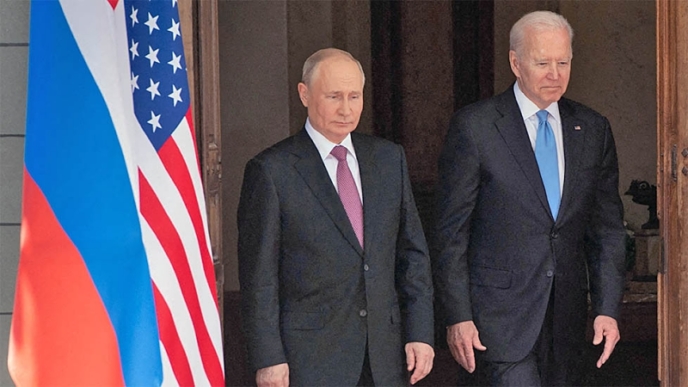
Hungarian Prime Minister Viktor Orban said on Saturday Russia’s leadership was “hyper rational” and that Ukraine would never be able to fulfil its hopes of becoming a member of the European Union or NATO. . .

“In the next long decades, maybe centuries, Asia will be the dominant center of the world,” Orban said, mentioning China, India, Pakistan and Indonesia as the world’s future big powers.

“And we Westerners pushed the Russians into this bloc as well,” he said in the televised speech before ethnic Hungarians at a festival in the town of Baile Tusnad in neighboring Romania. . .

Orban, whose own government has passed a number of anti-LGBT measures, said Russia had gained clout in many parts of the world by cracking down on LGBTQ+ rights.

“The strongest international appeal of Russian soft power is its opposition to LGBTQ,” he said. (Read more from “Hungary’s Orban Says Anti-LGBTQ Russia Stands to Gain as ‘Irrational’ West Loses Power” HERE)

Photo credit: Flickr

Iranian Hard-Liners Accuse President-Elect Pezeshkian of Connections to U.S. Intelligence and “Promoting Homosexuality”

A hardliner aligned with Iran’s Supreme Leader Ali Khamenei has sharply criticized President-elect Pezeshkian’s cabinet formation team, accusing them of corruption, espionage, and “promoting homosexuality.”

In an article published on Saturday, Hossein Shariatmadari, editor of Iran’s flagship hardliner newspaper Kayhan, funded by Khamenei’s office, criticized President-elect Masoud Pezeshkian’s Strategic Council for Transition. Shariatmadari argued that the council, responsible for identifying and recommending ministerial candidates, is made up of individuals who are incompetent and unfit for their roles. He also accused them of fraud and purported liberal leanings without providing any concrete evidence to support his claims.

The Council for Transition is a new development in Iranian politics, intended to demonstrate Pezeshkian’s commitment to his campaign promise of using varying experts to tackle important issues. Currently, there is intense competition for ministerial roles, with various factions striving to secure cabinet positions. This period is particularly significant due to concerns about Khamenei’s advancing age, potentially tumultuous times, and the likelihood that this administration may act as a transitional government if a new leader takes over. . .

[Hard-liner Shariatmadari also wrote,] “Many members of the council and its subcommittees have a history marked by collaboration with enemy intelligence services, security convictions, corruption, and defense of homosexuality. Their track records reveal disbelief in the system and the revolution, and they have openly aligned and collaborated with the US, UK, and Israel during riots and uprisings”. . .

Pezeshkian, a relative moderate, is replacing hardline President Ebrahim Raisi, who was killed in a helicopter crash in May. He will be sworn in before parliament on Tuesday. (Read more from “Iranian Hard-Liners Accuse President-Elect Pezeshkian of Connections to U.S. Intelligence and “Promoting Homosexuality” HERE)

NATO Summit Swirls With Rumors of Foreign Leaders ‘Alarmed’ and Embarrassed by Biden

The annual NATO summit this week was marred by multiple reports of anonymous diplomats fretting that its host, President Joe Biden, was mentally incapable of running the country and would soon vacate the presidency of NATO’s most important country.

Unnamed European officials described themselves as to Politico journalists as “alarmed” in a report published on Thursday, while Ian Bremmer, president of the Eurasia Group, cited rumors that Biden had an episode in which he did not recognize someone he was believed to know well and would repeat himself often in interactions with other world leaders.

The reports preceded rumors published in the D.C. outlet Axios that Ukrainian President Volodymyr Zelensky, a premier guest at the NATO summit, was watching with mounting concern the increasingly frenetic debate in America about Biden’s capacity to fulfill his duties. The report preceded Biden referring to Zelensky as “[Russian] President [Vladimir] Putin” in a public engagement on Thursday.

Later that night, in a press conference American media described as a “big boy” press conference as he was expected to take questions, Biden referred to Vice President Kamala Harris as “Vice President Trump,” again concerning onlookers.

Prior to those gaffes, however, NATO summit attendees were already speaking candidly of “alarm” surrounding Biden’s mental state. (Read more from “NATO Summit Swirls With Rumors of Foreign Leaders ‘Alarmed’ and Embarrassed by Biden” HERE)

IDF Releases Findings on Why Oct. 7 Mass Slaughter Wasn’t Stopped

The Israel Defense Forces’ new report includes its findings from a military probe into some of the failings on Oct. 7, presenting them initially to residents of Kibbutz Be’eri, one of the worst-hit communities on that “Black Sabbath.”

The specially convened presentation took place at a Dead Sea hotel, where internally displaced refugees have been staying since their homes were largely destroyed by Hamas terrorists. While providing some answers, the probe left significant questions hanging, and the report neither assuaged some of the community’s pent-up fury amid its ongoing trauma, nor did it restore trust in the army. There are those who wonder aloud whether that sacred bond between the IDF – a largely conscript army – and the people, particularly those who felt bereft and abandoned on Oct. 7, will ever be fully repaired. It was more than just 1,200 people Hamas terrorists annihilated that day; they also damaged – perhaps irreparably – the “stickiness” that helps hold Israeli society together. . .

The investigators spent hundreds of hours sifting through residents’ WhatsApp messages, reviewing both Israeli and Hamas radio communications, checking surveillance footage and aerial reconnaissance, as well as interviewing survivors and those who fought in the battle to save the kibbutz and its residents. Supplemental intelligence was also gathered from interrogating captured Hamas terrorists.

However, several critical questions – and ones that may not get resolved without a full commission of inquiry – were left unanswered.

These include why military forces did not enter the kibbutz for several hours – despite the desperate pleas of those trapped behind its yellow sliding electric gate. This issue seemed to be partly explained by the fact that although defenders did arrive in numbers, nobody took overall command of the kibbutz’s defense. And certainly nobody decided to go in at once and attempt to take out the Hamas fighters. This was not expressly said, but the general chaos of hundreds of terrorists swarming around – with dead bodies liberally scattered across roads and fields – added to the confusion. More than 100 civilians and 31 security personnel were slain at the kibbutz, which had a pre-invasion population of about 1,000, while 30 other residents and two additional civilians were kidnapped to Gaza. Eleven of them remain in captivity. At one point, the attackers outnumbered the defenders by 340 to 26.

(Read more from “IDF Releases Findings on Why Oct. 7 Mass Slaughter Wasn’t Stopped” HERE)

Photo credit: Flickr

It Turns Out That Western Sanctions on Russia’s Booming Oil Industry May Be Falling Flat

The West has sought to crack down on Russia’s oil sector through crippling sanctions in response to the country’s invasion of Ukraine, but new data indicates that a key goal of the sanctions is not being achieved, Bloomberg News reported Monday.

The price for Russian Ural crude oil deliveries from a major Black Sea port to Asian buyers has fallen to its lowest mark since October 2023, while theoretical delivery costs — a metric that isolates the impacts of sanctions specifically — has also decreased, according to Bloomberg, which cites market research from a company called Argus Media. The price decreases allow Russian companies to keep a larger share of revenues earned from sales to buyers in China and India, and indicate that a key goal of the West’s massive sanctions package targeting Russia — increasing delivery costs — is not being met.

Russia is expected to rake in $9.4 billion in revenues from oil and gas in June alone, a 50% increase from the same period in 2023, Reuters reported.

Currently, it costs about $7.2 million to deliver one million barrels of Russian Ural crude to northern China by way of the Black Sea port of Novorossiysk, according to Bloomberg. As of early April, the same delivery would cost $10.4 million.

The part of those costs that are thought to be directly attributable to the West’s sanctions have also decreased, down to about $2.8 million from approximately $6.8 million in April, according to Bloomberg. Additionally, the per-barrel price premium on oil shipped from the Baltic Sea to India has fallen by about 45%, currently sitting at $4 after being as high as $7.40 in April. (Read more from “It Turns Out That Western Sanctions on Russia’s Booming Oil Industry May Be Falling Flat” HERE)

Indian Prime Minister Visits Moscow for Talks With Vladimir Putin

Indian Prime Minister Narendra Modi arrived in Moscow on Monday for a two-day state visit that included a meeting with Russian President Vladimir Putin scheduled for Monday night.

Debate over the intended significance of Modi’s visit was rife in foreign policy circles on Monday. Officially, the Indian government said Modi was simply resuming a long-standing tradition of bilateral summits with Russia that was interrupted by first the Wuhan coronavirus pandemic and then Russia’s invasion of Ukraine. India has maintained cordial relations with Russia since the Cold War, upgrading to an official “strategic partnership” with an agreement signed in 2000.

The New York Times on Monday thought Modi wanted to signal his “determination to stick to his own diplomatic path” by hopping over to Moscow at a moment when the Western world is eager to isolate Putin and pressure him for peace.

For his part, Putin could use Modi’s visit to demonstrate that “the Kremlin continues to have a strong partnership with India, despite India’s deepening relationship with the United States.” India buys massive amounts of Russian oil at discount prices, an arrangement that has benefited both countries tremendously since the outbreak of the Ukraine war.

Bloomberg News speculated that Modi and Putin needed to clean up some thorny issues in their bilateral relationship. India is especially worried about Russia getting closer to regional arch-rival China, which has probably done more to help Russia get through sanctions than even India’s gigantic oil purchases. India’s massive trade imbalance with Russia is also causing Modi some political trouble at home. (Read more from “Indian Prime Minister Visits Moscow for Talks With Vladimir Putin” HERE)

What a Sad Day for France

Riots erupted in France on Sunday after Prime Minister Gabriel Attal announced his resignation after election results revealed a far-left coalition was set to win a plurality of French parliamentary seats.

The results were a major upset for the conservative French who counted on Marine Le Pen’s National Rally to secure the win.

Footage showed thousands of protestors rummaging through the streets of Paris, setting fires and clashing with more than 30,000 police officers.

The New Popular Front (NFP) alliance is on course to have 172-215 MPs with Emmanuel Macron’s centrists on 150-180 seats and the RN on 115-155, according to projections by four leading polling firms. The party was formed last month, bringing together socialists, greens, communists and the hard-left into one camp – with the leader of the radical left, Jean-Luc Melenchon, vowing to implement several socialist policies, which critics fear will leave France ‘ungovernable’. Via the Daily Mail.

(Read more from “What a Sad Day for France” HERE)

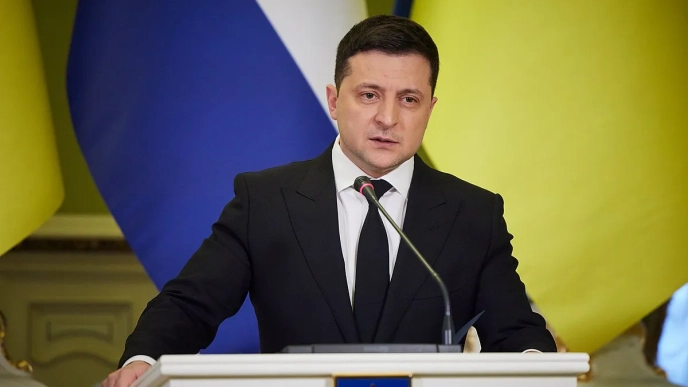
Ukraine’s Hopes of NATO Entry Dashed Over Its Persistent Corruption

Ukraine has been jockeying for a spot in NATO since it gained independence from the former Soviet Union in 1991 and has good reason to believe it has a shot. After all, NATO allies agreed at the 2008 Bucharest Summit that the country would one day become a member of the military alliance.

Despite early eagerness, Ukraine pursued a non-alignment policy from 2010 to 2014; however, it jettisoned this approach around the time of Russia’s annexation of the Crimean Peninsula. In 2017, the Ukrainian parliament — which has not had elections since 2019 — adopted legislation recommitting the pursuit of membership in NATO.

A senior official in the U.S. State Department recently told the Telegraph that NATO will soon inform Ukraine ahead of the alliance’s annual summit next week that it remains too corrupt to enter the alliance.

“We have to step back and applaud everything that Ukraine has done in the name of reforms over the last two-plus years,” the official told the British paper. “As they continue to make those reforms, we want to commend them, we want to talk about additional steps that need to be taken, particularly in the area of anti-corruption. It is a priority for many of us around the table.”

This is hardly the first time the alliance has thrown cold water on Ukraine’s dreams of membership over its struggles with corruption. (Read more from “Ukraine’s Hopes of NATO Entry Dashed Over Its Persistent Corruption” HERE)

WATCH: Chinese Rocket Crashes Into Mountain After Accidental Launch

A rocket belonging to a Chinese civilian aerospace manufacturer crashed into a mountain after accidentally launching Sunday, the company announced.

Space Pioneer, also known as Beijing Tianbing Technology, was attempting a ground test with their Tianlong-3 rocket when a “structural failure” caused it to separate from the launch pad, a statement obtained by CNN said.

“Due to the structural failure of the connection between the rocket body and the test platform, the first-stage rocket was separated from the launch pad,” the company stated.

“After liftoff, the onboard computer was automatically shut down, and the rocket fell into the deep mountains 1.5 kilometers [0.9 miles] southwest of the test platform. The rocket body fell into the mountain and disintegrated.”

Videos shared on social media by onlookers shows the moment the rocket was launched before falling and causing a fiery explosion:

(Read more from “WATCH: Chinese Rocket Crashes Into Mountain After Accidental Launch” HERE)

Over 15 Killed in Suspected Terror Attacks on Russian Synagogues, Church, Police Post

More than 15 cops and several civilians, including a priest, were killed when gunmen attacked two synagogues, an Orthodox church and a police post in a suspected coordinated terror attack in Russia.

Russian officials said the assaults against the church and one of the synagogues occurred in the coastal city of Derbent, with both catching fire, according to state media. Another synagogue and the traffic police post were hit in Makhachkala, the largest city in the same Dagestan region, according to Russian authorities.

Russia’s National Anti-Terrorist Committee said five gunmen were “eliminated” while the head of Dagestan Republic, Sergei Melikov, announced six “bandits” were “liquidated.”

“All the circumstances of the incident and the persons involved in the terrorist attacks are being established, and their actions will be given a legal assessment,” the federation said in a statement.

Melikov vowed the probe wouldn’t stop until “all sleeping cells” of the militants were found as he urged residents to stay calm. (Read more from “Over 15 Killed in Suspected Terror Attacks on Russian Synagogues, Church, Police Post” HERE)