Legislation Would Curb Restrictions on Political Speech in Churches

Congress is taking aim at a 1950s-era law that restricts the free speech of churches and other nonprofits after President Donald Trump recently condemned it.

Trump pledged at the National Prayer Breakfast earlier this month, “I will get rid of, and totally destroy, the Johnson Amendment and allow our representatives of faith to speak freely and without fear of retribution.

Rep. Jody Hice, R-Ga., was a pastor for 25 years before serving in Congress, which is one reason he favors doing away with the Johnson Amendment. The law threatens the tax-exempt status of nonprofits, including churches, for engaging in certain political speech.

“For too long, the IRS has used the Johnson Amendment to silence and threaten religious institutions and charitable entities,” Hice said in a public statement. “As a minister who has experienced intimidation from the IRS firsthand, I know just how important it is to ensure that our churches and nonprofit organizations are allowed the same fundamental rights as every citizen of this great nation.”

Hice and House Majority Whip Steve Scalise, R-La., announced their bill to repeal the law the same day Trump pledged to at the National Prayer Breakfast.

Repealing the Johnson Amendment was included in the GOP platform adopted at the 2016 Republican National Convention that nominated Trump.

The bill would amend the U.S. tax code to allow 501(c)(3) nonprofit organizations to speak out on political matters so long as the commentary is made in the ordinary course of the carrying out of a group’s tax-exempt purpose, and as long as no expenditures are made to promote the message that might relate to a candidate.

Sen. James Lankford, R-Okla., the co-chairman of the Congressional Prayer Caucus, has a companion Senate bill, which he said is crafted to ensure more political speech rights, but also won’t allow churches and nonprofits to become political action committees.

“The Free Speech Fairness Act is needed to prevent government intrusion and suppression of free speech by removing a restriction on speech that has existed since 1954,” Lankford said of his bill in a public statement. “The First Amendment right of free speech and right to practice any faith, or no faith, are foundational American values that must extend to everyone, whether they are a pastor, social worker, or any charity employee or volunteer.”

However, Rob Boston, spokesman for Americans United for Separation of Church and State, insisted repealing the Johnson Amendment could unleash money in politics and corrupt the purpose of churches.

“This is an issue closely identified with the religious right, but it would affect every organization with 501(c)(3) status, not just houses of worship,” Boston told The Daily Signal in phone interview. “You might see sham nonprofits start up to funnel money to campaigns. Tax-exempt status is a benefit, but it does come with conditions.”

Boston said this is a question of bad policy rather than a constitutional matter.

“I don’t think [getting rid of the Johnson Amendment] would be an Establishment Clause violation unless the repeal was limited to houses of worship,” Boston said.

A leaked draft executive order from the White House showed the Trump administration was considering an inclusive order to recognize the right to religious expression, not just the right to worship. Once this was reported, several liberal groups stepped up to oppose the action.

A concern to some conservatives is that Trump will attempt to address the Johnson Amendment matter through an executive order, while ignoring other significant religious freedom concerns.

Melanie Israel, a research associate with the DeVos Center for Religious and Civil Society at The Heritage Foundation, told The Daily Signal in a statement:

Should Trump issue an executive order that only addresses the Johnson Amendment, it would be a tremendous disappointment because the Johnson Amendment cannot be fully addressed by executive order and must ultimately be repealed by Congress. In the meantime, there are high-priority items that can be fixed by the text of the draft executive order earlier this month. Trump should move quickly to make good on the commitment that his administration will do ‘everything in its power’ to protect religious liberty. The draft copy of the leaked executive order is a good, lawful public policy that would ensure that the public square remains open to all religious voices, including those whose voices differ from the government’s view.

The Johnson Amendment was named after then-Sen. Lyndon B. Johnson, a Texas Democrat, in 1954. Johnson was the Senate minority leader at the time, and he and other lawmakers were concerned 501(c)(3) nonprofit groups would get involved in the elections on behalf of their opponents.

Just before the Senate’s summer recess, Johnson, who would go on to become vice president and later president, pushed through an amendment to rescind a charitable nonprofit’s tax-exempt status if such an organization—including churches—campaigned for or against a political candidate.

The text of the House and Senate bills protect liberal and conservative groups and churches of any leaning, said Travis Weber, director for the Center for Religious Liberty at the Family Research Council.

“This loosens up simple speech on churches or environmentalist nonprofits or other groups,” Weber told The Daily Signal. “Some might seize on this and say this repeal would be good for just Republicans or for Christian conservatives, but they aren’t looking at the law to see who it protects.” (For more from the author of “Legislation Would Curb Restrictions on Political Speech in Churches” please click HERE)

Follow Joe Miller on Twitter HERE and Facebook HERE.

This Lawmaker Faults GOP Leadership for Not Blocking DC Assisted Suicide Law

Republican leaders in the House and Senate don’t want to stand up for life by rejecting the legalization of physician-assisted suicide in the nation’s capital, a prominent conservative lawmaker said Tuesday.

“We disagree with the law,” Rep. Jim Jordan, R-Ohio, said. “We disagree with the premise of what D.C. did, and we have the constitutional authority to disapprove it.”

Jordan spoke in response to a question from The Daily Signal at a monthly meeting between reporters and Republican House members called Conversations With Conservatives.

The House Oversight and Government Reform Committee voted 22-14 Monday night to block the District of Columbia’s assisted suicide law from going into effect Saturday. The D.C. Council passed the bill in December and D.C. Mayor Muriel Bowser signed it.

Jordan said the committee’s chairman, Rep. Jason Chaffetz, R-Utah, doesn’t intend to send the resolution disapproving the city law to the full House for a vote.

A resolution of disapproval is an expedited way for Congress to invalidate a D.C. law.

The Constitution and the D.C. Home Rule Act give Congress jurisdiction over the District of Columbia. Congress may reject laws passed by the D.C. Council with enough votes in both the House and the Senate, if it does so within 30 congressional work days.

Sen. James Lankford, R-Okla., spearheaded opposition to the assisted suicide law in the Senate, and Rep. Brad Wenstrup, R-Ohio, is doing so in the House.

Both chambers have until Friday to reject the Death with Dignity Act of 2015 or it takes effect Saturday.

Either Chaffetz or House Speaker Paul Ryan may move the resolution toward a floor vote, Jordan noted to reporters, and that can be done within 24 hours of the committee vote.

“Right now the holdup is the chairman,” Jordan said. If Chaffetz doesn’t act, he added, “it is in essence denying every single [House] member a right they have under the rule to call up this particular resolution.”

In the Senate, Sen. Ron Johnson, R-Wis., chairman of the Homeland Security and Governmental Affairs Committee, would need to move a disapproval measure.

Unless the House adopts the resolution disapproving the assisted suicide law, the Senate can’t act and President Donald Trump can’t sign the measure.

Chaffetz’s office did not return an email Tuesday morning from The Daily Signal on the D.C. law.

Ryan and Senate Majority Leader Mitch McConnell also did not return emails seeking comment.

In an interview Tuesday afternoon with D.C. radio station WMAL-AM, Jordan said of the city’s law: “Congress has the ability to stop it and we’re not even going to let it get to the House floor.”

Lankford introduced his companion resolution Jan. 12.

“This resolution of disapproval responds to an action from the D.C. City Council and their mayor,” Lankford told The Daily Signal in a phone interview at the time. “Congress spoke in the 1990s actually forbidding assisted suicide within the District of Columbia. So that is something that has already been settled as an issue from Congress from decades ago.”

The city’s assisted suicide law would permit “an adult who has been diagnosed with a terminal disease, having less than six months to live, to receive a prescription for medication to end his or her life.”

The phrase “terminal disease” is dangerous, Lankford’s office argues, because it could be interpreted to mean illnesses such as diabetes and leukemia, which normally are fatal only if not treated.

Physician-assisted suicide was passed in California, Colorado, Oregon, Vermont, and Washington and legalized in Montana by a court ruling.

Compassion & Choices, which seeks legalization of assisted suicide across the nation, argues that terminally ill individuals should have the choice to “end their suffering if it becomes intolerable.”

“There are many people that have stated that [banning physician-assisted suicide] removes the ability for a doctor to be able to work with a family, to be able to make difficult life decisions about end-of-life choices,” Lankford said. “That is far from the truth. All of those things remain when a doctor and a family are working together to make difficult end-of-life decisions.”

A physician, Wenstrup said he has strong convictions about not legalizing physician-assisted suicide. In a statement provided last month to The Daily Signal, he said the D.C. law would limit health care options and suggested it could encourage suicide.

“Under this new law, if D.C. residents are not able to pay for health care out of pocket, they may find their options severely limited when facing a new diagnosis, suffering from a chronic illness, facing a disability, or struggling with mental illness,” Wenstrup said.

Stephanie Woodward, director of advocacy at the New York-based Center for Disability Rights, shares a similar sentiment.

“Any act proposing to legalize assisted suicide puts real lives at risk,” Woodward said in an email to The Daily Signal. “We have a profit-driven health care system where it is all too easy to say ‘no’ to covering expensive, life-prolonging treatment, and ‘yes’ to a cheap pill with a lethal impact.”

Some opponents of legalized assisted suicide say it might appeal to individuals who might not be able to pay for medical treatment.

This was the case for Stephanie Packer, whose insurance company refused to pay for chemotherapy treatment for cancer but told her it would cover the cost of physician-assisted suicide “with a copayment of $1.20” for the lethal drugs, according to the New York Post.

Physician-assisted suicide encroaches on the sanctity of life and fosters disrespect for life, Lankford told The Daily Signal.

“There should be a basic principle for life,” the Oklahoma Republican said. “This is not a medical issue as much as it is a suicide issue, and we think that we should build a culture of life within the country.” (For more from the author of “This Lawmaker Faults GOP Leadership for Not Blocking DC Assisted Suicide Law” please click HERE)

Follow Joe Miller on Twitter HERE and Facebook HERE.

House Dems Troll Trump With Valentine’s Day Card

The Democratic Congressional Campaign Committee (DCCC) on Tuesday mocked President Trump with a Valentine’s Day card featuring Russian President Vladimir Putin.

“Trump’s having a tough day,” the DCCC said Tuesday in a tweet. “We thought a Valentine’s Day card could cheer him up!”

The tweet included an image of a card, which featured a picture of Putin wearing red heart-shaped glasses.

The image included a poem that read: “Roses are red. Violets are blue. We’re sorry that Putin is the only one who loves you.” . . .

“We can’t let Trump off the hook just because it’s Valentine’s Day,” the page said. “Sign our tongue-in-cheek card to remind him the resistance will never let up.” (Read more from “House Dems Troll Trump With Valentine’s Day Card” HERE)

Follow Joe Miller on Twitter HERE and Facebook HERE.

Scalia Breaks It Down: Is There a ‘Right’ to Immigrate to the US?

Monday marks a year since the tragedy of Justice Antonin Scalia’s death while on a hunting trip in west Texas, and his legal insight remains as poignant and pertinent as the day he left this world.

The Ninth Circuit court has recently come under fire from all sides for their “absurd,” “dangerous,” and “damningly silly” ruling against President Donald Trump’s travel suspension. And the current dustup between the judiciary and the executive — as well as the impending nomination fight over Scalia’s successor — raises the question on the anniversary of his death: What would Justice Scalia have to say about all this?

While we will never know the answer to that on this side of paradise, the late jurist’s dissent in a previous immigration case might offer some insight.

The case was Zadvydas v. Davis in 2001. The question before the court was whether or not the executive branch had a right to detain an alien set for deportation indefinitely, or if the 90-day detention period created some sort of “right” to be released back into the general population.

While the 5-4 majority ruled that the detention period was limited to 90 days, Scalia dissented (joined by Clarence Thomas), arguing that the rights of aliens to be deported run along the same lines as those at the border seeking entry.

Here’s what Scalia had to say about both:

“Insofar as a claimed legal right to release into this country is concerned. “An alien under final order of removal stands on an equal footing with an inadmissible alien at the threshold of entry: He has no such right.

“We are offered no justification why an alien under a valid and final order of removal – which has totally extinguished whatever right to presence in this country he possessed – has any greater due process right to be released into the country than an alien at the border seeking entry.”

Scalia makes this point its simplest, by offering: “[A]n inadmissible alien at the border has no right to be in the United States.”

In the case, Scalia also goes back to Justice Robert Jackson’s dissent from in Shaughnessy v. United States in 1953, which Justice Frankfurter joined:

“Due process does not invest any alien with a right to enter the United States, nor confer on those admitted the right to remain against the national will. Nothing in the Constitution requires admission or sufferance of aliens hostile to our scheme of government.”

This, of course, doesn’t mean that someone’s human rights are contingent upon their citizenship, but that but that there is no such thing as a right for a person to enter the country of which they are not a citizen. “[Another previous immigration case] at least involved aliens under final order of deportation,” explained Scalia in the Zadvydas dissent. “But all it held is that they could not be subjected to the punishment of hard labor without a judicial trial. I am sure they cannot be tortured, as well–but neither prohibition has anything to do with their right to be released into the United States.”

Yet the Ninth Circuit has ruled that every potential migrant in a terror-infested warzone of a failed state now has constitutional due process rights to come in whenever they want, that government institutions somehow suffer “Concrete and Particularized Injury” as a result, and that campaign statements are fair game in evaluating a law.

A year since his passing, Scalia’s absence has left an unmistakable void on American jurisprudence, and time will only tell if Trump’s Supreme Court pick will prove up to the task of following such a titanic presence on the bench.

One thing is certain, however: As the federal circuits slip further and further into absolute legal nonsense like that seen last week, Justice Antonin Scalia’s witty, commonsensical clarity will only be missed more and more. (For more from the author of “Scalia Breaks It Down: Is There a ‘Right’ to Immigrate to the US?” please click HERE)

Follow Joe Miller on Twitter HERE and Facebook HERE.

Ninth Circuit Forces Arizona to Follow Obama’s Illegal Amnesty, Provide Illegals With Driver’s Licenses

You heard that right. At the same time the Ninth Circuit is flipping federal immigration power on its head and allowing states to block Trump’s lawful order reducing dangerous immigration, it is forcing Arizona to comply with Obama’s executive amnesty and provide illegal aliens with driver’s licenses.

There is no word in the English language to describe this degree of perfidy and hypocrisy. I don’t know how I missed this, but just one week before the Ninth Circuit nullified federal immigration laws and lawfully delegated presidential powers, the full court refused to overturn a three-judge panel that forced Arizona to provide DACA recipients with driver’s licenses.

The rationale of the court? Arizona was preempted by federal immigration powers!!!

“The federal government, not the states, holds exclusive authority concerning direct matters of immigration law,” wrote the radical Judge Harry Pregerson. This opinion to deny the rehearing of the case was joined by 23 of the remaining 28 active judges on the Ninth Circuit … including Judge Michelle Friedland. She wrote the opinion last week saying that states can force the federal government to bring in more immigrants even when the president is acting on iron-clad statutory authority.

Just last week, I detailed how the federal courts are flipping federalism and immigration on its head — upside down, inside out. However, the juxtaposition of these two decisions takes the duplicity to a new level. A few points to consider:

1) Sure, the federal government controls immigration, but which branch? Congress. With Obama’s DACA amnesty, Obama unilaterally nullified federal statutes and created his own immigration program, a program that was explicitly rejected by Congress. Trump, on the other hand, was following a long tradition of delegated authority to ratchet down immigration as needed, in concert with five congressional statutes.

2) Arizona was being asked by illegal aliens, who should never have had standing to sue, to initiate a positive action in order to abide by Obama’s unlawful amnesty. Washington and Minnesota, on the other hand, were given no mandate by Trump’s order. They were the ones burdening the federal government and overriding federal plenary power over immigration.

3) As Scalia noted in Arizona v. U.S., “the naturalization power was given to Congress not to abrogate States’ power to exclude those they did not want, but to vindicate it.” On the other hand, it was designed precisely to prevent liberal states from flooding the rest of the union with immigrants the federal government deemed undesirable, as the Ninth Circuit allowed Washington to do last week.

4) In Texas v. U.S., the Obama administration explicitly argued that states could not get standing to sue against the executive amnesty precisely because, in their view, states were not obligated to issue driver’s licenses! Now the Ninth Circuit is contending that states must give driver’s licenses but have no reason to complain!

5) After ruling that the state of Washington will suffer irreparable harm if Trump exercises his legitimate authority to keep out un-vetted immigrants from war-torn countries, the same panel ruled that “Arizona has no cognizable interest in making the distinction it has for drivers’ licenses purposes.” The fact that almost 30,000 driving offenses have been committed just by the 30,558 criminal aliens Obama released in fiscal year 2014 alone is evidently of no concern to Judge Pregerson, who has replaced jurisprudence with political rants.

6) There is a seamless flow from obtaining a driver’s license to voting via the motor-voter laws. Yet, this same court has prevented Arizona from verifying proof of citizenship in order to register to vote.

7) With at least 630,000 illegals residing in the state, at a cost of $2.4 billion a year, Arizona is left defiled and helpless in protecting its own residents and even their right to vote in untainted elections. Over 10% of the state’s public school population is comprised of illegal alien children. The Arizona Department of Corrections estimates that illegal aliens comprise 17% of its prison population and 22% of all felony defendants in Maricopa County. Arizona has become the drug smuggling capital of the country. From 2010-2015, heroin seizures in Arizona have increased by 207%, while methamphetamine seizures grew by 310%. In FY 2014, there were more pounds of marijuana seized in the Tucson corridor than every other border sector combined. Yet, the state has no “cognizable interest” in fighting a past president’ illegal amnesty, but Washington state has an interest in overturning federal immigration power of an existing president and demanding its own immigrants!?

The courts of Sodom and Gomorrah indeed.

This is why it is foolish for any conservative to suggest that a better prepared Trump administration could have survived the Ninth Circuit. Those judges are willing to use opposing legal theories in order to achieve the “right” political outcome at any and all costs. That is why we need wholesale judicial reform and why it must start with breaking up the Ninth Circuit. Meanwhile, Arizona’s junior senator, Jeff Flake, R-Ariz. (F, 50%) is more bothered by the criticism of these judges than what they are doing to disembowel his own state.

The fact that states are still being forced to issue driver’s licenses to illegal aliens is another reason why Trump must terminate DACA. It’s not merely about the inaction of declining to deport this category of illegal aliens. These illegals are unconstitutionally obtaining Social Security cards, which forces states to issue driver’s licenses. It’s time for Trump and Congress to unite on behalf of Arizona and expose the duplicity of the courts. (For more from the author of “Ninth Circuit Forces Arizona to Follow Obama’s Illegal Amnesty, Provide Illegals With Driver’s Licenses” please click HERE)

Follow Joe Miller on Twitter HERE and Facebook HERE.
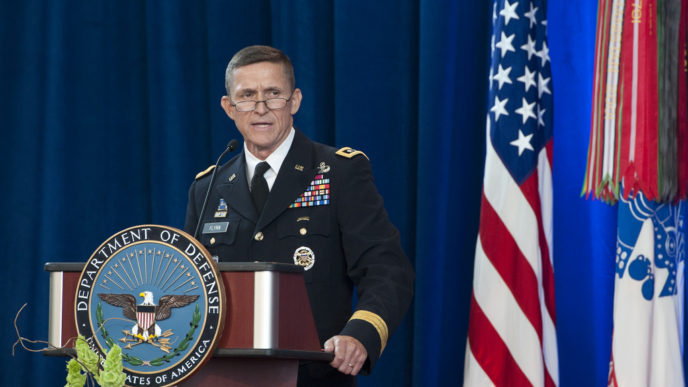
National Security Advisor Michael Flynn Resigns

President Donald Trump’s embattled national security adviser Michael Flynn resigned late Monday night, following reports that he had misled Vice President Mike Pence and other officials about his contacts with Russia. His departure upends Trump’s senior team after less than one month in office.

In a resignation letter, Flynn said he held numerous calls with the Russian ambassador to the U.S. during the transition and gave “incomplete information” about those discussions to Vice President Mike Pence. The vice president, apparently relying on information from Flynn, initially said the national security adviser had not discussed sanctions with the Russian envoy, though Flynn later conceded the issue may have come up.

Trump named retired Lt. Gen. Keith Kellogg as the acting national security adviser. Kellogg had previously been appointed the National Security Council chief of staff and advised Trump on national security issues during the campaign. (Read more from “National Security Advisor Michael Flynn Resigns” HERE)

Follow Joe Miller on Twitter HERE and Facebook HERE.

Trump Terrorism Adviser Says War on ISIS About Ideology

One of the key figures driving President Donald Trump’s national security policy outlined a counterterrorism vision on Monday squarely focused on defeating ISIS beyond the battlefield.

Sebastian Gorka’s view of the ISIS threat melds with many in the White House who believe that the U.S. is engaged in a nontraditional war against radical Islam.

Gorka, and others in Trump’s orbit, allege that previous administrations have not properly combatted the ideology they say fuels terrorism, and that the U.S. government has struggled to define the war it is fighting.

“In this current warfare environment, body bags are not a good metric for winning,” said Gorka, a deputy assistant to the president, during an event at The Heritage Foundation. “You can kill a jihadi high-value target. But what happens if the next day, 20 people volunteer to replace that jihadi? The last 16 years we have become preeminent in exquisite whack-a-mole. Oh, and we are good at it.”

“We look at physical battlefield actions as the metric for success,” Gorka continued. “We have to understand 80 percent of this war will be fought in the mind, and 80 percent of our conflict will be fought in the media domain.”

Early Actions

Gorka, a former Breitbart News national security editor who has held positions at various military educational institutions, did not outline specific policies that transfer his ideas into action.

But some early actions by the Trump administration, and others reportedly being considered for roles in it, reflect a different approach to counterterrorism explicitly focused on “radical Islamic terrorism.”

At the Heritage event, Gorka defended Trump’s controversial executive order temporarily halting refugee admissions, and travel from seven countries the Obama administration and Congress had designated as posing risks of terrorism.

Politico reported Monday that Gorka was one of the few White House staffers consulted ahead of Trump’s order, which has been blocked by the courts.

Lawsuits around the country have alleged that Trump’s order violates the Constitution by intentionally punishing Muslims, and many trial courts blocked aspects of the president’s order.

Gorka, and others in the Trump administration, reject charges of religious intent, and say the chosen countries are sources of terrorism.

“One of the reasons the president signed his executive order [is that] those [targeted] nations are where ISIS and al-Qaeda exist, plus Iran,” Gorka said. “We won’t capture or kill all jihadis. What will happen is they will move. They may go to your neck of the woods. We want to make sure that events like Berlin, like Nice, like Paris, don’t happen in America. We have to understand that ISIS’ battlefront begins when you leave your house in the morning.”

Gorka’s calls for a tougher response against Islamist radicalism are reflected in other moves being considered by the White House.

The Trump administration is reportedly considering re-engineering a Department of Homeland Security domestic counterterrorism program—known as Countering Violent Extremism—to concentrate on Islamic extremism only. Some counterterrorism experts say this singular focus ignores other forms of extremism, and may harm relations between Muslim community groups and the government.

In addition, the Trump administration, according to The New York Times and others, is debating an order to designate the Muslim Brotherhood, an influential Islamist group in the Middle East, as a foreign terrorist organization.

‘Help Muslims Win the War’

Together, these actions and ideas represent an about-face to traditional U.S. strategy embraced by both Republican and Democrat administrations.

Former Presidents George W. Bush and Barack Obama defined the terror threat in narrower terms as they tried to avoid making it seem the U.S. was at war with Islam.

They argued that a more direct focus on radical Islam would feed into ISIS’ narrative that Muslims are not welcome in the West, and encourage more extremism.

Gorka on Monday defended himself against others in the national security establishment who’ve criticized his rhetoric as inflammatory.

“We are not at war with Islam,” Gorka said. “Let me be explicit here. It’s very easy for our detractors to paint us as Islamophobes. It is absolutely wrong. This is a war inside Islam—war for the heart of Islam. Which version will be preeminent? We have to help Muslims win the war for the heart of their own religion.”

Whereas Obama tried to not legitimize ISIS by overstating its power, and said he believed they did not constitute an existential threat to America, Gorka argues the U.S. government needs to take the claims of the terrorist group literally.

“ISIS is different because it succeeds where every jihadi group failed, and it has captured transnational, transregional territory, which by itself means it is a tier one threat to all people who believe in freedom of religion, freedom of expression, democracy, and representative government,” Gorka said. “ISIS has not just rehashed al-Qaeda’s message of jihad. They have really executed an ideological and theological coup.”

“Every time it [ISIS] tweets or goes on Telegram [a messaging service] and says, ‘We are the Islamic State of Iraq and al-Sham [translation of Syria in Arabic],’ they are a sending very powerful message to that man in his mom’s basement, to that Pakistani immigrant on a fiancé visa in San Bernardino,” Gorka added.

‘Deligitimze Ideology’

Gorka, and others in the Trump administration, have so far not outlined specific differences on how to fight ISIS and take back territory it controls in Iraq and Syria.

Late last month, Trump issued a directive ordering his new defense secretary, retired Marine Gen. James Mattis, to submit a strategy within 30 days to defeat ISIS.

But Gorka did signal a pullback from one component of the Obama administration’s counterterrorism strategy: relying on elite special operations forces to conduct raids and kill missions. Obama described this approach as less costly and more efficient than traditional combat operations.

Trump’s first counterterrorism operation using special operations forces, a raid against al-Qaeda’s Yemen affiliate last month, resulted in the death of a Navy SEAL, and civilian casualties.

“In the last eight years, we have tended as a government to look at our special operations capabilities as the easy button,” Gorka said. “That is a wholly fallacious understanding of special operations. The whole point of our bravest of the brave is that they are a tactical level deployment meant to effect strategic results—not a tactical level asset for tactical results. We should go back primarily to do what they were created to do. We should be helping others fight their own fights, not fight their fights for them.”

If Trump follows Gorka’s approach to counterterrorism, he envisions a dramatic result.

“What is victory in this war?” Gorka said. “Sebastian Gorka’s definition of victory is very simple. We will have won when the black flag of jihad, when the black flag of ISIS, is as repugnant across the world as the white peaked hood of the Ku Klux Klan and the black, white, and red swastika of Hitler’s Third Reich.”

“Don’t get me wrong, killing terrorists is great,” Gorka continued. “I am down with killing terrorists. But the ultimate victory will have accrued when we delegitimize the ideology of groups like the Islamic State.” (For more from the author of “Trump Terrorism Adviser Says War on ISIS About Ideology” please click HERE)

Follow Joe Miller on Twitter HERE and Facebook HERE.
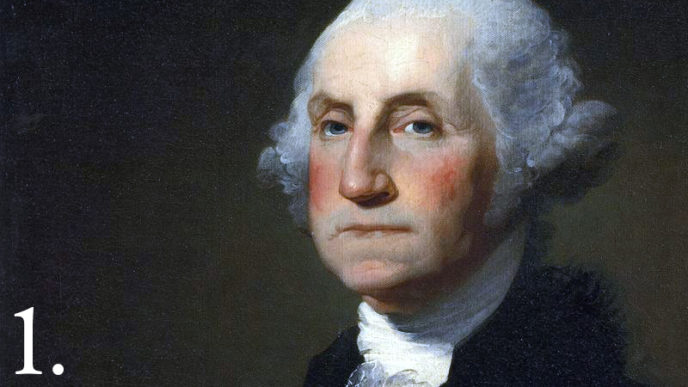
Trump Has Fewest Cabinet Secretaries Confirmed Since George Washington

It took nearly a month, but President Donald Trump is finally operating with at least half of his Cabinet in place. Not since George Washington in 1789 has a newly elected president waited so long.

Twenty-five days after Trump took the oath of office, the Senate on Monday night voted to confirm the eighth and ninth members of his Cabinet: Treasury Secretary Steven Mnuchin and Veterans Affairs Secretary David Shulkin. The six remaining Cabinet nominees will have to wait a while longer.

Why? Unprecedented delays and obstructionism on the part of Democrats have resulted in the most contentious confirmation process in U.S. history, according to a Washington Post analysis. No other president’s nominees have collectively faced similar opposition.

And that’s just the 15 members of Trump’s Cabinet. Other top nominees, such as Rep. Mick Mulvaney to lead the Office of Management and Budget and Scott Pruitt to head the Environmental Protection Agency, continue to wait as well. And then there’s Supreme Court nominee Neil Gorsuch, who could face the biggest battle of anyone.

It’s the consequence of a polarized Washington, where Democrats are in no rush to rubber-stamp Trump’s picks, even though past presidents have been afforded such a courtesy.

“President Trump has the fewest Cabinet secretaries confirmed at this point than any other incoming president since George Washington,” lamented Senate Majority Leader Mitch McConnell last week. “The president deserves to have his Cabinet in place. The American people deserve that, too.”

The Kentucky Republican, a scholar of Senate history, reviewed the records and discovered that prior to the 1950s, most Cabinet nominees faced no opposition at all. (McConnell’s analysis included first-term elected presidents, not those who assumed office after a vacancy.)

In fact, many presidents had their Cabinet nominees in place on Day One. Such was the case beginning in 1881 with President James Garfield and spanning 52 years until President Franklin D. Roosevelt.

Washington, of course, was establishing the office for the first time when he was inaugurated on April 30, 1789. His Cabinet wasn’t confirmed until September 1789.

In recent history, Trump’s predecessors have enjoyed a much faster pace of Cabinet confirmations. At this point in their presidencies, here’s how they compared to Trump:

Barack Obama had 12 of 15 confirmed.

George W. Bush had 14 of 14 confirmed.

Bill Clinton had 13 of 14 confirmed.

George H.W. Bush had 10 of 14 confirmed.

Ronald Reagan had 12 of 13 confirmed.

Jimmy Carter had 11 of 11 confirmed.

Richard Nixon had 12 of 12 confirmed.

John F. Kennedy had 10 of 10 confirmed.

Dwight D. Eisenhower had nine of 10 confirmed.

Monday’s confirmation of Mnuchin and Shulkin gives Trump nine of his 15 Cabinet secretaries. Two of Trump’s nominees—Sonny Perdue for agriculture secretary and Andrew Puzder for labor secretary—haven’t had a committee hearing yet. Puzder’s is scheduled for Thursday, while Perdue, picked Jan. 18, is still awaiting a date.

The confirmation delays have left many agencies without a leader, a situation Democrats know is impeding Trump’s ability to implement his policies.

“This is a president who wants change, and he has got to get his nominees confirmed as soon as possible if he is going to get that change,” Don Devine, director of the Office of Personnel Management under Reagan, told The Daily Signal last month.

Under the leadership of Senate Minority Leader Chuck Schumer, Democrats have kept their promise to delay Trump’s nominees, even if they lack the votes ultimately to defeat them.

Schumer, D-N.Y., specifically targeted eight of Trump’s picks. Five now have been confirmed: Education Secretary Betsy DeVos, Health and Human Services Secretary Tom Price, Attorney General Jeff Sessions, Secretary of State Rex Tillerson, and Mnuchin. The other three targeted are Mulvaney, Pruitt, and Puzder.

Trump has also voiced frustration with the slow progress.

And while the Senate slowly confirms his Cabinet, the time it spends to do so prevents lawmakers from addressing the president’s legislative priorities. Last week, for instance, senators had to wait 30 hours between votes because of Democrat delaying tactics. The Senate confirmed three nominees—DeVos, Sessions, and Price—over the span of a week.

Even those who won Senate confirmation faced “record-setting opposition,” according to The New York Times.

Another delaying tactic Democrats have employed is boycotting the nominees’ committee votes to deny a quorum. Three of Trump’s nominees have faced this treatment—unprecedented for a newly elected president. Obama and Bush nominees faced similar boycotts, but not until later in their presidencies.

In 2009, Obama had 10 Cabinet secretaries confirmed after his first week in office. Nine of those nominees won Senate confirmation by voice vote, where an official tally isn’t recorded.

The Obama nominee who faced the greatest GOP opposition—Timothy Geithner for treasury secretary—was approved 60-34 on Jan. 26, 2009, less than a week after Obama took office.

Like Trump, Obama enjoyed a Senate controlled by his own party. Democrats had 57 senators on Jan. 20, 2009, when Obama took office. Today, Republicans have 52 senators. (For more from the author of “Trump Has Fewest Cabinet Secretaries Confirmed Since George Washington” please click HERE)

Follow Joe Miller on Twitter HERE and Facebook HERE.

What I Saw at an NYU Speech Proves Good Policing Can Prevent UC Berkeley-Type Riots

This February, there was a riot at UC Berkeley and a near riot at NYU over the invitation of speakers leftists do not like. Both are shocking stories that have gained extensive coverage. What has not been highlighted, however, is why a riot erupted in one place and why a near riot did not become a riot in the other.

The same group was involved in both incidents. A violent, brownshirt cabal known ironically as the “Antifa” (Anti-Fascists) organized to attack “Nazis.” And literally anything can get someone called a “Nazi.” My friend Katie Richter — after she appeared on “Fox & Friends” not long after a picture framing business refused to frame her photographs from Trump’s inauguration — was swamped with hate messages calling her a “Nazi” and wishing her bodily harm.

When Antifa set out to attack people at Berkeley, there was no effective police presence from the city to stop them.

The New York City Police Department, however, is not the Berkeley PD. The central pillar of the NYPD is that disorder is not tolerated. Situations are tackled quickly and decisively, leaving no room for escalation. And the bad guys know that the stuff they get away with in Ferguson, or Baltimore, or Berkeley, they won’t get away with in New York.

I was standing outside the NYU student center when Canadian Libertarian comedian Gavin McInnes was scheduled to speak. I couldn’t get inside the building because dozens of NYPD officers in bulletproof vests were denying access to anyone who did not have a current student ID. There was a good reason for this. NYU Antifa had loudly proclaimed their intention of stopping this event on their Facebook page.

On his way into the building, Gavin and his entourage was rushed by Antifa crew, though the only harm they could inflict was when one of them hurled himself over the scuffle and got close enough to Gavin to pepper spray him. Within moments, all the attackers were on the ground subdued by a police officer. Two of the Antifa people, apparently thinking I was on their side, told me that they had put a bounty out for anyone that could hurt Gavin.

Antifa still wasn’t getting the message though. So for the next few hours they mulled around, chanting about fighting fascism, about how they were going to “Off the Pigs,” about how the many black police officers were traitors (and other words I do not wish to repeat), so on and so forth. Every now and then they tried to start fights with Trump supporters, but the moment the first punch was thrown a police officer twice the troublemaker’s size would have him by the shirt collar and on the ground before anyone had time to get their cameras out.

Inside the building, Gavin was shouted down. The NYU administration did not throw the troublemakers out, so the talk could not continue. Antifa did shut down the speech — which was their goal — but it was a pyrrhic accomplishment for Antifa, as many of their “comrades” now have criminal records. And they now enjoy the contempt of hundreds of thousands of people who have seen the video of their antics on YouTube.

The real victory of the night went to the NYPD. NYU Antifa said repeatedly that they wanted to recreate the chaos and destruction of Berkeley. And they failed. They tested the Thin Blue Line, and the only “safe space” they found was the back of a police van. (For more from the author of “What I Saw at an NYU Speech Proves Good Policing Can Prevent UC Berkeley-Type Riots” please click HERE)

Follow Joe Miller on Twitter HERE and Facebook HERE.

How Trump’s Executive Orders Line up With Past Presidents

President Donald Trump is moving rapidly to fulfill campaign promises early. With little activity from Congress so far, Trump has used executive actions to achieve what he pledged to do.

Trump is on track to begin his fourth week in the White House having issued 12 executive orders. While questions have surfaced over Trump’s use of executive power, recent history demonstrates that Trump’s actions are in line with past presidents.

By the end of his third week in office in 2009, President Barack Obama had issued 14 executive orders.

Trump and Obama each issued five executive orders in the first week in office. Prior to Trump, Obama was the first modern-day president since John F. Kennedy to issue more than two in the first week.

Traditionally, a president’s early orders aim either to make good immediately on campaign commitments or rescind the previous administration’s policies. Trump has done both.

On Trump’s first day, he signed an order to begin dismantling Obamacare. Obama, on his third day in the White House, signed an executive order on closing the detention center for terrorism suspects at Guantanamo Bay Naval Base. In the face of congressional opposition, it has yet to close.

In addition to his 12 executive orders, Trump issued 12 presidential memorandums and two proclamations—totaling 26 executive actions.

An executive order is one of three basic types of written instructions a president can employ to achieve a desired outcome through the executive branch of government. The total number of executive orders issued by American presidents is over 15,000, according to data collected by the American Presidency Project.

President George Washington issued a total of eight executive orders, according to the data, while John Adams, James Madison, and James Monroe were the only presidents to issue just one.

President Franklin D. Roosevelt holds the record with 3,721—five of which were overturned by the Supreme Court in 1935. More recently, President Bill Clinton issued 364 and President George W. Bush issued 291 during their two terms.

Trump’s actions are consistent with presidents of the modern era. In his first year as president, Obama issued 39 executive orders, Bush issued 54, and Clinton issued 57.

Trump’s 12 executive orders address rolling back Wall Street regulations, reducing government regulations, placing ethics restrictions on administration officials, implementing a temporary ban on travel from seven terrorism-prone nations, enforcing border security, cutting federal funds to sanctuary cities, expediting environmental reviews, and reducing the burden of Obamacare.

His latest orders focus on “making America safe again,” which includes implementing a task force on “crime reduction and public safety,” preventing violence against law enforcement officers, and enforcing federal law to stop international trafficking of “humans, drugs, or other substances, wildlife, and weapons.”

Trump’s executive actions drew controversy, especially his order temporarily suspending immigration or travel from seven terrorism-prone countries. A federal judge in Seattle paused enforcement of the order Tuesday, and the 9th Circuit Court of Appeals in San Francisco upheld that ruling Thursday.

Over his two terms, Obama issued 276 executive orders, some of which conservatives criticized and even went to court over. Some of the most contested ones addressed illegal immigrants, health care, gun control, cybersecurity, the environment, education, and gender identity.

In his second term, Obama touted his executive power, saying: “We’re not just going to be waiting for legislation in order to make sure that we’re providing Americans the kind of help they need. I’ve got a pen and I’ve got a phone.”

Many Trump supporters looked forward to seeing him fulfill his campaign commitment to reversing some of Obama’s executive actions, with Republican controlling the White House as well as both chambers of Congress. (For more from the author of “How Trump’s Executive Orders Line up With Past Presidents” please click HERE)

Follow Joe Miller on Twitter HERE and Facebook HERE.