Appeals Court Keeps Freeze on Trump’s Refugee Order

A federal appeals court Thursday night kept a freeze on President Donald Trump’s executive order restricting refugee resettlement and other forms of legal immigration, meaning those previously blocked from traveling to the U.S. under the action can continue to enter the country as the case makes it way through the legal system.

A three-judge panel with the U.S. Court of Appeals for the 9th Circuit in San Francisco unanimously rejected the government’s assertion that the suspension of the order imperils national security, and ruled that the suing states would suffer “irreparable harms” if travel suspension could carry on.

“The states have offered ample evidence that if the executive order were reinstated even temporarily, it would substantially injure the states and multiple other parties interested in the proceeding,” the court’s ruling stated.

The judges on the Ninth Circuit panel were Judge Michelle T. Friedland, appointed by President Barack Obama; Judge William C. Canby Jr., appointed by President Jimmy Carter; and Judge Richard R. Clifton, appointed by President George W. Bush.

The ruling was focused on the narrow question of whether Trump’s executive order should be frozen while courts consider its lawfulness. The government could now ask the Supreme Court to lift the stay of the order, but the ideologically-split high court is down a member, and a 4-4 ruling would leave the appeals court decision in place.

Trump quickly turned to Twitter to denounce the decision, writing:

Kellyanne Conway, a counselor to the president, later said in an interview with Fox News that the administration “is fully confident” they will ultimately win in court.

“This ruling does not affects the merits at all,” Conway said. “It is an interim ruling, and we are fully confident that now that we will get our day in court and have an opportunity to argue this on the merits that we will prevail.”

Trump’s executive order, signed Jan. 27, bans Syrian refugees from the U.S. indefinitely, imposes a four-month suspension on all refugee admissions from anywhere in the world, and bars for 90 days people from seven countries the Obama administration and Congress had designated as posing risks of terrorism.

Those countries are Iraq, Iran, Syria, Yemen, Sudan, Libya, and Somalia.

The Trump administration received widespread criticism early on for its seemingly chaotic and uneven implementation of the order.

After facing legal challenges, the government clarified the order does not apply to green-card holders — or legal permanent residents — and it granted waivers to Iraqis who assisted the U.S. military, and refugees who had already been screened prior to the order being signed.

The courts usually defer to the executive branch on issues of national security and immigration policy.

Indeed, federal immigration law states that if the president finds “the entry of any aliens” would be “detrimental” to the country’s interests, he can impose restrictions.

But the appeals court asserted in its ruling that there are checks on these powers. The judges said the government had not provided enough evidence to support a need for the travel restrictions.

“The government does not merely argue that courts owe substantial deference to the immigration and national security policy determinations of the political branches — an uncontroversial principle that is well-grounded in our jurisprudence,” the judges wrote. “Instead, the government has taken the position that the president’s decisions about immigration policy, particularly when motivated by national security concerns, are unreviewable, even if those actions potentially contravene constitutional rights and protections … There is no precedent to support this claimed unreviewability, which runs contrary to the fundamental structure of our constitutional democracy.”

Hans van Spakovksy, a senior legal fellow at The Heritage Foundation, contended that the court overstepped its bounds.

“This decision has as little basis in the law as the original decision by the district court judge,” van Spakovsky said. “The federal courts are in essence refusing to recognize or acknowledge the authority given to the president by Congress to suspend the entry of aliens into the U.S. The very idea that any foreigner has any constitutional or statutory right to be admitted to the U.S. is absurd. This is just another sign of overbearing federal courts grabbing power from the legislative and executive branches in violation of basic separation of powers principles.”

Other legal experts agreed with the court that Trump’s order went too far.

Lawsuits around the country have alleged that Trump’s order violates the constitution by intentionally punishing Muslims, and many trial courts blocked aspects of the president’s order.

The Trump administration rejected charges of religious intent, noting that most Muslim-majority countries were not included in the order.

The 9th Circuit appeals court was ruling on a decision issued in the broadest of the trial court rulings. On Feb. 3, Judge James Robart, a federal judge in Seattle appointed by President George W. Bush, issued a temporary restraining order requiring a nationwide halt to Trump’s order — prohibiting federal employees from enforcing it — in a decision that contained little reasoning.

The states of Washington and Minnesota had brought the suit, arguing the executive order harms the state’s residents in areas of employment, education, business, and family relations.

Hundreds of travelers who are citizens of the seven targeted countries have come to the U.S. since Robart issued his order, and those that have been screened can continue to travel here at least until the courts rule on the legality of Trump’s order.

Full court proceedings on the legality of Trump’s order are expected to take months, and with multiple appeals it could take more than year before the courts make a final decision. (For more from the author of “Appeals Court Keeps Freeze on Trump’s Refugee Order” please click HERE)

Follow Joe Miller on Twitter HERE and Facebook HERE.
Trump’s Acting Treasury Secretary, an Obama Holdover, Helped Craft Iran Nuclear Deal

As President Donald Trump’s nominee for treasury secretary continues to wait for Senate confirmation, an architect of the Obama administration’s Iran nuclear deal is currently running the agency.

Acting Treasury Secretary Adam Szubin—who had been a career department employee—previously served as the acting undersecretary for terrorism and financial crimes in the Obama administration. The Senate never confirmed Szubin.

A White House spokesman told The Daily Signal this week there are no announcements planned as to whether Szubin will remain in the Treasury Department after Trump’s nominee, Steven Mnuchin, is confirmed as treasury secretary. Mnuchin is expected to get a Senate vote Saturday.

Since Jan. 20, and until Mnuchin is confirmed, Szubin is running the agency. It’s the same type of role that Sally Yates had at the Department of Justice before she was fired Jan. 30 for refusing to defend Trump’s immigration executive order.

The Treasury Department is charged with implementing the Trump administration’s new Iran sanctions. White House press secretary Sean Spicer told The Daily Signal during a press briefing this week those sanctions were applied and “went off without a hitch.”

The Trump administration last week announced new economic sanctions on 13 Iranian individuals and 12 Iranian companies in response to the country’s missile test in support of Houthi rebels in Yemen. The sanctions do not affect the Obama administration’s negotiated multilateral nuclear deal with Iran, known as the Joint Comprehensive Plan of Action.

The Treasury Department did not respond to questions from The Daily Signal.

Keeping former Obama administration officials on board could threaten the effectiveness of the new sanctions, said Fred Fleitz, a former chief of staff for arms control and international security at the State Department, working under then-undersecretary John Bolton.

“I would be concerned about implementation and enforcement of Iran sanctions with Obama holdovers in place,” Fleitz, now the senior vice president for policy and programs at the Center for Security Policy, a national security think tank, told The Daily Signal in a phone interview. “Having a confirmed treasury secretary in fast should be a priority.”

Fleitz said he is more concerned with State Department officials in the arms control bureaus, who are hostile to Trump and strongly support the Joint Comprehensive Plan of Action, being in charge of the deal.

Szubin’s time is limited at this point, and it could be too early to pre-judge what he will do, said Mark Dubowitz, a CEO of the Foundation for Defense of Democracies, a national security think tank.

“Adam Szubin is a strong believer in the Iran deal, but he is a consummate professional who is extraordinarily talented at finding innovative ways to squeeze the Iranian regime. But he is leaving soon,” Dubowitz told The Daily Signal in an email.

The Wall Street Journal reported last month that Trump chose to keep Szubin at the Treasury Department for now to maintain continuity, but that report regarded his acting undersecretary role. It could also be a sign of the new administration’s policy, said Jim Phillips, senior research fellow for Middle Eastern affairs at The Heritage Foundation.

“I think it is one more sign that the Trump administration is in no hurry to tear up the deal and is still reviewing its options,” Phillips told The Daily Signal in an email.

Szubin’s job as acting undersecretary for terrorism and financial intelligence was to disrupt financial support to international terrorist organizations, proliferators of weapons of mass destruction, and narcotics traffickers. President Barack Obama nominated Szubin to this political position in 2015 in an acting role, though the Senate never confirmed him.

Before the Iran deal, Szubin also helped to draft tough sanctions against Iran, which he later said helped force the country to negotiate.

Speaking at the Atlantic Council and the Iran Project Symposium on Dec. 17, 2015, Szubin said:

Our sanctions worked as intended. Iran would not have come to the table as seriously as it did were it not for the powerful array of sanctions robustly enforced by the U.S. and our allies around the world. And once Iran came to the table, we reached a strong, comprehensive deal that closes every pathway to an Iranian nuclear weapon.

While serving as acting undersecretary in the summer of 2015, Szubin traveled to Israel to lobby government officials to support the Iran nuclear deal, Foreign Policy reported.

Sen. Tom Cotton, R-Ark., blocked the Szubin nomination for undersecretary from coming to the Senate floor last year. He said Szubin is “well respected on both sides of the aisle,” but his key objection was to the Iran policy pushed by Obama, Secretary of State John Kerry, and Treasury Secretary Jack Lew.

“Until President Obama, and Secretary Kerry, and Secretary Lew publicly and conclusively renounce any intent to allow Iran to dollarize a foreign transaction, I will object to this nomination,” Cotton said, according to The Hill.

Cotton’s office did not respond to inquiries from The Daily Signal for this story.

Szubin began working in the Treasury Department under President George W. Bush as a career employee, serving as director of the department’s Office of Foreign Assets Control, a position he held from 2006 to 2015. Before that, Szubin worked in the Justice Department. From 1999 to 2000 he clerked for Judge Ronald Gilman, a President Bill Clinton appointee on the U.S. Court of Appeals for the 6th Circuit. (For more from the author of “Trump’s Acting Treasury Secretary, an Obama Holdover, Helped Craft Iran Nuclear Deal” please click HERE)

Follow Joe Miller on Twitter HERE and Facebook HERE.

Democrats’ Warped View of Islam Is the Reason Our National Security Debate Is So Screwed Up

The Left’s persistent denialism over the relationship between Islam, jihadism, and our national security is, to somewhat-paraphrase Thomas Hobbes, brutish and nasty without the decency of being solitary or short. Some recent polling shows the cold hard data on just how unhinged from reality this persistent denialism is.

One recent CBS News poll found that 66 percent of Democrats believe that other world religions are just as violent as Islam, while Rasmussen found that Democrats are more likely to believe that Muslims are mistreated in the U.S. than to think Christians are in Muslim-majority countries.

These, of course, raise the eternal question: What color is the sky in the Democrat Party’s world?

The first assumption – that all religions are somehow equally violent – runs parallel to the equally ludicrous assertion of many on the Left that “right-wing extremism” poses a larger threat to the American people than jihadist terror.

Is there a concerted conspiracy of militant Christians all over the world to topple sovereign governments and institute a global theocracy? When was the last time it struck? How many Baptists have been radicalized into shooting up a gay nightclub or their office building for the glory of Jesus Christ lately? And please, if Catholic or Mormon extremists ever tried to lay waste to the Milwaukee Art Museum for that grotesque depiction of Pope Benedict XVI, please let me know; I can’t find it.

Of the world’s 1.6 billion Muslims, the vast majority are peaceful. But whether or not there is a liberty-loving American patriot within each remains a rightfully debated point, given the prevalence of Sharia-supremacist attitudes throughout the Muslim world (as well as in Muslim-heavy Western populations).

Such an assumption, however, would seem to be common creed and shibboleth among Democratic policymakers who would have their fellow citizens look the other way, pretending that not all worldviews are created equal. They’re clearly not. The distinction that needs to be made here is that Islam has a problem, rather than necessarily being the problem itself. But it’s a bigger, more violent problem than any other major religion.

Then, as illustrated by the Rasmussen survey, we have Democrats’ belief that Muslims in the United States are treated worse than Christians in Muslim-majority countries. That makes you wonder whether people are still confusing that part of the world with Agrabah, the fictional city from Disney’s “Aladdin.”

Yes, let’s hold up the United States — where the First Amendment and supporting legislation have defended Muslim citizens’ rights to abstain from transporting alcohol at work, pray in public schools, and maintain beards as first responders, and even as prisoners — to some helpful case studies in the Muslim-majority world.

The abuses visited on Christians and rarely-persecuted mob violence in the Middle East are so well documented, it barely merits response. One need only look at the horrors Christians face under ISIS, the state of the underground church in Iran, the ongoing trial of Asia Bibi and others in Pakistan, and attacks on Christians by Muslims even in refugee camps to know that even a one-to-one comparison with Muslims’ wellbeing in America would be sheer lunacy.

In addition to the cases mentioned above, it’s also important to remember that Muslims in America are free to convert to other religions, profess atheistic views, or to openly question the teachings of their own faith without government coercion to the contrary.

A quick survey of Muslim-majority countries like Pakistan, Saudi Arabia, Sudan, and others with apostasy and blasphemy laws show that this is not the case for millions of their foreign counterparts, many of whom can face death for such activities.

Some will say that the real persecution doesn’t necessarily come from the state, but rather intolerance in the population. This is equally overblown.

Regardless of what you think of hate crime legislation, Muslims in the United States are protected by a justice system — bound by our laws and Constitution — that tracks, prosecutes, aggregates, and publicly reports incidents of religiously motivated hate crimes. An examination of that report shows that incidents against Muslims significantly trail behind those of Jews (with nary a word from the media, academia, and Hollywood).

While vigilante persecution of any religion is an anathema to who we are as Americans, it’s also important to keep proportion and frequency in mind. This message doubly applies to the post-election hijab hoaxers and their deceptive ilk.

Following President Trump’s travel suspension and the error-laden legal battle surrounding it, the breathless dungeon of public discussion involving Islam, terrorism, national security, and religious freedom has only gotten more hostile and dysfunctional.

It’s not because one side of the debate is pushing an agenda that oversteps the limits of power prescribed by the Constitution, thereby ushering in some sort of fascist dystopia — it’s because the other side, as the polls show, is completely detached from reality. (For more from the author of “Democrats’ Warped View of Islam Is the Reason Our National Security Debate Is So Screwed Up” please click HERE)

Follow Joe Miller on Twitter HERE and Facebook HERE.
Frank Gaffney Applauds Trump Administration for Moving Towards Terrorist Designation for Muslim Brotherhood

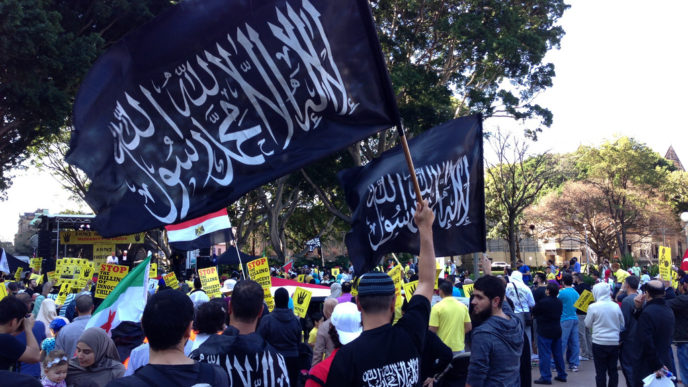
Center for Security Policy President Frank Gaffney said it was an “incredibly important step” for the Trump administration to consider formally designating the Muslim Brotherhood a terrorist organization.

“I hope he’ll do it, and I hope he’ll do it soon,” Gaffney said. “The reason simply being that the Muslim Brotherhood, in many ways, is the leading edge of the global jihad movement worldwide. It’s gotten a pass, in particular in American administrations of both Republican and Democratic stripes since 9/11, I’m sorry to say, by virtue of the fact that they putatively eschewed violence as a means of accomplishing the end-state they seek – which is the imposition of this barbaric totalitarian ideology or doctrine or program. Call it what you will; they call it sharia.”

Gaffney added that the Brotherhood seeks to impose sharia law “worldwide, not just on Muslims, but non-Muslims alike.”

“The truth of the matter is that they do not eschew violence,” he contended. “They use it where they believe they can effectively. One prime example, of course, is their Palestinian franchise known as Hamas. But the idea that we’re going to somehow get along with – let alone do what the Obama administration did in particular: empower, legitimate, fund, even arm the Muslim Brotherhood, in the case of its time and power in Egypt – is simply madness.”

“I’m very heartened that the president has seemingly taken stock of this outfit, recognizes that they are a sharia supremacist program that, in fact, has provided sort of the ideological impetus behind all of the other jihadist enterprises around the world, even of the Shiite stripe. They’ve been motivators and inspiration, and in some cases actually contributed materially to them. So the same objectives of al-Qaeda, of the Islamic State, of Boko Haram, and so on, are being practiced and espoused and sought by the Muslim Brotherhood. They’ll just use stealth and subversion, including in countries like ours, where they don’t feel they’re strong enough to use violence. They should be designated as a terrorist organization for all those reasons, and I hope will be,” he said. (Read more from “Frank Gaffney Applauds Trump Administration for Moving Towards Terrorist Designation for Muslim Brotherhood” HERE)

Follow Joe Miller on Twitter HERE and Facebook HERE.

Senate Confirms Jeff Sessions as Attorney General

The Senate voted 52-47 Wednesday night to confirm Jeff Sessions, a longtime U.S. senator and former federal prosecutor, as the nation’s 84th attorney general.

Only one Democrat, Joe Manchin of West Virginia, joined Republicans in confirming Sessions, who voted “present.”

Sessions, a Republican representing Alabama in the Senate since 1997, will take over a Justice Department that conservatives see as tainted by political corruption during the Obama administration.

Senate Majority Leader Mitch McConnell, R-Ky., lauded President Donald Trump’s choice:

Senate Democrats who opposed their colleague’s nomination succeeded in delaying a Judiciary Committee vote while continuing to attack his character. Their tactics ultimately failed to deter Sessions’ confirmation by the full Senate, where Republicans have 52 seats.

During debate Tuesday night, Sen. Elizabeth Warren, D-Mass., accused Sessions, 70, of trying to “chill the free exercise of the vote by black citizens” when he was a U.S. attorney in Alabama.

The Senate subsequently voted to prohibit Warren from speaking for the remainder of the debate because she had broken a rule against “impugning” a fellow member of the Senate. Among her tweets after the vote:

During his legal career, supporters said, Sessions actually worked to desegregate schools in Alabama and brought criminal charges against Ku Klux Klan members. Blacks who worked with and for Sessions rallied to his defense and disputed 30-year-old allegations.

Before representing Alabama in the Senate, Sessions served as the state’s attorney general for two years and as a federal prosecutor there for 12 years. In 1986, the Senate rejected President Ronald Reagan’s nomination of Sessions to a federal judgeship after liberal opponents such as the late Sen. Edward Kennedy, D-Mass., accused him of racism.

Trump announced Sessions as his choice to lead the Department of Justice in November, stating: “It is an honor to nominate U.S. Sen. Jeff Sessions to serve as attorney general of the United States. … He is a world-class legal mind and considered a truly great attorney general and U.S. attorney in the state of Alabama.”

Christian Adams, a former Justice Department lawyer who is president and general counsel of Public Interest Legal Foundation, a nonprofit law firm that works to protect the integrity of elections, told The Daily Signal that Sessions will fight for equal justice under the law.

“Finally, the United States will again have an attorney general that stands for all of the law—not just what he agrees with,” Adams said in a statement provided to The Daily Signal, adding:

Sessions has an immense task before him. He will inherit a department filled with employees that have dedicated their careers to prioritizing ideological advancement over equal enforcement of law. Despite this, I am wholly confident that Jeff Sessions is the right man for the job.

Jay Sekulow, chief counsel of the American Center for Law and Justice, a conservative legal and legislative organization, said he is excited about the fresh perspective Sessions will bring to the job. In a statement provided to The Daily Signal, Sekulow said:

After eight years of a Justice Department that was deeply politicized and incapable of doing its job, I am truly delighted that Attorney General Sessions will be at the helm of one of the most critical departments in our government.

In contrast to the one Senate Democrat who voted for Sessions, 10 Republicans voted to confirm his immediate predecessor, Loretta Lynch, and 19 voted to confirm President Barack Obama’s first attorney general, Eric Holder, in 2009.

Sessions long has supported enforcing and reforming immigration law, and he backed Trump’s proposal to build a wall at the border with Mexico.

During the Republican presidential primary, Sessions was the first senator and one of the only members of Congress to endorse Trump.

He was a member of major Senate committees, including Judiciary, Budget, and Armed Services.

(For more from the author of “Senate Confirms Jeff Sessions as Attorney General” please click HERE)

Follow Joe Miller on Twitter HERE and Facebook HERE.

Dakota Access Pipeline Easement Marks a New Day for US Energy

The final easement granted on Wednesday by the U.S. Army Corps of Engineers to complete the Dakota Access pipeline project sent a clear signal to our nation: Infrastructure development is once again a priority.

Last November, America chose a president who campaigned on rebuilding America’s infrastructure, encouraging energy development, and championing job creation. Now, only weeks into his administration, President Donald Trump’s actions have matched his campaign promises.

Four days after his inauguration, the president signed an executive order for expedited approval of the Dakota Access pipeline easement. Two weeks later, the easement has been granted.

This stands in stark contrast to the actions of President Barack Obama, whose disregard for the rule of law last fall halted the completion of the legally permitted Dakota Access pipeline.

This sent a chilling message to the private industries that finance, develop, and complete all required regulatory reviews to build roads, bridges, transmission lines, pipelines, wind farms, and water lines.

The message was that when top government officials and lawless mobs decide to obstruct a legally permitted pipeline project that is more than 90 percent complete, no infrastructure project is safe.

Few people outside North Dakota can comprehend the chaos this conflict brought to my state. It became a cause célèbre, bringing thousands of political activists, anti-oil extremists, and movie stars to an area south of Bismarck where they illegally camped on federal land.

These protestors damaged bridges and construction equipment, burned tires, threatened law enforcement and area residents, and blocked progress on the pipeline’s construction.

Except for a few hundred still in the area, these protesters are mostly gone.

Yet today, the nearby Standing Rock Sioux members and state and county crews are feverishly cleaning up the mess of personal belongings, trash, and human waste they left behind—an estimated 250 truckloads that must be hauled to the Bismarck landfill.

They are hoping to beat next month’s spring thaw on the floodplain where they camped, so that the trash left behind by these “water protectors” doesn’t pollute the Missouri River.

There is a poignant and absurd irony about this situation. Those claiming to be the true protectors of land and water turned out to be the only threat to the environment.

With the easement to finish the Dakota Access pipeline now granted, it’s time to get to work and finish this $3.7 billion private project that will deliver as many as 570,000 barrels of oil a day from northwestern North Dakota through South Dakota and Iowa to connect to existing pipelines in Illinois.

This important piece of energy infrastructure will enhance America’s energy security and put Americans back to work.

I am grateful for the president’s commitment to projects like this that are so vital to our nation.

It sends a strong signal of a new era of cooperation between the federal government and private businesses that are committed to moving our nation forward with new critical infrastructure creating greater job opportunities for Americans. (For more from the author of “Dakota Access Pipeline Easement Marks a New Day for US Energy” please click HERE)

Follow Joe Miller on Twitter HERE and Facebook HERE.
Last-Minute Lawyer Faulted for ‘Poor Job’ Defending Trump’s Immigration Order

The lawyer who argued the case for President Donald Trump’s executive order designed to bar terrorists from entering the country is the target of sharp criticism for his performance Tuesday night before a federal appeals court.

“I’m not sure I’m convincing the court,’’ August E. Flentje says.

Flentje, a career Justice Department lawyer, took the case after two top lawyers in the Trump administration recused themselves.

“I’m not sure I’m convincing the court,’’ Flentje said out loud at one point in arguing for the executive order temporarily restricting travel to the U.S. from seven terrorism-prone nations.

During the Obama administration, then-Attorney General Eric Holder honored Flentje for helping to draft the legal case for same-sex marriage and for terrorism suspects being held in the Guantanamo Bay detention center, which the administration sought to close.

When the three-judge panel from the 9th Circuit Court of Appeals pressed Flentje for evidence connecting the seven countries to terrorism, he said, “These proceedings have been moving quite fast, and we’re doing the best we can.”

He said the government hadn’t included all the evidence yet. He cited some Somalis in the United States who he said were connected to the al-Shabab terrorist group.

Judge Michelle Friedland asked, “Can you point us to where in the record you are referring?”

Flentje responded: “It is not in the record.”

Flentje delivered a weak argument that likely could affect the outcome of the case, said Hans von Spakovsky, senior legal fellow at The Heritage Foundation.

“It was a very poor job. It’s the worst presentation I can recall seeing by a Justice Department attorney,” von Spakovsky, a former Justice Department lawyer, told The Daily Signal.

Justice Department spokeswoman Nicole A. Navas said the department wanted to avoid any conflicts of interest after the former employer of two top Trump administration lawyers filed a brief on behalf of opponents in the suit against the president’s executive order.

The acting solicitor general and acting assistant attorney general “have refrained from signing this brief, out of an abundance of caution, in light of a last-minute filing of an amicus brief by their former law firm,” Navas told The Daily Signal in an emailed statement.

“The department has no additional comment than what was stated in the government’s brief,” she added on the question of why Flentje argued the case in one of the nation’s most liberal circuits.

A federal judge in Seattle on Friday placed a temporary restraining order, or TRO, on enforcement of the week-old executive order. It put a nationwide pause on carrying out the order.

Flentje’s job Tuesday night was to make the legal case for Trump’s order on vetting immigrants from seven Middle Eastern countries that have been terrorism hot spots.

“There was a lot of back and forth in that entire argument,” White House press secretary Sean Spicer said Wednesday in response to a question on Flentje’s presentation and whether Trump was concerned about it.

“I think he did what he had to do to, represent the president’s case and represent the administration’s case on the TRO,” Spicer said of Flentje before adding of Trump:

He feels very confident on the merits. That’s where his focus has been. So I’m not concerned.

I think the president’s main concern has been … making sure that an executive order that was lawfully executed and [went] through the entire process—remember, the DOJ’s Office of Legal Compliance vetted this order and deemed it was legal. So we can follow this entire process to be sure it was done correctly, constitutionally, legally.

Washington state, later joined by Minnesota, challenged Trump’s executive order, arguing it would harm their states’ tax bases and businesses.

A U.S. district judge in Seattle did not rule on the merits of the case, but determined Washington state had standing and issued the temporary restraining order on the executive order. Now, the appeals court is deciding only on the restraining order and not, for now, the actual executive order.

Flentje started work at the Justice Department about 19 years ago, under President Bill Clinton. He continued under Presidents George W. Bush and Barack Obama.

Noel Francisco, the acting solicitor general, and Chad Readler, acting assistant attorney general, initially were going to represent the Trump administration.

Their decisions to remove their names from the most recent brief and from the case itself came after their former employer, the Jones Day law firm, filed an amicus brief against Trump’s executive order. Jones Day also filed a brief seeking to remove the two lawyers from the case, contending their involvement represented a conflict.

Flentje, the special counsel to the assistant attorney general, then became the highest-ranking Justice Department attorney to handle the case.

Interestingly, Jones Day was associated with both the Trump presidential campaign and the Trump transition team. The new president named a former Jones Day lawyer, Don McGahn, as White House counsel, the legal news site Above the Law noted.

The person filing the brief against Trump’s executive order now could pose ethical questions since the Jones Day firm has had such close ties to Trump in the past, von Spakovsky said.

“The opposing brief of the executive order is a very serious conflict,” von Spakovsky said.

In 2013, Holder issued the Attorney General’s Award for Distinguished Service to a team, including Flentje, that made the legal case that the Defense of Marriage Act, a Clinton-era law recognizing marriage as the union of a man and woman, was not constitutional.

In 2010, Holder’s Justice Department honored Flentje and other lawyers with the Attorney General’s Award for Excellence in Furthering the Interests of U.S. National Security. The award was for their work on 240 appeals involving detainees at the Guantanamo Bay prison for terror suspects.

(For more from the author of “Last-Minute Lawyer Faulted for ‘Poor Job’ Defending Trump’s Immigration Order” please click HERE)

Follow Joe Miller on Twitter HERE and Facebook HERE.
Your Chicken Sandwich Costs More With a $15 Minimum Wage

Progressives are touting a $15 minimum wage as a low-cost policy to reduce poverty and income inequality. However, the costs of a high minimum wage are higher than its proponents would like to believe.

In a recent Heritage Foundation backgrounder, James Sherk outlined the costs to consumers of a $15 minimum wage and took issue with methodological flaws in two studies that proponents of a higher minimum wage often cite.

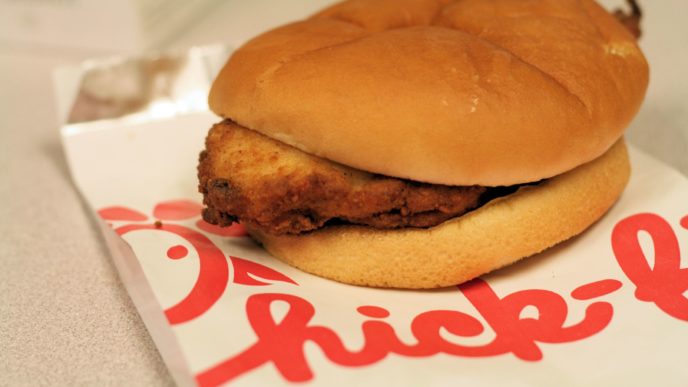
Relying on peer-reviewed scholarship on the fast-food sector, Sherk estimates that increasing the minimum wage to $15 would raise fast-food prices 38 percent and reduce employment 36 percent. A chicken sandwich that currently sells for $3.05 would instead cost customers $4.21.

The logic is straightforward: With higher labor costs and already narrow profit margins, fast-food restaurants will have to raise prices. But with higher prices, consumers spend significantly less on fast food.

Sherk goes on to argue that two studies predicting little effect from a $15 minimum wage on fast-food business models include fatal flaws.

One study by Purdue’s School of Hospitality and Tourism Management found that a $15 minimum wage would increase a fast-food restaurant’s costs by only about 4 percent.

However, the authors made a major mistake: They added up median costs, rather than average costs, which made 8 percent of all restaurant costs disappear. Since restaurants in the real world can’t make costs vanish, the study has little relevance for them.

A more respectable effort, by the Political Economy Research Institute, likewise found low costs to fast food from a higher minimum wage. However, the institute’s model assumed that fixed costs were constant in the industry, and that the fast-food sector’s future growth would be relatively low cost. With low cost growth ahead of them, restaurants could afford to pay workers more without raising prices.

However, the assumption of constant fixed costs is inappropriate in a multiyear, industrywide projection, since it implies that the industry will be able to grow without building any new stores or buying any new kitchen equipment.

The Political Economy Research Institute also assumed a lower level of price sensitivity than the scholarly consensus indicates. Finally, the institute assumed that turnover costs in the fast-food sector are unrealistically high, generating unrealistic savings from higher wages.

Correcting these three assumptions brings the institute’s model largely in line with Sherk’s.

Advocates of higher minimum wages have laudable goals: helping poor Americans become self-sufficient and showing respect for often thankless jobs.

But a high minimum wage would do more harm than good. It would raise the cost of living for low-income households, including many that don’t include a minimum-wage worker.

A higher minimum wage also would make entry-level employment harder to find, putting the bottom rung of the wage ladder out of reach to those with the fewest marketable skills.

Those who sincerely care about fighting poverty and improving economic mobility will find less costly ways to meet those goals. (For more from the author of “Your Chicken Sandwich Costs More With a $15 Minimum Wage” please click HERE)

Follow Joe Miller on Twitter HERE and Facebook HERE.
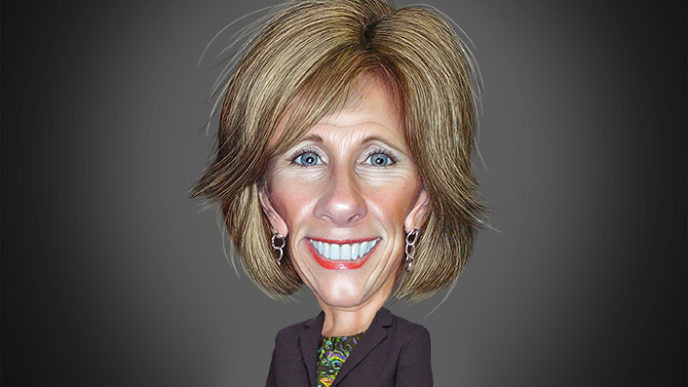
DeVos Confirmed as Education Secretary, Pence Casts Historic Tie-Breaking Vote

School choice advocate Betsy DeVos was narrowly confirmed Tuesday as the next education secretary despite deep opposition from teachers unions and other groups, after Vice President Pence intervened to cast a historic tie-breaking vote.

Pence’s vote marked the first time in American history a vice president has broken a tie on a Cabinet nominee’s Senate confirmation – and the first tie-breaking vote by a VP since 2008. Pence was compelled to cast the vote after two Republican senators – Susan Collins of Maine and Lisa Murkowski of Alaska – joined all 48 Senate Democrats in opposing DeVos.

“The Senate being equally divided, the vice president votes in the affirmative and the nomination is confirmed,” Pence said, stepping into his role as president of the Senate in a brief appearance on Capitol Hill.

With his support, DeVos was confirmed on a 51-50 vote.

Devos was sworn in later by Pence in a ceremony at the vice president’s ceremonial office, which he called “the easiest vote I ever cast.” (Read more from “DeVos Confirmed as Education Secretary, Pence Casts Historic Tie-Breaking Vote” HERE)

Follow Joe Miller on Twitter HERE and Facebook HERE.

Judge Robart’s Ruling Against Trump’s Immigration Order Is Baseless

If the law means anything, the Trump administration will succeed in overturning the so-called court ruling against its travel ban.

The nationwide stay of the ban issued by Judge James Robart, a Washington state-based federal district judge, is tissue-thin. It doesn’t bother to engage on the substance, presumably because facts, logic and the law don’t support Robart’s sweeping assertion of judicial authority in an area where judicial power is inherently quite limited.

This doesn’t justify President Donald Trump tweeting that Robart is a “so-called judge.” That slam earned Trump bipartisan blowback and may encourage other judges to tilt against Trump’s ban in response to a perceived threat to the independence of the judiciary. But Robart’s handiwork is shoddy and usurpatory, despite the fact that he is indeed a literal judge.

Even if you assume that the states of Washington and Minnesota have standing to pursue the litigation (Robart asserts implausibly that they “face immediate and irreparable injury” from the executive order, the heart of which is a three-month pause on most travel from seven countries), the stay falls down. It ignores our constitutional scheme and Supreme Court precedent, as the Justice Department brief seeking to reverse it persuasively argues.

First, Judge Robart is trespassing on a core executive responsibility. “The exclusion of aliens is a fundamental act of sovereignty,” the Supreme Court held in the 1950 Knauff case, “inherent in the executive power to control the foreign affairs of the nation.” The courts are not meant to second-guess the executive’s conduct of foreign affairs, or intrude on its plenary power in this area. “It is not within the province of any court,” the court noted in that decision, “unless expressly authorized by law, to review the determination of the political branch of the Government to exclude a given alien.”

Second, it’s hard to get around the relevant federal immigration law, which says, “Whenever the President finds that the entry of any aliens or of any class of aliens into the United States would be detrimental to the interests of the United States, he may by proclamation, and for such period as he shall deem necessary, suspend the entry of all aliens or any class of aliens as immigrants or nonimmigrants, or impose on the entry of aliens any restrictions he may deem to be appropriate.”

This is as explicit and wide-ranging as it gets. When the president has such authorization from Congress, the Supreme Court held in the Youngstown Steel case in 1952, his “authority is at its maximum, for it includes all that he possesses in his own right plus all that Congress can delegate.”

Finally, aliens residing outside the United States have no right to come here. The Supreme Court held in the 1982 Landon case, “an alien seeking initial admission to the United States requests a privilege and has no constitutional rights regarding his application, for the power to admit or exclude aliens is a sovereign prerogative.”

It’s not clear how Judge Robart expects opponents of the Trump ban to overcome these substantial and well-established obstacles. A more extensive and carefully reasoned decision by a Massachusetts-based district judge reached the opposite conclusion of his.

It is true that the ultimate source of the Trump executive order is his ill-advised call for a Muslim ban during the campaign. But the executive order, focusing on seven war-torn or hostile countries that had already been singled out for special scrutiny during the Obama administration, is manifestly not a Muslim ban.

Judge Robart may not like the Trump policy, but that doesn’t mean that it is illegal or unconstitutional. His ruling is worthy of the generally unhinged opposition to President Trump. If the judge doesn’t deserve the abuse that Trump heaped on him on Twitter, he produced what should rightly be considered so-called jurisprudence. (For more from the author of “Judge Robart’s Ruling Against Trump’s Immigration Order Is Baseless” please click HERE)

Follow Joe Miller on Twitter HERE and Facebook HERE.