How Tom Price Can Begin to Unravel Obamacare From Inside the Agency That Implemented It

Tom Price took the helm of the Department of Health and Human Services on Friday, capping a lengthy confirmation process that ended in the wee hours of the morning.

Now, as the health and human services chief, Price can begin fulfilling a yearslong goal of unwinding Obamacare. But instead of dismantling the health care law from the halls of Congress, he’ll be acting from inside the agency that oversaw its implementation.

The Senate confirmed Price 52-47, and the former House Budget Committee chairman is taking over the Department of Health and Human Services as the White House and Congress prepare to follow through on their campaign promises to repeal Obamacare.

An orthopedic surgeon who served more than a decade in the House, Price has spent the last seven years in Congress opposing the Affordable Care Act. The new HHS secretary introduced his own health care plan in 2009—he’s reintroduced that same proposal, the Empowering Patients First Act, in every Congress since then.

The Georgia Republican will take the helm of the agency at a crucial time. GOP lawmakers are debating how to dismantle the law, with a vote to repeal the Affordable Care Act expected to take place by March or April.

Unwinding Obamacare

But even as congressional Republicans finalize their course for unwinding the law, Price can now use his executive power to begin chipping away at Obamacare’s framework.

The Affordable Care Act gave the federal government the power to write and implement many of the law’s regulations through the federal rule-making process—like the exemptions from the individual mandate that are available to consumers who encounter hardships and the mandate that requires insurance plans to cover contraception and abortifacients.

And already, President Donald Trump is using that authority to make changes to the law.

“You live by the administrative state, you die by the administrative state,” Ed Haislmaier, a senior fellow at The Heritage Foundation who worked on health policy for Trump’s transition team, told The Daily Signal.

During a confirmation hearing in January, Price told a Senate committee he believed insurers needed some assistance from the Trump administration before 2018.

“What they need to hear from all of us, I believe, is a level of support and stability in the market,” the Georgia Republican said.

And as the new health and human services secretary, Price can begin providing them with that relief by tightening the monitoring of consumers purchasing coverage on Obamacare’s exchanges—changes insurers asked the Obama administration to make long before Trump took office.

That includes making changes to special enrollment periods, or the time outside the standard enrollment window a person can purchase health insurance, and verifying the eligibility of consumers purchasing coverage during open enrollment and special enrollment periods.

The Obama administration created several special enrollment periods, which a consumer can qualify for if they lose their health insurance, get married, or move to a new state.

But insurance companies warned last year that Americans were taking advantage of the special enrollment periods and purchasing coverage only when it was needed.

That led to an increase in costs for plans and higher costs for consumers, insurers said.

“The Trump administration you would expect to go in and say, ‘We’re going to prioritize minimizing costs and disruption, and we’re not going to let people enroll at the drop of a hat,’” Haislmaier said.

The new health and human services secretary can also eliminate federal regulations that already exist at the state level, such as oversight over proposed rate increases and network adequacy.

Under the current system, insurance companies looking to raise their rates must receive approval from state regulators and the federal government, which review the plans insurers want to sell for the upcoming benefit year.

“If you’re approaching it from the Obamacare mindset, then you make insurers go through all of that at the federal level after they’ve done it at the state level,” Haislmaier said. “If you come in at the Trump administration, they’re saying, ‘We’re not interested in nationalizing insurance. If it’s OK with the state, it’s OK with us.’”

According to draft documents obtained by Politico, the Trump administration is also weighing whether to make changes to a provision of Obamacare that dictates how much more insurers can charge older Americans than younger Americans.

The provision prohibits insurance companies from charging their older customers more than three times what they charge younger customers. According to the documents, the Trump administration proposes changing the ratio to 3.49-to-1.

Health policy experts, though, worry that such a change may not be legal, since the Affordable Care Act specifically set the ratio for insurance companies. Changing the ratio from 3 to 3.49 would require action from Congress.

Still, Trump administration officials believe that since 3.49 “rounds down” to 3, the changes can be made without a change in statute, according to The Huffington Post.

Eliminating Mandates

In addition to enhancing the monitoring of consumers who sign up for coverage, Price can take aim at one of Obamacare’s most controversial provisions: the contraception mandate, which requires plans to cover contraceptives and abortifacients without cost-sharing.

Price, an opponent of abortion, has criticized the contraception mandate in the past for infringing on religious liberty.

As the leader of the Department of Health and Human Services, the Georgia Republican could have his agency rewrite the regulations tied to the mandate or choose not to enforce it.

Price could also revise the list of services insurers are required to cover—called the essential health benefits requirement—to amend or exclude preventive health.

The White House set the stage for the new Health and Human Services secretary to begin making changes to Obamacare just hours after the president took the oath of office.

On Inauguration Day, Trump signed an executive order to “ease the burden of Obamacare as we transition to repeal and replace.”

The order was light on specifics, but health policy experts said it gave the executive branch the authority to begin addressing the thousands of regulations tied to Obamacare.

And some wondered if the individual mandate was on the chopping block.

Price could decide not to enforce the individual mandate, the part of Obamacare that requires consumers purchase insurance or face a fine, or extend hardship exemptions to all enrollees.

But Haislmaier said that for Price, the decision regarding enforcement of the mandate would need to involve the White House, since such a move would require coordination between multiple agencies.

For the executive branch, deciding whether to enforce the individual mandate also is a game of timing.

Republicans are considering passing a repeal bill that gets rid of the individual mandate, among other major provisions of Obamacare.

Turning to Congress

Haislmaier questioned whether it would be necessary for the Trump administration to take action on a part of the law Congress may get rid of on its own.

“If the mandate is going to be repealed in repeal legislation, is it worth the bother of the administration doing it?” Haislmaier asked.

Like with the executive order on Obamacare, the White House began the process for making changes to the health care law through the rule-making procedure before the Senate confirmed Price.

Last week, the Trump administration submitted a proposed rule to the Office of Management and Budget. The details haven’t yet been released to the public, but the rule aims to stabilize the Obamacare markets, likely through the changes reference above.

Once the details are released, it’s Price who will oversee the efforts to provide relief for insurers. (For more from the author of “How Trump’s Executive Orders Line up With Past Presidents” please click HERE)

Follow Joe Miller on Twitter HERE and Facebook HERE.

Clinton Foundation Partner Hiked Opioid Overdose Reversal Drug Price by 680 Percent

The head of a pharmaceutical company, who partnered with the Clinton Foundation, has increased the price of an auto-injector used to treat opioid overdoses by 680 percent over the course of three years.

Spencer Williamson, the president and chief executive officer of the Richmond, Virginia-based Kaleo Pharmaceuticals, is under fire after the price of a two-pack of Evzio, a device that treats life-threatening opioid overdoses, skyrocketed from $690 in 2014 to $4,500 today.

Thirty-one Democratic senators are now demanding answers on the price hike.

“We are deeply concerned about reports that Kaleo dramatically increased the cost of its naloxone injector device, Evzio, an FDA approved medication used for the emergency treatment of an opioid overdoes – from $690 for a two pack in 2014 to $4,500 today,” the letter sent from the senators to Williamson said. “This drug is now in the hands of first responders and families struggling with substance use disorder across the country. It is particularly needed in rural areas where access to life-saving emergency services can be limited. Such a steep rise in the cost of this drug threatens to price-out families and communities that depend on naloxone to save lives.”

The senators ask Williamson to detail the pricing structure of Evzio and to provide documentation as to why the company changed its pricing structure. In addition, the lawmakers seek the total amount that Evzio has received in reimbursements over the last 12 months, among other demands. (Read more from “Clinton Foundation Partner Hiked Opioid Overdose Reversal Drug Price by 680 Percent” HERE)

Follow Joe Miller on Twitter HERE and Facebook HERE.
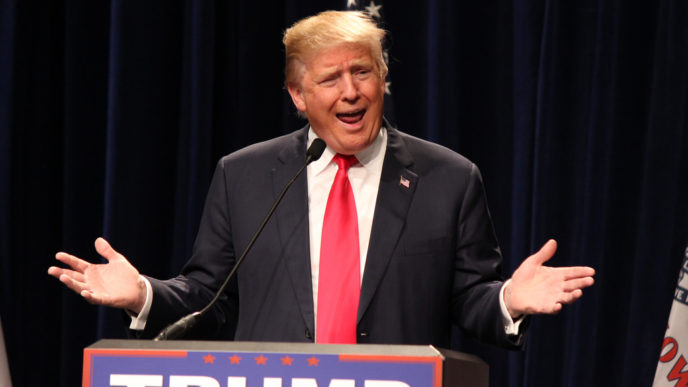
Trump Friend Says Priebus Is ‘in Way Over His Head’

One of President Trump’s longtime friends made a striking move on Sunday: After talking privately with the president over drinks late Friday, Christopher Ruddy publicly argued that Trump should replace his White House chief of staff.

“A lot of people have been saying, ‘Look, Donald has some problems,’ and I think he realizes that he’s got to make some changes going forward,” Ruddy said in an interview with The Washington Post.

Ruddy went on to detail his critique of White House Chief of Staff Reince Priebus: “It’s my view that Reince is the problem. I think on paper Reince looked good as the chief of staff — and Donald trusted him — but it’s pretty clear the guy is in way over his head. He’s not knowledgeable of how federal agencies work, how the communications operations work. He botched this whole immigration rollout. This should’ve been a win for Donald, not two or three weeks of negative publicity.”

(Read more from “Trump Friend Says Priebus Is ‘in Way Over His Head'” HERE)

Follow Joe Miller on Twitter HERE and Facebook HERE.

What Is Likely to Happen With Trump’s Travel Ban

As promised, after assuming office President Donald Trump immediately began signing executive orders reversing several policies of the Obama administration — including the famous “travel ban.” And as expected, Democratic politicians and liberal activists objected. As usual, they used the courts to try to get what they couldn’t get politically.

Executive Order 13769, “Protecting the Nation From Foreign Terrorist Entry Into the United States,” put into place a 90-day ban on immigrants and refugees from seven countries known for terrorism. The explanation in the EO stated, “Deteriorating conditions in certain countries due to war, strife, disaster, and civil unrest increase the likelihood that terrorists will use any means possible to enter the United States.”

The president has argued that he was doing what the law allows him to do. The relevant federal statute authorizes the president to suspend immigration as long as necessary in order to protect the country.

Doing What the Law Lets Him Do

The Attorney General of the state of Washington decided to challenge the EO. He apparently went “judge shopping,” and found a sympathetic federal judge in Seattle who had once represented refugees pro bono. Judge James L. Robart did not recuse himself, even though the law requires federal judges to recuse themselves from cases where they have a conflict of interest.

He issued a temporary restraining order halting the ban. The state of Minnesota also joined the lawsuit. The Trump administration appealed to the United States Court of Appeals for the Ninth Circuit, asking for an emergency stay of the TRO. The Ninth Circuit is the most liberal of the federal circuit courts. The economist Thomas Sowell once said that someday that court “may declare the Constitution unconstitutional.”

A three judge panel refused to lift the TRO. In a 29-page decision issued on February 9, the court declared that the EO was not likely to be found constitutional, and the failure to enter a stay would not cause irreparable injury.

The administration asserted that the court doesn’t have the authority to review the EO. “It is beyond question, that the federal judiciary retains the authority to adjudicate constitutional challenges to executive action,” the judges responded.

And they weren’t going to help the administration improve it. “More generally, even if the TRO might be overbroad in some respects, it is not our role to try, in effect, to rewrite the Executive Order.”

The Panel’s Reasoning

How did the panel justify their decision, when the EO seems to be perfectly legal under federal law?

First, the three judges addressed whether the two states had standing to file the lawsuit. In order to bring a lawsuit in federal court, someone must have a personal stake in the issue and show the injury will cause real damage soon that can’t be repaired later.

The panel declared that the states had shown that the ban would hurt their public universities by keeping students from attending and the damage would be irreparable. This has been criticized as a stretch. The connection between the state and immigrants attending its universities affected by the ban isn’t very direct. Nor is the harm imminent, as no immigrants have been stopped yet from attending.

Second, the court addressed the question of whether the ban would succeed on the merits and be upheld by a higher court. The court said it wouldn’t because it wasn’t constitutional.

The panel opined that it violates the due process rights of certain types of immigrants. In particular, the three judges said they “cannot rely upon the Government’s contention that the Executive Order no longer applies to lawful permanent residents.” They also hinted that the ban wasn’t likely to succeed because it constitutes religious discrimination against Muslims.

The court was dismissive of the administration’s claim that the TRO could cause the country irreparable harm. “The Government has pointed to no evidence that any alien from any of the countries named in the Order has perpetrated a terrorist attack in the United States.”

Critics of the decision argue that this ignores the fact that several nationals from those countries have been arrested on suspicion of terrorism. Being killed by terrorists would certainly constitute irreparable harm for the victims.

The President Is Not Pleased

Trump tweeted his outrage that the opinion didn’t even mention the federal law authorizing his EO.

If Trump appeals to the U.S. Supreme Court, he could lose there too. With his SCOTUS nominee Neil Gorsuch not yet on the court, it tilts to the left. Even if the swing vote Anthony Kennedy votes with the conservative wing, the result would be a 4-4 split, which means the Ninth Circuit’s decision stands.

Of course, the Ninth Circuit is the circuit court whose decisions are most reversed by the Supreme Court. Even some on the left are criticizing the decision. Liberal Harvard Law Professor Emeritus Alan Dershowitz explained on MSNBC’s Morning Joe that the EO was constitutional, but the legal battle would take too long. He said Trump would be better off rewriting it. The ruling “looks like it’s based more on policy than on constitutionality,” he noted.

Trump is reportedly now redoing the EO to comply with the Ninth Circuit’s opinion. “We’ll be doing something very rapidly having to do with additional security for our country,” he announced during a press conference yesterday. “You’ll see something next week.”

If a court overturns the new order, it will be the first time Washington state sets immigration law for the nation. (For more from the author of “What Is Likely to Happen With Trump’s Travel Ban” please click HERE)

Follow Joe Miller on Twitter HERE and Facebook HERE.

‘Indivisible,’ With Ties to George Soros, sows Division Against Trump, GOP Lawmakers

Democrats who used to work on Capitol Hill are helping to disrupt Republican lawmakers’ town hall meetings across the country through a nationwide effort to oppose and “resist” President Donald Trump’s agenda.

They call their group Indivisible Guide, a name that came from an actual guide posted online telling activists how to pressure members of Congress. Among topics: what to say when going to town halls and calling or visiting a member’s office.

Leaders of the organization have loose ties to George Soros, the billionaire hedge fund manager who bankrolls liberal causes, according to the Capital Research Center, a conservative think tank that investigates nonprofits.

However, in an email Friday to The Daily Signal, board members of Indivisible Guide denied financial backing from Soros:

We have received donations from more than 4,000 people since putting a donate button on our site two weeks ago. We think George Soros funds many worthy programs, but he has not funded us. We understand why it’s convenient for Republicans to dismiss widespread popular disapproval as astroturf, but anyone looking at the numbers for the Women’s March and other recent events knows better.

The Capital Research Center argues that Indivisible Guide’s board has indirect ties with left-leaning groups funded by Soros, as well as with other liberal organizations.

“Indivisible is ultra-slick leftist astroturf activism at its finest,” Matthew Vadum, senior vice president at the Capital Research Center, told The Daily Signal in an email. “At least three of the group’s five principals—Ezra Levin, Leah Greenberg, and Angel Padilla—have ties to organizations funded by George Soros. Indivisible is apparently not yet a nonprofit, but plans are in the works to register it as a nonprofit.”

According to Vadum’s research:

Ezra Levin, a former staffer for Rep. Lloyd Doggett, D-Texas, and his wife, Leah Greenberg, are the president and vice president of the Indivisible Guide’s board, respectively.

Levin is also associate director of the Corporation for Enterprise Development, an anti-poverty nonprofit. Melissa Bradley, who sits on that group’s board, previously worked for Green for All, a group founded by liberal commentator and former Obama administration official Van Jones. She was appointed as a Soros Justice Fellow through the Open Society Foundations, which Soros founded.

Greenberg previously worked for Humanity United, which is funded by Soros’s Open Society Institute.

The secretary of Indivisible Guide, Angel Padilla, works for the National Immigration Law Center, which is funded by Soros through his Open Society Foundations. And treasurer Matt Traidi is the research team director for the Service Employees International Union, a major donor to and endorser of Democrat politicians, Capital Research Center notes.

Indivisible Guide boasts that it has disrupted town halls held by Republican lawmakers in Utah, California, Pennsylvania, Indiana, Michigan, and Nebraska. And the group, which amplifies its message over Twitter and other social media, promises it isn’t finished.

Politico reported that local activists shouted down Rep. Justin Amash, R-Mich. Police had to escort Rep. Tom McClintock, R-Calif., at a town hall meeting because of protesters.

One CNN report presented the disruption of a town hall meeting held Thursday night by Rep. Jason Chaffetz, R-Utah, as a sign of a “grassroots” reaction to Trump such as the taxpayer-based tea party movement was against the Washington establishment:

ActBlue, a political action committee that raises millions of dollars for Democrat candidates, also raises money for Indivisible Guide. Its appeal says, in part:

As former congressional staffers and advocates, we want to help provide local activists with information, tools, and support to take action. Most of all we want you to be part of this nationwide movement.

Let us be clear: donating is the last thing we want you to do. If it’s a choice between going to your local group’s meeting or donating to us, please go to the meeting. Really.

The website of Indivisible Guide, also known simply as Indivisible, provides scripts for what activists should say when calling the office of their House or Senate members on various issues—among them opposing senior Trump adviser Steve Bannon’s role in the White House, Trump’s nomination of Neil Gorsuch to the Supreme Court, his refugee policy, and most other policy positions.

The website says:

More than 4,500 local groups have signed up to resist the Trump agenda in nearly every congressional district in the country. What’s more, you all are putting the guide into action—showing up en masse to congressional district offices and events, and flooding the congressional phone lines. You’re resisting—and it’s working. … we want to demystify the heck out of Congress and build a vibrant community of angelic troublemakers.

Longstanding liberal groups MoveOn, the Working Families Party, and the American Civil Liberties Union have joined Indivisible Guide’s effort.

Just two days after Trump’s Jan. 20 inauguration, Indivisible Guide, MoveOn.org, and the Working Families Party organized a teleconference for activists that attracted 60,000 listeners, Politico reported.

Indivisible did another call with the ACLU focusing on Trump’s executive order aimed at increasing the vetting of immigrants from seven terrorism-prone Middle Eastern countries; it drew about 35,000 listeners.

MoveOn.org is conducting “Resist Trump” rallies across the country. The ACLU issued pamphlets about how to demonstrate, including for protesters who attempted to disrupt Washington during Trump’s inauguration.

In running for the Democratic presidential nomination, Sen. Bernie Sanders, I-Vt., called the Working Families Party “the closest thing there is to a political party that believes in my vision of democratic socialism.”

Actor and liberal activist George Takei, of “Star Trek” fame, tweeted Friday:

(For more from the author of “‘Indivisible,’ With Ties to George Soros, sows Division Against Trump, GOP Lawmakers” please click HERE)

Follow Joe Miller on Twitter HERE and Facebook HERE.
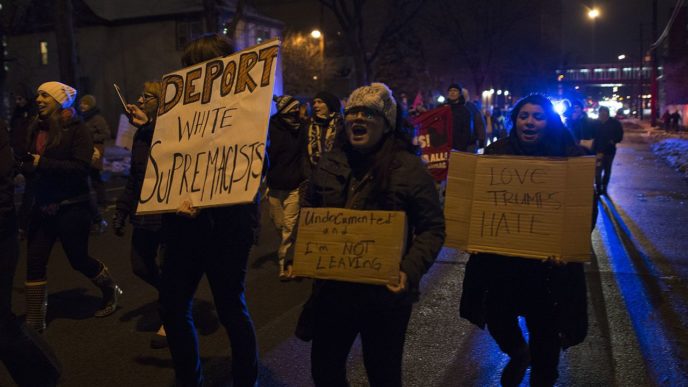
Rescind the Executive Order — and Replace It With Many Tougher Ones

President Trump needs to deny the Left a victory over his immigration executive order. The court challenge heard by the infamously unconstitutional and extremist 9th Circuit threatens to set a precedent that will codify open borders and leave the president powerless to protect us. Trump can snatch victory from the jaws of defeat and deny the Left their unconscionable and unconstitutional attempted power grab by rescinding this EO and issuing stronger multiple replacements as stand alone orders.

The president cannot lose here. We must protect our borders; keep out the terrorists and rein in out-of-control immigration. It is the signal issue that got him elected. It is also the signal action needed to save this country from the Left’s malevolent intentions. The Left is attempting to subvert our country by simply replacing its population with a more malleable, sympathetic one. Unlike the immigrants of yesteryear, today’s are largely illiterate, welfare-dependent, unwilling to learn our language and definitely hostile to American culture and traditions. And while they are in many cases fleeing conditions created by their countries’ socialist policies, they nonetheless bring socialist ideas with them. As our country has become more “multi-cultural”, it has drifted ever leftward.

This was no mistake.

President Trump can and must rescind this executive order. Despite it’s hesitation, the [en banc] 9th Circuit is virtually guaranteed to agree with the ruling by District Judge Robert Chambers halting Trump’s immigration ban. As the initial complaint was not justified by immigration law, which provides the president clear authority to do what he did, it would set a horrible precedent in eroding the president’s ability to protect the nation. If it goes to the Supreme Court, it will likely lose. Justice Kennedy will side with the leftists. With an 8 person court, even a 4-4 decision would mean the 9th Circuit ruling holds. Even with Trump’s Supreme Court nominee, Neil Gorsuch, a likely Kennedy defection would mean 5-4 for the Left. And support for Trump’s position is not even certain with Gorsuch.

Rescinding the EO would be a victory, not a defeat. First, it would prevent the Left from getting a major win in court that would alter permanently a president’s ability to control our borders. The lawsuit and likely favorable court ruling defy immigration law. They should not be allowed to get away with it. As abominable as it is, the current state of enforcement is better than what would result. The Left would like to thwart Trump’s agenda with endless lawsuits. Their victory here will encourage much more of the same.

But more importantly, Trump should reissue a score of executive orders that address the same issues as the current one, but make them even more muscular. If the Left is going to play dirty like this, make them pay for it. Give them something they will dislike even more and force them to fight many battles instead of just one. Perhaps that will cool their ardor for obstructionist lawsuits and nationwide, Democrat funded violence that threatens to drag this country into civil war:

1. Replace the 3 month ban on immigration from seven terrorist-producing nations with a 6 month ban on the same seven nations. President Obama issued a six-month ban on refugees from Iraq in 2011. He did so after two Kentucky-based Iraqi refugees were discovered to be former insurgent IED makers. So much for our supposedly infallible vetting process. Despite much-ballyhooed improvements, the current vetting procedure places almost all emphasis on processing refugees as quickly as possible, with few, if any national security safeguards. The seven nations were also first identified by the Obama DHS.

2. Consider expanding the list to all nations of terrorism concern. The State Department keeps a list which formally includes State Sponsors of Terrorism: Syria, Sudan, Iran, and Countries of Particular Concern: Burma, China, Eritrea, Iran, North Korea, Saudi Arabia, Sudan, Turkmenistan, Uzbekistan. Those countries on the DHS list not identified by the State Department, i.e. Somalia, Libya, Yemen and Iraq, should be added to State’s list.

3. Extend suspension of the refugee admissions program (USRAP) to a full year as requested by numerous members of Congress and cities all over the country begging for relief. (It now only lasts 120 days). President Trump does not need an executive order for this. He can simply send a letter to Congress, informing it of his intentions. Refugee caps for FY 2017 would be reduced to zero.

4. Issue all other components of the current EO as separate, standalone orders. Many of these are not challenged by the court in this EO, but are desperately needed. For example: ending the Obama administration’s insane policy of allowing U.S. entry of foreign nationals who have aided terrorists, focusing on those refugee minorities facing the worst persecution (e.g. the Christians that Obama ignored), enacting uniform screening standards for all immigrants, suspending the visa waiver program, completing the Biometric Entry-Exit Tracking System, visa reciprocity, and data transparency.

Trump needs to rescind this executive order to snatch victory out of the Left’s intolerable hands. He needs to replace it with others that will punish the Left for their vicious, relentless, unconstitutional and often illegal tactics, and force them to fight every single item, piece by piece.

Posted with permission of the author.

Follow Joe Miller on Twitter HERE and Facebook HERE.

Victory for Christians: Georgia State Employee Fired for Weekend Sermons Prevails

Dr. Eric Walsh’s lawsuit against the State of Georgia came to an end when the state agreed to pay the Seventh-Day Adventist and former state employee $225,000. First Liberty Institute, the non-profit law firm representing Walsh, announced the victory Thursday.

The settlement comes after a nearly three-year legal battle in which Walsh, a lay-minister for his church, accused Georgia of religious discrimination.

Accusations of Religious Discrimination

Walsh, a member of former President Barack Obama’s Presidential Advisory Council on HIV/AIDS and holder of multiple advanced degrees, was hired as a district health director with Georgia’s Department of Public Health in 2014. But officials abruptly fired him after reviewing YouTube videos of sermons he had preached on the weekends.

First Liberty Institute, a national non-profit law firm based in Texas, helped Walsh file a complaint with the Equal Employment Opportunity (EEOC). As The Stream reported last April, Title VII of the 1964 Civil Rights Act prohibits the discrimination of employers based on their religion.

“No one should be fired from their job for something they said in a sermon, First Liberty Senior Counsel Jeremy Dys told The Stream at the time. “It will be fair game to examine the notes you took in church or the Sunday School lesson you prepared during your annual review.”

Six months later, after receiving the EEOC’s go-ahead, Walsh sued the state of Georgia in April of 2016. Georgia responded in September by demanding that Walsh produce “sermon notes and/or transcripts” and “all documents relating to your service as a pastor.”

Dys responded that the demand was intrusive, calling it “an excessive display of the government overreaching its authority and violating the sanctity of the church.”

Victory for Religious Liberty

First Liberty called the settlement a victory for religious freedom. “We are grateful that the State of Georgia agreed to settle the case and acknowledge the right of their employees to express their religious beliefs,” Dys said in a press release.

Dys pointed out that the law was on Walsh’s side. “No one should be fired for simply expressing his religious beliefs,” he said. He called Walsh “a man of courage and conviction who suffered a serious injustice.”

“It’s been a long, difficult journey,” Walsh commented, “but it’s worth it to have my name cleared and to ensure that all Georgia government employees know they have religious liberty.”

Walsh has been working as a medical missionary and as a medical doctor in California since being fired. Now that the lawsuit has ended, Walsh hopes he can continue to care for his community, First Liberty’s Director of Legal Communications Kassie Dulin told The Stream. (For more from the author of “Victory for Christians: Georgia State Employee Fired for Weekend Sermons Prevails” please click HERE)

Follow Joe Miller on Twitter HERE and Facebook HERE.
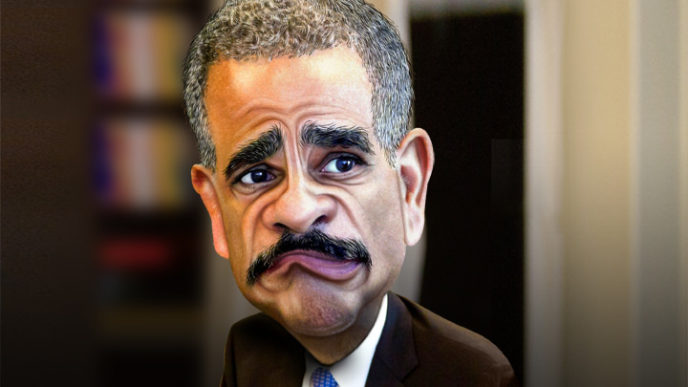
California to Pay Eric Holder’s Law Firm $25,000 a Month for Anti-Trump ‘Legal Strategies’

Former Obama Attorney General Eric Holder’s law firm, Covington and Burling, will receive $25,000 a month from the California Legislature.

The fee is in exchange for 40 hours of work each month on providing “legal strategies regarding potential actions of the federal government that may be of concern to the State of California,” according to documents obtained by Judicial Watch.

In response to the documents, Judicial Watch president Tom Fitton said that California legislators are “wasting tax dollars to bankroll another corrupt politician – Eric Holder – under the pretense of attacking the Trump administration.” . . .

Even before Donald Trump was sworn in as president, California State Senators de León (D-Los Angeles) and Rendon (D-Paramount) announced in a joint statement that “…to protect California’s economy and our sensible policies on climate change, health care, civil rights, and immigration,” the Legislature has hired “an expert legal team…led by former United States Attorney General Eric H. Holder Jr.”

The contract with Covington and Burling, which Holder felt “honored” to receive, is limited to the firm providing “legal strategies.” Should the California Legislature wish to use the firm for litigation or public advocacy work, a new “engagement letter” would be required. (Read more from “California to Pay Eric Holder’s Law Firm $25,000 a Month for Anti-Trump ‘Legal Strategies'” HERE)

Follow Joe Miller on Twitter HERE and Facebook HERE.

No Longer a Nation of Laws, Ninth Circuit Usurps Presidential Powers on Immigration Ban

San Francisco’s federal appeals court asserted a novel theory on Thursday to claim jurisdiction over the legal challenge to Executive Order 13769, affirming the lower court’s order halting President Trump’s temporary travel-restriction policy. . .

The Ninth Circuit went on to reject several of the tenuous theories the states of Washington and Minnesota asserted to claim standing to bring this lawsuit. Nonetheless, a three-judge panel of the court adopted one of the novel theories asserted by the state, holding that, “as the operators of state universities, the States may assert not only their own rights to the extent affected by the Executive Order but may also assert the rights of their students and faculty members.” Some of those students are effected by the immigration order.

President Trump’s Department of Justice (DOJ) argued that Congress has plenary authority over all immigration decisions, and that Congress had delegated complete discretion to the president in 8 U.S.C. § 1182(f) to make such decisions, especially when national security was at stake. . .

[Listen to Joe Miller Hammer the Ninth Circuit:]

The court held that the executive order likely violated the Due Process Clause of the Fifth Amendment, holding that the “Government has not shown that the Executive Order provides what due process requires, such as notice and a hearing prior to restricting an individual’s ability to travel”. . .

The court also gave at least some credence to what many considered one of the most tenuous claims in the lawsuit, the one asserting that appearing to prefer Christianity over Islam for immigrants violates the Constitution’s Establishment Clause. (Read more from “No Longer a Nation of Laws, Ninth Circuit Usurps Presidential Powers on Immigration Ban” HERE)

Follow Joe Miller on Twitter HERE and Facebook HERE.

Florida GOP Seeks Deathblow to Sanctuary Cities: ‘We Are a Nation of Rules’

Republican lawmakers in Florida are taking aim at sanctuary city policies with two bills designed to penalize cities, counties, and elected officials that do not fully cooperate with federal enforcement of immigration law.

According to The Miami Herald, The Rule of Law Adherence Act (SB 786 / HB 697) would implement a number of penalties and fines for state, local, or law enforcement agencies that employ “sanctuary policies.”

The bills would formally define a “sanctuary policy” as any “law, policy, practice, procedure, or custom adopted or permitted … which contravenes or which knowingly prohibits or impedes a law enforcement agency from communicating or cooperating with a federal immigration agency with respect to federal immigration enforcement.”

“What this bill would do is put into policy in the state of Florida the idea that our immigration policies at the federal level should receive cooperative support at the state and local level,” said Rep. Larry Metz, R-Yalaha.

Specific provisions of the legislation would:

Prohibit government entities from adopting sanctuary policies and require any existing ones to be repealed within 90 days;

Require state and local governments and law enforcement agencies to “fully comply” and support federal immigration law and prohibit any efforts to restrict or limit that support;

Require government officials and workers to report “known or probable violations” of the act — under threat of suspension or removal from elected office — and require the attorney general to investigate those reports;

Protect whistle-blowers who report such violations;

Impose a fine of up to $5,000 a day, starting Oct. 1, on any government entity that is found to still have a sanctuary policy;

Allow the governor to remove from office any elected official who is found to have violated the act;

Allow government agencies to be sued should a person who is in the country illegally injure or kill someone as a result of the government entity having a prohibited sanctuary policy; and, withhold state grant funding for five years from any government entity that violates the act.

“The one thing that everybody should know in our country is: We can’t choose which laws we’ll obey or which laws we don’t obey,” said state Sen. Aaron Bean, R-Fernandina Beach. (For more from the author of “Florida GOP Seeks Deathblow to Sanctuary Cities: ‘We Are a Nation of Rules” please click HERE)

Follow Joe Miller on Twitter HERE and Facebook HERE.