
Ft. Lauderdale Shooter Another ‘Known Wolf’ Let Go by FBI

It is uncertain the motive or mental state of the man who walked off a plane in the Fort Lauderdale airport, loaded a gun, and murdered five people. What we do know is that he basically turned himself in to the FBI and once again the Bureau did nothing when confronted with the possibility that he had been influenced by radical Islam. This continues a disturbing trend of law enforcement knowing that specific violent jihadis, or known wolves, exist — and not doing anything to prevent attacks.

From Omar Mateen, the jihadi who shot up a gay nightclub, to the jihadi who set off a bomb in Manhattan, to seemingly countless others, the FBI has known about specific terrorists before they carried out attacks. The FBI has time and time again caught and released these jihadis, and yet again that appears to be the case.

It is uncertain if Esteban Santiago, the man in custody for the horrific attack, is a true believer in a radical Islamic ideology, or a severely mentally unstable person who carried out jihad because of the voices in his head. What is undeniable is that he walked into a FBI office in Alaska and told them “voices” were making him do things.

He told officials he was hearing voices in his head, some of which were telling him to join ISIS and watch their videos, and was taken to hospital for a mental health evaluation.

Santiago, who also told the FBI the government controlled his mind, gunned down 13 people at Fort Lauderdale airport today, killing five and injuring eight.

After the evaluation, and after agreeing to seek help for his mental issues, Santiago was freed. It looks as though there was very little monitoring of him afterwards. There also appears to have been no follow up or monitoring of Santiago, nor an attempt to use existing laws and due process to suspend his right to carry a gun, something that is permissible under current law.

Again, it is very much unsure at this stage if Santiago is an actual convert to radical Islam. But he did flash what is known as, for lack of a better term, the ISIS gang sign in a social media photo.

If, in fact, if it turns out that Santiago is mentally unstable and not a true jihadi, that brings another government agency into focus: the VA. It is well known that the VA health system has been letting down our nation’s veterans at an alarming rate, especially the mental well-being of those veterans. It has been reported that Santiago recently spent a tour of duty in Iraq. His family said that he was not the same since coming back.

The suspect’s aunt Maria Ruiz Rivera claimed the alleged shooter “lost his mind” while fighting in Iraq.

When quizzed why Santiago may have opened fire at passengers, her husband, Hernan Rivera, said: “No idea. Only thing I could tell you was when he came out of Iraq, he wasn’t feeling too good.”

No matter if Santiago was a true believing jihadi, radicalized while in Iraq, or a veteran who did not get the health care he deserved from the VA, it is beyond doubt that our government dropped the ball once again. President-elect Trump has promised to revamp both law enforcement’s stance toward jihad and the VA. The attack in Fort Lauderdale proves that new focus cannot come fast enough. (For more from the author of “Ft. Lauderdale Shooter Another ‘Known Wolf’ Let Go by FBI” please click HERE)

Follow Joe Miller on Twitter HERE and Facebook HERE.

America’s CIA, FBI and NSA Continue to Lose Credibility, Issue Politicized Second Russian Hacking Report

The report “Assessing Russian Activities and Intentions in Recent US Elections” released on January 6th by the Director of National Intelligence could be classified as “spam,” an irrelevant message sent over the Internet to large numbers of users for the purposes of advertising.

Out of the twenty-five pages, there is what some may describe as “news”, if you believe in assessments rather than evidence, of which none is provided:

(1) The heads of Obama’s three intelligence-gathering agencies, the Central Intelligence Agency (CIA), The Federal Bureau of Investigation (FBI), and The National Security Agency (NSA) assess that, “Russian President Vladimir Putin ordered an influence campaign in 2016 aimed at the US presidential election. Russia’s goals were to undermine public faith in the US democratic process, denigrate Secretary Clinton, and harm her electability and potential presidency. We further assess Putin and the Russian Government developed a clear preference for President-elect Trump” (disclaimer – I had a clear preference for Trump too);

(2) the three agencies “did not make an assessment of the impact that Russian activities had on the outcome of the 2016 election,” but none of the Russian activities were “involved in vote tallying”;

(3) Obama’s political appointees “assess with high confidence that Russian military intelligence (General Staff Main Intelligence Directorate or GRU) used the Guccifer 2.0 persona and DCLeaks.com to release US victim data obtained in cyber operations publicly and in exclusives to media outlets and relayed material to WikiLeaks,” although any link between Russian intelligence and Wikileaks was not identified;

(4) “Disclosures [from the Democratic National Committee and senior Democrat officials] through WikiLeaks did not contain any evident forgeries,” that is, the Democrats really said/did those things.

The bulk of the report, however, simply provides information about US intelligence analysis techniques, scope and sourcing, previously published material and describes:

“longstanding Russian messaging strategy that blends covert intelligence operations-such as cyber activity-with overt efforts by Russian Government agencies, state-funded media, third-party intermediaries, and paid social media users or ‘trolls,'” especially the role of RT (formerly Russia Today), the “Kremlin’s principal international propaganda outlet.”

None of that is exactly “news” as the report itself admits:

“During the Cold War, the Soviet Union used intelligence officers, influence agents, forgeries, and press placements to disparage candidates perceived as hostile to the Kremlin, according to a former KGB archivist.”

What is interesting is an article by another “Russia’s state-run propaganda” outlet, Sputnik News, which said that Annex A of the US intelligence report claims that “Kremlin’s TV Seeks To Influence Politics, Fuel Discontent in US,” but buried at the bottom of that page is a note stating, “This annex was originally published on 11 December 2012 by the Open Source Center, now the Open Source Enterprise.”

That is, the information cited in the US intelligence report “to provide evidence of RT influencing the American public [in 2016] was compiled in December 2012.”

According to Sputnik News, “The report focuses on television shows and interviews that took place four years before Trump was elected, and well before he was even a politician” and that two RT shows, Breaking the Set and Truthseeker, mentioned in the US intelligence report, were off air before the 2016 election season began.

I would not be terribly shocked to learn that Russian intelligence hacked Democratic Nation Committee computers and John Podesta’s personal email account on Putin’s orders and provided information from those activities to WikiLeaks and DCLeaks.

Neither the first nor the second intelligence report, however, provide direct evidence to support that accusation, but the report authors rely on Americans’ natural inclination to believe it.

The lack of evidence, the timing of the revelations as well as the delayed punitive measures taken against Russia, generate skepticism.

Public reports of alleged Russian hacking surfaced in October 2016 and it was probably known to the US intelligence community much earlier, as their report implies.

Why weren’t Russians expelled, sanctions applied and reports produced prior to the election?

One wonders if any of what has occurred after the election, would have, if Hillary Clinton had won on November 8th.

So, what is the point of the ex post facto intelligence revelations and the diplomatic punishment of Russia other than a result of Obama’s failed Russian foreign policy, his personal animosity towards Putin, a ruse to discredit the election of Donald Trump and a means to hamper the incoming administration?

Perhaps, the Obama Administration can issue a report on that. (For more from the author of “America’s CIA, FBI and NSA Continue to Lose Credibility, Issue Politicized Second Russian Hacking Report” please click HERE)

Follow Joe Miller on Twitter HERE and Facebook HERE.

This Is What REAL Hope Looks Like: GOP Senators Fight for Families of Victims of Illegal Aliens

The 115th United States Congress has only been in session for a few days, but Republicans are already taking advantage of their overwhelming majority.

On Thursday, Senator Joni Ernst, R-Iowa (F, 59%) released a statement announcing that she, along with Senators Chuck Grassley, R-Ind. (D, 66%), Deb Fischer, R-Neb. (F, 55%), and Ben Sasse, R-Neb. (A, 94%), reintroduced a piece of legislation that would require federal officials to take custody of illegal immigrants “charged with a crime resulting in the death or serious bodily injury of another person.”

The legislation, known as Sarah’s Law, was named to honor Sarah Root, a 21-year-old Iowa woman who was killed last January in the “sanctuary city” of Omaha, Neb., by 19-year-old Edwin Mejia, an illegal immigrant who was driving drunk three times over the legal limit, and drag racing. Mejia, a Honduran native who entered the United States as an “unaccompanied minor” in 2013, disappeared after posting the $5,000 bail and has been at large ever since.

“Mr. Mejia has been on the [U.S. Immigration and Customs Enforcement’s] Most Wanted List for more than nine months — that’s time he should have been behind bars,” Senator Sasse, a member of the Senate Judiciary Committee, said in the press release this week. “Congress has an opportunity to make sure this never happens again. Sarah’s Law would make it absolutely clear that ICE must immediately detain any illegal alien who kills someone.”

Thursday’s move to reintroduce the law offers families of individuals killed by illegal immigrants renewed hope that their loved ones will be vindicated. If passed, the legislation would require ICE officials to “make reasonable efforts to identify and provide relevant information to the crime victims or their families.”

“It is unconscionable that nearly one year after Sarah’s death, Edwin Mejia remains at-large, and the fact remains that today U.S. immigration law does not require federal immigration authorities to detain those here illegally who harm American citizens,” Senator Ernst said. “Although nothing can bring Sarah back to her family or heal the wounds of such unimaginable loss, we have an obligation to the American people to ensure that no citizen falls victim to this injustice again. Sarah’s Law is about honoring Sarah, and her legacy; I have already had conversations with the incoming administration, and am hopeful that they will work with Congress to pursue

In his nomination acceptance speech at the Republican National Convention in July, Donald Trump described Sarah Root as “just one more American life that wasn’t worth protecting. One more child to sacrifice on the altar of open borders.” The president-elect made illegal immigration a focal point of his presidential campaign, inviting family members of those killed by illegals to join him onstage at the RNC and to speak at various campaign stops.

“We are sadly hearing of these instances far too often. If the Obama administration won’t protect our citizens, Congress will make it clear illegal immigrants who have committed serious crimes will be detained. We must do everything possible to prevent the pain Sarah’s loved ones and too many others have endured,” said Sen. Pat Roberts, R-Kan. (F, 51%).

Since Sarah’s Law was first introduced in June 2016, the legislation has gained new support from Senators Jerry Moran, R-Kan. (D, 67%), Pat Roberts, John Thune, R-S.D. (F, 44%), Ted Cruz, R-Texas (A, 97%), and Jim Inhofe, R-Okla. (C, 72%). Congressman David Young, R-Ind. (F, 38%) will lead a House companion bill.

Sen. Cruz indicated that the November election afforded Congress “an extraordinary chance” to strengthen border security and restore the rule of law in a post-Obama America.

“The last eight years under the Obama Administration have seen a disastrous deterioration of the rule of law and an unwillingness to justly prosecute those who break our laws,” said Senator Cruz. “But now we have an extraordinary chance to reverse that course, secure our border, and strengthen our immigration laws. I am proud to be a sponsor of Sarah’s Law and other similar law enforcement measures that will deter illegal immigration, and ensure those who disregard our immigration laws and bring harm to our citizens are held accountable.” (For more from the author of “This Is What REAL Hope Looks Like: GOP Senators Fight for Families of Victims of Illegal Aliens” please click HERE)

Follow Joe Miller on Twitter HERE and Facebook HERE.
The Democratic Party Goes Left: Just What Republicans Want

In November, more than 8,750,000 Californians voted for Hillary Clinton; only about 4.5 million voted for Donald Trump. Similarly, New York went for Secretary Clinton by 4.55 million to 2.8 million votes, a substantial margin of 1.75 million ballots.

What you have just read constitutes about all the good news there is these days for the Democrats.

Much is being made in some quarters about the fact that Hillary Clinton won the popular vote. In fact, she did not.

Secretary Clinton won nearly 65.8 million votes, according to the authoritative Cook political report. Donald Trump won almost 63 million votes. The total variance was about 2.85 million votes in favor of the candidate who lost the Electoral College.

However, what has been reported almost nowhere is that 7.8 million votes were cast for other presidential candidates. Libertarian Gary Johnson, a relatively right-leaning former Republican, won 4.5 million votes. Independent Republican Evan McMullin took 725,000 ballots and the Constitution Party’s Darrell Castle came out with 202,000. Together, that’s something over 5.4 million votes for non-Republican conservative presidential candidates nationwide.

The rather over-covered candidate of the Green Part, Jill Stein, received 1.46 million votes, and other third-party and predominantly liberal also-rans took about one million votes total.

The math is pretty straightforward: The Republican nominee and other conservative or conservative-leaning candidates accrued about 68.5 million votes. Secretary Clinton and other liberal candidates garnered about 68.2 million. In sum, as to the presidency, the Right beat the Left by roughly 300,000 votes. A rather narrow margin, yes, but the now-received fact that liberalism, in sheer numbers, beat conservatism is simply untrue.

Over the past eight years, the story of the Democrats’ future has become far shakier than the numbers just noted might indicate. As Eric Levitz writes in New York Magazine, a fortress of weary liberal elitism:

Since President Obama took office, more than 900 Democratic state legislators have been ousted. In January 2009, the party occupied 29 governor’s mansions. Today, it lays claim to 15. The GOP — the party that was supposed to be headed for a great crack-up — holds 33. In 24 states, Republicans control the Executive branch and both legislative houses. Of course, they now enjoy the same trifecta in Washington, D.C.

Only five states now have Democratic governors and state legislatures and the GOP controls 69 of 99 state legislative bodies. This pattern seems unlikely to change, given Democrats’ concentration in urban areas. As the Washington Post’s Amber Phillips notes, “Because Democrats are clustered in one area of (a) state, they have less of a say in who represents congressional (and state-level) districts in the rest of the state.”

Although as an unabashed partisan I rejoice in these numbers, I do not write the above to crow or to sneer at the Democratic Party. Rather, I report them to make a larger comment about a narrative now emerging, strongly, within that once-venerable political institution: Calls from many of its leading stalwarts to turn it harder Left-ward are profoundly ill-advised if Democrats ever care about winning nationally again.

“We’re spending all of our resources on broadcast television chasing this mythical unicorn white swing voter,” says Democratic pollster Cornell Belcher, who argues that the nation’s changing demographics — it is increasingly less white — demands less focus on disaffected lower-income white voters.

Eric Levitz summarizes the growing chorus of “turn Left, young man,” Democrats this way:

Instead of channeling that anger toward real, progressive solutions for the middle (and working) class’s legitimate problems, Trump directed it toward the most vulnerable people in our society, as right-wing populists always have. Clinton failed to counter this appeal, because she refused to embrace populist, class politics.

Former Democratic Senator and Vice-Presidential nominee Joe Lieberman, now an independent, said in a recent interview that he fears a “real attempt by the left-left” to seize control of the Democratic agenda and public appeal. His fear is justified: former Labor Secretary Robert Reich, former Obama Administration “Green Jobs” czar” Van Jones, and hard-Left Congressman Keith Ellison, among other prominent Democrats, are calling for this strategy explicitly.

Why is it unwise, politically? Because America is not a hard-Left country. Disproportionate Democratic majorities in New York and California do not a national majority make. As CNN reporter John King said shortly after the November election, “America is a center-right country. It is a lot more conservative, especially out in the heartland, than Democrats think.”

There is also a dynamic at play for which proponents of an aggressive liberal statism fail to account: The Electoral College is a device built into the Constitution that, unlike the finding of hitherto unimagined “rights” lurking in fanciful constitutional penumbras, cannot suddenly be reinterpreted to mean what its liberal opponents want. Its mechanism is very clear and undisputed, articulated with exactitude in a written text.

Can the Constitution be amended? Sure. But is populist rage so great that people across the country would support altering its plain text, one that has endured and served well since 1789? Will such an enterprise be appealing to them, especially since such a change would calcify the suzerainty of the liberal regions into the distant future? No — or to borrow some language from Winston Churchill, this is nonsense up with which the American people will not put.

So, how do the Democrats reclaim political viability, especially at a time when recalibrating congressional districts (which determine presidential electors) in their favor is a pipe dream? I have no particular wisdom for them, other than that, as a conservative, I hope they do go radically to the Left. That way the defeat of dangerous and extreme liberalism will accelerate and deepen all the more. (For more from the author of “The Democratic Party Goes Left: Just What Republicans Want” please click HERE)

Follow Joe Miller on Twitter HERE and Facebook HERE.
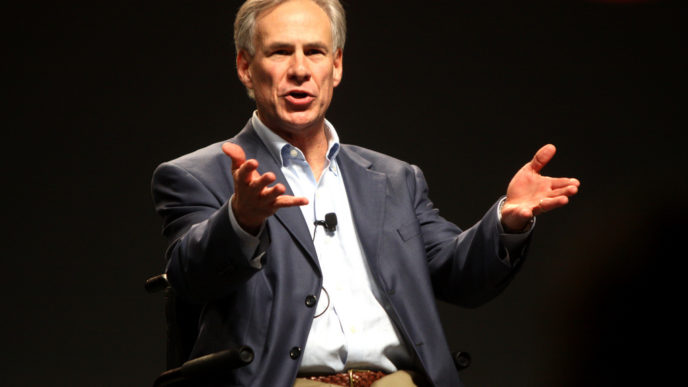
Texas Governor Pledges to Sign Anti-Sanctuary City Bill

Texas Gov. Greg Abbott says he expects the Legislature to pass an anti-sanctuary city bill this year, opening a new front in the battle over “local control.”

Weighing in on the intensifying national immigration debate, the Republican governor pledged to sign S.B. 4, which would require municipalities to enforce migrant detainers at local jails and withhold state grants if they don’t comply.

“I will work with the Legislature to compel government bodies and employees to live up to their oath of office,” Abbott declared.

Cities, counties, or universities that violate the law will face a “multitude of consequence, ranging from financial penalties to removal from office,” the former state attorney general said.

Abbott, who has clashed with Sheriff Lupe Valdez over sanctuary policies in Dallas County, took aim at newly elected Travis County Sheriff Sally Hernandez, who vowed to remove Immigration and Customs Enforcement agents from the Austin jail.

“It’s erroneous to have an attitude that laws are like some big buffet where you can choose one item and ignore other items,” Abbott said, referring to sanctuary cities and campuses.

Federal law states: “A federal, state, or local government entity or official may not prohibit, or in any way restrict, any government entity or official from sending to, or receiving from, the Immigration and Naturalization Service [now ICE] information regarding the citizenship or immigration status, lawful or unlawful, of any citizen.”

Responding to reports of crimes committed by illegal immigrants—some of them after multiple deportation—Hernandez told The Texas Tribune: “I just don’t think you solve the criminal justice process by deporting them. We talk about being progressive. I believe we need to lead the way.”

Larry Korkmas, president of Texans for Immigration Reduction and Enforcement, said sanctuary policies punish taxpayers while municipal and school officials complain about chronic funding shortages.

“If we enforced [immigration] laws, we would reduce our medical welfare and education costs,” Korkmas told Watchdog.org.

In introducing S.B. 4, state Sen. Charles Perry, R-Lubbock, cited the election of Donald Trump, saying, “The American people made it clear that solving our illegal immigration crisis must be a priority. We cannot sit idly by and allow local policies to undercut efforts made at the federal and state level.”

Bob Dane, executive director of the nonpartisan Federation for American Immigration Reform, said, “Local politicians who support sanctuary policies are, in effect, giving the middle finger to federal law enforcement and, in so doing, giving it to every law-abiding, taxpaying resident.”

“Those days are over,” Dane told Watchdog from his Washington, D.C., office. “Since there is no longer fear of recrimination by [President] Barack Obama’s iron-fisted Department of Justice, Texas should pass [S.B. 4] and Abbott should sign it. The rule of law will be restored and Texas will be a safer place.”

Jeff Judson, a policy fellow with the market-oriented Heartland Institute, agreed.

“I think Abbott is smart enough to know how [antithetical] sanctuary cities are to voters. It fits with his belief that cities have abused their home-rule ‘local control’ and are violating freedoms the state is pledged to uphold,” said Judson, a former councilman in the San Antonio suburb of Olmos Park. (For more from the author of “Texas Governor Pledges to Sign Anti-Sanctuary City Bill” please click HERE)

Follow Joe Miller on Twitter HERE and Facebook HERE.
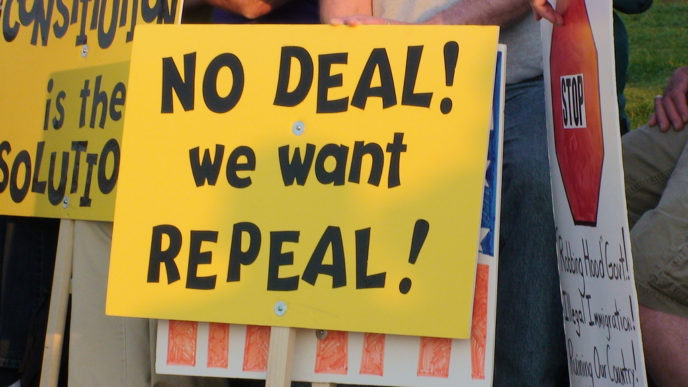
Holding Obamacare Repeal Hostage for Replace Guarantees Its Defeat

After six years of pushing for a repeal of Obamacare, some on the right are now critiquing Congress’ effort for a full repeal. Their arguments do more to confuse the issue than to present a viable path forward for eliminating the harmful effects of this law.

Congressional Republicans appear set to finally repeal Obamacare using reconciliation, a process that allows them to overcome a Democratic filibuster in the Senate and pass budget-related legislation with a simple majority of the chamber’s members.

The repeal bill would include a transition period to give Congress time to debate how best to replace Obamacare with a series of patient-centered reforms, each of which would address specific problems in the health care system.

But critics of this approach derisively dub it “repeal and delay” and assert that it is based on a fatally flawed strategy that inevitably presents the GOP with several insoluble problems.

They claim that repealing Obamacare in this way guarantees market instability, higher premiums, and ultimately the loss of coverage for millions of Americans. This is because the insurance regulations mandated by the law may not be included in the reconciliation bill.

As a consequence, the critics argue that so-called “repeal and delay” carries with it significant political risks that will come back to haunt the GOP.

If that weren’t enough, the critics also contend, counterintuitively, that repealing Obamacare first makes replacing it more difficult.

According to the American Enterprise Institute’s Joseph Antos and James Capretta, the effect of repealing Obamacare before replacing it makes “it much more difficult to build a broad political coalition for the replacement plan.”

Antos and Capretta say that under such an approach, Republicans would eventually be forced to “reverse course and take steps to provide some kind of emergency insurance” for those negatively impacted by repeal because of the political backlash that would result.

Similarly, Heather R. Higgins and Phil Kerpen argue in a separate piece that “Democrats would have little incentive to come to the table on a ‘replace’ bill” in such an environment. And Peter Suderman, writing at Reason, argues that the current approach would set up “a political and policy equilibrium that is likely to make more effective reforms even more difficult.”

The implicit assumption in each of these critiques is that Democrats are willing to repeal Obamacare now just so long as we replace it with market-based reforms that Republicans can support.

Given this, some Republicans have proposed their own repeal plans. And they all largely reflect this common belief that Obamacare can only be repealed and replaced if it’s done simultaneously.

But the fundamental problem with this approach is that it actually poses greater political risk for the GOP, makes repeal less likely, and ensures that the replace debate will occur in the context of the framework created by Obamacare.

Holding repeal hostage for replace perpetuates the current market instability, increasing premiums, and coverage losses that have been the result of Obamacare. This poses significant political risks for a GOP that has consistently promised its supporters it would repeal the law as soon as it was able.

As pointed out by The Wall Street Journal, “affordability, choice and competition are due for another tumble next year under the status quo.” The health insurance market is getting worse day by day, and the American people expect Congress to stop the situation from deteriorating further.

In this environment, it will be difficult for Republicans to persuade their constituents that they are truly committed to repealing Obamacare when they now control the House, Senate, and presidency, and still can’t bring themselves to fully repeal it.

In addition, tying replace to repeal by voting on them simultaneously makes success in either effort unlikely. Congressional Democrats are unlikely to negotiate when the price of doing so is to facilitate Obamacare’s demise.

Their participation in efforts to replace the health care law while it is still on the books would acknowledge that it has been a failure, something rank-and-file Democrats have been unwilling to concede up until now despite all of the mounting evidence to the contrary.

Some critics concede that the absence of significant bipartisan support for the current replace plan means that almost every elected Republican will have to support it. Barring unified GOP support, it is unlikely that the legislation can pass the House or Senate.

Moreover, the partisan nature of this replace effort requires it to be accomplished through the same reconciliation process that critics are currently attacking, since Senate Republicans are unlikely to overcome a Democratic filibuster.

At best, such a process ensures that the GOP replacement plan can pass only by using the same controversial process that Democrats used to ram Obamacare through the Congress in the first place. That process, just as much as Obamacare’s substance, has been responsible for poisoning the debate ever since.

Legislation that combines repeal with a comprehensive package of reforms would inevitably be an enormous thousand-plus-page bill that will have been written in secret. And it will ultimately need to be quickly forced through the House and Senate, giving members and their constituents little time to read, much less understand, its numerous complicated provisions.

While the editors at National Review are correct in their assessment that building near-unanimous Republican support around such a replace plan will take time, they are wrong to assume that the end result will be “a real win.”

Instead, the most likely outcome is that Obamacare will continue to be the law of the land and any changes to it will be considered in the context of that baseline. As a consequence, efforts to enact the fundamental reforms that are needed to fix our health care system will be seriously disadvantaged.

The process to fully repeal Obamacare must begin now. The current plan to do so using budget reconciliation is a necessary first step in that process. The House and Senate did just that in the last Congress when they repealed the guts of Obamacare, and they should do at least that much again this year. Only then can the real effort begin to replace it.

Political risk, real or imagined, should not be used as an excuse for members of Congress to avoid doing the job they signed up for in November. No one said it was going to be easy. But a promise is a promise.

It’s time to repeal Obamacare. (For more from the author of “Holding Obamacare Repeal Hostage for Replace Guarantees Its Defeat” please click HERE)

Follow Joe Miller on Twitter HERE and Facebook HERE.

Federal Worker Union Is Blocking Republican VA Reforms

President-elect Donald Trump promised to fire incompetent and dishonest Department of Veterans Affairs employees, but he will have to fight the American Federation of Government Employees—the largest federal worker union—every step of the way.

During the 115th Congress, Trump—along with Republican majorities in both the Senate and House of Representatives—can enact sweeping reforms to improve every department and agency in the federal workplace.

Republicans controlled the 114th Congress, too, but outgoing Democratic President Barack Obama routinely threatened to veto GOP proposals.

Trump and AFGE already share some history. When the GOP presidential candidate proposed expanding a VA program that lets veterans get private medical care, AFGE quickly blasted the idea.

“Donald Trump wants to throw veterans to the wolves. Private health care for veterans would be an expensive disaster, and no one should be fooled into believing otherwise,” said AFGE National President J. David Cox Sr. (Read more from “Federal Worker Union Is Blocking Republican va Reforms” HERE)

Follow Joe Miller on Twitter HERE and Facebook HERE.

4 Key Things to Know About Building Trump’s Border Wall

President-elect Donald Trump has legal authorization to move forward on his core campaign promise of building a border wall; he just needs the money to do it.

Trump said he still intends to require Mexico to pay for the wall, but needs congressional appropriation to expedite the process.

Here are four things to know about the border wall.

1. Legal Authorization

The Secure Fence Act of 2006 authorized a 700-mile, double-layered border fence along the U.S.-Mexican border to keep illegal immigrants from entering the United States.

The measure had broad bipartisan support and passed the House by a vote of 283 to 183 in September of that year. It then passed the Senate a couple of weeks later with a vote of 80-19. President George W. Bush signed the bill on Oct. 26.

A fence might seem short of Trump’s promise of a “big, beautiful, powerful wall.” However, Ira Mehlman, spokesman for the Federation of Americans for Immigration Reform, a pro-border enforcement group, said he believes it is essentially in line with Trump’s pledge.

“Fence or wall or barrier, he called for securing the border,” Mehlman told The Daily Signal. “His campaign was about fulfilling the promise of the 2006 law.”

2. How Much of the Wall Is Already Built?

The first layer of the planned double-layered wall is a little over half finished, as is much of the fence to stop vehicles, but the second layer still has a long way to go.

In May 2011, President Barack Obama asserted the border fence is “now basically complete” because the primary and vehicle fencing has been built. PolitiFact said this was “mostly false,” because the secondary fencing was such a key aspect of the fence. When finished, the complete wall is supposed to be wide enough to drive a truck between the two layers.

The Department of Homeland Security has completed 353 miles of primary pedestrian fencing, which runs directly along the border and is intended to prevent crossings on foot. The department also completed another 300 miles of vehicle fencing, which prevents motorized vehicles from crossing.

However, just 36 miles of secondary fencing is finished. This fencing runs behind the primary fencing, usually separated by a patrol road that allows the Border Patrol to monitor the area between fences. Another 14 miles of tertiary pedestrian fencing, which runs behind the secondary fencing, is intended to prevent attempts to cross the border on foot.

Mehlman said these May 2015 numbers on the wall are the most recent, and are about the same as the 2012 numbers regarding miles complete.

The cost of building that much of the existing fence was $2.3 billion, according to the Department of Homeland Security.

3. How Will Congress Pay for It?

Since Congress doesn’t have to pass a stand-alone bill for the wall, the Republican majority reportedly intends to make it part of an appropriations bill that must pass by the end of April. Most media reports are not putting a finite figure on the cost other than in the billions.

The most ambitious estimate was $11 billion, said Jessica Vaughan, director of policy studies at the Center for Immigration Studies, a pro-border enforcement think tank.

She told The Daily Signal she expected it would be less, adding that number is small compared to the estimated $50 billion taxpayers spend each year on illegal immigration costs, from crime to welfare benefits.

Since so many Democrats, including Senate Democratic Minority Leader Charles Schumer of New York, voted for the Secure Fence Act, Republicans reportedly believe they will have a political advantage in pushing the appropriation through. Further, Democrats won’t likely want to shut down the government over stopping the wall, according to Vaughan.

“I don’t think it will be politically difficult for Schumer or others to change their position on border security because so many have already done a total reversal on border security,” Vaughan said. “But shutting down the government, that is something they were severely critical of the Republicans for doing and this would be a popular bill.”

4. Could Mexico Really Pay?

For now, the Trump transition team is not getting into specifics as to when the Mexican government would cover the cost of the wall.

“There will be ongoing discussions with Congress on how to fund and organize [the wall],” Trump transition team spokesman Sean Spicer told reporters Friday during a conference call.

The notion of getting some form of reimbursement from Mexico shouldn’t be outright dismissed, Vaughan said.

“It’s hard for me to see the Mexican government agreeing to write a check for the U.S. wall, but the Trump administration could find ways to extract revenue by withholding remittance, by seizing the assets of Mexican crime syndicates, or reducing foreign aid,” Vaughan said. “It’s not only Mexico. It could be other countries in Central America.” (For more from the author of “4 Key Things to Know About Building Trump’s Border Wall” please click HERE)

Follow Joe Miller on Twitter HERE and Facebook HERE.
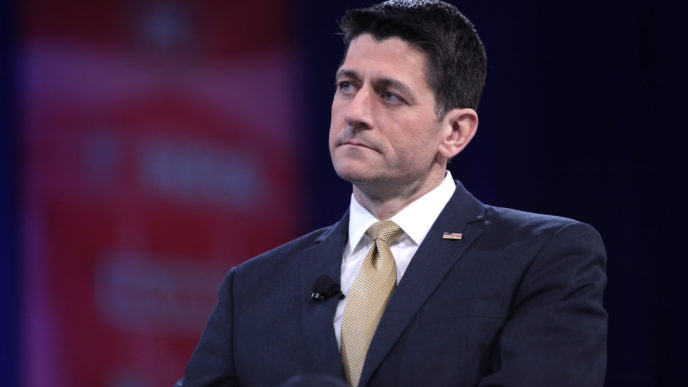
Ryan: Reconciliation Bill Will Block Planned Parenthood Funding

Stopping the stream of federal funding to Planned Parenthood, the nation’s largest abortion provider, will be part of the upcoming budget reconciliation package, House Speaker Paul Ryan said during a press briefing Friday.

This important announcement maintains the strong policy stance Congress took in the 2015 reconciliation bill that would have repealed Obamacare and stopped federal Medicaid funding to Planned Parenthood.

While that bill was vetoed by President Barack Obama, the outlook is much different now with the inauguration of a new president and the start of a new Congress committed to repealing Obamacare and defunding Planned Parenthood.

If the reconciliation bill is crafted as it was in 2015, it would make Planned Parenthood affiliates ineligible from receiving Medicaid reimbursements for one year after the enactment of the bill. Such federal reimbursements constitute a significant portion of the roughly $500 million in government funds sent to the nation’s largest abortion provider each year.

Federal funding could still flow to the many other qualified health care providers that offer the same services as Planned Parenthood affiliates, plus additional services, without entanglement in abortion. In fact, the last reconciliation bill increased funding for these community health centers.

Taxpayer money should not be used to fund elective abortion providers such as the Planned Parenthood Federation of America affiliates. Ending such tax funding has become even more urgent in light of serious and disturbing press coverage of Planned Parenthood representatives discussing the sale of body parts of aborted babies.

Of course, a reconciliation bill isn’t the only tool at Congress’s disposal with regard to defunding Planned Parenthood. To cut off all federal funding streams to Planned Parenthood, Congress should use the appropriations process to disqualify Planned Parenthood affiliates not only from receiving any federal Medicaid reimbursements, but also from receiving grants under specific discretionary programs, like Title X family planning.

Just this week, the Select Investigative Panel on Infant Lives issued its final report, which recommended that Congress defund Planned Parenthood. The Daily Signal’s Kelsey Harkness has highlighted six other disturbing findings in the panel’s report, which further underscores why Planned Parenthood should not receive taxpayer funding.

A reconciliation bill that makes Planned Parenthood affiliates ineligible to receive Medicaid reimbursements is an encouraging step toward ending federal funding for the nation’s largest abortion provider. (For more from the author of “Ryan: Reconciliation Bill Will Block Planned Parenthood Funding” please click HERE)

Follow Joe Miller on Twitter HERE and Facebook HERE.
New Legislation Could Open up Health Care Options After an Obamacare Repeal

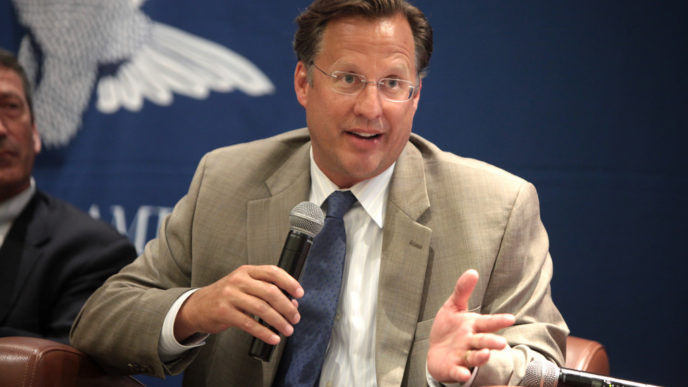
Rep. Dave Brat, R-Va., has introduced a bill in the House that, if passed, will allow individuals to decide how they want their health care funds to be spent, without the influence of the government or health insurance providers.

Brat said that the health savings account legislation is a way for lawmakers to prove to the American people that they have a plan to replace Obamacare after repealing it.

“First and foremost, we are putting through one of the biggest public policy initiatives of the decade with an Obamacare repeal,” Brat told The Daily Signal in a phone interview. “And so that has become very important to people, what you are going to replace it with. People want assurances that they are going to be better off.”

Labeled the Health Savings Account Expansion Act, or H.R. 247, “this bill equalizes the tax treatment for health insurance and care between different ways of paying for it,” according to a statement from Brat.

Mia Heck, the director of the health and human services task force at the American Legislative Exchange Council, or ALEC, told The Daily Signal that health savings accounts help individuals plan for their future.

“A health savings account (HSA) is a pre-tax medical savings account available for taxpayers who are enrolled in a high-deductible health plan,” Heck said in a statement provided to The Daily Signal. “The high-deductible health plan serves as catastrophic coverage, while encouraging individuals and families to save money to use toward future medical expenses. Funds deposited into an HSA are not subject to federal income tax.”

According to Brat, health insurance accounts enable consumers to shop around for plans that best suit their needs.

“Instead of having to get coverage approved from the government, an employer, or an insurance company, people will be able to use their [health savings account] funds directly for the products and services that they value,” Brat said.

Sen. Jeff Flake, R-Ariz., has reintroduced a companion bill in the Senate.

Flake said that the Health Savings Account Expansion Act puts individuals in charge of their health care decisions without penalty from the government or their insurance provider.

“[Health savings accounts] give consumers greater control over their health care dollars by providing them with a tax-advantaged savings option for their medical expenses,” Flake said in a speech Wednesday on the Senate floor. “This means that the dollars they work so hard to save can grow over time, tax-free, and be withdrawn, tax-free, for qualified medical expenses.

The Health Savings Account Expansion Act includes several reforms, according to Brat’s website.

First, it enlarges contribution limits to $9,000 to $18,000 per year for people who file single or jointly.

Second, it removes restrictions imposed by Obamacare for items that are purchased over the counter.

Third, it permits users to allocate health savings account funds to pay their health insurance premiums and other health care costs, such as doctor visits.

Fourth, it simplifies regulations “by eliminating the high-deductible health plan mandate.”

This legislation, according to Brat, is a free-market solution to the health care crisis.

“People are going to be very rational when it comes to allocating your own dollars that the doctor or whatever service you are going for,” Brat told The Daily Signal.

Brat sees his proposed legislation as a way to plan for the future and address the problems Obamacare has created.

“The reason Obamacare policy is so important is because it is right in the middle of Social Security and the Medicare crisis,” Brat said. “Both of those programs are insolvent in 12 years. And the kids won’t get any of those programs if we don’t do something about this.”

The campaign of President-elect Donald Trump has also spoken favorably of health savings accounts.

His presidential campaign website stated that they would be of “great benefit” to individuals. (For more from the author of “New Legislation Could Open up Health Care Options After an Obamacare Repeal” please click HERE)

Follow Joe Miller on Twitter HERE and Facebook HERE.