Was the Video Torture of a Handicapped “Trump Supporter” Really a Love Crime?

Chicago police just couldn’t decide whether the kidnapping and video-livestreamed torture of a learning disabled white man constituted a hate crime or just kids being “stupid.” As Fox 32 reported:

The footage shows the suspects kicking, hitting and cutting the hair of the victim while he was gagged. Shouts of “F*** Trump!” and “F*** white people!” can be heard in the background.

At one point, the victim is held at knife point and told to curse President-elect Donald Trump. The group also forces the victim to drink water from a toilet.

The victim was held hostage for at least 24 hours and as long as 48 hours.

The American Mirror commented: “To listen to the initial reaction of Chicago Police Superintendent Eddie Johnson, the filmed shock attack on a white special needs resident … was just kids being kids.” It quoted Johnson:

Some of it is just stupidity. People just ranting about something they think might make a headline. … At this point we don’t have anything concrete to point to to suspect it’s a hate crime, but we’ll keep investigating and let the facts guide us on how this concludes.

Now, there is good reason to question the whole idea of a “hate crime.” Why should it matter from a legal point of view precisely why a criminal attacks someone and violates his right to life, liberty, or property? Was the record-setting murder spree that engulfed Democrat-run Chicago in 2016 — which largely saw non-whites killing non-whites — a wave of “love crimes,” since those murders weren’t racially motivated?

But granting that the legal category of hate crime does exist, why was there the slightest reluctance to label what these four vicious young people did a hate crime? They used racial epithets (check), targeted a member of another race (check), and forced him at knife point to denounce a white politician (check). It sounds like it fits the bill.

What would have happened if four white kids from Donald Trump’s native Queens had reacted to Barack Obama’s election in 2008 by kidnapping a handicapped black teen and forcing him to damn Obama at knife point? The entire racial grievance industry, the mainstream media, and the federal government would have swung into action to address a “national crisis” of white-on-black political violence.

What Matters Isn’t the Victim, but the “Narrative”

The media reactions to this crime were different, to say the least. The iconic Washington Post let columnist Callum Borchers blow right past the horror inflicted on a helpless, imprisoned American, to focus on the dangerous “pro-Trump” “narrative” which this attack could be used to bolster — the idea that just as white people can target black people for crimes, it can also work the other way around. We see here the mind of an ideologue, trapped in its little Habitrail, scurrying left and right to avoid the plain and ugly facts and obtain its little pellet of “social justice.”

Why did it take many long hours for Chicago police to classify this obvious hate crime as a hate crime, and charge the attackers accordingly? Indeed, they might not have done so without the explosion of public comment, admirably led by Paul Joseph Watson, a gadfly at Alex Jones’ InfoWars:

Only Whites Can Be Racist, Got It?

Why is there a double standard on hate crimes? For the same reason that leftists deny that black hatred for whites (or Asians or Jews) can constitute racism:

Because whites have all the institutional power in society, and “racism” is defined as an act that perpetuates institutional power. So when black rioters targeted Korean grocers during the Los Angeles riots, beat them bloody, called them “gooks” and burned their businesses, what they were doing wasn’t “racist.” You have to call it something else.

I had this principle of cultural Marxism carefully explained to me at an official gathering called by the Catholic Diocese of Baton Rouge, which priests and church employees were forced to attend, back in the early 90s. Clearly someone in the church had taken his Saul Alinsky training and put it to use.

It’s a gross oversimplification to lump together all people of the same ethnic group as having the same power or “privilege.” White coal-miners in Appalachia who have been put out of jobs by Obama administration regulations clearly have less institutional power than my black classmates from Yale enjoy. To lump people together in broad racial categories and grant them different treatment under law… that in fact sounds more like the classical definition of racism. (For more from the author of “Was the Video Torture of a Handicapped “Trump Supporter” Really a Love Crime?” please click HERE)

Follow Joe Miller on Twitter HERE and Facebook HERE.
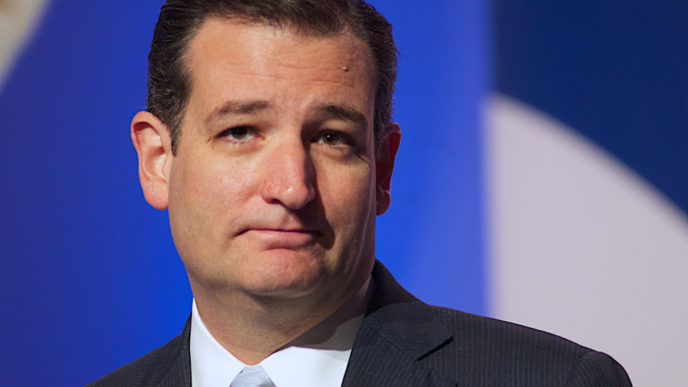
Unlikely Allies? Ted Cruz and Lindsey Graham Join Forces to End the UN’s Taxpayer Gravy Train

Republican offices in the Senate are fully committed to bringing legislation forward to stop full or partial U.S. funding to the United Nations. A bill that withdraws commitments to the U.N., or puts in place conditions for further support, can be expected in the next couple weeks, Senate sources confirmed to Conservative Review.

Senate offices have become irate with the international body’s treatment of the state of Israel in particular. And they have expressed dismay with how the U.N. as a whole has continued to act against American interests.

A bipartisan bill is expected to pass Congress Thursday or Friday condemning the United Nations for its anti-Israel approach. However, to several congressional offices, merely objecting to another wrongful U.N. vote is not enough to change the institution’s tyrannical behavior.

Senators Lindsey Graham, R-S.C. and Ted Cruz, R-Texas are building a coalition to bring forward these efforts on the Senate side. Their offices are currently drafting the legislation, which is expected to be made public in the coming weeks.

Graham and Cruz’s proposal and other defund-U.N. efforts have already received public support from Sens. John McCain, R-Ariz., Tom Cotton, R-Ark., Marco Rubio R-Fla., and James Lankford, R-Okla. Additionally, Sen. Rand Paul, R-Ky., has supported the dissolution of the U.N. in its entirety.

The move comes after the United Nations decided to pass a late December resolution demonizing Israel, which the Obama administration let through thanks to their abstention at the Security Council. The resolution castigated Israel on “settlements” and falsely claimed that Israel’s holiest sites and cities belonged to Palestinians.

The United Nations costs the American taxpayer over $3 billion a year, not including the hundreds of millions of dollars in lost real estate value on the Manhattan East Side from the U.N. headquarters and countless diplomatic buildings.

“As the Chairman of the Subcommittee on Foreign Operations of the Senate Appropriations Committee, I oversee the United States assistance to the United Nations. The United States is currently responsible for approximately 22 percent of the United Nations total budget,” Sen. Graham said before the resolution, warning there would be severe consequences for the continued bullying of Israel.

“If the United Nations moves forward with the ill-conceived resolution, I will work to form a bipartisan coalition to suspend or significantly reduce United States assistance to the United Nations,” he added.

On the House side, Conservative Review has learned that GOP leadership is discussing with conservative legislators potential strategies that would result in a vote coming to the floor in late January.

Leadership has “made a commitment” to propose additional avenues later in January that will provide more direct pathways toward expressing “Congress’ displeasure with the U.N. action,” a conservative House member tells Conservative Review.

BuzzFeed reports that members of President-elect Donald Trump’s transition team have not yet committed one way or another when it comes to U.N. funding. Before the international body voted to condemn Israel, Trump took to Twitter to express his disgust with the U.N., and pledged to have Jerusalem’s back once he got into office. Trump has also been highly critical of the Obama administration’s series of attacks against Israel.

Currently, the United States continues to fund several anti-American U.N. institutions, including UNRWA, which has embedded itself with Palestinian terrorists; UNESCO, which denies Jewish and Christian claims to the Holy Land; and the U.N. Human Rights Council, which has a membership roster that includes the most dictatorial nations in the world. (For more from the author of “Unlikely Allies? Ted Cruz and Lindsey Graham Join Forces to End the UN’s Taxpayer Gravy Train” please click HERE)

Follow Joe Miller on Twitter HERE and Facebook HERE.

How Black Democrats Stole Votes in Alabama… And Jeff Sessions Tried to Stop It

The Left has lobbed many false charges at Sen. Jeff Sessions, R-Ala. (C, 78%), Donald Trump’s nominee for attorney general. But perhaps the most outrageous claim is that he tried to suppress African-American voters in 1985 by pursuing a voter fraud prosecution in Perry County, Alabama.

The bogus accusation would be laughable, were it not such a familiar tactic. But this is just another instance of so-called “progressives” going all out to protect their own — even when the victims are black voters.

Perry County is a rural county of about 10,000 residents in west-central Alabama in an area known as the Black Belt for its dark, rich soil. Its population is majority black (68.7 percent, according to the 2010 census) and overwhelmingly Democratic (Barack Obama received 73 percent of the vote in 2008). The key to winning any local office in Perry County is to win the Democratic primary.

Perry County has long been plagued by accusations of voter fraud in local elections. As former Alabama Democratic congressman Artur Davis said, “The most aggressive contemporary voter suppression in the African American community” that he saw in Alabama was “the wholesale manufacture of ballots, at the polls and absentee, in parts of the Black Belt.”

On April 20, 1983, a local county grand jury (with a majority of black members and a black foreperson) issued a report concerning problems in the balloting process that targeted the “aged, infirmed, or disabled.” The grand jury called for the “vigorous prosecution of all violations of the voting laws” and requested “the presence and assistance of an outside agency, preferably federal, to monitor our elections and to ensure fairness and impartiality for all.”

But Sessions, the U.S. Attorney in the region, did not open a federal investigation into the 1982 election. In his Senate Questionnaire for the attorney general nomination, he explains that he was hoping it wouldn’t be necessary, that the county grand jury report would cause local activists to “conform to the law.” Unfortunately, that did not happen.

Instead, as LaVon Phillips, a black legal assistant in the Perry County district attorney’s office, later testified, her office received numerous complaints during the 1984 election cycle. Black voters and incumbent black officials reported that voters were receiving absentee ballots they had never requested. Moreover, she testified that local candidate Albert Turner was illegally picking up absentee ballots from voters.

A handwriting expert concluded that Turner had written in his own name on some of the absentee ballots. Other black voters had gone to the polls only to be told that someone had already voted in their names by absentee ballot.

What was happening? Perry County was embroiled in an intense political fight pitting one set of black Democratic candidates against another. But one side was apparently willing to do anything to win.

All of this culminated in the 1984 Democratic primary in which key county commission seats, as well as the tax assessor’s post and other local offices, were on the line. With one exception, all the serious candidates were black.

A week before the primary, Sessions said he received a call from District Attorney Roy Johnson informing him that two black Democratic candidates opposed by Turner — Reese Billingslea and Warren Kinard — “were convinced that fraud was occurring in the election.” Turner and others were collecting large numbers of absentee ballots that “were being taken to a central headquarters where the ballots were altered to ensure that they were marked for candidates endorsed by Turner.”

Billingslea and Kinard had information that the altered ballots would be taken to the county post office the night before the election to be mailed. They were “extremely concerned about the election and believed it was being stolen from them.” And sure enough, the night before the election, Turner and his wife Evelyn showed up at the post office with more than 300 ballots, while their co-conspirator Spencer Hogue, showed up with 170. All told, Turner and his minions mailed 504 of the 729 absentee ballots cast in the election.

According to Sessions, FBI analysis showed that at least 75 of the ballots had been altered, and 25 voters said they had not given their ballots to the Turners or Hogue for mailing. One African-American family of six voters (the Sheltons) testified that they had not given permission to change their votes — particularly since the candidate they had originally voted for was their cousin! Ultimately, Turner admitted changing the Sheltons’ absentee votes.

A 34-page federal grand jury indictment filed on Jan. 25, 1985 lays out in great detail the actions of the Turners and Hogue in the voter fraud case. The object of the conspiracy was to elect the candidates they had “supported and endorsed.” According to the indictment, they used Evelyn Turner’s position as a notary public to witness absentee ballots falsely in furtherance of the conspiracy.

The indictment also gives the lie to the spurious claim recently made by former Massachusetts Gov. Deval Patrick, a member of the Turner/Hogue defense team. In a letter to the Senate Judiciary Committee, Patrick claims that Sessions based the case on the legal theory that it was a federal crime “for someone to help someone else to vote or to advise them how they should vote — even if and when they ask for such help.” As the indictment makes clear, that was not the theory of the case.

Neither the Turners nor Hogue were prosecuted for assisting voters. The indictment charges them with picking up absentee ballots to “open and fraudulently change those ballots that had not been marked for candidates supported and endorsed” by the defendants. They were prosecuted for allegedly casting “false, fictitious, spurious and fraudulently altered absentee ballots.”

Yet somehow, the Left would have us believe that this was a racist prosecution.

It’s a totally fabricated claim, spun from thin air by Sen. Ted Kennedy and his allies to block the 1986 appointment of Sessions to the federal bench and now resurrected by the NAACP and Democrats.

A Dec. 28, 2016 interview with Craig Donsanto confirms the deception. Now retired, Donsanto was the long-time head of the Election Crimes Unit inside the Justice Department’s Public Integrity Section of the Criminal Division of the U.S. Department of Justice. Donsanto, who is now retired, was well-known in the U.S. election community and was a nationally recognized expert on election crimes.

Donsanto wrote the Justice Department’s manual on “Federal Prosecution of Election Offenses,” which is distributed to the 93 U.S. attorney’s offices across the country. During his more than 40 years as a prosecutor, Donsanto was the go-to authority inside the Justice Department for all election crime prosecutions — including the Perry County case. No one could file such a case without getting his OK.

Donsanto remembers the Perry County case well. Indeed, he was in Alabama at the federal courthouse when the grand jury voted to return the indictment, thereby initiating the formal charges.

“No federal prosecutor faced with the evidence seen by the grand jury would have failed to take the case and go forward with the prosecution,” Donsanto told me. “The evidence in the case was overwhelming. I was there with the other assistant U.S. attorneys and not one dissented — everyone thought it was a solid case. I told Jeff Sessions to go forward with the case.”

Donsanto did more than that. He helped prepare the indictment.

Donsanto is highly offended by any claims that the prosecution was racist. The federal prosecutors were “trying to protect black voters who were having their votes stolen,” he notes. Moreover, the investigation was initiated only after local black voters and candidates complained to the Justice Department. When asked about the fact that a jury found the defendants not guilty, Donsanto says that as a former federal prosecutor, he respects the jury system.

But there is no question in Donsanto’s mind that, given the overwhelming evidence of wrongdoing, this was an example of “jury nullification.” The defendants, he notes, “were local civil rights activists, and the jury was not going to find them guilty no matter what they did.”

How otherwise could one account for the jury, for example, discounting the testimony of all six members of the Shelton family that Turner had changed their ballots without their permission or knowledge?

The false claim of racism to cover up wrongdoing and the power struggle between black Democrats in Perry County, as well as the methods used to steal absentee ballots, is eerily similar to another voter fraud prosecution conducted by the Justice Department in nearby Greene County, Ala., 10 years later. Craig Donsanto was also intimately involved in that prosecution.

Greene County has almost the same size population as Perry County and is 80 percent black. Just like in the Perry County case, the Justice Department received calls from black Democratic candidates who said their election was being stolen through absentee ballot fraud by other black candidates and activists.

Suitcases full of absentee ballots were brought to the county post office the day before the 1994 election. The result of the federal investigation showed that the defendants submitted hundreds of fraudulent absentee ballots created through an assembly line process that forged signatures, altered ballots, and convinced some voters to sign blank ballots.

Fortunately, jury nullification did not happen in Greene County. Eleven local officials and activists were eventually convicted. But just as in Perry County, the Greene County defendants and civil rights organizations like the NAACP and the Southern Christian Leadership Conference (whose treasurer was convicted in this case) falsely alleged that the prosecution was a racist conspiracy intended to suppress black voters through “Gestapo” tactics. The NAACP Legal Defense Fund even defended some of the vote stealers, and NAACP officials met with Attorney General Janet Reno to try to convince her to drop the prosecution.

John Kennard, the first black official ever elected in Greene County, was one of the candidates who first contacted the FBI. He was outraged by the accusations made against the prosecutors and by the intercession of civil rights organizations on the side of the voter fraud conspirators instead of on behalf of the black candidates whose votes had been stolen.

In an angry letter to Julian Bond, then chairman of the NAACP, Kennard wrote that helping the vote stealers was “tantamount to … defending the policemen that used the fire hoses and dogs, and Eugene ‘Bull’ Conner in Birmingham, in the early 1960s.” According to Kennard, the defendants “knew they had a fail-safe way out, when all else fails … cry racism, intimidation and pretend they are victims when they were the perpetrators of this crime.”

In Perry County, Jeff Sessions and the other Justice Department lawyers were trying to protect black voters from having their right to vote stolen — a precious right that those voters had fought very hard to obtain during the civil rights battles of the 1950s and 1960s. Unfortunately, a jury let the defendants off despite the evidence in the case, including testimony from black residents of the county about how their ballots had been altered and changed without their permission. And that is the real tragedy of this case.

As Craig Donsanto says, this was a prosecution intended to preserve and protect the right to vote, something to which he dedicated his entire professional career. Anyone who claims this was a racist prosecution by Jeff Sessions is, according to Donsanto, “a liar and a political opportunist of the worst kind.” (For more from the author of “How Black Democrats Stole Votes in Alabama… And Jeff Sessions Tried to Stop It” please click HERE)

Follow Joe Miller on Twitter HERE and Facebook HERE.

Trump and Congress Want to Audit the Fed. Let’s Do It Already!

Back when Ron Paul was in Congress, you could always count on him to do one thing: introduce the same bill every year, heedless of futility or Sisyphean labor, to conduct a comprehensive audit of the United Stated Federal Reserve Bank.

It never went anywhere. But undaunted, the elder Paul continued the tradition right up until his retirement, at which point he passed the mantle to his son, Sen. Rand Paul, R-Ky. (A, 92%).

Rand continues to introduce the bill every year, with increasing probability of action, receiving a rare vote in the Senate in 2016. This year, the warriors of monetary policy may have their best shot yet at success, as a new version of the bill is being sponsored by Rand and Rep. Thomas Massie, R-Ky. (A, 94%) with vocal support from the incoming Trump administration.

The Federal Reserve is a nominally independent agency that regulates the nation’s money supply, controls interest rates, and occasionally intervenes in markets more directly, as when it purchased toxic mortgages during the 2008 housing crisis. The Fed generally operates behind the scenes in comparative secrecy, with the general public having only a vague conception of what the agency actually does.

What few people realize is that when the Fed alters the money supply and changes interest rates, it is sowing the seeds of future economic disaster by introducing distorted signals into money markets. Not only does dramatically expanding the money supply (as the agency has done for the last decade) create inflation that causes consumer prices to rise, but it also leads investors into making bad decisions that harm the economy as a whole.

The Fed is adamant that it is already subject to audits by the inspector general, and that it is already fully transparent. The agency is also adamant in its opposition to the Audit the Fed bill. Can you spot the inconsistency? If the agency is already transparent, then the bill would do nothing, so why oppose it?

The truth is that, while the Fed is subject to periodic audits, these are only partial reviews of the agency’s activities that leave out many of the most important aspects of what the Fed does: Transactions with foreign governments, internal communications, and the open market operations that constitute most of what the Fed does are currently exempt from scrutiny. If people knew exactly what goes on behind the agency’s closed doors, they would be shocked at how much power it has to screw things up for the rest of us.

We would also discover that the Fed is not nearly as independent as most people believe. The Fed chairman is appointed by the president, which imparts an inherently partisan slant to anything the agency does. I suspect an audit of internal communications would reveal far more consideration for political concerns than the Board of Governors lets on.

Make no mistake: Auditing the Fed will not be a panacea that will immediately change anything, but it is a necessary first step toward exposing the agency’s actions to the public and convincing ordinary citizens of the need to end the agency’s charter. (For more from the author of “Trump and Congress Want to Audit the Fed. Let’s Do It Already!” please click HERE)

Follow Joe Miller on Twitter HERE and Facebook HERE.

A General Joins the House’s Conservative Ranks as New Congress Convenes

Six months shy of serving 30 years, Brig. Gen. Don Bacon decided to end his Air Force career so he could speak out on the concerning direction he saw the country taking.

A run for Congress, however, was not what Bacon had originally envisioned.

“I decided to retire a little early because I wanted to speak up, as you can’t do that wearing a uniform,” Bacon told The Daily Signal in a phone interview over the holidays. “And I just felt like our country was going in the wrong direction and I wanted to start writing articles and editorials, giving speeches, just getting involved.”

Bacon, R-Neb., is one of 30 Republican freshmen in the House who were set to be sworn in Tuesday as the new Congress convened, 17 days before Donald Trump’s inauguration as president.

Democrats also welcomed 30 freshmen to the House, where Republicans hold a majority of 241-194 after a net loss of six seats in the Nov. 8 election.

Although a new member, Bacon, 53, has some Capitol Hill experience as an adviser on military issues to Rep. Jeff Fortenberry, R-Neb. As an assistant professor at Bellevue University, a medium-sized college in Nebraska, he has taught courses on leadership and American vision and values.

Bacon says his desire to become active in civic life was instilled in him long before his military career.

“My story is I was raised on a farm in Illinois,” Bacon said. “[We grew] corn, soybeans, hay, and I was raised with a family that really liked talking about public policy and so I have always had a burning desire to be involved.”

‘Maybe This Is Why We’re Here’

Bacon says he saw serving his country in the military as a good place to start. “I joined the Air Force at 21 as a newlywed,” he said.

It was 1985 and he had gotten his political science degree from Northern Illinois University the year before.

Bacon went on to serve in 16 assignments in Asia, Europe, the Middle East, and “coast to coast in the United States and a lot of places in the middle,” he said. His duties included electronic warfare, intelligence, and reconnaissance.

Above all, however, Bacon says, his favorite part of his Air Force service was the opportunity to command at military bases, including at Ramstein Air Base in Rhineland-Palatinate, Germany, and Offutt Air Force Base near Bellevue, Nebraska.

During four deployments to the Middle East, he helped establish the Israeli missile defense system. He commanded an electronic warfare squadron during the invasion of Iraq and returned to Baghdad for a yearlong tour during the surge of 2007-2008.

Bacon says he retired from the Air Force in 2014 because he wanted to start getting politically involved and campaign for “down-ballot folks” who he believed to be principled leaders for Nebraska.

He will represent Nebraska’s 2nd Congressional District, which includes Douglas and Sarpy counties in the eastern part of the state.

He decided to run for Congress after Rep. Lee Terry, R-Neb., lost re-election in 2014 to a Democrat state senator, Brad Ashford.

“Our congressman got defeated … by a 30-year local Democrat politician,” Bacon said. “He [Ashford] had 30 years of history in the state. My wife and I looked at each other and said, maybe this is why we’re here and maybe we can make a difference.”

Bacon and his wife, Angie, who works in Omaha as a real estate agent, have three sons and a daughter ranging in age from 20 to 32, plus three granddaughters.

‘We Built a Small Team’

Bacon said Ashford attempted to portray himself as a moderate, but the incumbent Democrat’s record proved otherwise.

Ashford, he said, “voted for Nancy Pelosi twice for speaker and voted with her about 80 percent of the time.”

Considered one of the most liberal Democrats in Congress, Pelosi, D-Calif., is the former House speaker and current Democratic leader.

“You will not have that with Don Bacon in Congress,” he said.

The road to Congress, however, was by no means easy and Bacon says things came together slowly.

One challenge was building his name recognition, which stood at 9 percent in January 2015, he says.

“We started out very slow,” Bacon said. “No one knew who I was, and so we had a couple of the local mayors who knew me from being the base commander. So we just built a small team.”

The hard work paid off, however. In the May 10 primary, Bacon defeated lawyer and former state legislator Chip Maxwell, a tea party favorite, by a 2-to-1 margin, the Omaha World-Herald reported.

In the end, Bacon beat Ashford by a margin of fewer than 5,600 votes Nov. 8, and the incumbent Democrat called the next morning to concede.

He is one of only three Republicans who defeated an incumbent House Democrat, according to OpenSecrets.org.

Bacon told The Daily Signal:

I think, on paper, it looked like an uphill climb. My opponent [Ashford] had much more money and much more name ID. I think we had a better story to tell.

Inspiring Young Volunteers

Bacon described his campaign as centered around four pillars: addressing harmful regulations by federal agencies such as the Environmental Protection Agency and the Department of Labor, reforming the tax code, addressing the national debt of nearly $20 trillion, and strengthening the military.

Bacon said the Obama administration “underestimated ISIS,” the terrorist army that calls itself the Islamic State, and the Trump administration must unite with other countries to defeat ISIS.

“I hope we can be able to work with more of our traditional allies to go after ISIS. I think that’s the one thing we’ve got to do better,” Bacon said.

Bacon said his campaign’s success largely is due to the young people who volunteered:

I had 150 young volunteers on our team from three different universities and 10 different high schools and we knocked on 130,000 doors … and that is probably the reason I won. I am excited that a conservative can pull on a lot of young people.

The conviction of young people in Nebraska’s 2nd Congressional District did not go unnoticed.

Hal Daub, a former mayor of Omaha who represented the district from 1981-1989, served as Bacon’s finance chairman. The youth who got involved helped make the campaign a success, he said.

“A core group of about 60 showed up for everything and did a lot of the walking and stuffing and sticking and licking and calling, all the things that you do to make a campaign really work,” Daub told The Daily Signal in a phone interview.

‘Not the Politicians’ House’

Daub said Bacon made such a significant impact because of his personality and interest in young people:

He cared about them and reached out to them, and it was fun to watch the chemistry between this marching army, this brigade, of young people really, really working hard to elect Don. And I think he relates so very well to young people.

Brett Lindstrom, a Republican state senator from Nebraska’s 18th District, told The Daily Signal in a phone interview that Bacon brought certain qualities to bear.

“Don brings that energy and Don is very young at heart and able to lead that charge, and I think he is the type of guy that people want to follow,” Lindstrom said.

Sen. Deb Fischer, R-Neb., said she looks forward to seeing what Bacon’s leadership in Congress will bring.

“I know Don will be a positive, strong leader for the 2nd District,” Fischer said in a statement provided to The Daily Signal. “He will fight to uphold Nebraska values, and his extensive military leadership experience has prepared him to address the many threats our nation faces both abroad and here at home.”

Bacon said his desire is to serve his constituents and build a record based on addressing their concerns.

“We have lots of career politicians in Washington right now, and I don’t think it serves us well,” Bacon said. “Congress is supposed to be the people’s house, not the politicians’ house.” (For more from the author of “A General Joins the House’s Conservative Ranks as New Congress Convenes” please click HERE)

Follow Joe Miller on Twitter HERE and Facebook HERE.

The Left’s Selective Outrage Over Alleged Voter Fraud

The year 2016 will be remembered for many headlines: Donald Trump’s insurgent campaign and surprise election, the shocking and crushing collapse of the Clinton dynasty, and—because politics isn’t everything—the nail-biting end of the Cubs’ 108-year World Series drought.

And then, there was the political left’s apoplectic post-election meltdown and the spectacular failure of Green Party candidate Jill Stein to proffer any evidence for her claims of mass hacking of ballot boxes in the crucial states of Wisconsin, Michigan, and Pennsylvania.

In fact, to date, there remains no evidence that Russian or any other hackers infiltrated voting machines or affected the actual casting or counting of ballots anywhere in the United States.

This is not to say that Russia’s hacking of the Democratic National Committee should not be taken seriously and be fully investigated in an independent and bipartisan manner. But airing the dirty laundry of one political party is a far cry from the left’s preferred narrative: that Hillary Clinton lost to Trump because Russia rigged the election.

The left’s sudden awakening to the possibility that elections can in fact be rigged is welcome. But their epiphany seems limited only to pie-in-the-sky fantasies that would deprive conservatives of their electoral gains.

To our friends on the left, old-fashioned voter fraud—the kind that involves tampering with absentee ballots and buying votes—remains impossible, and efforts to secure against it are merely smoke screens for voter disenfranchisement.

But they are sorely mistaken, and The Heritage Foundation’s “Does Your Vote Count?” project has the data to prove it. This week, we have added 18 new cases of proven election fraud to our voter fraud database. For those keeping track, that’s 742 documented criminal convictions for all manner of election fraud—and this is likely the veritable tip of the iceberg.

Most states lack the tools to detect or prevent voter fraud, and many prosecutors do not prioritize these cases. The sad reality is that most voter fraud goes undetected and unpunished.

Here are a few of the newest entrants to the database.

Kentucky

Wilbur Graves, a former judge-executive for Monroe County, was convicted along with Wanda Moore, Gary Bartley, and Ronald Muse of a vote-buying scheme during the 2006 Monroe County general election.

Moore and Muse both reached plea agreements with prosecutors and testified against Graves. Moore testified that Graves provided her with $20,000 to $30,000, which Moore used to buy votes for Graves. She paid about 140 voters $40 to $60 per vote.

Following his conviction, Graves was sentenced to 12 months and one day in prison followed by two years’ supervised release, and was also ordered to pay a $5,000 fine. Moore was sentenced to two years’ probation and ordered to pay a $400 fine. The judge sentenced Bartley to six months’ probation on home confinement and ordered him to pay a $2,000 fine. Muse was sentenced to time served.

Ohio

During a 2012 campaign for the Voters First Ohio amendment, Working America—a group associated with the AFL-CIO—hired Timothy Zureick to collect petition signatures.

Zureick forged the names of 22 prominent Democrats, including members of the Athens County Board of Elections. The Democrats on the board alerted officials when their signatures appeared on the petitions they were certifying.

Zureick pled guilty and was sentenced to serve a week in jail and to pay all court costs, as well as perform 100 hours of community service.

Michigan

Brandon Hall was convicted of 10 counts of ballot petition fraud stemming from a 2012 election. Chris Houghtaling, who sought to become a candidate for the Ottawa County District Court, hired Hall to acquire the necessary signatures for his candidacy.

Houghtaling reportedly did not care whether the signatures were collected legally or illegally, and even assisted in Hall’s crime by providing him old 2010 petitions to copy.

Hall, realizing he did not collect enough signatures, used a phone book to complete the rest. Hall’s friend, Zachary Savage, assisted with the fraud, but prosecutors granted him immunity in exchange for his testimony.

Hall was sentenced to serve 30 days in jail, 18 months of probation, and was ordered to pay $3,105 in fines and legal fees and to perform 60 hours of community service.

They say the first step to solving a problem is admitting you have one, and when it comes to voter fraud, it’s long past time for America’s elected leaders—both on the right and the left—to admit the ugly truth: Voter fraud exists, and we need sensible policies to detect and prevent it. Heritage has proposed several such policies, including voter identification laws and routine checks of voter rolls.

Elections are fundamental to American democracy, and fraud undermines the will of the people and casts doubt over the democratic process. Even one case of voter fraud is too many. (For more from the author of “The Left’s Selective Outrage Over Alleged Voter Fraud” please click HERE)

Follow Joe Miller on Twitter HERE and Facebook HERE.

The Obamacare Executive Orders Trump Could Issue on Day One

President-elect Donald Trump may be following President Barack Obama’s lead come Jan. 20, using executive orders to roll back parts of the outgoing president’s signature health care law.

During a meeting with Republicans on Capitol Hill Wednesday, Vice President-elect Mike Pence said the president-elect plans to kick off his administration by signing executive orders to begin dismantling Obamacare.

“We’re working now on a series of executive orders that will enable that orderly transition to take place even as Congress appropriately debates alternatives to and replacements for Obamacare,” Pence told reporters after the meeting.

Pence did not elaborate on which parts of the law the president-elect would dismantle using his executive authority, and Trump’s transition team did not return The Daily Signal’s request for comment.

But health care experts believe there are several steps the president-elect can take on his first day in the White House that would deliver a blow to the health care law even before Congress acts legislatively.

“This is the problem with expansion of executive branch powers is that it cuts both ways,” Seth Chandler, a visiting scholar at George Mason University’s Mercatus Center and a professor at the University of Houston Law Center, told The Daily Signal. “I think a lot of liberals gave Obama a pass when he did it, and they’re now potentially going to have to face the consequences of permitting the executive to greatly expand its powers.”

Individual Mandate

Experts believe Trump could first decide not to enforce the individual mandate, which requires people to have health insurance and fines those who do not.

The provision was designed to balance out the population of consumers who enrolled in coverage under Obamacare and ensure healthier enrollees offset the higher costs associated with a sicker enrollment population.

But if the president-elect decided not to enforce the individual mandate, it “could make a real difference to the vitality of the exchanges going forward,” Nicholas Bagley, a professor at the University of Michigan Law School, told Kaiser Health News.

The president-elect also could announce his intention to seek hardship exemptions for all enrollees, effectively exempting everyone from the individual mandate, Chandler said.

“Obama expanded the hardship exemption for all sorts of reasons,” he said. “He has paved the way to a larger set of exemptions.”

The individual mandate is also likely to be the target of congressional Republicans in a reconciliation bill repealing parts of Obamacare.

Cost-Sharing Reductions

The president-elect can move to end the cost-sharing reductions or drop an appeal the Obama administration filed in response to the House’s lawsuit on the cost-sharing reductions in 2014.

Cost-sharing reductions are discounts offered to eligible consumers who purchase silver-level plans. The federal government then reimburses insurers for the reductions.

Last year, a federal judge ruled in favor of House Republicans, but the Obama administration filed an appeal to a higher court.

Dropping the appeal would allow U.S. District Court Judge Rosemary Collyer’s ruling to stand, and the payments to insurers would end.

If the payments ended, insurers would still be offering discounts to customers, but would no longer receive subsidies from the federal government to help with the cost.

As a result, insurance companies would likely begin to leave Obamacare’s exchanges, Chandler said.

“[Rep.] Tom Price voted to authorize a lawsuit to stop those payments because Congress never authorized them,” Chandler said of Trump’s pick for Health and Human Services secretary. “It becomes a little difficult for having said the payments are illegal to continue to keep taking them.”

Reinsurance Payments

In addition to the cost-sharing reductions, insurance companies received money from another program, the reinsurance program, under the Affordable Care Act.

Under the program, payments are made to insurers who enroll higher-risk populations.

But $5 billion was supposed to be returned to the Treasury before it was distributed to insurers. The Obama administration, however, has prioritized at least $3.5 billion to insurers over the Treasury.

Now, Republicans in Congress are pushing the Department of Health and Human Services to return the money paid to insurers under the reinsurance program to the Treasury.

Chandler said Trump could issue an executive order instructing the government to repay the Treasury.

Basic Health Program

Under the Affordable Care Act, states had the option to create a Basic Health Program, which was designed to offer public health insurance to low-income residents who did not qualify for Medicaid but were below 200 percent of the federal poverty line—$48,600 for a family of four in 2016.

Just two states implemented Basic Health Programs: New York and Minnesota.

Like the cost-sharing reductions, Trump could decide to no longer allocate money the states receive for Basic Health Programs, which would “throw the market in those two states in disarray,” Chandler said. (For more from the author of “The Obamacare Executive Orders Trump Could Issue on Day One” please click HERE)

Follow Joe Miller on Twitter HERE and Facebook HERE.

Hypocrite Up-Chuck Schumer Wants to Keep Scalia’s Seat Open Forever

In a rhetorical about-face that should surprise nobody, Senate Minority Leader Chuck Schumer, D-N.Y. (F, 2%) has pledged to do everything in his power to block President-elect Donald Trump’s Supreme Court moves going forward.

Schumer told MSNBC’s Rachel Maddow Tuesday that he “absolutely” plans to keep Justice Antonin Scalia’s vacant seat open indefinitely.

Barring a new nuclear option, if Sen. Schumer can muster enough Senate votes behind his cause (even though Americans elected a Republican government with the future Supreme Court as a chief election issue), the seat will stay open. The Constitution grants Congress the responsibility to control the size and scope of the courts – something they should do with far more discretion and zeal, mind you.

After all, as I wrote yesterday, this is politics. Obviously, the Senate minority leader’s plan is completely out of step with the American people, but what else can you expect from the Democratic Party these days?

The issue at hand here is the sheer hypocrisy.

Oh, how elections can change things. The Democrats no longer have the prospect of turning the federal high court into a stronger version of the liberal battering ram it has become over the past few decades, and now Sen. Schumer sounds exactly like the same politicians he was telling to “Do your job!” just months ago.

Yes, after months of contorting the intent of the Constitution to sell the idea that it was the job of the Senate GOP to usher Merrick Garland into Scalia’s vacant seat, the minority leader has miraculously rediscovered the Senate’s checking power on the judicial branch – just in time for the new administration.

Democrat obstructionism is sure to be a thorn in the side of everyone who voted for the new president-elect, because the voters didn’t want to see Justice Scalia replaced with a leftist water-carrier. Luckily, Democrats have created enough of a template over the past few months to give the Senate majority all the rhetorical ammo they need for the fights ahead.

Sen. Chuck Schumer’s hypocrisy here is ripe for mockery, and the GOP should give it to him – as H.L. Mencken would put it – good and hard. (For more from the author of “Hypocrite Up-Chuck Schumer Wants to Keep Scalia’s Seat Open Forever” please click HERE)

Follow Joe Miller on Twitter HERE and Facebook HERE.
Trump Will Have His Hands Full Fixing LGBT Extremism in the State Department

It may be a new year, but there’s nothing new about the concerns surrounding the State Department’s liberal activism. While Americans were busy unwrapping presents, conservatives were tearing into something else: Obama’s record on social issues. After eight years of watching the State Department operate as a global base for abortion and sexual activism, most Republicans are ready to get back to the real business of diplomacy. That’s a tough job under normal circumstances, but after two terms of President Obama, the Trump team will have its hands full.

Lately, there have been some who have suggested that (after almost a decade of proving otherwise) the State Department has nothing to do with abortion and sexual politics. Tell that to our friends around the globe, who’ve spent the last eight years trying to dodge this administration’s biggest export: rainbow flags and abortion dollars. Under President Obama, this radical agenda has completely infiltrated the State Department — usually eclipsing the agency’s other vital functions, like defending religious liberty. Obviously, America has a sincere interest in stopping the unjust persecution or targeting of any human being. But what’s happened for the last eight years is not the simple defense of those who are mistreated — it’s the elevation of people around the world based on sexual behavior.

State’s Culture of Extremism: LGBT Issues

While some people are falling for the line that social issues are “irrelevant” to the work of the State Department, the Trump team isn’t buying it. They’re keenly aware of the culture of extremism at the agency — so much so that they’ve requested a detailed list of the ways the office has tried to promote “gender equality.” Late last month, the New York Times reported on the Trump memo, which asked the department to provide, among other things, details on the positions “‘whose primary functions are to promote such issues’ — as well as how much funding was directed to gender-related programs in 2016.” (Read more from “Trump Will Have His Hands Full Fixing LGBT Extremism in the State Department” HERE)

Follow Joe Miller on Twitter HERE and Facebook HERE.

Trump’s ‘Historic’ Opportunity to Reshape the Federal Courts

After an election in which the Supreme Court proved to be a deciding factor in how people voted, President-elect Donald Trump has a significant opportunity to reshape the federal judiciary from top to bottom.

In addition to the vacant Supreme Court seat, Trump will inherit at least 103 openings in the lower courts—that is, district and circuit courts. They don’t get the same attention as the top court, but hear many more cases on a variety of issues involving federal law.

The 103 vacancies is nearly double the 54 openings President Barack Obama had upon taking office in 2009.

Another 12 federal judges have announced plans to leave their posts later this year.

While the Supreme Court reviews roughly 75 cases a year, the nation’s 13 regional circuit courts (or federal courts of appeals) heard more than 55,000 cases last year. The Supreme Court accepts 1 percent of the cases submitted to it, so in the great majority of cases, the circuit courts set a legal precedent when they decide appeals.

“If you are a cultural warrior watching for rulings on gay marriage and abortion, the Supreme Court is where you should look, but if you are a business, a taxpayer, an employee involved in a workplace dispute, or someone making a discrimination complaint, the circuit court is often the final word,” Curt Levey, a legal affairs fellow at FreedomWorks, said in an interview with The Daily Signal.

Conservative groups such as FreedomWorks say they expect Trump to quickly nominate justices to the lower courts, taking advantage of an opportunity given to him after Senate Republicans declined to confirm some of Obama’s judicial nominees the past few years.

Before the last Senate ended its two-year term, 25 of Obama’s court nominees did not get a vote on the floor after the Judiciary Committee approved them, The Washington Post reported.

The nonpartisan Judicial Conference of the United States, a national policymaking body for the federal courts created by Congress, has deemed 41 of the openings to be judicial emergencies, because cases in those jurisdictions are severely backlogged as a result of long-vacant seats.

Though Trump did not talk about the lower court openings on the campaign trail, the circuit courts often serve as a pipeline of judges considered qualified for a Supreme Court appointment. Of the current Supreme Court justices, only Elena Kagan, an Obama appointee, did not serve on a U.S. appeals court.

Trump could get additional opportunities to nominate Supreme Court justices, beyond Antonin Scalia’s replacement.

Justices Ruth Bader Ginsburg, 83, and Stephen Breyer, 78, both liberals, and Justice Anthony Kennedy, 80, considered a swing vote, may choose to retire soon.

District and circuit judges, like Supreme Court justices, serve lifetime appointments unless they retire before they die.

“President-elect Trump realizes this issue gave him the election, that there’s a historic interest in the Supreme Court and the courts in general, and that the public increasingly recognizes the significance of the president’s role in shaping the courts’ composition,” Carrie Severino, chief counsel and policy director of the conservative Judicial Crisis Network, said in an interview with The Daily Signal.

‘Big Fight’ Ahead

Democrats eager to strike back at Republicans are likely to try to thwart Trump’s effort to name more conservative judges, even if their ability to vote down potential judges is limited.

When Democrats controlled the Senate, they changed the rules to allow for confirmation of all presidential nominees, except for the Supreme Court, by a majority vote. Republicans now have a 52-vote majority.

But Senate leaders usually follow a tradition of considering lower court nominees only if they are supported by both senators representing the state in which the court is situated. Democratic senators are represented in 28 of the 50 states in the new Congress, including large ones such as California, Florida, and New York.

“Trump won’t automatically get who he wants,” Russell Wheeler, an expert on judicial nominations at the Brookings Institution, said in an interview with The Daily Signal. Wheeler added:

The Democrats will put up a big fight and say, ‘There were nominees for these vacancies which were bipartisan and you refused to bring them for a vote when you could have confirmed them in an afternoon.’ It will be the fight over the Scalia vacancy, only multiplied by 100 because there are a lot more players in this.

Obama’s Influence on Federal Courts

Even with Republicans’ resistance to Obama’s nominees in his second term, the outgoing president was able to dramatically reshape the federal judiciary.

In his eight years, Obama ended up with three more judicial confirmations than his Republican predecessor, President George W. Bush, 329 to 326.

Today, nine of the 13 circuit courts have a majority of justices appointed by a Democrat, compared to only one when Obama took office.

Wheeler says Trump’s appointments won’t significantly shift these appeals courts because only about 10 percent of the 179 circuit judgeships—17 of them—are vacant.

This is significant because the Supreme Court, experts say, tends to take cases on issues in which the circuit courts split on their rulings. So if more of the courts are liberal-leaning, they likely will be more cohesive in their decisions, and those rulings, without making it to the Supreme Court, would become the law of the land.

According to Wheeler’s research, the Republicans’ challenge today is compounded because the majority of district and circuit court judges who are most likely to retire in the coming years are Republican appointees.

Still, Wheeler predicted that by mid-2020, Republican appointees would hold about half of the 673 district judgeships, compared to the current 34 percent.

In the circuit courts, Wheeler expects Democratic appointees to fall from 51 percent to about 43 percent by mid-2020.

“It’s not insurmountable in four years for Trump to restore the courts almost to what they were before Obama took office,” FreedomWorks’ Levey said. “If he can do that, the chances are conservatives will be in great shape if Trump serves eight years.”

Policy Impact

Legal experts say many of Trump’s policy priorities could be affected by the makeup of the courts.

For example, if Trump fulfills his plans to repeal some Obama administration regulations dealing with issues such as the environment, labor, and energy development, he likely will meet resistance from opposition figures and groups who could challenge his changes in the federal courts.

“In general, what will happen is as the Trump administration and his Cabinet appointees try to pull back, amend, change, or otherwise void regulations issued by the Obama administration in many different areas, you will see a huge number of lawsuits filed by everyone from environmental groups to perhaps state attorneys general to try and stop regulations from being changed or rewritten,” Hans von Spakovsky, a senior legal fellow at The Heritage Foundation, said in an interview with The Daily Signal.

Ernest Young, a Duke University law professor focused on the federal courts, said he expects Democrat-led states to respond to Trump’s potential regulatory changes by issuing their own regulations on issues such as climate change and immigration.

If that happens, Young predicts the lower federal courts will see cases involving conflicts between federal and state law.

“Progressive policy experiments at the state level will raise questions about what extent the federal government can shut those down,” Young told The Daily Signal in an interview, adding:

I expect you will see more challenges dealing with the validation of state law—about how easy or hard it is for federal statutes to preempt state law. Some of those may go to the Supreme Court, but the lower courts are critical on issues like that.

(For more from the author of “Trump’s ‘Historic’ Opportunity to Reshape the Federal Courts” please click HERE)

Follow Joe Miller on Twitter HERE and Facebook HERE.