Obama Sent Someone to Castro’s Funeral, but Not Thatcher’s. Why It Sends the Wrong Message.

President Barack Obama sent high-level administration officials to Cuban dictator Fidel Castro’s funeral procession last week, a gesture of respect he did not offer for former British Prime Minister Margaret Thatcher’s funeral.

After Castro’s death, Obama released a statement saying: “History will record and judge the enormous impact of this singular figure on the people and the world around him.”

The carefully guarded words made no reference to the legacy of tyranny and destruction Castro left for the Cuban people, nor did it explain how much Castro’s communist ideology played a role in the half-century of humanitarian catastrophes during his regime.

As reported in Conservative Review, “Ben Rhodes, the White House deputy national security adviser and one of the president’s closest aides,” was sent to attend Castro’s funeral service along with the U.S. ambassador to Cuba, Jeffrey DeLaurentis.

Rhodes became notorious this spring when he boasted of selling a “narrative” about the U.S.-Iran nuclear deal to journalists to push the president’s agenda through Congress.

He was also a key player in opening up relations between the U.S. and Cuba in 2015, ending a long-standing American policy to isolate the communist nation.

The Obama administration failed to send high-level members to Thatcher’s funeral in 2013, which many British saw as a “snub” of their famous leader. Nor was that the first sharp elbow thrown at legendary British leaders by the Obama administration.

The words and actions of an administration, such as who a president chooses to send to a funeral, have a heightened influence on the global stage without the chief executive ever having to act officially.

As historian Richard Neustadt wrote, paraphrasing President Harry Truman, “presidential power is the power to persuade.” And as Neustadt noted, this power to persuade leads to the more tangible power to negotiate—perhaps the most important presidential role in foreign relations.

That the president seems so willing to symbolically and concretely abandon the “special relationship” the U.S. has had with Britain while going out of the way to tiptoe around the sore spots of the Cuban regime is a reversal of priorities for a nation that stood as a beacon for the free world.

Of course, Castro and Thatcher stood at opposite ends of the Cold War in the ultimate test of freedom against authoritarianism—Castro was a revolutionary communist who battled with the United States for decades and Thatcher was a legendary Cold Warrior who stood shoulder to shoulder with President Ronald Reagan against international communism in the 1980s.

When Thatcher was elected prime minister in 1979, she, along with Reagan, pursued a more confrontational approach to the Soviet Union, which she viewed as a primary global threat to human liberty.

She saw the difference between free countries like the United States and Great Britain and authoritarian regimes like under the Soviet Union and Cuba as fundamental.

Like Reagan, who called the Soviet Union an “evil empire” in a famous 1983 speech, Thatcher rhetorically undermined the tyrannical regimes and indicated that a mere détente with them was unacceptable.

When negotiating with the Soviet Union at the end of the Cold War, Reagan and Thatcher came from a position of strength.

In a 1983 television appearance, the Iron Lady, as Thatcher came to be called, explained the radically different outcomes for people living under these nearly opposite systems of government:

[Nations] that have gone for equality, like communism, have neither freedom nor justice nor equality, they’ve the greatest inequalities of all, the privileges of the politicians are far greater compared with the ordinary folk than in any other country. The nations that have gone for freedom, justice, and independence of people have still freedom and justice, and they have far more equality between their people, far more respect for each individual than the other nations.

Castro’s Cuba has been the very picture of this despotism based on a false “equality,” as Thatcher described.

“Castro’s communism has not just left Cubans economically pauperized, but politically bereft, a situation that Obama’s unilateral concessions to Castro’s little brother, the 85-year-old Raul, Cuba’s present leader, has only made worse,” Heritage Foundation senior fellow Mike Gonzalez wrote for The Daily Signal.

Cuba’s pursuit of communism under Castro crippled the island nation and pushed hundreds of thousands to risk their lives to escape. Thatcher and Reagan’s rhetorical stands against autocracy helped break the power of communism as an international threat as they pushed the Soviet Union to collapse.

But the Obama administration now has sent high-ranking officials to the funeral service of the man who pleaded with Soviet leader Nikita Khrushchev to wage nuclear war against the United States during the 1962 Cuban missile crisis. The system the now-deceased Castro created still exists after his death and continues under his brother.

The simple act of administration officials attending or not attending a state leader’s funeral service communicates a great deal to the world about what a president’s intentions are.

Signaling that free countries like the United States will back off in their condemnation of oppressive, communist regimes like the one propped up by the Castro brothers helps breathe new life into their failed ideology. (For more from the author of “Obama Sent Someone to Castro’s Funeral, but Not Thatcher’s. Why It Sends the Wrong Message.” please click HERE)

Follow Joe Miller on Twitter HERE and Facebook HERE.

Trump’s First 100 Days: His Supreme Court Choice Could Have a Lifetime Impact

President Thomas Jefferson long ago offered a salient if sour lament about members of the Supreme Court: “They never retire, and they rarely die.”

So a vacancy in Washington’s most exclusive club is a time for political opportunity and obstacle. It is also something President-elect Donald Trump must confront in his first 100 days in office as he works to replace the late conservative icon Justice Antonin Scalia.

Sources close to the process say the president-elect is getting close to naming a nominee. He said on Fox News’ “Hannity” last week that he was “down to probably three or four” candidates and an announcement would come “pretty soon.”

“They are terrific people,” he added.” “Highly respected, brilliant people.”

A formal nomination would come after the inauguration. But how successfully Trump and his GOP allies can navigate the confirmation process in the first hectic days of his presidency will depend on how much political air it sucks up, amid other pressing personnel and legislative priorities. (Read more from “Trump’s First 100 Days: His Supreme Court Choice Could Have a Lifetime Impact” HERE)

Follow Joe Miller on Twitter HERE and Facebook HERE.

Michelle Malkin Calls BS on the Mainstream Media’s Fake News on ‘Hannity’

Following the official premier of “Michelle Malkin Investigates” on CRTV, Conservative Review Senior Editor Michelle Malkin appeared on “Hannity” Monday night to dive into the mainstream media’s bias and this faux fake news hysteria. Malkin exposed why the liberal media hates Donald Trump so much: because he uses social media to get around them and he doesn’t need the media. Steven Laboe of rightsitings.com captured the segment:

Malkin also joined Hannity on the radio Monday afternoon, to discuss her new show and President-elect Donald Trump.

Take a listen:

If you want to hear more from Michell Malkin, the best way is to check out her show “Michelle Malkin Investigates,” now available with a CRTV subscription. (For more from the author of “Michelle Malkin Calls BS on the Mainstream Media’s Fake News on ‘Hannity'” please click HERE)

Follow Joe Miller on Twitter HERE and Facebook HERE.

Latest Felons to Be Released by Obama Probably Not Just Peaceful Drug Dealers

Obama has commuted the prison sentences of 79 more felons, bringing the total number he’s commuted to 1,023 federal inmates, more than the previous 11 presidents combined. He’s probably not finished, either, Deputy Attorney General Sally Yates told reporters the Department of Justice will be recommending even more commutations before his term is over.

Who are these people whose sentences have been commuted? Although roughly one third are serving life sentences, they are merely described as “drug dealers,” with a description of each one’s drug crimes listed on Obama’s press releases.

Neil Eggleston, counsel to the president, claimed, “The vast majority of today’s grants were for individuals serving unduly harsh sentences for drug-related crimes under outdated sentencing laws.” The only other type of crime noted in the press release was unlawful possession of a firearm by a handful of the offenders.

But many are more than that.

Long Rap Sheets

As I’ve explained previously, many if not most of the felons have long criminal histories, and they were often sentenced for drug crimes after being charged with a more serious offense. It is common for a felon charged with a violent crime to plea down to drug dealing. Many were sentenced to life imprisonment as repeat offenders for previous felonies that could have been violent crimes.

When I was a prosecutor, I saw hundreds of case files, and almost every defendant had long rap sheets that even the judge wasn’t allowed to see when determining sentencing. Some case files were a foot high.

Who They Really Are

Although the public will never be allowed to see these felons’ criminal histories, some of their records do make it out into the media. Marty Herndon is described on one of Obama’s press releases as serving time for possession of crack cocaine with the intent to distribute, but the reality is he was found to be a career offender and given a lengthier sentence due to failing to stop for the police, considered a “crime of violence.”

Jose Ramon Rivas is listed as merely serving time for “Conspiracy to distribute cocaine base.” A quick Google search, however, reveals that he also escaped from prison, which increased his sentence. Escaping from prison is considered a violent felony.

Martavious Devonn Anderson is listed as serving time for the same offense. However, the Fourth Circuit Court of Appeals noted that Anderson actually has an extensive criminal history that contributed to his long incarceration. If he had previously been convicted for violent felonies, this isn’t a peaceful drug offender being released.

Shawn Leo Barth was convicted of selling methamphetamine and unlawfully owning a firearm, according to the press release. The Bismarck Tribune reported what the administration’s press release left out: that “Firearms were part of the drug transactions, and those buying and selling the drugs were threatened and intimidated, the indictment said.” Again, this is not a peaceful drug offender.

The Violent Ramifications

Maybe some day one or more of these freed felons will release their full criminal history, perhaps in a genuinely reformed interest of exposing the false pretexts of these commutations. It was hard to keep a straight face as a prosecutor in court listening to public defenders tell the judge that a particular criminal was really quite peaceful and had very little criminal record. If the American public could see what I saw in the case files of convicted drug dealers, there would be an outcry over these commutations.

The National Association of Assistant US Attorneys (NAAUSA) opposes the commutations. Obama has already released 46,000 drug traffickers through retroactive softer sentences. In a press release issued one year ago, the organization noted that these types of offenders have a 77 percent recidivism rate. NAAUSA asked that Obama start including the felons’ full criminal history in his press releases, not just their drug crimes, but he failed to do so. NAAUSA accused Obama of violating its own criteria for clemency, which is releasing only non-violent, low-level offenders, with no significant criminal history and no history of violence.

The Trump administration is not expected to continue this policy of releasing hundreds of felons. During the presidential campaign, Trump criticized the large number of clemencies. “Some of these people are bad dudes,” Trump said. “And these are people who are out, they’re walking the streets. Sleep tight, folks.”

Unfortunately, the damage cannot be undone and the only way to put these felons back in prison will be when they commit another crime, as many of them will. (For more from the author of “Latest Felons to Be Released by Obama Probably Not Just Peaceful Drug Dealers” please click HERE)

Follow Joe Miller on Twitter HERE and Facebook HERE.
Philadelphia Recount Finished – Clinton Picks up Only 5 More Votes

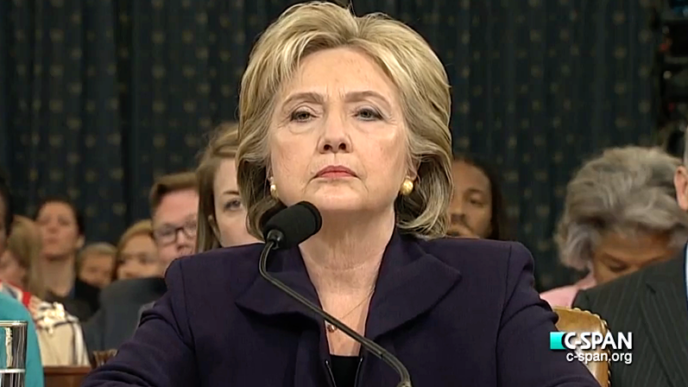
Green Party presidential candidate Jill Stein is in for some bad news regarding the electoral recount in Philadelphia — it has earned Democratic nominee Hillary Clinton only five more votes than her original total.

The recount, which began Friday, resulted in the exact same totals for Republican Donald Trump, Stein and Libertarian Gary Johnson.

Stein planned on using district-level recounts to prove to the courts there was evidence of hacking or voter fraud. If true, this would have given her evidence to proceed with a statewide recount.

“We have very primitive voting machines here,” City Commissioner Al Schmidt told the Philadelphia news site Billy Penn. “Our voting system is only vulnerable to individual cases of voting fraud, as we’ve seen. Whenever it does occur it would be someone going in and voting for somebody else or an election board manually adding votes, which is an entirely different thing than hacking.”

According to Billy Pen, the five extra votes that Clinton garnered came from “paper provisional or absentee ballots that were undetected by the optical scanner that counted votes in the days following the election.”

Schmidt said something like this could happen when people don’t mark their choices clearly, or use a green highlighter instead of a pen or pencil.

“People do ridiculous things,” he said, “all the time.”

After abandoning its Pennsylvania recount push Saturday because of the cost, the Green Party filed a federal lawsuit Monday seeking to force Pennsylvania to recount the ballots. It said the state’s election system was a “national disgrace.”

“This labyrinthine, incomprehensible, and impossibly burdensome election regime might make [author Franz] Kafka proud,” the lawsuit states. “But for ordinary voters, it is a disaster.”

“In just a few seconds, anyone can install vote-stealing malware on a voting machine that silently alters the electronic records of every vote,” Stein’s court documents add. “Absent a thorough, sophisticated forensic examination by computer experts, it is not possible to determine the absence of malicious software hiding within many thousands of lines of legitimate software code.”

Unless Stein is able to prevail at the federal level, Philadelphia is officially done totaling ballots for the 2016 presidential election.

“The law provides for it,” Schmidt said of the local recount. “And it’s our job to do what the law provides regardless of its merits.”

Stein has also run into trouble with Michigan’s statewide recount after a Republican-controlled House Elections Committee approved a bill which requires candidates who lost by more than 5 percentage points to pay 100 percent of the estimated recount cost. (For more from the author of “Philadelphia Recount Finished – Clinton Picks up Only 5 More Votes” please click HERE)

Follow Joe Miller on Twitter HERE and Facebook HERE.

Trump’s Treasury Nominee Already Has a New Idea to Reduce the Debt

President-elect Donald Trump’s cabinet is taking shape. He has locked down his picks for attorney general, departments of Treasury, Education, Health and Human Services, Commerce, and Transportation.

So far, most of the names submitted are familiar in the political world, but one is not: Steven Mnuchin, Trump’s pick for Treasury secretary.

Mnuchin is better known among America’s financiers and investment bankers because he spent 17 years as a partner at Goldman Sachs. He is also known in Hollywood, where his firm, RatPac-Dune Entertainment, produced films like the “X-Men” and “Avatar.”

When it comes to public policy, Mnuchin has no real experience. In fact, The New York Times dubbed Mnuchin a true, “Outsider to Public Policy.” His policy suggestions so far appear to mirror talking points from the Trump campaign: He opposes the Dodd-Frank financial regulation bill, he regrets the lack of punishment for Wall Street titans post crisis, and he wants to help facilitate a large, new tax cut.

Yet, Mnuchin recently branched out with a policy proposal of his own to curb U.S. debt. The proposal recommends a review of Treasury maturities to determine whether ultra-long-term treasuries should be added to debt security options. A Treasury maturity is the timeline for a debt to remain outstanding, after which the security expires. For example, U.S. government securities are currently sold to the public with maturities of between 30 days (Treasury bills) and 30 years (Treasury bonds).

But Mnuchin would like to explore adding 50- or 100-year bonds. Why would he propose such an option to deal with the debt? Well, it really has everything to do with today’s low interest rates. Here’s why:

This year (fiscal year 2017), the government will run a deficit of $590 billion. To cover the deficit, the government will need to borrow money by selling its debt. However, the government will actually have to borrow far more — enough money to cover “rollover” maturing debt. That means the government has to take on new debt to cover the old debt that is effectively expiring.

So, instead of ‘just’ $590 billion in new debt, the U.S. government will also have to borrow about $3.3 trillion to pay off the old maturing debts. That means the government will need borrow almost $4 trillion this year alone!

Although the government offers Treasury securities with many different maturities, historically, the government borrows long-term debt i.e., securities with maturities of more than 10 years. However, this trend significantly shifted toward short-term U.S. debt under the Clinton administration.

This was done to save money since short-term treasuries offer a lower yield than say the 30-year bonds. Long-term U.S. debt usually pays a percentage or two more in interest payments than short-term debt. This is mostly to cover implicit risks. First, there is greater risk that a debtor will fail to make payments over 30 years, then say, five years. In addition, the higher interest rate on long-term debt helps cushion future inflation that would reduce the value of those interest payments to the lender. Therefore, short-term debt allows the government to borrow more money at a cheaper cost but not without serious risks.

First, since short-term debt needs to be “rolled over” more frequently, it subjects that new debt to the fluctuation of immediate interest rates. Short-term debt may be insanely cheap for the government, with less than a few percentage points of interest payments. But that’s today. There is no guarantee the government will have the same luxury a year or two from now. Yet on the other hand, 30-year bonds have a fixed interest rate over the course of three decades, which is particularly attractive right now since rates are historically low — even for longer-term debt.

John Cochrane, economist at Stanford’s Hoover Institution, points out the troubling scenarios for short-term securities if interest rates return to “normal” levels. He writes,

Here’s the nightmare scenario: Suppose that four years from now, interest rates rise 5 percent, i.e. back to normal, and the US has $20 trillion outstanding. Interest costs alone will rise $1 trillion (5% of $20 trillion) — doubling already unsustainable deficits! This is what happened to Italy, Spain, and Portugal. Don’t think it can’t happen to us.

These short-term securities cause “rollover risk.” Since the U.S. government is in the business of issuing a lot of debt that is short-term, outstanding for only two, three, five, or seven years, then we have to hope that the world remains interested in continuing to purchase U.S. treasuries — and often. At present, the current maturity rate is 68 months, or less than six years. According to Cochrane, the government rolls over about half its debt every two years — or all of the $20 trillion in debt every half-decade.

This could lead to a partial default on our debt in the event we can’t find enough buyers in those short timeframes (unless, of course, the Federal Reserve steps in to purchase unwanted securities with printed dollars – a dangerous tactic in itself). And, because interest rates on short-term debt are so low, lenders (i.e., anyone who wishes to invest in government debt) become skittish in their willingness to continue to loan money to the U.S. government, as it continues to rack up records amount of debt.

If there aren’t enough investors to continue to buy our debt, America is deep trouble.

Countries like Belgium, Canada, France, and the United Kingdom have issued debt with maturities of 100 years. So why hasn’t the U.S.? Part of the reason has to do with market needs and liquidity demands in the economy. But, politically speaking, it has much to do with the government’s wishes to spend as recklessly and cheaply as possible.

For example, since long-term debt has higher interest rates than short-term debt, converting all the short-term debt currently outstanding into long-term would increase the near-term interest costs by about $277 billion, according to Cochrane. Yet, it could save billions — if not trillions — of dollars over the long-term if interest rates return to normal levels. In addition, locking in long-term debt helps insure against rollover risk.

There are some valid reasons for issuing short-term debt, yet, there is merit to the idea of locking in trillions of dollars of debt into low interest rates for the long-term. Mnuchin’s idea is intriguing and certainly deserves consideration. And, it’s noteworthy that it’s not a mainstream political idea. After all, near-term spending that is issued with debt-bearing higher interest rates (as would be the case by issuing 50- or 100-years bonds) will certainly make Washington’s spending spree a little more difficult to swallow.

Although the idea of issuing long-term debt is an interesting concept, Mnuchin also must advocate for less debt in general. Regardless of his wishes to implement new debt management techniques, unless our debt is reduced, the U.S. is headed toward a fiscal crisis. We must not forget that no matter what, the taxpayers of this country must repay all of this debt some day. At present, it will cost more than $160,000 per household.

Now, that’s a debt problem. (For more from the author of “Trump’s Treasury Nominee Already Has a New Idea to Reduce the Debt” HERE)

Follow Joe Miller on Twitter HERE and Facebook HERE.

Ellison’s Bid to Lead DNC Complicated by Calls to Relinquish House Seat

Minnesota Rep. Keith Ellison remains the frontrunner to take over the beleaguered Democratic National Committee but is facing growing questions not only about his controversial past but whether he can effectively lead the group without relinquishing his House seat.

The call for a full-time DNC leader — and for Ellison to step down from the House if he gets the job — is being led by former committee Chairman Howard Dean, who last week ended his bid to return to the post.

Dean made the announcement before a gathering in Denver of Democratic state party leaders, after which Ellison purportedly said with mixed emotions that he is considering leaving Congress to devote his full attention to the DNC.

Dean made clear he considers Ellison’s exit from Congress a requirement. He afterward told MSNBC, “I do not support Keith as long as he has his congressional seat. I do not believe you can do this job and another job in Congress. I don’t support Keith. Maybe I will later.”

The other remaining DNC candidates are Ray Buckley and Jamie Harrison, the chairmen, respectively, of the New Hampshire and South Carolina state Democratic parties. (Read more from “Ellison’s Bid to Lead DNC Complicated by Calls to Relinquish House Seat” HERE)

Follow Joe Miller on Twitter HERE and Facebook HERE.

First Two Months of FY2017, 98% of Syrian Refugees Entering the US Are Muslims

Continuing a trend on-going now for several years, the vast majority of Syrian refugees entering the US are Muslims. Of the 2,279 Syrians resettled in October and November, 2,225 are Muslim (2,188 of those are Sunnis). All data from Wrapsnet.org (Refugee Processing Center)

Here are the top states where they were distributed. (15 states got none, so far)

Michigan (313)

California (256)

Pennsylvania (162)

(Read more from “First Two Months of FY2017, 98% of Syrian Refugees Entering the US Are Muslims” HERE)

Follow Joe Miller on Twitter HERE and Facebook HERE.

Wrong Kind of Black? Twitter Libs Can’t Handle Ben Carson’s HUD Appointment

News broke Monday morning that President-elect Donald Trump will nominate former presidential rival Dr. Ben Carson to be his Secretary of Housing and Urban Development.

And the immediate reaction from many on social media was incredulous skepticism.

A few people cited statements made by Carson spokesman Armstrong Williams indicating that Dr. Carson felt he was unqualified to hold a cabinet-level position. Williams told the Hill that “Dr. Carson feels he has no government experience, he’s never run a federal agency. The last thing he would want to do was take a position that could cripple the presidency.”

Carson clarified his position in a November 15 Facebook post, indicating that his decision not to seek a cabinet position “has nothing to do with the complexity of the job as is being reported by some news outlets.”

It seems the president-elect convinced Dr. Carson to change his mind. And now Carson is being mercilessly ridiculed.

But here’s the thing:

Yeah, that’s definitely not happening.

The tolerance mob out in full force to nuke this appointment today. As for Dr. Carson, he’s just “honored” to serve.

(For more from the author of “Wrong Kind of Black? Twitter Libs Can’t Handle Ben Carson’s HUD Appointment” please click HERE)

Follow Joe Miller on Twitter HERE and Facebook HERE.

Obama Administration Not Finished yet With Executive Actions, Regulations

On Monday, President Barack Obama issued his fifth executive order since the Nov. 8 election. In this case, it was to create a National Invasive Species Council to compile a report by 2020 on how to prevent such species from affecting climate change, food safety, and even military readiness.

Citing national security concerns, Obama issued another order on Friday blocking Chinese firm Fujian Grand Chip from buying Aixtron, a German company operating in California that produces crystalline layers used as semiconductors in U.S. weapons systems.

Executive orders aren’t the only means for Obama to act without Congress before he leaves office on Jan. 20.

A new policy on highly skilled immigrants, restrictions on for-profit colleges, and energy efficiency standards are among the matters that the administration wants that don’t require congressional authorization that the Obama administration is moving aggressively in the post-election to complete before Obama exits on Jan. 20.

Executive actions and administrative regulations were planned and considered before the election and not a result of Republican Donald Trump’s victory, White House press secretary Josh Earnest said at a White House press briefing, noting executive actions and regulations take “a lot of preparation.”

“I’m not going to rule out additional executive actions that the administration may take between now and January 20—after all, the president of the United States is the president of the United States until Jan. 20,” Earnest told The Daily Signal, adding:

But what I can rule out are any sort of hastily added executive actions that weren’t previously considered that would just be tacked on at the end. But are there some actions that have been in the pipeline for quite some time that could be announced between now and Jan. 20? That possibility certainly exists, but I don’t have anything to preview at this point.

Politico reported the list of Obama administration actions before leaving office includes:

A U.S. citizenship and immigration policy to make it easier for employers to sponsor highly skilled immigrants;

An Education Department policy to provide debt relief to students at for-profit colleges;

The Transportation Department is moving to ban cellphone calls on commercial flights;

The Occupational Safety and Health Administration could limit exposure to beryllium, a metal used in electronics and aerospace industries believed to pose lung cancer risks; and

The Department of Health and Human Services is seeking to change how doctors and hospitals get paid for administering drugs under Medicare Part B.

The fact that Trump could overturn much executive or administrative actions doesn’t appear to have caused pause, as the Federal Register has grown by 9,000 pages since Nov. 8, said Ryan Young, a fellow with the Competitive Enterprise Institute.

Gina McCarthy, the Environmental Protection Agency administrator, seemed eager for more action in a memo to staff sent to employees after the Nov. 8 election, which was obtained by the Washington Examiner.

“As I’ve mentioned to you before, we’re running—not walking—through the finish line of President Obama’s presidency,” McCarthy wrote. “Thank you for taking that run with me. I’m looking forward to all the progress that still lies ahead.”

Whether the regulations or executive actions are hasty shouldn’t really be the key question, said James Gattuso, a senior research fellow who studies regulatory issues for The Heritage Foundation.

“As far as I’m concerned, if it takes a long time to adopt rules or actions, or if they fly through the process, it doesn’t matter if it’s a bad rule,” Gattuso told The Daily Signal.

Regulations, he said, can be more tedious to overturn than executive orders or executive actions. However, the 1996 Congressional Review Act could be used to roll back many of those regulations, Gattuso said.

The law allows Congress, with the president’s signature, to scrap regulations it opposes, bypassing previous legal procedures in place, while forbidding bureaucrats from imposing rules that are substantially the same.

“No president is willing to sign a bill overturning their own regulation, but they are willing to overturn their predecessor’s regulations,” Gattuso said. “This is a once in a decade chance, really a once in several decades’’ opportunity, to roll back regulations.”

House Majority Leader Kevin McCarthy, R-Calif., and 21 House committee chairmen warned against a rush for regulations in a letter to agency heads, pledging to used the Congressional Review Act if need be. The Nov. 15 letter from House Republicans said:

As you are aware, such action often involves the exercise of substantial policymaking discretion and could have far-reaching impacts on the American people and the economy. Considering these potential consequences, we write to caution you against finalizing pending rules or regulations in the administration’s last days.

By refraining from acting with undue haste, you will ensure that agency staff may fully assess the costs and benefits of rules, making it less likely that unintended consequences will harm consumers and businesses.

Moreover, such forbearance is necessary to afford the recently elected administration and Congress the opportunity to review and give direction concerning pending rulemakings.

Should you ignore this counsel, please be aware that we will work with our colleagues to ensure that Congress scrutinizes your actions—and, if appropriate, overturns them—pursuant to the Congressional Review Act.

On Nov. 8, the Federal Register contained 78,300 pages, and as of Dec. 2, it had increased to 87,297 pages, Young said. Further, since Election Day, there were 144 new proposed regulations from federal agencies, and 243 regulations that were finalized.

“We could see a midnight rush the likes of which we haven’t seen before,” Young, of the Competitive Enterprise Institute, told The Daily Signal. (For more from the author of “Obama Administration Not Finished yet With Executive Actions, Regulations” please click HERE)

Follow Joe Miller on Twitter HERE and Facebook HERE.