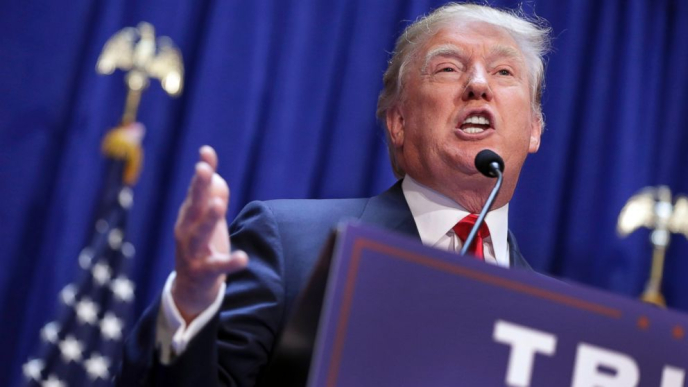
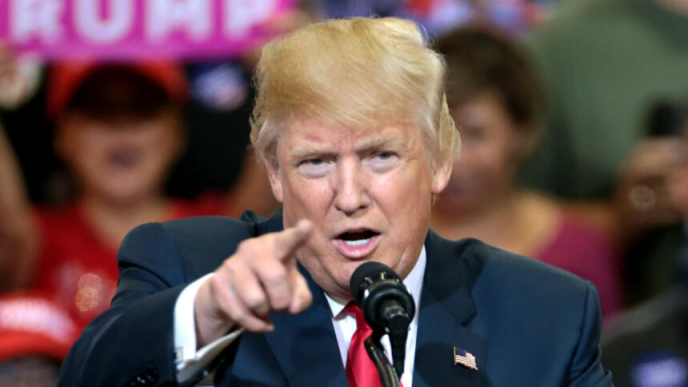
The Press Hates Trump More Than It Loves the Truth — and the Hyperbolic Fear-Mongering We’ve Seen Is Proof

When there is a Republican president, the leftist-dominated White House press corps likes to gang up and try to put him on defense.

The ultimate fantasy is repeating the glory days of Watergate by driving the president from office.

That was certainly the aim in Donald Trump’s first term, where the hunt by Democrats with press passes — and the help of a corrupt FBI — was so intense that they produced a near-daily flood of lurid allegations, with the Russia, Russia, Russia hoax being the grand climax.

But Trump 2.0 is turning out to be a far different story, though not because the press has decided to be fair in its coverage.

Far from it.

Many editors and reporters are still predicting the end of the world every time he says or does something they don’t like.

Their definition of a scandal is when he deviates from past presidents, as if the Oval Office is a straitjacket. (Read more from “The Press Hates Trump More Than It Loves the Truth — and the Hyperbolic Fear-Mongering We’ve Seen Is Proof” HERE)

Replacing the Income Tax With Tariffs?

During the 2024 campaign and since, President Trump has mused about replacing the income tax with tariffs. Trump believes that tariffs will put the burden of financing the U.S. government on the backs of foreigners.

Nice idea. Who wouldn’t want somebody else paying our government’s bills? To support his case, Trump correctly points out that until the modern income tax was adopted by the 16th Amendment in 1913, the United States collected the bulk of its revenue through tariffs (customs duties) and manufacturers excise taxes (discussed below).

So why can’t the U.S.do that again? If foreign producers of products imported into the U.S. in fact pay tariffs, it might be good idea. The problem is that’s just not how it works.

What is a Tariff?

A tariff (or customs duty) is an excise tax on foreign products brought into the U.S. An excise tax is imposed on a specific product or activity. Examples of excise taxes on products are those on cigarettes, alcohol, and gasoline.

A tariff is paid by the domestic importer, not the foreign producer. For example, suppose ABC Imports, Inc., a U.S. corporation, brings $1 million of home goods into the U.S. from Mexico. At the point the products are received in a U.S. port, ABC Imports pays the tariff to the U.S. government. The amount of the tariff is based on the specific goods in question. Different products have different rates. The amount also depends on the foreign source of the product. Products from China may carry a heavier tariff than products from the European Union, for example.

The price of the tariff gets folded into the overall cost that ABC Imports pays for the product. That price is passed on to the retailer, and then to the final purchaser. As such, when a foreign product is sold in the U.S., the tariff is ultimately paid by the end-user of the product. President Trump’s apparent belief that foreign producers take the hit on tariffs ignores the economic reality that corporations don’t pay taxes; people do. Corporations invariably pass production and distribution costs on to consumers in the form of higher prices for goods, or lower quality goods at the same price.

The economic reality of a tariff is that U.S. consumers pay it, not the foreign producer or foreign government. That makes foreign products more expensive for U.S. consumers.

Why Impose Tariffs?

1. Raising revenue. Raising revenue to help fund the government is one reason to impose tariffs. However, the revenue raised from tariffs by the federal government in the present era is insignificant. In 2024, the U.S. collected about $4.92 trillion in revenue from all sources. Only about 2 percent of that came from tariffs.

To consider replacing all income taxes with tariffs, there would have to be massive increases in tariff rates, on a huge number of and from most nations. This would have substantial negative economic effects, not the least of which is substantially higher prices on consumer goods, and likely a substantial reduction in consumer options as foreign products become increasing unavailable. At a minimum, such a move would trigger retaliatory tariffs by other governments. We are already seeing some of this with the new tariffs.

2. Encouraging and protecting domestic investment and production. As stated above, tariffs make imports more expensive. Because those products are more expensive, they become less desirable to U.S. consumers. This can favor U.S. producers. For example, suppose a U.S.-produced home good sells at Walmart for $25. A comparable un-tariffed Chinese product with a wholesale cost of $10 sells at retail for $20. Consumers will generally choose the less expensive Chinese product.

In the simplest scenario, if the government imposes a 50% tariff on the Chinese product, the wholesale cost goes from $10 to $15, and the retail price goes from $20 to $30. That imported product now costs $10 more than the similar domestic product. This can have the effect of encouraging domestic production of that product.

The irony is that increased tariffs on foreign products can reduce tariff revenue. A seminal economic principle is that what you tax you get less of. When you tax foreign products, you get fewer foreign products. High tariffs incentivize manufacturers to produce their product domestically so as to avoid the tariff. Likewise, customers are incentivized to purchase lower-cost domestic products. In both cases, people stop paying the tariff, undercutting the goal of raising revenue.

3. Addressing market distortions. A “distortion” is a phenomenon that leads people to do something they otherwise would not do; or discourages people from doing something they otherwise would do. All taxes cause distortions at some level. Graduated income taxes, for example, cause distortions in that they discourage production because the more money one earns, the higher the rate of tax is paid; thus, the less a person benefits from his own labor and industry.

Tariffs can mitigate market distortions caused by foreign governments flooding U.S. markets with subsidized products or those produced with (by U.S standards) artificially cheap labor.. The Chinese workforce does not enjoy the luxury of U.S. labor unions, minimum wage laws, workmen’s comp protections, medical insurance, and retirement benefits, etc. Because of that, Chinese products are frequently far cheaper than comparable U.S. products. The distortion is that U.S. consumers are driven to purchase the lower-cost product, where they might otherwise purchase the U.S.-produced product at a comparable price.

4. Retaliation and negotiating leverage. Tariffs can be used to retaliate against other nations that are trading unfairly.. In this regard, tariffs serve to level the playing field between nations. The U.S. imposes tariffs and then promises to remove them if the unfair behavior stops. This undercuts both the goals of domestic production and of raising revenue, since the entire point of the tariffs is to eventually negotiate them away.

5. National security. The U.S. may impose tariffs on certain foreign products deemed essential to U.S. national security. High tariffs on such items discourage imports, thus protecting domestic producers. This helps to ensure that the U.S. does not become dangerously dependent on foreign products that are integral to national security and defense.

Can Tariffs Replace the Income Tax?

The president argues that because the United States operated chiefly on tariffs and manufacturers excise taxes in the past, it can do so again. The reason that the federal government could operate on tariffs 125 years ago is because the federal government spent very little money. Its need for revenue was nowhere close, even in inflation-adjusted numbers, to what federal spending is today.

Between the years 1895 and 1910, federal spending went from about $366 million (not billion) to $758 million per year. Today, the federal government spends over 1,300 times more than that on interest payments alone.

During that same period, around 60 to 70 percent of federal revenue came from tariffs. The balance came from excise taxes and other insignificant sources. The modern personal and corporate income tax did not begin until after 1913.

To make Trump’s idea work, the federal government would have to slash its spending considerably. And by that, I don’t mean by 3 to 5 percent, or even 10 to 20 percent. Even cutting spending in half would require the federal government to collect about $3 trillion in revenue from a system that currently collects only about $100 billion.

And even if that would work to raise enough revenue, it would be impossible for Trump to accomplish his other tariff goals, such as encouraging domestic production or negotiating better trade deals. Tariffs work against themselves, which is one of the reasons they are such a destructive tax, one the U.S. should avoid layering on top of its already uncompetitive tax system.

Understanding the Upcoming Papal Conclave

With the death of the most controversial pope in centuries, perhaps of all time, the entire planet will be focusing on the election of a new supreme pontiff for the one, holy, catholic and apostolic Church.

You do not have to be Catholic in order to fully grasp the significance of this event. American Catholics and non-Catholics alike have watched, with largely muted shock and disdain, what happens to planetary morality, and truth in general, when we do not possess a giant of a man who fills the Shoes of the Fisherman. It has happened before. The Catholic Church and its popes, for two thousand years, have demonstrated the full display of human strengths and weaknesses, virtues and sinfulness.

The world was spoiled by the magnificence of John Paul II’s long, strong and eventful papacy, from 1978 until 2005. Even his predecessor, the generally weak and feckless Paul VI, held the line against the worldwide sexual revolution with the 1968 encyclical Humanae Vitae. It was once ridiculed. It is now seen as prophetic. The papacy’s strength was further encouraged by the election of Pope Benedict XVI [2005-2013], but his early promise slowly devolved into a flat tire.

But none of them, which also apparently included John XXIII [1958-63] and Pius XII [1939-58] were immune to the nefarious machinations within the Vatican that led to the appointment of many bishops and cardinals who were anything but faithful to moral and religious truth. The stars were subsequently lined up for the Francis papacy, whose legacy has been confusion and credible accusations of outright heresy.

The initial charm of the Francine papacy did not last long. Becoming “up-beat”, informal, or accessible did not lead to an increase of faith among Catholics. Rather, it discouraged them and the rest of the world with foolishness, contradiction and confusion. Off-the-cuff press conferences and informal interviews which questioned the existence of hell, encouraged the heretical idea that all religions were the same, and the appointment of morally questionable bishops and cardinals, all made the term “papal infallibility” misunderstood by Catholics and non-Catholics alike.

Some of the events were downright childish. We can begin with the absurd use of St. Peter’s basilica for a laser light show, or allowing the hard-edged rock group U-2 to perform in, of all places, the Sistine Chapel. Accepting a hammer-and-sickle crucifix and allowing intercommunion with non-Catholics made a mockery of the Church’s historic stand against communism, as well as faith in the sacredness of the most precious of all sacraments.

But far and away THE worst event was the Pachamama episode, an embarrassment so colossal that it pains this writer to even recall it. It was an absurd piece of rank idolatry, which culminated in a poorly orchestrated Papal Garden fertility goddess worship. For non-Catholics who have long decried devotion to the Blessed Virgin as something similar, I won’t waste the time here, but invite an open debate about their 500 year-long misunderstanding of Mary’s role in salvation history. This was hardly the same thing.

Pachamama was stolen by an authentic young Catholic from Austria who tossed it into the Tiber River at dawn. His courage saved the honor of the Church.

None of this can be understood unless we look at the momentum created by one of the most evil of all men in history, Joseph Stalin. His infiltration of Russian Orthodoxy by the Soviet secret police is an historic and accepted fact. But far less known is his green-lighting of the same tactic for the Catholic Church. His chosen acolytes were not only communist agents but also known homosexuals, neither of which demonstrated faith nor care for their own eternal destiny.

Bella Dodd was an Italian communist immigrant and naturalized American citizen. By the 1950s, she had been expelled from the communist party and openly embraced her Catholicism, thanks to the influence of Fulton J. Sheen, the American television icon of the 1950s. She testified before congressional committees on her work:

“In the late 1920s and 1930s, I personally put eleven hundred men into the priesthood in order to weaken the Catholic Church from within. The idea was for these men to be ordained and progress to positions of influence and authority as Monsignors and Bishops…. Right now, they are in the highest places, where they are working to bring about change in order to weaken the Church’s effectiveness against Communism. These changes will be so drastic that you will not even recognize the Catholic Church.

“Of all the world’s religions, the Catholic Church was the only one feared by the Communists, for it was its only effective opponent. The whole idea was to destroy, not the institution of the Church, but rather the faith of the people, and even use the institution of the Church, if possible, to destroy the faith through the promotion of a pseudo-religion. Something that resembled Catholicism but was not the real thing.

“Once the faith was destroyed, there would be a guilt complex introduced into the Church … to label the ‘Church of the past’ as being oppressive, authoritarian, full of prejudices, arrogant in claiming to be the sole possessor of truth, and responsible for the divisions of religious bodies throughout the centuries. This would be necessary in order to shame Church leaders into an ‘openness to the world,’ and to a more flexible attitude toward all religions and philosophies. The Communists would then exploit this openness in order to undermine the Church.”

Read it all here: https://catholicinsight.com/beware-of-communists-bearing-gifts/.

One can now see how the Francis papacy brought to fruition the communist plan. Even now, as the conclave meets to select a successor, only God can save the Church.

It would seem, due to the late Pope Francis’ appointments to the College of Cardinals, that there is an apparent strangle-hold and lock on the papal office. But the workings of the Holy Spirit on each individual Cardinal is the wild card in every conclave. Papal conclaves in the past have involved coercion, death threats and worldly politics — but also courage, faith and a willingness to defy the evil powers, which the world will continue to experience until the end of time.

The story of Christianity is the story of repentant sinners. This means all of us. And as C. S. Lewis wrote in The Great Divorce, those who adhere to spectacular evil are often more apt to accept repentance and conversion than the lukewarm or indifferent.

Christ said, “The reason I came into the world was to testify to the truth. All who desire the truth hear my voice.”

Yet Pilate asked, “What is truth?”

The corpus of Catholic doctrine, held for 2,000 years, dares to proclaim it, in the face of internal and external denials.

All men of good faith, Catholic or not, should pray for a pope faithful to the truth.

How Easter Transformed The World Like Nothing Else Ever Could

Across cultures throughout human history, people have sought to flee oppression and escape persecution. A recurring theme in Western literature and in modern classics such as Superman and Disney originals, which revolve around the struggle between good and evil, is the need and critical role for a rescuer or savior.

Easter is the celebration of the finished work of the Messiah, Jesus Christ, the ultimate rescuer and savior for mankind, who sacrificed his life to provide forgiveness of sin — enabling all who believe in Christ to have a direct relationship with God.

That no other religion makes the claim that it was founded by a messiah makes Jesus the most revolutionary figure of human history.

Still, some assume Christianity is like other religions that require followers to perform certain works and rituals acceptable to God. Not so with Jesus, for he implores us in Matthew 11:30, “My yoke is easy, and my burden is light.” When a learned Jewish Pharisee, whose life required living up to stressful “dos and don’ts” of the Mosaic law, asked Jesus which was the greatest commandment in the law, Jesus answered simply that if we love God and love our neighbor as ourselves, we will have fulfilled all the laws.

Christ is absolutely unique in other ways. First, he is the only person in history who was pre-announced starting a thousand years before he was born, with eighteen different prophets between the 10th and the 4th centuries B.C. predicting his coming birth, life, and death. Hundreds of years later, the details of Christ’s coming birth, life, betrayal, and manner of death validated those prophecies in surprisingly accurate and minute detail. One thousand years before Christ, David prophetically wrote about the crucifixion of Christ, at a time when crucifixion was unknown as a means of execution. (Read more from “How Easter Transformed The World Like Nothing Else Ever Could” HERE)

The Biggest Plot Twist In History

If you spent any time online lately, you’ve probably noticed everyone is buzzing about the latest season of Black Mirror on Netflix. Our culture’s appetite for dystopian stories seems insatiable—every few years, it feels like a new wave of bleak futures floods our screens and bookshelves. Like many in my generation, I grew up on these cautionary tales: plug into grim cyber-worlds in The Matrix, watch masked rebels stand up to tyranny in V for Vendetta, and read Orwell’s 1984 in school.

Dystopia is everywhere—and it’s become so familiar, so meme-able, that pointing it out almost feels cliché. But here’s the irony: while we eagerly binge the latest Black Mirror episode and assure ourselves that these twisted realities could never really happen to us, we turn a blind eye to the creeping dystopia shaping our own daily lives.

Our world is the dystopian novel. Infants are discarded as “choice,” generations are raised worshipping plastic gods and Disney princesses in spandex. Minds atrophy in digital cribs while borders dissolve, traditions rot, and native populations wither—all cheered on by progressive elites who brand resistance as hate.

Grown men paint their identities in Marvel slogans while algorithms strip-mine their souls, addicting them to rage and casual porn. We beg for heroes, but the void answers with influencers and bureaucrats.

Culture collapses into a meme, families into statistics, truth into lies laundered as “lived experience.” We drone on, fattened by convenience yet hollowed by despair, too coddled to revolt, too nihilistic to try. Dystopia doesn’t need boots on necks; it just makes sure we never stop scrolling.

No revolution required—we built this hell ourselves.

Take a closer look at the headlines—not just the fiction streaming on your screen, but the reality scrolling past. In the UK, ordinary people have found themselves arrested for what’s labeled as “hate speech” on social media—even when it amounts to little more than an offensive joke or an opinion that falls out of step with the current orthodoxy. In the United States, hastily expanded “antisemitism” laws are already being used to silence critics of a foreign regime, criminalizing dissent and setting a dangerous precedent for restricting free speech. The very freedoms our parents took for granted are eroded overnight, often cheered on by those convinced it could never, ever go too far.

Yet, amidst all this, there’s a stubborn ember the machine cannot extinguish: human hope. For all our frustrations and failings, people remain defiant, even when the odds seem impossible. Rebellion is not just battle cries—it is the quiet resistance of telling the truth in a world of lies, of raising a child to love growing things, of refusing to let kindness be crushed by cynicism. In these acts, however small, we see sparks fly against the shadows.

The future isn’t fixed. Dystopia isn’t destiny. It can only claim victory if we play our assigned parts without question and forget that, at any moment, the story can change. We are the wild card that authors and algorithms can never fully predict.

There is, as always, a plot twist.

What is it that sustains those sparks of hope in a world seemingly so determined to snuff them out? For many, it’s not blind optimism, and it’s more than simple stubbornness or contrarian grit. The roots run deeper—down to the soul, where the world’s noise can’t quite reach. It’s here that faith enters. And for countless people throughout history, faith in Jesus has been the enduring antidote to despair.

While the surrounding culture preaches self-worship, endless progress, and “you do you” morality, faith in Christ offers something beautifully subversive: the assurance that you are not your own god, the promise that suffering isn’t meaningless, and the hope that love does indeed win—not as a slogan, but as a reality grounded in the cross and the empty tomb.

In the darkest chapters of human history, it’s often Christians—rooted not in their own strength, but in Christ’s—who have quietly, and sometimes not so quietly, sparked revolutions of justice, mercy, and truth. The early followers of Jesus faced the might of the Roman Empire, yet held out a hope that could not be killed with the sword. Slaves and prisoners, kings and beggars alike, discovered in Christ a freedom and dignity greater than any state or system could bestow or steal. The biggest plot twist of history turned on the resurrection—the ultimate subversion of a world built on death and despair.

In our own age of digital distractions, collapsing traditions, and hollow amusements, faith in Christ remains a revolutionary hope. In Christ, you are called to be more than a consumer, an algorithm’s target, or a passive observer. You become a beloved child of God, equipped not only to resist the darkness but to redeem it—one act of love, mercy, and truth at a time.

Jesus doesn’t promise escape from the troubles of the world—He bids us take up our cross and follow Him, even through shadowed valleys. But He also promises that this world’s story is not the final word. Behold, I am making all things new. That’s the counter-narrative Christianity offers in a time when so many believe the die is cast and the ending unwritten.

So, if you’re weary of dystopia—if you’re tired of the lies, of the hollow idols, of the restless hunger—come to the One who promises rest for your soul. In Him, every defiant act of kindness, every honest word, every seed planted, and every broken heart mended has meaning beyond what this world can see.

Faith in Jesus is the ultimate plot twist—a hope stronger than darkness, a love deeper than despair, and a victory promised, whatever the age. The dystopia fails the moment even one soul whispers, “Thy will be done,” and steps into the light. In Him, the machines don’t win. Hell is not inevitable. And the story—your story—can turn toward redemption.

In Christ, we meet the Author of the story Himself, and discover that even now, even here, there is hope worth living for.

(To read the original blog post, click HERE)

Holy Shroud and Holy Week

In an amazing turnaround from the Biden years, the Trump White House issued Holy Week greetings to the entire country. As a flawed human being, and one who has escaped death by a hair’s breadth, as well as the preposterous dirty tricks of the Deep State, it appears that Trump is discovering something that every person must come to grips with: the soon-to-be experienced Divine Judgment.

We live in a culture that sweeps such soul-chilling realities under the rug, but within every soul exists the basic understanding of right and wrong. There is no escaping it. You do not have to study or be schooled in this truth. The Bible says that God has implanted it in everyone’s heart. We will be called to account, and we are all guilty.

Why is Holy Week necessary to be understood and commemorated? Because to have any chance at eternal life, the Son of God had to become Man, preach to us, demonstrate His powers and accept the preposterous suffering that a Roman crucifixion entails. In our time, we have used the medium of books and movies to impart to us how this may have been like, 2,000 years ago. All are different, all recognize that their version may not be entirely accurate, and yet we can be utterly slammed when we see the following list of non-fiction books or motion pictures:

The Day Christ Died by Jim Bishop.

The Last Hours of Jesus by Ralph Gorman.

The Founding of Christendom by Warren H. Carroll.

But it is the motion picture that our culture has come to chiefly rely upon. Mel Gibson’s The Passion of the Christ and Franco Zeferelli’s Jesus of Nazareth take very little artistic license, and must be classified technically as fiction, yet are based upon solid Biblical narrative and researched facts. Currently an animated feature is out, The King of Kings, and appears to be worthy. Many have seen Risen, starring Ralph Fiennes, a fictionalized yet plausible story of a Roman tribune who encounters the risen Christ.

But what if we could get into a time machine and be there? At the foot of the cross, on Friday, April 7, 30 AD? Or at the moment of resurrection on April 9th? What would it really have looked like? How did people react? What about the two disciples on the road to Emmaus? Mary Magdalen’s encounter in the cemetery? What is it like to actually see an angel, as the women coming to anoint the body did? Or the 10 apostles on Easter evening, when Jesus walked through a locked door? Or when Thomas placed his hands into Jesus’ wounds a few days later?

Well, we actually can. Sort of. And you can do it today. On the internet are hundreds of documentaries, brief interviews and talk-show discussions about the Holy Shroud of Turin. It may be from the BBC, National Geographic, the History Channel. If you encounter the opinions of the fast-evaporating skeptics, they are probably hopelessly outdated.

These discussions involve its scientific properties, its history and current theories — which are constantly being revised by honest science. The Holy Shroud is the most scrutinized artifact in human history, exceeding the Rosetta Stone, moon rocks, the Zapruder film or photos from Mars.

What does this artifact tell us? Whenever I lecture on it, with a life-sized replica in the room, you should see what I see: the eyes of the audience, whenever its properties begin to communicate the dynamics of the self-torture of crucifixion. Or the pain of hematidrosis, the sweating of blood. The BB-studded whips of the Roman flagrum. The carrying of a 100-pound cross beam on the shoulders, and the bruising of the knees and head from the face-plants that follow each stumble. Or the fixture of a helmet of thorns.

Only God could leave us His photograph, implanted on linen, and in the medium of a photographic negative. As Lord of Time, only He could reach His loving hand across the centuries to blast our layers of complacency away, in our age that worships anything and everything but Him.

Truly, in every century, mankind is a flock of lost and scattered sheep, ripe for easy picking by wolves. Likely our imagination of the demons and goblins of hell pale before the reality. The voice of the Shepherd calls us, for only He can protect us. The rage of the demons screams at every soul that accepts, with humility, the admission, confession and cost of our sins.

The Holy Shroud silently awaits the investigation of those who have chosen to regard the Bible as a fairy tale. Our electronic age makes it possible to do so without going to Italy or attending a lecture. Only God could be so loving, and so patient, with his sheep.

Go to www.shroud.com and begin the search.

Why Comparing Trump’s Tariffs To The Smoot-Hawley Act Is Dishonest

Trump’s tariffs are not designed to encourage Americans to borrow money and maximize their consumption. Nor are they designed to encourage participation in speculative stock market or real estate bubbles. America’s free trade policies encouraged such excesses after the end of the Cold War, and we can’t stand a repeat of the folly. While his critics wrongly invoke the Smoot-Hawley tariff failures of 1930, Trump’s emerging tariff policies, particularly if combined with the appropriate monetary policy, will have much better results and Make America Great Again.

As Trump’s tariffs are implemented, they will generate revenue for the federal government and encourage investment in atrophied as well as cutting-edge sectors of the American economy. In addition, they will increase the quantity and quality of jobs available for Americans as a whole, will persuade (and are already persuading) our trading partners to adopt fairer and less predatory trading regimes, will arrest a possible slide into recession, and will get our economy moving toward our long-term growth potential of 3 percent (or more) GDP growth per year.

President Trump says “tariff” is one of his favorite words, and historical evidence indicates tariffs work. They worked for the Chinese this century, they worked for the Japanese after World War II, and they worked for the U.S. and Germany in the late 19th century. Back then, American and German growth rates and economic vibrancy radically outstripped the growth rates and economic vibrancy of a free-trading Britain, which, after abandoning its early 19th-century tariffs, adopted the free trade nostrums of David Ricardo and slipped into decline.

One of the few instances when tariffs failed was during the Smoot-Hawley tariff episode at the beginning of the Great Depression. But there are special circumstances surrounding the imposition of the Smoot-Hawley tariffs that the free-traders hesitate to mention. When the United States raised the Smoot-Hawley tariffs, the U.S. was the world’s greatest creditor, and by raising the tariffs, we prevented others from selling us things so they could make money and pay us back. When they didn’t pay us back, it collapsed the global financial system and helped usher in the Great Depression.

Obviously, today the circumstances are reversed. The United States is now the world’s largest debtor. If we can’t pay back our debts, the global financial system will collapse, which would be disastrous for the entire world. (Read more from “Why Comparing Trump’s Tariffs To The Smoot-Hawley Act Is Dishonest” HERE)

Trump and Our Return to the ‘American System’

Few economic philosophies have shaped America’s prosperity as profoundly as Henry Clay’s American System—a blueprint for national strength and self-sufficiency. Developed in the early 19th century, Clay’s vision centered on protective tariffs, a strong national banking system, infrastructure development, and the responsible use of natural resources.

These pillars propelled the United States into economic dominance. However, in the latter half of the 20th century, Cold War geopolitics led to a significant departure from these principles. Today, President Donald Trump’s economic policies signal a revival of the American System, aiming to restore national industry, energy independence, and economic resilience.

One of the key components of Clay’s American System was the use of tariffs to shield domestic industries from foreign competition. Clay and his contemporaries understood that fledgling American manufacturers needed time to grow without being undermined by cheaper imports. This approach helped transform the U.S. from an agrarian economy into an industrial powerhouse.

Trump’s embrace of tariffs is a modern adaptation of this strategy, aimed at protecting American businesses from unfair foreign trade practices. His policies seek to revitalize domestic manufacturing, reduce dependency on foreign goods, and address trade imbalances, particularly with China. Additionally, tariff revenue contributes to lowering the national debt, reinforcing economic sovereignty.

Clay’s American System also relied on a centralized banking institution to maintain financial stability. The Second Bank of the United States played a critical role in providing credit, regulating state banks, and preventing economic crises. Although Andrew Jackson dismantled the bank in the 1830s, its essential functions were later restored with the creation of the Federal Reserve in 1913. (Read more from “Trump and Our Return to the ‘American System’” HERE)

Photo credit: Gage Skidmore via Flickr

Dear President Trump

President Trump needs to bite his tongue. Please. We know, after what he has gone through, it is hard to do that. He is not doing himself, his supporters, or the country any favors. Because his opponents have made so many reckless statements, and are themselves guilty of lying, when he is worthy of criticism, his friends must do it. And he had better listen. History is full of great leaders who went sideways.

We understand that the rule of law has been punctured by the enemies of liberty. They did this through the use of “lawfare”, the January 6 Committee and their control of the mainstream media. We know that they lied to us about Covid. About the Russia Hoax. We know that Biden was a puppet, possibly with Obama somehow fulfilling his fantasy about a Third Term.

A planted earpiece in Biden’s head may actually have been used, and at least some of his confused answers might have occurred because of dictated narratives going on inside his head. If this did not actually occur, no one doubts that the technology exists.

But the will of the Left to do something existed. By the middle of Biden’s term, even the most ardent supporters of the Democratic Party knew that Biden was not in charge.

We might be headed for civil war with all the violence the Left is allowed to get away with, starting with “The Summer of Love” and the “mostly peaceful” riots in 2020. We see this now with the Tesla Torchings. But Trump is not helping the cause of freedom by shooting off his mouth in so many ways, just like many congressional Democrats have been doing.

Yes, the Constitution has been violated since its beginning in 1789. Both the Left and the Right tolerate it when their side is doing so, and the Left and the Right has existed, only under different names, ever since the start of our independence. Trump’s supporters are largely ignorant of what is, and is not, “constitutional”. Things that were violated long ago have become accepted as legal when they actually are not. These create a springboard for subsequent violations, and he has already crossed several lines.

The latest one is quite serious: the talk about a Third Term. He will lose his best supporters by suggesting that he might try for a 3rd term. I have read through the micro-parsing of words in the 22nd amendment by those who believe that a technical loophole exists. Only lawyers would salivate over this, which is why there are so many scornful lawyer jokes.

The Left for decades has used constitutional technicalities to claim that the vicious and discredited Equal Rights Amendment is still up for grabs. For conservatives to suggest such magical nonsense about a 3rd term would forever forfeit the moral high ground about constitutionality.

Imagine if Obama had tried to do this in 2016! The entire Republican Party and its conservative allies would have been screeching to the high heavens, as would have many Democrats. Many Democrats dumped FDR and voted for Republican Wendell Willkie in 1940 on those grounds alone, when no 22nd Amendment existed, but rather a hallowed, unwritten law of tradition about third terms. Grant and Teddy Roosevelt had tried, and been whacked down. The people made it clear enough to ensconce it into the Constitution in 1951, so any verbal loophole will sour Trump with his own friends.

Trump is floating a “trial balloon”. If we do not voice our displeasure, and right away, in every state, in every conservative blog large or small, he will see it as a green light.

We all know that Trump is reckless with talk, but it is through his actions that we have supported him. Personally, I don’t like his talk about either Greenland or Canada, but during his time as president-elect, it produced some initially favorable results. But we still at least like to pretend that we obey the Constitution. He might have said something more constitutional, as in “When I am sworn in, I will ask Congress to invite Greenland and part of Canada to join the United States.”

As I write this, Congress is making a bi-partisan effort to reclaim their power to control tariffs. It is a power that was yielded to the executive in a decidedly and unconstitutional manner. And it is truly bi-partisan. Susan Collins and Lisa Murkowski are RINOs, but Rand Paul and Chuck Grassley are solid, proven and principled conservatives, and they can see the consequences for playing fast and loose with the rules.

Mr. President, closing up NATO, flipping off the EU and the UN, the alphabet agencies in our own government, ending the trade disadvantages that NAFTA and GATT created in 1994 by a lame duck Congress, stopping the weaponization of justice, attacking the madness of transgenderism and abortion, are all great strides you have made. But not everything you do is good, nor constitutional. No winning streak lasts forever. Even the 1927 Yankees could not win every game.

You will squander your momentum unless you make the corrections, not the ones your enemies want to see — but your supporters.

Photo credit: Gage Skidmore via Flickr

COVID Taught Americans To Stop Trusting A Government That Puts Them Last

When Donald Trump first sailed into the Oval Office, his detractors shrieked that his blunt rhetoric was dividing the country. His supporters pointed out that Trump wasn’t so much creating division as he was revealing divisions that had been growing in America for a long time.

The reaction to the novel Wuhan coronavirus did the country a similar service, by revealing a new fault line: two sets of rules, which were applied differently to Americans depending on their membership in certain political cliques. For the average American who assumed his political leaders still shared the belief that all men are created equal, it was a cruel betrayal.

Coronavirus lockdowns alerted Americans to an uncomfortable reality: the institutions to which they’d entrusted their liberties were no longer trustworthy. If the 2024 election is any indication, they got the message.

In the Covid times, hardworking people were deemed “nonessential” and lost their jobs while watching Tony Fauci’s net worth climb. They were banished from church while thousands gathered in the street to worship George Floyd. They watched their kids fall behind in school while Nancy Pelosi and Lori Lightfoot broke the rules to get their split ends trimmed. Their dying loved ones left this world alone, while Obama danced with Hollywood stars at his 60th birthday bash. To add further insult, those loved ones were denied proper funerals, while 10,000 people gathered to eulogize a drug-addicted criminal in a gold casket on television. Only some Americans were authorized to print their opinions online, while others were punished and censored.

The delusion that we were “all in this together” didn’t survive for long. A certain set of rules applied to the BLM protesters, the Democrat politicians, and the Hollywood elites, and another set of rules applied to everyone else. Americans started to realize they were being had. (Read more from “COVID Taught Americans To Stop Trusting A Government That Puts Them Last” HERE)