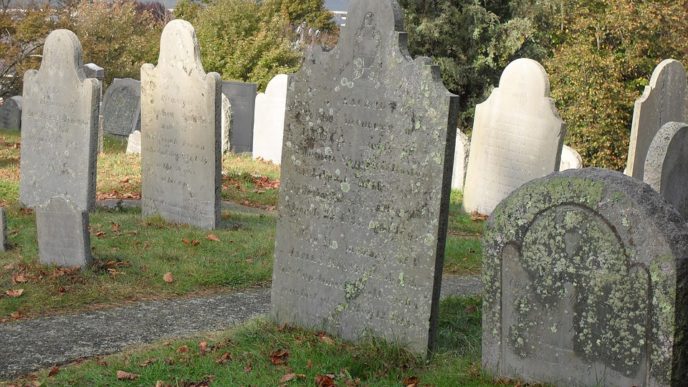
Man Wanted for Murder Caught in Spain Because of Tell-Tale Tattoo: ‘Thanks for Everything’

Late in October, police in Freyung, Germany, made a grisly discovery. The body of a 20-year-old woman named Lisa had been stuffed into trash bags and left in the apartment she shared with her boyfriend, Dominik and their 18-month-old son.

There were signs that her throat had been slit, but investigators couldn’t be certain how long her remains had been there – maybe three weeks, the BBC reports . . .

Spanish police tracked him down to the beach area of Catalonia and arrested him on Friday. On his upper arm was a horrifying tattoo with the dead woman’s name, birth date, possible death date of Oct. 27 and the line, “Gracias por todo” – “Thanks for everything.”

Spain’s National Police said in a statement, “Officers have rescued in perfect condition the couple’s 18-month-old baby with whom he fled after committing the murder.”

Dominik, whose last name has not been released by Spanish police, left an obvious trail of clues for investigators during his flight from justice. (Read more from “Man Wanted for Murder Caught in Spain Because of Tell-Tale Tattoo: ‘Thanks for Everything'” HERE)

Follow Joe Miller on Twitter HERE and Facebook HERE.

How My Husband Ended up in Jail After Walking Our Dog

For the record, I told you so, Peter!

In 2007, my British husband got a ticket for walking our dog Henry without a leash in Washington, D.C. The National Park Service made it impossible to pay the ticket. So, a newly minted citizen, Peter said he’d wait for his day in court.

I told him that was most unwise and that he could end up in jail.

I was right.

Overcriminalization is a serious issue in our country, and while Peter’s experience was trivial, it describes a terrible (yet hilarious) day.

Here’s an excerpt from my new book, “Let Me Tell You About Jasper.” This story is written by Peter, explaining how he ended up in jail while I was working at the White House. When he was given his “one phone call” from jail, I was in the Oval Office briefing the president. True story.

With that, I give you: my husband, the off-leash criminal.

It’s all Henry’s fault! My brush with the law started around 7:15 p.m. on Nov. 15, 2007, when I took Henry to Lincoln Park. I parked across the road and was walking in the park with him; the park was deserted apart from a few other dog owners there, and we chatted about our dogs as the darkness settled around us.

We were standing near the Lincoln statue when we noticed headlights entering the park toward the far end, and we saw a police car racing down the middle of the park toward us.

We soon realized the reason for the rapid approach: It was the Park Police and our dogs were off-leash. Everyone immediately called their dog and reached in their pockets for their leash. I did the same, but alas—no leash! I had left it on the seat of the car.

I quickly turned away and, with Henry walking extremely close, started to leave the park.

“You! Stop!” I heard. I turned and sure enough, the policeman had leapt from his car and was advancing rapidly toward me. Busted!

I explained to Officer Smith that I had left my leash in the car and was returning for it, so he asked for ID, then instructed me to wait while he went to the car. He took a few minutes, presumably checking I was not a serial dog-off-leash scofflaw and returned to write the ticket.

I tried to make light of the situation and joke with Officer Smith, but he was all business. No response, no smile, no pleasantries in reply to mine.

I duly received my ticket and was told that I could pay at any of the stations listed on the back. I informed Officer Smith that there were some suspicious squirrels at the end of the park that he might want to check on, and returned to my car.

Okay, I got a ticket. I was in the wrong, I broke the law, and I am not arguing with that. I had 15 days in which to pay and so on Nov. 24 I reported to First District Substation on E Street SE in Washington, D.C., as listed on the back of the ticket.

I was informed that they did not accept the payments anymore, and my inquiry as to where they thought I might be able to pay was met with a disinterested shrug and the words “Park Police headquarters.”

I returned home and, as we were leaving town for a couple of days, I decided to call the Park Police headquarters on Ohio Drive SW to check whether they accepted payment, or ask where I should mail the check, as the ticket stated, “You may mail in the collateral” but did not state where to mail the payment, how to make the payment, or to whom the payment should be made. However, all I got was an answering machine; an hour later I got the same. Are you starting to see a pattern here?

I have since learned that the ticket I received with both wrong and missing information had been incorrect for six years. A friend got a ticket six years prior and the station on E Street SE did not accept payment then.

So I duly wrote a check made out to U.S. Park Police and mailed it to the headquarters, with a letter explaining that their ticket contained wrong and insufficient information.

I also stated, “I know that the job of ticketing dog owners whose dog is off-leash is highly important—especially in time of war and terror threats, not to mention D.C.’s soaring crime rate. However, if someone at your department could see their way to having a ticket written in competent language with correct information, perhaps we might feel our taxes are not being totally squandered.”

They received my letter and did not reply for 12 days before stating that my payment was unacceptable and that I should send a money order to the D.C. Court.

By the time I received the letter it was already 10 days past the cutoff date and the ticket stated that this would “result in the case being presented at the District of Columbia Superior Court for disposition.”

Given that I had made three attempts to pay, and some information on the ticket lacked sufficient details while other information was just plain wrong, I decided to have my day in court. I wanted to explain to the judge just how apathetic/indolent/incompetent the Park Police are with their tickets. And as a newly minted citizen (for all of about two months), I knew it was my right!

I was therefore awaiting notice to attend court, but did not hear anything for some time. Given that the Park Police are apparently incapable of producing a competently written ticket, this didn’t surprise me.

However, upon returning from a business trip in April, I found a letter inviting me to go to the police station on Fourth Street SW so that they could process me through court on the same day. This was part of “Operation Clean Slate.” (I’m not kidding or exaggerating.)

On Wednesday the 18th I went to the station but was told it was too late for processing that day and was asked to return early the next morning, preferably before 7 a.m. When I asked how long the process would be, I was told, “Oh, an hour and a half, maybe two hours.”

So on the 19th I arrived at the station at 6:45 a.m. and was promptly arrested! The arresting officer asked what had happened and he shook his head in amazement. “They issued a warrant for that?” he asked incredulously. “Why didn’t you go to the court and pay the fine?”

Oops! That’s something else not mentioned on the ticket—apparently the Park Police expect citizens to be psychic. So during the 12 days my letter was sitting in the Park Police headquarters being ignored, they had gone ahead and issued a warrant.

My belongings and belt were taken and I was placed in a cell. Now, I am a normal, law-abiding person. I’ve never been in a cell in my life, and my reaction was somewhere between surprise and fascination. It was just like the TV shows. The fact that I knew a judge would release me as soon as I was through the court proceeding meant that I was never worried—this was in no way a long-term situation—but it was strange to know that I could not leave if I wanted to.

I no longer had any control over my own freedom, and while awaiting transportation to the court I contemplated how awful it must be for someone who knows they will be incarcerated for a long time. It doesn’t matter how many times you see it on the TV; it’s different when you are there yourself. I was tempted to ask if I could get a tattoo of Henry on my shoulder to mark the occasion.

However, when the other prisoners were taken to court and I remained there, I inquired as to why and was told that, as I was a Park Police case, I must await a Park Police officer.

Of course nobody turned up from the Park Police station for a couple of hours, so I sat and waited patiently, counting the tiles on the floor (8,280) and finding the whole situation actually quite amusing. Though by this time I knew that the parking meter was running out for my car; so much for a couple of hours.

Finally, the Park Police arrived and it was none other than my old nemesis Officer Smith! He searched me again and, after handcuffing me, led me to his car. At least I sat in the front so it wouldn’t look like I had been arrested if anyone I knew saw me.

When he got into the driver’s seat, I said, “When you put me in the car, weren’t you supposed to put your hand on my head, like they do in the movies?” He did not respond.

I tried making conversation with Officer Smith but the responses were monosyllabic and usually one word. I tried making jokes, but they fell on deaf ears. All business, this guy (or maybe the squirrel jibe was still rankling him).

Upon arrival at the headquarters building, I was taken to another cell and the cuffs were released, then after five minutes Officer Smith brought me out and cuffed me to a wooden bar while he filled in the necessary paperwork. It’s probably just as well he did, because by this time I was considering fleeing.

If I could just overpower this young, fit, armed officer and steal his ID to open the door before anyone noticed—the place was after all virtually empty—I could be free! I could see the headlines: Leashless Dog Walker Stalks D.C. parks.

I knew I was also allowed to call my wife, but I was a little afraid to. Dana had warned me several times about getting that ticket paid, and when I told her I was going to exercise my rights she told me I was going to be arrested. I didn’t believe her. Now I was going to have to call her at the White House, where she was the acting press secretary and surely “didn’t need this crap.” Her White House voice can still scare me to this day.

So I said to Officer Smith that I would like to make a call. He looked at me blankly.

“I’ve seen the movies. I know my rights,” I said with a smile.

He grudgingly obliged.

When I called the press office, her assistant press secretary Carlton Carroll answered the phone. He said she was in the Oval Office and asked if I wanted to interrupt the meeting. Over my dead body! So I asked him to leave her a message, which he promptly emailed. She saw a message came in and snuck a peek at her messages. All it said was that I had been delayed and that she needed to arrange for the dog walker to come take care of Henry.

She later told me that she knew immediately. “That jerk’s been arrested.” (Right on both counts.)

More handcuffs, another car, and I was soon at the court building, where, once Officer Smith was sure we were behind locked doors, I was handed over to the processing officers.

Form-filling and fingerprinting followed; however, these fellows, while highly professional, were a lot more relaxed. When they asked the reason for my arrest and I told them “walking my dog without a leash,” the response was hilarity. I think I was the first, as it took them some time to find the nearest category for me on the computer!

When they stopped laughing, a mature officer of some years’ service also told me, “This is ridiculous.” He explained that most officers would have used their initiative, had the warrant delayed for a couple of days, and made a call, or even visited me to tell me to go to the court and pay.

Still, we enjoyed the humor of the situation and made a few wisecracks, while they fed me cheese sandwiches and lemonade and, after 10 minutes in my third cell, I was cuffed again and placed in the back of yet another car to be taken to the Superior Court building a couple of hundred yards away.

By this time, it was early afternoon, and the officer driving told us he was rushing so that we would be processed that afternoon. He explained that if we weren’t processed that day it would mean an overnight stay. Now it wasn’t quite so funny!

When he asked the reason for my arrest and I told him, it resulted in the same outburst of disbelieving laughter. “Are you serious? You were arrested for that?”

So now I arrived at the Superior Court, where the handcuffs were finally removed, only to be replaced with leg shackles! “If my friends could only see me now,” I thought with a wry smile.

Following another search, I found myself in the fourth cell, one I shared with 20 others.

A couple hours more cell time and after three court-appointed attorneys shared the humor of the situation and expressed their disbelief that an arrest had been made for this, I found myself in front of the judge.

I explained what had happened and even the judge smiled. With my English accent, I was clearly a relative newcomer to the United States, and I had made three attempts to pay via a Park Police system that I described to him as blatantly incompetent, but it had not been possible given the inadequate information they provided.

The judge told me that this should not have happened and that I should not have been there that day. I held up my manacled leg and said, “Well, your honor, it’s been a very interesting day and I’ve had a good insight into the U.S. judicial system.” He smiled and said, “Welcome to America!”

Upon payment my record would be expunged, and I left the court a free man. I had to collect my belongings from the Park Police station the next day—they had told me that after 3 p.m. the office would be closed. I hope nobody went there to pay a fine that afternoon.

As my car keys were with the belongings, I walked there with Henry on a delightful April morning. (On the leash all the way, I would add! Well, most of it—)

Oh, and the good news was—I did not get a parking ticket after being off the meter all the previous day! But if I had, I would have paid that ticket right away.

This is an excerpt from Dana Perino’s new book “Let Me Tell You About Jasper,” courtesy of Twelve Books.

(For more from the author of “How My Husband Ended up in Jail After Walking Our Dog” please click HERE)

Follow Joe Miller on Twitter HERE and Facebook HERE.

Improper Recycling Could Land You in Jail: How Overcriminalization Threatens Everyone

Criminal laws and regulations in the United States have increased to absurd proportions in the past few decades, posing a growing threat to our constitutional liberties.

There are nearly 5,000 criminal laws and an estimated 300,000 or more criminal regulations at the federal level alone. In fact, there are so many possible criminal offenses that Harvey Silverglate, a civil liberties attorney, contends the average American probably commits at least three felonies a day, most without knowing it.

In April, the perils of overcriminalization were on full display when Brian Everidge traveled to Michigan with more than 10,000 bottles and cans, seeking to capitalize on Michigan’s generous 10 cents-per-bottle refund program. He stood to make $1,000.

Everidge was pulled over for speeding and found himself facing a $5,000 fine and up to five years in prison after the state trooper discovered his cargo. As it turned out, transporting more than 10,000 bottles into Michigan with the intent to collect a deposit is a felony.

Besides Michigan, nine other states have bottle deposit laws—California, Connecticut, Hawaii, Iowa, Massachusetts, Maine, New York, Oregon, and Vermont. Though each state law varies slightly from the others, each law operates on the same basic premise: Consumers pay a deposit on specified beverage containers and get reimbursed upon returning the emptied container.

Deposits vary from 5 cents to 15 cents by state and container size. When a person knowingly brings in containers sold outside the state, they are deceiving state officials by seeking the return of a deposit they never paid.

Surprisingly, interstate bottle fraud can be big business. In 2015, California officials uncovered a recycling ring that raked in $14 million from 2012 to 2014 on approximately 250 million containers brought from Arizona to California recycling centers.

The Michigan Treasury Department reported that interstate bottle fraud costs the state $10 to $13 million every year. Michigan state Rep. Kenneth Kurtz, a Republican, said of repeat “scammers who drive car and truck loads of cans from Indiana, Wisconsin, and Ohio,” that “If you are intending to defraud … then you should be held accountable for it.”

Six of the 10 bottle bill states—California, Maine, Massachusetts, Michigan, New York, and Vermont—have codified penalties specifically for cashing in on out-of-state bottles, or attempting to. Only Michigan and California, however, make it a crime.

Michigan’s penalties work on a sliding scale. Attempt to return up to 99 containers, you’ll get off with a civil fine; attempt to return 100 to 9,999 containers, you’re guilty of a misdemeanor; and if you attempt to return 10,000 or more, you’re now a felon and subject to up to five years in prison, a $5,000 fine or both.

Other types of fraud, such as dishonest practices in connection with official records on milk and butter production or failing to label imitation leather boots as such, are misdemeanors—no matter how much butter is produced or how expensive the boots are.

In California, trading in out-of-state recyclable containers is also a felony if the redemption value is more than $400. One truck driver faced criminal charges for smuggling 7,000 pounds of containers worth more than $7,100 in redemptions, with possible jail time of six months to three years.

The United States Supreme Court stated recently, in Bond v. U.S. (2014), that states “have broad authority to enact legislation for the public good—what we have often called a ‘police power.’” It also ruled in Minnesota v. Clover Leaf Creamery (1981) that a state can outright ban the sale of retail goods in a “plastic nonreturnable, nonrefillable container” if it so chooses, respecting the states’ broad discretion to implement environmental policies.

Heritage Foundation scholars have argued, however, that “the most successful environmental policies emanate from liberty.”

Criminal laws and penalties, writes John Malcolm, director of Heritage’s Meese Center for Legal and Judicial Studies, are “meant to enforce a commonly accepted moral code that is set forth in language the average person can readily understand and that clearly identifies the prohibited conduct.”

Administrative schemes like state bottle recycling programs, Malcolm writes, should “establish rules of the road (with penalties attached for violations of those rules) to curb excesses and address consequences in a complex, rapidly evolving, highly industrialized society.”

Maine’s bottle fraud rules exemplify a proper understanding of how law ought to work. Maine imposes civil fines whenever a person attempts to deposit more than 48 containers not sold in the state, with the penalty being the greater of a $100 fine for each container or $25,000 fine for each attempted transaction.

This creates a disincentive for cashing in on out-of-state containers and more than compensates the state for its losses without branding every person who violates the scheme as a criminal.

Moreover, Maine requires all recycling centers to post a sign that clearly defines “bottle fraud” and warns customers of its penalties, so anyone who unlawfully takes advantage of Maine’s incentive structure does so with a full understanding of the consequences.

Heritage scholars have identified ways to address the overcriminalization crisis. Lawmakers must reassess current laws and scrutinize any new laws that use criminal instead of civil penalties, incorporating safeguards to ensure that the criminal code is not a trap for the unwary. Everidge and the many others caught up in cases of overcriminalization deserve better from our justice system. (For more from the author of “Improper Recycling Could Land You in Jail: How Overcriminalization Threatens Everyone” please click HERE)

Follow Joe Miller on Twitter HERE and Facebook HERE.

Police Chopper Catches UFO on Thermal Camera

South Wales police are still scratching their heads over the UFO that appeared on one of their cameras last Saturday, reports the Daily Mail in Britain.

Officers flying in a helicopter across the Bristol Channel around 9:30 p.m. local time became aware of the mystery object when it showed up on the aircraft’s thermal camera. It was not visible to the eye, nor did air-traffic control detect the unidentified object.

The helicopter’s altitude at the time was 1,000 feet.

“It’s difficult to judge the size but we filmed it for just over seven minutes,” the police tweeted, while requesting suggestions from the public as to the object’s identity.

Some have suggested the UFO is a Chinese lantern or balloon, but those ideas have been rejected since the object was flying against the wind. (Read more from “Police Chopper Catches UFO on Thermal Camera” HERE)

Follow Joe Miller on Twitter HERE and Facebook HERE.

A Mysterious Polio-Like Illness That Paralyzes People May Be Surging This Year

Through July, 32 new cases of AFM [acute flaccid myelitis] have been confirmed across the United States this year by the Centers for Disease Control and Prevention, a sharp rise compared with last year, when just seven cases had been confirmed by that month. The numbers have risen steadily since April. In past years, most cases have occurred between August and December, with a peak in October.

Among the many unanswered questions about the condition are what causes it, how best to treat it and how long the paralysis lasts. Although most cases occur in children, AFM occasionally affects adults.

The CDC official who leads the surveillance efforts said that confirmed numbers for August will not be available until the end of this month, but the number of reports she is receiving from doctors around the country continues to rise.

“CDC is looking at these trends very carefully,” Manisha Patel said. “We have sent out several health alerts to states to let them know we are seeing an increase in reporting and to encourage them to communicate with doctors to report these cases in a timely fashion.” (Read more from “A Mysterious Polio-Like Illness That Paralyzes People May Be Surging This Year” HERE)

Follow Joe Miller on Twitter HERE and Facebook HERE.

It Spreads: Invasion of the Scary Killer Clowns

Whatever, the recent spate of hysteria started in South Carolina.

Police say they are doing extra patrols in a Winston-Salem neighborhood after two children reported seeing a clown trying to lure kids into the woods with treats.

About four hours later, a caller who refused to give a name reported another sighting about two miles away. Police say again they found no evidence of a clown.

More unverified scary clown sightings in northern South Carolina have been in the news recently.

In the Greenville area, multiple law-enforcement agencies are investigating a rash of incidents involving clown sightings at apartment complexes and other areas of Greenville and Spartanburg counties. (Read more from “It Spreads: Invasion of the Scary Killer Clowns” HERE)

Follow Joe Miller on Twitter HERE and Facebook HERE.
TV Star Dies in Plane Crash – ‘Tragic Loss’

The world of reality television just suffered a tragic loss.

Darrell Ward, one of the stars of History Channel’s Ice Road Truckers, was killed Sunday when his plane crashed en route from Dallas to Missoula, Mont.

Ward had attended the Great American Truck Show in Dallas over the weekend.

Ironically, 52-year-old Ward was scheduled to begin filming a documentary on what goes into recovering a plane crash.

In a statement to Fox 411, a spokesman for Ice Road Truckers said, “We are saddened by the tragic loss of Darrell Ward, a beloved member of the HISTORY family. He will be greatly missed and our thoughts are with his family during this difficult time.”

A press release was posted on Ward’s social media page, where many people went to pay their respects.

One fan wrote: “My thoughts and prayers go out to the family and friends of Darrell’s. Loved watching him on The Ice Road Truckers. He will be missed by all!!!”

Another posted: “We are stunned and saddened by this tragic loss, our thoughts and prayers go to his family. May the good lord wrap his loving arms around you and comfort you as well as to give you the strength and courage to get thru this.”

Witnesses of the crash stated the plane went into a stall and the pilot was unsuccessful in his attempt to gain control.

The Cessna 182 was making an approach to an airstrip in Rock Creek, Mont., and crashed onto the shoulder of Interstate 90.

The accident killed Ward and another person aboard the plane.

The incident is being investigated by the National Transportation Safety Board.

Ward’s family reportedly released a short statement: “While many of you will share in this loss, we ask that you respect the family’s privacy during their time of grief. His manager and best friend M. Bob Stanton and long time friend Chuck Campbell are expected to make a lengthier statement shortly.”

Ward, who described himself as an “adrenaline junkie,” was true to his motto: “Any road, any load.”

Ice Road Truckers chronicles the often dangerous lives of the people who haul cargo to remote areas. (For more from the author of “TV Star Dies in Plane Crash – ‘Tragic Loss'” please click HERE)

Follow Joe Miller on Twitter HERE and Facebook HERE.

The Earth’s Crust Will Be Shaken by More Than 100,000 Earthquakes That Humans Can Feel in 2016

Did you know that our planet will be hit by more than 100,000 earthquakes of magnitude 3.0 or greater this year alone? Earlier today, I came across a report that contained this amazing fact, but it was so incredible that I felt that I had to go and verify it myself. So I went to the official USGS website, and I found out that this is actually true. Overall, there are about half a million earthquakes around the globe each year, but it is only when a quake is of about magnitude 3.0 or greater that humans actually feel them. As the very large earthquakes in Italy and Myanmar within the last 24 hours have demonstrated, the shaking of our planet is getting worse, and this is something that I have written about over and over again. So why is this happening? Why does the crust of our planet seemingly become more and more unstable with each passing year?

We need to start addressing those questions, because there aren’t too many things that can do more damage to a community than a major earthquake. Very early Wednesday morning, a magnitude 6.2 earthquake struck central Italy. It is being reported that it sounded “like a bomb” went off, and it looks like this is going to end up being the worst natural disaster to hit Italy in many years.

This earthquake rattled buildings in Rome, it could be felt in Naples to the south, and it is even being claimed that it could be felt all the way up in Bologna in the north.

The epicenter of the quake was a charming little Italian town known as Amatrice. According to Mayor Sergio Pirozzi, “the town is no more” at this point. You can see some amazing photographs of the destruction for yourself right here. Homes, churches and businesses collapsed in heaps of rubble, and at this moment rescuers are engaged in a frantic race against time to pull survivors from the wreckage…

Rescue teams using bulldozers, and aided by townspeople with their bare hands, were still poring through the piles of rock, metal and wood late Wednesday looking for possible survivors. Police near the town of Ascoli said they could hear cries for help from under the rubble but lacked the heavy equipment to move the rocks, according the RAI radio.

“We need chain saws, shears to cut iron bars, and jacks to remove beams: everything, we need everything,” civil protection worker Andrea Gentili told the Associated Press.

So far, the death toll stands at 159 people, but that number is going to go way up as more bodies are discovered. The following was reported by Reuters…

One hotel that collapsed in the small town of Amatrice probably had about 70 guests, and only seven bodies had so far been recovered, said the mayor of the town that was one of the worst hit by the quake.

But as destructive as the Italian quake was, it wasn’t even the largest earthquake on the globe on Wednesday. A huge magnitude 6.8 earthquake struck Myanmar, but because that earthquake was much deeper it didn’t do the same level of damage as the quake in Italy did…

A powerful earthquake shook Myanmar on Wednesday, killing at least three people and damaging nearly a hundred ancient Buddhist pagodas in the former capital of Bagan, a major tourist site, officials said.

The U.S. Geological Survey said the magnitude 6.8 quake was centered about 25 kilometers (15 miles) west of Chauk, a town south of Bagan. It was located fairly far below the Earth’s surface at a depth of about 84 kilometers (52 miles), it said.

Sadly, most Americans couldn’t care less about what goes on in places like Italy or Myanmar. I know that may sound terrible, but it is true.

However, Americans should care, because this global rise in earthquake activity is affecting us as well. In fact, the USGS now says that human activity may at least be partially to blame for the “dramatic increase in seismicity” that we have been witnessing in the United States in recent years…

On Monday, for the first time, the U.S. Geological Survey has released an analysis of the magnitude of “human-induced” earthquakes. That such a thing as human-induced earthquakes can exist is scary enough, but the “dramatic increase in seismicity” in places such as Oklahoma has forced the USGS to consider the threat more broadly.

“By including human-induced events, our assessment of earthquake hazards has significantly increased in parts of the U.S.,” said Mark Petersen, chief of the USGS National Seismic Hazard Mapping Project, in a statement. “This research also shows that much more of the nation faces a significant chance of having damaging earthquakes over the next year, whether natural or human-induced.”

And I wanted to note that there was a magnitude 3.9 earthquake in Colorado on Tuesday. We have started to see sizable earthquakes in many portions of the country where they are not expected, and this is going to continue to get worse as the shaking of our planet intensifies.

There is one more thing that I wanted to share with you all today. I don’t know if this is related to anything, but a blood red moon was photographed directly behind the new World Trade Center tower last night. To some people this is just a meaningless coincidence, but there are others that consider it to be a very ominous sign.

This summer, things have been relatively calm and peaceful in America. Donald Trump and Hillary Clinton have dominated the headlines, but other than the election there really hasn’t been a major crisis that has grabbed the attention of the nation.

But of course all of that could change in a moment. Despite all of our advanced technology, the truth is that we are still virtually defenseless against a major natural disaster.

Scientists tell us that it is inevitable that a great New Madrid earthquake will shake the center of the country. They also tell us that it is inevitable that there will be a major earthquake in southern California, that volcanoes on the west coast will erupt again, and that the Yellowstone supervolcano could wipe out much of the country in a single day.

As global seismic activity continues to rise, it is just a matter of time before a string of historic disasters hits this nation.

Unfortunately, I am convinced that this could happen a lot sooner than most people would dare to imagine. (For more from the author of “The Earth’s Crust Will Be Shaken by More Than 100,000 Earthquakes That Humans Can Feel in 2016” please click HERE)

Follow Joe Miller on Twitter HERE and Facebook HERE.
Global Warming Alarmists Plead: Save the Children by Not Having Them

Global warming will, of course, doom us all. That is, if the models created by scientists are any guide. Which they aren’t, since these models have for decades predicted temperatures far greater than what we actually see.

Too, our greatest natural disasters occurred long ago before global warming loomed, (as this site documents). In 1931, a flood killed perhaps two million Chinese. Forest fires in the USA are far, far below their destructive peak in the late 1920s. An awful flood happened in 1936, the same year a heat-wave killed some 12,000 Americans, which again was the same year of the highest maximum temperature.

Still, even though tornadoes, floods, fires and hurricanes are way down, the consensus is that global warming will kill us all. A hundredth of a degree increase in temperature is nothing to sneeze at, you know.

Who will fare worst in our coming climate apocalypse? That’s right! The children! The promised destruction of our littlest ones is why NPR and a group of academic philosophers say we should “protect our kids by not having them.”

Protect our kids by not having them? That’s like saying the way to protect your house from fire is by not building it, or that the way to protect against crop failure is to cease farming.

Barren wombs as cure for our climate “catastrophe” makes sense to philosophers Colin Hickey, Travis N. Rieder and Jake Earl, who defend the idea in “Population Engineering and the Fight against Climate Change,” which will appear in the journal Social Theory and Practice (PDF). They say that “threats posed by climate change justify population engineering, the intentional manipulation of the size and structure of human populations” (emphasis in original).

Now all philosophical arguments start with premises, the assumptions which must be accepted to get the argument going. Here are theirs:

Two uncontroversial ideas set the stage for this article. First, climate change is among the most significant moral problems contemporary societies face, in terms of its urgency, global expanse and the magnitude of its attending harms. Second, population plays an important role in determining just how bad climate change will be.

Balderdash: both ideas are controversial and, as shown above, both are far from the truth. This is not a good beginning to their argument. As Aristotle noted, “The least degree of deviation from the truth is multiplied later a thousandfold.” Let’s see if that prophecy holds here.

From their premises, the authors derive this:

In procreating one makes a whole new person who will emit [greenhouse gases]. But in fact, it is more than that. By creating a new person, one makes it possible that he or she will go on to create more people, who are then able to go and create even more people.

Who knew?

This radical deduction led to this conclusion: “The question, it seems, is not whether we should implement some sort of fertility-reducing population engineering program, but rather which interventions such a program should include.”

From there it was a short hop to the heading “Population Engineering Policies: Coercion and Choice Enhancement.”

Did somebody say coercion?

Somebody did. “This includes policies that involve straightforward violations of citizens’ autonomy or bodily integrity.” Not to worry. “Straightforwardly coercive interventions to reduce human population growth are almost always wrong.”

Almost always.

The other end of the scale of “total coercion” is pestering the population with putrid propaganda: e.g., “Poster campaigns featuring images of small, happy families and national slogans have been used widely” in other countries. While finding it distasteful, they don’t outright reject “outright misinformation, deception or manipulation,” and assure us they “would not endorse just any token preference-adjusting intervention to reduce fertility.” Grand of them.

They also put forward “women’s education and improved access to reproductive health care.” Now these are philosophers and you’d think they’d know better than to employ cheap euphemism. Reproductive health care means abortion and contraception, where there is no reproduction and where the health of any child “accidentally” conceived is permanently removed, and the would-be mothers endangered into the bargain.

Stripped of euphemism, the authors recommend active killing to reduce the population.

And if you’re “rich,” look out:

Our outline for a global population engineering program suggests that the greater a would-be procreator’s wealth, the more appropriate it will be to target that person with interventions to the right on the coercion spectrum. This is justifiable not only pragmatically, but also morally: since wealth is a fairly reliable proxy for individuals’ GHG emissions, and so for their carbon legacy, it is morally justifiable to exert greater pressure on wealthy people’s procreative behaviors.

Some people would still be allowed to have babies. Who decides who should procreate future GHG generators? Well, folks like author Travis Rieder, who is bravely passing on his genes (he has a daughter).

There isn’t a scintilla of a hint of a whisper of a ghost of a figment of an idea from these men that they might be wrong. But Aristotle was right. Start with silliness, end in lunacy. (For more from the author of “Global Warming Alarmists Plead: Save the Children by Not Having Them” please click HERE)

Follow Joe Miller on Twitter HERE and Facebook HERE.

Ryan Lochte Loses Major Endorsement Over Robbery Report Flak

As the fallout continues over U.S. Olympic swimmer Ryan Lochte’s apparently false description of an armed robbery while in Rio de Janeiro, an announcement by one of his key sponsors on Monday revealed significant financial repercussions for the gold medalist.

Speedo USA released a statement on Twitter regarding its business relationship with Lochte, confirming the company has decided to end its sponsorship.

At least a portion of the money Lochte would have received through the partnership is now slated to help fund a charity in 2016 Olympic host country Brazil.

“As part of this decision,” the company announced, “Speedo USA will donate a $50,000 portion of Lochte’s fee to Save The Children, a global charity partner of Speedo USA’s parent company, for children in Brazil.”

While Speedo described its work with the swimmer up to this point as “a winning relationship,” the company concluded it “cannot condone behavior that is counter to the values this brand has long stood for.”

The move earned Speedo some social-media praise from users disappointed in Lochte.

blockquote class=”twitter-tweet” data-lang=”en”>

Good move, @SpeedoUSA!

— Eric Haywood (@EricHaywood) August 22, 2016

Ralph Lauren followed suit with its own statement announcing its “endorsement agreement with Ryan Lochte was specifically in support of the Rio 2016 Olympic Games and the company will not be renewing his contract.”

As Western Journalism reported last week, Lochte was one of two Team USA swimmer indicted on suspicion of filing a false report with Brazilian authorities.

Until additional evidence surfaced casting doubt on his initial statement, Lochte claimed he and three other team members were robbed by armed men displaying a police badge.

His account of the evening’s events have since changed, prompted by an anonymous source who claimed not only that the swimmers were not robbed, but they were responsible for causing extensive damage to a gas station restroom.

Bob Williams, head of Burns Entertainment and Sports Marketing, predicted the controversy would cost Lochte money as the loss of the Speedo endorsement already has.

He predicted the swimmer’s actions will “virtually eliminate him from future endorsements.” (For more from the author of “Ryan Lochte Loses Major Endorsement Over Robbery Report Flak” please click HERE)

Follow Joe Miller on Twitter HERE and Facebook HERE.