

Establishment Mouthpiece Tells GOP, ‘Reject Trump Even If He’s Nominee’
 By George Will. Donald Trump’s damage to the Republican Party, although already extensive, has barely begun. Republican quislings will multiply, slinking into support of the most anti-conservative presidential aspirant in their party’s history. These collaborationists will render themselves ineligible to participate in the party’s reconstruction.
Ted Cruz’s announcement of his preferred running mate has enhanced the nomination process by giving voters pertinent information. They already know the only important thing about Trump’s choice: His running mate will be unqualified for high office because he or she will think Trump is qualified.
Hillary Clinton’s optimal running mate might be Sen. Sherrod Brown of Ohio, a pro-labor populist whose selection would be balm for the bruised feelings of Bernie Sanders’ legions. Running mates rarely matter as electoral factors: In 2000, Al Gore got 43.2 percent of the North Carolina vote. In 2004, John Kerry, trying to improve upon Gore’s total there, ran with North Carolina Sen. John Edwards but received 43.6 percent. If, however, Brown were to help deliver Ohio for Clinton, the Republican path to 270 electoral votes would be narrower than a needle’s eye.
Republican voters, particularly in Indiana and California, can, by supporting Cruz, make the Republican convention a deliberative body rather than one that merely ratifies decisions made elsewhere, some of them six months earlier. A convention’s sovereign duty is to choose a plausible nominee who has a reasonable chance to win, not to passively affirm the will of a mere plurality of voters recorded episodically in a protracted process. (Read more from “Establishment Mouthpiece Tells GOP, ‘Reject Trump Even If He’s Nominee'” HERE)
________________________________________
Eyeing an Indiana Victory, Trump Says, ‘It’s Over’
By Steve Holland and Valerie Volcovici. Front-runner Donald Trump said on Sunday that he will have essentially sealed the Republican U.S. presidential nomination if he wins Tuesday’s contest in Indiana, where he holds a big lead over chief rival Ted Cruz.
A new NBC/Wall Street Journal/Marist opinion poll showed Trump with a wide lead in Indiana, 49 percent to 34 percent for Cruz and 13 percent for a third candidate, Ohio Governor John Kasich.
Trump, a 69-year-old billionaire real estate developer, sounded confident in an interview on “Fox News Sunday” when asked whether Indiana would basically end the long-running Republican race in his favor.
“Yes, it’s over,” Trump said. “It’s already over.”
The poll showed the depth of the challenge facing Cruz, a conservative U.S. senator from Texas who is trying to prevent Trump from winning the 1,237 delegates needed to seal the nomination. (Read more from “Eyeing an Indiana Victory, Trump Says, ‘It’s Over'” HERE)
Follow Joe Miller on Twitter HERE and Facebook HERE.
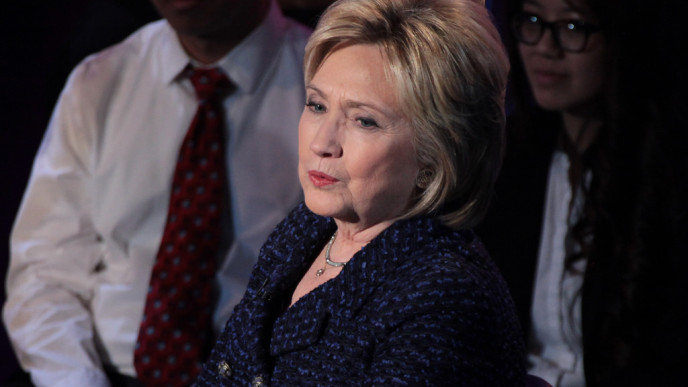
 With 172 Republican delegates up for grabs and another 384 at stake on the Democratic side, Tuesday’s presidential primary elections added some distance between the two parties’ respective front-runners and the challengers who remain in the race.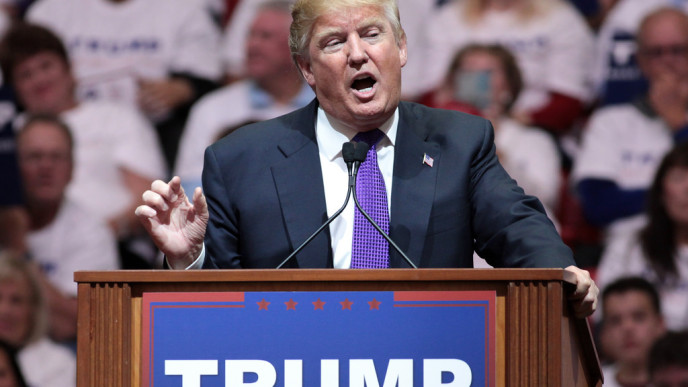
 Donald Trump has won presidential primaries in all five US states that voted on Tuesday, while Hillary Clinton triumphed in four out of five.

 By Jen Lawrence. Republican National Convention delegates from the District of Columbia who are bound to or supportive of Sen. Marco Rubio tell Breitbart News that they are open to supporting Donald Trump instead.
 Cruz must rely on contested convention
 Former New York Mayor Rudy Giuliani has given his recommendation for a Republican presidential ticket he feels “could win the election” . . .
 By Ian Hanchett. GOP presidential candidate Texas Senator Sen. Ted Cruz and talk radio and Fox News Channel host Sean Hannity engaged in a testy exchange over the delegate process on Hannity’s radio show on Tuesday.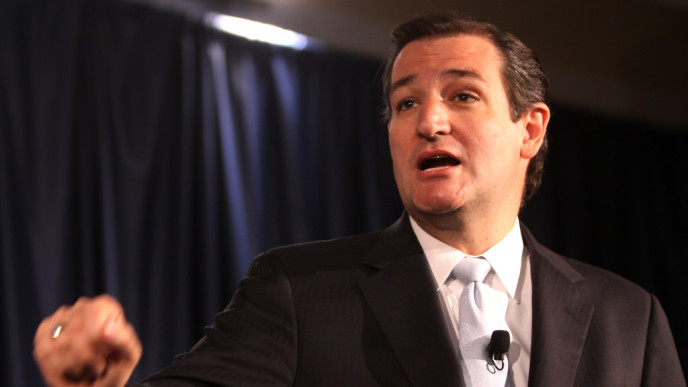
 By Ginger Gibson. Republican U.S. presidential hopeful Ted Cruz won all 14 delegates at stake on Saturday in Wyoming, besting rival Donald Trump, who made little effort to win the rural state, and further narrowing the gap in the race for the party’s nomination.
 By Alex Isenstadt and Shane Goldmacher. The Republican National Committee is expected to debate a proposal next week that would dramatically shift the balance of power at this summer’s convention — and impose a new rulebook for selecting the party’s nominee.