Posts

China Expert Says Trump is Absolutely Correct About the T-Word

Well-known China expert Gordon Chang has confirmed President Donald Trump is correct when he suggests tariffs are part of the solution of America’s business dealing with China.

Trump has suggested if elected, he’d pursue tariffs as high as 60% on Chinese goods being dumped on American shores.

“I can’t believe how many people are negative on tariffs that are actually smart people,” Trump said just a few weeks ago. “Economically, they’re phenomenal.”

In a commentary at Gatestone Institute, where he is distinguished senior fellow and advisory board member, Chang pointed out that immediately, “a lot of smart people” have insisted that high tariffs are “horrible.”

“Trump is right. Although these levies would increase costs to American consumers, the costs would not be nearly as great as experts say. Moreover, there are other considerations, both economic and national security, favoring raising tariffs now,” Chang wrote. (Read more from “China Expert Says Trump is Absolutely Correct About the T-Word” HERE)

Photo credit: Flickr

Chinese and Russian Bombers Seen Off Coast of Alaska

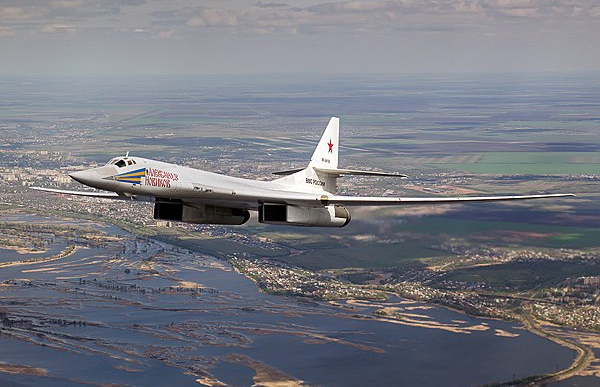
On Wednesday, Chinese and Russian nuclear-capable bombers ventured into the Air Defense Identification Zone (ADIZ) off the coast of Alaska. This marked the first known incursion by Chinese H-6 bombers into this strategic buffer zone, prompting a swift response from both the United States and Canada.

According to the North American Aerospace Defense Command (NORAD), the simultaneous appearance of Chinese and Russian bombers in the Alaskan ADIZ is a significant development. While the ADIZ itself is not sovereign airspace, and such incursions do not constitute an act of war, they are provocations that necessitate a robust defensive posture.

NORAD’s command reported intercepting and tracking two Russian TU-95 bombers and two Chinese H-6 bombers. U.S. forces deployed F-16 and F-35 fighters to monitor the situation, while Canada responded with its CF-18 fighters.

While the Russian bombers have entered the Alaskan ADIZ before—most recently in May—this incident stands out as it involved a Chinese military presence. The joint patrol of Russian and Chinese bombers, which was confirmed by Chinese Defense Ministry spokesman Col. Zhang Xiaogang, marks the eighth such strategic air patrol between the two nations since 2019. Zhang emphasized that the patrol was designed to enhance coordination between the two air forces.

China’s increasing assertiveness in the Arctic region has been a point of contention for several years. Declaring itself a “near-Arctic state,” China has sought to expand its influence and involvement in Arctic affairs, often using terms like “polar Silk Road” to describe its ambitions. This effort aligns with Beijing’s broader strategy to secure access to Arctic resources and integrate the region into its global infrastructure initiatives.

The Pentagon has expressed growing concern over the expanding cooperation between China and Russia in the Arctic. A recent Department of Defense report highlighted the increasing alignment of these two major powers in the region as a significant strategic challenge:

While significant areas of disagreement between the PRC and Russia remain, their growing alignment in the region is of concern

Chinese Spying Facilities in Cuba Signal America’s New Cold War

China has likely upgraded and expanded its spying facilities in Cuba, according to a new report by an American think tank. The report not only confirms that a Cold War between China and the U.S. has already started, but also raises new concerns that China may be aiming to bring it to America’s doorstep, posing potentially severe and grave implications for the U.S.

The Center for Strategic and International Studies (CSIS), a Washington, D.C.-based think tank, produced the study as a follow-up to The Wall Street Journal’s reporting last year that revealed China had secretly agreed to pay cash-strapped Cuba several billion dollars to establish a Chinese electronic eavesdropping facility on the island. This facility is likely to be used for intercepting communications and gathering intelligence on the United States and its allies, according to CSIS.

Probably not wanting the news to disrupt the Biden administration’s détente approach to Beijing, the White House initially insisted that the Journal’s report was inaccurate. Yet, two days later, a U.S. official confirmed that China had a spy base in Cuba since at least 2019. The Biden administration then claimed that it had taken steps to “slow down Beijing’s efforts to expand its intelligence gathering” without elaborating on those steps.

The Biden administration’s vague explanation only inspired more research on the topic. CSIS examined years’ worth of satellite images and released its findings last week. CSIS finds that, contrary to what the Biden administration has told us, China has probably sped up, not slowed down, its intelligence-gathering effort in Cuba.

CSIS’s investigation identified four electronic spying stations in Cuba that have been upgraded and expanded: Bejucal, Calabazar, Wajay, and the previously unknown El Salao. For example, by comparing satellite images, CSIS noticed the site at Wajay “has gradually expanded over the past 20 years, growing from just one antenna and several small buildings in 2002 to a robust complex today. It now hosts 12 antennas of various sizes and orientations.” (Read more from “Chinese Spying Facilities in Cuba Signal America’s New Cold War” HERE)

‘Rolling Surveillance’: Chinese Self-Driving Cars Mapping America

As Chinese companies test their autonomous vehicles on American roads, concerns are growing about the vast amounts of data these “rolling surveillance devices” are collecting and the potential national security implications.

Fortune reports that in recent years, Chinese-owned companies have been quietly testing their self-driving cars on American roads, particularly in California. While this may seem like a harmless part of technological advancement, experts are raising alarms about the potential national security risks associated with these vehicles.

Since 2017, self-driving cars owned by Chinese companies have traversed 1.8 million miles in California alone, according to data from the state’s Department of Motor Vehicles. These vehicles, equipped with advanced cameras, sensors, and mapping technology, are capable of collecting massive amounts of data about their surroundings, including detailed video footage and precise geospatial information.

Among the 35 companies approved to test autonomous vehicles in California, seven are wholly or partly China-based. Five of these companies — WeRide, Apollo, AutoX, Pony.ai, and DiDi Research America — were active on California roads last year. Some of these companies also have permission to test in other states like Arizona and Texas. (Read more from “‘Rolling Surveillance’: Chinese Self-Driving Cars Mapping America” HERE)

WATCH: Chinese Rocket Crashes Into Mountain After Accidental Launch

A rocket belonging to a Chinese civilian aerospace manufacturer crashed into a mountain after accidentally launching Sunday, the company announced.

Space Pioneer, also known as Beijing Tianbing Technology, was attempting a ground test with their Tianlong-3 rocket when a “structural failure” caused it to separate from the launch pad, a statement obtained by CNN said.

“Due to the structural failure of the connection between the rocket body and the test platform, the first-stage rocket was separated from the launch pad,” the company stated.

“After liftoff, the onboard computer was automatically shut down, and the rocket fell into the deep mountains 1.5 kilometers [0.9 miles] southwest of the test platform. The rocket body fell into the mountain and disintegrated.”

Videos shared on social media by onlookers shows the moment the rocket was launched before falling and causing a fiery explosion:

(Read more from “WATCH: Chinese Rocket Crashes Into Mountain After Accidental Launch” HERE)

Sword-Wielding Chinese Soldiers Seize Filipino Ship in Its Own Waters, Forcing Bare-Handed Brawl

The Chinese Communist regime admitted on Wednesday that it used force to board Filipino ships and force them out of the Philippines’ territorial waters, an act of piracy the Chinese touted as a “police action” because the Filipinos entered an area illegally claimed by China.

The Philippine military said its forces used their “bare hands” to fend off Chinese “barbarians” and demanded China pay damages for its conduct during the incident.

The Armed Forces of the Philippines (AFP) posted video and photos of the encounter on Wednesday night, showing Chinese personnel attacking their rigid-hulled inflatable boats (RHIBs) with knives, axes, and poles.

(Read more from “Sword-Wielding Chinese Soldiers Seize Filipino Ship in Its Own Waters, Forcing Bare-Handed Brawl” HERE)

China’s Xi Accused the U.S. of Trying to Trick Him Into Invading Taiwan, but Said He Won’t Take the Bait, Report Says

China’s leader, Xi Jinping, accused the US of trying to trick China into invading Taiwan but said his country wouldn’t take the bait, the Financial Times reported, citing people familiar with the matter.

The FT said Xi made the accusation in April last year during a meeting with European Commission President Ursula von der Leyen.

Xi has issued the same warning to officials in his own country, one person told the FT, but this is first known case of him making the claim to a foreign leader, the outlet said.

During the meeting, according to a press statement released at the time, Xi said Taiwan was at the “core” of China’s interests, adding: “If anyone expects China to compromise and concede on the Taiwan question, they are having a pipe dream and would shoot themselves in the foot.”

Xi’s accusation against the US wasn’t featured in the statement. (Read more from “China’s Xi Accused the U.S. of Trying to Trick Him Into Invading Taiwan, but Said He Won’t Take the Bait, Report Says” HERE)

‘Make Their Lives Utterly Miserable’: Top US Commander Outlines ‘Hellscape’ Response If China Invades Taiwan

A top U.S. naval commander outlined a “hellscape” American response if China decides to invade Taiwan in an interview with The Washington Post published Monday.

The U.S. maintains a position of “strategic ambiguity” when it comes to Taiwan, not committing to whether it would militarily defend the island in the event of a Chinese incursion. But Navy Adm. Samuel Paparo, the new chief of the U.S. Indo-Pacific Command (INDOPACOM), told the Post in an interview that there is a plan to deter China by ensuring that Beijing understands the “utterly miserable” consequences it could suffer if it does launch an incursion.

“[China wants] to offer the world a short, sharp war so that it is a fait accompli before the world can get their act together,” Paparo told the Post. “My job is to ensure that between now and 2027 and beyond, the U.S. military and the allies are capable of prevailing.”

China views Taiwan as a rogue territory that needs to be reunited with the mainland and condemns other countries that view the island as independent. Chinese President Xi Jinping has ordered the country’s military to be ready to invade Taiwan by 2027.

The U.S. strategy in stopping China from launching an invasion is called “Hellscape,” Paparo told the Post. As soon as Chinese forces start moving toward Taiwan, the U.S. military would launch thousands of unmanned surface ships, aerial drones and submarines to surround the island. This would give the U.S., Taiwan and its regional partners enough time to coalesce for a bigger response, Paparo said. . .

“I want to turn the Taiwan Strait into an unmanned hellscape using a number of classified capabilities,” Paparo told the Post. “So that I can make their lives utterly miserable for a month, which buys me the time for the rest of everything.” (Read more from “‘Make Their Lives Utterly Miserable’: Top US Commander Outlines ‘Hellscape’ Response If China Invades Taiwan” HERE)

An Endless Wave Of U.S.-Led Sanctions Might Be The Greatest Gift China Has Ever Received

The U.S.’ bid to isolate its foes on the global stage through crippling sanctions has cleared the way for a new shadowy global alliance headed by the West’s greatest adversary — China.

The U.S. and a host of Western nations have levied sanctions against Iran, North Korea, Russia and Venezuela — some of whom have suffered further penalties in recent years given their military incursions on other nations and blatant violations of international law. Despite being largely cut off from Western markets, these countries have managed to find a key trading partner in China, which hasn’t hesitated in benefiting from the unintended consequences of the U.S.-led sanctions regime, according to recent data from China’s General Administration of Customs and The Wall Street Journal.

This has created record-level multilateral trade cooperation, bolstered security and military agreements and forged a new anti-Western axis with China at the head.

“China is the strategic competitor willing and able to reshape the current global order,” Dana Stroul, a former senior U.S. defense official and fellow at The Washington Institute for Near East Policy, told the WSJ.

The Biden administration and a majority of the Western bloc imposed harsh sanctions against Russia after the country invaded Ukraine in early 2022, prompting a full-scale war. The U.S. alone has imposed over 4,000 sanctions against Russian entities and individuals in a bid to “[disrupt] and [degrade] Russia’s economy and war machine,” according to the U.S. Department of Treasury. (Read more from “An Endless Wave Of U.S.-Led Sanctions Might Be The Greatest Gift China Has Ever Received” HERE)

Xi Jinping Wants American Tourists to Save Tanking Chinese Economy

The Chinese government held a “tourism leadership summit” to entice Americans to spend their money in China, featuring a personal invite from genocidal dictator Xi Jinping.

Xi sent a personalized message to the event, in the city of Xi’an, emphasizing the importance that “cultural and people-to-people exchanges” hold in the eyes of the Communist Party for improving relations with America. Organizers and state media noted that the China-U.S. Tourism Leadership Summit used to be an annual event but had not been held since 2019, the last year before the Communist Party began locking down entire cities in response to the coronavirus outbreak beginning in Wuhan late that year.

Xi’an was the site of some of Xi’s most brutal lockdowns, in December 2021 and October 2022.

“We warmly welcome American tourists to travel to China, meet Chinese friends, experience Chinese culture, visit beautiful landscapes, and experience the real China,” Xi said in his message to the event, according to China’s state-run Xinhua News Agency. . .

The Global Times, another Chinese government propaganda outlet, reported that leftist American President Joe Biden also sent a letter to the organizers and attendees at the tourism summit inviting Chinese nationals to travel to America. (Read more from “Xi Jinping Wants American Tourists to Save Tanking Chinese Economy” HERE)

Photo credit: Flickr