Posts

CDC Announces COVID-19 May No Longer Be an Epidemic; Coronavirus Expert Says Americans Will Be Wearing Masks for ‘Several Years’; Cities Acknowledge Riots Likely Caused New COVID-19 Cases

By The Federalist. The United States now has so few deaths due to COVID-19 that the Centers for Disease Control and Prevention reported Friday it is approaching the threshold for dipping below the level of an epidemic.

The CDC defines an epidemic as an outbreak from which the number of deaths per week exceeds a given percentage of total deaths within the nation. The number of deaths from COVID-19 has steadily declined since hitting its peak in early May after it began spiking in the second week in March.

That threshold death rate for COVID-19 and other diseases such as influenza and pneumonia fluctuates, ranging typically from 5 to 7 percent at the height of flu season. The CDC said the Wuhan flu death rate had, during the last week in June, become equal to the epidemic threshold of 5.9 percent, reaching its lowest point since the end of last year.

The agency warned this is likely to change as more death certificates from recent weeks are processed, but it could mean hopeful news for the upcoming weeks. The total number of deaths due to COVID-19 has been declining for 10 straight weeks, concluding with week 26 that ended June 27. This suggests the United States could be on the verge of not being considered in an epidemic.

“Based on death certificate data, the percentage of deaths attributed to pneumonia, influenza or COVID-19 (PIC) decreased from 9.0% during week 25 to 5.9% during week 26, representing the tenth week of a declining percentage of deaths due to PIC,” according to the CDC’s website. (Read more from “CDC Announces COVID-19 May No Longer Be an Epidemic” HERE)

__________________________________________________________

Anti-Police Demonstrations May Have Sparked New Coronavirus Cases, Some Cities Now Acknowledge

By Fox News. Several big-city mayors and top officials are acknowledging that weeks of anti-police protests and riots may have contributed to surging coronavirus rates, weeks after Democrats and even some epidemiologists openly encouraged Black Lives Matter allies to demonstrate in the streets.

In public statements and interviews with Fox News this weekend, officials in Los Angeles, Seattle and Miami-Dade County, Fla., have indicated that some link between protests and new cases was at least possible. Still, many officials declined to comment when contacted by Fox News this weekend, and others – including New York Mayor Bill de Blasio’s office – disputed that the protests had caused any issue.

“Based on our health indicators, which measure hospital admissions, number of people in ICU and percentage of New Yorkers testing positive, we have seen no indication of an uptick in cases,” Avery Cohen, de Blasio’s deputy press secretary, told Fox News. . .

New York officials were previously less tolerant of mass gatherings — at least, for certain religious groups. In April, de Blasio told the Jewish community that “the time for warnings has passed” after he said a funeral gathering had violated social distancing guidelines.

New York’s current position differs markedly from assessments by officials in Los Angeles and elsewhere. Last Wednesday, Los Angeles Mayor Eric Garcetti acknowledged that public protests likely were causing a coronavirus spike, just two days after claiming there wasn’t “any conclusive evidence” showing a connection between the two. De Blasio, like Garcetti, has defended demonstrators, saying they were participating in a “historical moment.”

(Read more from “Anti-Police Demonstrations May Have Sparked New Coronavirus Cases, Some Cities Now Acknowledge” HERE)

__________________________________________________________

Coronavirus Expert Says Americans Will Be Wearing Masks for ‘Several Years’

By Fox News. Health experts won’t ask Americans to take off their masks any time soon.

That’s the take of Eric Toner, a senior scholar at the Johns Hopkins Center for Health Security. He has been preparing for an outbreak like the novel coronavirus as part of his work for years.

Johns Hopkins practices virus simulations as part of is preparedness protocol, with the goal of offering public health experts and policymakers a blueprint of what to do in a pandemic. One of those simulations took place in October 2019, when Toner and a team of researchers launched a coronavirus pandemic simulation in New York, running through various scenarios on how residents, governments and private businesses would hypothetically react to the threat.

One thing that stood out to him: Face coverings are a vital defense to stop the spread of the virus. He believes COVID-19 won’t slow down in the U.S. even as states start to slowly reopen. . .

“I think that mask wearing and some degree of social distancing, we will be living with — hopefully living with happily — for several years,” he said. “It’s actually pretty straightforward. If we cover our faces, and both you and anyone you’re interacting with are wearing a mask, the risk of transmission goes way down.” (Read more from “Coronavirus Expert Says Americans Will Be Wearing Masks for ‘Several Years’” HERE)

Follow Joe Miller on Twitter HERE and Facebook HERE

Yet Another Stunning Revelation About the True Origin of COVID-19

In 2013, Zheng-Li Shi, the “bat woman,” and her team from the Wuhan Institute of Virology were asked to investigate the virus profile of a mine shaft in Yunnan Province after six miners contracted pneumonia with symptoms similar to Severe Acute Respiratory Syndrome (SARS).

After sampling the mine shaft for a year, the researchers identified a diverse group of bat coronaviruses, one of which was designated RaBtCoV/4991 (GenBank KP876546) and partially sequenced as a 440-base pair fragment targeting the RNA-dependent RNA polymerase gene (RdRp).

Despite being unique enough to be considered a new strain and associated with a human SARS-like outbreak as a Potential Pandemic Pathogen, thereafter, RaBtCoV/4991 disappeared from the scientific literature.

That is, until 2020.

The COVID-19 pandemic triggered an intensive search for the origin of the coronavirus responsible, SARS-CoV-2.

In the February 3, 2020 Nature article, scientists from the Wuhan Institute of Virology, led by Zheng-Li Shi, stated that the coronavirus RaTG13, isolated from bats in Yunnan Province, China, showed a 96.2% sequence identity with SARS-CoV-2 and, therefore, “RaTG13 is the closest relative” forming a distinct lineage from other coronaviruses and supporting China’s claim that SARS-CoV-2 is naturally-occurring.

A month later, on March 17, 2020, the article “The proximal origin of SARS-CoV-2,” widely-cited by scientists and the media, supported the conclusion that RaTG13 is SARS-CoV-2’s closest relative, which likely “jumped” from animals to humans in the Wuhan Seafood Market.

It is important to note that, Ian Lipkin, one of the authors of “The proximal origin of SARS-CoV-2,” the article supporting China’s claim that SARS-CoV-2 is naturally occurring, received a medal from the Chinese government in January, 2020.

It did not take long for doubts to appear about the validity of the RaTG13 argument or even its existence . We have now learned that RaTG13 existed only on paper. RaTG13 and RaBtCoV/4991 are the same virus.

The entire RaTG13 genome was first uploaded to the National Institutes of Health GenBank on January 27, 2020 and updated on March 24, 2020. In those filings, there is no mention of RaBtCoV/4991.

Yet, in a Chinese virus database, dated March 7, 2020 in the source code, RaTG13 and RaBtCoV/4991 are listed as being the same virus. It means that China knew early on that RaTG13 was not a unique coronavirus, but merely a duplicate of RaBtCoV/4991 and kept that important fact secret.

China has long implied that RaTG13 was only discovered in 2020 after the onset of the pandemic via a search of its coronavirus database.

That claim was echoed by Peter Daszak, President of the EcoHealth Alliance and long-time collaborator of the Wuhan Institute of Virology:

“We found the closest relative to the current SARS-CoV-2 in a bat in China in 2013. We sequenced a bit of the genome, and then it went in the freezer; because it didn’t look like SARS.”

Now comes yet another stunning revelation. It was not in the freezer.

According to new information, Chinese scientists experimented with RaTG13 during 2017 and 2018.

The evidence clearly shows that, not only did China lie in a major way about the origin of COVID-19, but that it is, without question, due to a man-made virus.

China lied, people died. (For more from the author of “Yet Another Stunning Revelation About the True Origin of COVID-19” please click HERE)

___________________________________________________

Lawrence Sellin is a retired U.S. Army Reserve colonel with branch qualifications and assignments in Special Forces, Infantry and Medical Services. He served in Afghanistan and Iraq and participated in a humanitarian mission to West Africa. Sellin holds a Master’s Degree in Strategic Studies from the U.S. Army War College and received training in Arabic, Kurdish and French from the Defense Language Institute. He had a distinguished civilian career in medical research after completing a Ph.D. in physiology, followed by an international business career in information technology, where he was a manager and subject matter expert in telecommunications, business process management, and command and control systems. He is also the author of numerous articles on military and national security issues.

Follow Joe Miller on Twitter HERE and Facebook HERE

Fauci Feeds Fear With Warning of 100,000 Coronavirus Infections a Day

Dr. Anthony Fauci testified before the Senate this week that the United States could soon see as many as 100,000 new coronavirus cases per day, feeding alarmist narratives that have spread rapidly through the media: Surging COVID-19 infections, hospital systems under strain, and the prospect of a “second wave” of the virus potentially throwing much of the nation back into open-ended lockdowns.

Yet estimates cited by other U.S. public health authorities and academic researchers indicate we may have already far surpassed 100,000 new infections per day, the vast majority of them mild and/or asymptomatic. If so, the U.S. would now be significantly closer to herd immunity — and the end of the pandemic — than widely assumed.

A representative of Fauci’s office this week told Just the News that the public health expert’s estimate this week was not “a hard prediction that we’d reach 100,000 cases per day”; rather, the doctor was indicating that “if we do not act quickly and decisively, the cases could surge to that level as a matter of exponential growth.” . . .

Whatever the explanation, health officials have been bracing for an even bigger surge in the weeks ahead, fearing that a scenario as envisioned by Fauci could very well be in the near future. (Read more from “Fauci Feeds Fear With Warning of 100,000 Coronavirus Infections a Day” HERE)

Follow Joe Miller on Twitter HERE and Facebook HERE

The Worst Texas Coronavirus Increase? On the BORDER

When New York and New Jersey were the epicenter of the serious coronavirus cases in March and April, nearly every state posted signs on highways requiring residents of those states to quarantine for 14 days. Yet no such order was given to those coming into Texas’ border counties, even as Tamaulipas, Mexico, became a hot zone in late May and early June. In fact, to this day, even as Texas has placed severe restrictions on its own citizens, there is still no closure of the international border. Why is cross-border travel more sacred than cross-state travel?

The pattern we are seeing now with the virus is remarkable. As cases rise, primarily as a result of universal testing and milder cases among younger people, deaths continue to plummet every week. However, there is one exception. We are seeing serious cases in border counties and even an increase in deaths. How is it that after America reached its peak in April, we are seeing higher deaths again – but only at the border? The answer is that cross-border travel is so pervasive that Americans likely brought back Mexico’s much later epidemic curve, which, unlike this current mild wave in the interior of our country, is more serious.

The border connection is irrefutable

Consider the following information a friend prepared on Twitter from the Texas dashboard data by county:

Hidalgo County, Texas, which contains the main international border crossing in the Rio Grande Valley, experienced a 641% increase in cases per thousand residents from June 1 to July 2. Harris County (Houston), by comparison, experienced just a 167% increase, which is more in line with the rate of increase in testing.

Hidalgo County recorded just 23 deaths from the beginning of March through June 23, but 34 deaths since June 24. Hidalgo composes just 2.9% of Texas’ population, yet accounted for 20% of the state’s deaths from June 30-July 2. On many days, it recorded more deaths than Dallas County. That is simply astounding, given that Dallas County is three times larger and five times denser. Based on everything we’ve seen throughout the country, unless there is some bizarre anomaly, the more densely populated county always suffers more deaths.

Overall, 31.39% of total deaths in border counties since the beginning of the epidemic were reported in the last 10 days, compared to just 16% in Texas statewide. Put another way, 19.71% of all Texas deaths in last 10 days were reported in border counties, compared to just 10.04% before June 24.

We are seeing the same trends in hospitalization as well.

In the rest of the state and the country, most of the increase is due to universal testing in hospitals and discovering more people with COVID-19 who came in for other ailments. These are not serious cases. To illustrate the point, 25% of all COVID-19 hospitalizations among women ages 15-49, according to the CDC, have been pregnant women. This is a big reason why the increase over the past month (over April and May) is so superficial. My wife gave birth in April but was not tested. That is enough to account for the general increase in hospitalizations, but not the insane increase of 1100% in Hidalgo County. Those are being driven by serious cases being brought over from Mexico’s first wave, which is more serious than what is being passed around in the rest of our country since June.

Why has the border changed in the past month?

The timing is remarkable. The average duration from infection to death with a COVID-19 case is about three weeks. Thus, the spike at the border occurred right as Mexico experienced its peak.

The main border county that receives the most cross-border traffic had zero deaths during the critical weeks after Texas’ May 1 reopening. There is therefore no way the reopening was the culprit of the recent spike. On the other hand, the timing matches up perfectly with the spike in Mexico:

Last week, CNN reported how border hospitals were getting flooded with medical tourists from Mexico. “They’ll literally come to the border and call an ambulance,” said Van Gorder, president and CEO of Scripps Health in southern California.

The New York Times reported a similar dynamic on the Arizona border. “Border towns in Arizona are experiencing an increase in infections that health officials believe is tied to people coming in from Sonora state,” reported the Times on June 7.

CNN quoted a border academic as saying that “there just is not a wall for viruses at the border.” “The wall is an illusion, because the two sides are really woven together,” said Josiah Heyman, director of the Center for Inter-American and Border Studies at the University of Texas at El Paso.

It is definitely true that people on both sides, especially dual citizens, go back and forth to shop, work, or visit family on a daily or weekly basis. However, are they more interwoven than Americans living within America or in different states who were locked down from going to work or forced to quarantine after traveling from another state? Why was the border not closed, or at the very least, why did federal or state officials not require a 14-day quarantine for anyone who crossed the border?

Last week, I reported about the dual citizens or Mexican green card holders who came across for medical care after contracting serious cases of COVID-19. However, a more serious problem of widespread transmission could be the Americans living on our side of the border who blithely traveled back and forth throughout May and June, even after the virus in Mexico began surging and America’s epidemic was waning. At least those who came for care were likely brought straight to the hospital and hopefully were not responsible for mass community spread. The same cannot be said for those who unknowingly contracted the virus while going on daily shopping trips in Matamoros or Reynosa and crossed back into communities in Hidalgo and Cameroon Counties.

Matamoras and Reynosa, which border McAllen and Brownsville on the U.S. side respectively, are the biggest hot spots in the Mexican state of Tamaulipas. They are very popular destinations for cross-border traffic over the bridges. One Customs and Border Protection official told KVEO News two weeks ago that the public seemed to continue travelling back and forth, though at a lower rate than normal.

“Considering that there are travel restrictions, people just don’t seem to take them very seriously,” said Philip Barrera, a U.S. Customers and Border Protection officer.

Barrera says bridge traffic is down, but there doesn’t seem to be much enforcement in Mexico.

“From what we understand they have checkpoints, but they’re done on a random basis, this is what we hear from the traveling public and they’re not there all the time and obviously people take advantage of that,” said Barrera who says pedestrian traffic has gone down 35%-40% and vehicular traffic is down 50%.

What many who don’t follow the border will miss is that these cases are qualitatively worse than the ones we are seeing elsewhere in the country now, because they are likely from the first unattenuated strain from Mexico. Whereas most Texas hospital systems are lamenting how the media and politicians are overblowing the situation, the hospitals in the Rio Grande Valley are sounding the alarm.

Manny Vela, the CEO of Valley Baptist Health System, warned “that we are now at the point of grave concern.” Ten of 12 hospitals in Hidalgo, Cameron, and Starr Counties – the three counties bordering Mexico – are now on “diversion status.”

It makes sense that these cases in the border counties are more serious than elsewhere. San Diego officials were warning as early as the end of April that serious cases were coming over the border, not the mild ones we are seeing spread throughout most of the country now. “So, what we’re seeing now is an uptick in the number of U.S. citizens that are coming across the border and when they arrive here they’ve been in pretty bad shape. Critical cases,” said San Diego County District 3 Supervisor Kristin Gaspar to local ABC news on April 29.

Strangely, Mexican health officials are the ones first calling for a shutoff of cross-border travel. Why didn’t we close our border for real in March or at least when we saw things getting bad in Mexico in May and border agents began getting sick?

The media is puzzling why America seems to be languishing from the virus longer than Europe. But European countries closed their borders so they wouldn’t re-import another country’s epidemiological curve. Citizens were allowed to come back one time at the beginning. In America, border residents were traveling back and forth for weeks as if nothing was happening.

Therefore, as a result of not locking down the Mexican border, Americans living and traveling within the cities and between the states will now be forced into a more severe quarantine than was ever required of those crossing an international border in middle of a pandemic. Once again, as we see with the dichotomy between the ban on mass gatherings and the public endorsement of BLM protests, some people and causes are created more equal than others. (For more from the author of “The Worst Texas Coronavirus Increase? On the Border” please click HERE)

Follow Joe Miller on Twitter HERE and Facebook HERE

Why No One Should Believe COVID-19 Is Naturally-Occurring

After six months of exhaustive investigation, the global scientific community has been unable to identify the natural source of COVID-19, that is, the when, where and how it “jumped” from animals to humans.

Some now imply that we may never know the natural origin of COVID-19.

In a news article recently published by the international science journal Nature, the progress, or lack thereof, identifying the natural source of COVID-19 was reviewed.

According to the article, COVID-19 probably originated in bats, specifically horseshoe bats, which host two closely related coronaviruses, named RaTG13 and RmYN02, whose genomes are 96% and 93% identical to COVID-19, respectively.

Both coronavirus samples were isolated from bats in Yunnan Province, RaTG13 in 2013 and RmYN02 in 2019, and were studied in the Wuhan Institute of Virology.

Wuhan is where the outbreak of COVID-19 originated and about 1,000 miles from Yunnan.

The Nature article does not mention that RaTG13 is actually a duplicate of another bat coronavirus, BtCoV/4991, about which there is nearly no published experimental data since it was isolated in 2013, despite clearly being a Potential Pandemic Pathogen.

That is, except for the structure, analyzed only by Chinese scientists, practically nothing is known about RaTG13.

The Nature article also does not mention that the receptor-binding domain of RmYN02 showed only a 61.3% sequence identity with COVID-19, meaning it is highly unlikely that RmYN02 could even bind to human cells.

The Nature article suggests that pangolins (scaly anteaters), might be an intermediate host because some pangolin coronaviruses “share up to 92% of their genomes” with COVID-19, presumably bridging the gap between bats and humans.

When asked about that possibility, Dr Ralph Baric, a coronavirus expert from the University of North Carolina, in a March 15, 2020 interview, stated unequivocally that pangolins were not the source of COVID-19:

“Pangolins have over 3,000 nucleotide changes – no way they are the reservoir species [for COVID-19], absolutely no chance.”

Nevertheless, the receptor-binding domain of COVID-19 is structurally closer to pangolins than bats indicating a recombinant event, in this case, likely artificial.

In fact, Ralph Baric and Zheng-Li Shi, the “bat woman” from the Wuhan Institute of Virology, conducted just such an artificial receptor-binding domain insertion from a newly isolated bat coronavirus (SHC014) onto the “backbone” from SARS-CoV, the coronavirus responsible for the 2003 pandemic.

In a December 9, 2019 interview, Dr Peter Daszak, President of the EcoHealth Alliance and a long-time collaborator with the Wuhan Institute of Virology, presumably referring to the Ralph Baric- Zheng-Li Shi experiments, stated “you can manipulate them in the lab pretty easily” inserting a spike protein “into a backbone of another virus.”

Thus, an artificial recombinant event carried out in the laboratory would be a far better explanation of pangolin-like structures appearing on a bat coronavirus backbone than one occurring in nature, at least given the current state of knowledge.

The most conspicuous sign of COVID-19 genetic manipulation is the presence of a furin polybasic cleavage site, a structure that is not present in any of the coronaviruses so far identified as possible direct ancestors.

The authors of the RmYN02 article stretch credulity even further by claiming that RmYN02 has a precursor cleavage site.

In reality, it is a weak attempt to offer a naturally-occurring explanation for the presence of the furin polybasic cleavage site in COVID-19.

Unfortunately, the amino acid sequence PAA, the insertion cited by the authors, is chemically neutral, totally unlike COVID-19’s polybasic PRRAR sequence and PAA has no ability to cleave anything.

Based on the actual evidence, it is unlikely that RmYN02 is a natural close relative of COVID-19.

Although COVID-19 appears to have been “pre-adapted” for human infection, the artificial insertion of the furin polybasic cleavage site may explain a potentially significant point mutation in COVID-19 that may have increased its infectivity.

According to the article “The D614G mutation in the SARS-CoV-2 spike protein reduces S1 shedding and increases infectivity,”, over the course of the human pandemic, one amino acid position has changed from aspartic acid to glycine, increasing the stability of the spike protein and, thereby, making COVID-19 more infectious.

As suggested by the authors, that mutation may have been what is known as a “positive selection” to compensate for the structural instability created after the artificial insertion of the furin polybasic cleavage site.

The burden of proof is now on China to demonstrate that COVID-19 is naturally-occurring because most of the available evidence indicates otherwise. (For more from the author of “Why No One Should Believe COVID-19 Is Naturally-Occurring” please click HERE)

___________________________________________________

Lawrence Sellin, Ph.D. is a retired U.S. Army Reserve colonel, who previously worked at the U.S. Army Medical Research Institute of Infectious Diseases and conducted basic and clinical research in the pharmaceutical industry. His email address is [email protected].

Follow Joe Miller on Twitter HERE and Facebook HERE
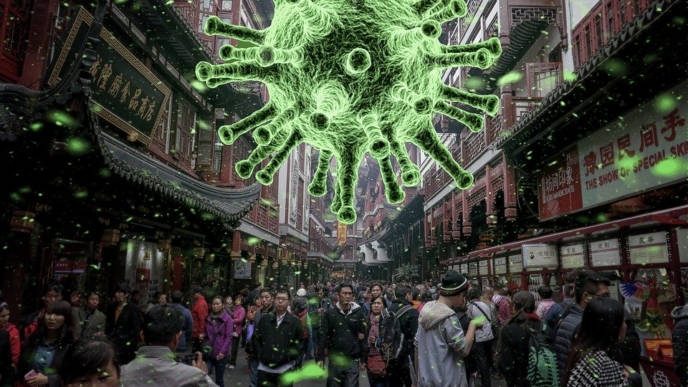
Most States See Coronavirus Spikes as Holiday Approaches, Do You Live in the Hardest Hit Areas?

Coronavirus infections rose in 40 out of 50 states heading into what will be a very different July Fourth weekend, as the virus continues to make a resurgence following weeks of nationwide containment measures that have been re-imposed in many areas amid the upswing.

In four states where outbreaks are the most severe — Arizona, California, Florida and Texas — more than 25,000 new COVID-19 cases were confirmed Thursday. Texas Gov, Greg Abbott, a Republican, ordered the wearing of masks in counties with 20 or more positive coronavirus cases.

He began one of the most aggressive reopening campaigns in May and COVID-19 hospitalizations have quadrupled in the Lone Star State since. . .

Nebraska and South Dakota are the only two states outside the Northeast to see a downward trend. Several Northeastern states have seen new infections decline, including New York, Massachusetts, Connecticut, Rhode Island and New Jersey. Officials in Colorado are watching nearby states where infections have increased.

Over the past two weeks, positive test results have doubled in Georgia, Kansas, Montana, Michigan, Missouri, Tennessee, Mississippi, South Carolina and Ohio, while tripling in Nevada. In Texas, the positivity rate soared from 8 percent to 14.5 percent in the same time period. (Read more from “Most States See Coronavirus Spikes as Holiday Approaches, Do You Live in the Hardest Hit Areas?” HERE)

Follow Joe Miller on Twitter HERE and Facebook HERE

New Study Shows Drug Mocked by Trump’s Critics Helped COVID Patients

Researchers at the Henry Ford Health System in Southeast Michigan have found that early administration of the drug hydroxychloroquine makes hospitalized patients substantially less likely to die.

The study, published in the International Journal of Infectious Diseases, determined that hydroxychloroquine provided a “66% hazard ratio reduction,” and hydroxychloroquine and azithromycin a 71 percent reduction, compared to neither treatment.

In-hospital mortality was 18.1 percent overall; 13.5 percent with just hydroxychloroquine, 22.4 percent with azithromycin alone, and 26.4 percent with neither drug. “Prospective trials are needed” for further review, the researchers note, even as they concluded: “In this multi-hospital assessment, when controlling for COVID-19 risk factors, treatment with hydroxychloroquine alone and in combination with azithromycin was associated with reduction in COVID-19 associated mortality.”

“Our results do differ from some other studies,” Dr. Marcus Zervos, who heads the hospital’s infectious diseases unit, said at a news conference. “What we think was important in ours … is that patients were treated early. For hydroxychloroquine to have a benefit, it needs to begin before the patients begin to suffer some of the severe immune reactions that patients can have with COVID.” (Read more from “New Study Shows Drug Mocked by Trump’s Critics Helped COVID Patients” HERE)

Follow Joe Miller on Twitter HERE and Facebook HERE

Infectious Disease Specialist Issues Dire Warning About Florida

An infectious disease specialist is warning that Florida is “heading a million miles an hours in the wrong direction” on its handling of the coronavirus pandemic.

“Right now, we are heading a million miles an hour in the wrong direction,” Dr. Aileen Marty, an expert who helped write Miami-Dade’s reopening rules, told “CBS This Morning.”

She added, however, that people are not properly following the rules and it’s playing a role in rising cases of COVID-19 in the area.

“It’s absolutely the saddest thing, the most unnecessary situation that we’re finding ourselves in,” Marty said. “And it’s behaviorally driven.”

Her warning comes as Florida recorded 10,109 new COVID-19 cases on Wednesday, the highest single-day increase for the state. There are now more than 175,000 confirmed cases in Florida. (Read more from “Infectious Disease Specialist Issues Dire Warning About Florida” HERE)

Follow Joe Miller on Twitter HERE and Facebook HERE

WHO Finally Admits China Never Reported the Existence of Coronavirus Outbreak

The World Health Organization backtracked on its assertion that the Chinese government alerted the United Nations agency about the coronavirus outbreak.

The WHO quietly updated its “Timeline of WHO’s response to COVID-19” on Tuesday following the House Foreign Affairs Committee Republicans’ mid-June Interim Report on Origins of COVID-19 Pandemic (led by ranking member and China task force Chairman Rep. Michael McCaul of Texas), which concluded that “despite public reporting to the contrary … China never notified the WHO about the outbreak in Wuhan.” The change was spotted by McCaul and first reported by the Washington Free Beacon.

“I’m glad to see the WHO and the Chinese Communist Party have both read my interim report on the origins of the pandemic and are finally admitting to the world the truth — the CCP never reported the virus outbreak to the WHO in violation of WHO regulations,” McCaul said in a statement to the Washington Examiner. “The question now is whether the CCP will continue their false propaganda campaign that continues to claim they warned the world or whether they will come clean and begin to work with the world health community to get to the bottom of this deadly pandemic.”

McCaul’s June report said the WHO found out about the coronavirus outbreak when Chinese media reports about an atypical pneumonia outbreak began to leak online and that the organization also discovered a post on the Program for Monitoring Emerging Diseases, a U.S.-based open-access platform for early intelligence about outbreaks, on the last day of 2019.

The previous iteration of the timeline said the “Wuhan Municipal Health Commission, China, reported a cluster of cases of pneumonia in Wuhan.” The updated timeline states that the WHO’s country office in China “picked up a media statement by the Wuhan Municipal Health Commission from their website on cases of ‘viral pneumonia’ in Wuhan” and that the WHO’s Epidemic Intelligence from Open Sources platform “also picked up a media report on ProMED … about the same cluster of cases of ‘pneumonia of unknown cause’ in Wuhan.” (Read more from “WHO Finally Admits China Never Reported the Existence of Coronavirus Outbreak” HERE)

Follow Joe Miller on Twitter HERE and Facebook HERE

Paused COVID-19 Reopenings Reflect Setbacks, Not a Failure of Protocols

The recent surges in COVID-19 cases and hospitalizations in Texas, Florida, and California have forced their governors to pause their states’ reopening plans to restrict further spread and to prevent area medical systems from being overwhelmed.

Some are claiming that means reopening plans are not working and represent reckless behavior. In reality, however, the governors are appropriately pausing to assess the developing situation and react to the new data.

That’s a planned fallback and an important aspect of a flexible and robust reopening strategy that balances protecting both lives and livelihoods.

As expected with reopening, we have begun to see incidences of COVID-19 begin to rise again. That’s no surprise. From the beginning, we knew reopening could result in rising case numbers and that there may be hot spots where a governor or mayor might need to target mitigation measures to stop and slow the spread of the disease.

States are in various stages of reopening, with many officials implementing a phased approach. The purpose of the phased plan was for a more predictable and manageable pattern of cases.

In fact, the incidence of COVID-19 had been fairly stable in the month of May, when Texas began its first phases of slowly reopening and returning to a modicum of normalcy.

However, based on new data, Texas, for instance, has frozen its efforts to reopen the state and closed bars.

Florida and California also closed bars, with Florida Gov. Ron DeSantis citing “widespread noncompliance” with rules regarding capacity and social distancing.

In addition, local officials in Tarrant County implemented a face mask ordinance, and officials in Dallas, Bexar, Harris, and several other counties in Texas have ordered businesses to require masks for employees and customers. Gov. Greg Abbott has ordered hospitals to suspend elective or nonessential procedures in four counties with the greatest surge of cases.

State officials are carefully monitoring hospital and intensive care unit capacity to adjust measures to prevent health systems from being overwhelmed.

Unfortunately, those steps are needed because many individuals seem to have forgotten and disregarded concerns and precautions for the virus.

Those steps are not a failure of the reopenings, but rather an example of policymakers leading an active process of reopening and reacting to real data as it comes in and obviating the need for a lockdown.

In fact, several Texas hospitals in the Houston area are confident of their ability to handle a new increase in cases and have released a joint statement:

Each hospital system has prepared for months to address the anticipated needs of this pandemic and has surge plans in place to successfully manage its own capacity to continue treating COVID-19 and non-COVID-19 patients.

Additionally, our hospitals are working together to manage capacity levels and ensure the highest-quality care for all who need it. We will continue to work closely with state leadership and public health experts to help maintain statewide visibility on acute capacity issues and other critical concerns.

According to many Texas hospitals, there’s sufficient capacity. State officials and hospital systems around the country have learned from the failures in New York and are rolling out emergency plans that adjust the flow of COVID-19 patients to ensure available hospital beds and rooms, and personal protective equipment, and to preserve capacity to meet the demand of a COVID-19 surge.

Critically, it’s important to take a measured assessment of who is getting sick, and how likely they are to die if they get sick.

Public health measures are focused on protecting the most vulnerable from dying of COVID-19, so those who are elderly or have preexisting conditions such as obesity or diabetes get the care they need.

Flattening the curve was never about ensuring that no one gets sick from COVID-19, but rather an attempt to prevent increased deaths due to an overwhelmed health care system.

And early data shows us that people getting infected this time are less at risk of death. For instance, in Florida, the median age of COVID-19 cases went from 65 in March to 36 in June. That’s significant because 80% of mortality due to COVID-19 has been in the 65-and-older age group.

The surge itself appears to be caused by complacency and disregard for the ongoing threat of the pandemic.

Going forward, Americans need to be absolutely clear: We must all take steps to protect the most vulnerable Americans as we reopen. Achieving that goal requires social distancing, mask-wearing, limiting social gatherings, and staying at home when possible.

Extra mitigation and containment strategies, such as aggressive testing, contact tracing, and voluntary isolation, must continue, and any new interventions must be targeted to communities with high infection rates or particular vulnerabilities to the virus. (For more from the author of “Paused COVID-19 Reopenings Reflect Setbacks, Not a Failure of Protocols” please click HERE)

Follow Joe Miller on Twitter HERE and Facebook HERE