Posts

Cut or ‘Clean’: Trump, Congress Negotiate on How to Raise the Debt Ceiling

Since winning a House majority in 2010, congressional Republicans have asked for any increase in the nation’s borrowing limit to be offset, at least in part, by spending cuts.

President Barack Obama denied that ambition, but it’s different now that Republicans control the presidency and both houses of Congress.

Or, so it might seem. Last week, Treasury Secretary Steven Mnuchin indicated a “preference” for passage of a clean bill that raises the debt ceiling from $19.81 trillion without necessitating cuts—and before Congress leaves for its August recess.

“I urge you to raise the debt limit before you leave for the summer,” he said.

House Minority Leader Nancy Pelosi, D-Calif., and other Democratic leaders also support such a “clean” increase in the debt ceiling, without attaching it to other matters. But Republicans likely aren’t unified on how to raise the debt limit.

“The responsible thing to do is address the debt ceiling early and avoid a last-minute crisis,” Rep. Jim Jordan, R-Ohio, a member and former chairman of the conservative House Freedom Caucus, told The Daily Signal in an email.

“Any debt limit increase should be paired with spending cuts to address our debt,” Jordan said. “The federal government has a spending problem and it’s time that Congress took meaningful steps toward getting it under control.”

The debt ceiling marks the federal government’s ability to continue borrowing money to pay for its spending. Raising the limit technically isn’t new spending, but it rarely takes the government long to reach the new limit.

The House Freedom Caucus, a group of about three dozen conservatives, issued a statement last week in support of raising the debt limit by August. But the caucus opposed doing so without conditions, and demanded any increase be paired with “cutting [the budget] where necessary, capping where able, and working to balance in the near future.”

Raising the debt ceiling should include budget savings, but shouldn’t mean threatening to default on paying the nation’s bills, said Maya MacGuineas, president of the Committee for a Responsible Federal Budget, a nonpartisan fiscal watchdog group.

“There should not be talk of allowing the country to default. That’s not a credible threat nor a legitimate strategy,” MacGuineas told The Daily Signal. “But, it does make sense to include savings and debt reduction as part of any package to increase the debt ceiling.”

The August recess is earlier than Congress had planned for raising the nation’s borrowing limit, but it is a reasonable amount of time in which Congress can move, MacGuineas said. Such savings should be consistent with a budget policy Congress decides on, which she said she hopes will be reached by that point.

As of last week, the Treasury Department measured the national debt at $19.8 trillion, right at the limit.

The debt limit came back into effect March 15, after it was suspended temporarily by a 2015 agreement between Congress and Obama.

President Donald Trump’s budget proposal estimated that the national debt will increase to $21 trillion by the end of 2018, and to $24.6 trillion by 2027.

Under Obama, the debt increased from $10.6 trillion upon his inauguration in January 2009 to $19.94 trillion when he left office in January 2017.

Policies in the Trump budget proposal, such as imposing work requirements for recipients of Medicaid and food stamps, could be included in a package raising the debt ceiling, said Romina Boccia, a federal budget expert who is deputy director of the Thomas A. Roe Institute for Economic Policy Studies at The Heritage Foundation.

Boccia noted the public doesn’t support simply increasing the borrowing limit without fiscally responsible measures.

“A clean debt ceiling increase is bad optics, bad politics, and bad policy,” Boccia told The Daily Signal. “The debt ceiling can be a key legislative tool for spending cuts in the future and to rein in spending and deficits.”

Mick Mulvaney, director of the White House Office of Management and Budget, opposed raising the debt ceiling without achieving savings when he was a House member from South Carolina. Mulvaney also was part of the House Freedom Caucus.

White House officials last week had a “listening session” with conservative groups and members of Congress about raising the debt ceiling, Boccia said.

Testifying before the House Ways and Means Committee last week, Mnuchin replied, “That is my preference” when asked about raising the debt ceiling without conditions. Referring to the Trump administration, the treasury secretary also told the committee:

We are very concerned that the debt has gone from $10 trillion to $20 trillion over the last eight years. We believe that the most important issue is economic growth. … I urge you to raise the debt limit before you leave for the summer. We can all discuss how we cut spending in the future and how we deal with budgets going forward, but it is absolutely critical that where we spent money, that we keep the credit of the United States as the most critical issue. It is the reserve currency of the world and we need to make sure we raise our debt ceiling to pay our debts.

(For more from the author of “Cut or ‘Clean’: Trump, Congress Negotiate on How to Raise the Debt Ceiling” please click HERE)

Follow Joe Miller on Twitter HERE and Facebook HERE.
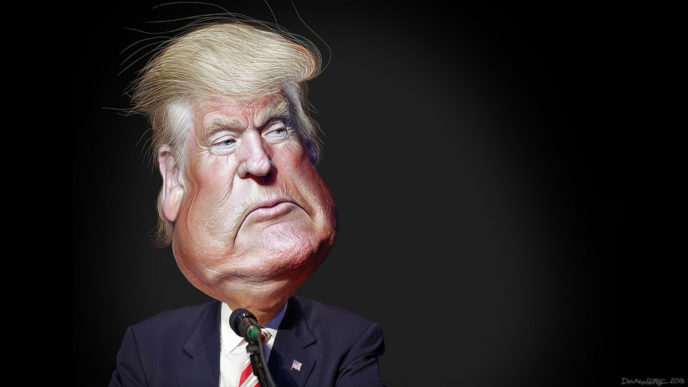
Report: Trump Tells Confidants He’s Pulling out of the Paris Climate Agreement

President Donald Trump privately told several confidants that he will be pulling out of the Paris climate deal, three sources with direct knowledge told Axios.

The president refused Saturday to join his Group of 7 (G7) counterparts in a pledge to uphold the 195-nation Paris Agreement. Trump tweeted that he will make his decision next week, signaling that he has yet to officially make up his mind.

Pulling out of the Paris climate deal would unravel Obama-era climate change policies, and possibly the agreement itself. Dropping the agreement would also send a message to the world that climate change is not a pressing issue for the new administration.

White House economic adviser Gary Cohn said earlier that if Trump is faced with a choice between growing the economy and fighting global warming, Trump will choose the economy.

“If it comes to a choice between measures to curtail global warming under the 2015 Paris climate accord and growing the U.S. economy, economic considerations would prevail,” Cohn told reporters on Air Force One Thursday. (Read more from “Report: Trump Tells Confidants He’s Pulling out of the Paris Climate Agreement” HERE)

Follow Joe Miller on Twitter HERE and Facebook HERE.
Trump’s Move to Deter Russian Aggression

On Tuesday, President Donald Trump presented a budget request to Congress that would boost spending for an Obama-era buildup of U.S. military forces in Europe meant to deter Russia from military provocations and show NATO and its European partners that the U.S. is committed to their defense.

“Such a request is more reassuring for American allies and partners in Europe like Ukraine than mere declarations from senior Trump administration officials,” Mykola Bielieskov, an analyst with the Institute of World Policy, a Ukrainian think tank, told The Daily Signal.

The Obama administration announced the European Reassurance Initiative, or ERI, in June 2014, three months after Russia illegally annexed Ukraine’s Crimean Peninsula and launched military operations in eastern Ukraine. The program called for a buildup of U.S. military forces and equipment in Eastern and Central Europe, as well as rotating military exercises throughout the region.

Trump’s 2018 budget calls for a $1.4 billion increase in ERI funds—a 41 percent increase over the $3.4 billion tagged in 2017 by the Obama administration. The move, which U.S. military forces in Europe praised, sent a reassuring message to both NATO’s eastern flank as well as countries throughout Eastern Europe that see Russia as an existential threat and are looking for U.S. protection.

“From the Polish perspective, the deployment of U.S. troops to Poland and Baltic states means a real deterrence since it increases the probability of the U.S. forces engagement in case of potential aggression from Russia,” Daniel Szeligowski, senior research fellow at the Polish Institute of International Affairs, told The Daily Signal.

“The more combat-ready U.S. troops there are, the higher such a probability is,” Szeligowski said.

In Ukraine, Trump’s budget proposal sent a reassuring message to a country that has been in a proxy war with Russia since April 2014 that has, so far, killed about 10,000 people.

“Kyiv is especially pleased as $150 million might be allocated to train, equip, and reform Ukraine armed forces if [Trump’s] budget is approved,” Bielieskov said.

Bielieskov added that Trump’s proposed budget “is the best possible proof that security of Central and Eastern Europe continues to be one of the major priorities for the Donald J. Trump administration despite previous contradictory statements.”

U.S. military forces in Europe also hailed the proposed boost in spending to defend Europe from Russia.

“As we continue to address the dynamic security environment in Europe, [European Reassurance Initiative] funding increases our joint capabilities to deter and defend against Russian aggression,” Gen. Curtis Scaparrotti, commander of U.S. European Command, said in an emailed statement to journalists on Wednesday.

The Russian Ministry of Foreign Affairs did not respond to a request for comment.

In Trump’s $4.1 trillion 2018 budget, overall U.S. defense spending is slated to increase by 10.1 percent—from $521.8 billion in 2017 to a proposed $574.5 billion in 2018.

Doubling Down

During a joint press conference with the Polish president on June 3, 2014, President Barack Obama said the European Reassurance Initiative was a “powerful demonstration of America’s unshakeable commitment to our NATO allies.”

“The United States will pre-position more equipment in Europe,” Obama said in 2014. “We will be expanding our exercises and training with allies to increase the readiness of our forces. We’ll increase the number of American personnel—Army and Air Force units—continuously rotating through allied countries in Central and Eastern Europe. And we will be stepping up our partnerships with friends like Ukraine, Moldova, and Georgia as they provide for their own defense.”

Totaling roughly $1 billion in 2014, the ERI was meant to be temporary. However, Russia’s military brinkmanship in Eastern Europe and its ongoing proxy war in Ukraine have kept the program alive and growing.

Obama’s last budget in 2017 quadrupled ERI funding from $789 million to more than $3.4 billion, including $335 million in nonlethal military aid for Ukraine. That year, Congress also appropriated $75 million as part of a combined State Department and Defense Department fund to train Ukrainian forces.

Today, about 7,000 U.S. military personnel are deployed throughout Europe on a rotational basis under the ERI’s umbrella. Yet, the number of U.S. personnel permanently based in Europe has not increased, according to U.S. European Command.

The U.S. has about 35,000 total military personnel in Europe. Recently, the U.S. Army deployed an additional heavy brigade to Poland, comprising about 3,500 troops and 87 tanks, as well as a unit of 500 troops to Romania. The U.S. military also has personnel in Ukraine conducting a training mission.

“These significant investments will further galvanize U.S. support to the collective defense of our NATO allies, as well as bolster the security and capacity of our U.S. partners,” Scaparrotti said.

Up North

This week, U.S. F-15 fighters and KC-135 aerial refueling tankers are deployed on the northern edge of Europe as part of a biennial military exercise in a region that has become a hotbed of tension with Russia.

The exercise, called Arctic Challenge, will last from May 22 to June 2, and is being hosted by Norway, Sweden, and Finland—of which Norway is the only NATO country.

The exercise underscores a constant drumbeat of temporary deployments and military exercises undertaken by U.S. military forces across Europe since 2014, which, while not always specifically advertised as a message of deterrence to Russia, have nonetheless been interpreted that way by Moscow more often than not. The temporary deployment of U.S. Marines to Norway this year, for example, drew sharp condemnation from the Kremlin.

“The scenarios are generic in nature, to solve an ill-defined problem in the air,” Lt. Col. Jason Zumwalt, 493rd Fighter Squadron commander, told The Daily Signal in a telephone interview from the Arctic Challenge exercise on Tuesday.

Zumwalt said Arctic Challenge, which comprises more than 100 military aircraft from 11 countries, is not intended to simulate a conflict with Russia.

“We’re not looking at any specific threats,” Zumwalt said. “Yesterday’s mission was defending an area from attack by a superior force—to protect a region of sky from enemy incursion.”

The exercise is taking place totally within the airspace confines of the three Nordic host countries—two of which, Norway and Finland, share land borders with Russia. Yet, Zumwalt said the risk would be “very low” for an unintended encounter between U.S. and Russian warplanes.

“Our pilots are professionals and they’re trained in what to do if they’re intercepted,” the U.S. fighter squadron commander said.

Tripwire

Trump’s budget request to extend and expand the European Reassurance Initiative highlights how the Russian threat to NATO and its European partners has not dimmed in the intervening years.

Since 2014, Russia has aggressively tested NATO’s air defenses in Eastern Europe and the Arctic with warplane flybys while simultaneously building up its military hardware in places like the Kaliningrad exclave and Crimea.

Resultantly, the security situation in Eastern Europe has been upheaved. Due to the Russian threat, the Baltic countries of Latvia and Lithuania, both NATO members, have had the two fastest-growing military budgets in the world since 2014, according to IHS Jane’s. And Poland, also a NATO member, has doubled its military spending since 2006.

At the NATO summit in July 2016 in Warsaw, Poland, alliance leaders announced the planned deployment of four 1,000-troop-strong combat battalions to Poland, Estonia, Latvia, and Lithuania on a rotational basis.

NATO also fields a Very High Readiness Joint Task Force, comprising about 5,000 troops, which is tasked to “respond to emerging security challenges posed by Russia,” according to a statement on the alliance’s website.

The deployments are considered “tripwire forces” by many military experts, presumably meant to deter Russia from an attack due to the risk of spurring a massive NATO response to defend its forward units.

“The U.S. rotating armored brigade combat teams currently scattered across Eastern Europe can hardly really deter Russia from starting an overt war against one of NATO’s members—it’s more of a guarantee that such violations of international law would trigger a massive U.S. and allied response,” Bielieskov, the Ukrainian analyst, said.

“Given U.S. nuclear, as well as conventional, capabilities, the risk of potential conflict escalation is high enough so as not to allow any aggressor to achieve its political goals,” Szeligowski, the Polish senior research fellow, said. “That, in the end, should influence any calculations made by third parties, especially Russia.”

Meanwhile, in Ukraine

The war in eastern Ukraine—Europe’s only ongoing land war—has not ended.

Ukrainian forces have been at war against a combined force of pro-Russian separatists and Russian regulars since April 2014.

Despite a February 2015 cease-fire, artillery and rocket attacks still occur daily, as well as small arms gun battles. Soldiers in opposing camps are hunkered down in trenches and in fortified positions along a static 250-mile-long front line in the Donbas, Ukraine’s embattled southeastern territory on the border with Russia.

Civilians and soldiers continue to die on both sides of the front lines. About a third of the conflict’s 10,000 deaths happened after the cease-fire went into effect. And about 1.7 million people remain displaced by the conflict.

According to U.S. and Ukrainian officials, Russia continues to feed the conflict with troops, weapons, and money. The Kremlin says it’s not involved in the war.

To defend itself against Russia, Ukraine has since 2014 rebuilt its once-hobbled military into the second-largest standing army in Europe, comprising about 250,000 active-duty personnel. With about 1 million active troops, and more than 2 million in its reserves, Russia has the only military in Europe bigger than Ukraine’s.

“In the end, general increased U.S. presence in Eastern Europe can indirectly assist Ukraine in its war with Russia as it would force Moscow to take into account new U.S. deployments and ease pressure in the Donbas and around the Ukrainian-Russian border,” Bielieskov said.

He added: “So the next logical step after increasing the ERI budget should be making the U.S. presence in Eastern Europe permanent, plus increasing the number of brigades in the region.” (For more from the author of “Trump’s Move to Deter Russian Aggression” please click HERE)

Follow Joe Miller on Twitter HERE and Facebook HERE.
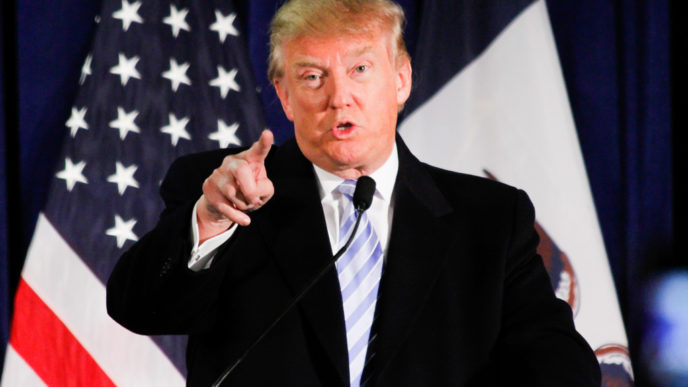
Trump Returns to US, Immediately Slams ‘Fake’ News Media on Twitter

President Trump resumed one of his favorite activities on Sunday, just hours after returning to the U.S. following his first presidential overseas trip.

The Republican blasted the “fake” news media in a series of tweets, accusing reporters of fabricating anonymous sources for some stories . . .

But numerous stories about the ongoing Russia investigation dropped while he was away. Perhaps the biggest headline was a report that Trump son-in-law and senior adviser Jared Kushner discussed setting up a secret communications line with the Russian government during a meeting with Russia’s ambassador in early December. (Read more from “Trump Returns to US, Immediately Slams ‘Fake’ News Media on Twitter” HERE)

Follow Joe Miller on Twitter HERE and Facebook HERE.
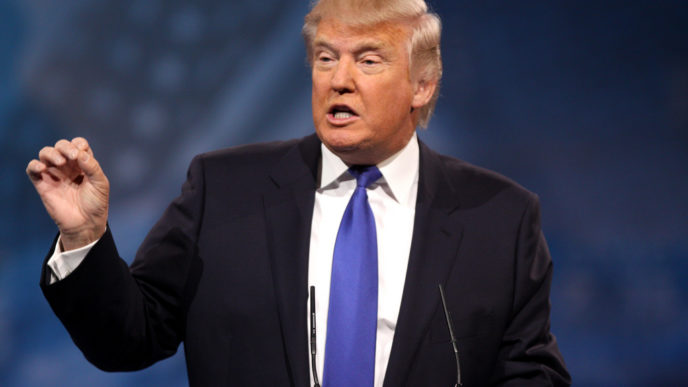
Appeals Court Deals Blow to Trump Administration Travel Ban

A federal appeals court dealt another blow to President Donald Trump’s revised travel ban targeting six-Muslim majority countries on Thursday.

The 4th U.S. Circuit Court of Appeals upheld a lower court ruling that blocks the Republican’s administration from temporarily suspending new visas for people from Iran, Libya, Somalia, Sudan, Syria and Yemen.

The Richmond, Virginia-based 4th Circuit is the first appeals court to rule on the revised travel ban, which Trump’s administration had hoped would avoid the legal problems that the first version encountered. (Read more from “Appeals Court Deals Blow to Trump Administration Travel Ban” HERE)

Follow Joe Miller on Twitter HERE and Facebook HERE.
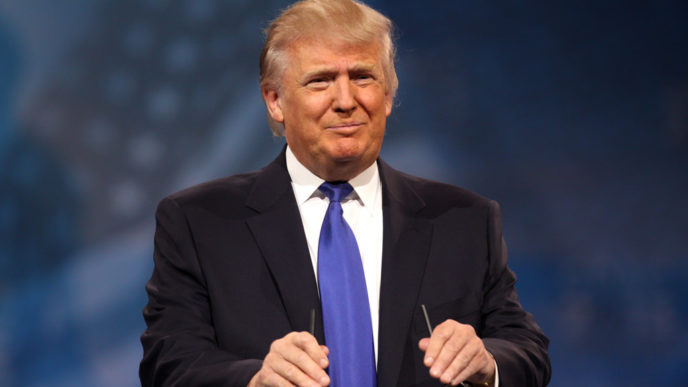
The Possible Reasons Big Corporations Are So Eager for Trump to Break His Promise on Paris Climate Deal

European countries and major corporations are pressuring President Donald Trump to remain in the Paris climate agreement despite his promises on the campaign to withdraw the United States from the Obama-era deal that never gained congressional approval.

The Trump administration so far is sticking with being undecided—at least until Trump returns to the United States from his first foreign trip, where on Friday, he’s meeting with Group of Seven ally countries, which support the agreement.

Back home, the pressure is growing from multinational corporations, even the energy sector, which have opposed stricter limitations on carbon.

Exxon Mobil Corp., once run by Trump’s secretary of state, Rex Tillerson, Royal Dutch Shell, and BP are urging the administration to remain in the agreement. Meanwhile, coal mining company Cloud Peak Energy urged the administration to remain.

European countries and major corporations are pressuring President Donald Trump to remain in the Paris climate agreement despite his promises on the campaign to withdraw the United States from the Obama-era deal that never gained congressional approval.

The Trump administration so far is sticking with being undecided—at least until Trump returns to the United States from his first foreign trip, where on Friday, he’s meeting with Group of Seven ally countries, which support the agreement.

Back home, the pressure is growing from multinational corporations, even the energy sector, which have opposed stricter limitations on carbon.

Exxon Mobil Corp., once run by Trump’s secretary of state, Rex Tillerson, Royal Dutch Shell, and BP are urging the administration to remain in the agreement. Meanwhile, coal mining company Cloud Peak Energy urged the administration to remain.

“BP and Shell are European companies and it’s impossible to do business in Europe without towing the political line,” Myron Ebell, director of the Center for Energy and Environment at the Competitive Enterprise Institute, told The Daily Signal. He added that for oil and gas companies, “the only way to get the price of gas back up is to kill coal. The Paris Agreement kills fossil fuels, but it kills coal first.”

Ebell was part of Trump’s transition team overseeing the Environmental Protection Agency.

The Competitive Enterprise Institute sponsored an ad showing Trump during the campaign saying, “We are going to cancel the Paris climate agreement and stop all payments of the United States tax dollars to U.N. global warming programs.”

While corporate support might seem surprising, it’s very much the same old story for large companies seeking an advantage over smaller competitors, said Katie Tubb, a policy analyst with The Heritage Foundation.

“Big business and big government often go hand-in-hand. Big businesses generally can absorb and adapt to the costs of complying with burdensome regulation, of which Paris is a wellspring,” Tubb told The Daily Signal. “Smaller companies have a much harder time complying, which means less competition for big business. This is especially true if big business can influence the substance of regulations to favor themselves or freeze out competitors. I think in other cases; these large companies are just looking for PR points.”

President Barack Obama and Secretary of State John Kerry led the United States into the Paris climate change agreement, along with 170 other countries. The agreement commits member countries to shift their energy industries away from fossil fuels and toward green energy.

Two dozen major U.S. companies—including Apple, Microsoft, Google, Facebook, the Hartford, Levi Strauss, PG&E, and Morgan Stanley—sent an open letter to Trump published in The New York Times and other newspapers across the country, urging him to remain in the deal. The letter says:

By requiring action by developed and developing countries alike, the agreement ensures a more balanced global effort, reducing the risk of competitive imbalances for U.S. companies … By expanding markets for innovative clean technologies, the agreement generates jobs and economic growth. U.S. companies are well positioned to lead in these markets.

U.S. business is best served by a stable and practical framework facilitating an effective and balanced global response. The Paris Agreement provides such a framework. As other countries invest in advanced technologies and move forward with the Paris Agreement, we believe the United States can best exercise global leadership and advance U.S. interests by remaining a full partner in this vital global effort.

Generally, larger energy companies have an advantage under the climate deal, said Fred Palmer, senior fellow for energy and climate at the Heartland Institute.

“Follow the money,” Palmer told The Daily Signal. “There are companies that want to game the system of using [carbon dioxide] as a currency to make money.”

After meetings at the Vatican earlier this week, Tillerson said, “The president indicated we’re still thinking about that, that he hasn’t made a final decision.”

Ahead of the G7 meeting, Trump chief economic adviser Gary Cohn, the director of the White House National Economic Council, told a pool reporter Friday that the president is weighing both sides.

“I think he’s leaning to understand the European position. Look, as you know from the U.S., there’s very strong views on both sides,” Cohn said. “He also knows that Paris has important meaning to many of the European leaders. And he wants to clearly hear what the European leaders have to say.”

Ebell warned that if the administration seeks to make a deal to stay in the agreement, perhaps with a lower commitment than the Obama administration pledged, then a future president could simply increase the U.S. commitment. That’s why, Ebell said, it’s best for the United States to get out.

“Obviously foreign leaders don’t care what Trump promised voters in the campaign,” Ebell said.

To be sure, many U.S. business groups oppose the Paris Agreement, such as the Industrial Energy Consumers of America—which represents manufacturers and other larger energy-using businesses—that wrote an April 24 letter to administration officials. The letter said:

We are the ones who eventually bear the costs of government imposed [greenhouse gas] reduction schemes. At the same time, we are often already economically disadvantaged, as compared to global competitors who are subsidized or protected by their governments.

Given the above concerns, IECA fails to see the benefit of the Paris Climate Accord. And, the long-term implications of the Paris Climate Accord, which includes greater future [greenhouse gas] reduction requirements, raises serious competitiveness and job implications for [energy-intensive, trade-exposed] industries.

(For more from the author of “The Possible Reasons Big Corporations Are So Eager for Trump to Break His Promise on Paris Climate Deal” please click HERE)

Follow Joe Miller on Twitter HERE and Facebook HERE.
Trump Signals New US Approach to China With Tough Actions

Two developments in the past few weeks suggest that America’s China policy is on a cusp.

The more publicly discussed event involves the Arleigh Burke-class destroyer USS Dewey, which conducted a freedom of navigation operation near Mischief Reef in the Spratlys island group.

This is the first freedom of navigation action conducted by the Trump administration. It is the first true freedom of navigation conducted since at least 2012.

By contrast, the Obama administration had undertaken a handful of “innocent passage” activities in the South China Sea, which failed to demonstrate the critical issues at stake.

The actions carried out in the previous administration were intended to argue that the U.S. did not need permission from China to enter the waters around its artificial islands—while ignoring the bigger question of whether China’s artificial islands exerted any sovereign claim to water at all.

Recommitting to Freedom of Navigation

The contrast is telling. With the Obama administration actions, there was an implicit endorsement that China’s artificial islands were, in fact, islands, because “innocent passage” involves rapid transit through the territorial waters of another nation.

Moreover, in an “innocent passage” operation, the transiting ship cannot conduct any kind of military activity, in deference to the idea that the waters being transited are not international in nature.

The Obama administration further muddied the waters by choosing features whose sovereignty was in dispute—and therefore could claim that it was not singling out Chinese-claimed features.

Even after the Permanent Court of Arbitration ruled that the various features in the South China Sea were not, in fact, islands and therefore could not lay claim to a 12-nautical mile territorial sea, the Obama administration nonetheless refused to reinforce the point by conducting a genuine freedom of navigation operation.

By contrast, the USS Dewey not only transited within 12 nautical miles of Mischief Reef, but more importantly, conducted a “man overboard” drill. Such an action would contravene an “innocent passage” exercise, but is perfectly within the scope of a “freedom of navigation” operation. Indeed, it underscores the message that Mischief Reef is not an island, and therefore does not merit a claim to exerting territorial waters.

For the first time since at least 2012, the United States is signaling Beijing that its efforts to dominate the South China Sea will not be meekly accepted, but will be challenged.

Defending Human Rights

In the same period, the family of Chinese dissident lawyer Xie Yang was successfully smuggled out of a Thai prison, where they were being held for extradition to China. Xie is one of several lawyers and human rights activists who have been arrested as Beijing has cracked down on dissent.

The decisive American action stands in contrast to the fumbling by American embassy officials in the case of Chen Guancheng. When the blind human rights lawyer sought refuge in the American embassy in May 2012, American officials were diffident about his status. Chen himself indicated in contemporary interviews that he felt pressured to leave the embassy, as American officials were unable to offer guarantees of his wife’s safety.

It remains unclear what the Trump administration’s overall strategy is for Asia. North Korea continues to push development of longer range missiles able to reach the United States.

The People’s Republic of China, despite promises by President Xi Jinping to President Donald Trump to pressure Pyongyang, has demonstrated limited impact on North Korea; Chinese statistics even suggest that trade between China and North Korea has increased.

While the administration has suggested bilateral trade deals in the region in place of U.S. membership in the Trans-Pacific Partnership, whether there are any takers and what exactly its new trade strategy is remains unclear.

But for one Chinese dissident’s family, the United States has demonstrated that its commitment to basic principles can take concrete form. And in the middle of the South China Sea, the U.S. Navy appears to be back in the business of defending freedom of the seas. The auguries seem to be improving. (For more from the author of “Trump Signals New US Approach to China With Tough Actions” please click HERE)

Follow Joe Miller on Twitter HERE and Facebook HERE.

Did Trump Threaten to Stop German Car Imports?

President Trump took his characteristically tough talk on trade to Brussels, complaining “bitterly,” according to Spiegel, about the country of Germany’s trade surplus with America.

“The Germans are bad, very bad,” Trump said of Germany’s trade policies.

“Look at the millions of cars they sell in the U.S. It’s horrible. And we’ll stop that,” the president said.

President Trump was in Brussels Thursday, speaking at NATO’s headquarters and chastising other NATO allies for not paying their “fair share” of the organization’s budget.

His comments on German trade policy came during a meeting with European Union officials, Spiegel reported.

German-manufactured cars sold in the U.S. include Audi, BMW, Ford-Werke GmbH, Mercedes-Benz, Opel, Porshe, Volkswagen, and A-C.

Impeding German car imports through tariffs would raise the price of these very popular car brands on American consumers. (For more from the author of “Did Trump Threaten to Stop German Car Imports?” please click HERE)

Follow Joe Miller on Twitter HERE and Facebook HERE.
Appeals Court Deals Blow to Trump Administration Travel Ban

A federal appeals court dealt another blow to President Donald Trump’s revised travel ban targeting six-Muslim majority countries on Thursday.

The 4th U.S. Circuit Court of Appeals upheld a lower court ruling that blocks the Republican’s administration from temporarily suspending new visas for people from Iran, Libya, Somalia, Sudan, Syria and Yemen.

The Richmond, Virginia-based 4th Circuit is the first appeals court to rule on the revised travel ban, which Trump’s administration had hoped would avoid the legal problems that the first version encountered. (Read more from “Appeals Court Deals Blow to Trump Administration Travel Ban” HERE)

Follow Joe Miller on Twitter HERE and Facebook HERE.
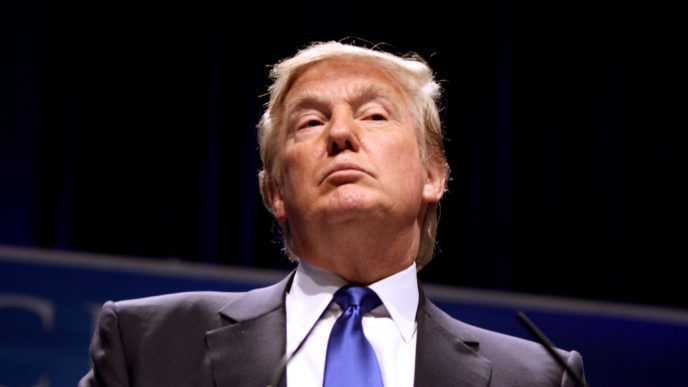
Trump’s Food Stamp Reform Would Close the Trap of Dependency

President Donald Trump’s newly released budget contains a proposed food stamp reform, which the left has denounced as a “horror” that arbitrarily cuts food stamp benefits by 25 percent.

These claims are fundamentally misleading.

In reality, the president’s proposed policy is based on two principles: requiring able-bodied adult recipients to work or prepare for work in exchange for benefits, and restoring minimal fiscal responsibility to state governments for the welfare programs they operate.

The president’s budget reasserts the basic concept that welfare should not be a one-way handout. Welfare should, instead, be based on reciprocal obligations between recipients and taxpayers.

Government should definitely support those who need assistance, but should expect recipients to engage in constructive activity in exchange for that assistance.

Work Requirements

Under the Trump reform, recipients who cannot immediately find a job would be expected to engage in “work activation,” including supervised job searching, training, and community service.

This idea of a quid pro quo between welfare recipients and society has nearly universal support among the public.

Nearly 90 percent of the public agree that “able-bodied adults that receive cash, food, housing, and medical assistance should be required to work or prepare for work as a condition of receiving those government benefits.”

The outcomes were nearly identical across party lines, with 87 percent of Democrats and 94 percent of Republicans agreeing with this statement.

Establishing work requirements in welfare was the core principle of the welfare reform law enacted in the mid-1990s. That reform led to record drops in welfare dependence and child poverty. Employment among single mothers surged.

Despite the harsh impact of the Great Recession, much of the poverty reduction generated by welfare reform remains in effect to this day.

Unfortunately, though, welfare reform altered only one of more than 80 federal means-tested welfare programs. The other programs were left largely untouched. Trump’s plan is to extend the successful principle of work requirements to other programs.

Restoring State-Level Accountability

The second element of Trump’s plan is to restore a minimal share of fiscal responsibility for welfare to state governments.

As noted, the federal government operates over 80 means-tested welfare programs providing cash, food, housing, medical care, training, and targeted social services to poor and low-income persons. In addition, state governments run a handful of small separate programs.

Last year, total federal and state spending on means-tested aid was over $1.1 trillion. (This sum does not include Social Security or Medicare.)

Some 75 percent of the $1.1 trillion in spending comes from the federal government. Moreover, nearly all state spending was focused in a single program: Medicaid.

Excluding Medicaid, the federal government picks up the tab for nearly 90 percent of all means-tested welfare spending in the U.S.

The United States has a federal system of government with three separate levels of independent elected government: federal, state, and local. Under this three-tier system, the federal government already bears full fiscal responsibility for national defense, foreign affairs, Social Security, and Medicare.

It makes no sense for the federal government to also bear 90 percent of the cost of cash, food, and housing programs for low-income persons.

But for decades, state governments have increasingly shifted fiscal responsibility for anti-poverty programs to the federal level. As a result, the federal government picks up nearly all the tab for welfare programs operated by the states.

This is a recipe for inefficiency and nonaccountability.

One of the key lessons from welfare reform—now 20 years ago—is that both blue and red state governments spend their own revenues far more prudently than they spend “free money” from Washington.

Efficiency in welfare requires state governments to have some fiscal responsibility for the welfare programs they operate.

The food stamp program is 92 percent funded by Washington. Washington sends blank checks to state capitals—the more people a state enrolls in food stamps, the more money Washington hands out.

A dirty secret in American politics is that many governors, both Republican and Democrat, regard this type of “free money” poured from Washington as a benign Keynesian stimulus to their local economies. The more spending, the better.

The Trump budget recognizes that the food stamp program will become more efficient if the state governments that operate the program have “skin in the game.” Therefore, it raises the required state contribution to food stamps incrementally from 8 percent to 25 percent.

By 2027, this would cost state governments an extra $14 billion per year. Half of the so-called “cuts” in food stamp spending in the Trump budget simply represent this modest shift from federal to state funding.

The remaining savings in food stamps in the Trump budget come from assumed reduction in welfare caseloads due to the proposed work requirement.

A Proven Policy

Today, there are some 4.2 million nonelderly able-bodied adults without dependent children currently receiving food stamp benefits. Few are employed. The cost of benefits to this group is around $8.5 billion per year.

In December 2014, Maine imposed a work requirement on this category of recipients. Under the policy, no recipient had his benefits simply cut. Instead, recipients were required to undertake state-provided training or to work in community service six hours per week.

Nearly all affected recipients chose to leave the program rather than participate in training or community service. As a result, the Maine caseload of able-bodied adults without dependent children dropped 80 percent in just a few months.

A similar work requirement for able-bodied adults without dependents, imposed nationwide, would save the taxpayer $80 billion over the next decade.

Even this would be a pittance compared to the $3.6 trillion the federal government will spend on cash, food, and housing benefits over that period.

The Trump policy is the exact opposite of so-called “block grants” in welfare.

In a welfare block grant, the federal government collects tax revenue and dumps money on state governments to spend as they will.

Welfare block grants have always been failures. In fact, the Trump budget would eliminate two failed block grant programs—the Community Development Block Grant and the Community Services Block Grant.

Instead of block grants, Trump is seeking to reanimate the principles of welfare reform from the 1990s that emphasized work requirements and renewed fiscal responsibility from state governments.

Deeply Needed Reforms

Of course, the left adamantly opposed welfare reform in the 1990s. In their view, welfare should be unconditional. Recipients should be entitled to cash, free food, free housing, and medical care without any behavioral conditions.

No wonder they have proclaimed Trump’s proposal to be “devastating” and a “horror.”

Contrary to protestations from the left, the U.S. welfare state is very large and expensive. For example, federal spending on cash, food, and housing benefits for families with children is nearly three times the amount needed to raise all families above the poverty level.

But the current welfare state is very inefficient. Trump seeks to reform that system.

In Trump’s unfolding design, welfare should be synergistic. Aid should complement and reinforce self-support through work and marriage rather than penalizing and displacing those efforts.

A welfare state founded on this synergistic principle would be more efficient than the current system. It would reduce both dependence and poverty.

More importantly, it would improve the well-being of the poor who have benefited little from the fractured families, nonemployment, dependence, and social marginalization fostered by the current welfare state. (For more from the author of “Trump’s Food Stamp Reform Would Close the Trap of Dependency” please click HERE)

Follow Joe Miller on Twitter HERE and Facebook HERE.