Posts

Trump Establishes Panel to Probe Voter Fraud

President Donald Trump signed an executive order Thursday establishing a panel to investigate voter fraud, a commission he first talked about in early February.

The president named Vice President Mike Pence to lead the Presidential Advisory Commission on Election Integrity, and named a bipartisan group of members that includes chief state election officials.

“The president is committed to the thorough review of registration and voting issues in federal elections and that’s exactly what this commission is tasked with doing,” White House deputy press secretary Sarah Huckabee Sanders said at a press briefing Thursday after Trump signed the order.

She later added:

The commission will review policies and practices that enhance or undermine the American people’s confidence in the integrity of federal elections and provide the president with a report that identifies system vulnerabilities that lead to improper registrations and voting. We expect the report will be complete by 2018. The experts and officials on this commission will follow the facts where they lead. Meetings and hearings will be open to the public for comments and input.

Kansas Secretary of State Kris Kobach, a Republican, will be the vice chairman under Pence. Indiana Secretary of State Connie Lawson will also be on the commission, as will New Hampshire Secretary of State Bill Gardner, a Democrat, and Maine Secretary of State Matthew Dunlap, a Democrat. The commission will also include former Ohio Secretary of State Ken Blackwell, a Republican, and U.S. Elections Assistance Commission member Christie McCormick.

Other members will be named at a later date.

Trump has asserted he would have won the popular vote in the 2016 presidential election had it not been for illegal votes cast. However, he hasn’t provided direct evidence. According to a study by Jesse Richman, an associate professor of political science at Old Dominion University, hundreds of thousands of noncitizens could have voted in the November election.

Based on an extrapolation of previous election studies, Richman determined more than 800,000 noncitizens likely voted in the 2016 presidential race, significant, but not nearly enough to overcome Hillary Clinton’s popular vote victory.

The commission is facing some opposition.

“This commission is a sham and distraction,” Michael Waldman, president of the Brennan Center for Justice, a liberal legal group based at the New York University School of Law, said in a public statement.

“It’s simply an effort to try and find proof of the president’s absurd claim that 3-5 million people voted illegally in November. It tries to pivot from the fact that this week Trump fired the chief law enforcement officer in charge of probing whether his advisers colluded with Russia to influence our elections. He fired the person investigating a real threat to election integrity, and set up a probe of an imaginary threat.”

However, since 2016, there have been cases of voter fraud in North Carolina, Nevada, Ohio, Illinois, Colorado and Wyoming, said Logan Churchwell, spokesman for the Public Interest Legal Foundation, a voter integrity group.

“This order is a step in the right direction in response to widespread concern about failures in our election systems that can lead to fraud and other irregularities,” Churchwell said in a public statement. “The issues of faulty voter registration procedures and record maintenance are ripe for review. Perennial questions surrounding the actual scope of ineligible voters and their rates of participation can only be answered when federal offices share information.”

Trump’s executive order says:

The commission shall be solely advisory and shall submit a report to the President that identifies the following:

(a) those laws, rules, policies, activities, strategies, and practices that enhance the American people’s confidence in the integrity of the voting processes used in Federal elections;

(b) those laws, rules, policies, activities, strategies, and practices that undermine the American people’s confidence in the integrity of the voting processes used in Federal elections; and

(c) those vulnerabilities in voting systems and practices used for Federal elections that could lead to improper voter registrations and improper voting, including fraudulent voter registrations and fraudulent voting.

(For more from the author of “Trump Establishes Panel to Probe Voter Fraud” please click HERE)

Follow Joe Miller on Twitter HERE and Facebook HERE.

Trump Has Vowed to Eradicate MS-13. What You Need to Know About the Gang.

In describing its effort to enforce immigration laws aggressively, the Trump administration repeatedly has invoked the threat of MS-13, a violent international gang with ties to Central America.

Responding to a recent surge of violence linked to MS-13 on Long Island, New York—punctuated by the April 13 discovery of four men killed near a public park—U.S. Attorney General Jeff Sessions visited with local law enforcement late last month, and vowed to eradicate the gang by cracking down on illegal immigration.

“The MS-13 motto is kill, rape, and control,” Sessions said at the U.S. Courthouse on Long Island. “Our motto is justice for victims and consequences for criminals. That’s how simple it is. Prosecute them, and after they’ve been convicted, if they’re not here lawfully, they’re going to be deported.”

In interviews with The Daily Signal, law enforcement experts who study MS-13—and have been working to help combat it—welcomed President Donald Trump’s tough approach to the gang, but cautioned that the federal government should not lose sight of other violent gangs with footprints in the U.S.

According to the FBI’s most recent statistics, there are about 33,000 active gangs in the U.S., with about 1.4 million members.

“The threat of MS-13 and their violence is real enough, but they are not the only gang in town,” said Wes McBride, the executive director of the California Gang Investigators Association, in an interview with The Daily Signal.

Experts such as McBride, who served 28 years in the gang unit of the Los Angeles Sheriff’s Office, say that immigration enforcement is only one element of a strategy that the U.S. has waged for decades against MS-13.

“People tend to talk about MS-13 as a gang of illegals, and it sort of is, but a lot of them now were born here, so they are second generation,” McBride said. “This is a long-term problem without a simple solution.”

‘Fertile for Gang Proliferation’

Mara Salvatrucha, known as MS-13, originated in Los Angeles in the 1980s, when thousands of people from El Salvador, a country of Central America’s northern triangle, fled civil war.

A 2008 Congressional Research Service report describes MS-13’s early membership as consisting of former guerillas and El Salvadoran government soldiers with combat experience. Those initial members helped the gang develop a reputation of using unusual methods of violence—most prominently, its choice of machetes as a murder weapon.

Eric Olson, the associate director of the Latin America program at the Wilson Center, said the new arrivals from El Salvador formed MS-13 as a form of self-preservation to compete with other Los Angeles-based gangs.

“The Salvadorans were suddenly confronted with Mexican gangs in the high schools, and African-American gangs, so almost as a self-protection thing, they formed cliques and gangs,” Olson told The Daily Signal.

Olson and other experts say MS-13 expanded when, in the mid-1990s, the U.S. government changed immigration law to hasten deportation of the gang’s members back to El Salvador.

MS-13 became the first street gang to be labeled a “transnational criminal organization”—one that operates internationally—by the U.S. government.

“While many of the gang members eventually got deported, they had to reconfigure themselves in El Salvador, and so you had a very vulnerable population fall back on their larger gang family [there] as a protection mechanism,” Olson said. “MS-13 became bigger and more powerful in El Salvador.”

Nelson Arriaga, president of the International Latino Gang Investigators Association, which provides training to law enforcement conducting anti-gang operations, says the U.S. government did not give proper support to Salvadoran authorities who were ill-equipped to handle the return of their troubled nationals.

“Law enforcement in Central America were completely oblivious to the criminal element being exported from the U.S. to those countries, and to the level of sophistication gang members were bringing with them,” Arriaga told The Daily Signal in an interview.

“Those countries were fertile for gang proliferation.”

As MS-13 grew its ranks from deportees returning from the U.S. to El Salvador, members also migrated back to the U.S.

“When we started deporting them, some would turn around and come right back,” McBride said. “It became a circular problem.”

Enforcement Crackdown

Today, the Justice Department estimates that MS-13 has roughly 30,000 members worldwide and more than 10,000 in the U.S. MS-13 is active in 40 states plus the District of Columbia, the department estimates, with an especially significant presence on the East Coast, in New York, Virginia, and Maryland.

While Trump has blamed the Obama administration’s less strict immigration policies for MS-13’s growth, a Justice Department fact sheet, dated April 18, credits “great progress made” by federal, state, and local law enforcement in “diminishing” and disrupting the gang’s impact during 2009 and 2010.

Indeed, McBride says he does not blame the Obama administration for the spread of MS-13. The California gang expert notes that President Barack Obama’s Treasury Department in 2012 sanctioned the gang as a transnational criminal organization.

In January 2016, the Justice Department indicted 56 MS-13 members in the Boston area on federal racketeering conspiracy charges, some related to murder, conspiracy to commit murder, attempted murder, and drug trafficking. In March of this year, the U.S. Attorney’s Office for the Eastern District of New York indicted more than a dozen MS-13 members in seven killings on Long Island spanning three years, including the deaths of several high school students last year.

The FBI started an MS-13 National Gang Task Force in 2004 to coordinate the investigative efforts of federal, state, and local law enforcement agencies against the gang.

Arriaga, a retired sergeant in the Inglewood Police Department who focused on gangs, says the FBI and U.S. Immigrations and Customs Enforcement agents today are embedded in Central America to help local police in those countries deal with the MS-13 threat.

“The MS-13 threat in Central America is on steroids compared to the threat here,” Arriaga said. “It’s good to see the Trump administration making greater emphasis of MS-13, but the enforcement aspect of this has already been there.”

Threat ‘Stays Here’

Despite these efforts, law enforcement experts acknowledge that MS-13 remains strong.

Gang members in the U.S. have preyed on recent arrivals from Central America, many of them teenagers who traveled here alone in a surge of illegal immigration from El Salvador, Honduras, and Guatemala over the past few years.

“The best way to tackle the problem is to convince young people to stay away from the gangs,” Sessions said during his April 28 speech in Long Island.

While MS-13, which has a decentralized structure with little coordination, is not considered a major player in international drug smuggling, Olson said, the gang uses extortion to control local drug markets.

“Extortion is really their bread and butter, so if you are in a poor neighborhood and your job isn’t paying enough, or you don’t have a job and sell tortillas on the corner, [MS-13] force you to pay a tax,” Olson said. “They are extorting all economic activity. Their control of legal markets and extortion is absolute. And when they are in conflict with one another and the police, they become extraordinarily violent.”

Olson called for a multipronged strategy to defeat MS-13:

It’s not like removing a tumor, where you can cut it out and it’s gone. It stays here. Anti-gang work in the U.S. and in Central America needs to go way beyond simply trying to deport and incarcerate people. I wouldn’t say border security won’t have any impact. It’s already had a big impact. It’s one element of an overall challenge.

(For more from the author of “Trump Has Vowed to Eradicate MS-13. What You Need to Know About the Gang.” please click HERE)

Follow Joe Miller on Twitter HERE and Facebook HERE.
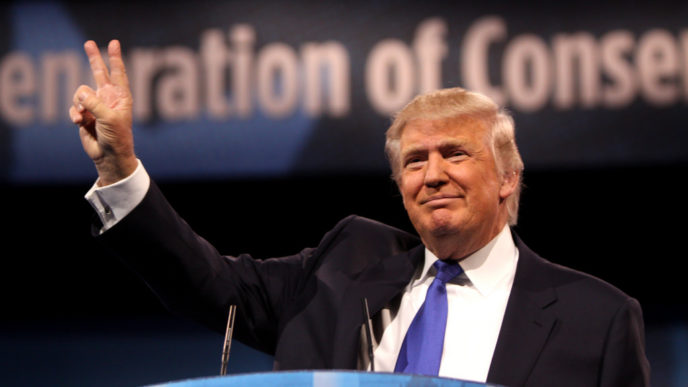
What Donald Trump Could Teach Ellen DeGeneres About Diversity and Tolerance

OK. I admit it. The title of this article is meant to be catchy. But there’s an important truth I want to convey, which is simply this: tolerance and diversity are two-way streets.

While appearing on The Ellen Show, the Today Show’s Matt Lauer turned the tables and began to interview his host, asking her about her coming out as a lesbian, since this is the 20th anniversary.

He then asked her if she would have President Trump on her show, to which she replied, “No.”

Ellen explained, “Because I’m not going to change his mind. He’s against everything I stand for. We need to look at someone else who looks different than us, and believes in something that we don’t believe in and still accept them and still let them have their rights.”

And for that reason Ellen won’t have him on her show? Look at her reasoning again. She won’t have him on her program because “we need to look at someone else who looks different than us, and believes in something that we don’t believe in and still accept them and still let them have their rights.”

So, Ellen is refusing to sit across from someone who looks different than her and believes in something that she doesn’t believe because we need to be able to sit with those very people? Am I the only one who sees a glaring contradiction here?

Acceptance Through Nonacceptance?

Let’s parse Ellen’s words carefully, not to attack her but rather to probe how tolerant and inclusive our friends on the left really are.

First, she says, “I’m not going to change his mind.”

But is that the criterion for being a guest on her show? That you either agree with her or else must be willing to have your mind changed? How about healthy interaction with those with whom you differ? Isn’t that an important part of tolerance and diversity?

I recently took exception to an article written on the Huffington Post by a humanist journalist. So I wrote an article in response, after which I invited him to join me on my radio show. He joined me earlier this week, and we had a delightful one-hour discussion in the midst of our disagreements. How can discussions like this hurt? What if Ellen, who is obviously a master host, had a civil discussion with the president? Couldn’t we all benefit from that?

Second, Ellen said, “He’s against everything I stand for.”

Perhaps that’s true on several issues. But the president has hardly been an aggressive opponent of LGBT activism. He’s been strong on pro-life issues and has appointed men to his administration like Dr. Ben Carson and Jeff Sessions, both of whom oppose LGBT activism. But Trump has sought to present himself as a friend of the LGBT community, and it appears that Ivanka and Jared Kushner certainly push him in that direction.

I hoped that Trump would take a more conservative stand when it comes to LGBT activism. But it’s hard to understand how Trump is “against everything” Ellen stands for. If they spoke face to face before Ellen’s massive audience, maybe a few areas of agreement would emerge?

Third, how I can tell you that we should be able to sit and talk with those we differ with, only to turn around and say, “I won’t sit and talk with you because we differ”? (I once had a company refuse to work with me because they were “inclusive.” Come again?)

Fourth, Ellen says that when it comes to people who are different than us, we must “still accept them and still let them have their rights.”

Is this, then, Ellen’s way of accepting Trump, by saying she would not have him on her show? (I’m sure this is of no concern to the president, who hardly needs to find a way to get more TV exposure. I’m simply addressing the issue.)

Whose Rights Does Ellen Affirm?

When it comes to people having “rights,” we could obviously debate many aspects of LGBT rights. For example, does a biological male who identifies as a female have the “right” to use the ladies’ bathroom? But right now, President Trump is not campaigning to overturn the Supreme Court’s ruling on same-sex “marriage” (again, I would be glad if he did), so I’m still not sure whose “rights” he is opposing.

It would be odd if Ellen wasn’t thinking about LGBT issues at all in her statement, given the immediate context of the interview. The context was her coming out as a lesbian, then asking if she’d have Trump on her show. Perhaps she has caricatured the president even beyond his own caricatured personality?

And when it comes to rights, is Ellen willing to affirm the right of a photographer not to be forced to shoot a same-sex wedding ceremony because of deeply held, sacred beliefs? Do Christian conservatives and other people of faith have rights too?

A Good Host — But a Bad Move

This is the kind of discussion that I think Ellen really should have on her show. Why further demonize each other? And as bombastic and combative as Trump can be, he also seems to like sitting face to face with those who differ with him. After all, isn’t that a part of negotiating and deal-making?

There are many reasons why Ellen DeGeneres is so loved by so many Americans. She must have many fine qualities as a human being created in the image of God. The fact that she is so dismissive of the president of the United States that should we not welcome him on her show is a point against her, not for her. (For more from the author of “What Donald Trump Could Teach Ellen DeGeneres About Diversity and Tolerance” please click HERE)

Follow Joe Miller on Twitter HERE and Facebook HERE.
Yates, Clapper Refuse to Reveal Details on Trump Surveillance

Former NSA Director James Clapper and former acting Attorney General Sally Yates testified before a Senate Judiciary subcommittee this week about the unmasking of surveillance on Trump and his associates. It was part of a congressional investigation into whether Russia interfered in the election. Democrats claim the Trump campaign colluded with the Russians to influence the election.

The questioning focused heavily on Michael Flynn, Trump’s former National Security Advisor. Flynn was forced to resign after the unmasking revealed he had lied to the vice president about a conversation with the Russian ambassador.

Media coverage of the testimony is focusing on the fact that Trump did not act right away to remove Flynn. But that is only a small part of what was revealed. More importantly, Clapper and Yates did not provide any evidence of collusion with Russia. They also revealed more evidence of the surveillance of Trump’s team.

Unmasking

Senator Chuck Grassley (R-Iowa) asked several piercing questions. He asked the two if they reviewed classified documents where Trump or his associates had been “unmasked.” The identities of Americans taped talking to a foreign official are “masked,” unless a request to unmask them is approved.

Clapper and Yates both responded yes, but refused to provide details.

Grassley asked them if they had any evidence that Trump or his associates colluded with the Russians to interfere in the election. Clapper responded no. Yates refused to answer. She added, perhaps tellingly, “Just because I say I can’t answer it, you should not draw from that an assumption that that means that the answer is yes.”

Next, Grassley asked, “Did you request the unmasking of Trump, his associates or any members of Congress?” Clapper said yes, but would not disclose any details. Yates said no.

Grassley asked the pair if they know how details of Yates’ conversations were leaked to The Washington Post. They both denied being the source.

Should Michael Flynn Have Been Fired Earlier?

Yates testified that she warned Trump’s White House counsel Donald McGahn about Flynn almost three weeks before Flynn was forced to resign. He was “compromised by the Russians” and “could be blackmailed,” she said.

Surveillance recorded a conversation Flynn had with Russian Ambassador to the United States Sergei Kislyak on December 29 about recent U.S. sanctions against Russia. When Vice President Mike Pence asked Flynn about it, Flynn denied discussing the sanctions.

The lie, not the conversation, reportedly led to his resignation. Members of a presidential transition team frequently speak with foreign officials. Yates refused to name what of Flynn’s behavior she thought illegal.

Flynn didn’t resign until 18 days after Yates warned Trump. However, Reince Priebus, Trump’s Chief of Staff, explained on CBS’s Face the Nation in February that the White House legal department “said they didn’t see anything wrong with what was actually said.” When Yates told McGahn about Flynn, he told her that the White House was concerned that taking action might interfere with the FBI probe.

White House spokesman Sean Spicer said Flynn was forced to resign due to a “trust issue,” not a legal issue. The White House became aware of the lie on Friday, February 10. Flynn was asked to resign the next business day, on Monday, February 13.

Former President Barack Obama told Trump two days after the election not to hire Flynn. In 2014, Obama fired Flynn as head of the Defense Intelligence Agency. Flynn worked on Trump’s presidential campaign and had been considered as a running mate. Spicer dismissed the warning as “sour grapes” from a “sore loser.”

Was Surveillance Really Just Part of ‘Incidental Collection?’

When Yates was asked whether Flynn was unmasked due to “incidental collection,” she declined to answer. Nor would she reveal whether anyone had asked to unmask Flynn. She said answering the question would reveal classified information.

Members of Trump’s transition team were reportedly caught in surveillance of foreign officials. Trump maintains that he was subject to surveillance. The Obama administration insists it was routine surveillance of Russians, who happened to be speaking with Trump and his associates.

Sen. Rand Paul (R-Ky.) has asked the House Intelligence Committee to disclose whether the Obama administration conducted surveillance on him or other members of Congress. He said an anonymous source told him it occurred. Susan Rice, Obama’s national security advisor, was caught in a lie about unmasking Trump or his associates. At first she denied having any role in unmasking. After evidence emerged showing otherwise, she admitted she requested unmasking. She has refused to testify before Congress.

Republicans also questioned Yates about her refusal to enforce Trump’s travel ban. Yates was fired after refusing to enforce the ban. Judicial Watch is suing for Yates’ emails. (For more from the author of “Yates, Clapper Refuse to Reveal Details on Trump Surveillance” please click HERE)

Follow Joe Miller on Twitter HERE and Facebook HERE.
LA Times: Ignore Insurance Death Spiral, Trump Is Fearmongering

The mainstream media continue to live in a fantasy world of its own making, where Obamacare works great and the evil Republicans, led by President Trump, are trying to take people’s health insurance away.

A Friday headline from Brian Bennett, reporting for the Los Angeles Times, reads “’Death spiral!’: Trump is stoking fear that the Obamacare markets will collapse if Congress doesn’t act.”

“Stoking fear,” eh? Last week, the president tweeted about Aetna’s exit of the Obamacare insurance markets, exclaiming “Death Spiral!”

“Many health care experts and industry officials believe the marketplaces need to be tweaked, and the withdrawal of insurers has left consumers in some parts of the country with few options,” Bennett reported, before denying that the “death spiral” exists.

“That said, health care experts have not seen signs of a so-called ‘death spiral’ for the exchanges, and have seen enrollment on the marketplaces remain relatively steady, even with recent premium hikes.”

So, according to the L.A. Times, Trump is fearmongering. But the truth is, the president has repeatedly claimed, correctly, that Obamacare is imploding; premiums continue to increase and individuals are unwilling to pay the higher prices, driving insurers out of the marketplace.

When United Health Care announced last year it would withdraw from the Obamacare exchanges, Conservative Review contributor Logan Albright explained how Obamacare has created the insurance death spiral Trump is talking about.

The death spiral works like this: When the pool of people who sign up for health insurance is older and sicker than insurance companies expect, costs end up being higher than projected. Companies have to raise their prices (premiums) in order to make a profit. Higher prices cause some people to drop their plans as being too expensive, and the people most likely to do this are the ones who need insurance the least. This makes the remaining pool still more costly than before, and the cycle begins again, until nobody can afford insurance anymore.

While Bennet writes that “health care experts have not seen signs” of the death spiral, in Maryland:

This Washington Post article by Carolyn Y. Johnson, published the same day as Bennet’s piece in the Times, quotes health care expert Chet Burrell, chief executive of CareFirst Blue Cross Blue Shield, stating that the Obamacare marketplaces “were in the early stages of a death spiral.”

“The head of the largest insurer in the Mid-Atlantic region warned Thursday that the Affordable Care Act marketplaces were in the early stages of a death spiral, a statement that came as the company announced its request for massive, double-digit premium increases for next year.” (Emphasis added)

CareFirst, which The Washington Post reports insures about 215,000 people thorough the Obamacare exchanges, has lost $600 million since entering the marketplaces four years ago. They are asking Obamacare regulators to approve a more than 50 percent premium rate hike in Maryland to cover their costs.

“What we’re seeing is greater sickness levels. The pool of beneficiaries is becoming sicker, in part because healthier people are not coming in at the same level we hoped,” said Burrell.

The explanation is straight from the definition of a death spiral. Obamacare’s insurance mandates and “consumer protection” regulations have driven up the cost of insurance plans, pricing healthy people out of the market. Without those people paying in to subsidize the sick, insurance costs must increase to make up the difference. The resulting higher premiums and deductibles price more people out of the market, and the cycle repeats ad nauseam.

“We were hoping for more stability. The factors that I have described to you today lead to instability and to a spiral, and we think we are in the beginning of that,” Burrell explained to the Post.

Obamacare is collapsing. Insurers in the health exchanges are indeed in a death spiral, and the president is telling the truth. The Los Angeles Times is being dishonest with the American people about the failure of Obamacare by accusing President Trump of “stoking fear.”

Campaigning against Obamacare’s visible failures has been a winnings strategy for Republicans in every election since the bill’s passage. Unfortunately, the Republican American Health Care Act, as passed by the House of Representatives, does not solve the problem.

“As a Marylander who know pays three times more for premiums in order to get less coverage and be subject to a $13,100 deductible, I can say this is an issue that fully resonates with residents of the state,” Conservative Review Senior Editor Daniel Horowitz said. “The problem is that Trump continues to promote a bill that accepts that premise of Obamacare that is causing these rising premiums.”

That premise is the continued demand for protective regulations for individuals with pre-existing conditions, community rating, and the insurance mandates from the federal government that micromanage what coverage insurance companies are permitted to offer to consumers. Those elements of Obamacare are preserved in the GOP reform bill, not repealed whole cloth as was promised.

“It takes talent, at a time when Obamacare is making families pay another mortgage, for Republicans to take the focus off the ills of Obamacare and transfer it to the ACHA,” Horowitz said.

“Yet, this is what happens when they focus on half-baked replace instead of repeal.” (For more from the author of “LA Times: Ignore Insurance Death Spiral, Trump Is Fearmongering” please click HERE)

Follow Joe Miller on Twitter HERE and Facebook HERE.
Trump OKs Arms for Syrian Kurds, Despite Turkish Objections

The Trump administration announced Tuesday it will arm Syria’s Kurdish fighters “as necessary” to recapture the key Islamic State stronghold of Raqqa, despite intense opposition from NATO ally Turkey, which sees the Kurds as terrorists.

The decision is meant to accelerate the Raqqa operation but undermines the Turkish government’s view that the Syrian Kurdish group known as the YPG is an extension of a Kurdish terrorist organization that operates in Turkey. Washington is eager to retake Raqqa, arguing that it is a haven for IS operatives to plan attacks on the West.

Dana W. White, the Pentagon’s chief spokeswoman, said in a written statement that President Donald Trump authorized the arms Monday. His approval gives the Pentagon the go-ahead to “equip Kurdish elements of the Syrian Democratic Forces as necessary to ensure a clear victory over ISIS” in Raqqa, said White, who was traveling with Defense Secretary Jim Mattis in Europe. (Read more from “Trump OKs Arms for Syrian Kurds, Despite Turkish Objections” HERE)

Follow Joe Miller on Twitter HERE and Facebook HERE.

Trump Fires FBI Director James Comey

President Donald Trump on Tuesday evening fired FBI Director James Comey, amid rising controversy over what Comey told Congress regarding a top Hillary Clinton aide and an ongoing investigation into Russian interference in the presidential election.

Numerous Democrats are calling for appointment of a special prosecutor to investigate questions surrounding Russia, claiming the Justice Department and FBI no longer are independent.

The White House said Trump informed Comey he was being terminated based on the recommendations of both Attorney General Jeff Sessions and Deputy Attorney General Rod Rosenstein.

Trump issued a firing letter to Comey in which the president appeared to thank Comey for telling him the FBI wasn’t investigating him. The letter said:

I have received the attached letters from the Attorney General and Deputy Attorney General of the United States recommending your dismissal as the Director of the Federal Bureau of Investigation. I have accepted their recommendations and you are hereby terminated and removed from office effective immediately.

While I greatly appreciate you informing me, on three separate occasions, that I am not under investigation, I nevertheless concur with the judgment of the Department of Justice that you are not able to effectively lead the bureau.

It is essential that we find new leadership for the FBI that restores public trust and confidence in its vital law enforcement mission.

I wish you the best of luck in future endeavors.

Comey was speaking to agents at the FBI’s field office in Los Angeles when the news of his firing came on TV, the Associated Press reported, citing a law enforcement official who was there. The FBI director chuckled, finished his remarks, and later returned by plane to Washington, AP reported.

In a public statement, Trump said:

The FBI is one of our nation’s most cherished and respected institutions and today will mark a new beginning for our crown jewel of law enforcement.

Comey, 56, last week testified before the Senate Judiciary Committee that Clinton confidant and campaign aide Huma Abedin forwarded “hundreds of thousands” of Clinton emails to her husband’s laptop computer. Clinton was secretary of state at the time, and some emails allegedly included classified information.

The FBI, in an embarrassment for Comey, clarified in a letter to the committee Tuesday that only a “small number” of emails had been forwarded to the laptop.

President Barack Obama nominated Comey in 2013 to what was supposed to be a 10-year appointment after the senior Justice Department official’s more than 30 years in law enforcement.

In the early days of his presidency, Trump announced he would keep Comey as FBI director, publicly giving him a hug and whispering something in his ear two days after his Jan. 20 inauguration.

Comey had announced in July that the FBI would not recommend that the Justice Department charge Clinton, about to become the Democrats’ nominee for president, for conducting official and often sensitive State Department business with a private email account over a private server at her home.

In October, 11 days before the Nov. 8 election, Comey announced a reopening of the investigation with the discovery of the emails sent by Abedin to the laptop of her husband, former New York congressman Anthony Weiner.

Two days before the election, Comey announced that the FBI had cleared Clinton.

In a public interview last week, Clinton blamed Comey in part for her loss to Trump in the election.

Comey deputy Andrew McCabe, who has his own ties to the Clinton camp, is expected to serve as acting director until Trump nominates a successor and the Senate confirms that nominee.

Senate Judiciary Chairman Charles Grassley, R-Iowa, issued a critical statement on Comey following the news of his firing. Grassley said:

The handling of the Clinton email investigation is a clear example of how Comey’s decisions have called into question the trust and political independence of the FBI. In my efforts to get answers, the FBI, under Comey’s leadership, has been slow or failed to provide information that Comey himself pledged to provide.

The effectiveness of the FBI depends upon the public trust and confidence. Unfortunately, this has clearly been lost.

But Sen. Edward J. Markey, D-Mass., compared the Comey firing to Watergate, saying:

President Trump’s firing of Director Comey sets a deeply alarming precedent as multiple investigations into possible Trump campaign or administration collusion with Russia remain ongoing, including an FBI investigation. This episode is disturbingly reminiscent of the Saturday Night Massacre during the Watergate scandal and the national turmoil that it caused. We are careening ever closer to a constitutional crisis, and this development only underscores why we must appoint a special prosecutor to fully investigate any dealings the Trump campaign or administration had with Russia.

Other Democrats, such as Rep. Gerry Connolly, D-Va., a member of the House Oversight and Government Reform Committee, had their own speculation.

Another member of the House oversight panel, Rep. Trey Gowdy, R-S.C., thanked Comey for his service.

While Sen. John McCain, R-Ariz., hasn’t joined Democrats in calling for a special prosecutor to investigate Russian interference in the election, he did renew his call for a select committee to investigate.

Meanwhile, Rep. Justin Amash, R-Mich., says he is writing legislation to establish an independent commission on the Russia questions.

Sen. Ron Wyden, D-Ore., called the decision to fire Comey “outrageous.”

Sen. Bob Corker, R-Tenn., chairman of the Senate Foreign Relations Committee, expressed skepticism over the timing of Comey’s firing.

Sen. Kamala Harris, D-Calif., repeated calls for a special investigation into the Russia claims.

Conservative commentator Jay Sekulow, chief counsel for the American Center for Law and Justice, tweeted:

(For more from the author of “Trump Fires FBI Director James Comey” please click HERE)

Follow Joe Miller on Twitter HERE and Facebook HERE.
‘Deep State’ Pulls Clearance of Trump NSC Official. Rogue Agenda?

A respected National Security Council analyst has had his security clearance revoked, and his allies are unanimously blaming a “deep state” campaign designed to sabotage the Trump national security agenda.

Last week, Adam Lovinger – a longtime Pentagon expert on loan to the NSC, who held a top secret clearance over the past decade without issue – had his clearance suspended effective immediately.

On Tuesday, Lovinger was informed by the Pentagon that his clearance was suspended. He was then abruptly marched out of the NSC offices. According to sources with direct knowledge of the situation, Lovinger has been transferred to an Alexandria, Va., location to do clerical work for an indefinite amount of time. Without his clearance, he has been effectively frozen out of the ability to do meaningful national security work.

Bill Gertz, who broke the story of Lovinger’s dismissal, reports at the Washington Free Beacon that Lovinger had been a strategic affairs analyst at the Office of Net Assessment (ONA) for over a decade. He is an expert in net assessments, which are “highly classified reports that assess foreign threats and U.S. capabilities.” Lovinger is also an adjunct professor at Georgetown University and holds a J.D. from Georgetown. He is an expert on the Indian Ocean region, the Persian Gulf, and sub-Saharan Africa.”

When President Trump was elected to the White House, Lovinger expressed an interest in moving his portfolio temporarily to the National Security Council, so that he could help shape the incoming administration’s grand strategy. He moved over to the NSC during the transition, and was then tasked with crafting a more comprehensive national security strategy for the Trump administration.

Sources say that Lovinger’s relationship soured with his Pentagon supervisor, James H. Baker, after the latter became aware that his colleague was being interviewed for a position at the NSC. Following Lovinger’s transfer, Baker immediately led two investigations into his security clearance.

Allies of Lovinger describe Baker as someone who is vehemently opposed to the policies of the Trump administration. Baker was appointed by Obama Defense Secretary Ash Carter in 2015 to lead ONA. He has since been held over by the current administration, for reasons unknown.

Another individual directly aware of the situation tells CR. “Because Lovinger’s clearance was being held by the Department of Defense, Baker got DOD to withhold his clearance off of phony information.”

Another source close to Lovinger said he was so alarmed by actions taken against his security clearance that he went to an attorney and filed a 38-page sworn affidavit to make a record of Baker’s campaign against him.

The Defense Department’s Office of Net Assessment was created to assess and develop future strategies for the U.S. military. It was first led by Andrew Marshall, a legendary director who is nicknamed “Yoda” for his strategic brilliance. Lovinger, described as a “brainiac” by one of his colleagues, was a protege of Marshall.

Under Baker, the ONA has been criticized for failing to produce assessments fundamental to the office’s founding mission.

Lovinger is the second National Security Council staffer to have his clearance revoked under questionable circumstances.

In February, NSC African specialist Robin Townley had his clearance pulled by the CIA, according to reports. Angelo Codevilla, a renowned international affairs expert, alleged that the agency axed Townley’s clearance because he did not approve of the CIA’s current trajectory.

The Department of Defense did not respond to a request for comment. Adam Lovinger did not respond to a request for comment. (For more from the author of “‘Deep State’ Pulls Clearance of Trump NSC Official. Rogue Agenda?” please click HERE)

Follow Joe Miller on Twitter HERE and Facebook HERE.
Trump Administration Announces First Batch of Federal Court Nominees

The Trump administration on Monday named 10 judges it plans to nominate for key posts.

White House press secretary Sean Spicer said that among the candidates are individuals previously named on Trump’s list of 21 possible picks for Supreme Court justice. All nominees would require Senate confirmation.

The announcement came less than a month after Trump’s pick for the Supreme Court, Neil Gorsuch, was confirmed, restoring the court’s conservative tilt. (Read more from “Trump Administration Announces First Batch of Federal Court Nominees” HERE)

Follow Joe Miller on Twitter HERE and Facebook HERE.
Younger Judicial Nominees Give Trump Chance for Legacy in Courts

President Donald Trump will begin to leave his mark on the lower courts of the federal judiciary with 10 nominees named Monday, many of them judges still in their 40s.

Shortly after 7:30 p.m. Monday, the White House formally announced Trump’s nomination of five judges to federal appellate courts and another five judges to lower federal courts.

“They all appear to be bright, young, capable conservatives who promise to be outstanding judges; some are already judges,” John Malcolm, a legal scholar who oversees the Institute for Constitutional Government at The Heritage Foundation, told The Daily Signal earlier in the day.

Two of the appeals court nominees—Michigan Supreme Court Justice Joan Larsen, 48, nominated to the 6th Circuit, and Minnesota Supreme Court Justice David Stras, 44, nominated to the 8th Circuit—were on the list of 21 contenders for the U.S. Supreme Court that the Trump campaign released months ago.

The Heritage Foundation and The Federalist Society developed the list at Trump’s request.

Trump also nominated Amy Coney Barrett, 45, a law professor at Notre Dame and former law clerk for the late U.S. Supreme Court Justice Antonin Scalia, for the 7th Circuit, and Louisville lawyer John K. Bush, 53, for the 6th Circuit.

Rounding out the appeals court nominees is Alabama’s former solicitor general, Kevin Newsom, 44, who clerked for Justice David Souter, nominated for a seat on the 11th Circuit.

White House press secretary Sean Spicer told reporters during the Monday afternoon briefing:

These 10 individuals the president has chosen were chosen for their deep knowledge of the law and their commitment to upholding constitutional principles. Two of the nominees today came from the list of potential Supreme Court nominees that the president released during the campaign. … The president followed the principles that were used to guide that list to select the additional eight individuals.

Spicer said more judicial and other nominations are on the way.

“I think you will continue to see a very robust amount of announcements on not just the judicial front, but on several fronts,” he said.

Most Supreme Court justices previously served as appeals court judges. Also, the high court can take only a limited number of cases. So, circuit court nominees are highly important.

Trump previously nominated U.S. District Judge Amul Thapar to serve on the 6th Circuit. He is awaiting Senate confirmation.

With more than 120 vacancies, the nominations can’t come too soon, said J. Christian Adams, a former Justice Department attorney who now is president of the Public Interest Legal Foundation, a conservative legal group.

“I’m in federal courts all the time. There are too many vacancies,” Adams told The Daily Signal. “So, we can’t have too many nominees.”

A Democratic majority in the Senate eliminated that chamber’s filibuster for nominees to the district and circuit courts in 2013.

“With a Republican Senate, now is the best time to nominate solid judges,” Adams said. “There is no reason to wait.”

Trump seems to have his eyes on the future with these nominees, said Curt Levey, president of the Committee for Justice and a constitutional lawyer with FreedomWorks, a conservative advocacy group.

“It’s clear that the administration is looking at young nominees,” Levey told The Daily Signal. “Being an appeals court judge, if not on the short list, it puts you on the long list for the Supreme Court. … This administration seems to be making a bigger factor of age than previous administrations.”

Trump also nominated Damien Schiff, a lawyer with the Pacific Legal Foundation, a conservative legal group, to the U.S. Court of Federal Claims.

The White House said the president made two district court nominations and intends to make two more:

Scott Palk, with the University of Oklahoma College of Law, to the Western District of Oklahoma.

Idaho state Judge David Nye to the U.S. District Court for Idaho.

Dabney Friedrich, a member of the U.S. Sentencing Commission and a former associate White House counsel under President George W. Bush, to the U.S. District Court for the District of Columbia (pending).

U.S. Magistrate Judge Terry Moorer to the Middle District of Alabama (pending).

The nominees build on Trump’s success in getting another appeals court judge, Neil Gorsuch, confirmed to the Supreme Court just weeks ago, said Carrie Severino, chief counsel for the Judicial Crisis Network, who posted brief biographies of each of Monday’s nominees on National Review’s website.

“The nominees have stellar qualifications and a record of courageous commitment to the rule of law that will make them excellent additions to the federal bench,” Severino said. “When it comes to fulfilling his campaign promise to appoint strong, principled judges, Trump is knocking it out of the park.” (For more from the author of “Younger Judicial Nominees Give Trump Chance for Legacy in Courts” please click HERE)

Follow Joe Miller on Twitter HERE and Facebook HERE.