Posts

Salon’s Fake News: Trump Supposedly Said the Constitution Is ‘Really a Bad Thing for the Country’

The left-wing media site Salon posted an article with the headline blaring: “Donald Trump doesn’t like the ‘archaic’ Constitution: ‘It’s really a bad thing for the country.’” Other liberal sites said the same thing. It was the classic gotcha article: The man who says he’s a conservative wants to trash the Constitution! Haha, say the liberals.

The only problem: he didn’t say that.

What Trump Didn’t Say, and What He Did

Salon did the easiest thing possible — took phrases out of Trump’s Fox News interview. In fact, the interview posted with the article contradicts it.

One hint that the liberal press misquoted the president? The word “constitution” doesn’t even appear in the interview. Not even once.

So what was Trump talking about? Fox News’s Martha MacCallum asks him about his political philosophy. Trump responds that he’s “not really an ideologue.” He’s “a person of common sense.” He gets things done, he says. “I understand what has to be done, I get things done I’ve always been a closer. We don’t have a lot of closers in politics and I understand why.”

Then comes the quote that the mainstream media jumped on. “It’s a very rough system, it’s an archaic system,” he says. The Constitution? No. He continues:

You look at the rules of the Senate, even the rules of the House. The rules of the Senate, some of the things you have to go through. It’s really a bad thing for the country. In my opinion, they are archaic rules. Maybe, at some point, we’re going to have to take those rules on. For the good of the nation, things are going to have to be different. You can’t go through a process like this. It’s not fair, it forces you to make bad decisions.

What’s He Upset About?

Does Trump reject the Constitution in the interview? No, he never even mentions it. What’s he upset about? The rules of Congress, especially the Senate. He thinks those rules are “archaic.”

Trump may be flustered working with Congress, but he hasn’t deserted our system of checks and balances to become a dictator.

The fake news piece had 17,500 Facebook shares at the time this article went to publication. There has been no retraction or correction. Will Google push it down in search results? Will Facebook flag it as fake news? Probably not. (For more from the author of “Salon’s Fake News: Trump Supposedly Said the Constitution Is ‘Really a Bad Thing for the Country'” please click HERE)

Follow Joe Miller on Twitter HERE and Facebook HERE.

Lead Dem Demands Trump Withdraw Army Secretary Pick Over ‘Homophobia and Transphobia’

The No. 2 Democrat in the U.S. House is calling for the withdrawal of President Trump’s nominee for Army secretary over his “clear record of homophobia and transphobia.”

Democratic Whip Steny Hoyer, Maryland, issued a statement on Monday strongly urging Trump to pick someone other than Mark Green, a Tennessee state lawmaker and former Army flight surgeon. Hoyer was adding his voice to LGBT advocates and other lawmakers who have assailed Green for calling transgenderism a “disease” and suggesting the Tennessee governor could refuse to issue same-sex marriage licenses.

Green has also come under fire for alleged anti-Muslim rhetoric, including a 2013 Twitter message in which he referred to then-President Obama as “B Hussein Obama” and a statement made during a political meeting last year, that Tennessee “will not tolerate” the “teaching [of] the pillars of Islam.” Hoyer’s statement came on the same day Muslim civil rights group Muslim Advocates condemned Green.

“The civilian leaders the President selects to oversee our military set the tone for the men and women of our Armed Forces and how they are expected to behave,” Hoyer’s statement reads.

“Appointing someone with a clear record of homophobia and transphobia, who has made disgusting statements demeaning toward groups of Americans, would send the absolute wrong signal about the values for which our military service members are risking their lives. (Read more from “Lead Dem Demands Trump Withdraw Army Secretary Pick Over ‘Homophobia and Transphobia” HERE)

Follow Joe Miller on Twitter HERE and Facebook HERE.

Blame Congress for Trump’s 100-Day Bust

Friday morning, the House of Representatives easily passed a one-week continuing resolution to avoid a partial government shutdown. The Senate followed suit on the bill, and in so doing proved the utter futility of Republican control of Congress in the first 100 days of Donald Trump’s presidency.

While the media will hang the apparent lack of Trump’s legislative accomplishments on the necks of the administration, ultimately this is not a failure of the executive branch. In this constitutional republic, it is Congress that holds the legislative power; the House of Representatives and Senate make the laws. They are responsible for the legislative policy of the Trump administration, and they’ve blown the first 100 days.

The failed negotiations over the spending bill Congress must now take up next week is the capstone on congressional Republican incompetence and the failed leadership of Sen. Mitch McConnell, R-Ky., and Speaker Paul Ryan, R-Wis.. The Republican Party has not received a single concession from the Democrats to implement any of President Trump’s agenda … and they will not.

Democrats succeeded in bullying the GOP, threatening a government shutdown over border-wall funding and other “poison pill” riders.

“Our position has been clear, and it’s nothing new: no poison pill riders. The sooner we can resolve this issue, the quicker we can have an agreement on appropriations for 2017, so I object,” Senate Minority Leader Chuck Schumer, D-N.Y., said on the Senate floor Thursday. Schumer prevented the Senate from automatically approving the short-term continuing resolution on grounds that changes to environmental regulations and Dodd-Frank protections are unacceptable.

While the Democrats fight to protect every inch of the leviathan federal government they explicitly support, the Republicans – who pretend to seek to put up a fight on the campaign trail – roll over once they have to take a tough vote.

Observe what has become of the Republican agenda, as timid or cowardly GOP members refuse to fight for smaller government.

Obamacare repeal? That promise was broken and now seems delayed indefinitely, as liberal Republicans fight to keep the core parts of the law they like, and are otherwise afraid of making major changes to any entitlements.

Tax reform? The big announcement that came from Treasury Secretary Steve Mnuchin and White House adviser Gary Cohn Wednesday left out the important details, as both administration officials had nothing but vague answers for reporters and essentially said Congress is “working on it.”

Build the wall? Republicans capitulated after Democrats’ threats to shut down the government.

Speaking of government spending, where is the budget? Where is the congressional action on President Trump’s skinny budget? Why is a Republican-controlled Congress still using soft continuing resolutions to pass short-term spending in place of hard budgets and a return to separate appropriations bills? That’s another broken promise.

What cuts to government spending are happening? None. Why does Planned Parenthood remain funded? Because Democrats will shut down the government to fight for baby murder. But you won’t hear a single Republican speak in those terms.

And then there are the 127 federal court vacancies that need filling. Where is the Trump administration on nominating conservative judges to fill those vacancies? Where is the Senate on taking those nominations up?

Apologists for Congress’ (lack of) accomplishments in the first 100 will note the regulations that have been repealed under the Congressional Review Act. Trump has signed 13 reversals of Obama administration policies into law.

But were Republicans actually interested in dealing a unifying, single blow to the administrative state, the Senate would take up the REINS Act.

The REINS Act is legislation designed to require regulators to seek congressional approval for their most expensive regulations. It passed the House of Representatives in early January, and since then the Senate hasn’t budged on it. What gives?

President Trump promised to “work hard to get it passed” on the campaign trail.

“I will sign the REINS Act should it reach my desk as President and more importantly I will work hard to get it passed,” Trump previously told American Commitment President Phil Kerpen. “The monstrosity that is the Federal Government with its pages and pages of rules and regulations has been a disaster for the American economy and job growth. The REINS Act is one major step toward getting our government under control.”

Nearly every Republican agrees that regulations need to be scaled back, and to a large degree that has been the focus of the Trump administration’s executive actions. But when it comes to legislation from Congress, Republicans are taking time to repeal several regulations individually instead of pursuing sweeping conservative reforms.

The U.S. Senate has not even been in session for 100 days this year. Including weekends, the Senate has taken 54 days off since the session began in January. What have they done to deserve the vacation time?

Like it or not, voters are going to demand that this Congress make the legislative trains run on time before the 2018 midterm elections. Given the GOP’s failure to keep basic promises so far, with no change on the horizon, what campaign promises can Republicans make in 2018 that voters will believe?

We will soon find out if “at least we’re not Democrats” is enough to get Republicans elected in this country. (For more from the author of “Blame Congress for Trump’s 100-Day Bust” please click HERE)

Follow Joe Miller on Twitter HERE and Facebook HERE.

Top 6 Media Meltdowns of Trump’s First 100 Days

The first 100 days of Donald Trump’s presidency have been filled with outrageous moments in the mainstream media. Some of those moments will make you laugh, some will make you cry, and some will infuriate you. Here are six of the hottest of hot-take fails, outrageous comparisons, outright fabrications, and more from Trump’s first 100 days.

1. LET’S START AT THE BEGINNING, ON INAUGURAL DAY AND NIGHT

LIfeZette had a great compilation of media meltdowns on inauguration day: Matt Lauer being afraid that Trump fans would physically harm Hillary Clinton, Salon saying that Trump was going to “victimize his own voters,” and more. But perhaps my favorite is Paul Krugman, the smarmy New York Times economic columnist, who just needed a safe space.

Inaugural day kicked off the insanity. It really hasn’t ended.

2. TRUMP SIGNS HIS NAME LIKE A NAZI WAR CRIMINAL

Surely this can’t be true, you must be saying to yourself. There is no way that any respected journalism outfit would waste either paper or internet bandwidth with a story like that. Well, you’d be wrong. The Boston Globe published an “ideas” piece that basically asked if you “should care” that Trump signs his name like a Nazi.

Some experts — graphologists, people who have been trained to examine handwriting for markers of personality — were no less harsh. “His signature is this barbed-wire thing that’s into power and control and rigidity,” said Sheila Lowe, a Ventura, Calif., handwriting analyst with more than 40 years of experience in this small field. “It’s closed, it’s not open, it’s not soft at all and it looks like Himmler’s.” As in Heinrich Himmler, head of Adolf Hitler’s SS and the man who established the first official concentration camp at Dachau.

But they totally made it OK by asking if you “should care.”

3. TRUMP’S KIDS ARE JUST THE SAME AS THE HUSSEIN WAR CRIMINAL DUO

If you guessed that this one would involve MSNBC, you’d be right. Almost lost in an orgy of Leftist spin were these two jewels by MSNBC hosts Rachel Maddow and Chris Matthews.

Here’s Rachel – jump to 3:40 in this video.

We have never thought of us as a country where Uday and Qusay [Hussein] get to be ministers of whatever they want, right?

You might think that was obnoxious but was all of it, until you hear Matthews from the week before.

That’s right, because the Trump kids and family follow a long tradition of family members working in a presidential administration, they should be compared to murderous thugs like Uday and Qusay Hussein, the sons of Saddam Hussein.

4. DONALD TRUMP IS CAUSING THE NATION TO LOSE PRECIOUS SLEEP

Here’s another golden one. Lisa Belkin, the “chief national correspondent” for Yahoo News, decided back in March that a think piece on Trump as national bogeyman would be a fun time. She described a dystopian present where Americans were tossing and turning, all because of Trump.

She even went full Nazi Germany, casting the heroes of the piece:

Last night I dreamed we were hiding people in our basement,” says Allentown, Pa., physician Jenni Levy. “Not sure what they were hiding from.”

It continued …

I’m worried about the ‘Anne Franks‘ of Syria, Somalia, Yemen,” says tech industry employee Amanda Silver, who is literally sleepless in Seattle, her hometown.

“I am afraid the democratic process is under attack by a nationalist, far-right, authoritarian leader,” says Lori Rivere Rodrig, who teaches math at a New Jersey high school.

Boo!

5. NOT JUST TRUMP BUT HIS APPOINTMENTS TOO

It was pretty hard to find dirt on the Boy Scout and Trump SCOTUS nominee Neil Gorsuch. But that didn’t stop NPR and a whole host of other organizations from trying. Here’s an original headline for a gotcha piece on Gorsuch.

The story went on to describe a class discussion about employment law that, quite simply, did not happen. Here’s the NPR story. After a rush to publish, without disclosing the conflicts of the source, NPR and other organizations were forced to clarify the story. It ended up not that bad for Gorsuch. Here’s the editors’ note from NPR.

Editors’ note Monday, 12:55 p.m. ET: Since this story was first published, we have added material from another former student and former law clerks of Gorsuch, as well as more information about Jennifer Sisk’s political affiliations. On Tuesday, Gorsuch disputed the allegation himself during his confirmation hearing and explained the lesson he intended to teach.

What were Sisk, the accuser’s, political affiliations?

Sisk, once a staffer for former Democratic Sen. Mark Udall of Colorado and the Interior Department during the Obama administration, told NPR that she wrote the letter “so that the proper questions could be asked during his confirmation hearings,” which begin Monday before the Senate Judiciary Committee.

Yeah, the allegations came from a professional Democratic operative, and until called out on it, NPR didn’t disclose it.

6. RACHEL MADDOW CHANNELS AL CAPONE’S VAULT

If you were alive during the 1980s, chances are you remember the hype from a not-yet-famous Geraldo Rivera surrounding the unveiling of Al Capone’s secret vault. It was a live prime-time event. Except it was an empty room behind a wall.

Maddow wanted a similar moment all to herself. So she hyped that she had Donald Trump’s tax returns. Except, well, she didn’t. Here, let Greg Gutfeld explain.

That’s right, she had one year’s returns, that Trump probably sent her anonymously himself, that showed he paid a higher tax percentage than almost every president who has released his returns.

Maddow was rightly excoriated for the remarks. Even Geraldo got in on the fun, in a hilarious bit of self-deprecating humor.

Those are just six of hundreds of media moments. Do you remember any others? Tweet me @robeno to let me know of your favorite meltdown. I may cover it in a future article or Facebook live. (For more from the author of “Top 6 Media Meltdowns of Trump’s First 100 Days” please click HERE)

Follow Joe Miller on Twitter HERE and Facebook HERE.
Trump Opens Doors on Oil Exploration, but Deeper Reforms Still Needed

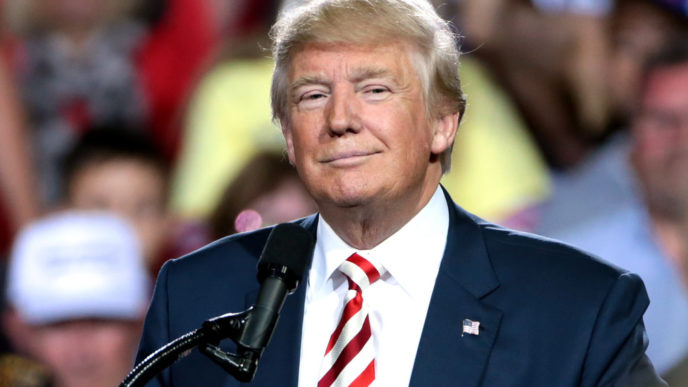
In another move to free up domestic energy supplies, President Donald Trump signed an executive order Friday aimed at lifting the Obama administration’s offshore drilling restrictions.

For decades, bad policies have blocked access to America’s abundance of domestic resources, yet America has still managed to be a global energy leader. Trump’s executive order, “Implementing an America-First Offshore Energy Strategy,” could unleash further success in the energy sector.

The economic potential sitting just off America’s coasts is enormous. The Outer Continental Shelf is awash with natural resources, containing an estimated 86 billion barrels of oil and 420 trillion cubic feet of natural gas.

Realizing that potential could create nearly a million American jobs, and the increased energy supplies that would result would put money back into the bank accounts of American families. It would also generate new prospects for investment and job creation, as cheap energy lowers the cost of business operations across all sectors, not just energy.

The federal government has placed various bans on offshore drilling for decades. Last November, the Obama administration’s Department of Interior finalized some of the most restrictive leasing programs to date.

The Interior Department’s final 2017-2022 Outer Continental Shelf Oil and Gas Leasing Program was best known for the areas it placed off limits, rather than what it made available to lease for energy exploration.

It excluded lease sales in the oil-rich Beaufort or Chukchi seas off the coasts of Alaska, as well as areas off the Atlantic and Pacific coasts. The Interior Department also restricted opportunities in the Gulf of Mexico and the Cook Inlet off south central Alaska.

Critics of Trump’s decision to free up leasing are making the same arguments they’ve made for years: “Oil prices are too low, so the decision won’t spur more oil exploration. Drilling offshore takes too long, so it’s not going to have any immediate impact.”

But those arguments ignore the biggest drivers of investment. Juliet Eilperin and Brady Dennis were spot on in writing for The Washington Post, “[L]ocal political considerations and the global energy market are likely to influence future exploration far more than an executive order in Washington.”

While Trump’s executive order will open more doors for exploration, it won’t automatically trigger an energy boom. That’s the way it should be.

Oil prices are long-term and, as history has shown, can increase rather quickly. Industry makes investment decisions looking decades into the future, not simply based on short-term projections.

Although it certainly is possible that low oil prices could prohibit offshore production, that’s a decision for the private sector to consider. Businesses are much better equipped and flexible to deal with changing economic circumstances than shortsighted politicians in Washington.

Another battle cry for of those who oppose offshore drilling is: Do we really want to risk another Deepwater Horizon spill?

The Deepwater Horizon spill of 2010, which caused environmental degradation in the Gulf of Mexico, was a rare and isolated incident, not a result of any systemic problem associated with offshore oil and gas operations.

That’s not to say flaws don’t exist in the current system or that improvements can’t be made.

In fact, after Deepwater Horizon, Congress examined the government-imposed offshore liability cap but never implemented any prudent solution.

Current law states that oil or gas companies do not have to pay more than $75 million in liability costs for accidents they cause—no matter how great the damages.

Additional fees can be paid out of a government-mandated trust fund (the Oil Spill Liability Trust Fund), which effectively socializes the risk of offshore oil and gas activities.

Congress should reform the Oil Spill Liability Trust Fund and remove the $75 million liability cap, replacing it with a new system that assesses the risks of offshore oil and gas operations and appropriately assigns those risks to industry operators.

A new approach would accurately assign risk to all offshore operations, including exploratory drilling, production, and tanker movements.

Such a system should also hold operators fully liable for their actions and guard against frivolous lawsuits. It should rely on market-based mechanisms and be built around private insurers and professional risk assessors.

Environmental activists aren’t the only ones opposed to Trump’s executive order. Some members of the tourism industry have also voiced concerns about expanded drilling off the Atlantic.

But the energy industry has worked in perfect harmony with other industries. Just look to the Gulf Coast. Every year, residents of the Gulf come to Morgan City, Louisiana, to celebrate the lifeblood of the region’s economy: seafood and oil.

Morgan City’s Shrimp and Petroleum Festival emphasizes “the unique way in which these two seemingly different industries work hand-in-hand culturally and environmentally in this area of the ‘Cajun Coast.’”

While the Deepwater Horizon spill affected all industries in the Gulf Coast, the majority of seafood and tourism companies supported the oil industry throughout the ordeal.

In fact, in many respects, the spill has strengthened the bond between the oil and seafood industry. Shrimpers and fishers were as vocal as anyone in lifting the offshore drilling ban after the spill.

Drilling off the Atlantic coasts could welcome the same symbiotic relationship, which already exists in the Gulf and in the state of Alaska.

Furthermore, states should collect more royalty revenue for offshore production.

Currently, states receive 50 percent of the revenues generated by onshore oil and natural gas production on federal lands, and Congress should apply this allocation offshore as well.

Drilling off states’ coasts and allowing them a larger share of the royalty revenue would encourage more state involvement in drilling decisions.

Offshore drilling would also promote state and local government participation in allocating funds, helping them to close their deficits, enabling coastal restoration and conservation, and shoring up funds for schools.

Trump’s executive order is a welcome step to increasing access to domestic resources, but the back-and-forth of banning resource exploration and then undoing it is a sign that wholesale reform is necessary.

The politicization of the leasing program and the static central planning process that has stifled a dynamic, constantly changing energy market points to the need for legislative action. It is time for a fundamental reconsideration of how the U.S. manages offshore resource development.

Congress should amend the Outer Continental Shelf Leasing Act and get rid of this antiquated, piecemeal leasing approach. (For more from the author of “Trump Opens Doors on Oil Exploration, but Deeper Reforms Still Needed” please click HERE)

Follow Joe Miller on Twitter HERE and Facebook HERE.

Trump’s Tax Plan Is Brilliant Politics and Even Better Economics

Donald Trump’s tax plan seems to mark a new chapter in his presidency, from floundering around with strange and sometimes scary policies (bombings, border closings, saber rattling) to focusing on what actually matters and what can actually make the difference for the American people and the American economy.

Under Trump’s plan, taxes on corporate profits go from 35% to 15%. They should be zero (like the Bahamas), but this is a good start. Taxes on capital gains go from 23.8% to 20%. Again, it should be zero (as with New Zealand), but it is a start. Rates for all individuals are lowered to three: 10%, 25%, and 35%. The standard deduction for individuals is doubled (politically brilliant). The estate tax and the alternative minimum tax is gone. Popular deductions for charitable giving and mortgage interest are preserved. The hare-brained idea of a “border adjustment tax” is toast.

All of this is wonderful, but the shining light of this plan is the dramatic reduction in taxes on corporate profits. The economics of this are based on a simple but profoundly true insight. Economic growth is the key to a good society. This is where good jobs come from. This is how technology improves. This is what gives everyone a brighter outlook on life. If you can imagine that your tomorrow will be more prosperous and flourishing than today, your life seems to be on track.

Tax Capital, Wreck Prosperity

Where does economic growth come from? For decades dating back perhaps a hundred-plus years, people imagined that it could come from government programs and policy manipulation. Surely there are some levers somewhere in the center of power that can cause this thing we call economic growth. We just need solid experts with power, resources, and intelligence to manage the system.

This turns out to be entirely wrong. It hasn’t worked. Since 2008, government has tried to mastermind an economic recovery. It has floundered. We are coming up on a full decade of this nonsense with economic growth barely crawling along. We are surviving, not thriving, and income growth, capital formation, and entrepreneurial opportunity restricted and punished at every turn.

The Trump tax plan is rooted in a much better idea. Economic growth must come from the private sector. It must come from investment in private capital. The owners of this capital who are doing well and earn profits should be allowed to keep them and invest them. This creates new job opportunities. It allows for more complex production strategies. It expands the division of labor.

The crucial institution here is capital. Sorry, anti-capitalists. It’s just true. Capital can be defined as the produced goods for production, not consumption. It is making things for the purpose of making other things. Think about it. Without capital, you can still have markets, creativity, hard work, enterprise. But so long as you have an absence of capital, you are forever floundering around just working to make and sell things for consumption. This is called living hand to mouth.

Without capital, and the private ownership of capital, and security over your property rights, you can’t have economic growth. You can’t have complex production. You can’t raise wages. You can’t live a better life. Every tax on capital, capital formation, capital accumulation, and business profit reduces the security of property rights over capital. This is a sure way to attack economic growth at its source.

And this is precisely what American policy has done. The rest of the world has been wising up about this, reducing taxes on capital for the last 15 years. But the US has languished in the mythology of the past, regarding capital not as a font of prosperity but rather a fund of stagnant resources to be pillaged by planners in government. It is not surprising that this strategy results in slow growth and even permanent recession.

What This Can Do for Growth

There is so much pent-up energy in this country. This tax cut will unleash it.

I have no regression to present to you but this much I can say out of experience and intuition. If this tax plan goes through, the entire class of entrepreneurs, investors, and merchants will receiving a loud signal: this country is safe for you to realize your dreams and make the dreams of others come true.

It wouldn’t surprise me to see GDP growth go from an anemic 1-2% to reach 4% and higher in one year. There is so much pent-up energy in this country. This tax cut will unleash it. And think what it means for the next recession or financial crisis. It prepares the entire country to weather such an event better than we otherwise would.

The beauty of unleashing the power of private capital is that the brilliant results will always be surprising. We don’t know what kind of experimentation in investment and business expansion this will create. This is the nature of a capitalist economy rooted in the freedom of enterprise. It defies our every expectation. No model can forecast with precision the range of results here. We only know that good things will come.

Now, of course, the opponents will talk of the deficit and the national debt. What about the lost revenue? The problem is that every revenue forecast is based on a static model. But an economy rooted in capital formation is not a static one. It is entirely possible that new profits and business expansion will produce even more revenue, even if it is taxed at a lower rate.

If you want to cut the deficit, there is only one way: cut spending. I see no evidence that either party wants to do this. Too bad. This should change. But it is both economically stupid and morally unsound to attempt to balance the budget on the backs of taxpayers. Letting people keep more of what they earn is the right thing to do, regardless of government’s fiscal problems.

In the meantime, these pious incantations of the word “deficit, deficit, deficit,” should be seen for what they are: excuses to continue to loot people of their just earnings.

The Politics of It

Already the opponents of this plan are kvetching in the predictable way. This is a tax cut for the rich! Well, yes, and that’s good. Rich capitalists — sorry for yet another hard truth — are society’s benefactors.

But you know why this line of attack isn’t going to work this time? Take a look at the standard deduction change. It is doubled. Not a single middle-class taxpayer is unaware of what this means. This is because they are profoundly aware of how the tax system works. If you take the standard deduction from $6,200 to $15,000, that means people are going to keep far more of their own money. There is not a single taxpayer in this country who will not welcome that.

This is why it strikes me as crazy for Democrats to inveigh against this plan. Doing so only cements their reputation as the party of pillage. Do they really want the United States to be outcompeted by every other nation in the OECD? What they should do is rally behind this, forgetting all the ridiculous pieties about the deficit and the rich and so on. Do they favor the interests of the American people are not?

It’s also fantastic politics to retain the deductions for charitable giving and mortgage interest. These are popular for a reason. They are two of the only ways that average people can save on their tax bill. It always pained me when the GOP would propose a “flat tax” that eliminated these provisions. People are very aware: taking away an existing tax break is a terrible foreshadowing of bad things to come. So this Trump plan dispenses with all that. Good.

As for compliance costs of the current system, the elimination of the Alternative Minimum Tax will do worlds of good.

What I love most about this plan is its real-world economic foundation. It embraces a truth that so many want to avoid. If you want jobs, rising wages, and economic growth, you have to stop the war on capital. You have to go the other way. You need to celebrate capital and allow rewards to flow to those who are driving forward economic progress.

It’s a simple but brilliant point. Finally, we’ve got a tax proposal that embraces it. (For more from the author of “Trump’s Tax Plan Is Brilliant Politics and Even Better Economics” please click HERE)

Follow Joe Miller on Twitter HERE and Facebook HERE.
25 Thoughts on Trump’s First 100 Days

God was able to create the universe in six days because He hadn’t yet created Democrats or the media.

Maxine Waters and other Democrats began calling for Trump’s impeachment before the inaugural parade made it down Pennsylvania Avenue. That’s right. Return him to a life with a supermodel wife, five great kids and a career building resorts in the most beautiful spots on earth.

Some Democrats refused to accept that Donald Trump was actually elected. That’s okay. I refuse to accept that I’m unable to dunk.

The reporter who falsely tweeted that Trump removed the Martin Luther King bust from the Oval Office on his first day did not apologize. What’s the old line from Love Story? “Good liberal intentions means never having to say you’re sorry.”

A study shows that 87 percent of Trump’s media coverage has been negative. The other 13% must own stock in Twitter.

You know the media’s attitude: “Why give him a honeymoon when he’s had three already?”

Trump had only been President a few hours before Madonna said she dreamed of blowing up the White House. If anyone knows about bombs, it’s the star of Swept Away.

Now Trump’s efforts to hold Sanctuary Cities is being blocked by a liberal judge in San Francisco. But I repeat myself.

Trump wants to stop giving some federal money to cities that openly refuse to enforce federal immigration law. Judge says no. Fine. Here’s an idea: Have the checks processed by the same people who process appointments at VA hospitals.

Barack Obama’s half-brother said the former President was born in Kenya. So? The Free Speech Movement was born at Berkeley. And we see how much that matters now.

Donald Trump is said to work 14 to 18 hours a day. He does know it’s a government job, right?

Trump has taken to inviting lawmakers over to the White House for bowling. Regardless of their score the Democrats expect participation trophies.

Meanwhile, @RealDonaldTrump is still tweeting — prematurely aging KellyAnne Conway 140 characters at a time.

Still, the president has cut down on the wild, over-the-top tweets. If we had a dollar for every time Ivanka yells, “Dad, put down the phone!” we’d have the wall paid for by Christmas.

Former National Security Advisor Susan Rice insisted she knew absolutely nothing about the unmasking of names of Trump associates. Then when it was proven otherwise she admitted she had done it, but claimed it was a routine part of her job. When that was proven false, she blamed it on an internet video.

Former State Department official and Hillary advisor Evelyn Farkas was seen on MSNBC explaining how she had desperately tried to get classified intelligence on Trump out to the public. The public was shocked. Somebody actually tuned in to see MSNBC?

Farkas later backpedaled. How fast did she backpedal? ESPN predicted she’d be the first cornerback picked in the NFL draft.

MSNBC’s Rachel Maddow got hold of a Donald Trump tax return. She trumpeted it like it was the lost Ark of the Covenant. The return showed … wait for it … that Trump paid a higher tax rate than Bernie Sanders. It was the biggest TV flop since Rosie O’Donnell’s return to The View.

Worries continue that Obama administration hold-overs are deliberately undermining Trump administration’s efforts. Just waiting for them to try replacing “Hail to the Chief” with “For the Love of Money.” Or “Back in the USSR.”

Why make Russia into a villain? Because China makes too much money for Hollywood, Iran would draw attention to the shameful Iran Deal, and putting focus on Islamic Extremists would force Democrats to admit there’s a problem with Islamic Extremism.

Congress is investigating the allegations that Russia meddled in the 2016 election. The story went from “hacked the election” to “interfered with the election” to “meddled with the election”? Next week it’ll be “dabbled in the election.” A month from now it’ll be “followed the election.” Liberals will still be shocked.

Hillary Clinton blamed her loss on misogyny, James Comey, WikiLeaks, the Russians and her staff. There must be no mirrors in her home. She is yet to “Blame It on the Boogie.”

President Trump has eliminated countless useless regulations, saving an estimated 18 billion dollars a year. When will he eliminate the regulation that says you have to wait 30 minutes after eating to get back in a pool? Or maybe that was my mother’s rule.

President Trump dropped a MOAB, the “Mother of All Bombs” on ISIS fighters in Afghanistan. The blast was so loud it could be heard in Pyongyang.

A New York Times columnist claims Trump has had the worst opening 100 days of any president ever. By his 100th day, William Henry Harrison had been dead two months.

What’s our final thought on Trump’s first 100 days? Grab the gallons of Red Bull. We’ve got 1,360 days to go. At least. (For more from the author of “25 Thoughts on Trump’s First 100 Days” please click HERE)

Follow Joe Miller on Twitter HERE and Facebook HERE.
Trump Opens Doors on Oil Exploration, but Deeper Reforms Still Needed

In another move to free up domestic energy supplies, President Donald Trump signed an executive order Friday aimed at lifting the Obama administration’s offshore drilling restrictions.

For decades, bad policies have blocked access to America’s abundance of domestic resources, yet America has still managed to be a global energy leader. Trump’s executive order, “Implementing an America-First Offshore Energy Strategy,” could unleash further success in the energy sector.

The economic potential sitting just off America’s coasts is enormous. The Outer Continental Shelf is awash with natural resources, containing an estimated 86 billion barrels of oil and 420 trillion cubic feet of natural gas.

Realizing that potential could create nearly a million American jobs, and the increased energy supplies that would result would put money back into the bank accounts of American families. It would also generate new prospects for investment and job creation, as cheap energy lowers the cost of business operations across all sectors, not just energy.

The federal government has placed various bans on offshore drilling for decades. Last November, the Obama administration’s Department of Interior finalized some of the most restrictive leasing programs to date.

The Interior Department’s final 2017-2022 Outer Continental Shelf Oil and Gas Leasing Program was best known for the areas it placed off limits, rather than what it made available to lease for energy exploration.

It excluded lease sales in the oil-rich Beaufort or Chukchi seas off the coasts of Alaska, as well as areas off the Atlantic and Pacific coasts. The Interior Department also restricted opportunities in the Gulf of Mexico and the Cook Inlet off south central Alaska.

Critics of Trump’s decision to free up leasing are making the same arguments they’ve made for years: “Oil prices are too low, so the decision won’t spur more oil exploration. Drilling offshore takes too long, so it’s not going to have any immediate impact.”

But those arguments ignore the biggest drivers of investment. Juliet Eilperin and Brady Dennis were spot on in writing for The Washington Post, “[L]ocal political considerations and the global energy market are likely to influence future exploration far more than an executive order in Washington.”

While Trump’s executive order will open more doors for exploration, it won’t automatically trigger an energy boom. That’s the way it should be.

Oil prices are long-term and, as history has shown, can increase rather quickly. Industry makes investment decisions looking decades into the future, not simply based on short-term projections.

Although it certainly is possible that low oil prices could prohibit offshore production, that’s a decision for the private sector to consider. Businesses are much better equipped and flexible to deal with changing economic circumstances than shortsighted politicians in Washington.

Another battle cry for of those who oppose offshore drilling is: Do we really want to risk another Deepwater Horizon spill?

The Deepwater Horizon spill of 2010, which caused environmental degradation in the Gulf of Mexico, was a rare and isolated incident, not a result of any systemic problem associated with offshore oil and gas operations.

That’s not to say flaws don’t exist in the current system or that improvements can’t be made.

In fact, after Deepwater Horizon, Congress examined the government-imposed offshore liability cap but never implemented any prudent solution.

Current law states that oil or gas companies do not have to pay more than $75 million in liability costs for accidents they cause—no matter how great the damages.

Additional fees can be paid out of a government-mandated trust fund (the Oil Spill Liability Trust Fund), which effectively socializes the risk of offshore oil and gas activities.

Congress should reform the Oil Spill Liability Trust Fund and remove the $75 million liability cap, replacing it with a new system that assesses the risks of offshore oil and gas operations and appropriately assigns those risks to industry operators.

A new approach would accurately assign risk to all offshore operations, including exploratory drilling, production, and tanker movements.

Such a system should also hold operators fully liable for their actions and guard against frivolous lawsuits. It should rely on market-based mechanisms and be built around private insurers and professional risk assessors.

Environmental activists aren’t the only ones opposed to Trump’s executive order. Some members of the tourism industry have also voiced concerns about expanded drilling off the Atlantic.

But the energy industry has worked in perfect harmony with other industries. Just look to the Gulf Coast. Every year, residents of the Gulf come to Morgan City, Louisiana, to celebrate the lifeblood of the region’s economy: seafood and oil.

Morgan City’s Shrimp and Petroleum Festival emphasizes “the unique way in which these two seemingly different industries work hand-in-hand culturally and environmentally in this area of the ‘Cajun Coast.’”

While the Deepwater Horizon spill affected all industries in the Gulf Coast, the majority of seafood and tourism companies supported the oil industry throughout the ordeal.

In fact, in many respects, the spill has strengthened the bond between the oil and seafood industry. Shrimpers and fishers were as vocal as anyone in lifting the offshore drilling ban after the spill.

Drilling off the Atlantic coasts could welcome the same symbiotic relationship, which already exists in the Gulf and in the state of Alaska.

Furthermore, states should collect more royalty revenue for offshore production.

Currently, states receive 50 percent of the revenues generated by onshore oil and natural gas production on federal lands, and Congress should apply this allocation offshore as well.

Drilling off states’ coasts and allowing them a larger share of the royalty revenue would encourage more state involvement in drilling decisions.

Offshore drilling would also promote state and local government participation in allocating funds, helping them to close their deficits, enabling coastal restoration and conservation, and shoring up funds for schools.

Trump’s executive order is a welcome step to increasing access to domestic resources, but the back-and-forth of banning resource exploration and then undoing it is a sign that wholesale reform is necessary.

The politicization of the leasing program and the static central planning process that has stifled a dynamic, constantly changing energy market points to the need for legislative action. It is time for a fundamental reconsideration of how the U.S. manages offshore resource development.

Congress should amend the Outer Continental Shelf Leasing Act and get rid of this antiquated, piecemeal leasing approach. (For more from the author of “Trump Opens Doors on Oil Exploration, but Deeper Reforms Still Needed” please click HERE)

Follow Joe Miller on Twitter HERE and Facebook HERE.

Promise Broken? Trump DOJ Continues Suit Against Religious Groups

The most absurd example of progressive pathology during Obama’s reign was arguably the legal assault on the Little Sisters of the Poor. “Jumping the shark” called, and it thinks making criminals out of chaste women because they won’t pay for other women to have recreational sex is just begging for some karmic justice.

But sadly, it may be the nuns’ turn to get kicked in the teeth once more. Because elections have consequences, or something.

According to LifeSiteNews, the Trump administration has asked the Fifth Circuit Court of Appeals for 60 more days to continue the Obama administration’s bullying of religious institutions. This is after several of them, including the Little Sister of the Poor, had found at least temporary relief in multiple courts from fascism masquerading as feminism.

During the campaign, though, Trump assured such groups that to force them into providing abortifacients is “a hostility to religious liberty you will never see in a Trump administration … I will defend your religious liberties and the right to fully and freely practice your religion, as individuals, business owners and academic institutions.”

That’s the exact moral clarity the oath of office calls for, but it was lacking in federal court this week. Trump could simply have declined to enforce the illegitimate and unethical penalties leveled against acts of Christian conscience, even if it turns out he doesn’t have the energy or conviction to engage in a crusade on behalf of religious liberty. But he didn’t.

And what was the excuse, err, reason given?

Wait for it … Wait for it …

We need more bureaucracy!

Yes, this “returning the government to the people” thing from Trump’s inaugural has taken a very weird turn indeed. The Department of Justice actually said the Trump White House, which is nearing its first 100 days in office, still hasn’t had enough to time to assemble the staff necessary to determine whether or not it’s cool to force nuns to defy God.

Good grief. How many more lawyers do you need to have sufficient confidence that the Founding Fathers weren’t just spitballing when they came up with that whole First Amendment thing? Might I suggest that when the ACLU is currently suing a hospital on behalf of a man who thinks he’s a woman and is upset the hospital won’t perform a hysterectomy on him, the answer might be “zero”?

In response to this, I know some of you will find comfort in telling yourself that all this is better than Hillary, or that Trump has done some good things. Those are two things that are true, but also irrelevant to this discussion.

There are also a lot of parents who do obvious and undeniably good things for their children, like feed, clothe, and shelter them. Yet they are so derelict at providing for their spiritual needs that as soon as they go off to college, subsidized pagan brainwashing is all but assured. Proportionally speaking, providing for your children’s material needs is a necessity. But doing so at the expense of their eternal souls is an existential failure.

That’s what we are dealing with here. Trump has deregulated some things. He has had some foreign policy successes. All of which I appreciate and have noted and complimented. But he hasn’t come close to indicating that he can be, or really even wants to be, transformational in the way that Obama was. And this is what is needed to truly undo the damage Obama did. Anything short of that will be a failure for a culture on the brink, as ours is.

Perhaps no group is more responsible for Trump’s election than the devout. He owes them, well, bigly. Payback shouldn’t take 100 days, let alone another 60. That assumes Planned Parenthood apologist Ivanka, who is all but acting as First Lady, hasn’t been persuading Daddy on this issue. That could be the real reason for the delay.

How much bureaucracy does it take to stop suing nuns? If your workload is too overbearing for an under-staffed Justice Department, why not kick some feckless litigation like this to the curb and lighten the workload? How much more work does it require to file a withdrawal than to file a delay? (For more from the author of “Promise Broken? Trump DOJ Continues Suit Against Religious Groups” please click HERE)

Follow Joe Miller on Twitter HERE and Facebook HERE.

How Trump’s Tax Plan Would Affect High-Tax States Like California, New York

High-income earners in high-tax states would see a federal tax rate cut. But they still may pay more in the end if they’re unable to deduct state and local taxes under President Donald Trump’s tax reform proposal announced Wednesday.

The White House released the contours of his tax reform proposal that would lower tax rates and reduce the number of tax brackets. However, the plan would also reduce the number of tax deductions.

When a reporter asked if deducting taxes on state and local income taxes would also be eliminated, Treasury Secretary Steven Mnuchin answered, “Yes.”

“We are going to eliminate on the personal side all tax deductions other than mortgage interests and charitable deductions,” Mnuchin said at a White House press conference Wednesday.

House Republicans were already reportedly considering eliminating the deduction on state and local taxes, which could disproportionately affect wealthy people in high-tax blue states such as New York and California.

This federal deduction basically encouraged states to hike taxes, said Jonathan Williams, the chief economist for the American Legislative Exchange Commission, a state-centric public policy organization.

“The current policy subsidizes high-tax states,” Williams told The Daily Signal in a phone interview. “Using that revenue to pay for cutting rates across the board is a step in the right direction.”

The Trump tax plan would reduce the number of tax brackets from seven to three brackets of 10 percent, 25 percent, and 35 percent. The plan would not tax the first $24,000 in income for a couple, which is double the current standard deduction.

The Trump plan would repeal the alternative minimum tax, phaseout the death tax, and repeal the 3.8 percent surtax on investment income used to fund Obamacare.

On the business side, the corporate tax rate will be cut to 15 percent, from 35 percent. Also, the government would only tax a business’s income from inside the United States, not income from abroad. This is common in other countries and is known as a “territorial tax system.”

Gary Cohn, director of the National Economic Council and Trump’s chief economic adviser, told reporters tax reform is a “once-in-a-generation opportunity to do something really big.”

The last sweeping reform came in 1986.

“This isn’t going to be easy. Doing big things never is. We’ll be attacked from the left. We’ll be attacked from the right,” Cohn said. “But one thing is certain. I would never, ever bet against this president.”

Cohn added:

In 2017, we are still stuck with a 1988 corporate tax system. That’s why we are one of the least competitive countries in the developed world when it comes to taxes. So tax reform is long overdue.

House Minority Leader Nancy Pelosi, D-Calif., said the plan is the “same trickle-down economics that undermined the middle class,” and said the president should work on a fiscally responsible bipartisan plan with Democrats.

“Instead of focusing on hardworking families as he promised, President Trump’s tax outline is a wish list for billionaires,” Pelosi said in a public statement. “What few details are here overwhelmingly cut taxes for the richest and do little for middle-class Americans and those trying to get there. Besides which, nowhere does President Trump indicate how his deficit-exploding tax plan will actually be paid for.”

Adam Michel, a tax policy analyst with The Heritage Foundation, said he believes the proposal shows Trump is serious about reform:

For too long, America’s out-of-date and overbearing tax system has put a damper on economic growth while punishing savings and investment. The president’s plan is a great starting point. Now, the president and Congress must work together to finally update our broken tax system. True reform should apply the most efficient and least economically destructive forms of taxation, have low rates on a broad base, and be as transparent, predictable, and simple as possible.

Grover Norquist, president of Americans for Tax Reform, praised Trump’s proposal.

“President Trump has re-energized the drive for fundamental tax reform that creates growth and jobs,” Norquist said in a public statement. “The plan cuts taxes for businesses and individuals and simplifies the code so Americans can file on a postcard. Reducing taxes on all businesses down to 15 percent will turbocharge the economy.”

Mnuchin called the current 35 percent corporate rate “perhaps the most complicated and uncompetitive business rate in the world.”

He said he anticipates the proposal would return the U.S. to greater than 3 percent growth without an adverse impact on the debt or revenue. Throughout most of the Obama administration, economic growth didn’t surpass 3 percent in a single year.

“This plan will lower the ratio of debt to [gross domestic product]. The economic plan under Trump would grow the economy, will create massive amounts of revenues,” Mnuchin said.

The plan is a net tax reduction, Williams said, and fundamental reform takes cronyism out of the tax code, which could help Trump keep another promise.

“Draining the tax code swamp is a good way to go about getting rid of all those special interest loopholes,” Williams said. (For more from the author of “How Trump’s Tax Plan Would Affect High-Tax States Like California, New York” please click HERE)

Follow Joe Miller on Twitter HERE and Facebook HERE.