Posts

The Merits of Trump’s Syria Strike Aside, We Need to Bring Back Congress’ Power Over Declaring War

Amidst the chaos of any sudden use of military force, there are numerous opinions, observations, and pearls of wisdom offered regarding the action. These opinions often fall along non-ideological lines that we are not used to seeing on domestic policy issues. But considering the airstrike against Assad’s airfield last night, there is an opportunity for people on all sides to unite behind the general need for congressional authorization of force. We must move back towards the direction of getting congressional approval at least for protracted engagements that are war in all but name only.

Putting aside any debate over the air strike last night, going forward it is clear both from a political and legal standpoint that any calls for a more protracted engagement in Syria should be backed by a Declaration of War or an Authorization of Use of Military Force (AUMF). This is a policy that should be enthusiastically embraced by both proponents and opponents of a deeper engagement in Syria.

What the Constitution and the founders said about war powers

It is very clear that our founders, based on the reality of warfare defined in their time, believed that any initiation of offensive action taken against another nation must be approved by Congress. As James Madison said, there must be “rigid adherence to the simple, the received, and the fundamental doctrine of the [C]onstitution, that the power to declare war, including the power of judging of the causes of war, is fully and exclusively vested in the legislature; that the executive has no right, in any case, to decide the question, whether there is or is not cause for declaring war…”

George Washington, in a 1793 letter to the governor of South Carolina regarding conflict with the Creek Indians, made it clear that the question to initiate any major offensive war was out of the hands of the president: “The [C]onstitution vests the power of declaring war in Congress; therefore no offensive expedition of importance can be undertaken until after they shall have deliberated upon the subject and authorized such a measure.”

On the other hand, any decisions about the execution of the war thereafter or to immediately repel an invasion were placed squarely in the hands of the president. This arrangement was born out of the Article I Section 8 enumerated congressional power to declare war on the one hand, but the president’s role as commander-in-chief of the armed forces on the other.

This is also why Madison had the convention members alter the original draft of the Constitution, which gave Congress the power to “make war,” to a more limited language of “declare” war, making it clear that all operations beyond the initial declaration would not be subject to the chaotic whims of 100 people.

The question of how to square modern day war fighting, communications, transportation, and logistics of urgency and secrecy with Congress authorizing every use of force is a complicated one. One can make a strong argument that the definition of war has changed and that the need for urgent or clandestine action could be justified under Article II commander-in-chief powers. Clearly, this has guided every president since World War II and the fact that we have special operations ongoing in 140 countries. Without addressing one-time urgent surgical strikes, such as last night’s bombing or the broader use of special forces, it’s important that everyone agree we need to move away from the post-WWII trend of almost never getting authorization from Congress for anything, even protracted commitments that are tremendously costly and consequential.

Congressional buy-in is not just a Constitutional requirement, but a strategic one

Although there are many reasons one can posit why we have failed to win most wars post-WWII, it is no coincidence that our losing streak began when we stopped declaring war. A congressional debate over making such a grave commitment and an ensuing declaration of war is not just a constitutional imperative, it is a political and strategic one.

A declaration of war allows the entire representative body of the people to raise the important questions about our strategic interests, definition of the mission, feasibility, and cost of achieving that mission, and the exit strategy. If Congress votes to pass a resolution, it serves as a definitive guide for defining the enemy, how victory is achieved, and what success looks like. This further serves the purpose of rallying the country behind a defined mission because public support is always needed to achieve such victory. This is what we have been lacking in most engagements since WWII.

Based on the statement put out from the Trump administration, it is very possible that last night’s bombing was limited to deterring the proliferation of WMD and is not part of a broader engagement. But if the administration or Republicans in Congress believe we must further engage in the Syria civil war, a view I personally disagree with, even supporters of such action must agree to the imperative of congressional buy-in.

The same way some may argue that the requirement for a declaration of war for any offensive action by the president, in the modern era, necessarily abrogates his role as commander-in-chief, the continuation of endless protracted ground missions in the Middle East without any declaration from Congress completely overrides the unambiguous dictates of Article I powers. Moreover, it ensures that our troops remain in precarious situations indefinitely without any definitive mission or understanding of how to achieve victory. Thus, the opportunity for a congressional debate over authorizing force is good for both opponents and proponents of any given military engagement.

Yet, there is a dangerous notion being peddled by Sens. Mitch McConnell, R-Ky., and John McCain,R-Ariz., that the AUMF passed by Congress in 2001 is somehow a retroactive catch-all for any engagement against any conventional or non-conventional adversary in the entire Middle East until the end of time. Such a worldview completely vitiates our Constitution and ensures that every new engagement in the Middle East will result in the same failed outcome to which we have grown accustomed. (For more from the author of “The Merits of Trump’s Syria Strike Aside, We Need to Bring Back Congress’ Power Over Declaring War” please click HERE)

Follow Joe Miller on Twitter HERE and Facebook HERE.

Trump’s First Big Foreign Policy Move a Departure From Stump Speeches

In what will almost certainly be the defining foreign policy decision of President Donald Trump’s first 100 days seems to be a significant shift from his noninterventionist rhetoric on the campaign trail in facing down Syrian dictator Bashar Assad.

Republican Sens. John McCain of Arizona and Lindsey Graham of South Carolina, longtime critics of the president, praised Trump’s decision to launch 59 Tomahawk missiles at the Syrian government’s Shayrat airfield, where a chemical weapons attack was launched that killed more than 70 Syrian civilians, including children.

Conversely, Republican Sens. Rand Paul of Kentucky and Mike Lee of Utah stressed that Trump should have sought congressional approval before the strikes. Meanwhile, conservative talk radio host Laura Ingraham noted the major policy shift.

While some Trump supporters on the pundit side might have been surprised by the strikes, it’s not likely to hurt the president with his supporters throughout the country, said Richard Benedetto, an adjunct professor of government at American University.

“Some Trump folks will be disappointed,” Benedetto told The Daily Signal. “Many of the so-called blue-collar Trump supporters backed him because they did not like to see America get pushed around.”

As a candidate, Trump heavily criticized George W. Bush, a former president of his own party, for launching the Iraq War, while in 2013, he tweeted that President Barack Obama shouldn’t intervene in Syria.

This doesn’t necessarily mean Trump has shifted away from a cautious attitude toward foreign entanglements, said Benedetto, a former White House correspondent for USA Today.

“He could still be a noninterventionist compared to Bush, but at the same time, wants to make it clear he is not Obama,” Benedetto said. “It doesn’t mean he will be an interventionist in other things. But this means he takes chemical weapons seriously and he believes he had to do something.”

During a Rose Garden press conference Wednesday, the president telegraphed a shift before the strike, stating he is flexible.

I don’t have to have one specific way, and if the world changes, I go the same way … I do change and I am flexible and I’m proud of that flexibility, and I will tell you that attack on children yesterday had a big impact on me, big impact. That was a horrible, horrible thing and I’ve been watching it and seeing it, and it doesn’t get any worse than that. And I have that flexibility and it’s very, very possible, and I will tell you it’s already happened that my attitude toward Syria and Assad has changed very much.

The New York Times ran a story with the headline “Trump’s Far-Right Supporters Turn on Him Over Syria Strike.” However, the story focused mostly on more extreme elements rather than the general Trump supporter or conservatives.

The expectations of Trump as a “restrictionist, realist, or isolationist” during the presidential campaign were miscalculated from the beginning, said Emma Ashford, a research fellow for defense and foreign policy at the libertarian Cato Institute.

“He talked in the campaign about staying out of stupid Middle East wars, but he also talked about Iraq and how we should have taken their oil, and how he would bomb the hell out of ISIS,” Ashford told The Daily Signal. “People tend to focus on whether he is a neocon or like Ron or Rand Paul. They ignore the third way, which is being a restrictionist on humanitarian matters but interventionist in other areas.”

Ashford noted that military presence in the Middle East has increased since Trump became president.

Ashford said that Obama’s decision not to strike Syria in 2013 was sound.

“It worked in that Assad did not use chemical weapons again while Obama was president,” Ashford said.

The change between campaign rhetoric and international affairs isn’t unusual for presidents. Woodrow Wilson campaigned on staying out of World War I. Franklin Roosevelt campaigned on staying out of World War II. Richard Nixon campaigned on exiting the Vietnam War, and George W. Bush shunned nation building, experts said.

“Campaign rhetoric is just designed to get votes,” James Carafano, a national security expert at The Heritage Foundation, told The Daily Signal. “Look at John McCain and Barack Obama in 2008, and they sounded almost identical. There was no way anyone could have predicted Barack Obama’s foreign policy over the next eight years.”

He continued that this is what one should expect from Trump as a businessman.

“This is who Trump is. He deals with what he is dealt,” Carafano said. “If profits are down, he doesn’t hold a press conference to pretend they are not. He deals with it.” (For more from the author of “Trump’s First Big Foreign Policy Move a Departure From Stump Speeches” please click HERE)

Follow Joe Miller on Twitter HERE and Facebook HERE.

Obama Gave $68 Million to Pro-Abortion UN Population Control Agency, Here’s How Much Trump Is Giving

The Trump Administration reinstated a policy Monday evening directing United States foreign assistance dollars away from the United Nations Population Fund (UNFPA) on the basis that its activities in China are complicit with that nation’s coercive population control program, the implementation of which includes forced abortion and involuntary sterilization. United States funding will be directed instead to other family planning and health programs not involved in China’s population control program.

“We congratulate President Trump and his administration for making it abundantly clear the United States will not support a United Nations agency that cooperates in China’s brutally repressive population control policies,” said National Right to Life President Carol Tobias. “I heartily applaud what we at National Right to Life are seeing from this pro-life administration.”

The State Department memorandum issued Monday determined that the UNFPA was in violation of the Kemp-Kasten anti-coercion law. The amendment prohibits giving U.S. “population assistance” funds to “any organization or program which, as determined by the President of the United States, supports or participates in the management of a program of coercive abortion or involuntary sterilization.”

As the memo states:

The Chinese Government’s Population and Family Planning Law, even as amended in 2015, and related regulations and practices at the central and Provincial levels, clearly constitute a “program of coercive abortion or involuntary sterilization,” and are an integral part of the comprehensive population-control program the Chinese Government advances. While there is no evidence that UNFPA directly engages in coercive abortions or involuntary sterilizations in China, the agency continues to partner with the [National Health and Family Planning Commission] on family planning, and thus can be found to support, or participate in the management of China’s coercive policies for purposes of the Kemp-Kasten Amendment. (Read more from “Obama Gave $68 Million to Pro-Abortion UN Population Control Agency, Here’s How Much Trump Is Giving” HERE)

Follow Joe Miller on Twitter HERE and Facebook HERE.

This Is Apparently What Drove Devin Nunes to Finally Step Aside From the Trump-Russia Probe

House Intelligence Committee Chairman Devin Nunes has temporarily stepped aside from the committee’s probe into Russia’s interference in the US election and whether President Donald Trump’s campaign was involved.

His announcement comes as he has become the subject of an ethics investigation.

Nunes has come under intense scrutiny after his decision last month to bypass the rest of his committee and brief Trump on classified executive-branch documents he said showed that members of Trump’s transition team had been swept up in government surveillance.

Nunes repeatedly had said he did not intend to step aside, but there have been questions about his ability to lead an independent investigation. Reports have said he obtained the documents from White House officials, despite his claims to the contrary.

But in a statement on Thursday, Nunes said he would allow Rep. Mike Conaway to lead the investigation while he waited for the House Ethics Committee to look into complaints filed against him by what he said were “several left-wing activist groups.” (Read more from “This Is Apparently What Drove Devin Nunes to Finally Step Aside From the Trump-Russia Probe” HERE)

Follow Joe Miller on Twitter HERE and Facebook HERE.
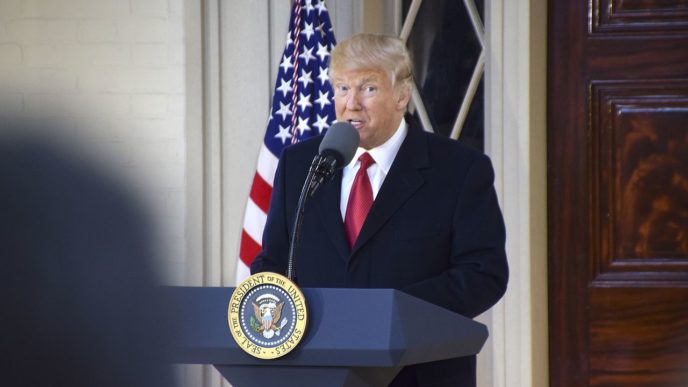
Trump Signs off on the Pentagon Carrying out Offensive Strikes in Somalia

President Trump has approved new kinds of operations for the U.S. military in Somalia, the Pentagon said Thursday, setting the stage for a wider American role in the war there as U.S. troops team directly with Somali soldiers in offensive operations.

The authorization, approved Wednesday, is “consistent with our approach of developing capable Somali security forces and supporting regional partners in their efforts to combat al-Shabab,” said Navy Capt. Jeff Davis, a Pentagon spokesman, referring to the al-Qaeda-linked group. U.S. troops will team with the Somali military and the African Union Mission in Somali (AMISOM), a regional peacekeeping force that operates with approval from the United Nations.

“Somali and AMISOM forces have already achieved significant success in recapturing territory from al-Shabab, and additional U.S. support will help them increase pressure on al-Shabab and reduce the risk to our partner forces when they conduct operations,” Davis said. “We stand with the international community in supporting the federal government of Somalia as it strives to improve stability and security in Somalia.” (Read more from “Trump Signs off on the Pentagon Carrying out Offensive Strikes in Somalia” HERE)

Follow Joe Miller on Twitter HERE and Facebook HERE.
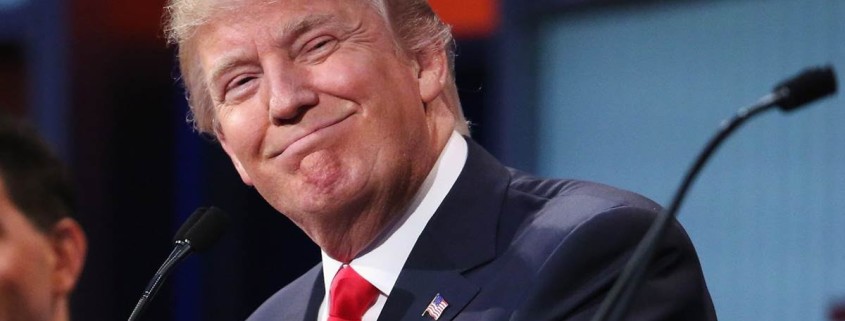
4 Issues Trump Will Likely Confront Chinese Leader About

North Korea will be the top agenda item for President Donald Trump when he meets Friday with Chinese President Xi Jinping.

“As you know, I’ll be meeting with the president of China very soon in Florida, and that’s another responsibility we have, and that’s called the country of North Korea,” Trump said Wednesday during a Rose Garden press conference with King Abdullah II of Jordan.

Trump suggested his predecessor, President Barack Obama, allowed North Korea to grow stronger.

“We have a big problem. We have somebody that is not doing the right thing and that’s going to be my responsibility,” Trump said, referring to North Korean dictator Kim Jong Un. “But I’ll tell you, that responsibility could have been made a lot easier if it was handled years ago.”

White House officials said there were a number of other items the two leaders will discuss—one being trade and commerce—paramount during Trump’s campaign, where he frequently took shots at the Chinese.

The meeting Friday and Saturday at Trump’s Mar-a-Lago estate in Florida will be a significant chance for both leaders to learn about one another, said Fred Fleitz, a former State Department official in the George W. Bush administration.

“China is coming here to try to figure Trump out. He’s not like a president they’ve ever seen before. He’s not a president they can walk all over like Obama was,” said Fleitz, now a senior vice president for the Center for Security Policy, a national security think tank.

Here are the four key issues Trump and Xi will likely be discussing.

1.) North Korea

North Korea initiated a missile test this week aimed at Japanese waters, but the test reportedly failed. The country previously conducted a missile test in February, and several in 2016. North Korea leader Kim is reportedly seeking to produce a long-range nuclear weapon capable of hitting the continental United States in a few years.

“Trump is going to be forceful with China over North Korea. He is not going to ask for help anymore. We are going to demand help,” said Walter Lohman, director of the Asian Studies Center at The Heritage Foundation. “The time for talk is over. The U.S. can impose secondary sanctions on Chinese companies if China doesn’t cooperate.”

A senior White House official told reporters the matter is urgent and “the clock is now very, very quickly running out.”

“Because of the amount of leverage that China has economically, the best outcome would be one in which China very thoroughly implements the U.N. sanctions and resolutions,” the official said. “That is really what we’re working toward.”

China has blocked U.N. Security Council resolutions against North Korea. After South Korea deployed the Terminal High Altitude Area Defense, or THAAD, missile defense system, China threatened South Korea with economic, diplomatic, and military measures.

2.) Trade

The administration recognizes it is economically interdependent with China, but will insist that all bilateral trade be “mutually beneficial,” according to a White House official.

“President Trump is very concerned about how the imbalance in our economic relationship affects American workers, and wants to address these issues in a candid and productive manner,” a senior White House official said. “President Trump will convey to President Xi the importance of establishing an economic relationship that is fair … We want to work with the Chinese in a constructive manner to reduce the systemic trade and investment barriers that they’ve created that lead to an uneven playing field for U.S. companies.”

A report by the U.S. trade representative in March said the U.S. trade deficit more than doubled from 2000 to 2016, from $317 billion to $648 billion, and that “[o]ur trade deficit in goods and services with China soared from $81.9 billion in 2000 to almost $334 billion in 2015.”

China joined the World Trade Organization in 2001.

3.) South China Sea

Late last year, China expanded artificial islands and seized an unmanned underwater drone belonging to the U.S. Navy in the South China Sea.

“The United States will certainly continue to fly and sail where international law allows. I would not be surprised if that came up in conversation,” a senior White House official told reporters. “It’s no secret that the president was disturbed by activities that took place under the last administration. He and his Cabinet members have been on the record as saying that has got to stop.”

This is again a matter in which the Obama administration allowed China to show too much assertiveness, Fleitz noted.

“China will look at American leadership. The lack of leadership has been very destructive,” Fleitz said.

4.) Religious Freedom and Human Rights

Fleitz also said that Trump should make a strong statement about China’s mistreatment of the Uyghur community in Xinjiang, which human rights groups have criticized.

He said there are several issues to address specifically, but hopes Trump speaks broadly about China’s abysmal human rights record in the meeting.

A White House official said this will likely come up.

“I’m not going to pre-speak the president’s talking points, but human rights are integral to who we are as Americans,” the senior official said. “It is the reason we have alliances at the end of the day, one of the reasons, other than they serve our security and prosperity here at home. Human rights issues I would expect will continue to be brought up in the relationship.” (For more from the author of “4 Issues Trump Will Likely Confront Chinese Leader About” please click HERE)

Follow Joe Miller on Twitter HERE and Facebook HERE.
Coffee Shop’s Reward Card Makes It Look Like Trump, Conservatives Shot in Head

A Pittsburgh coffee shop is offering incentives for its customers with a satirical punch card with images of President Donald Trump and conservative leaders.

The front of the rewards card is relatively benign, with 10 of the Black Forge Coffee House logos to punch, reports Fox News. But the back features 10 people management does not care for: Trump, Vice President Mike Pence, Republican Sen. Ted Cruz, former Republican Sen. Rick Santorum, former Republican Gov. Mike Huckabee, infamous hedge fund founder Martin Shkreli, media mogul Pat Robertson, and three political pundits: Ann Coulter, Bill O’Reilly, and Rush Limbaugh.

When staff perforate the card to keep track of the perk, a hole appears on the picture of the figure. Some say the punctures in the card, which can eventually be redeemed for a free cup of coffee, make it look like the conservative icons are being shot in the head.

“We are definitely not advocating violence,” said Nick Miller, co-owner of the Black Forge Coffee House, according to the Pittsburgh Post-Gazette. “This is purely political satire statement and an expression of frustration with the system” . . .

“It’s definitely been a rough couple of days. It escalated quickly and not to the intent that we wanted,” Ashley Corts, co-owner of the heavy metal themed shop, said in reference to the amount of adverse reactions they have received. According to Corts, several people called and made threatening statements, such as the suggestion that “someone should put bullets in our heads.”

(Read more from “Coffee Shop’s Reward Card Makes It Look Like Trump, Conservatives Shot in Head” HERE)

Psychologist Analyzes Trump’s Election and the Progressive Left

Sifting through the tumultuous aftermath of President Donald Trump’s election, a former clinical psychologist steeped in understanding cultural Marxism, shares his observations on how Democrats are working to distract and delegitimatize Trump.

According to Tim Daughtry, co-author of Waking the Sleeping Giant, our elections since 2010 demonstrate citizens want Washington to stop governing against the will of the people as it drives the nation towards liberal progressive socialism. The clear 2016 ballot box message, he says, was “change course, secure our borders, get rid of Obamacare, put in some free market reforms, get our economy going again” with this man, who has never held elective office.

Daughtry says America is clearly facing a crisis over the “consent of the governed” as citizens demand a responsive national government, just as the British turned from globalism of the European Union in their surprising Brexit vote last June. Trump’s inaugural address echoed this very theme as, to cheers, he promised to transfer power back to the citizen, from a small Washington elite.

“The establishment protected itself, but not the citizens of the country. Their victories have not been your victories,” Trump said, echoing his defense of the “forgotten man and woman” who elected him.

If Washington’s swamp-like behavior continues, Daughtry predicts “conditioned helplessness,” apathy and the surrender of America being founded on the core principle of the “consent of the governed” as elections will demonstrate to have no consequences. (Read more from “Psychologist Analyzes Trump’s Election and the Progressive Left” HERE)

Follow Joe Miller on Twitter HERE and Facebook HERE.

Donald Trump Vows to ‘Solve North Korea’ Problem

Speaking from the Oval Office in an interview with the Financial Times, the US president gave China an ultimatum: “Well if China is not going to solve North Korea, we will. That is all I am telling you.”

In a separate interview with the publication, deputy White House national security adviser KT McFarland warned: “There is a real possibility that North Korea will be able to hit the US with a nuclear-armed missile by the end of the first Trump term.”

The US sees North Korea as its most pressing threat after former president Barack Obama warned Trump about the substantial advancements Pyongyang has made with their nuclear weapons and long-range missiles.

Trump confirmed he would be discussing the issue of North Korea with Chinese president Xi Jinping when he hosts the world leader at his resort this week.

The president added: “China has great influence over North Korea.” (Read more from “Donald Trump Vows to ‘Solve North Korea’ Problem” HERE)

Follow Joe Miller on Twitter HERE and Facebook HERE.

Trump Drops the Hammer on ‘Cheating’ Trade Partners With Dual Executive Orders

President Donald Trump signed two executive orders Friday designed to crack down on trade partners taking advantage of the U.S.

The orders aim to identify the causes of the huge U.S. trade deficit, look into countries that are engaging in questionable trade practices, and strengthen America’s ability to punish countries that give their industries and businesses an unfair competitive advantage in international markets through unacceptable subsidies. Trump has repeatedly stated that he wants to bolster U.S. manufacturing create trade deals that work in America’s interests.

“The jobs and wealth have been stripped from our country,” Trump remarked at the time of the signing, “Voiceless Americans now have a voice in the White House. The theft of American prosperity will end. We are going to defend our industry and create a level playing field for the American worker. Today I am signing two executive orders that send this message loud and clear and that set the stage for the great revival of American manufacturing.”

The U.S. will “take necessary and lawful action to end” trade abuses, the president explained, adding, “We are going to get these bad trade deals straightened out.

The first order will give officials 90 days to create a comprehensive list of “every form of trade abuse and every non-reciprocal practice that now contributes” to the $500 billion U.S. trade deficit. (Read more from “Trump Drops the Hammer on ‘Cheating’ Trade Partners With Dual Executive Orders” HERE)

Follow Joe Miller on Twitter HERE and Facebook HERE.