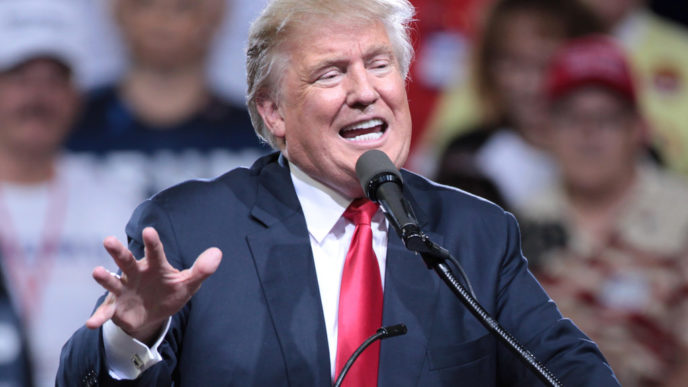
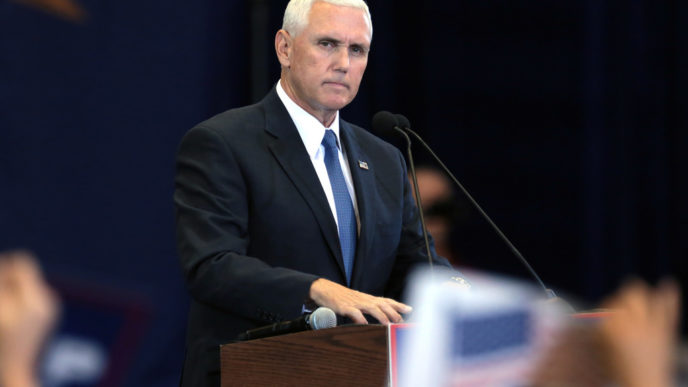
Yesterday a bomb went off in the Chelsea section of New York City, after an earlier bomb went off in Seaside, New Jersey. Donald Trump announced the bombing at his next scheduled event. The media went into a frenzy because Trump called a bombing a bombing before city officials confirmed.
They even asked Hillary Clinton about Trump’s remarks right after she called the incident a bombing herself on her campaign plane.
It is not irresponsible to call a bombing a bombing. That is in fact what happened and what social media networks were calling it. What the media don’t realize is that Americans are sick and tired of being lied to.
Almost contemporaneously to Trump calling it a bombing, the mayor of New York, Bill DeBlasio, was quick to rule out terrorism even before authorities had conducted a full investigation. You don’t see Clinton attacking him. No, she’s talking about how she’s in contact with him.
So let’s recap the past 24 hours: a bombing at a Marine Corps 5K in Seaside, New Jersey; a bombing in the Chelsea area of New York City; the discovery of a secondary Al-Qaeda-style pressure cooker bomb in NYC; and a jihadist stabbing spree at a mall in St. Cloud, Minnesota. But of course the media aren’t incredulous at DeBlasio calling the bombing “intentional” but not terrorism.
Is there any wonder why Trump has taken a lead in the presidential race? People are hungering for their leaders to speak the truth about terrorism, not to continue to obfuscate and lie. (For more from the author of “Media Upset With Trump’s Honesty Around NY Bombing” please click HERE)
https://joemiller.us/wp-content/uploads/27151862983_c3bf7003d8_b.jpg6831024Joe Millerhttps://joemiller.us/wp-content/uploads/logotext.pngJoe Miller2016-09-18 23:41:172016-09-18 23:41:17Media Upset With Trump’s Honesty Around NY Bombing
The first wave of polling after Hillary Clinton’s literal collapse over the weekend has started to be released. It’s a Trump rout. In the 11 polls released today, Trump leads seven and tied in two. Voters are reacting to their gut instincts after Clinton was caught lying about her health and giving Trump higher levels of support.
Here’s a quick snapshot of the recent polling as aggregated by RealClearPolitics.
In that polling are some state jumps. The most significant being in Ohio and Iowa. Polls in both of those states have shown large gains for Trump versus prior polling.
The words “SHOCK POLL” are probably the most overused in the political commentary business. But what just got released in Iowa fits that bill. A Monmouth poll released today in Iowa shows Trump with an eight-point lead. This is a jump from its previous poll. The poll was taken from Monday, September 12 to Wednesday, September 14, 2016.
There have been three polls released in Ohio over the past two days. Trump leads in all of them. All of them were taken, at least in part, after Hillary’s collapse over the weekend. CNN/ORC and Bloomberg both show Trump with a five-point lead, and Suffolk shows the lead at three points. Clinton leads in only one poll of the state taken in September. That CBS/YouGov poll is looking more and more like an outlier.
Hillary Clinton’s comments calling half of Trump’s supporter “deplorables,” and her being caught lying about her health have combined to move the needle in Trump’s favor. What seemed like a sure thing for a Clinton win just three short weeks ago is now a competitive race. If the election were held today, it is anyone’s guess who would win. (For more from the author of “Trump Just Had a Monster Polling Day” please click HERE)
https://joemiller.us/wp-content/uploads/25776422985_93048ba530_b.jpg6831024Joe Millerhttps://joemiller.us/wp-content/uploads/logotext.pngJoe Miller2016-09-15 23:45:012016-09-15 23:45:01Trump Just Had a Monster Polling Day
Donald Trump received a standing ovation coming and going at the Values Voter Summit in Washington, D.C., on Friday.
The theme of Trump’s speech was the centrality faith must play if America is to reclaim its heritage of greatness.
Academy Award winning actor Jon Voight introduced the candidate saying, “If God allows truth to be said and heard, we will see Donald Trump as the next president of the United States of America. He will lift the dark cloud that hovers over us now.”
“Our media culture often mocks and demeans people of faith,” Trump observed. “Your values of love, charity and faith built this nation.”
He promised, “In a Trump administration, our Christian heritage will be respected like never before. That includes religious liberty.”
Trump stated that faith in God has “the power to heal, the power to unite, the power to make all of us live better lives.”
“Our faith in God will lead us back to unity,” he believes.
A pledge that the GOP nominee made that particularly appealed to the Values Voter crowd was to repeal the so-called Johnson Amendment, which threatens churches and religious organizations with the loss of their tax exempt status if they take positions regarding political candidates.
Trump promised repealing the Johnson Amendment, which was passed in the 1950s, would be easy.
He joked that the repeal of the measure is “the only way I’m getting to heaven.”
Another issue that really resonated with the summit attendees was his commitment to support school choice.
“As your president, I will be the biggest cheerleader for school choice you’ve ever seen,” the candidate stated.
“School choice also means parents can home-school their children,” he said, which generated resounding applause.
Trump sees school choice as central to his new civil rights agenda, which he has proposed to help lift minorities out of poverty.
He said school choice is clearly the right thing to do, and there is one reason Hillary Clinton opposes it: “She is controlled like a puppet by special interests.”
Trump also addressed the future of the United States Supreme Court, noting that the next president will not only be replacing the late Justice Antonin Scalia’s seat, but as many as four others.
He contended if, “You pick the wrong people [for the high court] you won’t recognize your country.”
The candidate argued the stakes could not be higher: “It will determine whether we remain a constitutional republic.”
Trump closed reiterating that he believes the key to uniting a divided America is a renewal of faith, which recognizes that we are all God’s children, made in His image.
He stated, “Together we will make America believe again, we will make America united again, and we will make America great again.” (For more from the author of “Trump Contends Faith in God Key to Reuniting Country, Restoring Greatness” please click HERE)
https://joemiller.us/wp-content/uploads/jjjj.jpg6831024Joe Millerhttps://joemiller.us/wp-content/uploads/logotext.pngJoe Miller2016-09-11 22:52:032016-09-11 22:52:03Trump Contends Faith in God Key to Reuniting Country, Restoring Greatness
Hillary Clinton is world-renowned as a “habitual and serial liar”. She’s also an exteremely arrogant woman who will continue Barack Obama’s divisive and hateful behavior, only she won’t be as charming about it. She appears nasty and aloof because that is who she is. And this latest video confirms it.
The sad thing is half the country is just fine with this. Hillary could shoot someone on Fifth Avenue and it wouldn’t matter.
Her arrogance is why she had a personal server and continues to lie about it. The American people are beneath her.
At a New York fundraiser, she demonized “half” of Trump’s supporters as “baskets of deplorables” who are “racists, sexists, homophobic, xenophobic, Islamaphobic, you name it”. The rest are just “baskets” of pathetic people who think “the government has let them down, the economy has let them down, nobody cares about them.”
She called Trump followers “irredeemable”.
How dare she characterize people that way — half are haters and the other half are childlike idiots That is so insulting and condescending, words hardly can describe it. She has given it new meaning.
The only thing that is deplorable is her arrogance. It’s breathtaking.
We no longer have immigration, we have a welcomed invasion of illegal immigrants and unvetted asylum seekers but if we complain, we’re xenophobes and racists. If we want a private bathroom, we’re homophobes, and if we say a thing about a woman, we’re sexists. Expect to hear a lot of that last accusation if she wins the presidency.
She tried to walk it back today, saying she was “grossly generalistic”. You simply can’t take something like that back.
Look at this next brief clip. The first is Hillary behaving incredibly arrogant towards a congressman. She failed to properly supervise her embassies, particularly a most endangered one and she’s arrogant about it. In the next, she throws her support behind Soros’s anti-police, deceitful and violent hate group, Black Lives Matter – calls them “dignified”.
This is “deplorable” for traditional Americans who are being disposed and replaced. (For more from the author of “HILLARY’S ROMNEY MOMENT: More Than 47% of Trump Supporters Are Scum, According to Your Abuela” please click HERE)
https://joemiller.us/wp-content/uploads/Hillary_Clinton_24525869652.jpg37445616Joe Millerhttps://joemiller.us/wp-content/uploads/logotext.pngJoe Miller2016-09-11 21:31:462016-09-11 21:31:46HILLARY’S ROMNEY MOMENT: More Than 47% of Trump Supporters Are Scum, According to Your Abuela
For all the attention on battleground polls giving Hillary Clinton the edge, Donald Trump enjoys at least one electoral advantage in his uphill climb to the White House: Republicans are outpacing Democrats in registering new voters in key states.
A review of registration figures shows that in the swing states that sign up voters by party, Republicans are seeing a significantly bigger boost since 2012. In states like Florida and Pennsylvania, the party has added tens of thousands of voters to the rolls at a time when Democrats have seen their base shrink.
“The numbers [in those states] … are a huge shift from what we’ve seen in 2012,” Republican National Committee spokeswoman Lindsay Walters said.
The surge doesn’t change the fact that Clinton leads, if only by a thin margin, in most battleground state polls, which presumably reflect the current voter make-up.
Fox News ratings show Clinton maintains the advantage in the Electoral College, while a Washington Post survey this week of registered voters in all 50 states reflects a similar dynamic. And in big swing states ranging from Florida to North Carolina to Pennsylvania, there are still more registered Democrats than Republicans. (Read more from “Trump Card? Republican Voter Registration a Bright Spot for Campaign” HERE)
Donald Trump isn’t done killing the Tea Party yet. Today, he’s scheduled to propose repealing one of its signature achievements.
Trump’s advisors says he will propose ending the “sequester” for the military — one of the rare budget reforms signed into law by President Obama, born out of the debate over the 2011 debt ceiling increase.
Meaning, Trump’s — the self-described “King of Debt” — big plan for the military is more debt for America.
A quick trip down memory lane reminds that sequestration was brought to fruition largely by Tea Party-fueled members of Congress elected in the 2010 midterm wave. Sent to Washington by voters who were angry over the skyrocketing debt, those new members demanded more responsible spending. And President Obama’s 2011 request to increase the debt ceiling — the legal spending limit for the government — gave them the perfect opportunity.
The Democrats, as always, were resistant to any reforms. They said anyone who opposed the debt increase, for any reason at all, was threatening the “full faith and credit” of the United States government. They said the president deserved a no-questions asked, no-strings attached debt increase. Then, they said they would only be willing to talk if large tax increases were included in the deal.
Ultimately, a package of spending cuts was agreed upon in exchange for the debt ceiling increase that did not include any tax increases. The deal stipulated that Washington accept a series of spending cuts over the next 10 years in exchange for giving President Obama a $400 billion debt increase in 2011.
It wasn’t perfect because it a typical DC deal: spending, save later. But it was something.
The Heritage Foundation’s Steve Moore — now an enthusiastic Trump supporter — said the sequester “shrunk the size of government more effectively than any budget took in a generation” and that it “put an electric fence around the Left’s grand spending ambitions.”
Since it was enacted, efforts have been underway to undo the defense cuts by hawkish Republicans such as Sens. Lindsey Graham, R-S.C. (F, 30%) and John McCain, R-Ariz. (F, 34%). And, Trump is offering to turn off the electric fence for them.
“I will ask Congress to eliminate the sequester and immediately re-invest in our military,” he told an audience in Greenville, North Carolina yesterday. Aides say he will offer more details today in an upcoming military-focused speech at the Union League in Philadelphia.
That’s a change for Trump, who once praised the sequester in 2013 and called for even deeper cuts. A change that makes him sound a lot more like Hillary Clinton than a conservative.
“We cannot impose arbitrary limits on something as important as our military,” Clinton said at the American Legion in Cincinnati last week. “That makes no sense at all. The sequester makes our country less secure.”
So consider a debate over defense spending off the table for presidential debates. Both of them are in favor of nixing that particular Tea Party victory. (For more from the author of “Trump’s New Military Plan Will Gut One of the Tea Party’s Biggest Achievements” please click HERE)
https://joemiller.us/wp-content/uploads/25697720646_fa2b039926_b-1.jpg6831024Joe Millerhttps://joemiller.us/wp-content/uploads/logotext.pngJoe Miller2016-09-07 23:39:152016-09-07 23:39:15Trump’s New Military Plan Will Gut One of the Tea Party’s Biggest Achievements
There are not too many areas of policy on which Donald Trump and I agree. One of the few exceptions is on the topic of education policy, where Trump has rightly condemned the Department of Education as wasteful, meddlesome, and counterproductive. While the presidential candidate has waffled back and forth on whether he would eliminate the department outright or drastically scale it back, it’s clear that he has no love for the unconstitutional federal education bureaucracy.
Predictably, progressive groups are horrified at Trump’s proposal, and are scrambling to pull at the heartstrings of Americans, emotionally manipulating them into opposing this eminently sensible proposal. In this vein, the Center for American Progress (CAP) has released a policy paper claiming that eliminating the Department of Education (DoEd) would destroy jobs for nearly half a million teachers.
To which I can only respond: Good!
It’s time to punch a hole in this myth that teachers are some kind of noble, magical unicorns selflessly molding young minds out of the goodness of their hearts. While there are many good teachers who honestly want to help children learn, we need to get over this idea that every teacher is infinitely valuable simply by virtue of their chosen profession. Teaching is a job like any other, but unlike most other jobs, it’s one that has been badly corrupted by politics and government to the point where many teaching positions do more harm than good.
In particular, public school teachers have largely become glorified babysitters, tasked with crowd control, not education. And mandatory testing standards mean that many teachers are simply ”teaching to the test” rather than engaging in a genuine effort to enlighten their students. In some schools, the role of the teacher has been reduced to pressing play on a device containing a pre-recorded lesson plan. Yet these are the brave and noble souls that liberals think deserve special treatment compared to other workers.
Regarding the Department of Education itself, it’s important to note that the U.S. Constitution does not mention education as an enumerated power of the federal government, The Tenth Amendment makes explicit that anything not specifically given to the federal government is the sole province of the states, and the people. The Department of Education is therefore, by definition, illegal. Anyone who uses the argument that “we must uphold the rule of law” must likewise oppose the Department of Education, or risk falling into the fathomless abyss of hypocrisy.
Now that that’s out of the way, let’s take a pragmatic look at what the Department of Education actually does. The Department’s core function is awarding large amounts of money to state and local school systems in the form of federal grants, with inevitable strings attached that hamstring localities’ ability to set their own curricula, standards, or procedures. The massively unpopular Common Core standards are a prime example of the kind of mischief the DoEd gets up to, as states were lured into the restrictive standards by massive amounts of funding through the Race to the Top program, only to discover that any semblance of flexibility was the cost of the grants.
Federal control over local schools makes no sense, as bureaucrats in Washington have no idea what is needed to educate students in Alaska, Alabama, or Maine. Additionally, the money handed out by the DoEd has not resulted in any measurable improvement in education outcomes over the forty or so years of its existence.
If, as CAP alleges, scaling back teachers and funding will be catastrophic for student outcomes, why is it that we have seen absolutely no benefit from the steady increase of both these variables over the past several decades? This is how government operates; it endlessly piles up spending and staff that were never necessary to begin with, and then screams that disaster will occur if they are removed.
This brings us back to teachers. At this point, most people are familiar with teachers’ unions and how they prevent bad teachers from being fired. We’ve all heard stories about hopelessly incompetent or even criminal teachers staying on staff because of their union’s political power. A business that is unable to get rid of its worst employees is always doomed to failure, unless, of course, it is being propped up by endless revenue streams courtesy of the American taxpayer, as public school are. These people don’t care about students; they care about lining their own pockets.
This diversion of funds from the private sector, where people spend money on things they care about, and where they try to find good value for their dollars, to politically favored groups like teachers who bear no responsibility for doing a good, or even acceptable job, is a tremendous waste, not just of money, but of young minds as well. I have no doubt that many of these teachers who are propped up by funding from the DoEd would be much more valuable to society in other roles, where their worth is determined by the services they provide to the public, not the lobbying of special interests.
In summary, children in public schools, especially those under the thumb of the federal government, are not taught, they are controlled. They are not encouraged, they are discouraged. They are told what to think, not how to think. They are brainwashed to obey authority without question, and punished when they dare to think differently. In my view, the fewer people we have engaging in such irresponsible treatment of our children, the better. (For more from the author of “Why I Applaud Trump’s Plan to Show Teachers the Door” please click HERE)
https://joemiller.us/wp-content/uploads/1280px-Jinego_Elementary_School_1st_grade_classroom_back.jpg9601280Joe Millerhttps://joemiller.us/wp-content/uploads/logotext.pngJoe Miller2016-09-06 22:48:012016-09-06 22:48:01Why I Applaud Trump’s Plan to Show Teachers the Door
Donald Trump was enjoying a rare moment of positive media coverage on CNN, Fox and other networks Saturday as a black Christian bishop from Detroit was bestowing his blessing with a powerful symbolism that included the laying on of a Jewish tallit or prayer shawl.
“There are going to be some times in your life that you’re gonna feel forsaken,” Bishop Wayne Jackson told Trump. “You’re gonna feel down. But the anointing is going to lift you up. I prayed over this prayer shawl and I fasted over it. And I wanna just put this on you … .”
The bishop placed the prayer shawl over Trump’s shoulders, then gave him a Jewish Heritage Bible and instructed him, when things are going badly, to read Mark 9:23 “If you can believe … .”
That’s when a voice can be heard saying, “Shut it down!” . . .
After some brief resistance from the cameraman, the order to “shut it down” persists and the feed is suddenly dropped. The screen went to a “blackout.” (Read more from “‘Shut It Down!’: Cameraman Ordered to Kill Positive Trump Footage” HERE)
An NBC reporter who has been asking repeatedly about the release of Republican presidential candidate Donald Trump’s tax returns got an answer he might not have been expecting from Republican vice presidential candidate Mike Pence.
“Donald Trump and I are both going to release our tax returns. I’ll release mine in the next week,” Pence told Chuck Todd of during an interview filed for Sunday’s Meet the Press.
Pence said Trump will be following a different schedule.
“Donald Trump will be releasing his tax returns at the completion of an audit,” he said.
Todd asked Pence whether that would take place before the November election.
“Well, we’ll see,” said Pence.
Trump has said he was not releasing his taxes because several years of his returns are being audited by the Internal Revenue Service. He has come under fire from Democrat nominee HIllary Clinton to release his returns.
During his Meet the Press interview, Pence had harsh words for the character of Clinton.
Clinton is “the most dishonest candidate for president of the United States since Richard Nixon,” Pence said during the interview.
Todd questioned Pence about that position, but Pence was adamant.
“It is a tough charge,” Pence said. “But, come on.”
Earlier this week, Todd pressed Republican National Chairman Reince Priebus on the subject of Trump’s taxes, insisting to Priebus that Trump should release them in order to hold the “higher ground” against Clinton in discussing the Clinton Foundation
Priebus rejected that idea.
“We know that Hillary Clinton shouldn’t be trusted with national secrets and with the most precious — the most precious information that our country has in their hands. We know she can’t be trusted. Are you equating that the known conclusion that she can’t be trusted with state secrets to what could be in Donald Trump’s taxes?” Priebus said.
Although there is no legal requirement that presidential candidates release their tax returns, it has been the custom of candidates to do so since 1972. (For more from the author of “Pence Announces Plans He and Trump Have Made for Releasing Tax Returns” please click HERE)
https://joemiller.us/wp-content/uploads/28736711795_07c291c65d_b.jpg6831024Joe Millerhttps://joemiller.us/wp-content/uploads/logotext.pngJoe Miller2016-09-04 22:52:112016-09-04 22:52:11Pence Announces Plans He and Trump Have Made for Releasing Tax Returns
Donald Trump’s visit to Mexico has captured the headlines, and seems like a smart piece of political strategy. It suggests that he understands the need for dialogue, and the fact that our southern neighbor is far too important to America’s national interest for a president to treat it as a handy campaign pinãta. Just imagine if Mexico became not merely uncooperative but actually hostile, and cozied up to Russia or China: We’d face a replay of the Cuban Missile Crisis.
Trump’s speech on immigration was stirring, detailed and smart. It focused rightly on America’s national interest and the needs of the least among us: crime victims, less skilled workers and hard-pressed honest taxpayers, all of whom suffer from our uncontrolled national borders.
His having met with that country’s leader, let us hope that Mr. Trump embarks on a deeper study of Mexico’s people and history, from which he could draw a long list of valuable lessons in politics and governance. Sadly, most of those lessons would be on what to avoid.
What Happened to Monterrey, Mexico?
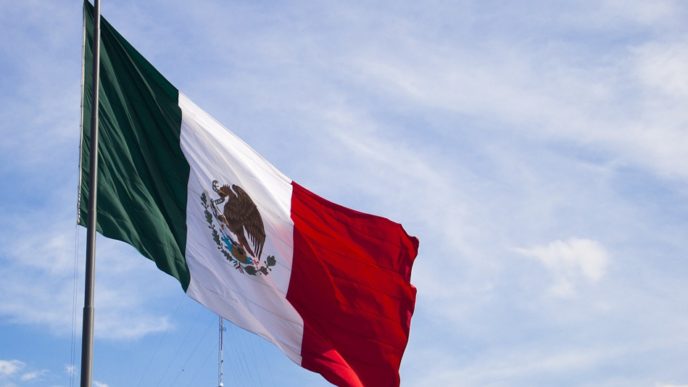
Mexico is a vast, complex, and beautiful country full of hard-working people of enormous creativity and faith, which has for most of its history been crassly misgoverned — wasting its great potential, and driving millions to flee their homes for America, in defiance of our just and democratically enacted immigration laws.
I’ve only visited Mexico once, in 2000. I stayed with Catholic activists in the city of Monterrey, which was then one of Mexico’s most prosperous cities. People called it “Mexico’s Dallas.” Apart from the gorgeous architecture and delicious food, the thing that stayed with me most was our drive through the city’s slums. The houses were small and fragile-looking, crowded too close together. But most were carefully maintained, freshly painted, and festively decorated. These people, however poor, insisted on their dignity.
Since then, Monterrey has been devastated by drug cartels, whose heavily armed and utterly ruthless soldiers think nothing of gunning down police captains, mayors, and thousands of civilians. I wonder what those humble homes I saw in 2000 look like today, and how their inhabitants are faring. I wonder how many were willing to break America’s laws to come here.
Mexico Inherited Bad Political Philosophy From Spain
That one city is a microcosm of Mexico as a whole. The stark contrast between American and Mexican history can be traced all the way back to the culture and politics of the nations that colonized them. The English who settled in North America came from a kingdom where the Magna Carta had prevailed for more than 300 years, guaranteeing due process and property rights. Its monarch’s rule was dependent on the consent of the English Parliament. Local government was strong, and much of the power decentralized. The English Reformation, for all the cruelty that was practiced on both sides, had underlined the need for restraints on royal power, as non-conforming Protestants cited medieval, Catholic precedents in Common Law to protect their political and religious freedom.
By contrast, the Kingdom of Spain had made itself religiously homogeneous in 1492 when it expelled the last Jews and Muslims. In 1520-21 the Spanish Crown crushed the revolts of localists. Its kings repealed the fueros (Spanish Magna Cartas) that had once guaranteed the rights of citizens and small communities. Spain’s kings rejected as inefficient and antiquated medieval restraints on monarchs, and governed according to the new and “modern” theory of absolute monarchy. Order was not seen as something that grew organically from the ground, but as a magnetic force that proceeded from a single all powerful center, in Madrid.
This contrast in political philosophies set the tone for the histories of two nations. While English colonies developed vibrant town councils and state legislatures, mostly rejecting attempts to impose royal governors from England, the provinces of New Spain were run by appointees arriving from Spain. The initiative for laws came not from the citizens of Mexico City or Monterrey, but from faraway Madrid.
Nor did the Spanish legal system provide the same robust protections for property rights as English citizens — and colonists — could rely on. Read the Peruvian economist Hernando de Soto (cited here at The Stream) on how crucial property rights are to raising people from poverty and supporting the rule of law.
Town Meetings in New England, But Not in New Spain
When England tried to impose protectionism for its own benefit on the residents of its colonies, their local governments resisted, and winked at citizens smuggling to avoid such crippling tariffs. By contrast, New Spain’s governors were perfectly willing to govern that province in Spain’s (not New Spain’s) interests, suppressing whole industries if Spain found the competition obnoxious. The path to wealth in New Spain lay through royal patronage and vast land grants, not industry or commerce.
When the United States and Mexico cast off their colonial masters, each followed for the most part in the tracks which their past had lain down. While the American founders built into their Constitution elaborate checks and balances, and preserved most taxing and governing power for states and even towns, the elites who seized power in newly founded Mexico continued to act like Spanish grandees, seeing those whom they governed not so much as citizens but as subjects — especially the large majority of Indian and mixed-race residents, who had little voice in governance. (Of course, in America we persecuted our Indians and imported African slaves — our hands are by no means clean.)
It was only the Catholic Church that preserved some land for Indians, land that ambitious descendants of the Conquistadors would gradually steal, in the name of “freeing” Mexico from the dominance of the Church. The periodic revolutions and coups d’etat that marked the transitions of power in Mexico were not philosophically driven movements like the American Revolution, but mostly the acts of strongmen like General Santa Anna who sought unaccountable power. Sometimes they used that power, as in the 1920s, to persecute clergy and churchgoers — trying to break the back of the only institution that could resist the centralized state. The faithful priests and peasants who took up arms in resistance (the Cristeros) nearly toppled that evil government.
Nationalism, Populism, Protectionism: 3 Imports America Doesn’t Need
Through all these historical traumas, the hard-working and long-suffering people of Mexico have forged a powerful sense of their own nationhood, which ideologues sometimes have fanned into intolerant nationalism. The socialist Party of Institutionalized Revolution rode such sentiments to power. In 1938 it seized the property of the (foreign-built) oil industry and turned it into a crony capitalist monopoly; then it harshly restricted the influx of foreign capital. Such economic populism, whether practiced in Mexico or Argentina, has a predictable effect: It starves local industries of much-needed investment, and helps make a few fat cats rich, while impoverishing the majority.
It’s ironic, then, that Donald Trump has made so much political hay from criticizing Mexico. In many ways the political impulses he has tapped into throughout his campaign are examples of what went wrong in Mexico. Economic populism; protectionism; angry reactive nationalism; impatience with the separation of powers and the rule of law; and the willingness to override property rights (see eminent domain): these are the hallmarks of Mexican political history, which produced a struggling country whose citizens are fleeing its cities to move to ours.
Nevertheless, as Trump said eloquently and accurately in his policy speech on immigration, the U.S. is the aggrieved party in the immigration crisis. While our neighbors in Mexico deserve our goodwill, respect and prayers, their country is in fact rife with social problems that we should not be importing in the form of millions of low-skill migrants whose political and social expectations have been formed by crony socialism. (For more from the author of “What Trump Could Learn From Studying Mexico’s History” please click HERE)
https://joemiller.us/wp-content/uploads/flag-622884_960_720.jpg720949Joe Millerhttps://joemiller.us/wp-content/uploads/logotext.pngJoe Miller2016-09-01 23:59:352016-09-01 23:59:35What Trump Could Learn From Studying Mexico’s History