Posts

FBI Says Two State Election Databases Compromised by Foreign Hackers

Foreign hackers have broken into two state election databases, according to evidence uncovered by the FBI, which is now warning election officials nationwide to enhance the security of their computer systems.

Yahoo! News reports the FBI’s Cyber Division sent out a “flash” alert indicating that the FBI received information of two separate IP addresses detected in the July 2016 compromise of a state’s Board of Election website and the August 2016 “attempted intrusion” of another state’s Board of Election system.

The FBI bulletin did not identify which states were compromised, but Yahoo! cited “sources familiar with the document” that indicated voter registration databases in Arizona and Illinois were targeted by suspected foreign hackers.

In the Illinois case, officials were forced to shut down the state’s voter registration system for ten days in late July, after the hackers managed to download personal data on up to 200,000 state voters, Ken Menzel, the general counsel of the Illinois Board of Elections, said in an interview. The Arizona attack was more limited, involving malicious software that was introduced into its voter registration system but no successful exfiltration of data, a state official said.

The FBI bulletin listed eight separate IP addresses that were the sources of the two attacks and suggested that the attacks may have been linked, noting that one of the IP addresses was used in both intrusions. The bulletin implied that the bureau was looking for any signs that the attacks may have been attempting to target even more than the two states. “The FBI is requesting that states contact their Board of Elections and determine if any similar activity to their logs, both inbound and outbound, has been detected,” the alert reads. “Attempts should not be made to touch or ping the IP addresses directly.”

This news comes amid recent cyber attacks from suspected foreign actors on the Democratic National Committee and Democratic members of Congress. (For more from the author of “FBI Says Two State Election Databases Compromised by Foreign Hackers” please click HERE)

Follow Joe Miller on Twitter HERE and Facebook HERE.

Defective Detectives at FBI Missed Another Terrorist in Va. Knife Attack

The FBI has launched an investigation into an alleged ISIS-inspired knife attack in Roanoke, Virginia. Investigators are attempting to determine if the attacker may have been trying to behead his victim, reports ABC News.

The alleged attacker is 20-year-old Wasil Farooqui, a resident of the Roanoke area. Federal authorities have known about him “for some time,” according to ABC News. In the past year, he traveled to Turkey and sources say may have tried to sneak into Syria, where ISIS is actively recruiting.

On Saturday, Farooqui allegedly injured a man and woman at an apartment complex, yelling “Allah Akbar” as he attacked them with a knife. Authorities believe he may have been trying to behead the male victim.

“‘The FBI is working with the Police Department following the incident that occurred on Saturday evening,’ the head of the FBI’s Richmond field office, Special Agent In Charge Adam Lee, said in a statement. ‘While I cannot discuss details of the investigation at this time, I do want to reassure the community that we are working to determine the nature of the incident.'”

If this is indeed a terrorist attack, it could mark yet another instance of an individual on the FBI’s radar for terrorist connections carrying out an act of jihad before authorities could stop him.

In his book, “United States of Jihad: Investigating America’s Homegrown Terrorists,” Peter Bergen identified several instances of law enforcement failing to cooperate with other law enforcement agencies and missing homegrown terrorists as a result.

As Conservative Review’s Robert Eno wrote in a review of Bergen’s book:

Bergen makes a strong case for a reliance on traditional police-work techniques to ferreting out homegrown radicals. This includes the sharing of information between agencies, something that was supposed to have changed after 9/11. Bergen explains how it hasn’t. Time and time again, Bergen shows that law enforcement is still not connecting dots, and not sharing information.

Farooqui was arrested by Roanoke County Police Saturday on charges of assault with malicious wounding.

Is this another instance of the FBI failing to “connect the dots”? (For more from the author of “Defective Detectives at FBI Missed Another Terrorist in Va. Knife Attack” please click HERE)

Follow Joe Miller on Twitter HERE and Facebook HERE.
FBI in ‘Secret’ Control of Your Smartphone

The FBI wants the ability to surreptitiously turn your smartphone into a video- and audio-recording device without your knowledge, and it is calling on the high-tech industry to supply it with an app to perform those surveillance functions.

According to a planning document that WND obtained via routine database research, the app would enable the FBI to capture sounds and images near a targeted phone, and not simply intercept communications taking place through the phone.

The contents of the draft Request for Information, or RFI, document, “Smartphone-based Audio Recorder Technical Requirements,” reveal more than the title suggests about this desired capability.

Although the FBI, on the one hand, also wants to give agents the ability to use their own phones to overtly record field interviews, upon closer inspection the document reveals a desire to remotely tap into another person’s phones via “stealth mode.”

“In this mode, the room audio will be streamed to another device for live/post monitoring,” the draft RFI, Solicitation No. DJF-16-1200-N-0007, says. “The basic capability will be audio, but GPS location information is also desired and eventually video capability.” (Read more from “FBI in ‘Secret’ Control of Your Smartphone” HERE)

Follow Joe Miller on Twitter HERE and Facebook HERE.

FBI Technician Convicted of Spying for China

An FBI computer technician with top-secret clearance who regularly accessed restricted information has been outed as a Chinese spy. Working in the agency’s large New York City office, Reuters reports, Kun Shan Chun was convicted Monday of acting as an agent of a foreign government and will be sentenced December 2. He had been arrested in March after a sting operation.

Chun, known as “Joey,” came to this country from China with his parents when he was 5. A naturalized citizen of the United States, he began working for the FBI in 1997 but admitted only to passing secrets to the Chinese government from 2011 to 2016, working through a Chinese printer company, for which he worked as a researcher and consultant.

The assistant U.S. attorney said that the information he passed to the Chinese government “included the identity and travel plans of an FBI agent; an internal organizational chart; and photos he took of documents in a restricted area related to surveillance technology,” according to Reuters.

Rising Chinese Espionage

Chun had been charged with four counts, but accepted a plea bargain for the one charge with the agreement he would serve a short sentence. “Since the government’s evidence against Chun looks airtight,” wrote security expert John R. Schindler, “it seems likely that the Feds don’t want a trial which would require the Bureau to explain in detail what their mole gave to Beijing.” Writing in The Observer, a New York City weekly, he argued that

rising Chinese espionage presents a serious problem for the United States because it’s so heavily ethnic in character. Beijing expects its nationals overseas — whom we want to view as patriotic immigrants and naturalized Americans — to serve as their spies abroad, and some of them are quite willing to do so, particularly if China sweetens the pot with financial incentives. This seems to have been the case with Chun.

Schindler warned that such spies are hard to catch, partly because of “political correctness.” No one “wants to be accused of ethnic bias — or worse “racial profiling” — over molehunts. As with counterterrorism in the age of Obama, it’s worse for your counterespionage career to be accused of racism than to miss the mole right in your midst.”

Schindler has, he said, knowledge of “suspected Chinese moles inside our Intelligence Community” who “were allowed to resign, never to face charges of any kind.”

The Daily Caller quoted a report by Manhattan U.S. Attorney Preet Bharara stating that Chun’s is the second Chinese espionage case in the past four months. The other is the case of Amin Yu, “‘who smuggled underwater drone parts from U.S. companies to a state-owned university in China that does military research.’” Yu was a permanent resident who used her own companies to acquire the parts she sent on to China.

The week before Yu was arrested, Newsweek reported, Chinese citizen Fuyi Sun was arrested in another sting operation for buying strictly controlled carbon fiber to send to China. And those arrests followed yet others, including this one described in a New Yorker feature. (For more from the author of “FBI Technician Convicted of Spying for China” please click HERE)

Follow Joe Miller on Twitter HERE and Facebook HERE.

FBI Fails at Prioritizing Cyber Threats, Report Finds

Subjectivity and sluggishness plague the FBI’s cybersecurity threat prioritization process, leaving room for bad actors to exploit national security weaknesses, according to a new Department of Justice (DOJ) Office of Inspector General (IG) report.

The FBI’s Cyber Division only conducts its Threat Review Prioritization (TRP) review once a year. Unnamed FBI officials in the report described using review techniques as a “gut check” that’s based more on the “loudest person in the room” than objective criteria.

“We found the criteria used in the TRP process are subjective and open to interpretation,” the IG said. “As a result, the FBI’s TRP process does not prioritize cyber threats using an algorithmic, objective, data-driven, reproducible, and auditable manner.”

“In addition, we found that TRP may not be agile enough to identify emerging cyber threats,” the IG added. “We believe that as cyber threats continue to increase in size and complexity, lack of objective, data-driven prioritization can hinder the FBI’s ability to effectively prioritize the most serious threats.”

The FBI claims protecting the U.S. against cyber attacks is its third priority, behind conducting counterterrorism and counterintelligence operations.

The FBI tried to address TRP’s subjectivity in 2012 by adding a second layer of cybersecurity threat analysis, a system called the Threat Examination and Scoping (TExAS) tool. TExAS has the potential to make the FBI Cyber Division’s approach to threats more objective, but the FBI hasn’t developed policies and procedures dictating who enters data into that second system, or how, the IG said.

“Since its implementation, the TExAS tool has been managed without documented policies and procedures detailing the roles and responsibilities for entering data about each threat,” the IG stated.

The IG also found the Cyber Division can’t determine how it’s allocating its resources to any given cyber threat.

“Without the ability to track the time agents spend by threat, the FBI cannot be sure that it is appropriately aligning its cyber resources to its highest priority threats, a vital capability for a threat-driven organization in the current cyber climate,” the IG said.

The IG said the FBI should use an algorithmic, data-driven, objective methodology to analyze and prioritize cyber threats, and use documented policies and procedures dictating who enters data and how. The FBI should also analyze its cybersecurity priorities at least every 30 days, instead of annually, the IG said. (For more from the author of “FBI Fails at Prioritizing Cyber Threats, Report Finds” please click HERE)

Follow Joe Miller on Twitter HERE and Facebook HERE.

FBI Confirms Agents Were Ordered to Keep Silent About Clinton’s Emails

Five months after the FBI was first asked whether its agents investigating Democratic presidential candidate Hillary Clinton’s emails were being prevented from speaking publicly about the case, the FBI has now admitted officially that that is indeed the case.

Fox News reports that a July 1 letter sent by the FBI to Senate Judiciary Committee Chairman Chuck Grassley, R-Iowa, confirmed that agents had been required to sign a “Case Briefing Acknowledgement.” The document says that disclosing information about the case is “strictly prohibited” without prior approval.

Grassley had first asked the FBI about any attempt to muzzle agents back in February, but did not receive a reply until early this month.

The FBI letter said the purpose of the agreement was twofold: “to maintain an official record of all persons knowledgeable of this highly unusual investigation, and to remind individuals of their obligations to protect classified and sensitive information.” The letter said “no one refused to sign” or “raised any questions or concerns.”

Fox News quoted a recently retired FBI agent as saying that such a step was used only in “the most sensitive of sensitive cases,” and can have a “chilling effect” on agents, who know that the edict not to talk “comes from the very top and that there has to be a tight lid on the case.”

In a July 6 letter to FBI Director James Comey in which Grassley asked a wide range of questions about the FBI investigation, he touched upon the FBI’s order limiting the ability of agents to speak about the case. In light of several “inconsistencies” in the case that the senator listed, he said he found it “even more troubling that the FBI tried to gag its agents with a non-disclosure agreement on this matter, in violation of whistleblower protection statutes.”

“In your July 1st reply to my February 4th letter, you indicated that agents working on this case were required to sign a non-disclosure agreement that failed to exempt protected whistleblowing,” Grassley wrote. “Only after I wrote to you did you advise your FBI agents that they are still free to speak with Congress regarding waste, fraud, and abuse.” (For more from the author of “FBI Confirms Agents Were Ordered to Keep Silent About Clinton’s Emails” please click HERE)

Follow Joe Miller on Twitter HERE and Facebook HERE.

FBI Director Comey Called to Answer for Hillary Decision

FBI Director James Comey will appear before Congress on Thursday to explain his bombshell decision not to recommend charges against Hillary Clinton over her handling of classified information on her private, unsecured email server.

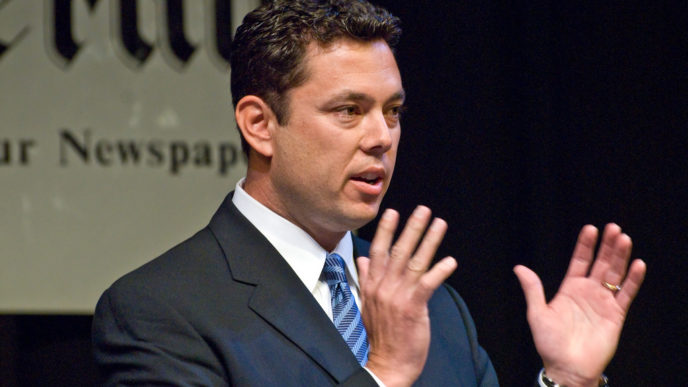
Rep. Jason Chaffetz, R-Utah, the chairman of the House Oversight and Government Reform Committee, told Fox News on Wednesday that Comey will answer questions before his committee regarding the decision.

“The FBI’s recommendation is surprising and confusing,” Committee Chairman Jason Chaffetz, R-Utah, said. “The fact pattern presented by Director Comey makes clear Secretary Clinton violated the law. Individuals who intentionally skirt the law must be held accountable. Congress and the American people have a right to understand the depth and breadth of the FBI’s investigation.”

Comey, in making his announcement not to recommend indictment on Tuesday, described the former secretary of state’s actions as “extremely careless,” which would seem to meet the legal standard of “gross negligence” laid out in the applicable statute.

The FBI director stated 110 emails were “determined by the owning agency to contain classified information at the time they were sent or received.” Of those, eight contained Top Secret information.

These findings contradict statements made by Clinton about her email server. First the former secretary claimed her server contained no classified information, but then over 2,000 emails were found that did contain such information. Clinton then changed her defense claiming none was classified at the time, which was also found not to be true.

Clinton altered her story yet again saying nothing was “marked” classified at the time, which was also false.

“Comey’s decision was seen in many quarters as a punt. By branding Clinton’s use of unauthorized servers to send and receive sensitive — and in some cases top secret — information as ‘extremely careless,’ Comey gave Clinton’s critics plenty of ammunition,” Fox News reported.

“By stopping short of referring the results of his bureau’s year-long probe to the Attorney General to pursue an indictment, Comey may have removed the biggest obstacle in Clinton’s path to the White House,” the news outlet added.

Comey took no questions in making his Tuesday announcement, so his appearance on Thursday will potentially give the public the first opportunity for further explanation behind his decision. (For more from the author of “FBI Director Comey Called to Answer for Hillary Decision” please click HERE)

Follow Joe Miller on Twitter HERE and Facebook HERE.
Rudy Giuliani Reveals Why Hillary Clinton Still Might Face Criminal Charges

On Tuesday morning, FBI Director James Comey reported the findings of the investigation into former Secretary of State Hillary Clinton’s handling of classified emails on her personal email servers. While Comey called Clinton’s decision to maintain private email servers and to send and receive some 110 emails containing classified information “extremely careless,” he ultimately decided not to recommend to Attorney General Loretta Lynch that criminal charges be filed against the Democratic presidential candidate.

Former New York City Mayor Rudy Giuliani, a former prosecutor himself, told Fox News he is “so disappointed” in Comey’s decision. “She violated 18 USC section 793,” Giuliani concluded.

Giuliani, however, said the case is still not closed. “Now the interesting thing is the statute of limitations will not have run out on this,” the former New York mayor noted.

Giuliani concluded that if Republican presidential candidate Donald Trump is elected president, he could appoint an aggressive attorney general to charge Clinton. “If Trump should win and appoint an attorney general who’s got the courage to do it, they could bring this indictment,” he said.

Trump himself made a similar point in a speech in November.

“You better remember: There’s a six-year statute of limitations on that crime,” he said. “So Hillary’s running for a lot of reasons. One of them is because she wants to stay out of jail. Because I am sure — and first of all, everybody gets a fair shake with me — but I am sure whoever the attorney general is, you’ve got a lot of years left on that crime. That’s a crime.”

“If I win, we’re going to look into that crime very, very seriously, folks,” he added. “She’s watching right now and she’s saying to herself, ‘Man, I better win.’”

In his concluding comment, Giuliani said that Clinton “should have at least resigned as a candidate, on the grounds that if she can’t pass a top security clearance, she can’t be president of the United States.” (For more from the author of “Rudy Giuliani Reveals Why Hillary Clinton Still Might Face Criminal Charges” please click HERE)

Follow Joe Miller on Twitter HERE and Facebook HERE.
WATCH: FBI Director Warns Democrat Gun Control Measures Could ‘Blow’ Terror Investigations

FBI Director James Comey has warned Democrats that their plans to ban individuals on terrorist watch lists from purchasing firearms threatens to damage FBI terror investigations.

Congressional Quarterly (Paywall) reports that a spokeswoman for the FBI said that “Comey does not take a position on the proposed gun amendment but … has told lawmakers he is focused on the operational side and the FBI does not endorse legislation.”

During a 2015 Senate Appropriations subcommittee hearing, Director Comey said that stopping the sales of firearms could “blow our investigation”

“Well, senator, what we do now is if someone on the watch list purchases or attempts to purchase a firearm, an immediate alert is sent to the agents who are the source of the suspicion about that individual, so they can incorporate that information into their investigation,” Comey said.

“It’s a little bit challenging for us because known or suspected means it hasn’t been adjudicated in every case that somebody is a terrorist,” Comey said. “It’s somebody we’re investigating, so we don’t want to, obviously, blow our investigation. Sorry.”

Here’s video of the testimony:

(For more from the author of “WATCH: FBI Director Warns Democrat Gun Control Measures Could ‘Blow’ Terror Investigations” please click HERE)

Follow Joe Miller on Twitter HERE and Facebook HERE.

FBI Terror Watch List Can Have Little Impact, Experts Say

Being on the FBI’s terror watch list doesn’t necessarily have a direct impact on an individual, experts say. This is why the Islamist-inspired gunman who murdered 49 people in Orlando was still able to purchase a firearm and work for one of the nation’s largest security firms.

The FBI twice investigated Omar Mateen, the Orlando mass murderer who pledged allegiance to the Islamic State, but authorities say he doesn’t appear to have been directed by the Sunni militant group. The FBI won’t confirm whether Mateen was on the list.

If he was on a list, it likely would have been the Terrorist Screening Database, or TSDB, which is for domestic and foreign individuals reasonably believed to be involved in terrorism. This is typically referred to as the terrorist watch list. Broadly, being on the list may have few consequences, but being on a subset of the list could have significant ramifications.

“The Terrorist Screening Center does not publicly confirm nor deny whether any individual may be included in the U.S. Government’s Terrorist Screening Database (TSDB) or a subset list,” FBI Terrorist Screening Center spokesman Dave Joly said in an email to The Daily Signal. “Disclosure of an individual’s inclusion or non-inclusion in the TSDB or on the No-Fly List would significantly impair the government’s ability to investigate and counteract terrorism, and protect transportation security.”

Mateen was previously on the terror watch list, but was later taken off the list, the Los Angeles Times reported. The newspaper reported that remaining on the list would not have stopped him from buying a gun.

Joly sent a later message explaining, “an individual’s presence in the Terrorist Screening Database, in and of itself, is not a disqualifying factor pursuant to the Brady Act.”

An example of these subsets is the “Known and Suspected Terrorist,” also know as the KST file. Someone on this file would be flagged on the National Instant Criminal Background Check system when trying to purchase a firearm, said David Inserra, a policy analyst for homeland security and cyber policy for The Heritage Foundation. If a name were flagged, it would trigger an investigation, as anyone on the “known or suspected terrorist” file would be prohibited from buying a gun or explosives.

A widely known subset of the terror watch list is the “No-Fly List.”

“The criteria for the list is there has to be enough evidence for intelligence to raise a red flag,” Inserra told The Daily Signal. “An individual has to be nominated to the terrorist watch list. The No-Fly List has substantial criteria, above and beyond the TSDB.”

The specific criteria are confidential. According to the FBI, the “reasonable suspicion” standard must be based on credible information and intelligence by law enforcement, homeland security, and intelligence community agencies, as well as U.S. embassies and consulates, that an individual “knowingly engaged in conduct constituting, in preparation for, in aid of, or related to terrorism or terrorist activities.” The National Counterterrorism Center reviews the information gathered.

The State Department, the Defense Department, the Transportation and Security Administration, the FBI’s National Crime Information Center, and the U.S. Customs and Border Protection are the five federal agencies that screen the terror watch list.

Mateen reportedly purchased a gun in the last two weeks. He also worked as a security officer at G4S Secure Solutions since 2007.

“It is a fairly high bar for restricting constitutional rights and rightly so,” said Jim Hanson, executive vice president of the Center for Security Policy, a national security think tank. “When you query a database, it’s more about connecting the dots than about stopping people.”

The watch list can seem ineffective, said Bill Roggio, senior fellow at the Foundation for Defense of Democracies, an organization that conducts research on terrorism, noting that the culprits in the Boston Marathon bombing were also reportedly on the list.

“We don’t know all of what has been averted, but in this case the list clearly failed,” Roggio told The Daily Signal. “These lists can only do so much without trampling on constitutional rights. But at some point, as this happens more, people are going to ask what good are these lists if we are not protected?” (For more from the author of “FBI Terror Watch List Can Have Little Impact, Experts Say” please click HERE)

Follow Joe Miller on Twitter HERE and Facebook HERE.