Posts

Mass of Giant Sloths Died Together, and Scientists Can’t Figure out Why

Paleontologists Dig Into a Giant Sloth Boneyard

By Scientific American. . .Fossilization is a fairly rare occurrence to start with. Most lives that ever have been lived left no record of their existence or passing. So when paleontologists come across dense pockets of bone, representing not just one animal but many, how such an ancient treasure trove was assembled is one of the core threads that we can pull on to unravel the mystery of a time long gone. So it is with a massive accumulation of sloths found in Santa Elena, Ecuador.

The site, called Tanque Loma, has just gotten a detailed description from paleontologist Emily Lindsey and colleagues. It’s a fantastically-rich Ice Age bonebed, containing the remains of at least 22 individual Eremotherium laurillardi – one of the largest of the giant ground sloths. What’s more, the bones are entombed in sediment rich in asphalt and the mashed-up plant material found at the site are the sloth’s feces, gut contents, or both. So how did so many sloths wind up buried in the same spot?

First, the asphalt is something of a red herring. This place wasn’t a sticky trap like the famous La Brea asphalt seeps in Los Angeles. Instead, the bonebed was created in a watery environment that was later infiltrated by asphalt. Digging deeper, Lindsey and coauthors write, Tanque Loma was “a low-energy, anoxic, marshy aquatic environment” that sometimes went dry for long enough to let terrestrial plants to grow there. And this backdrop may hold the key to what befell the sloths. . .

But why at this place, and why so many? There are other bonebeds near Tanque Loma, but none contain Eremotherium in such great abundance. And bonebeds like this can form in very different ways. Perhaps the sloths stuck around a dried-up watering hole too long. Maybe some local catastrophe killed a whole bunch of the sloths at once. Maybe this place took victims over time, with mud or some other trapping mechanism preventing sloth after sloth from escaping. Or perhaps ancient humans with a hunger for sloths created this site. (Read more from “Paleontologists Dig Into a Giant Sloth Boneyard” HERE)

___________________________________________________

A Bone Bed Reveals Mass Death of Herd of Giant Ground Sloths

By Nature. . .The team found that the animals ranged from juveniles to full-grown adults, hinting that these Ice Age behemoths might have travelled in herds. The site, which has been carbon dated to roughly 18,000 to 23,000 years ago, features copious remains of the beasts’ digested food.

Ground sloths found at other fossil sites died after becoming mired in asphalt seeps. But the authors hypothesize that the Tanque Loma animals might have been gathered in a drying waterhole — as modern-day hippopotamuses do — when they perished of thirst or disease. (Read more from “A Bone Bed Reveals Mass Death of Herd of Giant Ground Sloths” HERE)

Follow Joe Miller on Twitter HERE and Facebook HERE
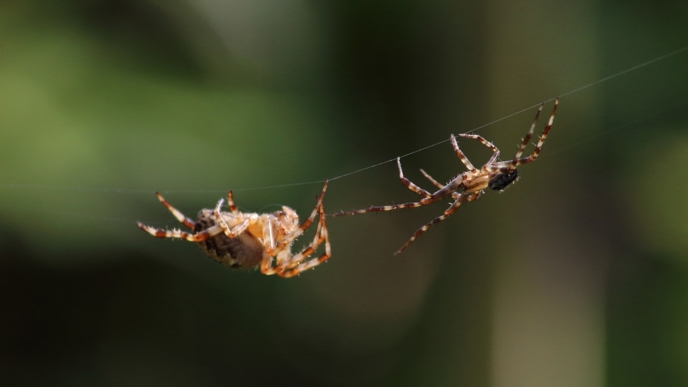
Researchers Found Spider Fossils From ‘110 Million Years’ Ago. The Eyes Still Glowed

A collection of spider fossils was discovered in South Korea, including two with eyes that appeared to glow, according to a study. . .

Researchers say two of the fossils of the spider family Lagonomegopidae, believed to have lived 110 million to 113 million years ago, have reflective eyes that were helpful for hunting at night. . .

“Because these spiders were preserved in strange slivery flecks on dark rock, what was immediately obvious was their rather large eyes brightly marked with crescentic features,” Paul Selden, a professor of geology and director of the Paleontological Institute at the University of Kansas’ Biodiversity Institute and Natural History Museum, said in a statement.

The study was completed in collaboration with a researcher at the Korea Polar Research Institute and a high school teacher with the Daejeon Science High School for the Gifted in South Korea who discovered the fossils. . .

“It has to be a very special situation where they were washed into a body of water,” he said. “Normally, they’d float. But here, they sunk, and that kept them away from decaying bacteria – it may have been a low-oxygen condition.” (Read more from “Researchers Found Spider Fossils From ‘110 Million Years’ Ago. The Eyes Still Glowed” HERE)

Follow Joe Miller on Twitter HERE and Facebook HERE

Ancient Human Fossils Found in African Cave Astonish Scientists, Reflect Intentional Burial

635774192580235042-06-ngm-1015-MM8345-mystery-man-robert-clarkThe two amateur cavers had to feel their way along the cave’s winding passages, crawl on their stomachs through an opening less than 10 inches high, ascend a jagged wall, cross a narrow ledge dubbed the “Dragon’s Back,” and make a 400-foot descent, sideways, through a vertical crack before finally arriving at the prize: a 30-foot-long chamber probably between 2 million and 3 million years old.

American paleoanthropologist Lee Berger had asked the men to keep their eyes open for fossils, though the well-explored cave at the Cradle of Humankind World Heritage Site in South Africa had given up most of its treasures decades ago.

What they found in September 2013 nearly took their breath away: fossil fragments of a relative of the human species, and a cache of bones and teeth buried in ancient clay that would eventually number more than 1,500 — the largest hominin fossil discovery of its kind in Africa. . .

Although the fragments have not yet been dated, the scientists said they could well represent one of the most primitive members of the genus Homo, which includes today’s humans.

Perhaps more remarkable, they added, was that the pieces belonged to at least 15 individuals of the same species — men, women, children and infants — and all of them appeared to have been deliberately placed there after death. The implication was as astonishing as the initial discovery: It suggested the ritualized disposal of bodies. (Read more from “Ancient Human Fossils Found in African Cave Astonish Scientists” HERE)

Follow Joe Miller on Twitter HERE and Facebook HERE.