Posts

Seventh U.S. Service Member Killed During Iran Conflict

A seventh U.S. service member has been killed following strikes against the Islamic Republic of Iran; no identity has been revealed.

U.S. Central Command (CENTCOM) confirmed the passing Sunday in a post on X.

“Last night, a U.S. service member passed away from injuries received during the Iranian regime’s initial attacks across the Middle East. The service member was seriously wounded at the scene of an attack on U.S. troops in the Kingdom of Saudi Arabia on March 1,” the post said.

“This is the seventh service member killed in action during Operation Epic Fury. Major combat operations continue. The identity of the fallen warrior will be withheld until 24 hours after next of kin notification,” it added.

(Read more from “Seventh U.S. Service Member Killed During Iran Conflict” HERE)

The Iran Conflict Will Be the ‘Straw That Breaks the Camel’s Back’ for the U.S. Economy if It Goes on Much Longer, Nobel Laureate Paul Krugman Warns

The U.S. economy has been on unsteady footing for a while now, but the catalyst to tip it over the edge could be an event playing out on the other side of the world.

The conflict in Iran is not even a week old, but observers are already seeing ways the war could cascade and contribute to a broader economic downturn on U.S. soil. If the war goes on for much longer, and if belligerents begin to target energy infrastructure important to the global oil and gas trade, the U.S. is likely to feel the economic pinch, according to Nobel Prize–winning economist Paul Krugman.

With initial hopes for a swift, decisive victory in Iran rapidly fading, the U.S. has entered a delicate “war of whim” with no clear endgame and a rising daily price tag, Krugman wrote in a Substack post Wednesday. It’s a potential shock the U.S. might be able to deal with in isolation, he added, but combined with an increasingly fragile and uncertain outlook back home, America’s latest foray in the Middle East could end up coming at an enormous cost.

“It isn’t occurring in isolation,” Krugman wrote. “There are many stresses on our economy, and this could be the straw that breaks the camel’s back—a straw that becomes heavier the longer the war goes on.”

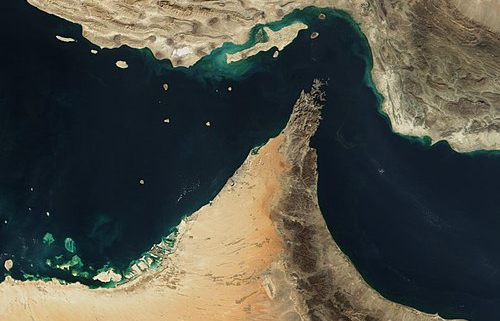
The primary economic risk stemming from the conflict has to do with energy—specifically oil and gas. The Strait of Hormuz—a narrow waterway connecting the Persian Gulf to global trade routes—has been effectively closed since the war’s onset, cutting off the approximate 20% of both liquefied natural gas and petroleum products that ordinarily transit through the strait. (Read more from “The Iran Conflict Will Be the ‘Straw That Breaks the Camel’s Back’ for the U.S. Economy if It Goes on Much Longer, Nobel Laureate Paul Krugman Warns” HERE)

Photo credit: Flickr

White House Releases Wild Video Montages Pairing Iran Strikes With Hollywood Blockbusters: ‘Justice the American Way’

The Trump White House released a chaotic video montage of US military strikes on Iran combined with iconic movie scenes Thursday night, drawing backlash from both sides of the aisle for making light of the Middle East war.

The X video — which stitched together memorable moments from Hollywood blockbusters like “Gladiator” and “Top Gun: Maverick” with footage of strikes on Iranian targets — was posted by the White House with the message, “JUSTICE THE AMERICAN WAY,” and later boosted by Secretary of War Pete Hegseth.

Hegseth himself made a brief appearance in the 42-second montage, which was crammed with clips from “Transformers,” “Braveheart,” “Breaking Bad,” “Better Call Saul,” “Iron Man,” and “Star Wars” as well as the popular video games Halo and Mortal Kombat — with a voice proclaiming a “flawless victory” at its end.

“White House trying to get every copy right [sic] strike known to man,” one X user quipped.

Actor Ben Stiller later called on Trump aides to “please remove the Tropic Thunder clip.”

(Read more from “White House Releases Wild Video Montages Pairing Iran Strikes With Hollywood Blockbusters: ‘Justice the American Way’” HERE)

53 House Democrats Vote ‘No’ on Declaring Iran a ‘State Sponsor of Terrorism’

A significant number of House Democrats voted “no” on declaring the Islamic Republic of Iran a “state sponsor of terrorism.”

Sponsored by Rep. Brian Mast (R-FL), the resolution passed the U.S. House on Thursday by a 372-53 vote. Two Democrats voted present. While squad members like Reps. Alexandria Ocasio-Cortez (D-NY), Ilhan Omar (D-MN), Ayanna Pressley (D-MA), and Rashida Tlaib (D-MI) were expected to vote “no,” a full 53 proved somewhat surprising.

Their names, per Fox News:

Donald S. Beyer Jr.
Suzanne Bonamici
André Carson
Greg Casar
Joaquin Castro
Yvette D. Clarke
Steve Cohen
Danny K. Davis
Maxine Dexter
Lloyd Doggett
Dwight Evans
Lizzie Fletcher
Valerie Foushee
Maxwell Alejandro Frost
Robert Garcia
Jesús “Chuy” García
Al Green
Raúl M. Grijalva
Val Hoyle
Jared Huffman
Sara Jacobs
Pramila Jayapal
Henry C. “Hank” Johnson, Jr.
Robin Kelly
Ro Khanna
Raja Krishnamoorthi
Summer Lee
Sarah McBride
Morgan McGarvey
James P. McGovern
LaMonica McIver
Christian D. Menefee
Robert Jacobsen “Rob” Menendez Jr.
Gwen Moore
Alexandria Ocasio-Cortez
Ilhan Omar
Chellie Pingree
Mark Pocan
Ayanna Pressley
Delia Ramirez
Emily Randall
Luz Rivas
Linda T. Sánchez
Janice D. “Jan” Schakowsky
Lateefah Simon
Mark Takano
Rashida Tlaib
Lori Trahan
Lauren Underwood
Nydia M. Velázquez
Maxine Waters
Bonnie Watson Coleman
Nikema Williams

The resolution said nothing about President Trump’s strikes on Iran, while saying the regime “remains the world’s largest state sponsor of terrorism and provides substantial financial and military support to groups including Hezbollah, Hamas, and the Houthis,” adding that it “poses a direct and persistent threat to the United States and is responsible for the deaths of hundreds of American citizens,” (Read more from “53 House Democrats Vote ‘No’ on Declaring Iran a ‘State Sponsor of Terrorism’” HERE)

China Slashes Fuel Exports As War In Iran Magnifies Key Vulnerability

China is demanding domestic oil refiners stop exporting fuel and renegotiate or cancel existing contracts as the conflict in Iran threatens the communist nation’s crude supplies.

Officials from China’s National Development and Reform Commission (NDRC), responsible for planning the nation’s economy, ordered oil executives to stop exporting refined fuel, Bloomberg reported on Tuesday. The stockpiling comes as U.S. and Israeli military forces continue strikes on Iran as part of Operation Epic Fury. China is the world’s top oil importer and one of Iran’s top trade partners, reportedly purchasing over 90% of the Islamic Republic’s crude oil between 2024 and 2025.

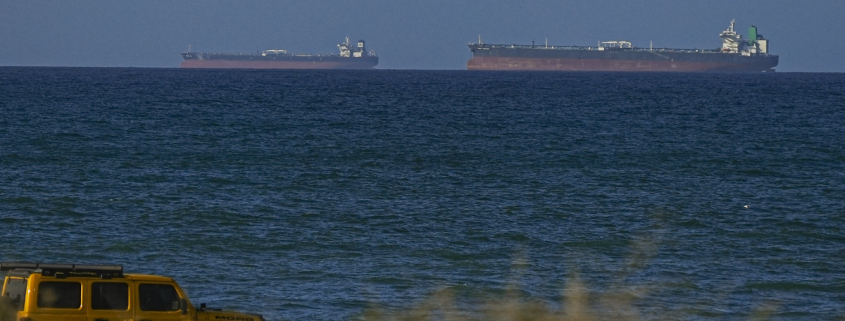
The communist country also imports 30% of its liquefied natural gas and 40% of its oil through the Strait of Hormuz, which Iran effectively closed at the start of the conflict. The Islamic Revolutionary Guard Corps warned that any ships belonging to Western allies “will certainly be hit,” and although the Strait remains open for China, oil tankers are beginning to avoid the conflict zone. Bloomberg reported Wednesday that three “very large crude carriers” turned away from the Persian Gulf, attempting to avoid the increasing instability in the region.

China is one of Asia’s three biggest oil exporters, shipping over 43 billion barrels of oil in 2023. Beijing exports billions of dollars worth of refined oil to countries in southeast Asia including Singapore and the Philippines, meaning a freeze on exports will likely create price instability in the region. (Read more from “China Slashes Fuel Exports As War In Iran Magnifies Key Vulnerability” HERE)

‘Make The Right Choices’: Fallen Soldier’s Advice Should Guide Trump’s War In Iran

. . .[M]essaging on the war has been disjointed, conflicting, and confusing, with administration officials citing different priorities and objectives. Is the endgame regime change? Is it knocking out Iran’s nuclear capabilities, the threat that we “totally obliterated” last summer?

Are we doing this to sate the unquenchable blood lust of the neocon warmongers? To further fatten the wallets of the military-industrial complex that Eisenhower warned us about so long ago?


Whatever the plan is, it must keep in mind the service members in and moving toward harm’s way. As of late Wednesday, there are six flag-draped caskets heading back from a war with many aims.

How many more families will have to hear the death knell of the doorbell like the Coadys? At the very least, they and their fellow Americans should know what it is we’re fighting for.

Sgt. Declan Coady, the Eagle Scout and cybersecurity major at Des Moines’ Drake University, the young man his mom described as “so kind and so amazing,” has given the last full measure of devotion and his future to the exigencies of war.

As a pre-teen in 2017, Coady offered some advice on his Facebook page that all of us, particularly the war planners, should take to heart: “The world is always changing my friends be prepared for your future and make the right choices.” (Read more from “‘Make The Right Choices’: Fallen Soldier’s Advice Should Guide Trump’s War In Iran” HERE)

Iran Warns U.S. Will ‘Bitterly Regret’ Sinking Warship, Calls for Trump’s Blood

You’ll be sorry. That was the warning from Iran to the U.S. on Thursday as it responded to the torpedoing of an Iranian warship in the Indian Ocean, with a Muslim leader adding a call for “Trump’s blood.”

As Breitbart News reported, the U.S. Navy sank the Iranian frigate IRIS Dena Tuesday night in the Indian Ocean which Iranian Foreign Minister Abbas Araghchi has since decried as “an atrocity at sea.”

A U.S. nuclear-powered submarine delivered the fatal blow in international waters off Sri Lanka as part of Operation Epic Fury.

“Frigate Dena, a guest of India’s Navy carrying almost 130 sailors, was struck in international waters without warning,” Abbas Araghchi wrote on social media.

“Mark my words: The U.S. will come to bitterly regret (the) precedent it has set.”

(Read more from “Iran Warns U.S. Will ‘Bitterly Regret’ Sinking Warship, Calls for Trump’s Blood” HERE)

Photo credit: Flickr

Senate Debate On Iran War Turns Into Senile Men Shouting At Sky

The Senate sort of debated a war powers resolution on Wednesday that might have eventually stopped the war in Iran, although the resulting vote was only on a motion to bring the resolution to the floor. That vote failed, leaving the Trump administration with what amounts to implied congressional permission to continue. As Rand Paul noted, speaking as the only Republican who supported the measure, “This essentially is the vote whether to go to war or not.”

But the Senate wasn’t debating the war, or debating Trump: It was debating against its own history, poorly and without noticing, in a mostly incoherent series of self-negating rhetorical maneuvers. Taken as a whole, the Senate doesn’t seem to have known what it was debating at all.

You can watch the debate-shaped thing here, in an eight-hour video that doesn’t contain eight hours of war powers discussion. During speeches about the war, senators shouted and spoke of the need for urgency, invoking all of the usual language about the judgment of history. Between speeches, they took long pauses, and senators popped in with speeches on hockey, Netflix, healthcare, tax cuts, and housing shortages in Pennsylvania.

Somewhere around the middle, Colorado Democrat John Hickenlooper got in a campaign speech that mentioned the war while hitting all the major talking points of the day: job growth, rent, child care. Here’s a senator’s urgent contribution to a debate about a war powers resolution, with bombs currently falling: “According to Moody’s, the top 10% of U.S. households now account for nearly half of all spending. That means on paper the economy may look relatively good, but only for half of Americans. Half of Americans at the top. And while working families struggle to get by, the president has given an extra boost to the powerful and well-connected.” Hickenlooper’s office proudly posted a transcript, if you want to see it for yourself. You can feel how deeply he cares about stopping the war.

If you don’t have a habit of torturing yourself by watching legislative debate, you might have found yourself surprised by the coupling of a frequent recourse to rhetoric about urgency with an unmistakable lack of actual urgency. This is normal. It would take the United States Senate nine hours to evacuate a burning tour bus. They give viewers the sense of being the audience for bingo night at a convalescent home. (Read more from “Senate Debate On Iran War Turns Into Senile Men Shouting At Sky” HERE)

Photo credit: Gage Skidmore via Flickr
Ex-Marine Dragged Out of Hearing After Anti-Iran War Protest

A man was violently dragged out of a Capitol Hill hearing on Wednesday, March 4, by police and a Republican Senator after interrupting the proceedings to protest the war in Iran.

Senator Tim Sheehy of Montana said he assisted officers in physically ejecting “an unhinged protester” from the Armed Services hearing.

The protester, Brian McGinnis, describes himself as a Marine veteran and is running as a Green Party candidate in North Carolina’s Senate race.

In another video posted online, McGinnis can be heard yelling: “America does not want to send its sons and daughters to war for Israel.”

This footage shows members of the Capitol Police attempting to remove McGinnis from the hearing room. McGinnis appeared to struggle with officers near the doorway when Sheehy stepped in.

(Read more from “Ex-Marine Dragged Out of Hearing After Anti-Iran War Protest” HERE)

How Israel ‘Chain-Ganged’ The Trump Administration Into War Against Iran

After several days of shifting and sometimes contradictory justifications from the Trump administration for why it launched a war against Iran over the weekend, Secretary of State Marco Rubio on Monday finally gave the real reason: Israel forced us into it.

“It was abundantly clear that if Iran came under attack by anyone, the U.S. or Israel or anyone, they were going to respond against the United States,” Rubio said. But later he added this: “We knew there was going to be an Israeli action. We knew that would precipitate an attack against American forces, and we knew that if we didn’t preemptively go after them before they launched those attacks we would suffer higher casualties and perhaps even higher numbers of those killed. And then we would all be answering questions about why we knew that and didn’t act.”

Later in the day, Speaker Mike Johnson said pretty much the same thing, that, “This was a defensive measure … If Israel fired upon Iran and took action against Iran to take out the missiles, then [Iran] would have immediately retaliated against U.S. personnel and assets.”

These remarks from Rubio and Johnson would seem to confirm recent reporting from the New York Times, which published a lengthy account Monday chronicling how President Trump decided to go to war. The article opens with this line: “Prime Minister Benjamin Netanyahu of Israel walked into the Oval Office on the morning of Feb. 11, determined to keep the American president on the path to war.” It goes on to explain that amid weeks of U.S.-Israeli planning for war, Trump administration officials had begun negotiating with Tehran over the future of its nuclear program, “and the Israeli leader wanted to make sure that the new diplomatic effort did not undermine the plans.”

Netanyahu, who has been candid about his decades-long desire to draw the United States into a war against Iran, was successful in this effort. The diplomatic talks with Iran faltered and Trump gave the go-ahead to launch strikes that immediately took out Tehran’s entire leadership, effectively bringing about a decapitation of the regime.

Why did it happen? Not necessarily because of our decisions, but because of Israel’s. According to the Times’ reporting, just hours before President Trump’s State of the Union address last Tuesday, Rubio and John Ratcliffe, the CIA director, briefed congressional leaders from the so-called Gang of Eight about ongoing negotiations with Iran and the possibility of strikes if those talks failed. “In the briefing, Mr. Rubio argued that, no matter if Israel or the United States struck first, Iran would respond with a powerful barrage of weapons against U.S. bases and embassies. It was logical then, Mr. Rubio said, that the United States should act in concert with Israel, since America would be dragged in anyway. And Israel, Mr. Rubio said, was determined to act.” (Read more from “How Israel ‘Chain-Ganged’ The Trump Administration Into War Against Iran” HERE)

Photo credit: Flickr