Posts

Trump Has Plans To Avoid Iranian Refugee Crisis — But War May Make It Inevitable

Many Americans fear U.S.-Israeli strikes on Iran could spark another refugee crisis, but experts say the Trump administration has policies in place designed to prevent that outcome — even if officials have not clearly communicated the strategy.

Researchers with the Center for Immigration Studies (CIS) told the Daily Caller that Trump’s war plans, Middle East travel restrictions and the refugee system’s current structure suggest the administration is not preparing to admit refugees at scale and instead expects Iranian migrants in the United States to return home.

“I think it’s safe to say there’s no plan for a wave of new Middle Eastern refugees to the United States of America,” Secretary of the Department of Defense Pete Hegseth said March 5. “I think, as the president has pointed out for a long time, there are a lot of countries in the region who would be capable of providing that kind of support if need be.”

Statements from the administration on this concern have been few and far between, and Hegseth’s admission that he merely “thinks” he is portraying the administration’s goals could signal to skeptics that the administration may not be as coordinated as one would hope.

Republican Kentucky Rep. Thomas Massie told Congress earlier in March that “a sustained war with Iran will not stabilize the region, it will radicalize new generations of terrorists, and it will send more swarms of refugees into Europe and the United States.”

Republican Tennessee Rep. Andy Ogles joined him in saying that the U.S. cannot take refugees from Iran or the Middle East, saying, “it’s time for them to build their own government and make their land great again.” (Read more from “Trump Has Plans To Avoid Iranian Refugee Crisis — But War May Make It Inevitable” HERE)

Trump Briefed Iran’s New Supreme Leader Is ‘Probably Gay’

Iran’s new Supreme Leader, Mojtaba Khamenei, may be gay, according to intel reportedly briefed to President Donald Trump last week.

Trump and several intelligence officials reportedly laughed after being briefed on the allegation, including one senior official who “has not stopped laughing about it for days.” Despite the reaction, U.S. intelligence sources believe the claim is credible, the New York Post reported Monday. One source told the Post the claim comes from “one of the most protected sources that the government has.”

Mojtaba had a “long-term sexual relationship” with a former tutor and made “aggressive” sexual advances to men taking care of him, sources told the Post. A 2008 U.S. diplomatic cable released by WikiLeaks was included in the report, which stated that the new Ayatollah married “late in life” and underwent two years of medical treatment in the United Kingdom for “an impotency problem.” The late Supreme Leader Ayatollah Ali Khamenei suspected his son was gay and feared it could corrupt and undermine his leadership of the Islamic Republic, where homasexual conduct is illegal, the Post wrote.

Mojtaba succeeded his father as the Islamic Republic’s Supreme Leader on March 8. Trump previously called the new Ayatollah “lightweight” in a phone interview with Axios, saying he was “unacceptable.”

The supreme leader was strangely absent from his own inaugural address, releasing a written statement instead of appearing on camera. The president later doubted whether Mojtaba was still alive, saying, “So far, nobody’s been able to show him.” (Read more from “Trump Briefed Iran’s New Supreme Leader Is ‘Probably Gay’” HERE)

Trump Demands Iran ‘Surrender,’ says he’s Hearing New Leader ‘not alive’

President Donald Trump said Sunday that Iran’s military has been “decimated,” claiming the U.S. has wiped out the country’s air defenses and severely weakened its forces.

Asked whether he was ready to officially declare victory against Iran, Trump said he was not declaring it over yet but argued the damage to Tehran’s military has been significant.

“There’s no reason to,” Trump told reporters aboard Air Force One. “I think I’d just say they’re decimated. … If we left right now, it would take them ten years and more to rebuild. But I’m still not declaring it over.”

Trump said U.S. operations have “taken out” Iran’s air force and air defense systems, leaving the country with “no air defense whatsoever,” and argued Iran’s missile and drone capabilities have also been sharply reduced.

Trump added that the U.S. and Israel have “similar objectives” regarding Iran and that the two countries’ militaries are “very well coordinated.” (Read more from “Trump Demands Iran ‘Surrender,’ says he’s Hearing New Leader ‘not alive’” HERE)

Photo credit: Gage Skidmore via Flickr
Trump Warns of ‘Very Bad’ Future if NATO Allies Refuse to Help Open Critical Strait of Hormuz

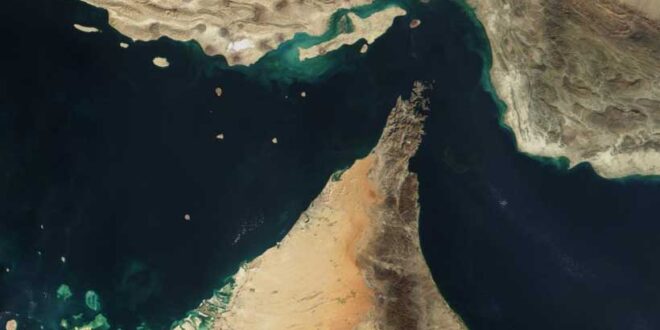
President Trump on Sunday warned NATO faces a “very bad” future if the US allies fail to help reopen the crucial Strait of Hormuz, as oil prices soar during the Iran war.

Trump said in an interview with the Financial Times that European nations and other global powers that rely on Gulf oil should join a US-led effort to secure the waterway — where roughly a fifth of the world’s oil supply normally flows.

“It’s only appropriate that people who are the beneficiaries of the Strait will help to make sure that nothing bad happens there,” Trump told the British outlet, arguing that Europe and China are more heavily dependent on oil from the region than the US.

“If there’s no response or if it’s a negative response I think it will be very bad for the future of NATO.”

The president also said he could delay his summit with China’s President Xi Jinping later this month as he presses Beijing to help unblock the Strait.

“I think China should help too because China gets 90 percent of its oil from the Straits [sic],” Trump told the Financial Times. (Read more from “Trump Warns of ‘Very Bad’ Future if NATO Allies Refuse to Help Open Critical Strait of Hormuz” HERE)

US Embassy in Baghdad Hit in Missile Attack

The US Embassy in Baghdad was targeted in a missile attack on Friday night, according to reports.

The missile struck a helipad at the embassy, the Associated Press reported.

Smoke was seen rising from the diplomatic mission in video posted on social media by Sabereen News, a pro-Iranian militia outlet in Iraq.

The attack took place shortly after two fighters belonging to an Iran-backed militant group were killed in Baghdad, AFP reported, citing sources.

The embassy is located in Baghdad’s heavily fortified “green zone.”

It’s unclear if anyone was injured in the attack. (Read more from “US Embassy in Baghdad Hit in Missile Attack” HERE)

President Trump Orders Oil Drilling Operations to Resume off California

The Trump administration has signed an executive order to ​resume oil drilling operations off the Southern California coast, citing national energy security concerns.

The order, which invokes a Cold War-era Defense Production Act, will prove controversial despite the potential to bring down gas prices, which are now the highest in America.

Gov. Gavin Newsom also flagged the state would challenge the order in the courts.

Secretary of Energy Chris Wright is now permitted to take actions under the Defense Production Act.

California’s price for a regular gallon hit an average of $5.416 on Friday.

That’s far above the national average of $3.60. (Read more from “President Trump Orders Oil Drilling Operations to Resume off California” HERE)

Photo credit: Gage Skidmore via Flickr
Scott Bessent Says U.S. Navy Will ‘Soon’ Escort Tankers Through Strait of Hormuz

Treasury Secretary Scott Bessent said on Friday that the U.S. Navy will “soon” begin escorting oil tankers through the Strait of Hormuz to protect them from Iranian terrorist attacks.

“My belief is that as soon as it is militarily possible, the U.S. Navy, perhaps with an international coalition, will be escorting vessels through,” Bessent told Sky News on Friday.

“There are, in fact, tankers coming through now, Iranian tankers, I believe some Chinese flag tankers have come through. So we know that they have not mined the straits,” he continued.

Sky News reported that Bessent had to take a two-hour break from the interview because he was called into the White House Situation Room. Upon his return, the interviewer asked if plans for naval escort had been discussed, and Bessent responded: “Your words, not mine.”

On Thursday, Energy Secretary Chris Wright also said naval escorts for tankers could begin “soon,” perhaps by the end of March, but the forces necessary for the mission were not available yet. (Read more from “Scott Bessent Says U.S. Navy Will ‘Soon’ Escort Tankers Through Strait of Hormuz” HERE)

Here Are The Biggest Things America Could’ve Done With $11 Billion Spent In Iran War Week 1

The Iran War is costing the U.S. billions of dollars every week it drags on. Meanwhile, there are programs at home that desperately need the funding more.

In a closed-door briefing with Congress, the Trump administration said that the first week of the Iran war cost around $11.3 billion (as well as several heroic lives). The figure, which covers munitions and initial operations but excludes ongoing maintenance, personnel costs, and pre-war buildup, represents a significant outlay of taxpayer dollars directed toward overseas military engagement. While some argue this is a small price to pay to end the Iranian regime, the economic toll on Americans should not be ignored.

That $11 billion could support key domestic initiatives that enhance U.S. security, create jobs, and reduce reliance on foreign resources, thereby better fulfilling President Donald Trump’s 2024 voter mandate.

Domestic energy production is central to reducing U.S. dependence on foreign oil and stabilizing prices for American consumers. Diesel prices spiked to well over $5 per gallon in some areas amid the U.S. involvement in Iran. The current national average for regular gasoline is $3.63, up almost $1 from a month ago ($2.94), according to AAA data.

Trump announced Tuesday that the U.S. would build the first large-scale greenfield refinery in Brownsville, Texas, in nearly 50 years. (Read more from “Here Are The Biggest Things America Could’ve Done With $11 Billion Spent In Iran War Week 1” HERE)

US obliterates ‘every MILITARY target’ on Iran’s Kharg Island in historic bombing raid, Trump says

Military targets on Iran’s Kharg Island – the loading site for most of the Islamic Republic’s oil exports – were “totally obliterated” by US airstrikes during a historic bombing raid in the Persian Gulf, President Trump announced Friday.

“Moments ago, at my direction, the United States Central Command executed one of the most powerful bombing raids in the History of the Middle East, and totally obliterated every MILITARY target in Iran’s crown jewel, Kharg Island,” Trump wrote on Truth Social.

The island, located about 16 miles off the Iranian coast, is one-third the size of Manhattan and controls 90% of Iranian crude oil exports.

Trump said the island’s oil infrastructure was not targeted but may be hit in future strikes, if the Iranian regime doesn’t allow ships to pass through the Strait of Hormuz.

“Our Weapons are the most powerful and sophisticated that the World has ever known but, for reasons of decency, I have chosen NOT to wipe out the Oil Infrastructure on the Island,” the president said. (Read more from “US obliterates ‘every MILITARY target’ on Iran’s Kharg Island in historic bombing raid, Trump says” HERE)

Iran War Bill Now Bigger Than DOGE Cuts Congress Passed

The United States military spent over $5 billion in munitions alone during the first two days of Operation Epic Fury, with war costs appearing to have surpassed $9.4 billion in U.S. Department of Government Efficiency (DOGE) spending cuts codified by Congress.

The U.S. military launched strikes against the Islamic Republic of Iran on Feb. 28, targeting Iranian Revolutionary Guard Corps command and facilities which killed the Supreme Leader of Iran Ayatollah Ali Khameinei and roughly around 49 senior regime and military officials, dealing a crippling blow to the Iranian government structure. The Pentagon used $5.6 billion in munitions within just the first two days of its ongoing Iran operation, according to three anonymous U.S. officials who spoke to The Washington Post.

An anonymous congressional official told the Atlantic that the Pentagon estimated the Iran war’s preliminary cost to be around $1 billion per day and that the Pentagon could request as much as $50 billion in supplemental funding.

Politico reported that senior GOP lawmakers privately expect the Trump administration to request tens of billions of dollars for the Iran war. Some GOP lawmakers heard estimates that the Pentagon is spending up to $2 billion a day, according to Politico.

President Donald Trump told reporters on March 9 the war would end “soon,” but no specific timeline has been confirmed. (Read more from “Iran War Bill Now Bigger Than DOGE Cuts Congress Passed” HERE)