Posts

Here’s How the Airstrike That Killed Soleimani Affected Trump’s Approval Rating

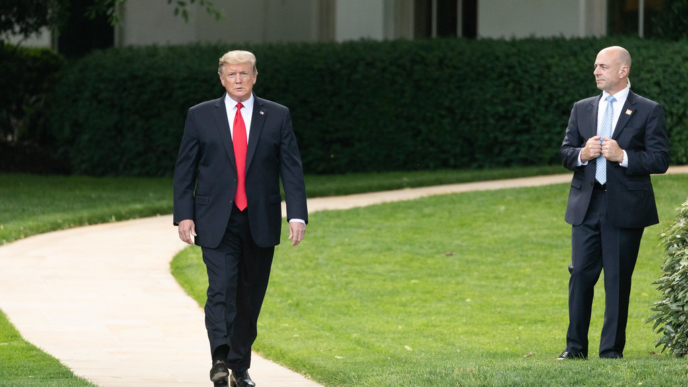
President Donald Trump’s approval rating has increased sharply following the impeachment proceedings against him and his decision to order the airstrike that killed Qassem Soleimani, Iran’s top terrorism architect.

According to RealClearPolitics, Trump’s average approval rating now stands at 45.3 percent, up from a low 41.6 percent just two months ago after Democrats began their formal impeachment investigation.

Since the airstrike that killed Soleimani, Trump’s approval has risen one percent.

The rating is nearly a three-year high, the Washington Examiner noted. Trump’s approval rating has not been this high since Feb. 2017, just two weeks after his inauguration when he notched a 46 percent approval rating. (Read more from “Here’s How the Airstrike That Killed Soleimani Affected Trump’s Approval Rating” HERE)

Follow Joe Miller on Twitter HERE and Facebook HERE
Flashback: Obama Bombed Countries, Went to War, Used ‘Kill List’ Without Congress

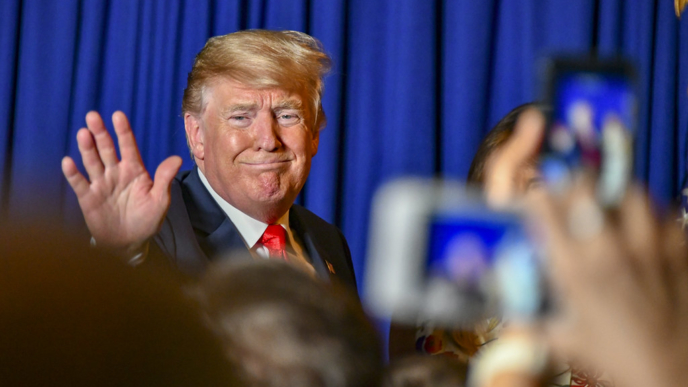
Democrats plan to pass a resolution in the U.S. House of Representatives this week declaring that President Donald Trump violated international law with last week’s airstrike against terrorist Iranian General Qasem Suleimani. . .

But few Democrats raised objections when President Barack Obama went to war — often exceeding the boundaries of his legal authority as president. The most notorious case was the Libya War, which President Obama launched in March 2011 without congressional authorization. He continued the war effort beyond the War Powers Resolution’s deadlines because, the administration argued, the U.S. was not engaged in “hostilities” but “leading from behind.”

Some on the left bent over backwards to defend Obama’s unconstitutional war. Former Yale Law School dean Harold Koh was once “one of the country’s foremost defenders of the notion that the president of the United States can’t wage wars without the approval of Congress,” the New York Times noted, but later became “the administration’s defender of the right to stay engaged in a conflict against Libya without Congressional approval.” . . .

Obama later abandoned that plan, but he did bomb Syria during the campaign against the so-called “Islamic State” (or ISIS, which he called “ISIL”). He also dropped “26,171 bombs” on Iraq, Afghanistan, Libya, Yemen, Somalia, and Pakistan in 2016 alone, according to the Council on Foreign Relations — often for reasons tangentially related to the 9/11-era Authorization for Use of Military Force (AUMF). And in 2012, the Obama White House leaked to the Times that in addition to killing Osama bin Laden, he personally oversaw a terrorist “kill list.” Few protested, other than Sens. Rand Paul (R-KY) and Ron Wyden (D-OR), the former mounting a filibuster to protest the use of drones against U.S. citizens — including in the hypothetical example that they would be used in the United States. (Read more from “Flashback: Obama Bombed Countries, Went to War, Used ‘Kill List’ Without Congress” HERE)

Follow Joe Miller on Twitter HERE and Facebook HERE
General Petraeus Reveals What Strike Did for U.S., Likely Response From Iran

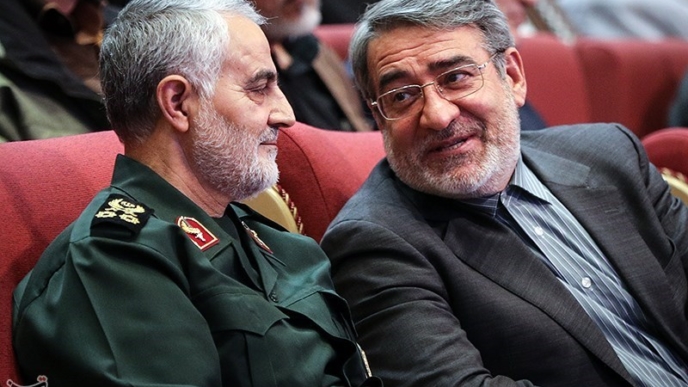
By Daily Wire. In two recent interviews, retired General David Petraeus highlighted just how significant President Trump’s killing of Iranian terrorist leader Qassim Suleimani was and revealed what the U.S. likely gained from the attack as well as what Iran’s likely response to the would be.

Petraeus, who also served as CIA Director in the Obama administration, told Foreign Policy that it was “impossible” to “overstate the importance” of the U.S. military taking out Suleimani.

“It is more significant than the killing of Osama bin Laden or even the death of [Islamic State leader Abu Bakr] al-Baghdadi,” Petraeus said. “Suleimani was the architect and operational commander of the Iranian effort to solidify control of the so-called Shia crescent, stretching from Iran to Iraq through Syria into southern Lebanon. He is responsible for providing explosives, projectiles, and arms and other munitions that killed well over 600 American soldiers and many more of our coalition and Iraqi partners just in Iraq, as well as in many other countries such as Syria. So his death is of enormous significance.”

In a subsequent interview on CBS News’s “Face The Nation,” Petraeus noted that killing Suleimani was “the equivalent in U.S. terms of the CIA director, CENTCOM Commander, JSOC Commander, and presidential envoy for the region for Iran. And- and the most powerful figure in Iran for the solidification of the Shia Crescent and also the operational commander of the actions that they were pursuing.” . . .

“The question is now, what will Iran do?” Petraeus said. “Will they dare to respond directly with Iranian missiles against our forces, our embassies, our bases, our shipping or what have you? Or do they continue to operate through proxies, which I’m pretty confident they will do.” (Read more from “General Petraeus Reveals What Strike Did for U.S., Likely Response From Iran” HERE)

__________________________________________________

Iran’s President to Trump: ‘Remember the Number 290’

By Newser. . .The Wall Street Journal reports the White House on Saturday provided Congress with a notification of the Friday strike that took out Soleimani as required by law. The contents—which the Journal says would cover the “circumstances necessitating” the action, the “constitutional and legislative authority” for it, and “the estimated scope and duration of the hostilities”—were classified. Top Senate Democrats including Chuck Schumer and ranking Foreign Relations Committee member Robert Menendez are calling on it to be declassified and made available to the public.

Iranian President Hassan Rouhani took to Twitter to respond to President Trump’s threat to target 52 sites of cultural importance if Iran retaliated for Soleimani’s killing. “Those who refer to the number 52 should also remember the number 290. #IR655 Never threaten the Iranian nation.” Trump’s 52 referred to the 52 Americans held hostage in Iran for more than a year beginning in 1979; Rouhani was referring to Iran Air Flight 655, which US missiles took down in 1988. All 290 on the passenger jet perished. (Read more from “Iran’s President to Trump: ‘Remember the Number 290′” HERE)

Follow Joe Miller on Twitter HERE and Facebook HERE

Trump’s Strike on Soleimani Is About America First, Not Reckless Interventionism

On New Year’s Eve, Iran-backed militias attempted to storm the U.S. embassy in Baghdad, engaging in an unsuccessful act of war as American forces secured the compound. In the aftermath, President Trump warned Iran that it would “be held fully responsible for lives lost, or damage incurred, at any of our facilities,” and “pay a very BIG PRICE. This is not a Warning, it is a Threat. Happy New Year!” . . .

His decision to strike Qassem Soleimani was a game-changing act with immense substantive and symbolic implications. It finally brought a modicum of justice for the hundreds of Americans murdered and thousands injured at the hands of the head of the terrorist Islamic Revolutionary Guard Corps-Quds Force, his henchmen, and their proxies. . .

It represented a decisive response to Iran’s act of war in Baghdad, as well as its repeated assaults on Iraqi coalition bases including last month’s rocket attack that killed one American and injured several others, and additional imminent strikes for which Soleimani would have been responsible. It was about putting America first. . .

Critics of the Trump administration are claiming that this operation—which also resulted in the death of Hezbollah Brigades leader and Iraq Popular Mobilization Forces deputy leader Abu Mahdi al Muhandis, and may have coincided with the rumored rolling up of other Iran-backed militia leaders—recklessly risked all-out war with Iran.

The assumption among both leftist Trump haters and anti-interventionist Trump supporters like Tucker Carlson is that the United States could well be drawn into a broader conflict that will lead to another Iraq or Afghanistan, replete with a full-scale invasion and occupation. Yet this would conflict with President Trump’s word, deed, and demonstrated instinct, and almost assuredly the desires of his supporters. (Read more from “Trump’s Strike on Soleimani Is About America First, Not Reckless Interventionism” HERE)

Follow Joe Miller on Twitter HERE and Facebook HERE

Iran Abandons Nuclear Deal Over Slaying of General

By Politico. Iran said Sunday it would no longer abide by any of the limits of its unraveling 2015 nuclear deal with world powers after a U.S. airstrike killed a top Iranian general in Baghdad, abandoning the accord’s key provisions that block Tehran from having enough material to build an atomic weapon.

Iran insisted in a state television broadcast it remained open to negotiations with European partners, who so far have been unable to offer Tehran a way to sell its crude oil abroad despite U.S. sanctions. It also didn’t back off of earlier promises that it wouldn’t seek a nuclear weapon.

However, the announcement Sunday represents the clearest nuclear proliferation threat yet made by Iran since President Donald Trump unilaterally withdrew from the accord in May 2018. It also further raises regional tensions, as Iran’s longtime foe Israel has promised never to allow Iran to be able to produce an atomic bomb.

The announcement came Sunday night after another Iranian official said it would consider taking even-harsher steps over the U.S. killing of Gen. Qassem Soleimani on Friday. Hundreds of thousands of people flooded the streets Sunday in Iran to walk alongside a casket carrying the remains of Soleimani, the former leader of its expeditionary Quds Force that organizes Tehran’s proxy forces in the wider Mideast. (Read more from “Iran Abandons Nuclear Deal Over Slaying of General” HERE)

____________________________________________________

Iran’s Response to Us Will Be Military — Khamenei’s Adviser

By CNN. The military adviser to Iran’s Supreme Leader said Sunday that Tehran’s response to the killing by the United States of its most most influential general will “for sure be military.”

In an exclusive interview with CNN in Tehran, the adviser — Maj. Gen. Hossein Dehghan — made the most specific and direct threat yet by a senior Iranian official following the killing of Gen. Qasem Soleimani in a US drone strike in Baghdad.

Dehghan said Iran would retaliate directly against US “military sites.” (Read more from “Iran’s Response to Us Will Be Military — Khamenei’s Adviser” HERE)

Follow Joe Miller on Twitter HERE and Facebook HERE

Customs and Border Protection Denies Viral News That It’s Been Ordered to Detain Iranians

By Daily Caller. Customs and Border Protection (CBP) denied it has been ordered to detain and deny entry to Iranian-Americans, refuting claims that have been promulgated by Democratic lawmakers and others on social media.

CBP, the agency within the Department of Homeland Security tasked with managing immigration into the U.S., released a statement Sunday evening, declaring reports saying its agents have been directed to detain and deny entry to Iranian-Americans are “false.”

“Social media posts that CBP is detaining Iranian-Americans and refusing their entry into the U.S. because of their country of origin are false. Reports that DHS/CBP has issued a related directive are also false,” the agency said in a statement Sunday. . .

As proof of her claim, Katebi issued a press release alongside the Council on American-Islamic Relations’ (CAIR) Washington state chapter. The press release stated it was assisting more than 60 Iranians and Iranian-Americans who were being detained and questioned at the Peace Arch Border Crossing in Blaine, Washington, while others were refused entry altogether.

(Read more from “Customs and Border Protection Denies Viral News That It’s Been Ordered to Detain Iranians” HERE)

__________________________________________________

U.S. Customs and Border Protection Denies Detaining Iranians, Iranian Americans

By ABC News. U.S. Customs and Border Protection has issued a statement saying allegations they are singling out and stopping Iranian Americans as they try to enter the country are false.

“Social media posts that CBP is detaining Iranian-Americans and refusing their entry into the U.S. because of their country of origin are false,” CBP said in a statement Sunday. “Reports that DHS/CBP has issued a related directive are also false.”

As a federal agency, CBP is prohibited from discriminating on the basis of race, color, creed, gender or religion. However, the Washington state chapter of the Council on American-Islamic Relations said Sunday that more than 60 Iranians and Iranian Americans were detained and questioned at length at the Peace Arch Border Crossing in Blaine, Washington.

“Those detained reported that their passports were confiscated and they were questioned about their political views and allegiances. CBP officials contacted at the Blaine Port of Entry provided no comment or reasons for the detentions,” CAIR-WA said in a statement. (Read more from “U.S. Customs and Border Protection Denies Detaining Iranians, Iranian Americans” HERE)

Follow Joe Miller on Twitter HERE and Facebook HERE

The Death of Iranian Gen. Soleimani Is About Long-Overdue Justice

As we watched Iranian-backed Shiite terrorist groups attack our embassy in Baghdad, many were in favor of a robust retaliation for the attack. What the U.S. military under the orders of President Trump delivered last night was even more than retaliation for the attack on the embassy: It was retaliation for decades’ worth of unanswered American blood spilt by Iran’s external paramilitary forces, led by Qassem Soleimani.

We have clearly intervened in numerous Middle Eastern theaters over the years that we should never have been involved in. But at every stage, Iran has been attacking and killing hundreds of our soldiers: Sacking the embassy in Tehran in 1979, the 241 Marines killed in the 1983 Beirut bombing, the killing of 19 airmen at the Khobar Towers in 1996, or the over 600 U.S soldiers estimated to have been killed directly or indirectly by Soleimani’s Islamic Revolutionary Guard Corps (IRGC) during the Iraq war. More recently, Iran captured our naval ships in 2016 and humiliated our sailors in what should have been viewed as an act of war, yet Obama did nothing. Well, actually, he transferred $150 billion to Iran, so it was worse than nothing.

Trump has laid down a new set of parameters. Soleimani was reportedly disembarking from a plane at the Baghdad airport and being greeted by Abu Mahdi al-Muhandis, the head of Kata’ib Hezbollah, when an airstrike killed them both. Kata’ib Hezbollah was the primary militia responsible for the attacks on our base near Kirkuk last Thursday and the Baghdad embassy this week. Secretary of State Mike Pompeo called out al-Muhandis by name earlier this week, tweeting out a picture of him leading the attack with the militiamen.

Going forward, the best outcome is a coherent strategy in the Middle East, but the next best outcome is justice against Iran’s most potent external force that has threatened us for decades. The killing of Soleimani is justice for the blood of American soldiers on his hands, but it will hopefully also serve as a turning point in reorienting our focus in the Middle East to one of “strike and maneuver” against enemies that affect our interests, rather than holding and building ground on behalf of Islamic tribal factions in Iraq, Syria, and Afghanistan.

The death of Soleimani is a bigger deal than the death of ISIS leader Abu al-Baghdadi in October. As I’ve noted before, Sunni terrorists, lacking a nation-state, do not fundamentally threaten our interests except through immigration when we let their operatives or adherents into our country. Iran, on the other hand, had the ability to attack us for years, threaten shipping lanes in the Strait of Hormuz and the Gulf of Aden, and take the fight closer to our homeland through Hezbollah’s global network in Latin America. Soleimani was the most trusted and tenacious general of the ruling mullahs, whose goal was solely focused on external hegemony, not just in the Middle East, but even in our hemisphere.

Moreover, the elimination of Soleimani finally confirms to the mullahs that Trump is not a paper tiger and that we are willing to use our air assets anywhere, any time, if they continue attacking our strategic interests. But the key going forward is to identity those strategic interests.

The focus in the long run should not be saving the incorrigible Iraqi nation from either Iran or the Sunni terrorists. The Iraqi prime minister already condemned our airstrike. His government is not worth our time and money, much less the blood of our soldiers. Rather, our objective should be drawing a clear line around our limited interests and assets and ensuring that anything that threatens them is met with painful repercussions. We should not conflate the need to deter Iran and project power in the face of its belligerence with the false notion that keeping our soldiers flung out precariously throughout Iraq on an interminable nation-building mission is somehow in our country’s interests in the first place.

We need to move toward more air and naval supremacy to keep the shipping lanes open while concurrently crushing Iran with sanctions and the constant threat of a punitive strike. We can cripple the mullahs with the soft power of fomenting the already growing rebellion at home without getting involved in nation-building either in Iraq or Iran. Continuing to leave so many assets in Iraq itself will just make us vulnerable to Iran’s attacks and counterattacks in the future. Much like a father who destroys a bees’ nest from which a bee emerged to sting his child, it makes sense to hit Iran strongly for attacking our soldiers. But in the long run, we need to ask why we have our heads three inches from the bees’ nest to begin with, when not only is it imprudent in its own right, but it prevents us from actually striking the nest from a position of strength, without fear of collateral damage. It’s time to take that collateral damage off the table.

Meanwhile, we need to focus on our own homeland. Iran, more than any other entity, through its foreign operative unit, known as Hezbollah Unit 910, can strike us at any time. Thanks to irresponsible immigration policies, we’ve admitted thousands of unvetted Lebanese Shiites over the past two decades. Several Unit 910 members have already been caught and indicted by the Justice Department. These are heavily trained paramilitary operatives who have the ability to strike targets in this country.

That has always been the imminent danger of Iran, at least until its regime develops nuclear weapons, and that is why it’s so much more important to focus on the Iranians and their Western Hemisphere operations than on the Sunnis. They have a global network backed by a state that can use migrants from both Iran and Lebanon to harm us. Now is the time to push a moratorium of visas from places like Lebanon and have the FBI and DHS double down on efforts to keep tabs on those already in the country.

We face a time of potential peril for our soldiers abroad and our citizens at home in the coming days. But in this act, justice was served. (For more from the author of “The Death of Iranian Gen. Soleimani Is About Long-Overdue Justice” please click HERE)

Follow Joe Miller on Twitter HERE and Facebook HERE
Guess Who Obama Hosted at the White House? Hint, He’s a Terrorist Connected to the Recent U.S. Embassy Attack

By Townhall. It turns out $400 million in cash, delivered by an unmarked plane in the middle of the night on palettes and a nuclear deal that eventually leads to a bomb, aren’t the only things President Obama gave to the murderous Iranian regime during his tenure in the White House.

Earlier this week Iranian backed militia leader Hadi Al-Amiri, who is also an Iraqi government official, participated in the attack against the U.S. Embassy in Baghdad. . .

In 2011, Al-Amiri visited the White House. Not only that, he made it into the Oval Office.

(Read more from “Guess Who Obama Hosted at the White House? Hint, He’s a Terrorist Connected to the Recent U.S. Embassy Attack” HERE)

___________________________________________________

Aircraft Carrying U.S. Troops Take off From East Coast Bases After Drone Strike Kills Top Iranian General

By Newsweek. United States Air Force aircraft with combat troops and special forces on board took off from bases on the East Coast Thursday night after President Donald Trump ordered a drone strike that killed a top Iranian general, military officials told Newsweek. The officials could not say where the transport aircraft were headed.

U.S. military Patriot anti-Missile batteries also were put on alert in Bahrain, headquarters of the Navy’s 5th Fleet. The Green Zone in Baghdad, where the U.S. embassy is located, is on lockdown, sources told Newsweek.

The president was briefed at Mar-a-Lago and ordered the strike from the Florida resort, sources told Newsweek.

It was unclear Thursday whether Congress was notified of the strike or the deployment. A spokesperson for Senate Majority Leader Mitch McConnell declined by email to answer whether McConnell was notified. (Read more from “Aircraft Carrying U.S. Troops Take off From East Coast Bases After Drone Strike Kills Top Iranian General” HERE)

Follow Joe Miller on Twitter HERE and Facebook HERE
U.S. Kills Top Iranian Military Leader in Airstrike; Iran Vows ‘Harsh Retaliation’

By Vox. On Thursday night, the Pentagon announced that the United States killed Maj. Gen. Qassem Suleimani, the head of Iran’s paramilitary forces, in an airstrike in Iraq “at the direction of the President.”

The strike that took out Suleimani also reportedly killed the leader of Kataib Hezbollah, an Iranian proxy militia in Iraq that has repeatedly attacked US and allied forces and recently launched rockets at a US military base. Those attacks killed an American contractor, which led the United States to respond and kill 25 operatives in attacks in Iraq and Syria. In separate operations, US forces have also captured and arrested leaders of other important Iraqi militias with close ties to Iran.

The killing of Suleimani, the long-time head of Iran’s Islamic Revolutionary Guard Corps Quds Force (IRGC-QF) is likely to prove a watershed in Washington’s relations with Iraq and Iran and will substantially affect the overall US position in the Middle East. The blowback may be huge, and much depends on how well prepared the United States is for Iran’s response and that of its many proxies in the Middle East. (Read more from “U.S. Kills Top Iranian Military Leader in Airstrike” HERE)

_______________________________________________________

Oil Prices Jump After Iran Military Leader Killed in U.S. Strike

By CNN. Oil prices pulled higher Friday morning after a top Iranian general was killed in a US airstrike at Baghdad’s airport ordered by President Donald Trump.

Futures for Brent crude, a global benchmark, jumped 2.9% to $68.16 per barrel during Asian trading hours on Friday. US oil futures gained 2.8%, reaching $62.86 per barrel. That puts both on pace right now for their biggest daily gains in about a month, according to Refinitiv data.

The Pentagon confirmed in a statement that the US military killed Qasem Soleimani, the commander of Iran’s Islamic Revolutionary Guards Corps (IRGC) Quds Force unit, in the attack at Baghdad International Airport. It said the strike was aimed at “deterring future Iranian attack plans.” (Read more from “Oil Prices Jump After Iran Military Leader Killed in U.S. Strike” HERE)

_______________________________________________________

Iran Vows ‘Harsh Retaliation’ After U.S. Airstrike Kills Iranian Gen. Qassem Soleimani

By Fox News. Iran’s Supreme Leader Ayatollah Ali Khamenei on Friday warned that a “harsh retaliation is waiting” for the U.S. after an airstrike on an airport in Baghdad killed Iranian Gen. Qassem Soleimani, the head of Iran’s elite Quds Force.

The Iranian state TV carried a statement by Khamenei who also called Soleimani “the international face of resistance.” Khamenei declared three days of public mourning for the general’s death.

The Iranian foreign minister warned that the U.S. would bear all the consequences of the “foolish” military attack, claiming Soleimani’s assassination would only escalate tensions in the region given that he was “THE most effective force” fighting terrorism carried out by the Islamic State.

Javad Zarif, the foreign minister of Islamic Republic of Iran, said on Twitter that “The US’ act of international terrorism, targeting & assassinating General Soleimani—THE most effective force fighting Daesh (ISIS), Al Nusrah, Al Qaeda et al—is extremely dangerous & a foolish escalation.”

“The US bears responsibility for all consequences of its rogue adventurism,” he said.

(Read more from “Iran Vows ‘Harsh Retaliation’ After U.S. Airstrike Kills Iranian Gen. Qassem Soleimani” HERE)

Follow Joe Miller on Twitter HERE and Facebook HERE

Attack on U.S. Embassy in Baghdad Exposes the Farce of Our Support for the Baghdad Government

The Iraq war was a colossal mistake that strengthened Iran beyond belief. There was never any realistic chance of installing a pro-American government in Shiite-dominated Baghdad. Our forces are eternally on the hook both for the Iranian-backed Shiite attacks and the Sunni insurgencies, in response to the Shiite hegemony threatening our forces and assets in the country. This is the enduring lesson our policymakers refuse to understand as they continue to grope in the darkness, perpetuating policies in the Middle East based on illusions. In the case of Iraq, there is this illusion that Baghdad is somehow our ally, when in fact it is perpetually an ally of Iran. This is painfully obvious from the developments today in Iraq.

Our continued presence in Iraq and support for the Baghdad regime are actually harming our deterrent against Iran and preventing us from countering it directly in the Straits of Hormuz and through more robust sanctions. Because of our fear that Iran will retaliate against our forces in Iraq, our government has largely held back from destroying Iran’s naval piracy operations in the Persian Gulf, which, unlike the Iraq nation-building mission, actually affects our strategic interests.

This fear came to fruition last Friday when an Iranian-backed Shiite militia attacked our base in Kirkuk with rockets, killing one contractor and wounding several U.S. soldiers. U.S. forces responded by launching air strikes against the Kata’ib Hezbollah (Hezbollah Brigades) militia in five locations throughout Iraq and Syria, killing dozens of their fighters. This set off a protest/attack against the U.S. embassy in Baghdad today that is close to spiraling out of control.

While everyone is focusing on the actual sacking of the U.S. embassy, the most important observation is the fact that these militias were able to breach the Green Zone security perimeter controlled by the Iraqi government. It’s evident that the Baghdad government itself is not just unreliable, but is controlled by these very forces.

Thus, once again, we are paying for the rope to hang ourselves in the Middle East. We fought together with some of these same militias in 2016 to bail out a Shiite pro-Iran government from the Sunni insurgency, aka ISIS. Now they are attacking us. How about we finally step outside the dumpster fire of tribal warfare and take a more holistic approach to the Middle East? We should draw a security perimeter around our maritime assets, zap anything that challenges them with our air and naval assets, and leave the land-based tribal wars to the Islamists.

This notion that we must remain in Baghdad to fight off Iranian influence is the most circular argument imaginable. The Shiite population is already going to side with Iran in perpetuity, and it will forever spawn endless rounds of Sunni insurgencies. We will never be able to fix the constituencies that these terrorist actors represent. The best we can do is free ourselves from this entanglement, so that we can confront Iran directly from a position of strength.

We have pumped endless funds into the “Afghan government,” the “Iraqi government,” and the “Lebanese armed forces.” In the case of the latter two, we as may as well hand the checks straight to Iran. Secretary of State Mike Pompeo just signed off on $115 million in aid to Lebanon’s armed forces, even as a Hezbollah member, Hassan Diab, was chosen by the Hezbollah-dominated parliament to be the new prime minister.

Our policies are built on the illusion of governments in the Middle East distinct from the terrorist actors or the insufferably fractured constituencies they represent. That fantasy is getting our people killed and harming our deterrent in the theaters that actually matter in the Middle East.

Foreign policy hawks will call for a robust response to Iran for attacking our embassy. But we need to also think strategically in the long term. On behalf of whom are we fighting in Baghdad? Why are we backing a government led by Adil Abdul-Mahdi, a man who worked closely with Iran while in exile under Saddam Hussein? That question must finally be answered after two decades of failure. We have nothing to show for the war other than tens of thousands of dead and wounded Americans, Iranian hegemony, the Sunnis fueling more terrorism, and 200,000 unvetted immigrants we’ve taken in from Iraq – equally divided between Sunnis and Shias.

What our policymakers refuse to understand is that the Middle East is not like a game of Risk with different pieces on the board representing different leaders or terror groups. There are multiple warring tribes of Islamists in all of these countries, and in places like Iraq, Syria, and Afghanistan, there really is no “country” to speak of. The State Department said yesterday, “We are standing with the Iraqi people.” But who are those people? Which ones? On behalf of which government over which territory that can be held, and in what way?

To recognize that the Baghdadi government is an enemy of the United States is to acknowledge that not only was the Iraq war a mistake, but that its outcome was a boon for Iran. The same failed generals and civilian leaders who led us into this are not going to readily admit that. Trump himself must finally rectify these mistakes and make this coming decade an America-first decade, where we only fight and die for our own interests at our own border and for strategic assets elsewhere. It’s time to fight to our own strengths rather than to the strengths of our enemies. (For more from the author of “Attack on U.S. Embassy in Baghdad Exposes the Farce of Our Support for the Baghdad Government” please click HERE)

Follow Joe Miller on Twitter HERE and Facebook HERE